Homily for Tuesday of the Twenty-ninth week in Ordinary Time (Year 2).
Perhaps Saint Paul’s description of the life of the Ephesians before their incorporation into Jesus Christ seems overly blunt. You were far off, Paul says, strangers, excluded, separated from God by a wall of enmity. We are not used to this kind of rhetoric.
But Paul’s blunt words are not written to reproach the Ephesians for their past life. They are already converted, and now they do live in the friendship of Christ. Paul’s words are written so that the Ephesians do not take this conversion for granted. This message is perhaps even more relevant to us, who were baptized as children and grew up as Christians.
The friendship with God that we enjoy in Christ is not the condition into which a person is born. It is a gift obtained by Jesus through the cross and shared with us in baptism. No other religion promises friendship with God or the divine sonship shared with us in the sacraments. Not the pagan religions of antiquity, not Buddhism, not Islam.
Christ is unique. His sacrifice, his love, and his friendship must never be taken for granted.
At the beginning of the summer, I posted about three short trips I took in Europe during the first half of the year that left me encouraged about ways in which the Church here is experiencing renewal. I spent a summer in the USA filled with pastoral activity and reconnecting with friends, so I thought it only fair to point out the many encouraging moments I had in the States as well. With quite a bit of international experience, I have to say that it is striking how much the American Church has going for it — energy and pastoral creativity, lots of committed and generous lay people, big families, sincere seminarians, and a sense of discipleship adapted to the religious pluralism of post-modernity.
I spent a good part of the summer giving retreats, first an 8-day retreat for Jesuits centered on the liturgy. It’s particularly humbling to lead a retreat for my Jesuit brothers, and I’m grateful to all the guys who were on it. Reviews were good, and I’ve already had sign-ups for next year’s retreat (June 30-July 8).
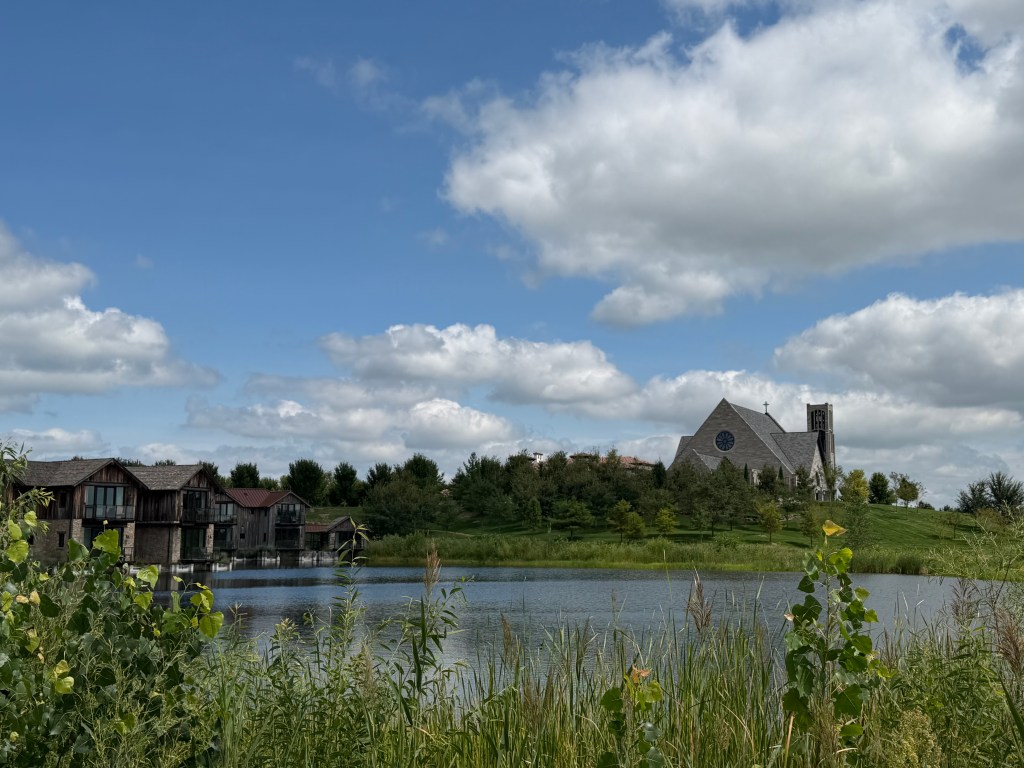
I also preached back-to-back weekend retreat at Cloisters on the Platte outside of Omaha; the days in between gave me time to enjoy the beautiful retreat center grounds in a way I never had time to before. Plus, I got to catch up with friends and an aunt and uncle in Omaha. The conversations one has on those retreats are always moving and inspiring. It’s wonderful to see people putting away their devices for a few days and turning the time over to God…
I made it back to South Dakota, where I was delighted to see that the trees I’ve planted at St. Isaac Jogues parish over the past couple of years are all alive and flourishing — the apple trees already had apples and the oaks had acorns. More digging and planting are planned for next year.
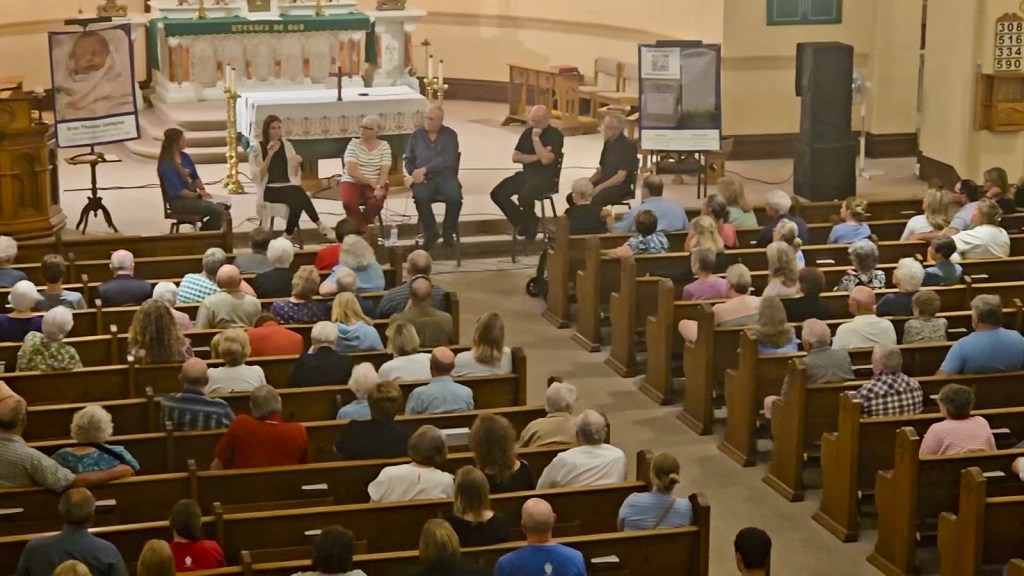
One of the summer’s most exciting events for me turned out to be a panel discussion sponsored by the tremendous Theology on Tap team at St. Wilfrid’s Church in Woonsocket, South Dakota. Woonsocket is, let’s just say, a long drive from wherever you are, so I was expecting a handful of people. Instead, 200 turned out. Woonsocket is a lovely small town, and St. Wilfrid’s overlooks an idyllic little lake. The town is said to produce the best melon in the country — and it didn’t disappoint. The panel’s theme centered on the story of Baby Brian, baptism of desire, and infant loss. Serious stuff, and I was really impressed to see so many people turn out, stick around to chat afterwards, and show such a strong desire to dive deeper into their faith on complicted issues.
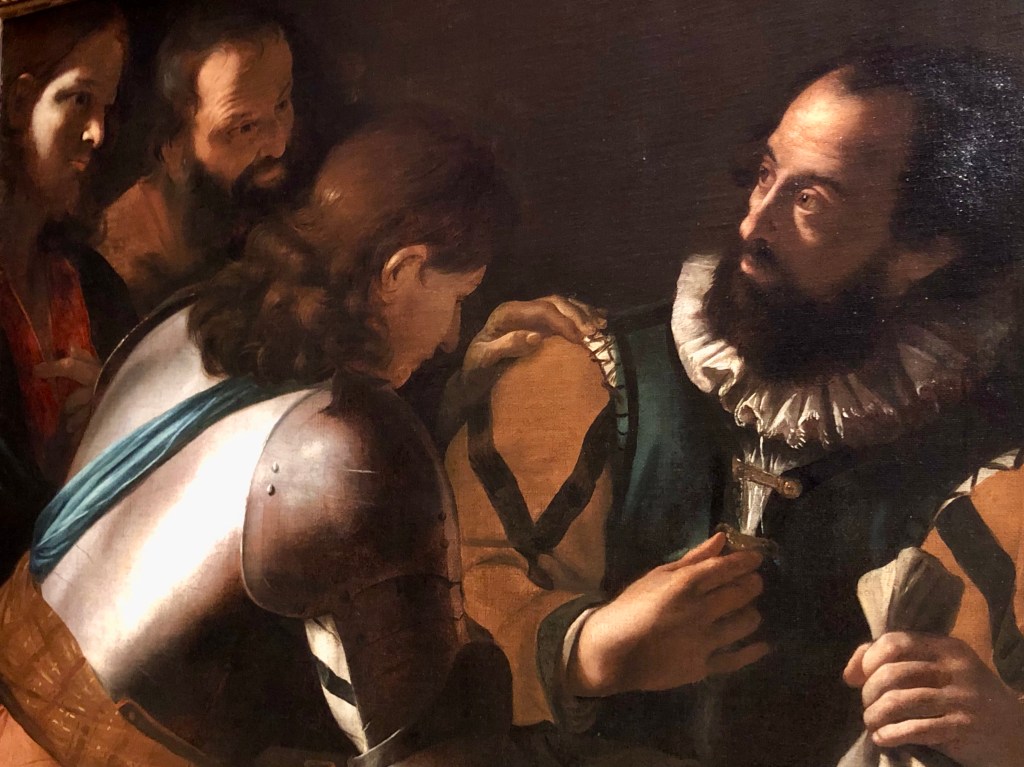
Two years ago on the eve of St. Matthew’s feast day, I posted a reflection on one of Rome’s most spectacular artistic compositions: Michelangelo Merisi da Caravaggio’s St. Matthew cycle. This year I thought I’d share some pictures of a lesser-known depiction of the same event by an artist from the generation that followed Caravaggio, Mattia Preti (1613-1699).
Preti was born in Calabria three years after Caravaggio died, though he worked in many of the same locales as the earlier artist, among them Rome, Naples, and Malta. He also clearly shows the influence of Caravaggio’s style: the realism and intensity, religious passion, and the effect–as spiritual as it is artistic–of radiant light emerging from the darkness.
Yearning to read something smart? Lord knows there’s plenty of schlock and silliness on social media when it comes to both religion and society. Algorithms often tend to multiply the obscene and bombastic — which is why when intelligent and original voices emerge it’s worth passing the word.
My friend Rachel Lu, a senior editor at Law & Liberty, whose work has appeared in America magazine, the National Review, and numerous other publications, has launched a new Substack page called Christendom Reborn. It comments on philosophy, culture, religion, motherhood, history, society, books, and more. The first couple of posts in which Rachel explains the impetus behind the project and gives wickedly smart reviews of some of the books that influenced her approach are especially worthwhile. Consider subscribing and hopefully we can goad Rachel into turning her ideas into a book…
While you’re at it, if you haven’t done so already, consider subscribing to this blog as well (also free!) so that you aren’t at the mercy of algorithms to stay updated but can receive an email update every week.
Jesus consigning the keys to St. Peter, G. Battista Cassignola, 1569
Homily for the Twenty-first Sunday in Ordinary Time (Year A).
It’s hard to imagine a better Gospel reading with which to end an Ignatian retreat. We find this episode at the middle point of Matthew’s Gospel, and the question that Jesus poses to his disciples is the hinge on which everything else turns: “Who do you say that I am?”
We have heard the episode before, so perhaps we don’t register what a strange question Jesus asks. When I test my students at the end of the semester, I ask them about the content of the course, not about my own identity. But Jesus asks about himself, not his message. Were he any other teacher, such a question would be pure arrogance. But Jesus is not like anyone else, and everything depends upon our recognizing the difference.
Public opinion, as the disciples tell it, seeks to put Jesus into a recognizable category; he is one of the prophets, like Elijah or Jeremiah. Perhaps he is the reincarnation of John the Baptist. But Jesus does not let such answers go, and the disciples themselves have been with him long enough that they are not satisfied with such an answer, either. There is a right and a wrong answer to the question Jesus asks. It is not a matter of opinion. Jesus is not administering a Rorschach test to prompt the disciples to look more deeply into themselves. The question is not what is inside, but who is standing here before you.
Homily for the Nineteenth Sunday in Ordinary Time (Year A)
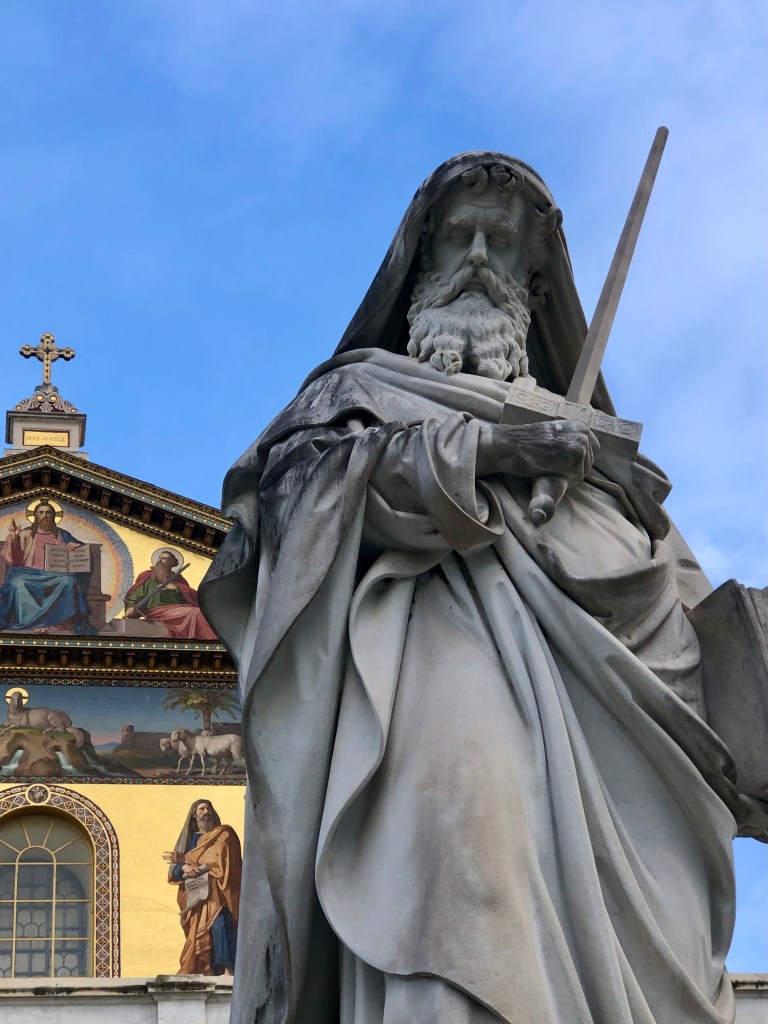
Basilica of St. Paul Outside the Walls, Rome
Today’s marvelous Gospel story of Jesus walking across a stormy sea shows us how faith grows from fear to true understanding. The disciples move from a superstitious worldview, imagining that the Lord is a ghost, to true faith, confessing to Jesus, “Truly, you are the Son of God.” But since the same reading came up at daily Mass earlier this week and some of you already heard what I had to say about it, I thought today I would step out onto a different kind of stormy sea: the second reading, taken from St. Paul’s Letter to the Romans. The reason this particular passage from Romans means walking on turbulent waters is because it deals with St. Paul’s attitude toward his own people, the Jews. It has implications, therefore, for what attitude Christians should take toward the Jewish people today.
I decided to risk stepping out onto such waters this morning because over the past several years we have seen a sharp rise in anti-Semitic rhetoric and an increase in violence directed against Jews. In March, a synagogue in West Bloomfield, Michigan was attacked and, soon after, the FBI thwarted a plot to firebomb synagogues in New York, Los Angeles, and Scottsdale, Arizona. The situation in Europe is worse, and it should disturb anyone of good sense and good will that in the wake of Hamas’s attack on Israel in October 2023—which included murder, rape, and hostage-taking—anti-Semitic rhetoric in the West increased.
Yesterday I wrapped up a retreat for Jesuits about praying with the liturgy in Parma, Ohio. It was the second time I offered the retreat, and I was blessed to have another wonderful group of participants. As I’ve worked with young Jesuits in studies in Rome and encountered others around the world, I’ve sensed a renewed interest in celebrating liturgy well. (I made some brief remarks on the topic at the Jungmann Society Congress a few years ago.)
While working on my retreat conferences this year, I read several of the talks that Pope Leo XIV gave on the subject of liturgy at his Wednesday morning catechesis earlier this summer. The Holy Father has been reflecting on Sacrosanctum Concilium, the document from Vatican II dedicated to the liturgy. As to be expected, the Pope’s reflections are solid, touching on the document’s key strengths. In his first talk, for example, he points out that merely changing the rites was not the Council’s goal; instead, the Council wanted us to appreciate just what liturgy is — an encounter with Jesus.
In drafting this Constitution, the Council Fathers sought not only to undertake a reform of the rites, but to lead the Church to contemplate and deepen that living bond which constitutes and unites her: the mystery of Christ. Indeed, the liturgy touches the very heart of this mystery: it is at once the space, the time and the context in which the Church receives her very life from Christ. For in the liturgy, “the work of our redemption is accomplished” (SC, 2)
Today, the Church in Europe is sometimes portrayed as ready for last rites, and the decline in Church participation, vocations, and the general vibrancy of the faith there since the mid-1960s is undeniable. But, if the history of Christianity on the continent has taught us anything, it is that the Church can survive ups and downs because she is endowed with a supernatural capacity for renewal.
My own decade living in Europe has taught me that, in times like ours, we need to be attuned to the danger of historical determinism and cultural conformity. We must resist the temptation to think that history moves in an inevitable direction so we might as well just go along with the times. Such an attitude is a recipe for managed decline and eventual extinction.
In contrast, as I’ve noted in previous posts on the Church in Scandinavia (reflecting on my trip to Sweden and and the fine work of Norway’s Bishop Erik Varden), times such as ours present unexpected opportunities if we know where to look and are bold and unapologetic enough to seize them.
Homily for the fifteenth Sunday in Ordinary Time (Year A).
“Brothers and sisters,” Saint Paul says, “I consider that the sufferings of this present time are as nothing compared with the glory to be revealed in us.”
In other words, Saint Paul recognizes that the present time, the world in which we live, is characterized by suffering—pain and weakness, shame and fear, insults and injustices. Human life is not entirely suffering, but suffering is present. Christianity does not promise us a life without it.
But if Saint Paul does not promise to eliminate suffering, what is his message? His message is that suffering can help us obtain a greater glory. In fact, if we read the Gospel with Saint Paul’s words in mind, the meaning of Jesus’ message today becomes clearer.
Jesus uses the image of the seed, and a seed, as we know, must be buried in order to grow. Before taking on its new form, before becoming a plant and blossoming, a seed must lose its old form—it must, in a certain sense, die.
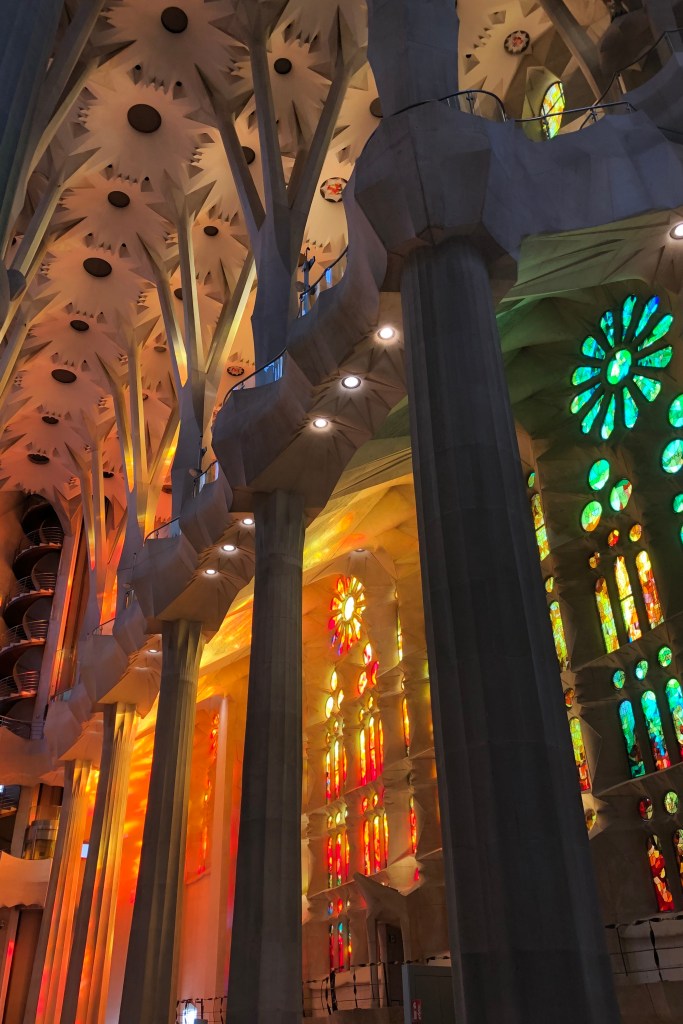
Next week Pope Leo XIV will visit the Basilica of the Sagrada Familia in Barcelona. I have been reflecting on this unique gem of modern architecture a lot since my trip to Barcelona this spring, especially in this essay in America magazine. Pope Leo will dedicate the basilica’s newly completed central tower; his visit got me thinking about the last time a pope visited the Sagrada Familia.
Sixteen years ago, Pope Benedict XVI dedicated the basilica’s central altar and gave a characteristically profound reflection to mark the occasion. I was studying philosophy at Loyola University Chicago at the time, and from the shores of Lake Michigan, I wrote a short reflection on the event, which I thought I’d reproduce here.
Beauty, Basilicas, and Barcelona
Beauty is one of mankind’s greatest needs.
—Benedict XVI
November 9, 2010.
On Sunday Pope Benedict consecrated the Basilica of the Sagrada Familia in Barcelona, Spain, a truly awesome rite. Construction of the basilica, Antoni Gaudí’s masterpiece, began in 1882 and is not expected to be complete for another decade and a half. In that respect, the Sagrada Familia is like many of the other great churches of Europe which took centuries to complete.
Today, the Church celebrates the dedication of another great basilica, St. John Lateran, Rome’s cathedral. To some, this might seem a rather strange feast on the liturgical calendar, commemorating as it does a building rather than an event in the life of Jesus or a saint. Some might even disapprove of lavishing such attention on a structure, a sentiment that finds expression in a line from my least favorite liturgical song, “Gather Us In.” “Gather us in,” the ditty goes, but “[n]ot in the dark of buildings confining.”
The idea of church buildings as “confining,” however, does not do justice to artistic marvels such as the Sagrada Familia or St. John Lateran, wonders as much spiritual as they are architectural. These buildings are, in fact, a true and profound expression of faith.
It takes an act of faith just to start a project such as the Sagrada Familia, especially knowing that one is unlikely to live to see it through. In Pope Benedict’s homily on Sunday he noted the deep faith of the architect Gaudí, who when confronted by setbacks and obstacles would exclaim, “St. Joseph will finish this church.” I’m reminded of Florence’s cathedral, Santa Maria del Fiore, which was designed to be topped by a massive dome—before anyone had developed the technology to make building such a dome possible. Buildings such as the Sagrada Familia and Santa Maria del Fiore represent man’s stretch beyond the limits of his abilities, beyond what seems possible; to start building such a project is always an act of hope.