Recently, I was fortunate to be able to take a brief trip to Barcelona for a research project (more on that to come). I spent as much time as I could at Antoni Gaudí’s marvel, La Sagrada Família (more on that, as well).
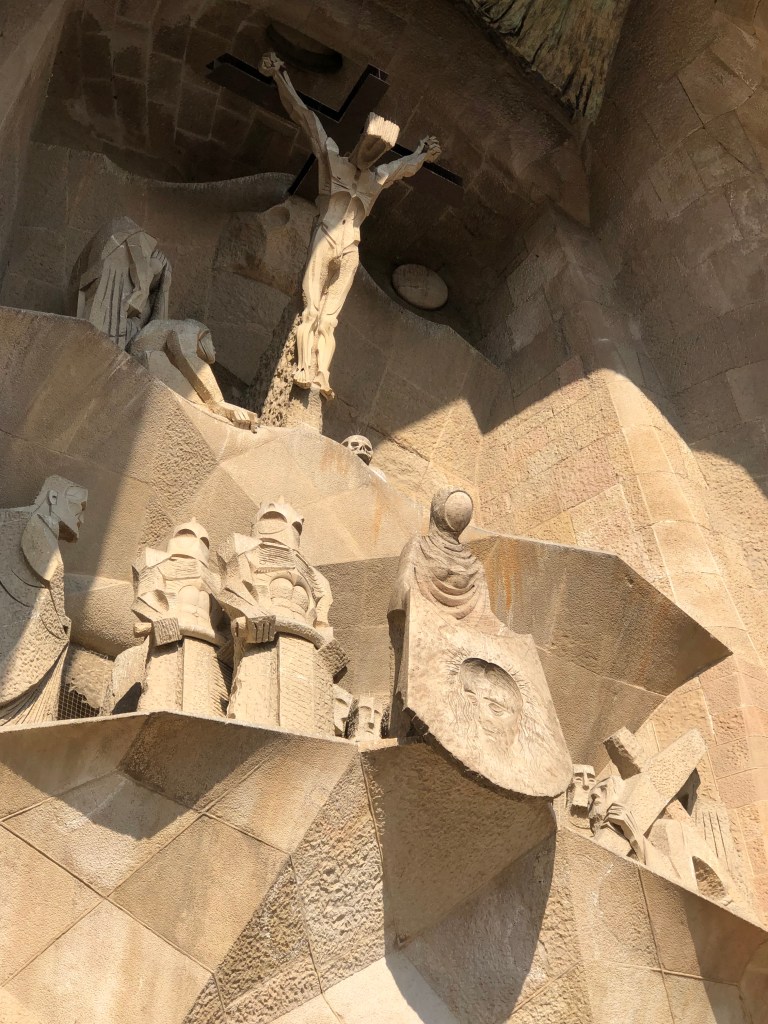
The entire basilica is a marvel, a deeply spiritual and prophetic building. This Holy Week, I thought it would be appropriate to share some photos of the Façana de la Passió, the Passion Facade. The sculptures broadly follow Gaudí’s instructions, though they are the work of Josep Maria Subirachs. If anything, the sculptures are even more harsh and austere than Gaudí’s original sketches. The hardness of the work is actually in keeping with Gaudí’s instructions.
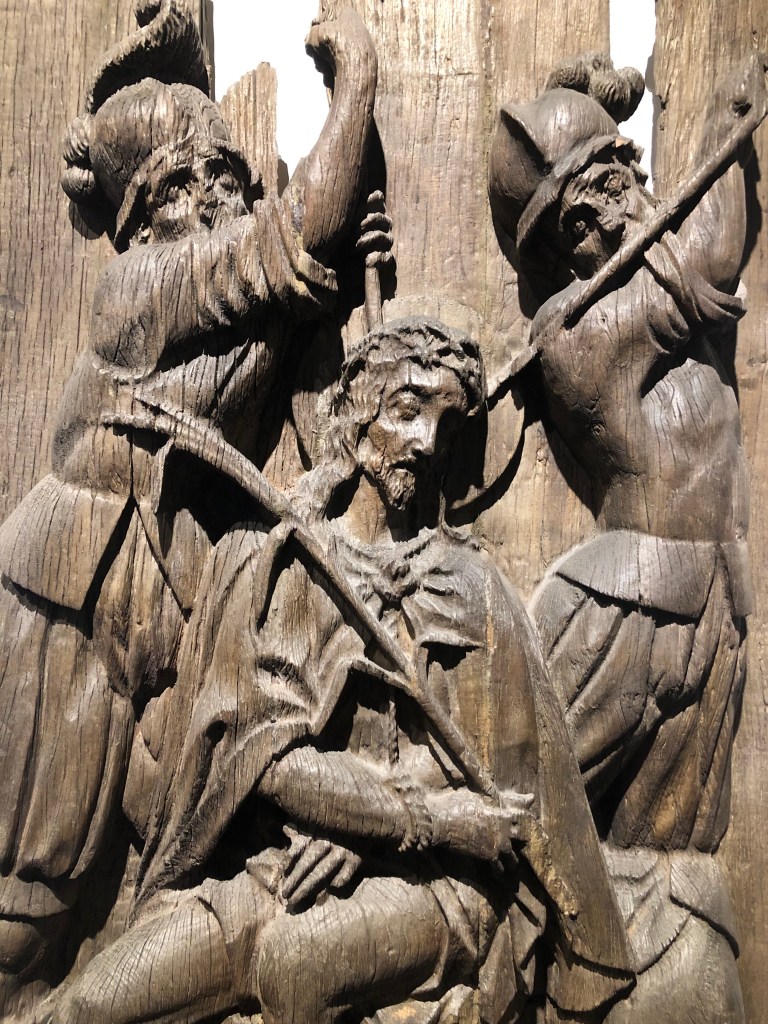
Jesus crowned with thorns, 18th century, Molave wood, San Augustin Museum, Manila
We have reached the final days of Lent. Five weeks ago, this penitential season began with an emphasis on prayer, fasting, and almsgiving. The austere sign of ashes reminded us of our mortality and challenged us to conversion. Prayer, fasting, and almsgiving are the classic means of conversion. Perhaps we have examined our lives, sought to grow in certain virtues, and made personal resolutions. And perhaps now, at the end of these five weeks of Lent, we realize that we have grown—or that we have not been very faithful to our resolutions. Or, more likely, we find that the results have been mixed: some growth, some failure.
In any case, we have reached a new moment. You may have noticed that, in this week’s liturgy, we have stopped using the Lenten prefaces at the beginning of the Eucharistic prayer and have begun to use the Passion preface. And today’s readings strongly orient us toward the Passion. Jeremiah speaks of slander and betrayal, and we naturally think of the sufferings that the Lord will face within a week. In the Gospel, opposition to Jesus grows, becoming increasingly violent, and his identity becomes clearer. It is no longer possible to maintain a moderate position toward him. It is no longer possible to respect him simply as a good teacher, a prophet, or a philosopher with interesting ideas: he is either the Son of God or a blasphemer. Everyone must choose.
This is the moment in Lent when we forget ourselves. Even our desire for conversion takes a back seat, because our attention is focused entirely on Jesus. Perhaps at this very moment, even our unsuccessful resolutions and failures help us understand how much we need a Savior. We are leaving the time of resolutions and moral growth and entering the time of the Savior. This time is his. It is the time of the Son of God, the time of the One who is greater than John and all the prophets, the time of our only Lord and only Savior. Thanks to our efforts—or perhaps despite our efforts—we have arrived here, at this moment. But this is the time of Jesus.
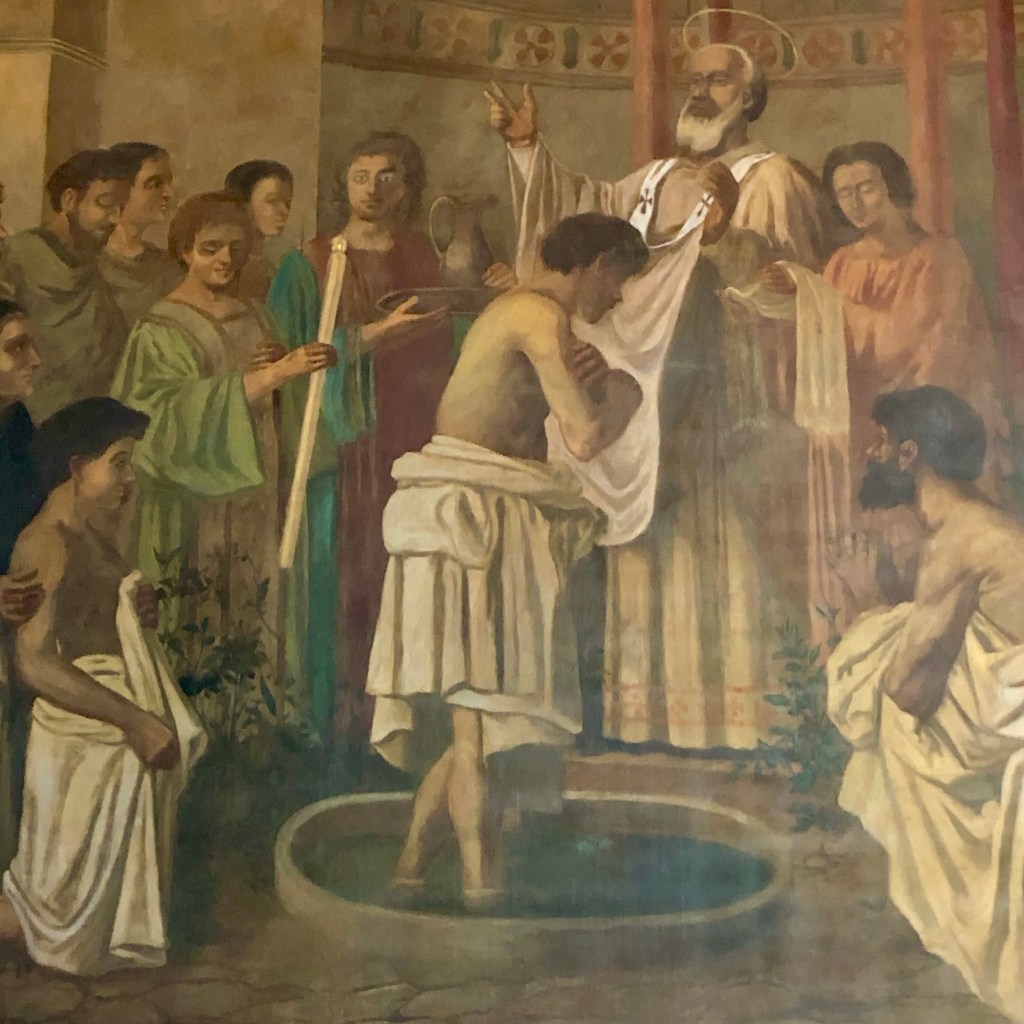
Baptism of St. Augustine (copy), Tito Troya, San Augstin Museum (Manila0
In these two readings, we see the two points of the compass for our Lenten journey. These points are also the two sides of the sacrament of baptism, to which this journey is directed.
The first reading speaks of freedom from evil: freedom from war and oppression; the end of exile in a devastated land; liberation from captivity, darkness, hunger, thirst, and abandonment. The joy that the prophet Isaiah expresses comes from the defeat of these evils that oppress us. The ascetic dimension of Lent is motivated by the desire to be freed from the forces that hold us captive: sin and selfishness.
But the purpose of Lent is not empty freedom. Rather, it is a freedom that allows us to live in a new relationship with the Lord. In the Gospel, Jesus emphasizes his relationship with the Father. And we, at the end of this Lenten journey, hope to renew the gift that was given to us in baptism: the gift of a new relationship with the Father, the gift of being reborn as his adopted children, the gift of the Spirit of Jesus who transforms us. Jesus speaks of intimacy with God.
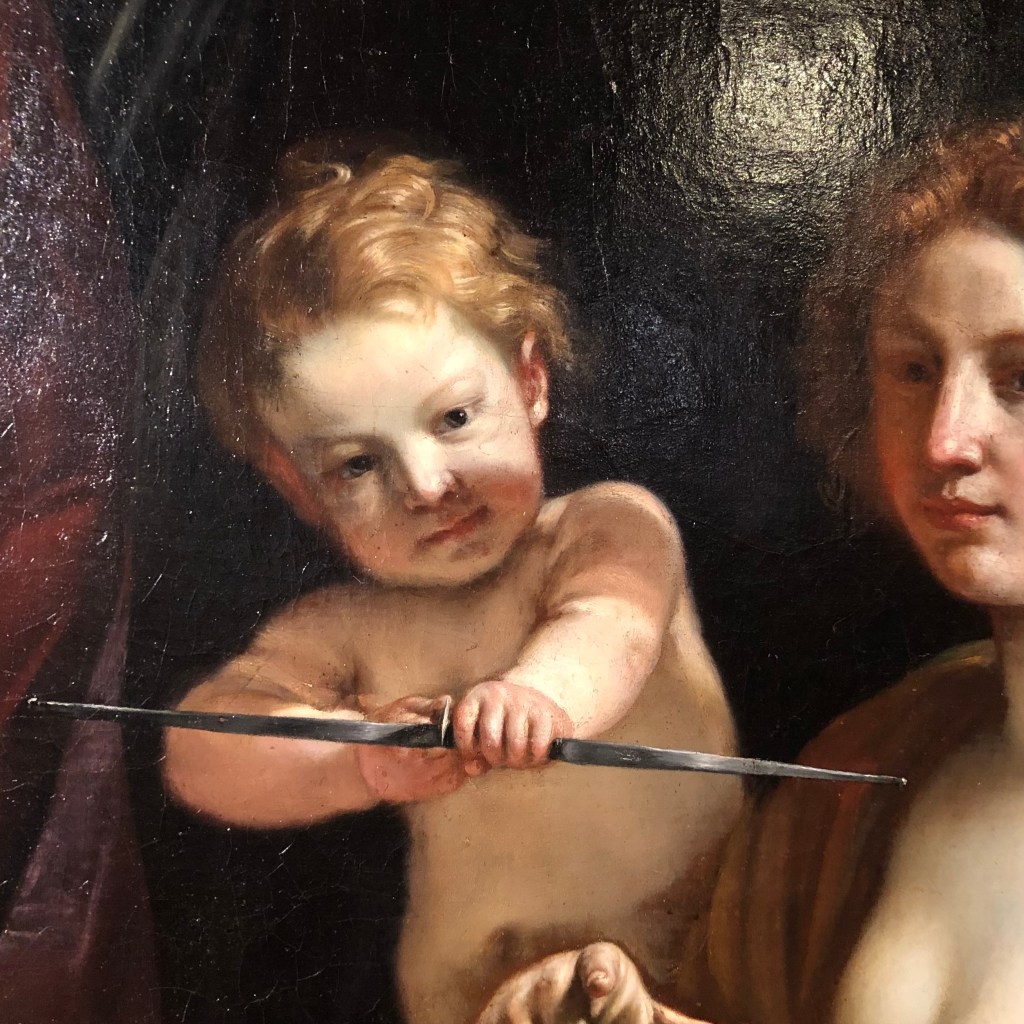
Cupid aims his arrow! From “Venus, Mars, and Cupid,” Guercino, 1633
Late last year, the Vatican’s Dicastery for the Doctrine of the Faith issued Una Caro a document praising monogamy. Monogamy is indeed a praiseworthy institution and not one to be taken for granted these days when everything seems up for grabs. In my seminar on marriage last semester, a student brought to my attention the story of a Protestant pastor in Berlin blessing a “marriage” of four men. And I know from the discussions about marriage in my introduction to the sacraments class at the Gregorian University that polygamy remains a real pastoral challenge in many parts of the globe.
I was happy to be able to review Una caro in the latest issue of La Civiltà Cattolica, adding some insights from recent sociological studies on marriage by Brad Wilcox, Mark Regnerus, and the Belgian sexologist Thérèse Hargot. These sort of studies cannot substitute for a theology of marriage, but they do provide an invaluable supplement to it, if for no other reason than that they help to dispel some of the myths used to deride the Christian vision of marriage.
Homily for Wednesday of the Second Week of Lent (translated from Italian).
When I was little, I liked a series of children’s books and cartoons called “Winnie the Pooh.” In this series there was a character called Eeyore—in Italian I think it’s “Ih-Oh”—a gray donkey who talks sadly and sl-ow-ly. Poor Eeyore is always pessimistic and depressed. Eeyore is not a bad character; he is just a melancholic person—or, rather, a melancholic donkey.
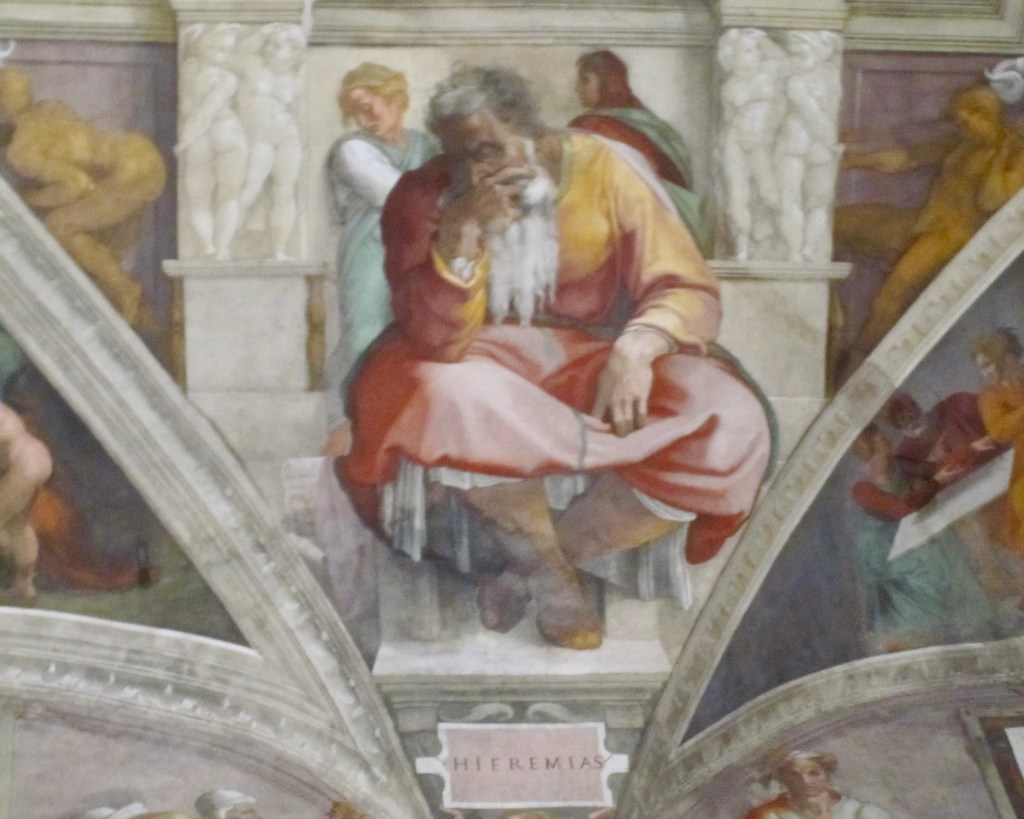
Jeremiah (Michelangelo, Sistine Chapel)
I think Eeyore would like today’s readings. The prophet Jeremiah is a prophet of doom. The message he receives from God to tell the citizens of Jerusalem is pessimistic. Destruction will come to the holy city, Jeremiah says. The king of Jerusalem and his advisors do not want to hear this message, so they find a more optimistic prophet, Hananiah, and plot to throw Jeremiah into a pit.
Jesus’ words today are also, in a way, words of doom. He repeats the prophecy of his crucifixion, which the disciples consistently try to avoid. Here, instead of listening to him, they immediately turn to church politics—who will have the highest position.