Jesuits and Liturgical Formation

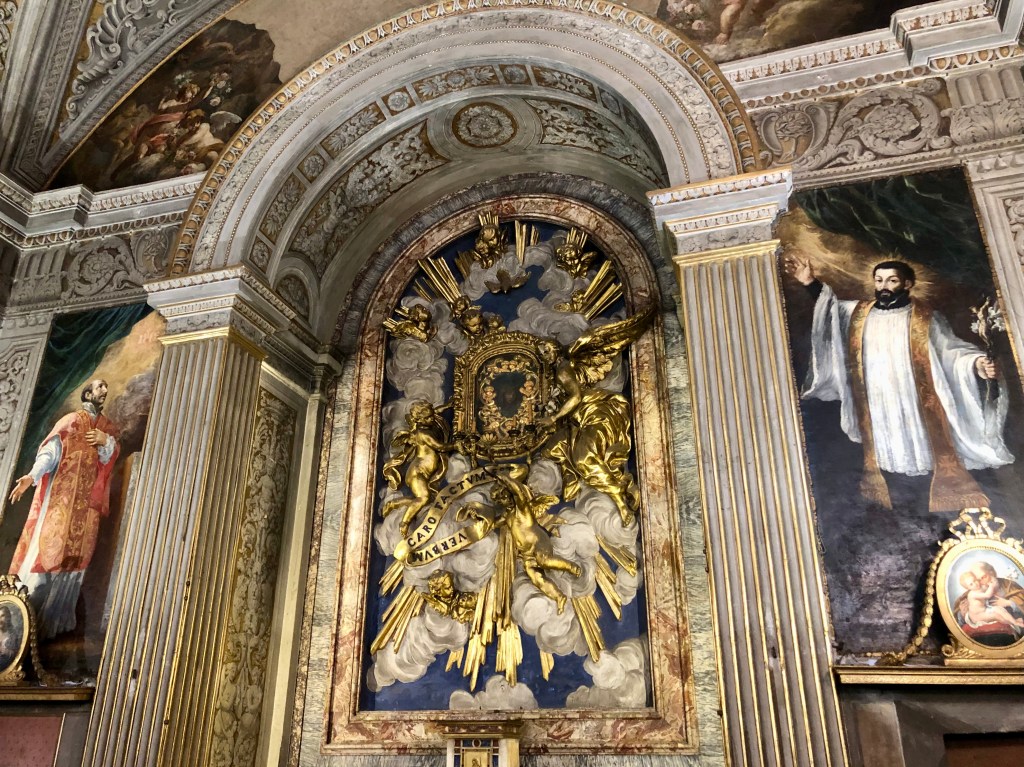
Chapel in the (original) Roman College

I am pleased to have a talk I gave a couple of years ago at the Jungmann Society Congress in the Philippines included in a new volume, JESUITS AND LITURGY: COMMUNITY AND FORMATION published by the Faculty of Theology at Trnava University. A pdf version of the book is available here on the Jungmann Society website.

From Fr. Vlastimil Dufka’s introduction, here is a description of my own modest contribution:

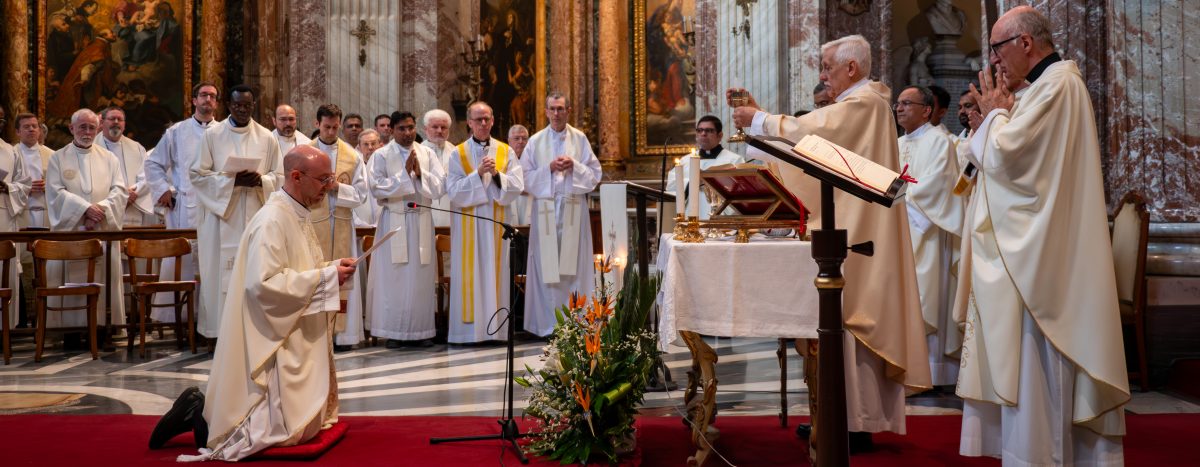
In his presentation “Daily Mass in Jesuit Communities” Anthony R. Lusvardi SJ reflects on the role of daily Mass in Jesuit communities, framing his insights through both historical and contemporary perspectives. Drawing on early 20th-century debates between Jesuits and Benedictines, he identifies a persistent tendency among Jesuits to undervalue the formative nature of the liturgy—a tendency rooted in neo-scholastic minimalism and an overly intellectualized approach to worship. Lusvardi argues that the liturgy is not merely ceremonial but participatory and transformative, shaping those who engage in it through embodied symbolic action.

This conviction is grounded in his pastoral and pedagogical experience, particularly in his work with Jesuit scholastics preparing for ordination. While many Jesuit communities strive to celebrate daily Mass with reverence and fidelity, Lusvardi observes that implicit liturgical formation remains inconsistent and, at times, insufficient. Many young Jesuits express uncertainty about basic liturgical practices and a lack of theological grounding, revealing gaps in formation that risk weakening both priestly identity and the communal expression of the Church’s worship.

Lusvardi calls for a renewed appreciation of the daily Eucharist as central to Jesuit life and apostolate, in alignment with the Complementary Norms and the vision of Sacrosanctum Concilium. He advocates for more robust practical and theological formation in the ars celebrandi, deeper engagement with the practice of concelebration, and greater fidelity to liturgical norms—not as rigid formalism, but as a path to spiritual depth and ecclesial communion. Guided by the insights of Romano Guardini and Desiderio Desideravi, the talk concludes with a vision of the liturgy as a place of humility, formation, and peace—offering Jesuits the possibility of becoming men shaped by their encounter with the sacred, and capable of serving the Church with integrity and courage.

Readers might also enjoy the other articles in the volume; I found the opening remarks of the Jungmann Society President Jérôme Guignand, SJ, as well as his exceptionally well-researched article “Celebrating and the Prayer of the Liturgy of the Hours” particularly worthwhile.


Please consider supporting this blog by subscribing and receive occasional email updates:
St. George in legend and in architecture

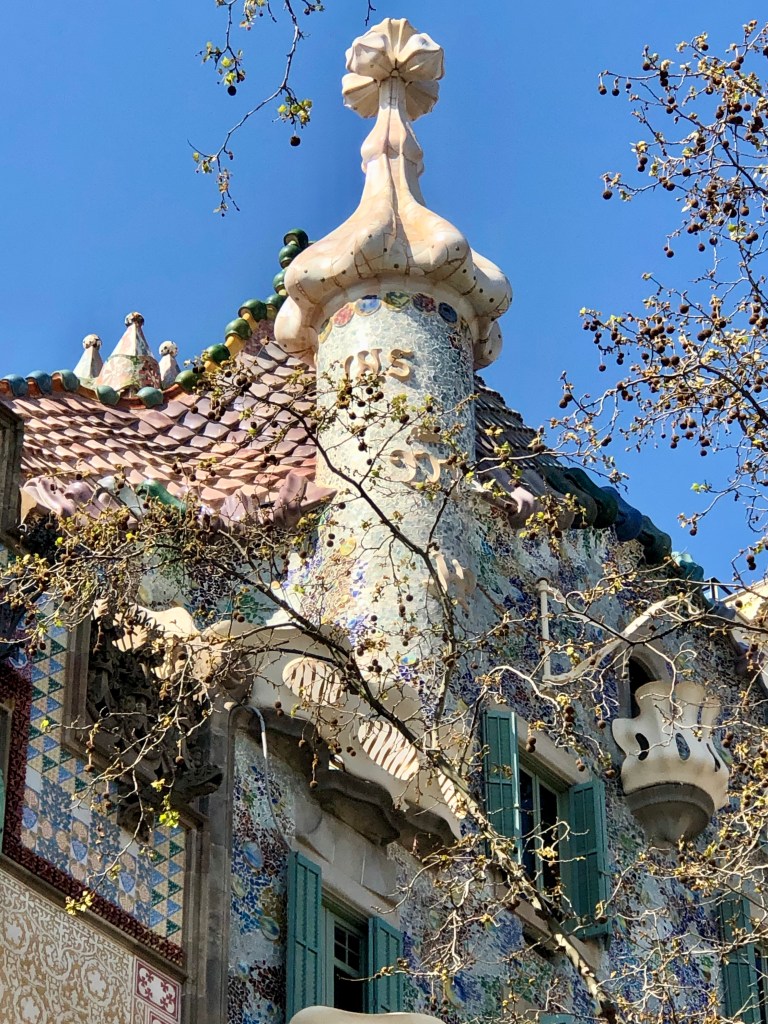
Casa Batlló IHS tower, Barcelona

April 23 is the feast day of St. George, a saint whose popularity — as well as just about everything we know about him — is legendary. The saint hailed from the Christian east — possibly from Cappadocia in present-day Turkey — but seems to have been martyred in the late third century in what is today Israel. George was a soldier who converted to Christianity. He was put to death after refusing to sacrifice to Rome’s pagan gods and undergoing excruciating tortures.

This defiant courage when standing up to a more powerful foe is perhaps what has made the figure of St. George resonate with so many throughout history. Perhaps it also contributed to the legendary stories of St. George slaying a dragon who was oppressing a Christian population. The saint is particularly popular among Arab Christians, who have long lived under the yoke of Muslim rule, and across the eastern Mediterranean — in Greece and Malta, for example, communities menaced for centuries by invasion from various Islamic empires pushing westward.

St. George, in fact, has found popularity wherever an underdog has felt the need for a champion. He is the patron, along with St. Sebastian, of one of Rome’s station churches. This year when I traveled to Barcelona (which I mentioned here and here), I learned that George is the patron of that city as well. The legend of St. George fits, in an unexpected way, into one of the city’s best known architectural monuments, Antoni Gaudí’s Casa Batlló.

Continue reading “St. George in legend and in architecture”

Egyptians and the afterlife

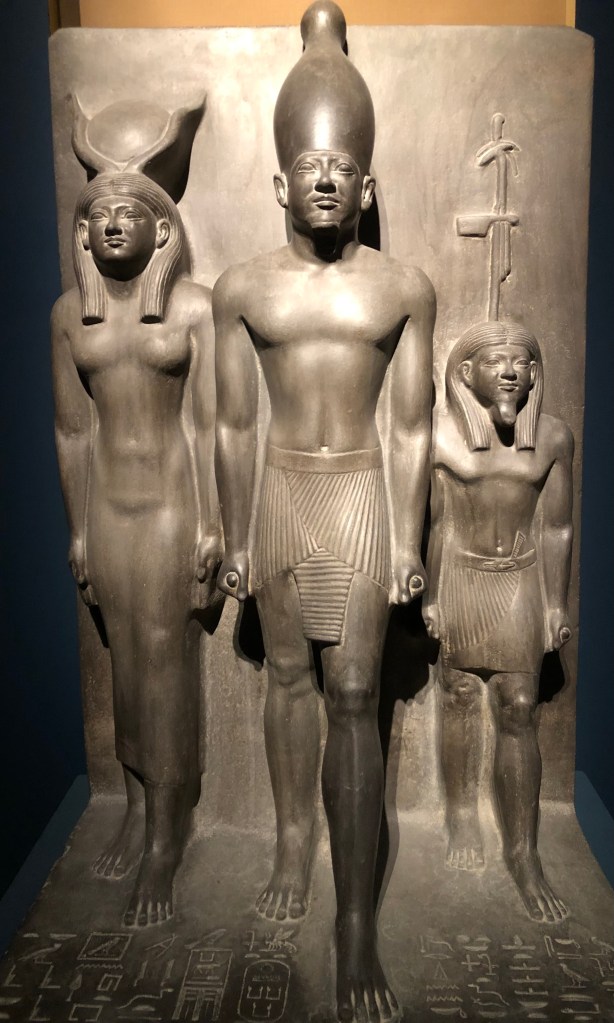
Triad of Menkaure

Romans have been fascinated with Ancient Egypt since before the time of the Caesars. Egypt was for them what Ancient Rome is for us–a powerful, slightly exotic civilization whose influence and fascination extends to the present day. Roman Emperors went to great lengths to bring Egyptian artifacts back to decorate the imperial capital, and today there are more Egyptian obelisks standing in the city of Rome than in Egypt itself.

Part of the fascination of Egypt for the Romans no doubt had to do with the religious intensity of the Egyptians. And that religious intensity, in turn, was concentrated on the life to come. The resources the Ancient Egyptians put into ensuring survival and flourishing in the next life continue to amaze. This aspect of Egyptian civilization is prominently featured in a special exhibit at Rome’s Scuderia del Quirinale (which hosted a fine exhibit on Guercino and the Roman baroque that I wrote about last year). The exhibit sensitively explains important aspects of the Egyptians’ belief system; the gold that covers ancient sarcophagi and death masks, for example, was not ancient bling meant to show off status, but a symbol of incorruptibility, a sign of hope in a new life that would not tarnish.

Continue reading “Egyptians and the afterlife”

Easter images from the Sagrada Familia

Christ is risen! Happy Easter!

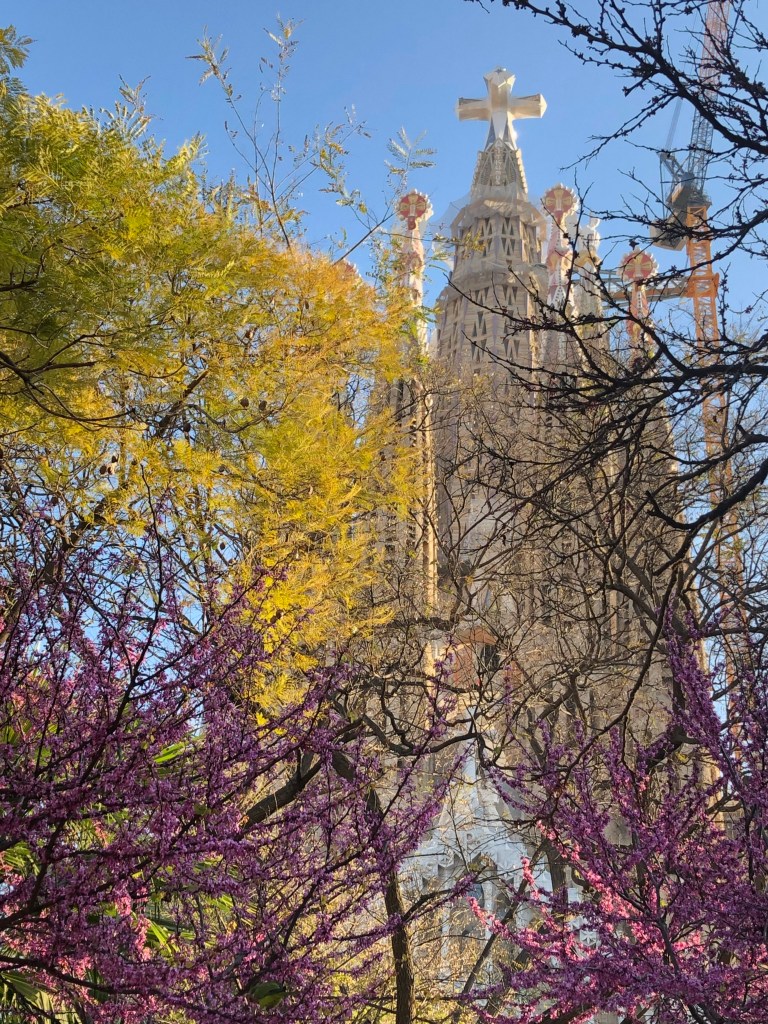
La Sagrada Familia, Barcelona

Last week I shared some photos from the stark Passion Facade of Antoni Gaudí’s Sagrada Familia in Barcelona. Not all is doom and gloom at the Basilica, of course, and, in fact, visiting the church is a amazingly uplifting experience.

The Glory Facade remains to be built, so we still can only imagine what is planned to be the most beautiful part of the whole project. But enough parts of the Basilica already suggest the victory of the Resurrection. High above the scenes of the Passion, in fact, one can see the women visiting the now empty tomb and, above that, a bronze figure of Christ ascending.

Continue reading “Easter images from the Sagrada Familia”