Following up on my article in America about the Sagrada Familia and looking forward to Pope Leo XIV’s visit to Spain, I had a chance to sit down at the beginning of the month with Robert Duncan, host of Vatican Access, a new podcast from Catholic News Services.
It was a great conversation, and I was happy to discover this excellent new podcast. You can watch the interview here: “Why Pope Leo Chose Sagrada Família.”
Readers might also be interested to check out the 20th Anniversary Issue of Dappled Things magazine. The fact that this unique contribution to the Catholic literary scene has been going for two decades is indeed worth celebrating, and I was honored that they included one of my stories from 2017 in an anthology of their favorites. The story has dystopian ring, which in retrospect feels almost prophetic….
Here’s a final rundown of recent posts on Gaudí and the Sagrada Familia:
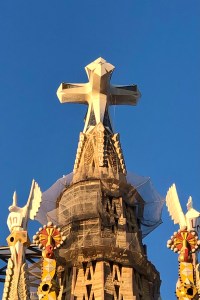
Next week Pope Leo XIV will visit the Basilica of the Sagrada Familia in Barcelona. I have been reflecting on this unique gem of modern architecture a lot since my trip to Barcelona this spring, especially in this essay in America magazine. Pope Leo will dedicate the basilica’s newly completed central tower; his visit got me thinking about the last time a pope visited the Sagrada Familia.
Sixteen years ago, Pope Benedict XVI dedicated the basilica’s central altar and gave a characteristically profound reflection to mark the occasion. I was studying philosophy at Loyola University Chicago at the time, and from the shores of Lake Michigan, I wrote a short reflection on the event, which I thought I’d reproduce here.
Beauty, Basilicas, and Barcelona
Beauty is one of mankind’s greatest needs.
—Benedict XVI
November 9, 2010.
On Sunday Pope Benedict consecrated the Basilica of the Sagrada Familia in Barcelona, Spain, a truly awesome rite. Construction of the basilica, Antoni Gaudí’s masterpiece, began in 1882 and is not expected to be complete for another decade and a half. In that respect, the Sagrada Familia is like many of the other great churches of Europe which took centuries to complete.
Today, the Church celebrates the dedication of another great basilica, St. John Lateran, Rome’s cathedral. To some, this might seem a rather strange feast on the liturgical calendar, commemorating as it does a building rather than an event in the life of Jesus or a saint. Some might even disapprove of lavishing such attention on a structure, a sentiment that finds expression in a line from my least favorite liturgical song, “Gather Us In.” “Gather us in,” the ditty goes, but “[n]ot in the dark of buildings confining.”
The idea of church buildings as “confining,” however, does not do justice to artistic marvels such as the Sagrada Familia or St. John Lateran, wonders as much spiritual as they are architectural. These buildings are, in fact, a true and profound expression of faith.
It takes an act of faith just to start a project such as the Sagrada Familia, especially knowing that one is unlikely to live to see it through. In Pope Benedict’s homily on Sunday he noted the deep faith of the architect Gaudí, who when confronted by setbacks and obstacles would exclaim, “St. Joseph will finish this church.” I’m reminded of Florence’s cathedral, Santa Maria del Fiore, which was designed to be topped by a massive dome—before anyone had developed the technology to make building such a dome possible. Buildings such as the Sagrada Familia and Santa Maria del Fiore represent man’s stretch beyond the limits of his abilities, beyond what seems possible; to start building such a project is always an act of hope.
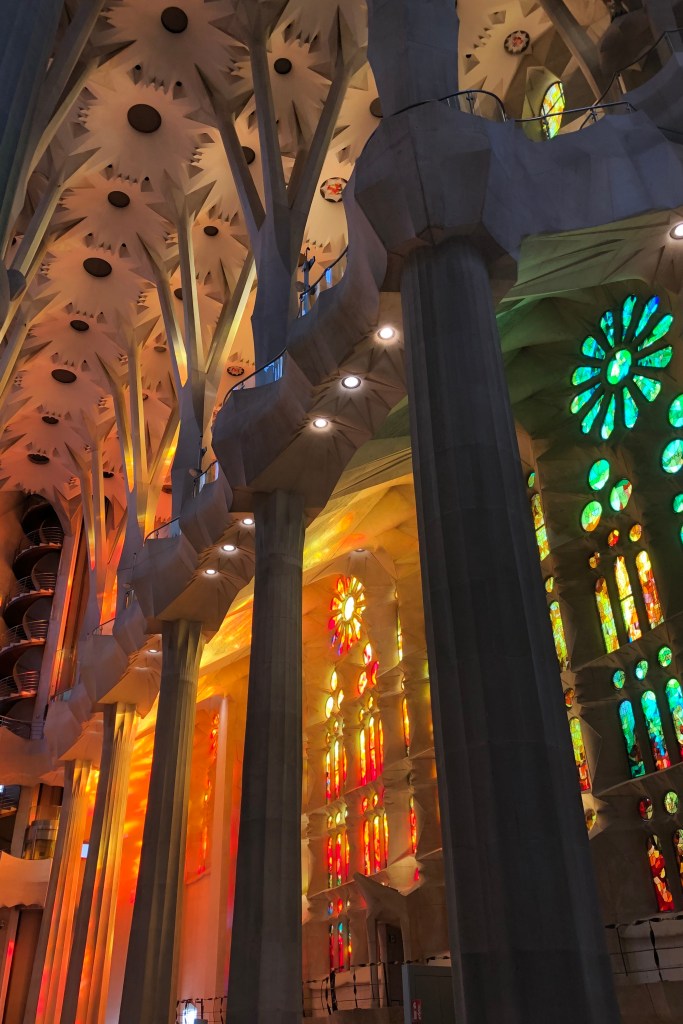
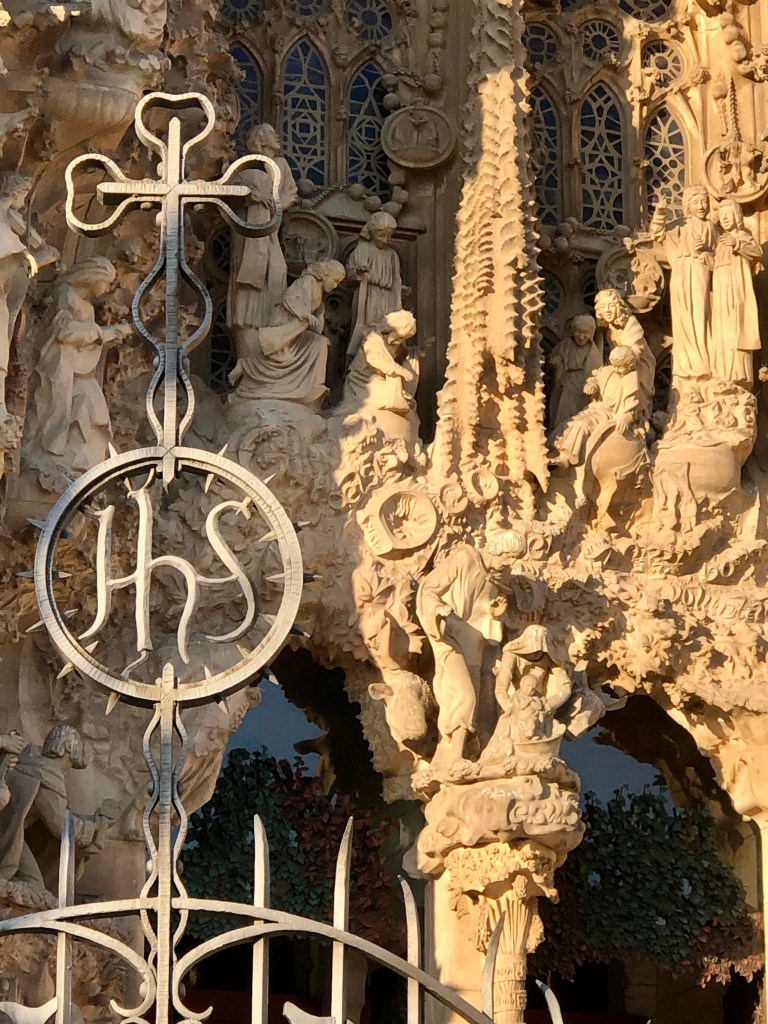
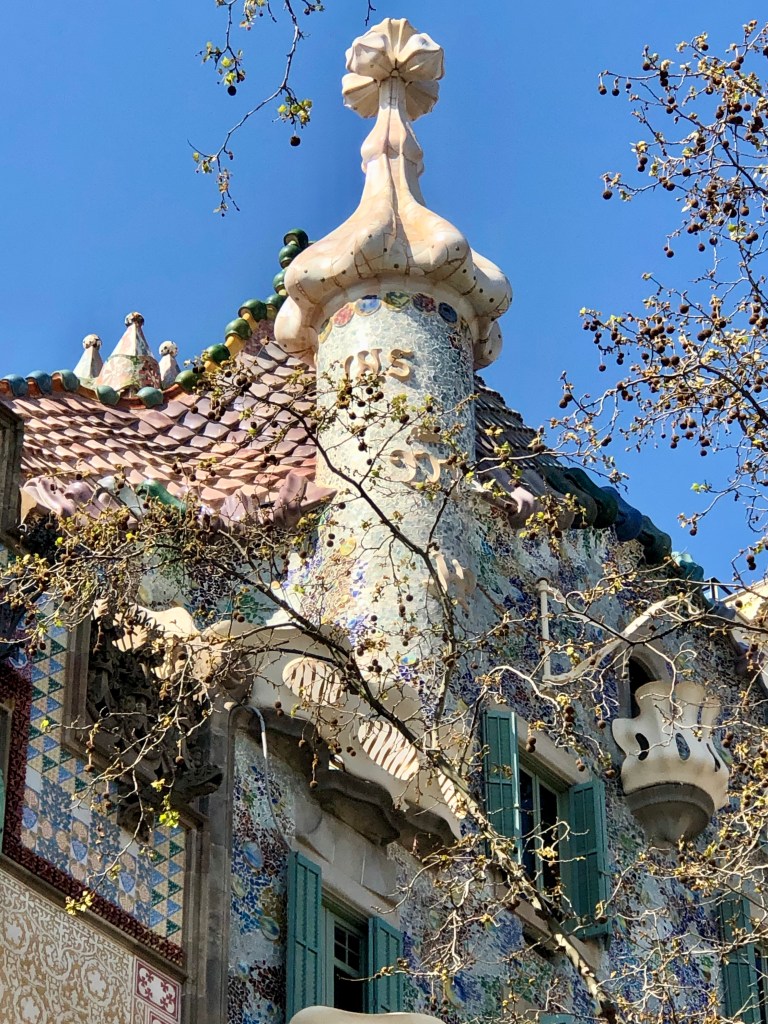
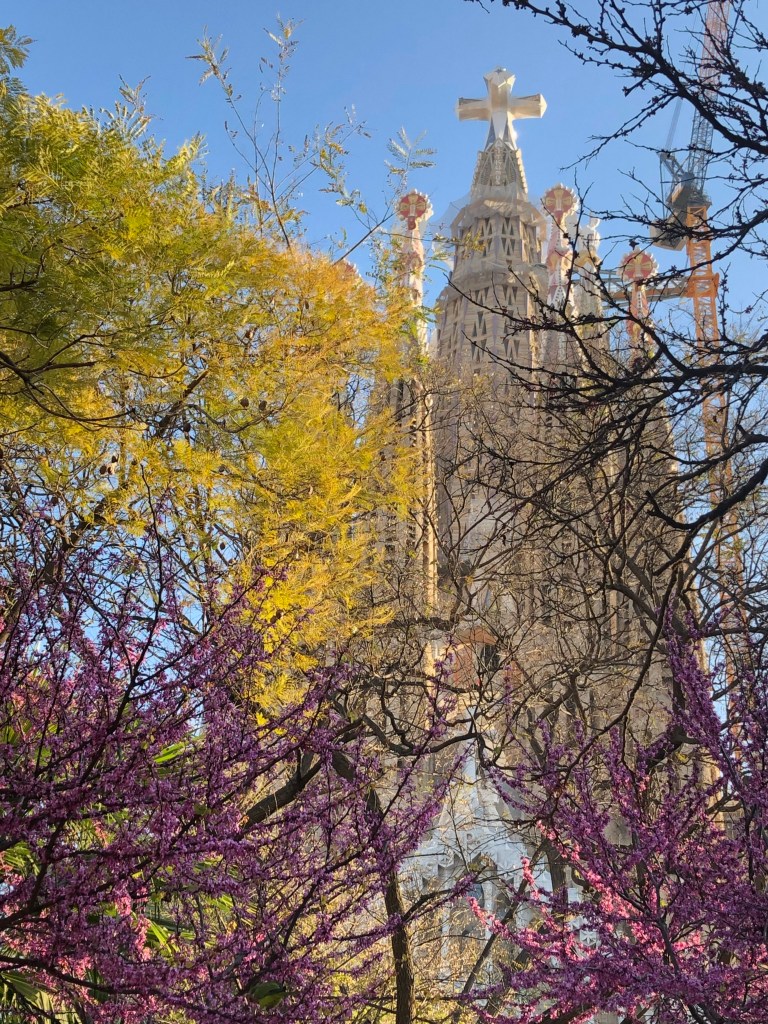
A few weeks ago I alluded to a somewhat unexpected trip I made to Barcelona before Easter and put up a few pictures of the Sagrada Familia (here and here) and Casa Batlló, two of the most iconic works of the architect Antoni Gaudí. This year happens to be the 100th anniversary of Gaudí’s death, which will coincide with the visit of Pope Leo XIV to Spain. The aim of the trip was to write a reflection on the meaning of Gaudí’s great work for America magazine. The article is now out here, and I have to say it is one of my favorite pieces — no doubt because the subject is so beautiful and fascinating.
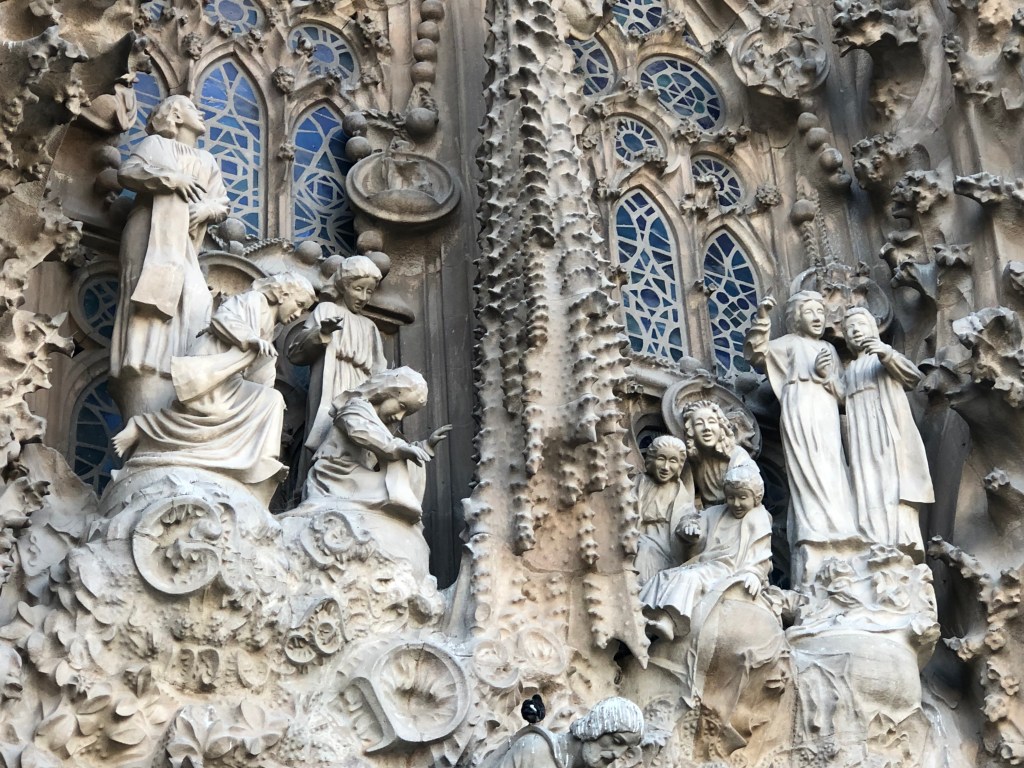
For good measure, I thought I’d share a few more photos for your reflection and enjoyment:
April 23 is the feast day of St. George, a saint whose popularity — as well as just about everything we know about him — is legendary. The saint hailed from the Christian east — possibly from Cappadocia in present-day Turkey — but seems to have been martyred in the late third century in what is today Israel. George was a soldier who converted to Christianity. He was put to death after refusing to sacrifice to Rome’s pagan gods and undergoing excruciating tortures.
This defiant courage when standing up to a more powerful foe is perhaps what has made the figure of St. George resonate with so many throughout history. Perhaps it also contributed to the legendary stories of St. George slaying a dragon who was oppressing a Christian population. The saint is particularly popular among Arab Christians, who have long lived under the yoke of Muslim rule, and across the eastern Mediterranean — in Greece and Malta, for example, communities menaced for centuries by invasion from various Islamic empires pushing westward.
St. George, in fact, has found popularity wherever an underdog has felt the need for a champion. He is the patron, along with St. Sebastian, of one of Rome’s station churches. This year when I traveled to Barcelona (which I mentioned here and here), I learned that George is the patron of that city as well. The legend of St. George fits, in an unexpected way, into one of the city’s best known architectural monuments, Antoni Gaudí’s Casa Batlló.
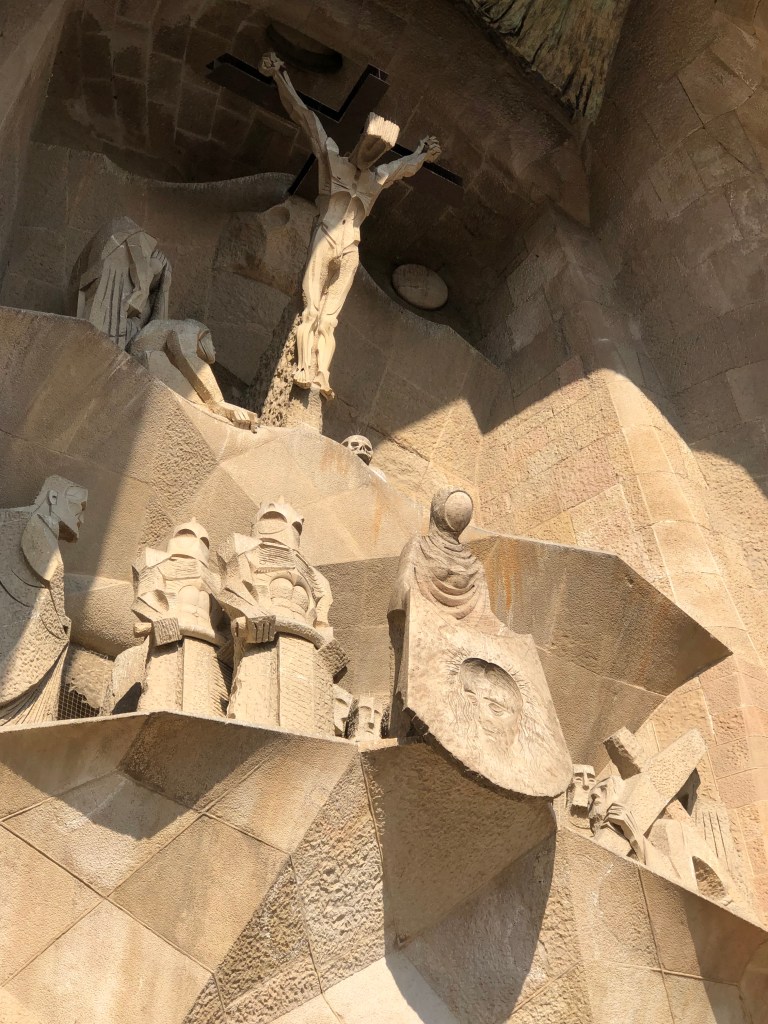
Last week I shared some photos from the stark Passion Facade of Antoni Gaudí’s Sagrada Familia in Barcelona. Not all is doom and gloom at the Basilica, of course, and, in fact, visiting the church is a amazingly uplifting experience.
The Glory Facade remains to be built, so we still can only imagine what is planned to be the most beautiful part of the whole project. But enough parts of the Basilica already suggest the victory of the Resurrection. High above the scenes of the Passion, in fact, one can see the women visiting the now empty tomb and, above that, a bronze figure of Christ ascending.
Recently, I was fortunate to be able to take a brief trip to Barcelona for a research project (more on that to come). I spent as much time as I could at Antoni Gaudí’s marvel, La Sagrada Família (more on that, as well).
The entire basilica is a marvel, a deeply spiritual and prophetic building. This Holy Week, I thought it would be appropriate to share some photos of the Façana de la Passió, the Passion Facade. The sculptures broadly follow Gaudí’s instructions, though they are the work of Josep Maria Subirachs. If anything, the sculptures are even more harsh and austere than Gaudí’s original sketches. The hardness of the work is actually in keeping with Gaudí’s instructions.