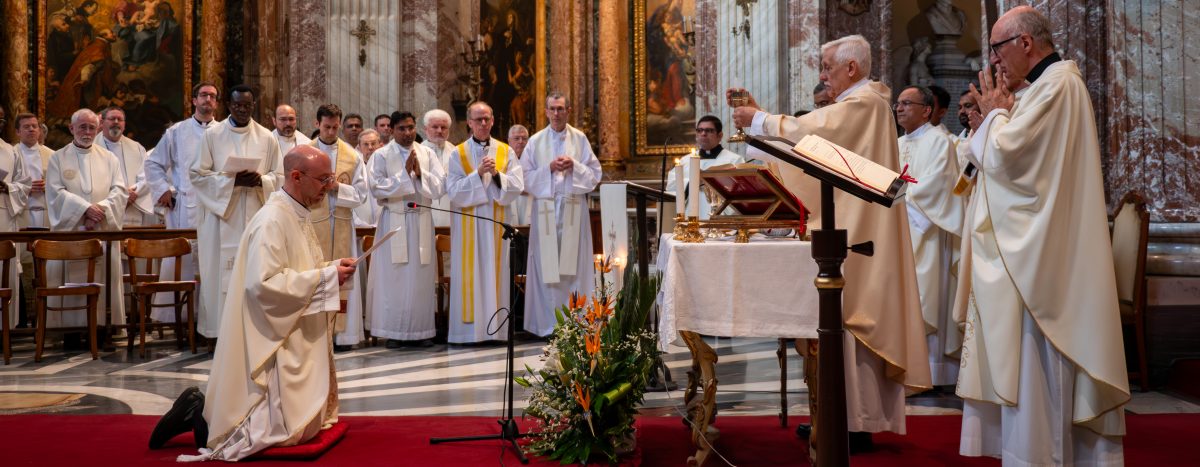
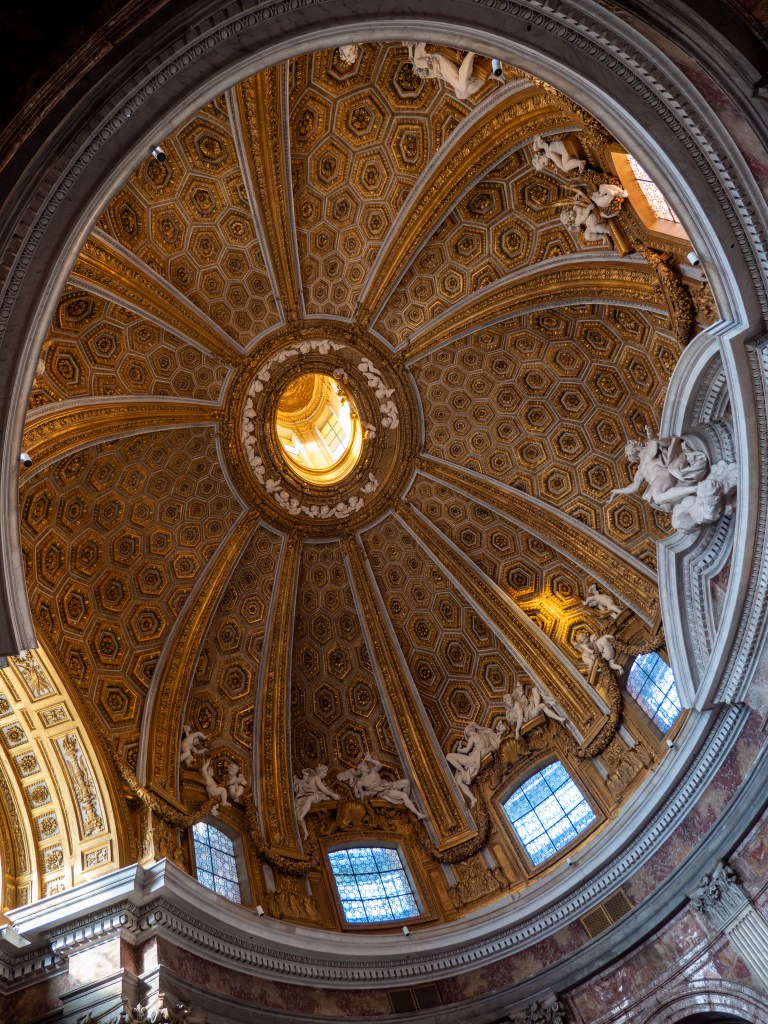
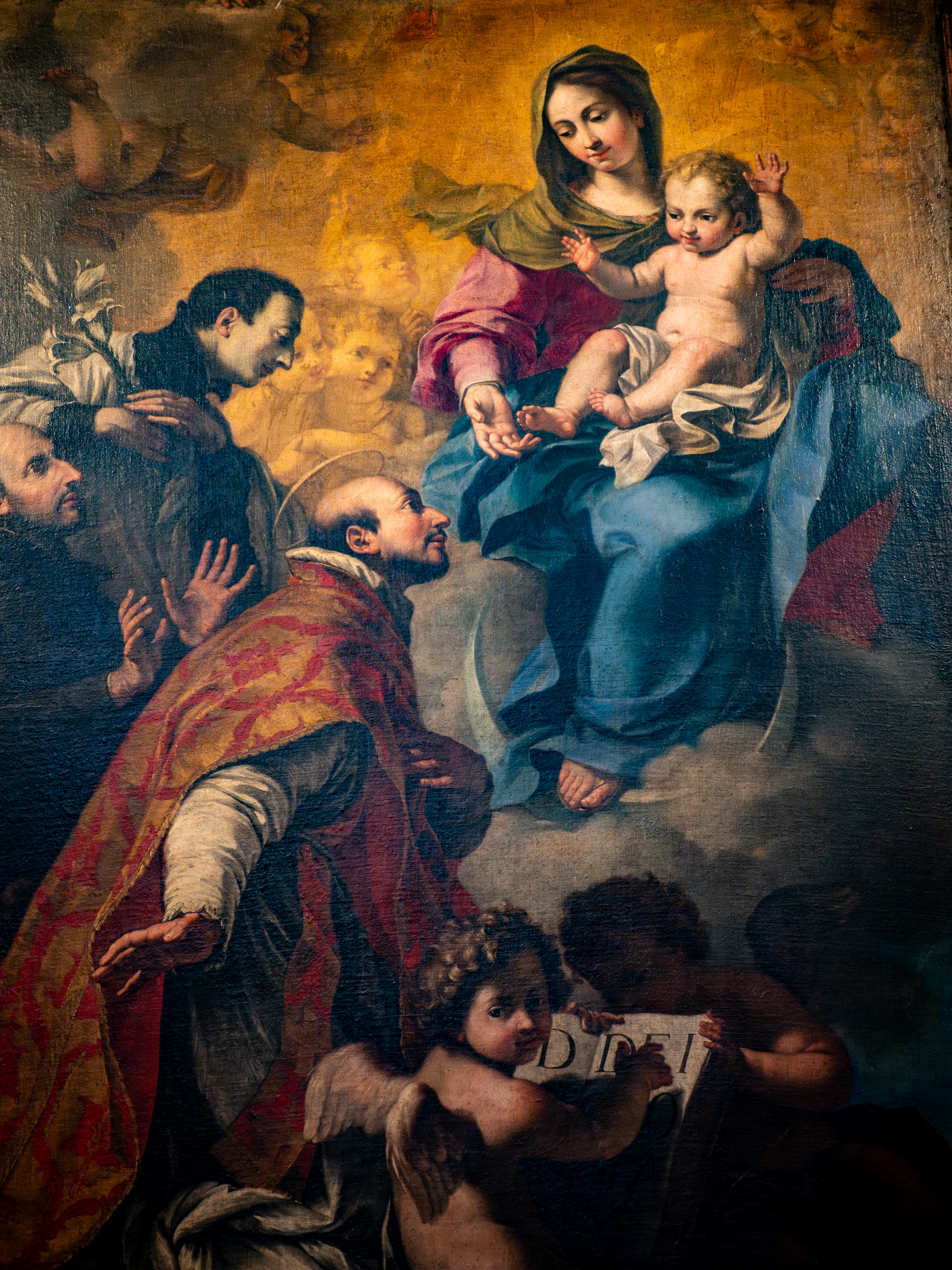
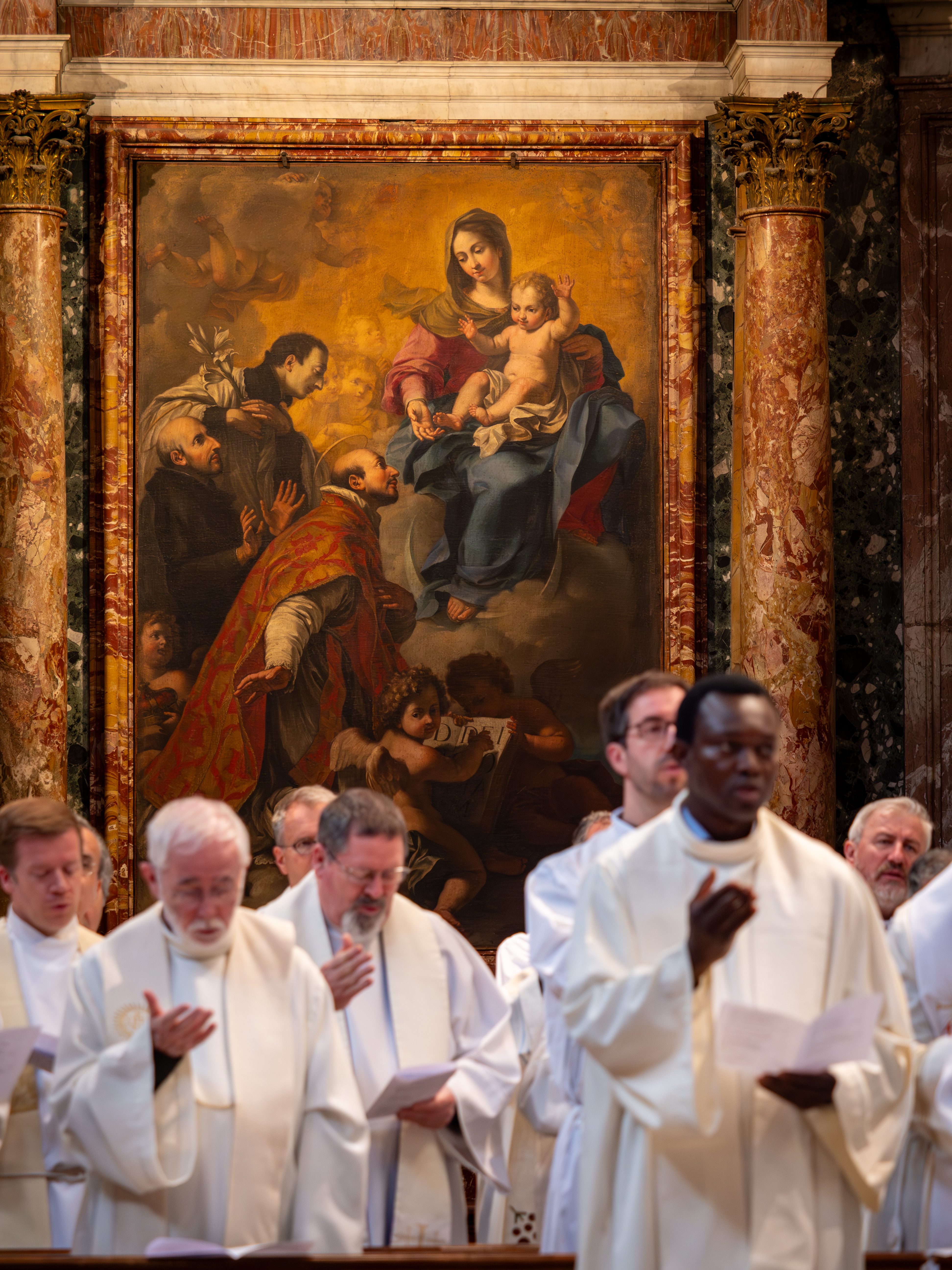
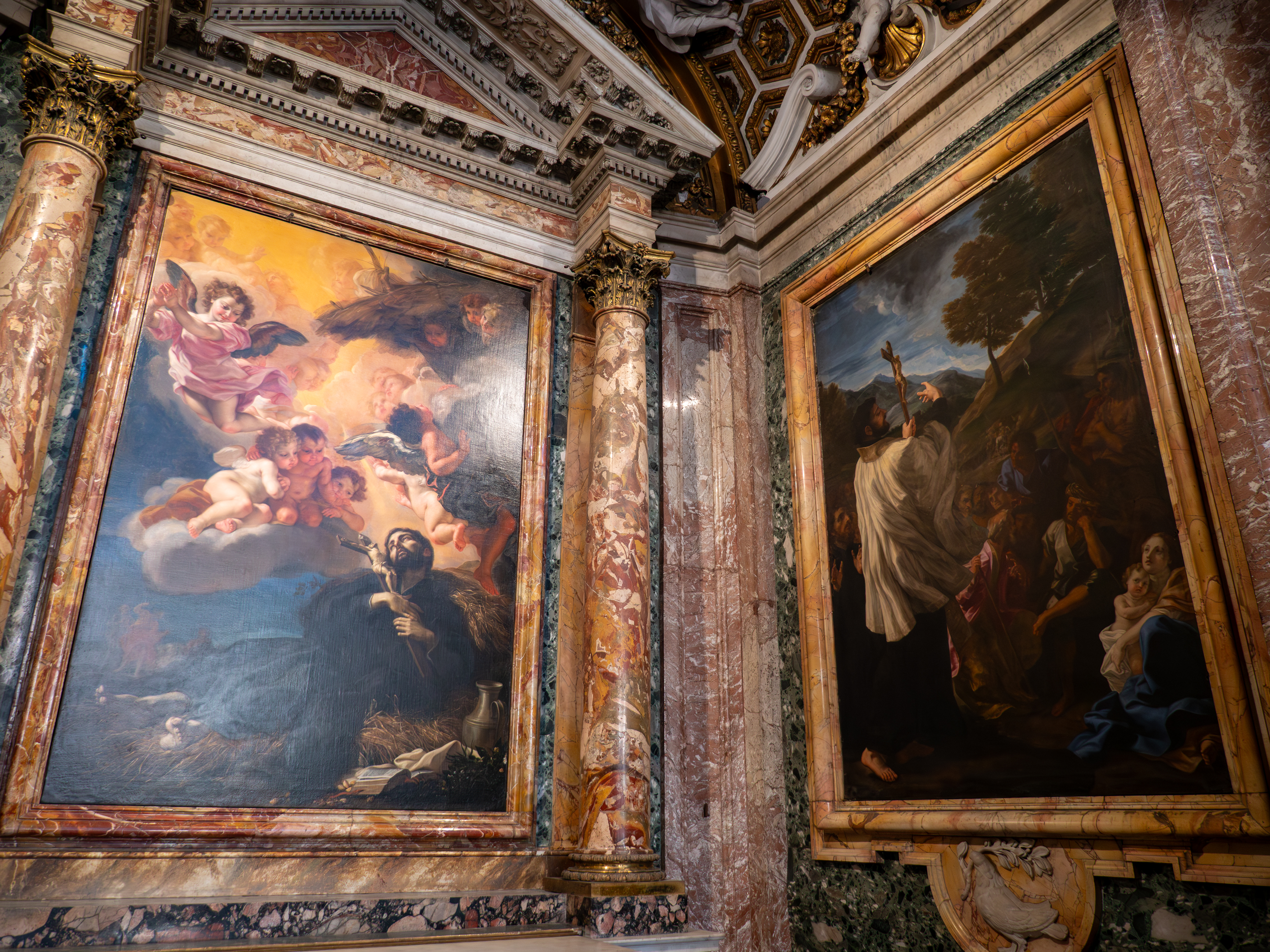
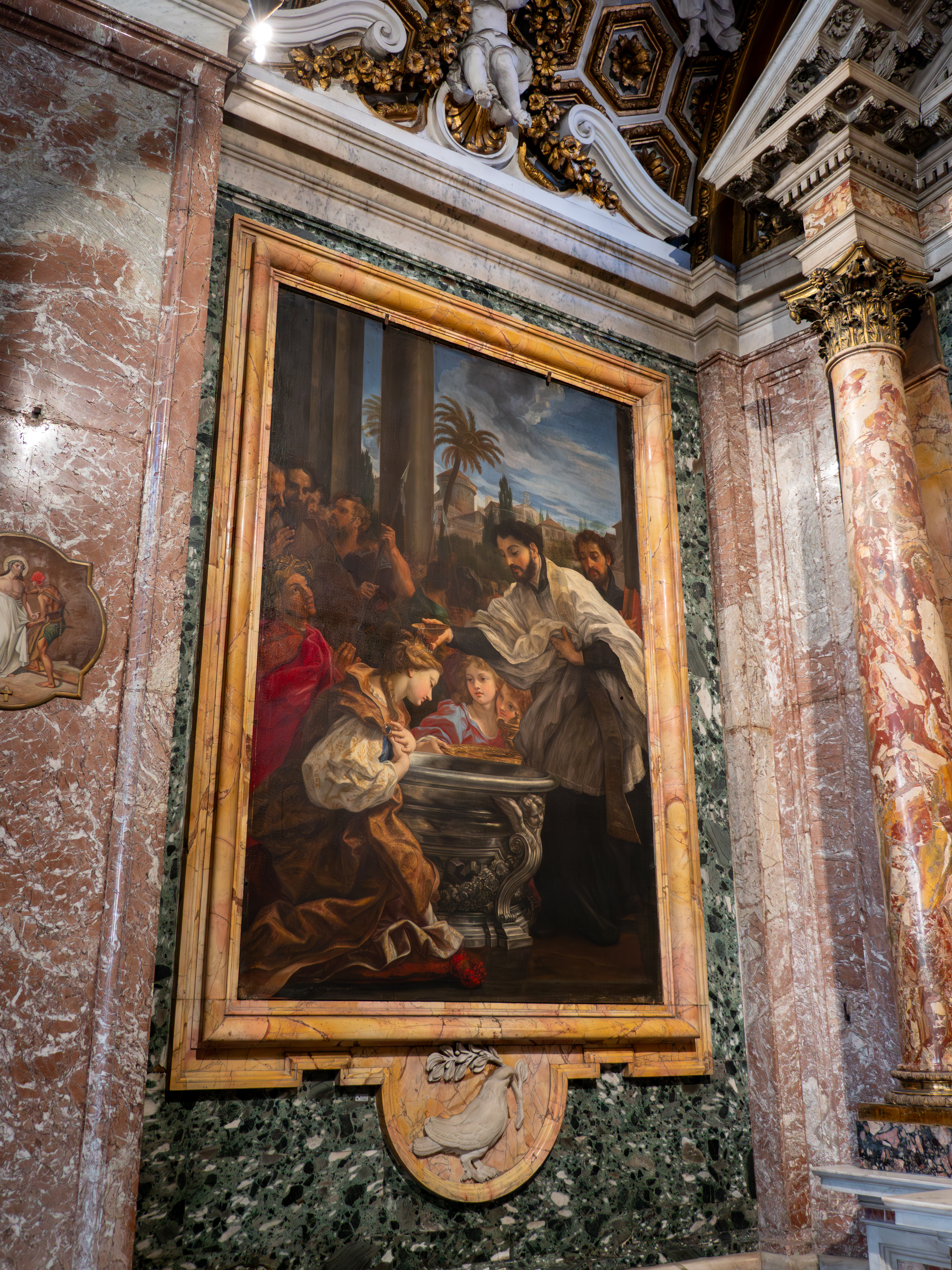
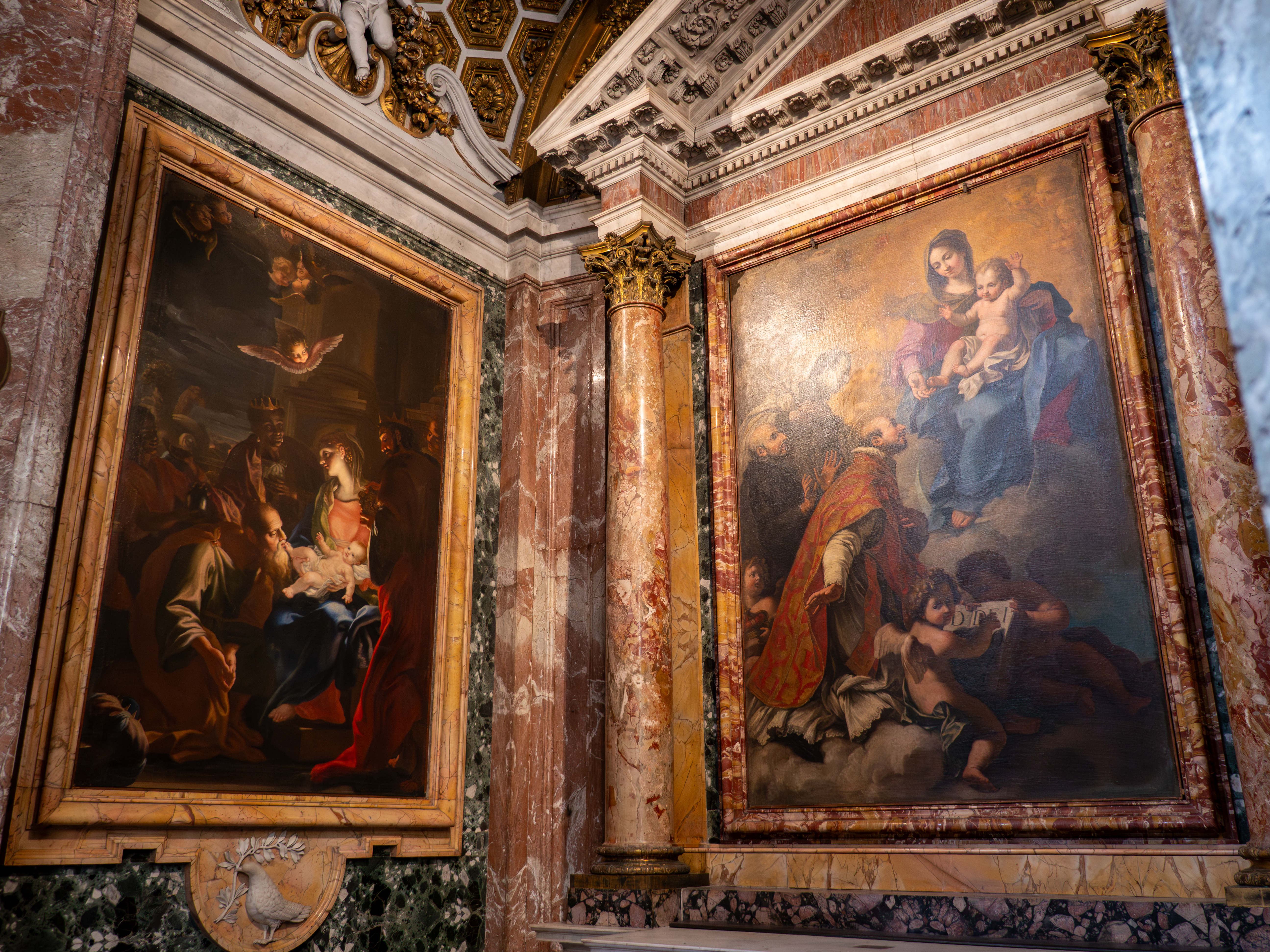
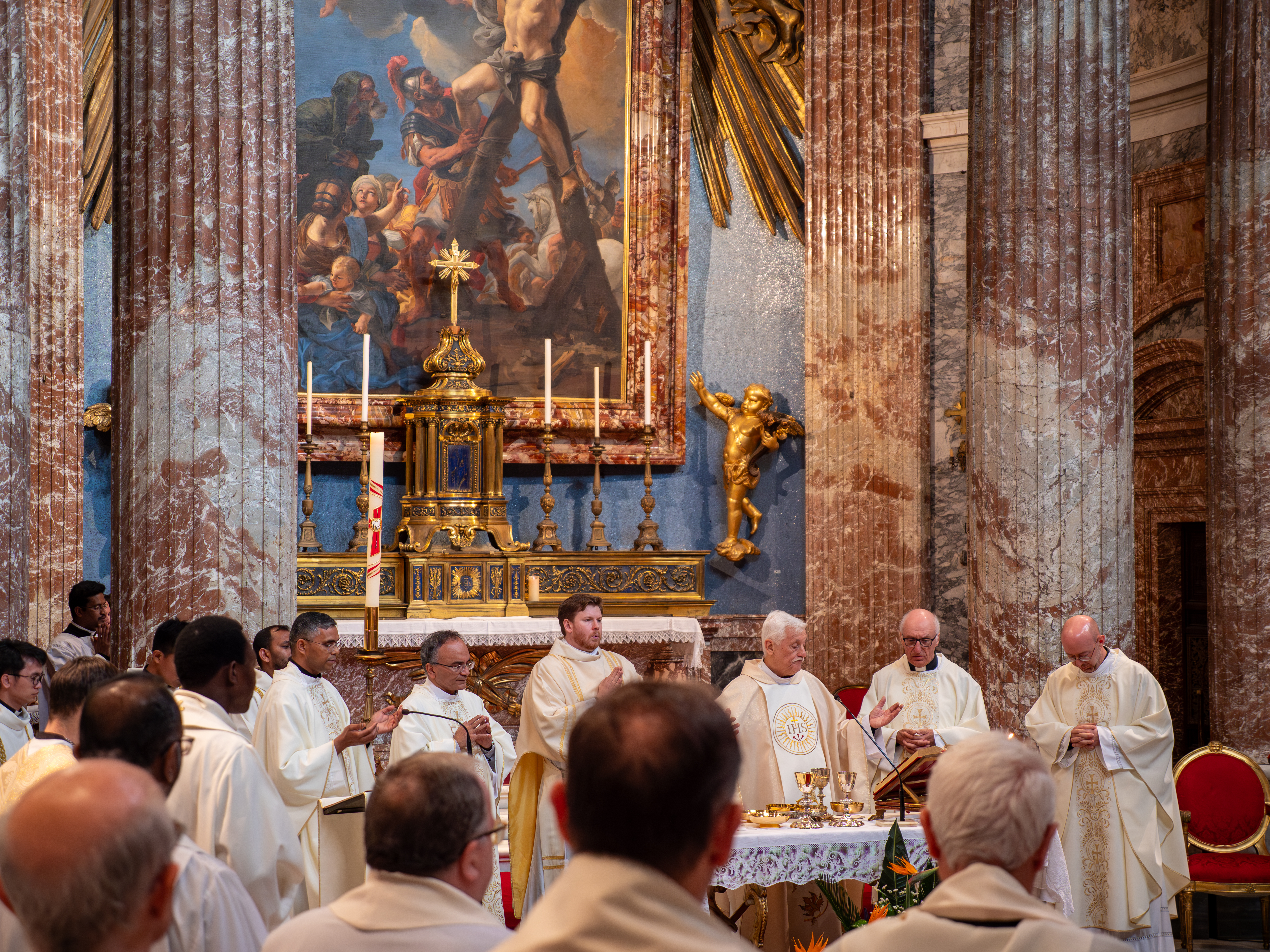
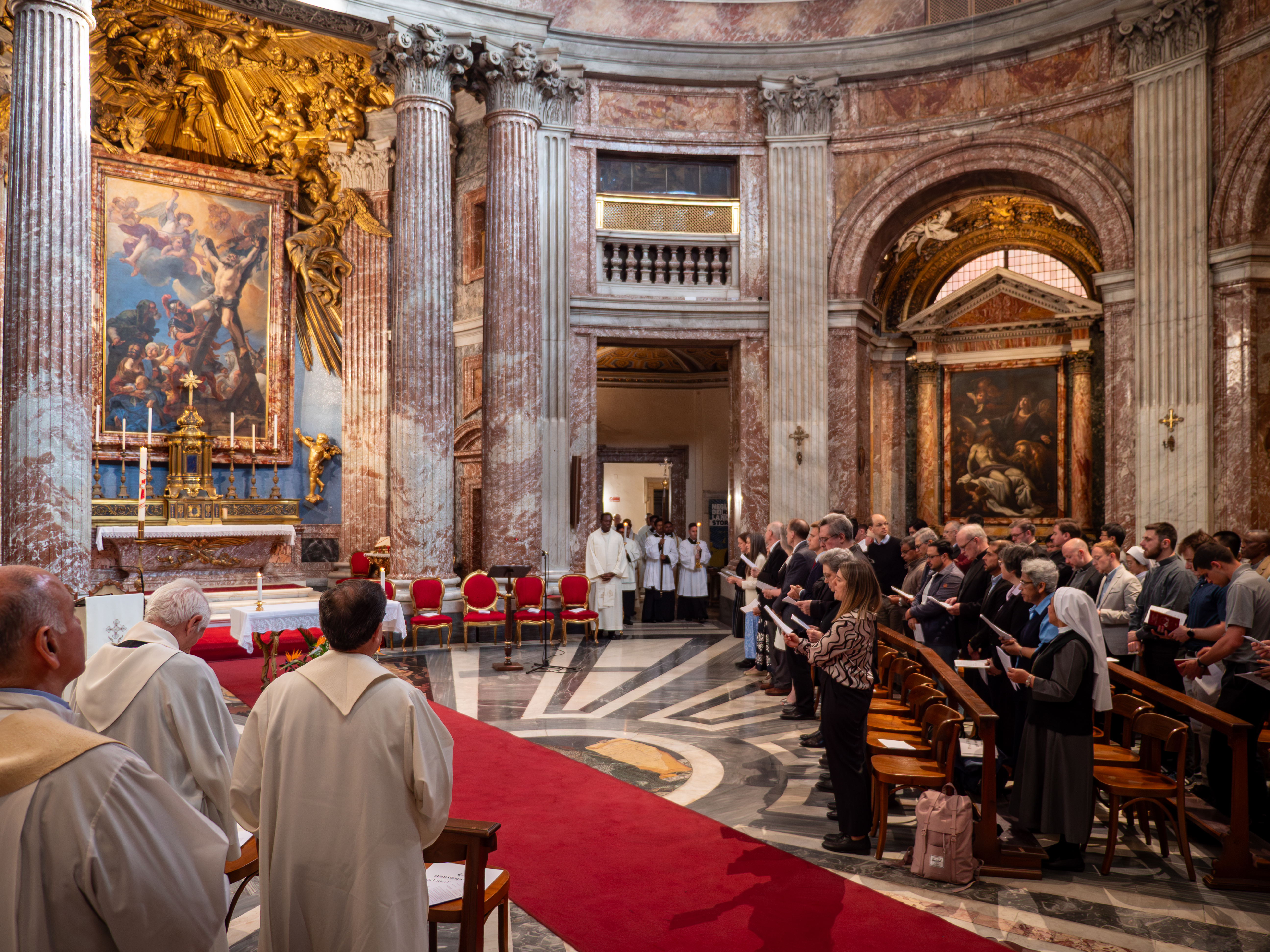
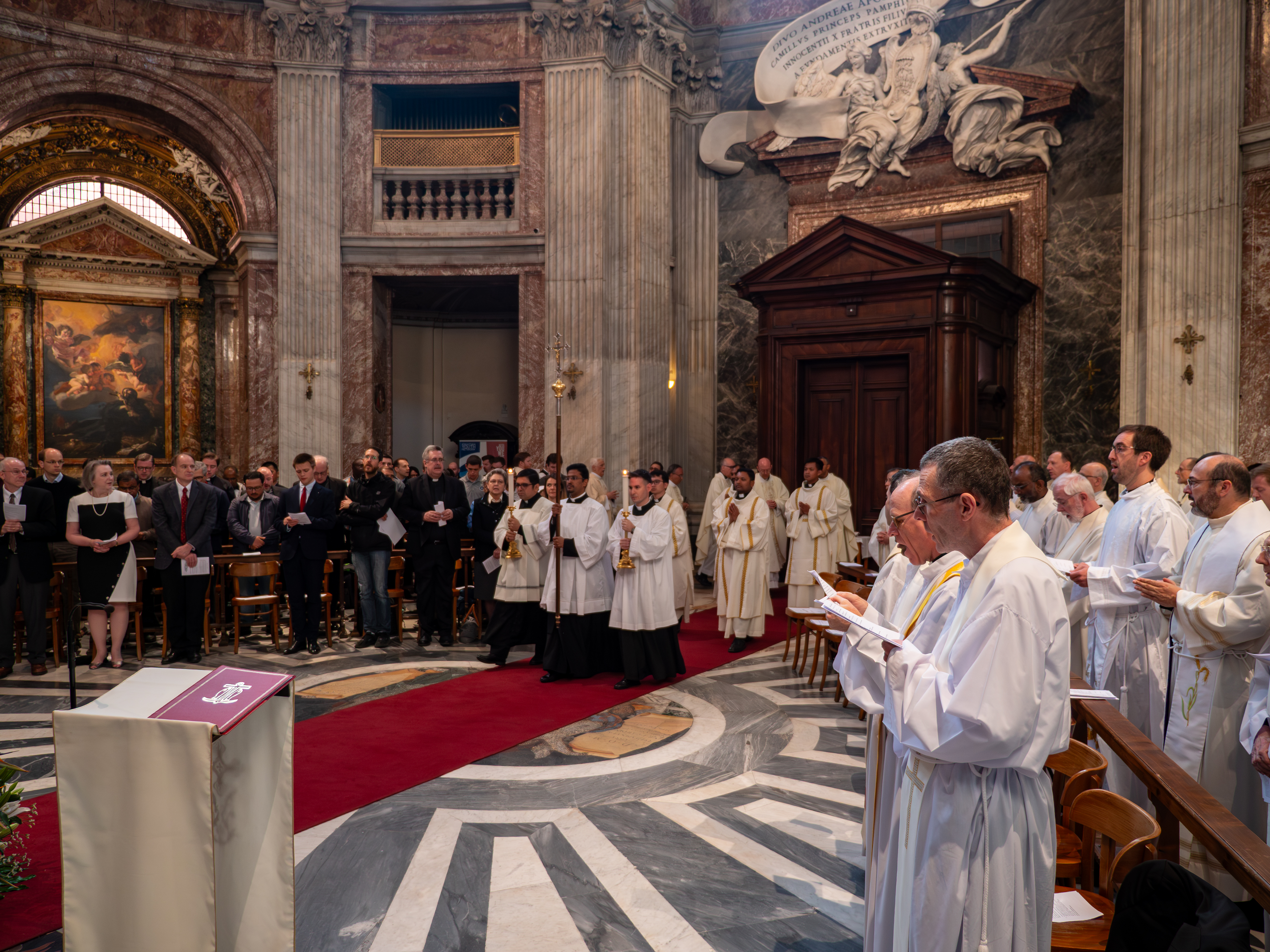
A few weeks ago I shared some reflections on taking my final vows as a Jesuit, a tremendously blessed moment for me. Today I thought I might add a few words and pictures about the place where I took those vows: the Church of Sant’Andrea al Quirinale.
Since Rome is packed with stunningly beautiful churches, sometimes those that would be at the top of the visitor’s itinerary anywhere else in the world end up being overlooked. Sant’Andrea al Quirinale is one of those. It should be numbered among the most important Jesuit churches in the world, but in Rome it has to compete with the Gesù–site of the body of St. Ignatius and the arm of St. Francis Xavier–and Sant’Ignazio–the onetime chapel of the Roman College, as the Gregorian University was first known. Both churches are enormous, paradigmatic examples of the baroque at its most overwhelming.
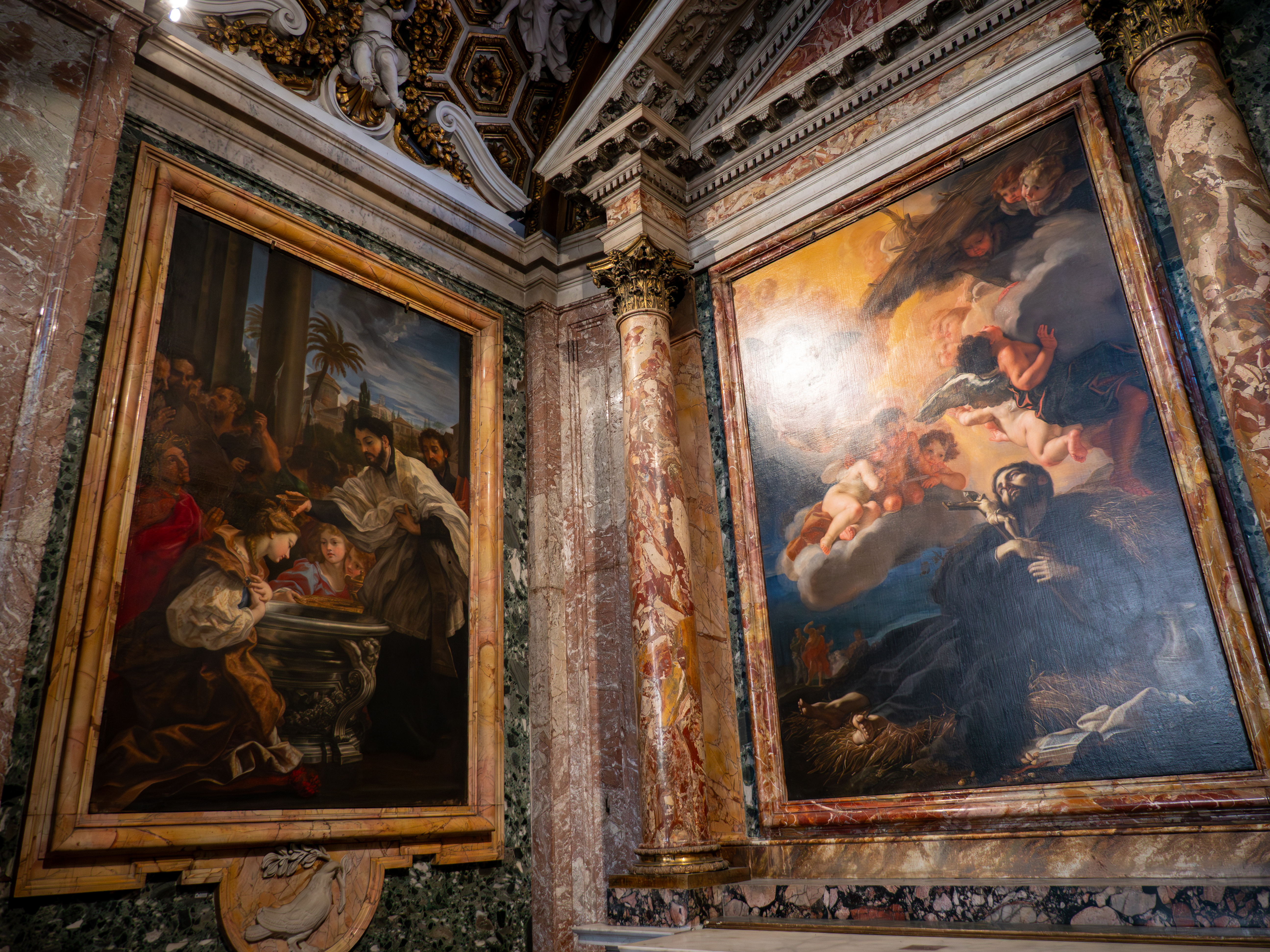
Sant’Andrea is tiny by comparison, but don’t let size mislead you. It was the chapel of the first Jesuit novitiate; in an adjoining room, one can visit the relics of St. Stanislaus Kostka, patron of Jesuit novices and of students, who died there in 1568 at the age of 17.
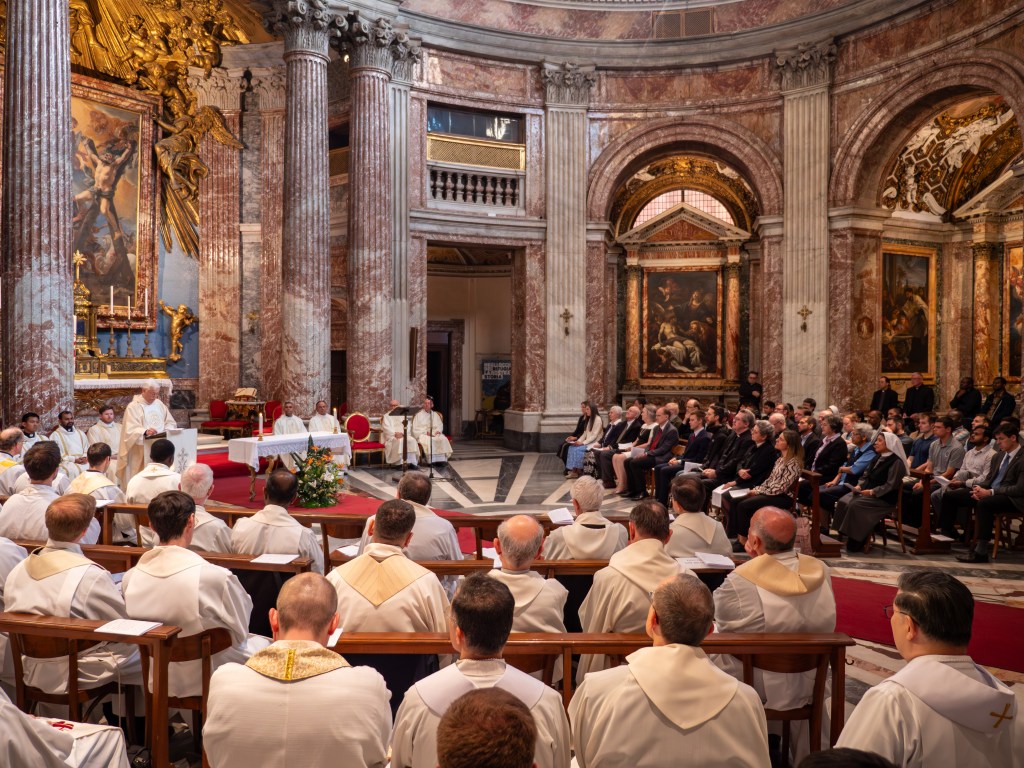
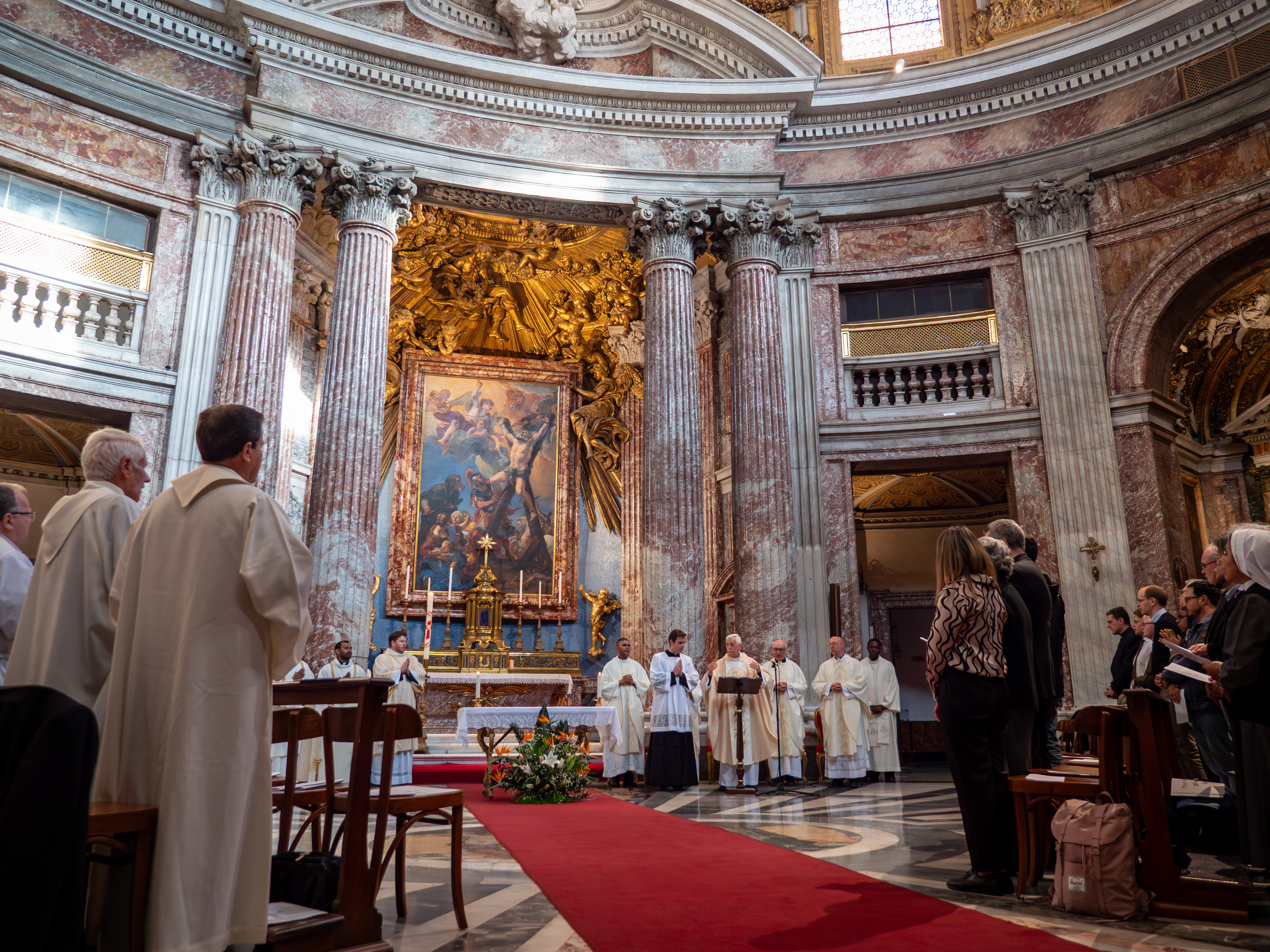
While it stood on the site of an early church dedicated to Andrew the Apostle, the present Sant’Andrea (built in 1658) was designed by Gian Lorenzo Bernini. Bernini, who was busy at the time decorating the interior of St. Peter’s Basilica and building the colonnade for St. Peter’s Square, refused to take a commission for Sant’Andrea. It was said to be his favorite work, and, as he aged, the great artist was sometimes seen sitting alone inside the church, enjoying its peaceful atmosphere.
The church is unusual, in that it’s built in the shape of an ellipse, giving it a welcoming and intimate feel. I chose to take my final vows there because of its great Jesuit history, but also because of the intimacy of the space itself. Whereas an ordination is a large public event that in some ways is a celebration of the Church’s sacramental life itself, final vows are more of a family affair, a commitment to the Society of Jesus, which is my home.
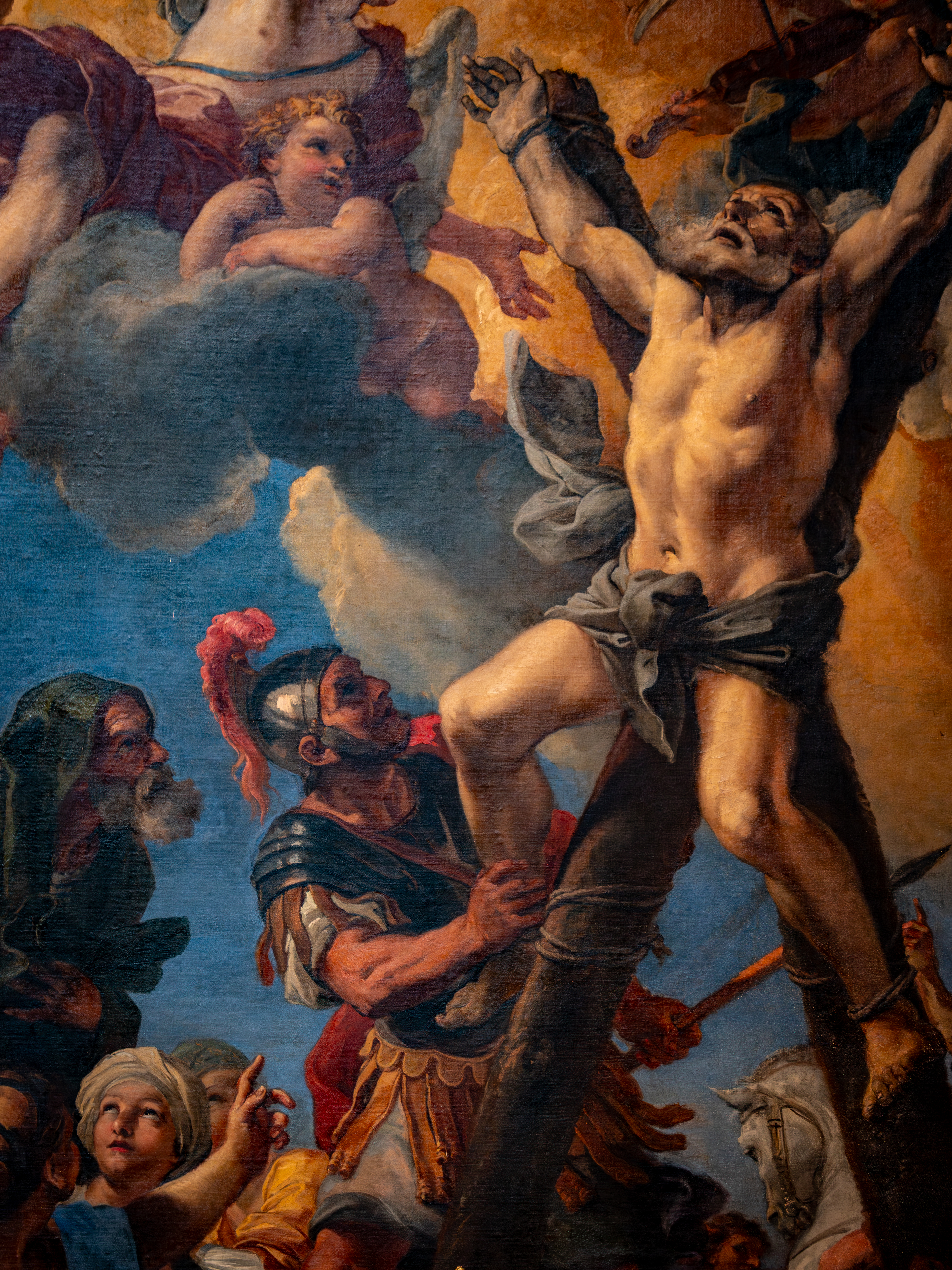
I also thought there was something appropriate about the connection to St. Andrew, the apostle who introduced his brother Simon to Jesus. Simon, of course, went on to take the early Church’s top job, as the Apostle Peter. I think of my own work as a teacher as a bit like Andrew’s. I hope to help my students come to know the Lord a little better, and I hope that they will go on to do great things for the Church. The Gregorian, after all, counts 28 saints and 16 popes among its alumni — so who knows who might be sitting in my classroom? I also chose to take final vows on the feast day of St. Peter Canisius because I wanted the celebration to happen during the Easter season, and Canisius, as a great educator, catechist, and evangelist, seemed a fitting Jesuit saint.
Please consider subscribing to this blog for occasional updates:


