Pope Leo on the liturgy

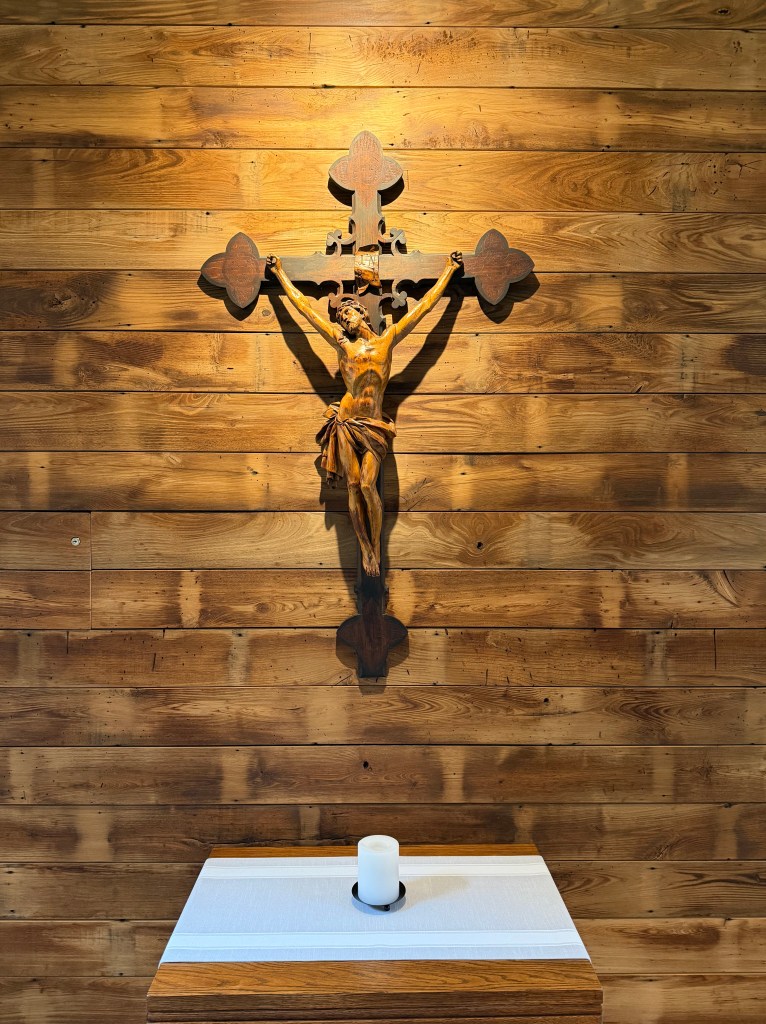
Prayer Chapel, Jesuit Retreat Center, Parma, OH

Yesterday I wrapped up a retreat for Jesuits about praying with the liturgy in Parma, Ohio. It was the second time I offered the retreat, and I was blessed to have another wonderful group of participants. As I’ve worked with young Jesuits in studies in Rome and encountered others around the world, I’ve sensed a renewed interest in celebrating liturgy well. (I made some brief remarks on the topic at the Jungmann Society Congress a few years ago.)

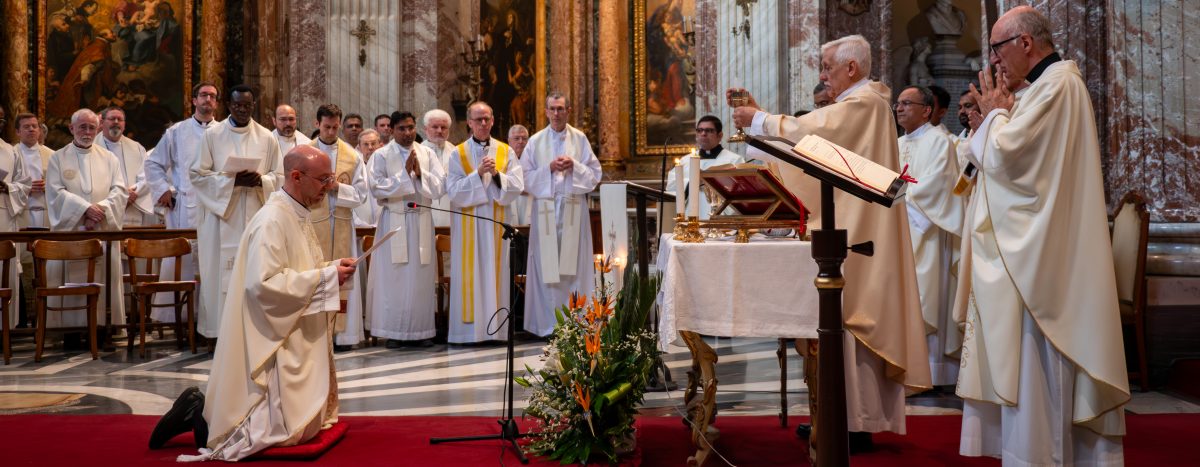
While working on my retreat conferences this year, I read several of the talks that Pope Leo XIV gave on the subject of liturgy at his Wednesday morning catechesis earlier this summer. The Holy Father has been reflecting on Sacrosanctum Concilium, the document from Vatican II dedicated to the liturgy. As to be expected, the Pope’s reflections are solid, touching on the document’s key strengths. In his first talk, for example, he points out that merely changing the rites was not the Council’s goal; instead, the Council wanted us to appreciate just what liturgy is — an encounter with Jesus.

In drafting this Constitution, the Council Fathers sought not only to undertake a reform of the rites, but to lead the Church to contemplate and deepen that living bond which constitutes and unites her: the mystery of Christ. Indeed, the liturgy touches the very heart of this mystery: it is at once the space, the time and the context in which the Church receives her very life from Christ. For in the liturgy, “the work of our redemption is accomplished” (SC, 2)
Continue reading “Pope Leo on the liturgy”

Signs of hope and renewal for the Church in Europe

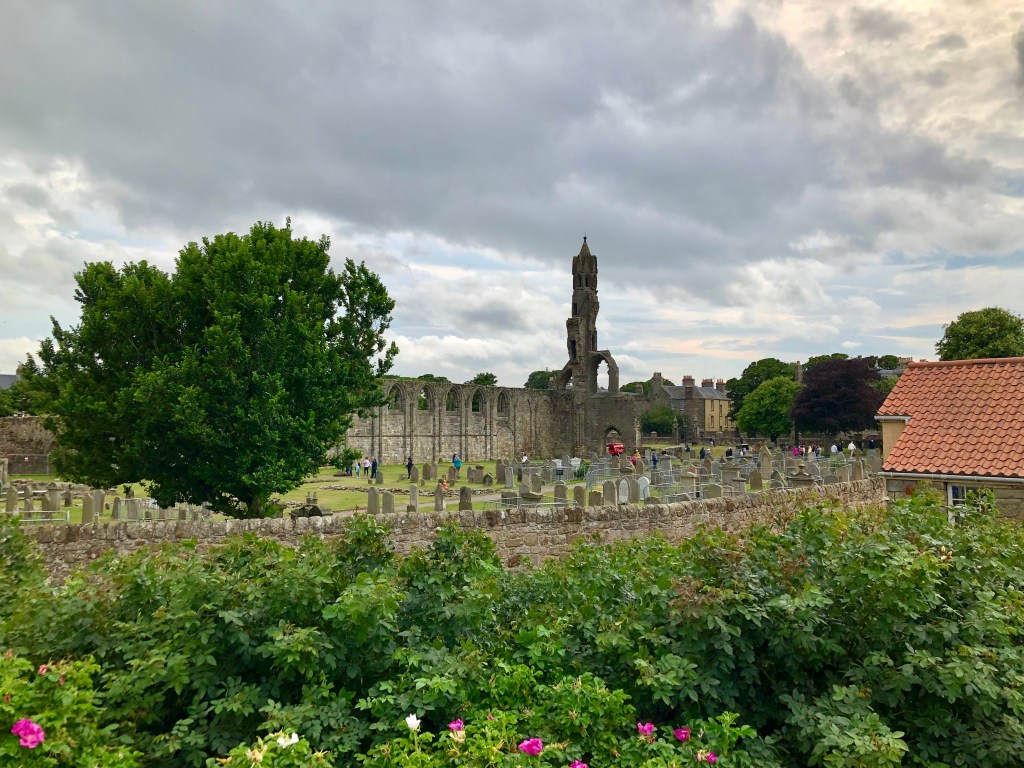
Ruins of St. Andrew’s Cathedral, Scotland

Today, the Church in Europe is sometimes portrayed as ready for last rites, and the decline in Church participation, vocations, and the general vibrancy of the faith there since the mid-1960s is undeniable. But, if the history of Christianity on the continent has taught us anything, it is that the Church can survive ups and downs because she is endowed with a supernatural capacity for renewal.

My own decade living in Europe has taught me that, in times like ours, we need to be attuned to the danger of historical determinism and cultural conformity. We must resist the temptation to think that history moves in an inevitable direction so we might as well just go along with the times. Such an attitude is a recipe for managed decline and eventual extinction.

In contrast, as I’ve noted in previous posts on the Church in Scandinavia (reflecting on my trip to Sweden and and the fine work of Norway’s Bishop Erik Varden), times such as ours present unexpected opportunities if we know where to look and are bold and unapologetic enough to seize them.

Continue reading “Signs of hope and renewal for the Church in Europe”

How do we choose to suffer? Homily for the 15th Sunday in Ordinary Time

The Sower, Vincent Van Gogh 1888

Homily for the fifteenth Sunday in Ordinary Time (Year A).

“Brothers and sisters,” Saint Paul says, “I consider that the sufferings of this present time are as nothing compared with the glory to be revealed in us.”

In other words, Saint Paul recognizes that the present time, the world in which we live, is characterized by suffering—pain and weakness, shame and fear, insults and injustices. Human life is not entirely suffering, but suffering is present. Christianity does not promise us a life without it.

But if Saint Paul does not promise to eliminate suffering, what is his message? His message is that suffering can help us obtain a greater glory. In fact, if we read the Gospel with Saint Paul’s words in mind, the meaning of Jesus’ message today becomes clearer.

Jesus uses the image of the seed, and a seed, as we know, must be buried in order to grow. Before taking on its new form, before becoming a plant and blossoming, a seed must lose its old form—it must, in a certain sense, die.

Continue reading “How do we choose to suffer? Homily for the 15th Sunday in Ordinary Time”

What does a missionary Church look like today?

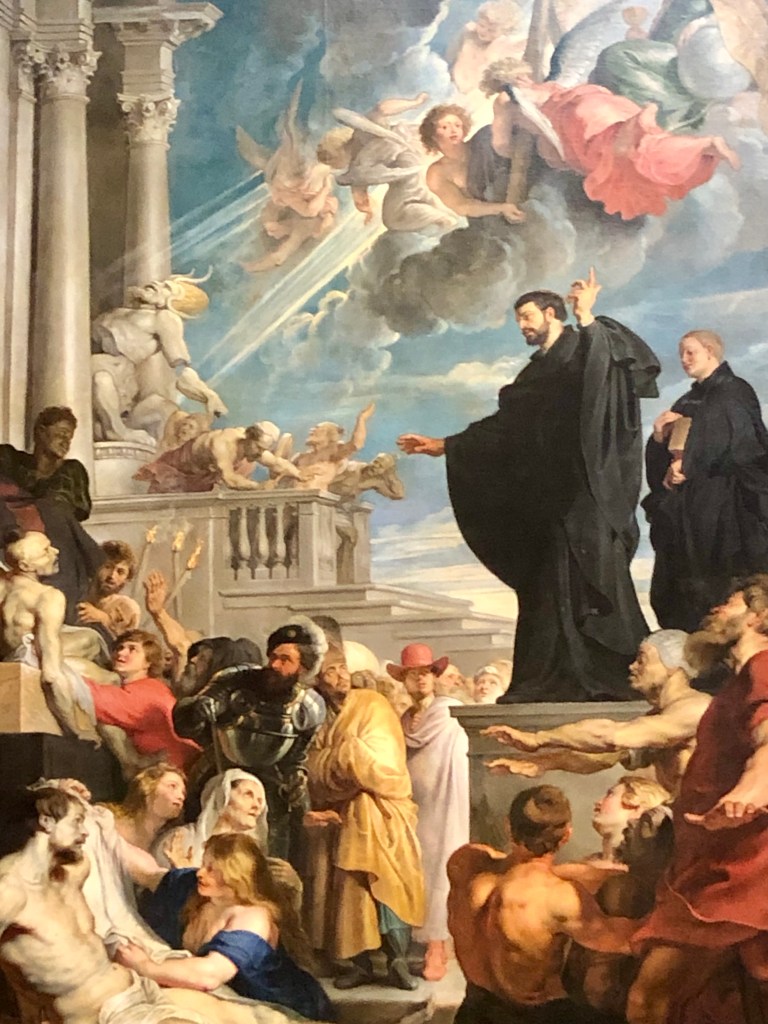
The Miracles of St. Francis Xavier, Peter Paul Rubens 1617

I was delighted to sit down a few weeks ago to talk to Hannah Brockhaus of the National Catholic Register about Pope Leo’s call to be a missionary Church. The article is out now in the Register: “Pope Leo XIV Wants a Missionary Church — What Does That Look Like Today?” There are lots of important insights in the article from a number of top theologians and Church officials — we talk about the message, the changing cultural situation in which the Church finds herself, our motive for evangelization, the recent increase in adult conversions, and more. Here’s a snippet, but be sure to read the whole article:

From around 1500 to 1800, we thought about missionaries as being sent out from a Christian heartland, [said Father Lusvardi, the author of Baptism of Desire and Christian Salvation].

Today, he explained, “we’re missionaries in the same way that they would have been in the early Church. … The whole world is mission territory, which I think actually makes the urgency of mission even greater.”

Father Lusvardi noted that missionary activity used to go hand in hand with economic, educational and healthcare development.

Those “don’t necessarily go together anymore. … I think that we have to be even more up front with acknowledging the uniquely supernatural dimension of Christianity and what it gives — it gives us a relationship with God, period. And we don’t need to justify that on any other grounds,” he said. “A relationship with God is valuable in and of itself.”