Why literature?

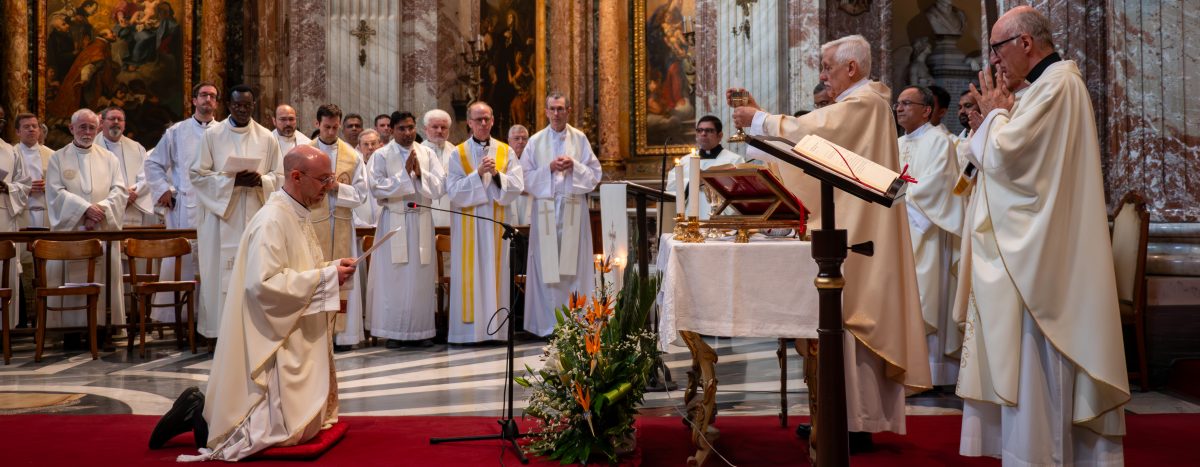
I was delighted earlier this month to be able to speak at the book presentation of a legendary member of the Gregorian faculty, Fr. Joseph Carola, S.J. Fr. Carola recently published his first novel Dragons: A Roman Requiem this summer and invited me to say a few words at the book presentation. The talk gave me the opportunity not only to talk up a great novel, but also to reflect on why we read and write literature to begin with.


Thank you, Fr. Bagasse, for the introduction, and thank you, Fr. Carola, for the invitation to speak today and for involving me in the entire process of the production of Dragons.  Outside of Tolkien or Game of Thrones, few people can say that they have witnessed the birth of dragons.  But I can now say that I have.

I followed the book’s gestation via energetic reports at the breakfast table in the Gregorian Jesuit community.  I heard descriptions of places that would appear in the novel—the aptly named Villa Mondragone in Frascati; the former Jesuit collegio in Orvieto; the famous breach in the wall near the Porta Pia as seen from Villa Bonaparte, the French embassy to the Holy See.  I found out that more—many more—exploratory trips went into the production of the novel, including a ferry ride across the English Channel—it’s a good thing, none of the novel’s characters fell overboard or Father Carola might have tried to swim it.

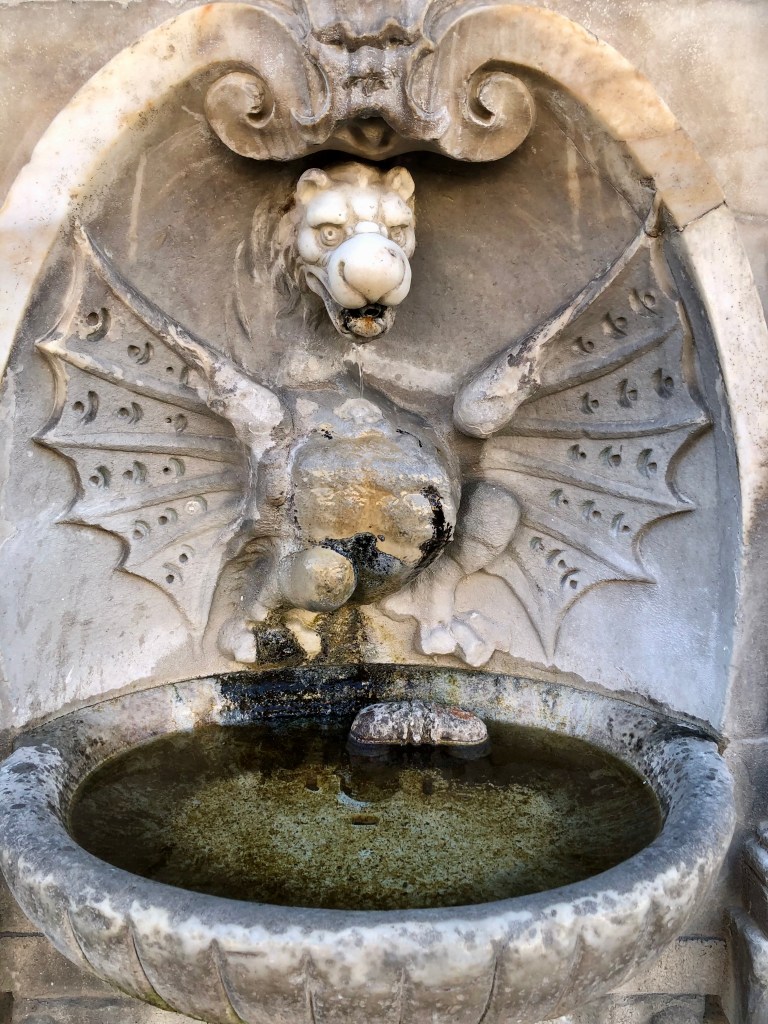
Eventually, I read drafts and witnessed the dragons begin to spread their wings.  I saw, as so often happens in that mysterious process by which literature comes into being, the author himself surprised as he realized what his own characters would do.  I found myself noticing—Roman readers beware, because this is a side-effect of the novel—I started noticing dragons everywhere—on buildings, in fountains, on floors, in mosaics, looking down from windows, peaking around corners.

For me, seeing the book emerge from the quarry of Father Carola’s imagination was part of the fun of the project.  And fun it was, and is.  Appropriately so.  The Roman poet Horace, after all, wrote that the purpose of literature is both to instruct and to delight.  And even though the novel’s subtitle “A Roman Requiem” hints at the somber trajectory of the events it describes, the book is not without its moments of fun: the saucy dialogue of the Jesuit brothers—Brother Paglia, Brother Pampana, and Brother Azzopardi—who provide color commentary on current events, rolling their eyes at the fathers upstairs who remain lost in their theology while making the practical preparations necessary for the community’s survival amid the nineteenth century’s revolutionary violence.

Continue reading “Why literature?”

The difference that Christ makes

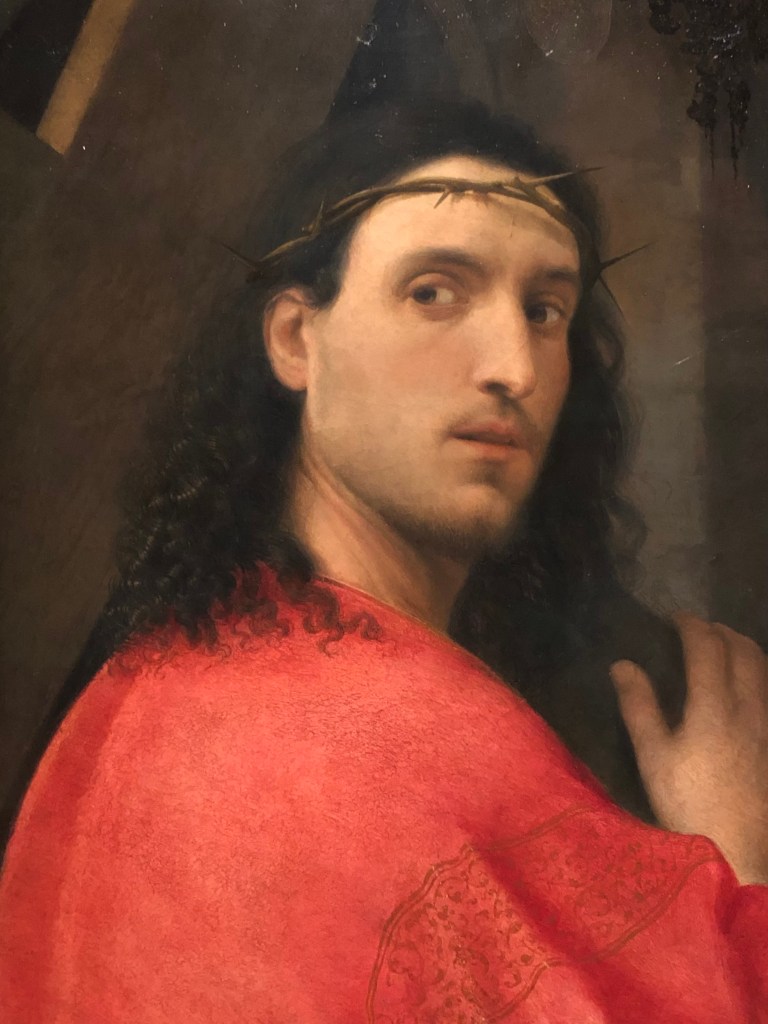
Christ carrying the Cross, Venetian 1515

Homily for Tuesday of the Twenty-ninth week in Ordinary Time (Year 2).

Perhaps Saint Paul’s description of the life of the Ephesians before their incorporation into Jesus Christ seems overly blunt. You were far off, Paul says, strangers, excluded, separated from God by a wall of enmity. We are not used to this kind of rhetoric.

But Paul’s blunt words are not written to reproach the Ephesians for their past life. They are already converted, and now they do live in the friendship of Christ. Paul’s words are written so that the Ephesians do not take this conversion for granted. This message is perhaps even more relevant to us, who were baptized as children and grew up as Christians.

The friendship with God that we enjoy in Christ is not the condition into which a person is born. It is a gift obtained by Jesus through the cross and shared with us in baptism. No other religion promises friendship with God or the divine sonship shared with us in the sacraments. Not the pagan religions of antiquity, not Buddhism, not Islam.

Christ is unique. His sacrifice, his love, and his friendship must never be taken for granted.

Readings: Ephesians 2:12-22; Luke 12:35-38

Original: Italian

October 22, 2024

Gregorian University Chapel

Rome

Jesus’ not-so-nice message

Homily for Thursday of the 28th Week in Ordinary Time (Year 2).

(Going through some old files, I came upon this reflection from my days studying philosophy at Loyola University Chicago.)

Today’s gospel is a difficult one to hear, frankly, because Jesus is not very nice.  Building off of yesterday’s condemnation of the Pharisees as self-serving, Jesus today accuses them of complicity in the murder of the prophets.  On the surface of it, his argument is not even particularly fair.  Not only are the opponents he addresses guilty of murder, but they are charged “with the blood of all the prophets shed since the foundation of the world.”  One yearns for the moderation of a good old-fashioned political attack ad.  

One is tempted to whisper in Jesus’ ear, “Don’t you know you aren’t going to get anywhere by condemning people.”  “You can’t just beat people over the head with the truth.”  “All this fire and brimstone really isn’t that pastoral.”  I could stand up here and try to spin Jesus’ words into something inoffensive, but they are offensive.  In fact we know they are offensive because at the end of Jesus’ speech, the scribes and Pharisees plot to kill him.  And you don’t try to kill someone for words that while perhaps a tad exaggerated, really are basically calls just to be nice.  No one has ever suffered martyrdom over Chicken Soup for the Soul.

Continue reading “Jesus’ not-so-nice message”

Discerning Jesus

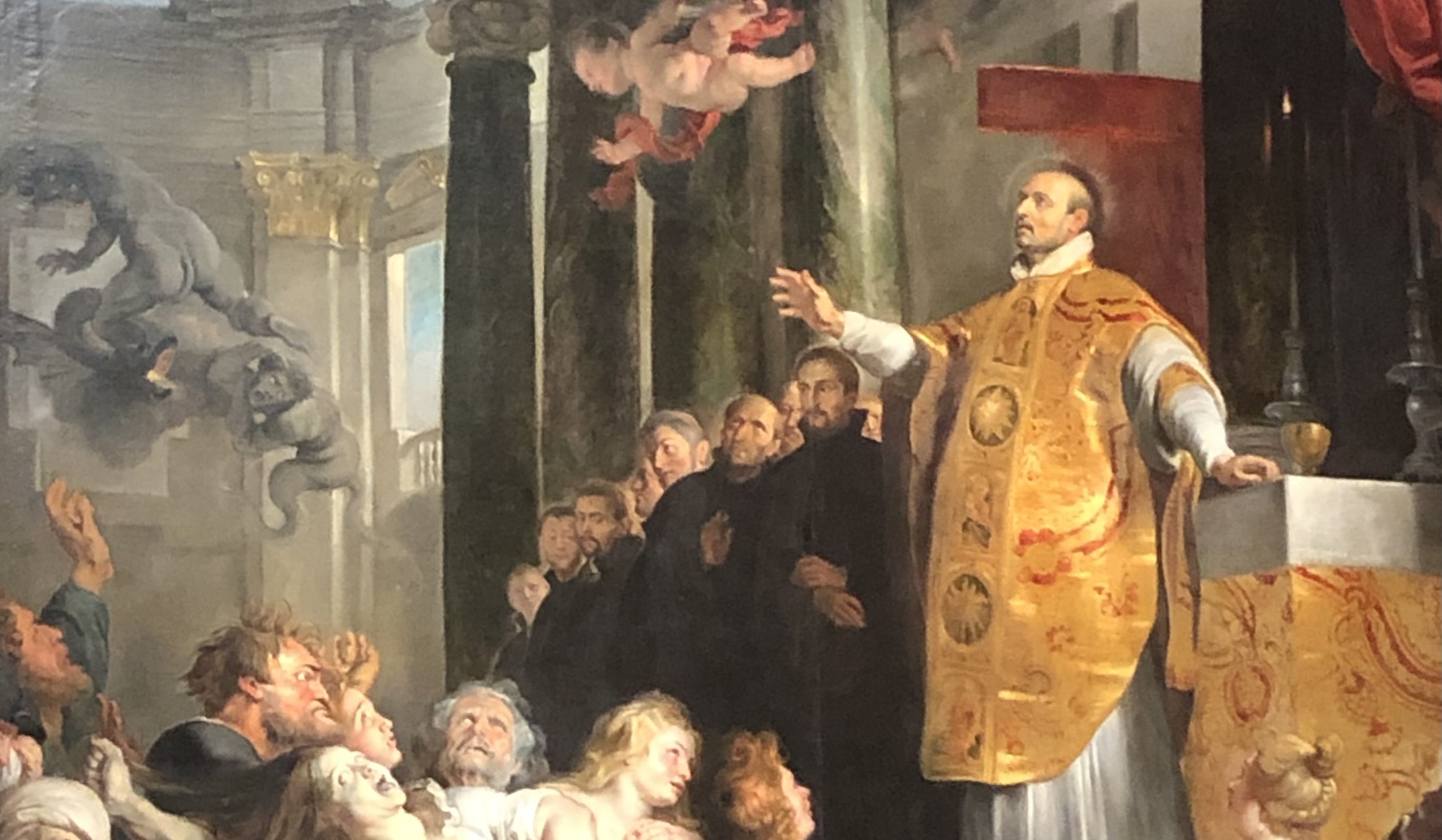
The Miracles of St. Ignatius, Peter Paul Rubens 1617-8

Homily for Friday of the Twenty-seventh week in Ordinary Time (Year 2).

Today’s Gospel passage begins with a question of discernment. Where does the power that Jesus manifests in his actions come from? From God or from Beelzebul? Jesus drives out demons, and his response seems to me like a “rule for discernment” that Jesus suggests in another passage: “Every good tree produces good fruit, and every bad tree produces bad fruit… Thus, by their fruits you will recognize them” (Mt 7:16-20).

Faithfulness to Jesus, lived with integrity, gives us a stability and a peace that allows for growth. Jesus creates a peace in which life can flourish. Even if the circumstances surrounding us are marked by disorder and conflict, we must try to maintain that inner peace which is the sign of the Holy Spirit. The final words of the Gospel, however, warn us not to confuse an empty space with the presence of the Holy Spirit. It is not enough to eliminate demons. We must also invite the Lord Jesus to take up residence in our home.

He is the source of life, and the Gospel also contains the most fundamental question for discernment of all: are we with him or against him? “Whoever does not gather with me scatters,” says the Lord. But whoever is with him will find eternal life.

Readings: Gal 3:7-14, Luke 11:15-26

Original: Italian

October 11, 2024

Gregorian University Chapel

Rome