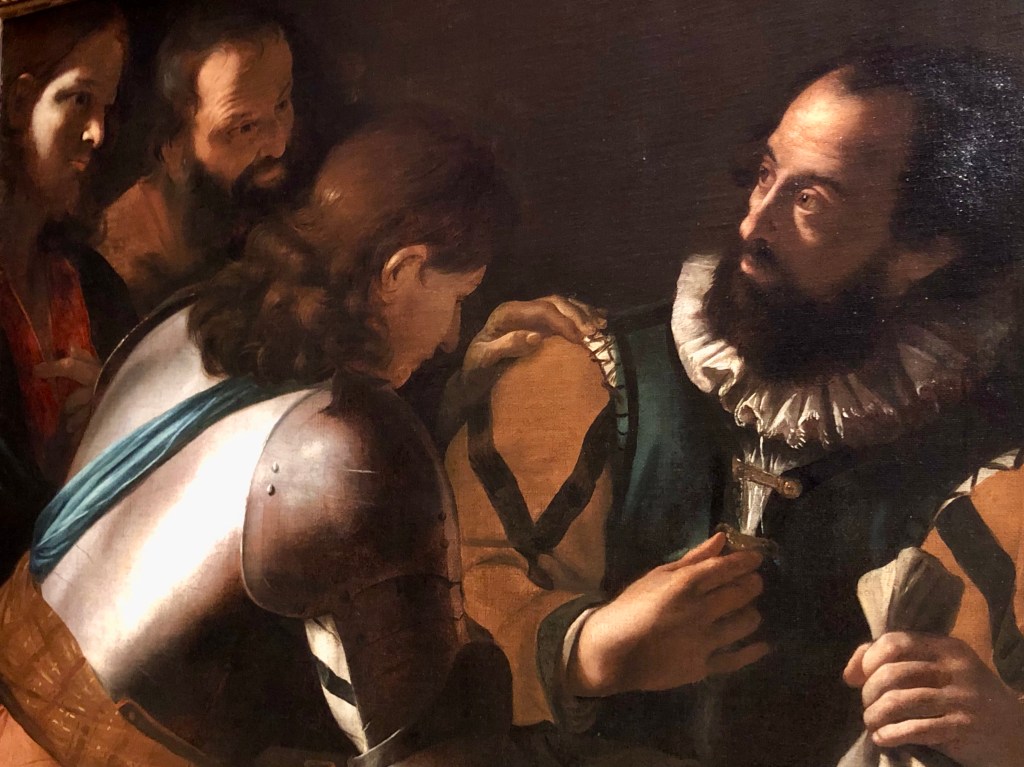
Two years ago on the eve of St. Matthew’s feast day, I posted a reflection on one of Rome’s most spectacular artistic compositions: Michelangelo Merisi da Caravaggio’s St. Matthew cycle. This year I thought I’d share some pictures of a lesser-known depiction of the same event by an artist from the generation that followed Caravaggio, Mattia Preti (1613-1699).
Preti was born in Calabria three years after Caravaggio died, though he worked in many of the same locales as the earlier artist, among them Rome, Naples, and Malta. He also clearly shows the influence of Caravaggio’s style: the realism and intensity, religious passion, and the effect–as spiritual as it is artistic–of radiant light emerging from the darkness.
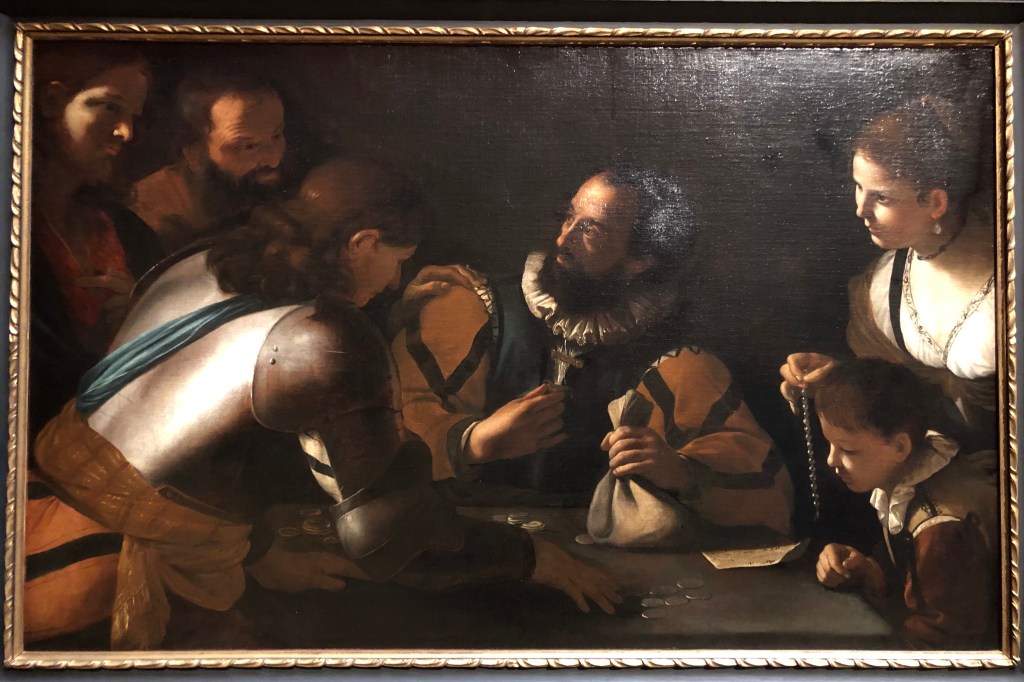
I happened upon Preti’s “Calling of St. Matthew” in the Kunsthistorisches Museum in Vienna earlier this year, and the influence of Caravaggio is unmistakable. In my earlier post on the St. Matthew cycle, I noted that Caravaggio himself grew up as an artist in the shadow of Michelangelo; his work reveals both admiration for that Renaissance great and perhaps a tinge of rivalry. Something similar could be said of Preti’s work.
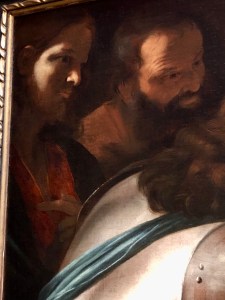
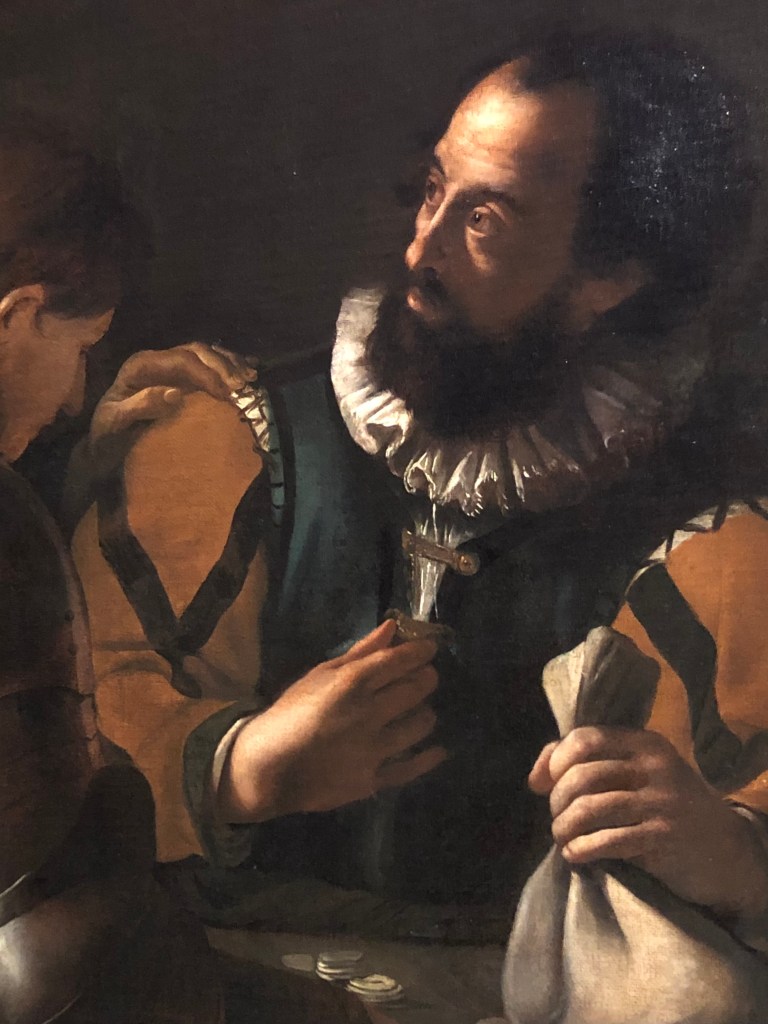
Preti’s Matthew is more visibly shocked by the call than is Caravaggio’s; his eyes are wide and alarmed and his lips almost seem to tremble. His right hand clasps his chest, so there is no interplay of pointing fingers as in Caravagggio’s work. In fact, Preti’s Christ points not to Matthew, but to himself, to his own heart. In Caravaggio’s work, that finger is more ambiguous and dramatic, combining accusation and call; it hints at God’s life-giving power depicted so dramatically on the ceiling of the Sistine Chapel.
Preti’s Christ–who, it must be said, seems rather crammed into the edge of the painting and does not command the scene in the way he does in Caravaggio’s painting–instead indicates the destination of the call: his own heart. The drama takes place behind Matthew’s eyes as he questions what that gesture means for him. While one of the tax collector’s hands goes to his heart, the other clutches a plump money bag on the table in front of him. Off to the other side, a woman accompanied by a child holds out a pearl necklace, hinting at the desperate straits to which she has been reduced by Matthew’s occupation.
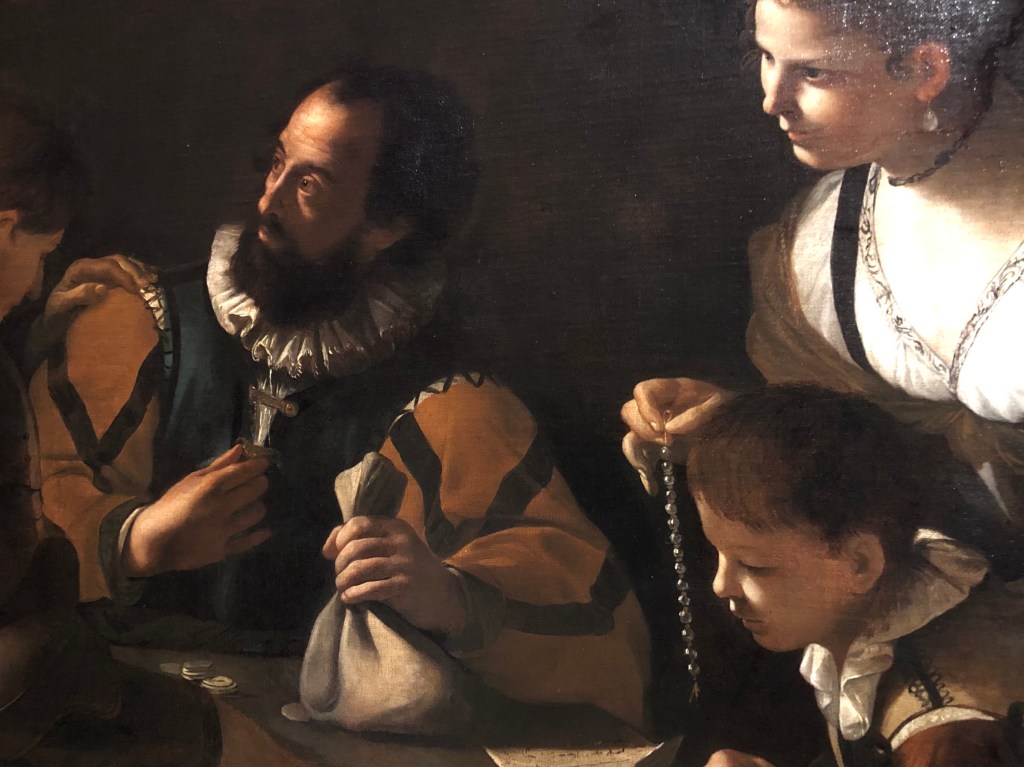
Preti had a far longer and less tempestuous career than Caravaggio, though his works too show a considerable religious sensibility. His “Calling of St. Matthew” was one of his early works, painted sometime between 1635-40 while he was in Rome. There is a bit less dash in Preti’s work than what one finds in Caravaggio, but it still reveals an artist who has seriously pondered the depths of conversion and rebirth.
Please consider subscribing to this blog:


