Today, the Church in Europe is sometimes portrayed as ready for last rites, and the decline in Church participation, vocations, and the general vibrancy of the faith there since the mid-1960s is undeniable. But, if the history of Christianity on the continent has taught us anything, it is that the Church can survive ups and downs because she is endowed with a supernatural capacity for renewal.
My own decade living in Europe has taught me that, in times like ours, we need to be attuned to the danger of historical determinism and cultural conformity. We must resist the temptation to think that history moves in an inevitable direction so we might as well just go along with the times. Such an attitude is a recipe for managed decline and eventual extinction.
In contrast, as I’ve noted in previous posts on the Church in Scandinavia (reflecting on my trip to Sweden and and the fine work of Norway’s Bishop Erik Varden), times such as ours present unexpected opportunities if we know where to look and are bold and unapologetic enough to seize them.
Over the course of the first half of this year, I was able to take three short trips within Europe, each of which gave me unexpected signs of hope. I’ve already written extensively about the power and draw of Barcelona’s Sagrada Familia. The tremendously successful visit of Pope Leo XIV to Spain only confirms me in the conviction that Antoni Gaudí’s basilica will be an icon of hope for centuries to come.
Just after classes ended, I took a short trip to Vienna, Austria, to visit the European Mission Campus and Zentrum Johannes Paul II. The European Mission Campus is a new initiative dedicated to preparing well-formed lay leaders for the Church; I gave their first group of students a talk on sacramental theology via Zoom last year and was happy to see the place and meet folks in person. Great people doing great work.
I was also deeply impressed by the work of the Zentrum Johannes Paul II., an innovative parish in the center of Vienna. I was especially interested to learn more about their way of celebrating Christian Initiation for Adults. I was moved to be present when two young men were admitted to the catechumenate and had a chance to hear some of the stories of those recently baptized at the Easter Vigil. The Zentrum has taken a step beyond mere parish maintenance and is dedicated to evangelization in the contemporary context. Even the way that the Zentrum is constructed is woven into the fabric of the modern city; the building in which it is located contains a hotel, work space, a cafe — all of which are integrated in different ways into the life of the parish.
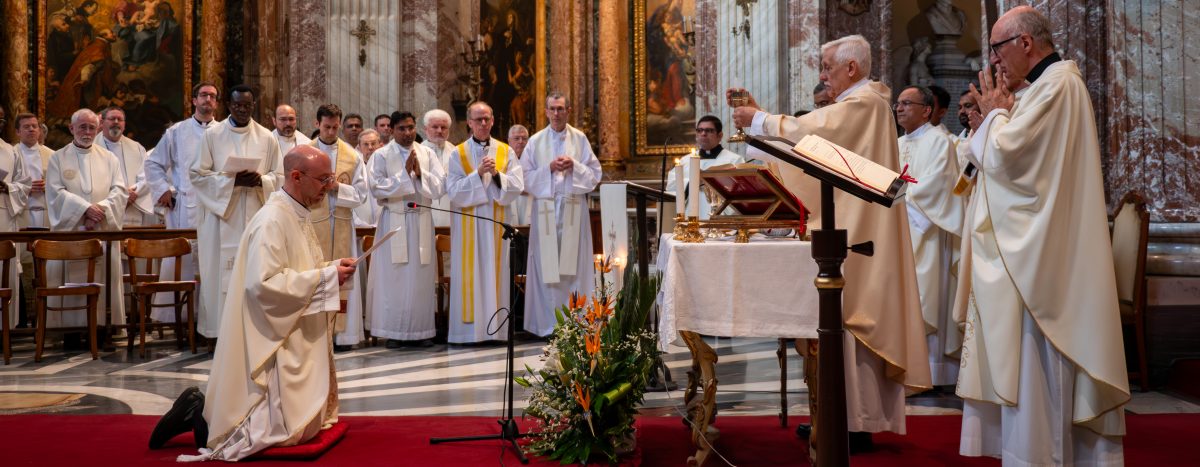
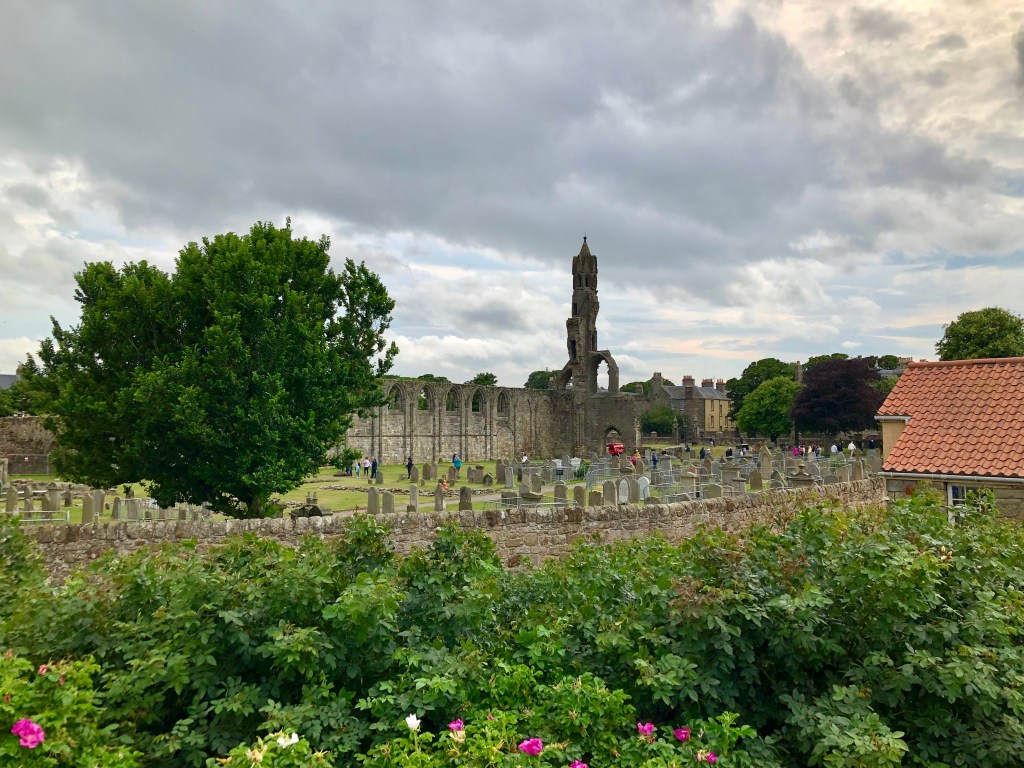
And, finally, the summer included my first trip to Scotland to celebrate the ordinations of two new priests I had the privilege of teaching while they were studying in Rome. Fr. Kieran Burt was ordained in June and is already hard at work in his parish, and Fr. Matthew McCafferty couldn’t get enough of the Gregorian University (who can blame him?) and will be back to study canon law next year. The Church in Scotland is truly blessed that men of such caliber will serve there as priests in the future, as well as by the other wonderful Scottish Catholics I met on my trip and through my association with the Pontifical Scots College in Rome.
“The harvest is plentiful, but the laborers are few; pray therefore the Lord of the harvest to send out laborers into his harvest” (Luke 10:2).


2 thoughts on “Signs of hope and renewal for the Church in Europe”