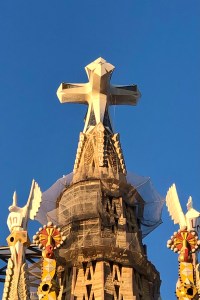
Following up on my article in America about the Sagrada Familia and looking forward to Pope Leo XIV’s visit to Spain, I had a chance to sit down at the beginning of the month with Robert Duncan, host of Vatican Access, a new podcast from Catholic News Services.
It was a great conversation, and I was happy to discover this excellent new podcast. You can watch the interview here: “Why Pope Leo Chose Sagrada Família.”
Readers might also be interested to check out the 20th Anniversary Issue of Dappled Things magazine. The fact that this unique contribution to the Catholic literary scene has been going for two decades is indeed worth celebrating, and I was honored that they included one of my stories from 2017 in an anthology of their favorites. The story has dystopian ring, which in retrospect feels almost prophetic….
Here’s a final rundown of recent posts on Gaudí and the Sagrada Familia:
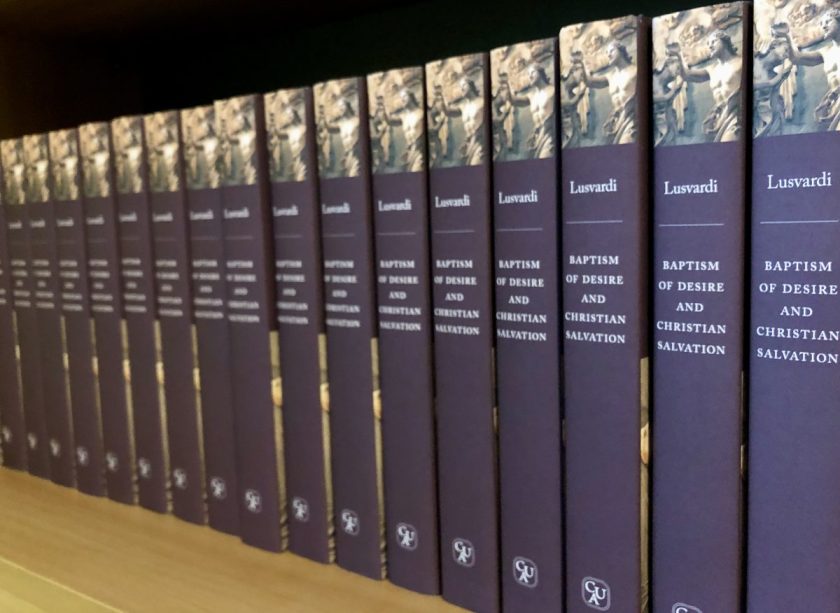
A number of reviews and reactions to Baptism of Desire and Christian Salvation have come out in the past few months from scholars who have recognized the book’s importance not only for the field of sacramental theology, but for other areas such as missiology and moral theology as well.
I was especially delighted to read Dom Hugh Somerville Knapman’s appreciative words in The Downside Review. Some very important — but today largely overlooked — debates over limbo, the eternal destiny of unbaptized infants, and baptism were hashed out in the pages of The Downside Review in the mid-twentieth century, and I cite some of them in Baptism of Desire and Christian Salvation. It is gratifying — and humbling — to see my own contribution become a part of this much longer and larger conversation.
Dom Knapman writes
It is to Anthony Lusvardi’s credit that he has revisited such an unfashionable doctrine, and so well… More importantly, even most importantly for this reader, Lusvardi confronts us with the centrality of baptism to the gift of salvation in Christ. Anyone who teaches baptism, especially at secondary and tertiary levels, will benefit enormously from Lusvardi’s work…
Lusvardi explains masterfully and accessibly how authentic doctrinal development plays out, as the Church addressed and overcame these apparent challenges to the fundamental doctrine of the necessity of sacramental baptism. What he reveals is that baptism always remains necessary, but also that in cases of strictly-defined inability, it can be attained by modes other than water, that is by blood or desire. Baptism by water, blood, or desire all achieve the same end: conformity to and participation in the death and resurrection of Christ.
While Dom Knapman appreciated the sacramental dimensions of the work, Dr. Gavin D’Costa, one of the world’s top scholars in the theology of world religions and missiology, notes its importance for those fields. In his review in Angelicum, D’Costa picked up on the parallels between my book’s historical analysis and Servais Pinckaers’s seminal The Sources of Christian Ethics, “where Pinckaers argued a similar thesis about Christian ethics — from Christologically centered praxis and the pursuit of virtue, to emphasizing duty, obligation and juridical categories.” Thinking about baptism or salvation primarily in terms of such categories, I argue, led to a distorted picture which began to come apart in the nineteenth and twentieth centuries.
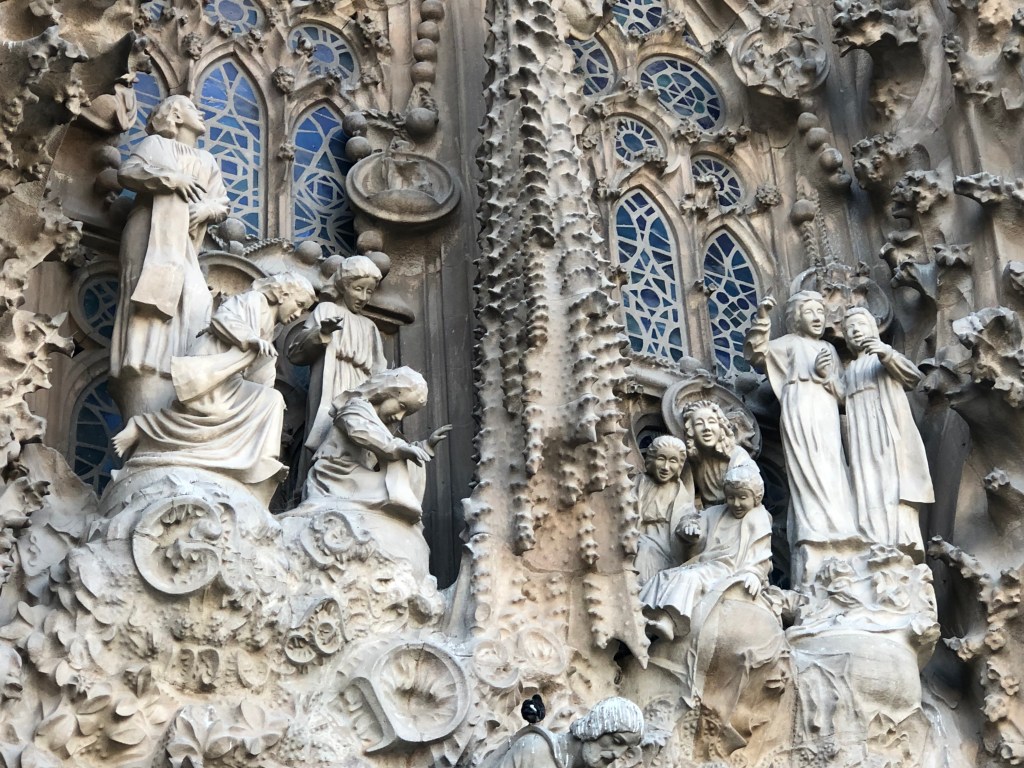
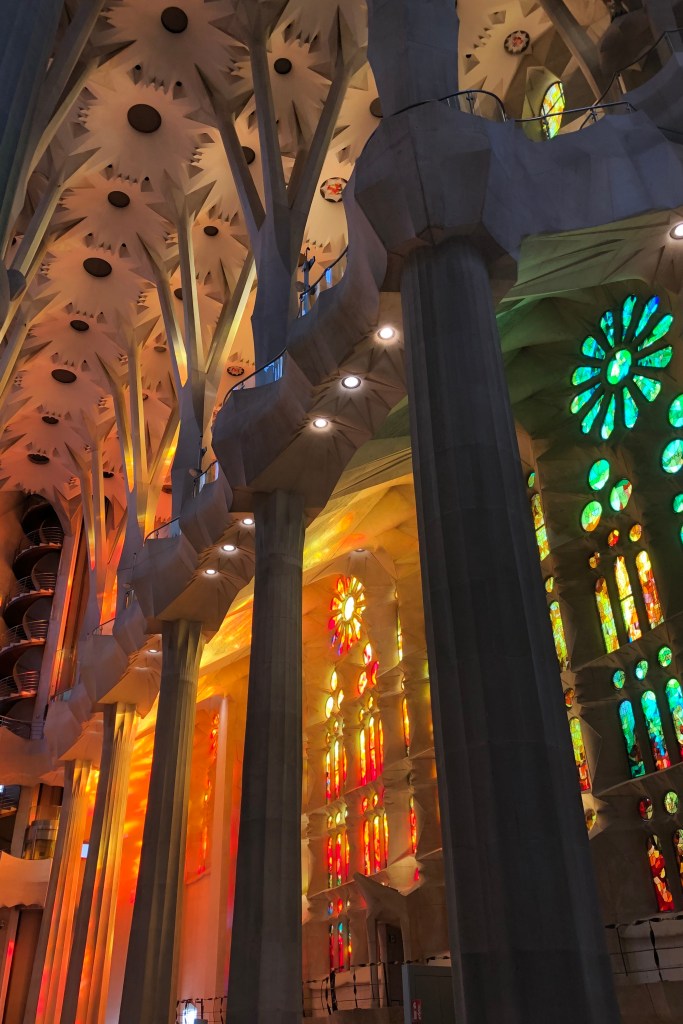
Next week Pope Leo XIV will visit the Basilica of the Sagrada Familia in Barcelona. I have been reflecting on this unique gem of modern architecture a lot since my trip to Barcelona this spring, especially in this essay in America magazine. Pope Leo will dedicate the basilica’s newly completed central tower; his visit got me thinking about the last time a pope visited the Sagrada Familia.
Sixteen years ago, Pope Benedict XVI dedicated the basilica’s central altar and gave a characteristically profound reflection to mark the occasion. I was studying philosophy at Loyola University Chicago at the time, and from the shores of Lake Michigan, I wrote a short reflection on the event, which I thought I’d reproduce here.
Beauty, Basilicas, and Barcelona
Beauty is one of mankind’s greatest needs.
—Benedict XVI
November 9, 2010.
On Sunday Pope Benedict consecrated the Basilica of the Sagrada Familia in Barcelona, Spain, a truly awesome rite. Construction of the basilica, Antoni Gaudí’s masterpiece, began in 1882 and is not expected to be complete for another decade and a half. In that respect, the Sagrada Familia is like many of the other great churches of Europe which took centuries to complete.
Today, the Church celebrates the dedication of another great basilica, St. John Lateran, Rome’s cathedral. To some, this might seem a rather strange feast on the liturgical calendar, commemorating as it does a building rather than an event in the life of Jesus or a saint. Some might even disapprove of lavishing such attention on a structure, a sentiment that finds expression in a line from my least favorite liturgical song, “Gather Us In.” “Gather us in,” the ditty goes, but “[n]ot in the dark of buildings confining.”
The idea of church buildings as “confining,” however, does not do justice to artistic marvels such as the Sagrada Familia or St. John Lateran, wonders as much spiritual as they are architectural. These buildings are, in fact, a true and profound expression of faith.
It takes an act of faith just to start a project such as the Sagrada Familia, especially knowing that one is unlikely to live to see it through. In Pope Benedict’s homily on Sunday he noted the deep faith of the architect Gaudí, who when confronted by setbacks and obstacles would exclaim, “St. Joseph will finish this church.” I’m reminded of Florence’s cathedral, Santa Maria del Fiore, which was designed to be topped by a massive dome—before anyone had developed the technology to make building such a dome possible. Buildings such as the Sagrada Familia and Santa Maria del Fiore represent man’s stretch beyond the limits of his abilities, beyond what seems possible; to start building such a project is always an act of hope.