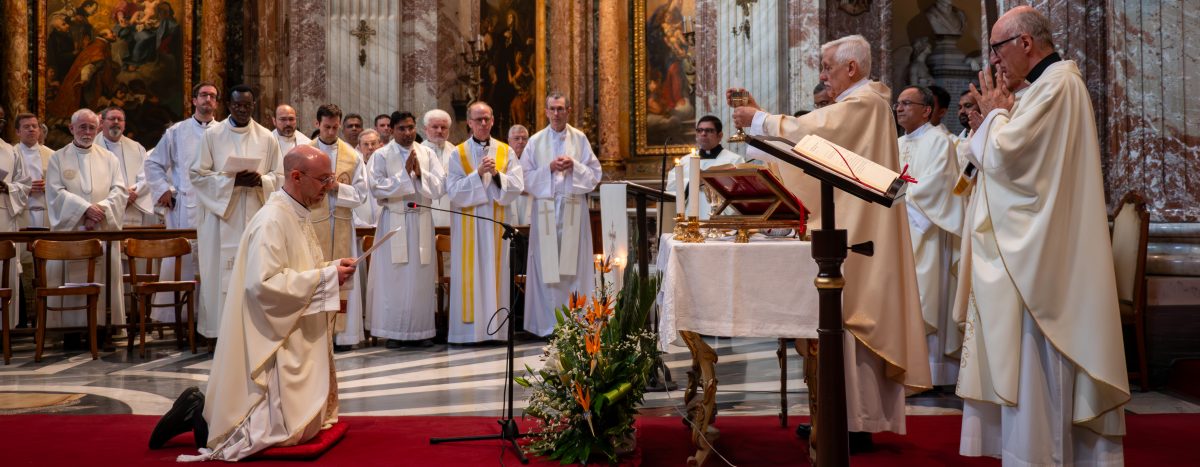
Jesus and the Temple

Homily for Friday of the Thirty-third week of Ordinary Time (Year 2).
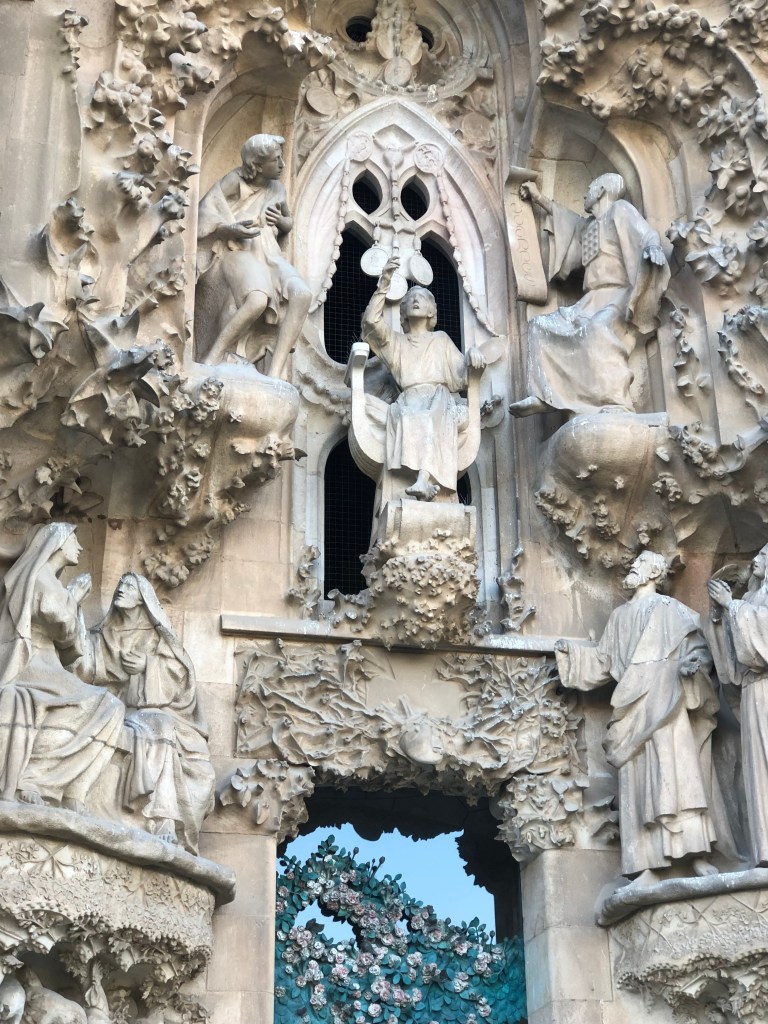
Jesus in the Temple, Sagrada Familia, Barcelona

Jesus loved the temple. Reading his harsh words addressed to those selling in the temple—shocking words—perhaps we forget that at the root of his righteous anger is his love for the temple, the Father’s house. It seems that as a child Jesus felt “at home” in the temple, as we know from the story of his finding in the temple at the age of twelve (Lk 2:41-50). Furthermore, Jesus uses the temple as a metaphor for his own body (Mt 26:61).

Because of this deep love for the temple, Jesus cannot tolerate its being turned into a secular and profane location or a place of commerce. I think that in his reaction there is an important warning for us as well, who work, in a sense, as “professionals” in the Church. It is very easy for us to lose our sense of the sacred and our apostolic passion and fall into a bureaucratic mindset.

In a theological center, we are at risk of considering theology not as a search for truth and the knowledge of God, but as a means to advance in one’s career. There is a temptation to use the things of God for one’s personal benefit, rather than for the salvation of souls.

Jesus’ words today are clear and, in some ways, shocking. They may seem a bit bitter to us, like the scroll eaten by the apostle in Revelation (Rev 10:9-10). However, this bitterness is for our good. Jesus speaks frankly so that we may recognize the subtle temptations that lead us to turn a house of prayer into a den of thieves.

Jesus’ pure love for the Father’s house, the sacred place, is something He desires to share with us. The spirit of the sacred, the love for the things of God, is a gift that we must constantly cultivate in our hearts.

Readings: Rev 10:8-11; Luke 19:45-48

Original: Italian

November 22, 2024

Gregorian University Chapel

Rome
Homily for the Nativity of John the Baptist: The desert in the temple and the temple in the desert

Homily for the Solemnity of the Nativity of St. John the Baptist

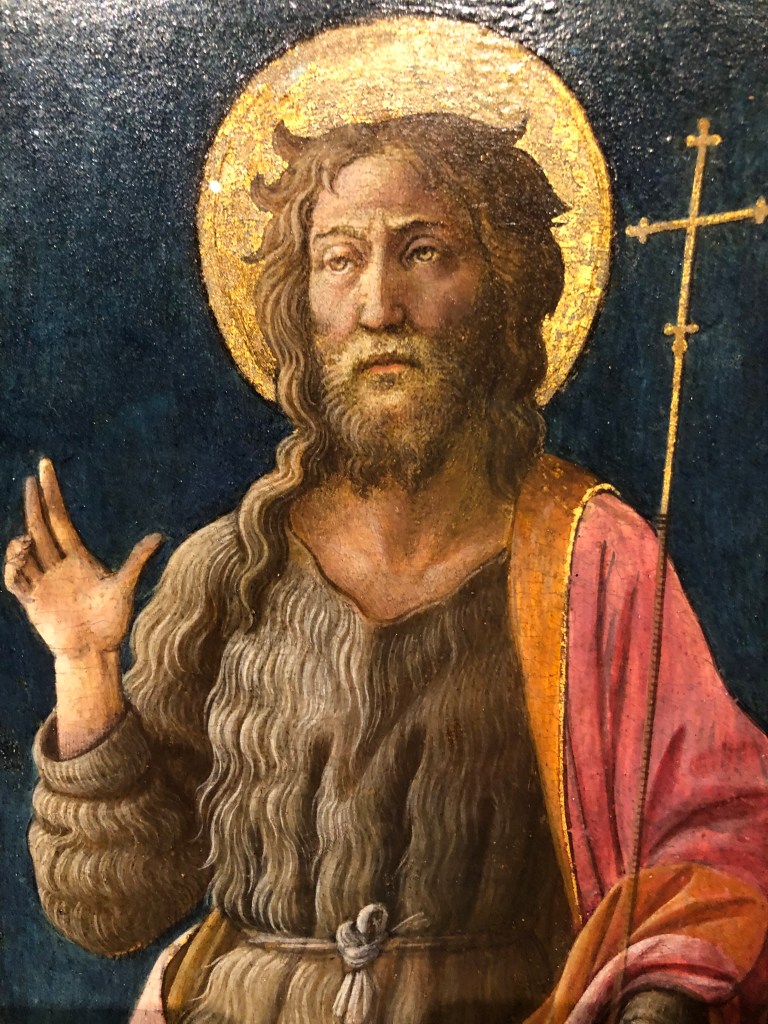
John the Baptist, Filippo Lippi (ca 1455)

The story of Saint John the Baptist begins in the temple, when an angel announces his miraculous conception to the priest Zechariah while he is offering incense at the altar. The account of Gabriel’s announcement is read during the vigil of this feast, and today we read about the fulfillment of that prophecy.

We probably do not associate John with the temple because most of his prophetic mission takes place in the desert—which is exactly where he heads at the end of today’s Gospel. But I would like to pause for a moment in the temple, where the story begins.

As modern Christians living after Luther, Kant, and the Enlightenment, we are unfortunately accustomed to viewing the temple and all Jewish rituals in a somewhat negative light. We tend to see them as superfluous, rigid, and irrational. We think of ourselves as more enlightened, scientific, progressive, and perhaps even more moral, believing we have no need for such complex and useless rituals.

I must admit, I am grateful that I am not required to observe the entirety of the Jewish ritual law. I, too, enjoy eating prosciutto and calamari. But if we view the Jewish religion in a negative light—as if ritual worship were in itself merely a sign of a primitive mindset that we have finally outgrown—we lose something. The Gospel of Luke begins in the temple but, as all our biblical scholars know, it also ends there: after the resurrection, the disciples “were continually in the temple praising God” (Lk 24:53).

Continue reading “Homily for the Nativity of John the Baptist: The desert in the temple and the temple in the desert”