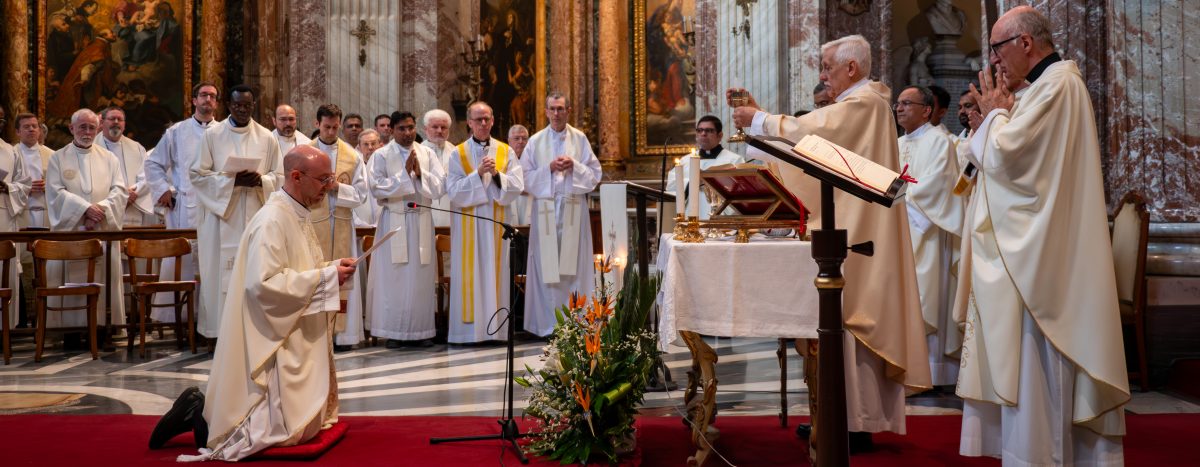
Homily for the Nativity of John the Baptist: The desert in the temple and the temple in the desert

Homily for the Solemnity of the Nativity of St. John the Baptist
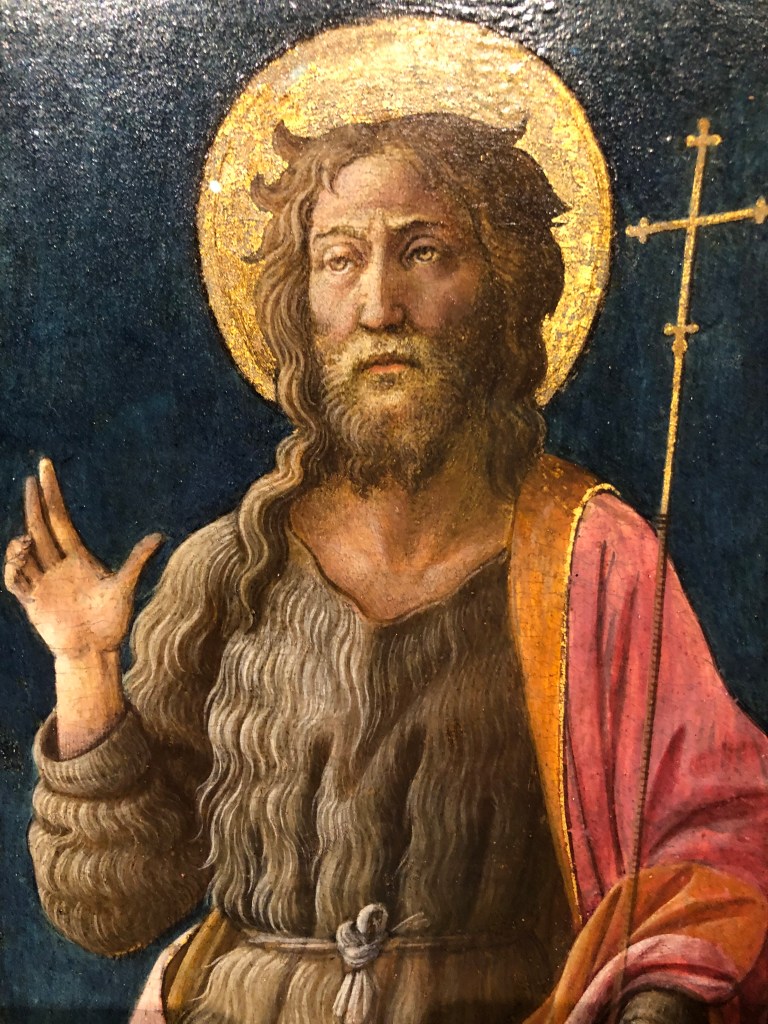
John the Baptist, Filippo Lippi (ca 1455)

The story of Saint John the Baptist begins in the temple, when an angel announces his miraculous conception to the priest Zechariah while he is offering incense at the altar. The account of Gabriel’s announcement is read during the vigil of this feast, and today we read about the fulfillment of that prophecy.

We probably do not associate John with the temple because most of his prophetic mission takes place in the desert—which is exactly where he heads at the end of today’s Gospel. But I would like to pause for a moment in the temple, where the story begins.

As modern Christians living after Luther, Kant, and the Enlightenment, we are unfortunately accustomed to viewing the temple and all Jewish rituals in a somewhat negative light. We tend to see them as superfluous, rigid, and irrational. We think of ourselves as more enlightened, scientific, progressive, and perhaps even more moral, believing we have no need for such complex and useless rituals.

I must admit, I am grateful that I am not required to observe the entirety of the Jewish ritual law. I, too, enjoy eating prosciutto and calamari. But if we view the Jewish religion in a negative light—as if ritual worship were in itself merely a sign of a primitive mindset that we have finally outgrown—we lose something. The Gospel of Luke begins in the temple but, as all our biblical scholars know, it also ends there: after the resurrection, the disciples “were continually in the temple praising God” (Lk 24:53).

Continue reading “Homily for the Nativity of John the Baptist: The desert in the temple and the temple in the desert”

Simeon and Anna, prophets of hope: homily for the Presentation of the Lord

Ludovico Carracci, Presentation of Jesus in the Temple, 1613-1616

Homily for the Presentation of the Lord (C)

Simeon and Anna appear so briefly in the Gospel that we might almost miss them.  They are a part of the story of the life of Jesus for just a few minutes, yet the few words that Luke writes about them reveal two remarkable lives.  It is especially moving, I think, to reflect on those lives in this Jubilee year because in Simeon and Anna we feel the challenge of hope.

Neither Simeon nor Anna, it seems, lived an easy life.  There is a tiredness in Simeon’s words after he takes the baby Jesus in his arms: “Now, Master, you may let your servant go in peace.”  Simeon had received a special revelation that he would not see death before he had seen the Messiah, and his words hint that it might not have been easy to hang on until that moment.  Perhaps you know of friends or relatives who have held on to life to see one special event—a wedding or a graduation or the birth of a child—and then let go soon after.  I think of a dear friend whose grandfather passed away minutes after watching his ordination, and I think there is something of that letting go—with gratitude for one last precious gift—in Simeon’s words.

But Simeon, too, still has something to give in that moment.  Today his words form part of the Church’s Night Prayer, and his prophecy to Mary would stay with her in the decades ahead.  To the blessing he received, Simeon responded with a blessing.

There is something moving, too, about what just a glance of God’s glory means for Simeon.  After all, he sees the Messiah only as a baby.  He will never hear the Sermon on the Mount, see Jesus cure the sick or raise Lazarus; he will never receive the sacraments; and, though his words to Mary allude to the crucifixion, he himself will not be there.  His eyes do see the salvation God has prepared in the sight of all the peoples—because salvation is Jesus Christ—but only just barely.  And that’s enough.  Jesus, before he can speak, before he can walk—but present—is enough.  Simeon has lived his life in hope for the moment that we see in the Gospel, and yet that hope fulfilled is itself a promise of more to come.  He is led from hope into hope, I suppose, much as our celebration of the Eucharist leads us to hope for the banquet promised us in heaven.

Continue reading “Simeon and Anna, prophets of hope: homily for the Presentation of the Lord”