Jesus and the Temple

Homily for Friday of the Thirty-third week of Ordinary Time (Year 2).
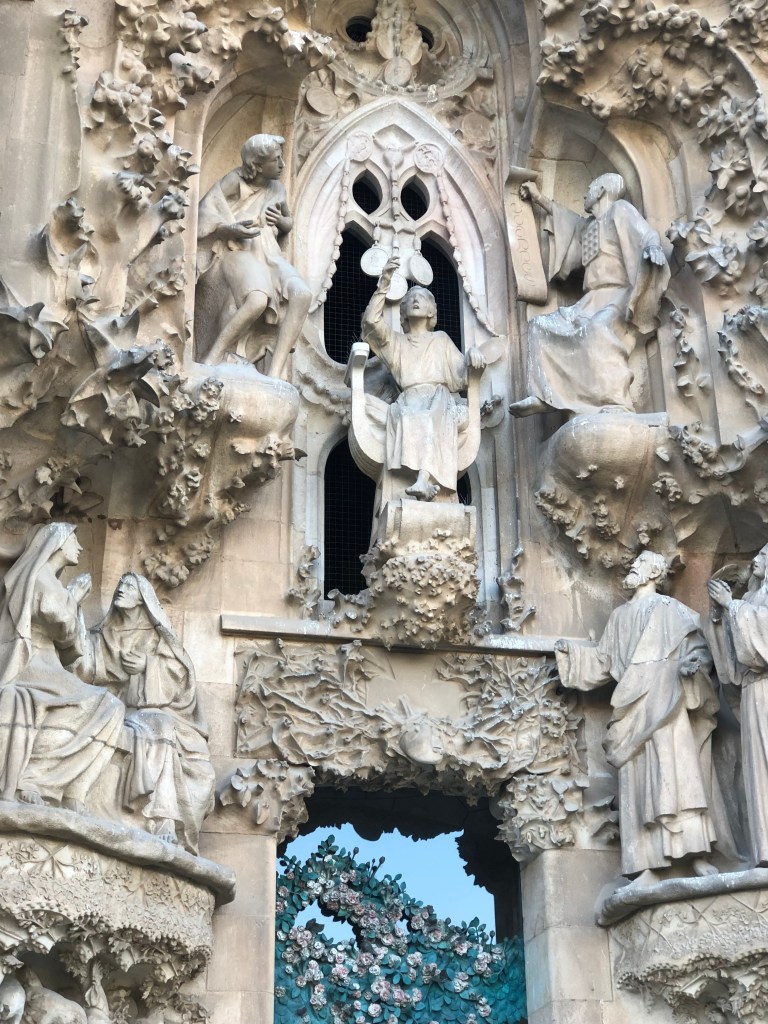
Jesus in the Temple, Sagrada Familia, Barcelona

Jesus loved the temple. Reading his harsh words addressed to those selling in the temple—shocking words—perhaps we forget that at the root of his righteous anger is his love for the temple, the Father’s house. It seems that as a child Jesus felt “at home” in the temple, as we know from the story of his finding in the temple at the age of twelve (Lk 2:41-50). Furthermore, Jesus uses the temple as a metaphor for his own body (Mt 26:61).

Because of this deep love for the temple, Jesus cannot tolerate its being turned into a secular and profane location or a place of commerce. I think that in his reaction there is an important warning for us as well, who work, in a sense, as “professionals” in the Church. It is very easy for us to lose our sense of the sacred and our apostolic passion and fall into a bureaucratic mindset.

In a theological center, we are at risk of considering theology not as a search for truth and the knowledge of God, but as a means to advance in one’s career. There is a temptation to use the things of God for one’s personal benefit, rather than for the salvation of souls.

Jesus’ words today are clear and, in some ways, shocking. They may seem a bit bitter to us, like the scroll eaten by the apostle in Revelation (Rev 10:9-10). However, this bitterness is for our good. Jesus speaks frankly so that we may recognize the subtle temptations that lead us to turn a house of prayer into a den of thieves.

Jesus’ pure love for the Father’s house, the sacred place, is something He desires to share with us. The spirit of the sacred, the love for the things of God, is a gift that we must constantly cultivate in our hearts.

Readings: Rev 10:8-11; Luke 19:45-48

Original: Italian

November 22, 2024

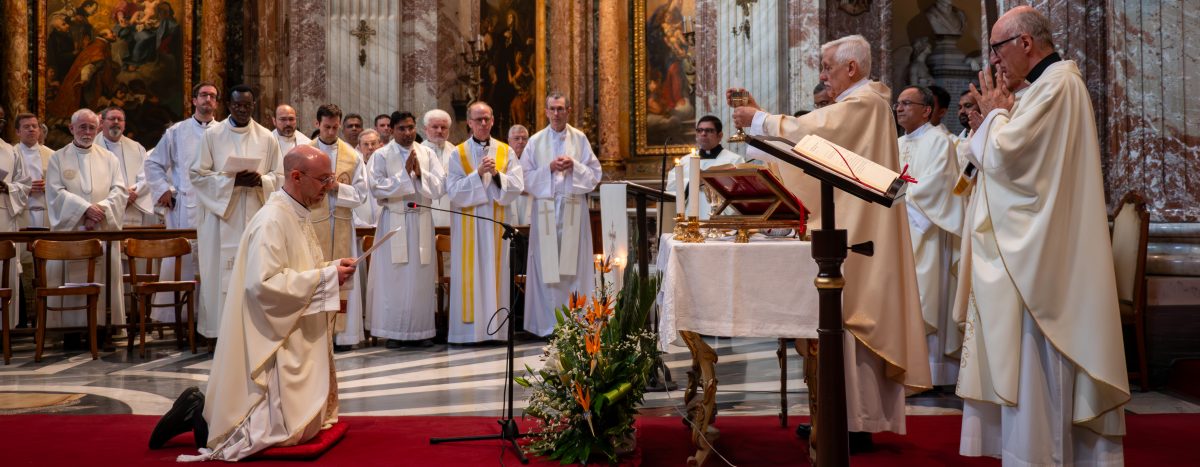
Gregorian University Chapel

Rome
Santa Maria dell’Orazione e Morte: a church for Rome’s forgotten

Santa Maria dell’Orazione e Morte, Rome

Of all the corporal works of mercy, the one which is perhaps easiest to forget is the last, burying the dead. Yet, both Christians and Jews have counted giving the dead a decent burial among the most laudable of charitable acts. The plot of the Book of Tobit–one of the Old Testament’s forgotten gems–revolves around the protagonist’s stubborn determination to see that his exiled countrymen receive a proper burial. Joseph of Arimathea is named in all four Gospels for the decency he showed the Lord’s body even after it seemed that all was lost. In the rabbinic tradition, burying the dead is considered especially praiseworthy because the dead have no ability to repay the favor.

Burying the dead shows a concern with human dignity–in contrast to a merely utilitarian concern with maximizing pleasure and avoiding pain–and I think that sense of dignity spills over into how we think about the living. We are both body and soul and to treat the body as something insignificant is to fail to appreciate the precious gift of being human. For Christians, showing the body reverence reflects the belief that our bodies become consecrated objects in baptism and confirmation and, as St. Paul says (1 Cor 6:19), temples of the Holy Spirit.

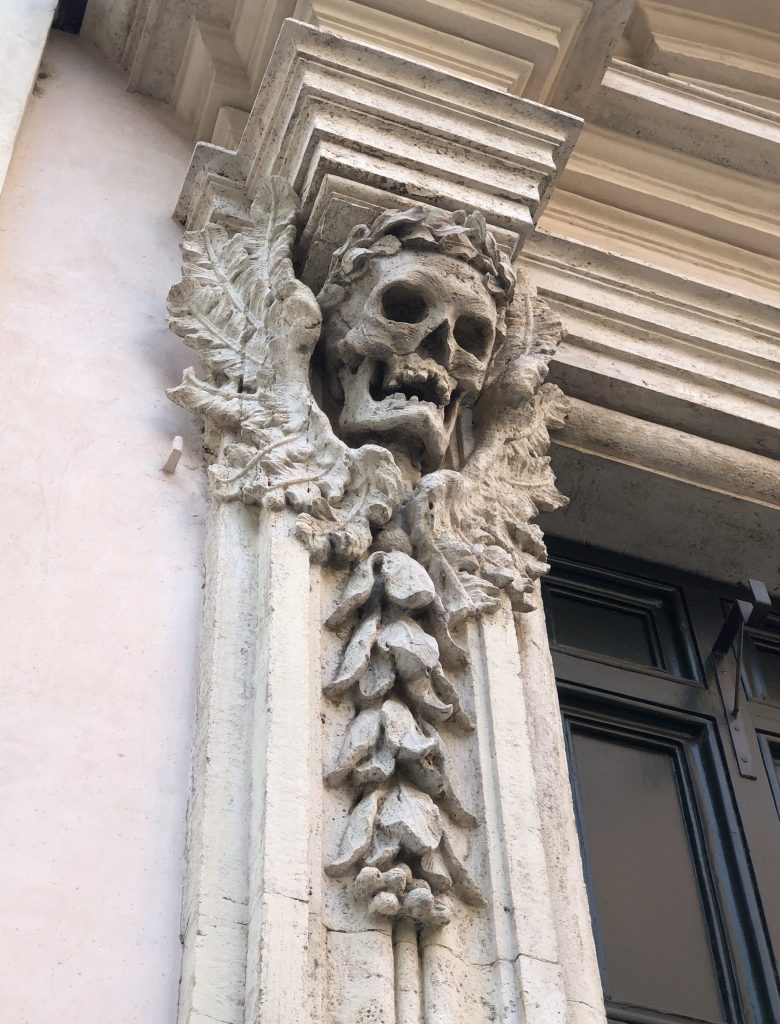
All of these reflections–on All Souls Day–are to introduce what might otherwise seem one of Rome’s strangest churches, the Church of Santa Maria dell’Orazione e Morte (St. Mary of Prayer and Death) located on the Via Giulia. It’s not one of the city’s better known churches and for many years was closed for restoration, but the skulls on its facade make it hard to forget.

Continue reading “Santa Maria dell’Orazione e Morte: a church for Rome’s forgotten”