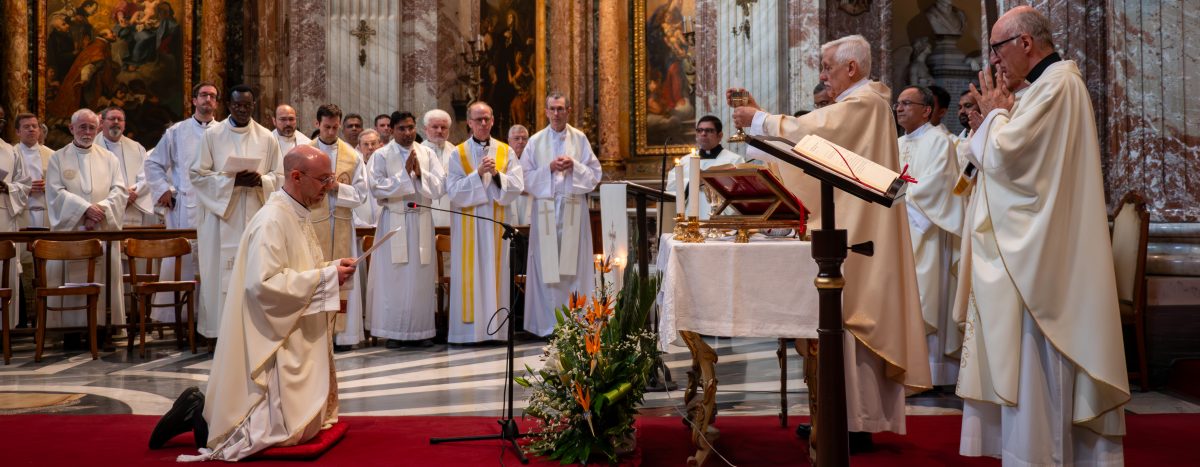
Homily for Tuesday of the Thirty-second week of Ordinary Time (Year 2).
Today we like to talk about our rights. The language of defending rights is very powerful in the political sphere, and there is no quicker way to arouse indignation than to suggest that our rights have been violated. It should be no surprise, then, that the number of rights keeps multiplying. Today, people talk not only about fundamental rights, such as life and religious freedom, but also about the right to high-speed internet and the right to change one’s sex. The problem with the explosion of rights is that there are so many of them that they begin to contradict one another, with the result that sometimes the most fundamental rights are denied—as when the so-called “right” to abortion nullifies a child’s right to life, and with it all other rights.
Catholic thought recognizes that for every right there is also a duty, but we do not like to talk about duties as much.
The language of rights, however, comes from politics, not from the Gospel. The passage from the Gospel of Luke that we hear today seems particularly foreign to the contemporary spirit. Jesus advises us to do our duty without boasting about it: “We are useless servants. We have done what we ought to have done.” Jesus reminds us that God owes us nothing.
We do not have a right to be created. God created us not out of obligation, but out of generosity. Our existence is a gift. Furthermore, we have no right to salvation. Salvation is a gift. We must be careful, therefore, when we talk about our rights within the realm of faith.
From this perspective, Saint Paul’s letter to Titus is also interesting, because it addresses a wide range of people. And these people are not encouraged to protect their own rights or to fight for what is “mine,” but to live as members of a larger body, to think not only of themselves, but of the common good. And thinking first of the common good and of others is, perhaps, the best way to ensure the rights of everyone.
Readings: Titus 2:1-8, 11-14; Luke 17:7-10
Original: Italian
November 12, 2024
Gregorian University Chapel
Rome

