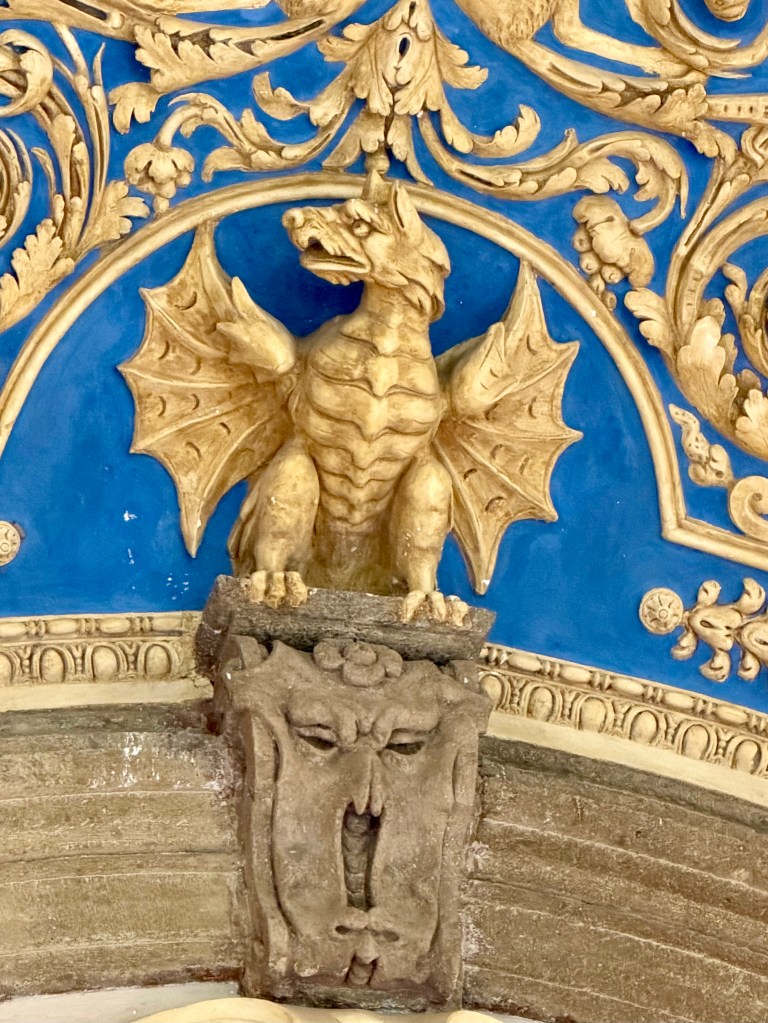
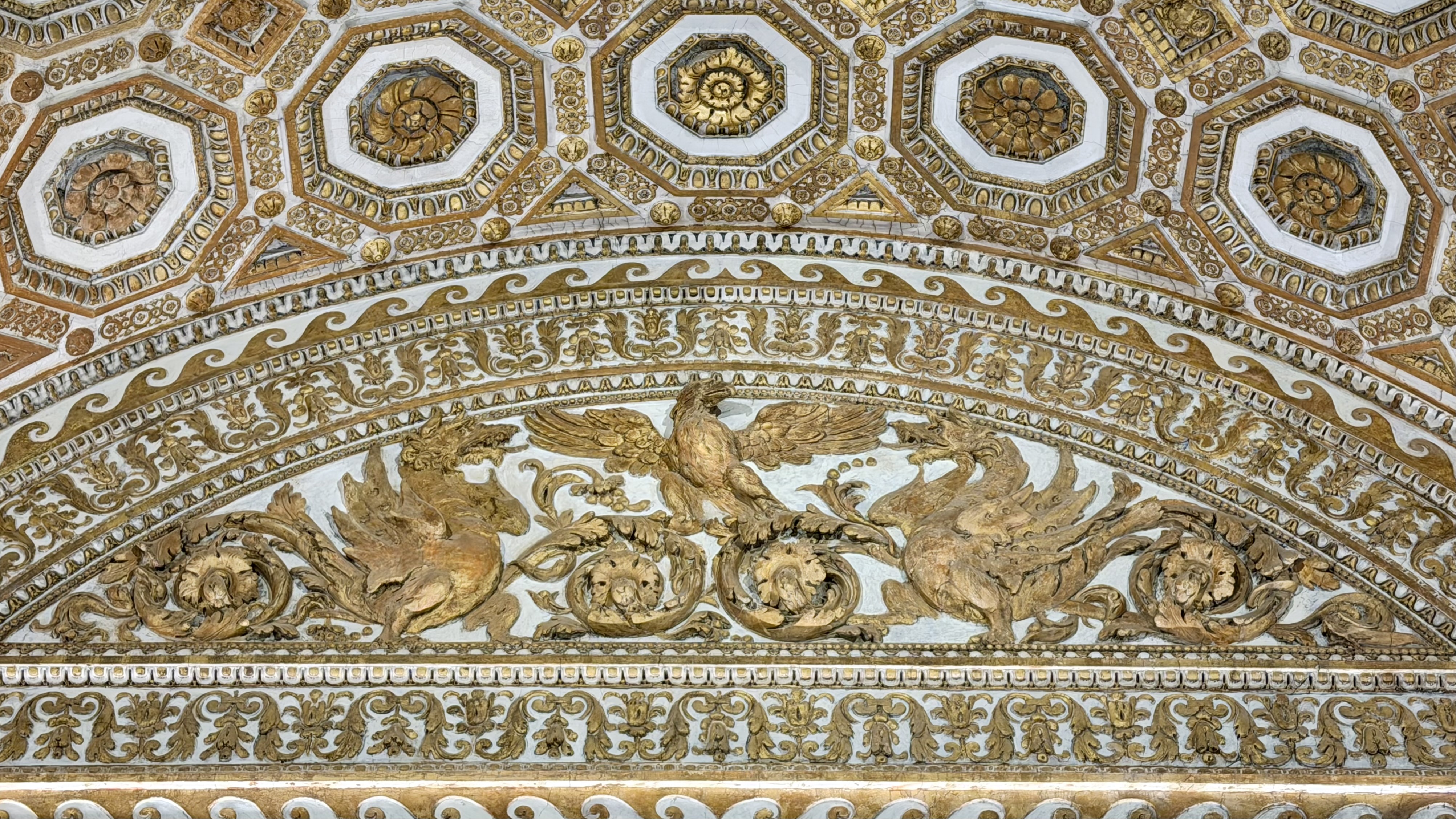
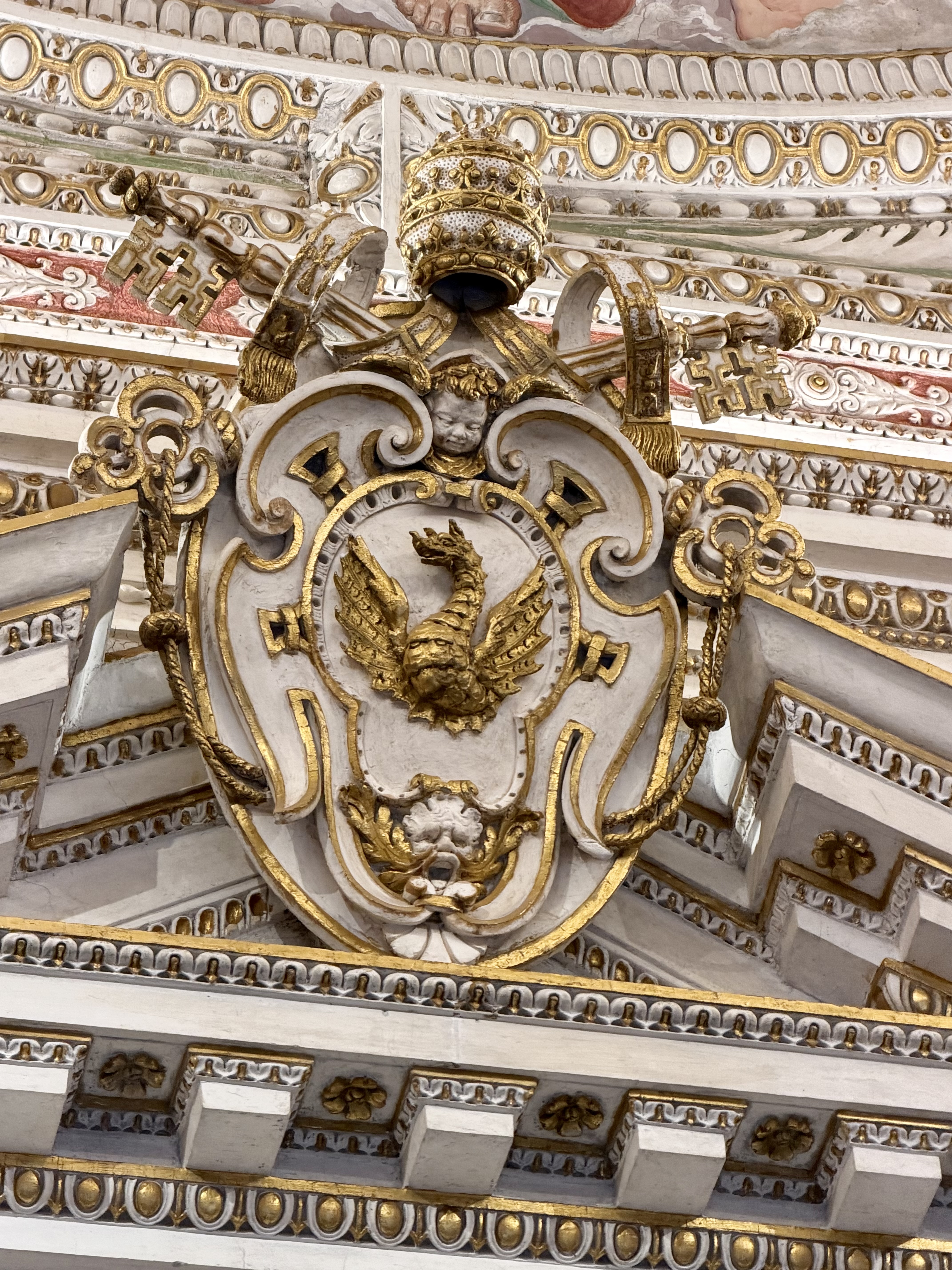
Last month I mentioned the novel Dragons, written by my Jesuit confrere and fellow professor at the Gregorian Fr. Joseph Carola. The dragons of the title come from the coat of arms of the Boncompagni family, one of Rome’s great aristocratic families, who counted among their number Ugo Boncompagni, who in 1572 became Pope Gregory XIII.
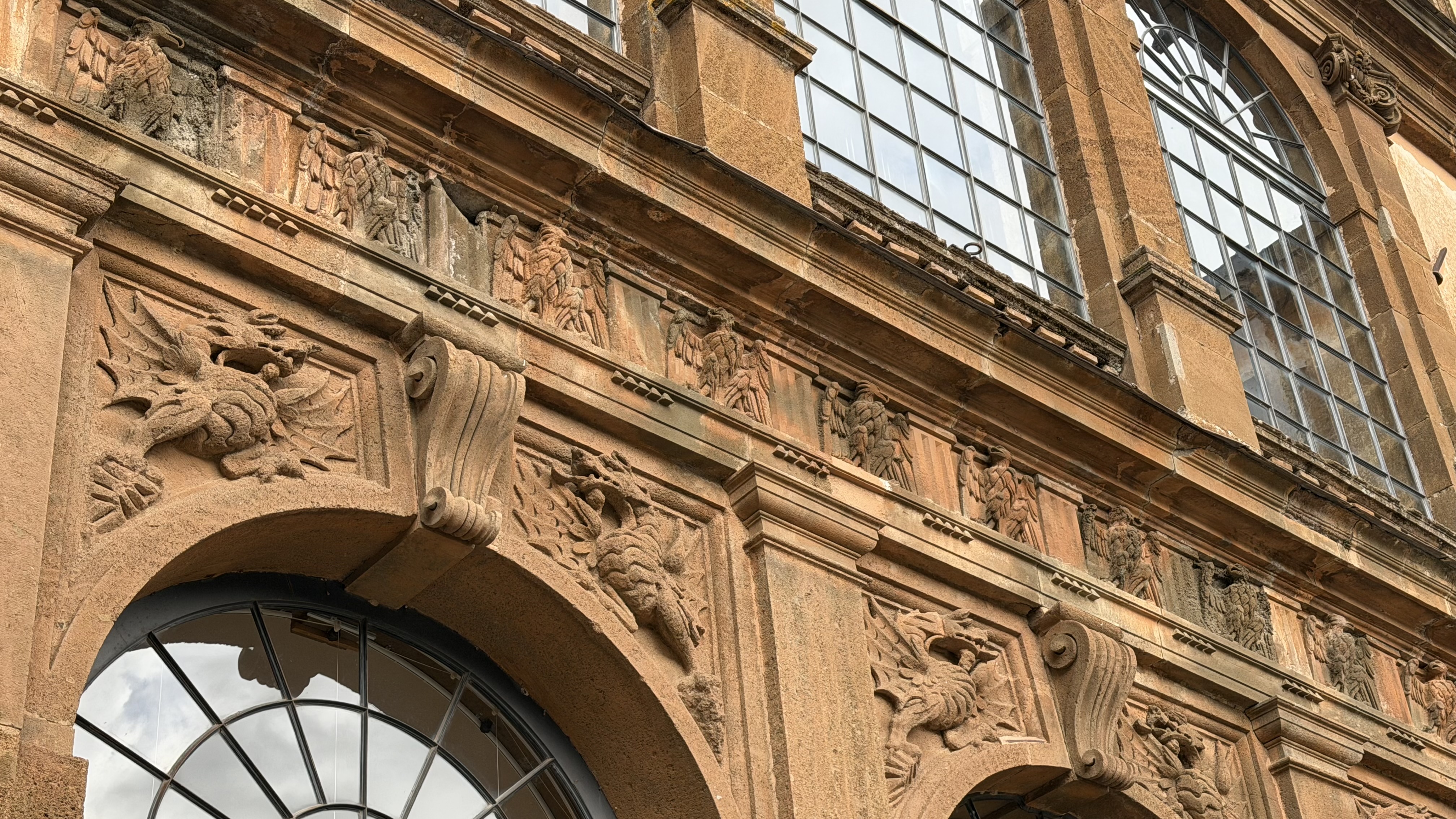
Among his many virtues and accomplishments, Gregory XIII was a great patron of the Jesuits. He reorganized and refinanced the Roman College founded by St. Ignatius. Today the Roman College is known as the Gregorian University as a result. If you look at the original Roman College building, in fact, you will still find dragons over the door. (The Boncompagni dragons don’t have tails, which is a way of showing that they are friendly and not harmful dragons.)
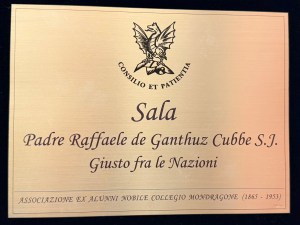
At Fr. Carola’s suggestion, last month the Gregorian Jesuit community took our semesterly outing to a site just outside of Rome associated with Pope Gregory — Villa Mondragone (Mount Dragon) in Frascati. In the late 19th and first half of the 20th century, the Villa housed a Jesuit college. A plaque on one of its walls commemorates Fr. Raffaele Cubbe, its Jesuit rector during World War II, honored as “Righteous Among the Nations” by the Holocaust memorial of Yad Vashem for hiding several Jewish children at the school.
The most significant historical event to take place at Villa Mondragone, however, was the signing of the papal bull Inter Gravissimas by Pope Gregory XIII in 1582. Drawing on the work of Jesuit scientist and Roman College professor Fr. Christopher Clavius, Inter Gravissimas replaced the Julian calendar with the Gregorian calendar — which we continue to use today.
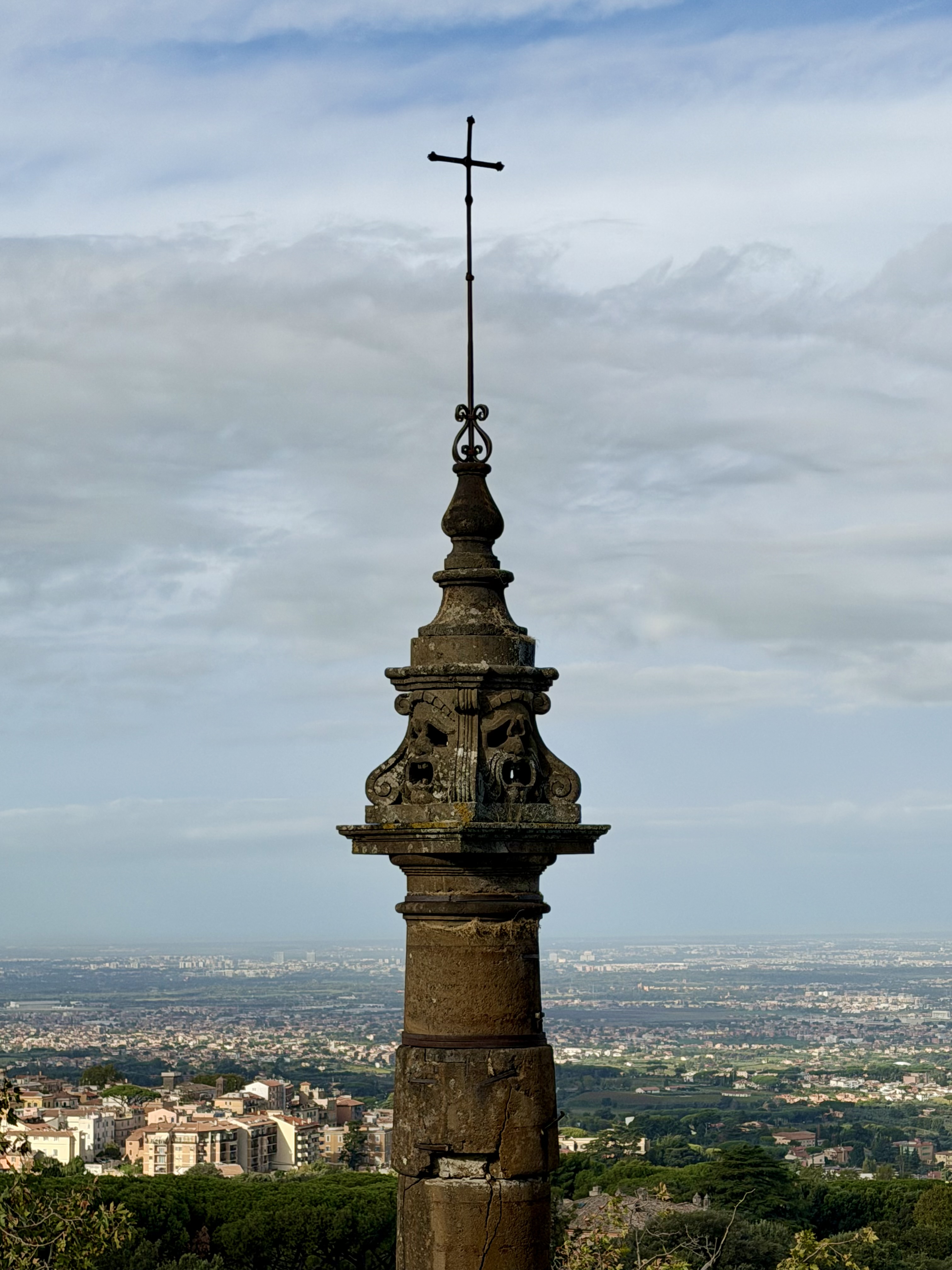
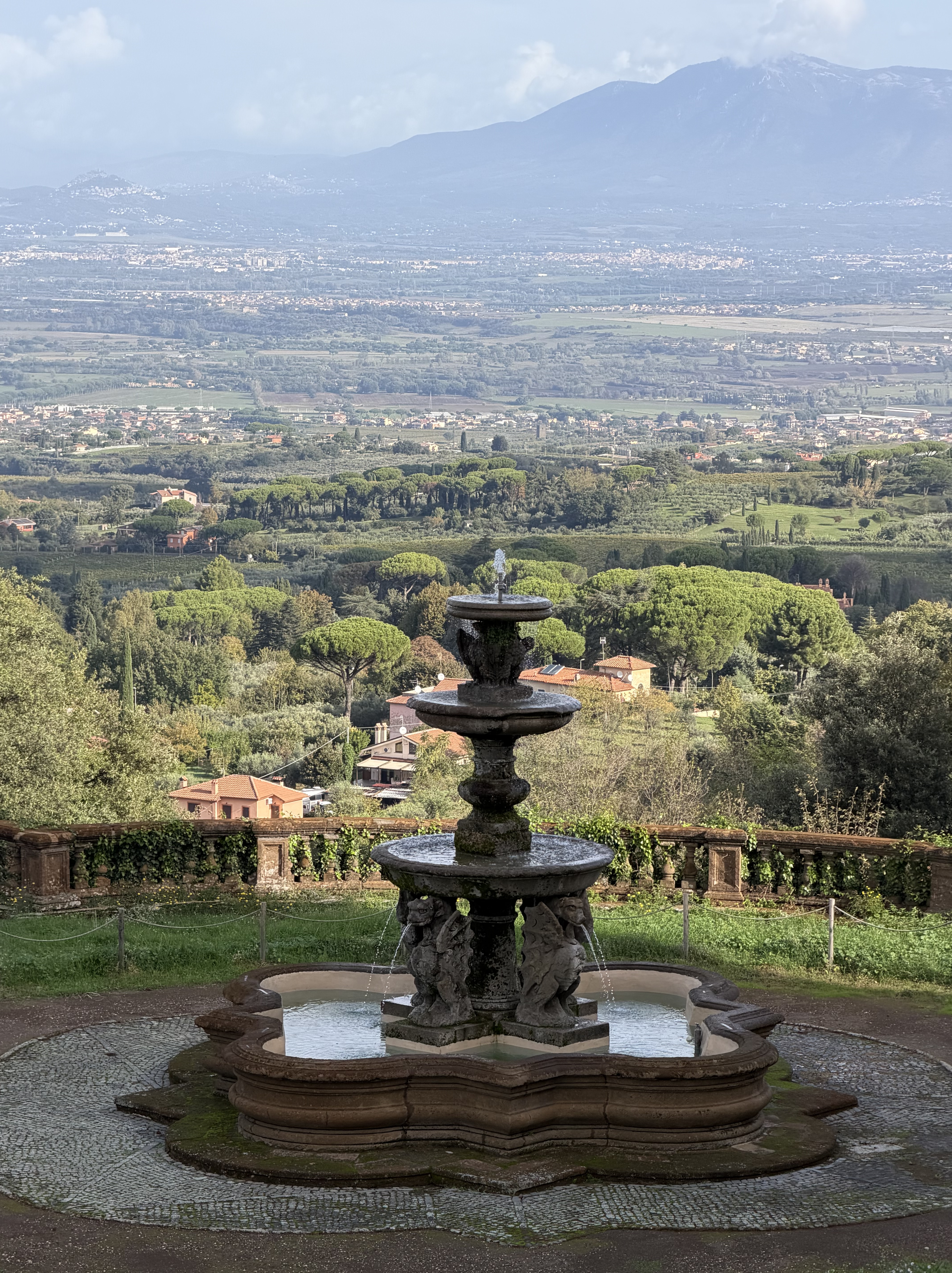
Villa Mondragone is a great place to go dragon-spotting, since the creatures are everywhere in its decor, and it boasts some great views over Rome and its surrounding plains. Note the spectacular gargoyle-like chimneys that once provided ventilation for its kitchens.
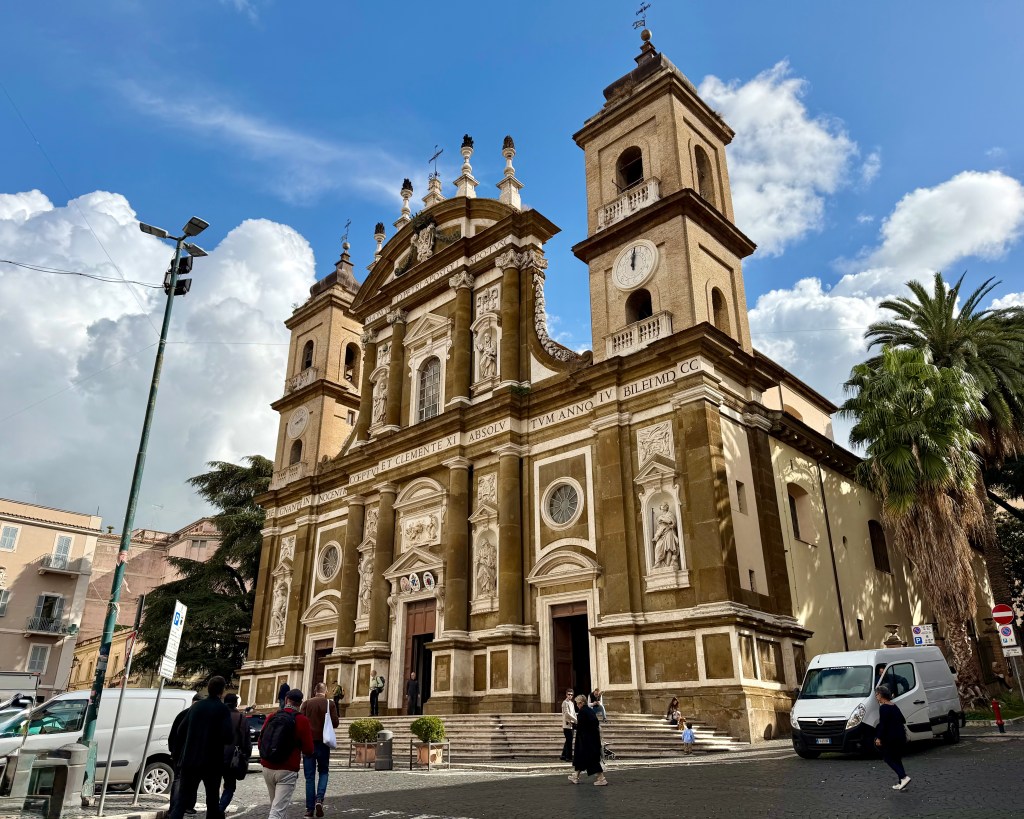
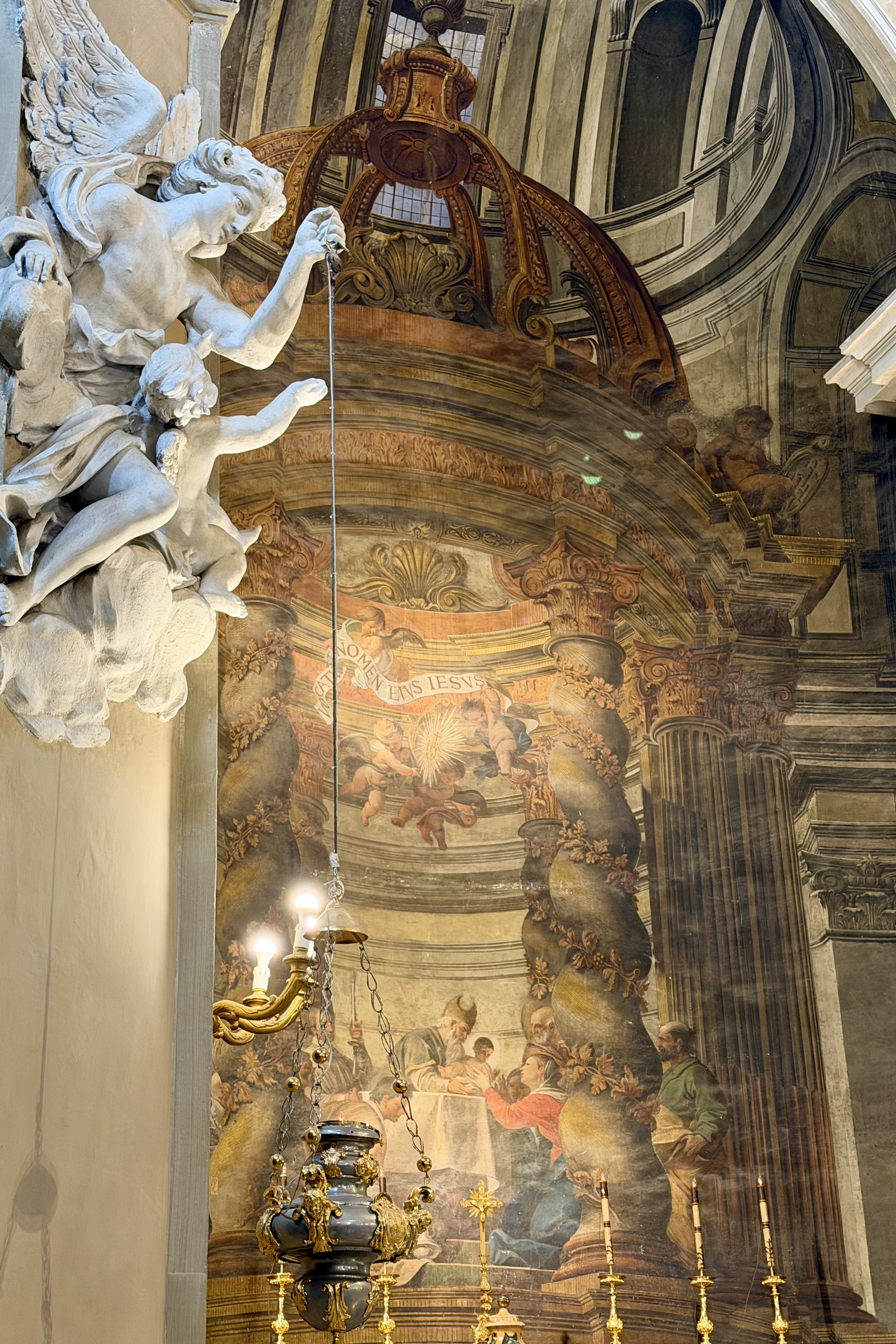
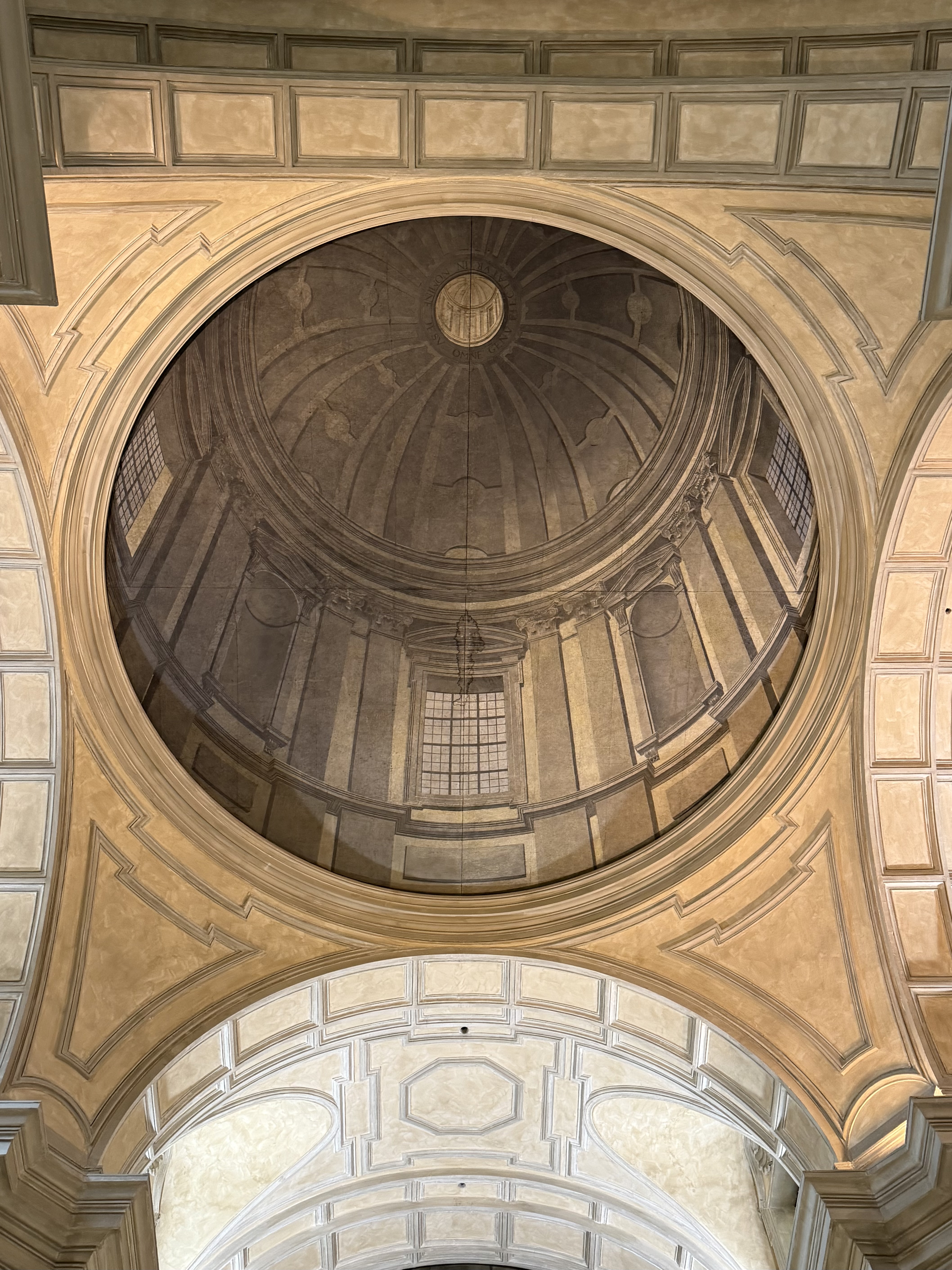
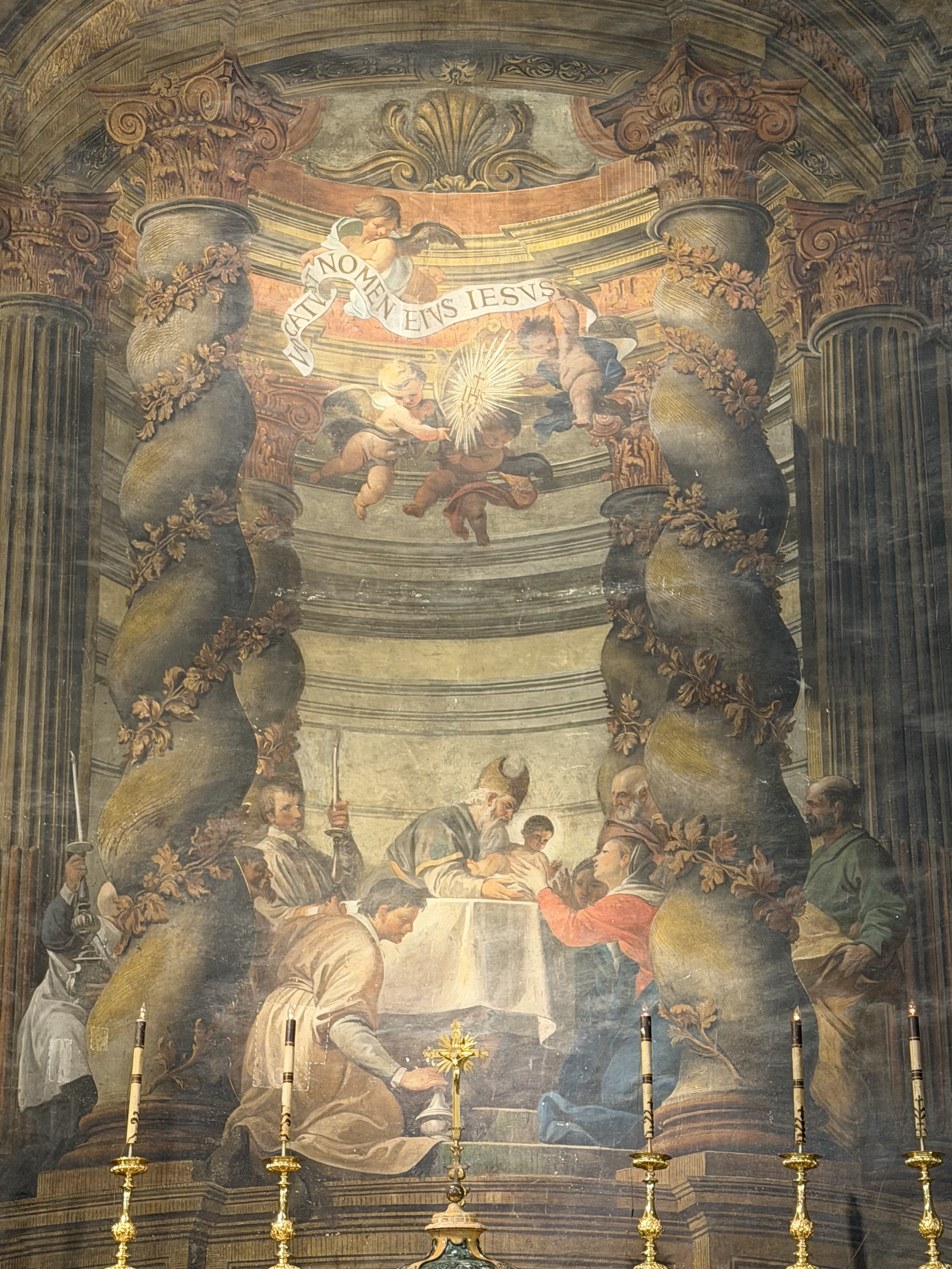
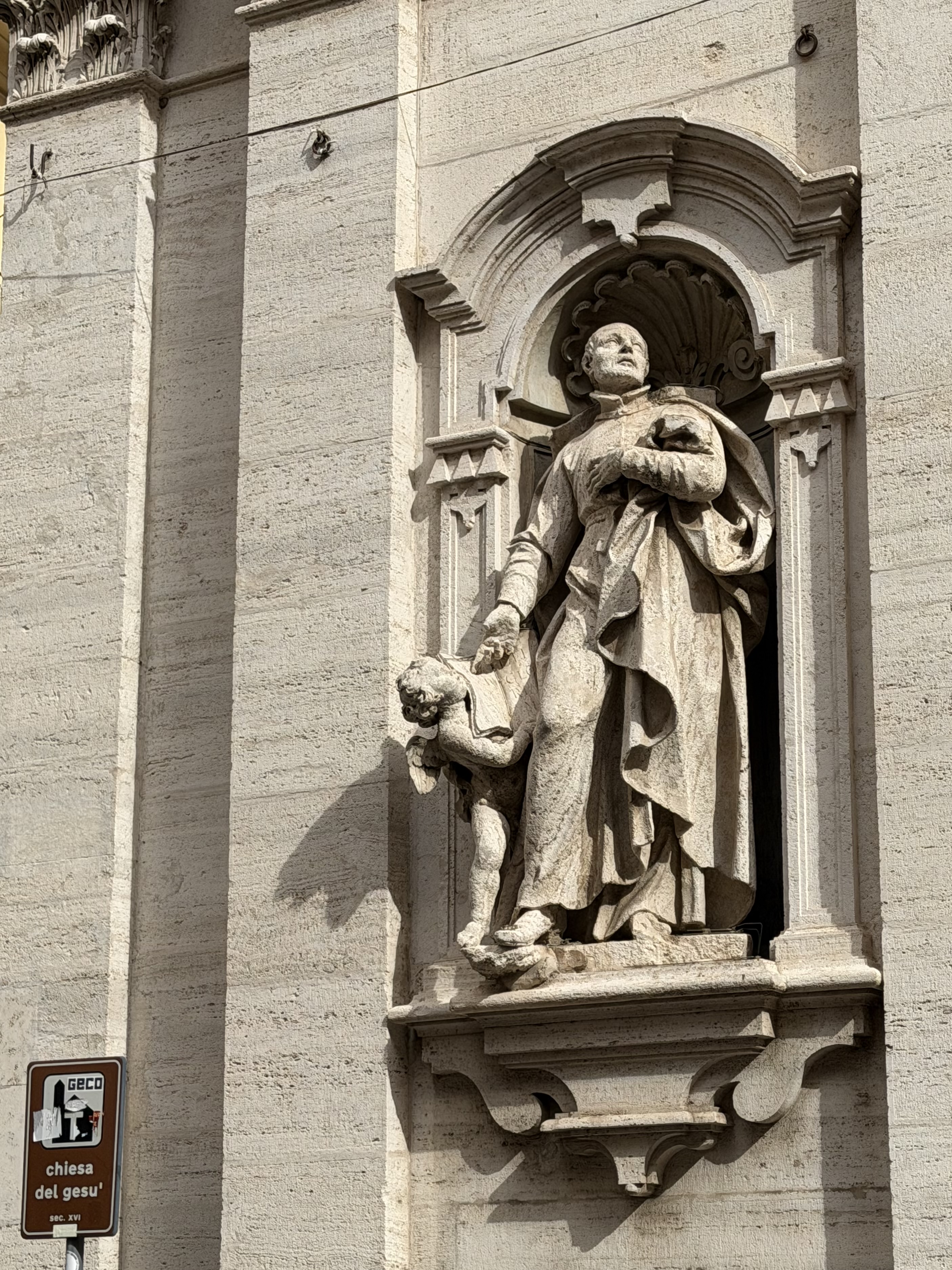
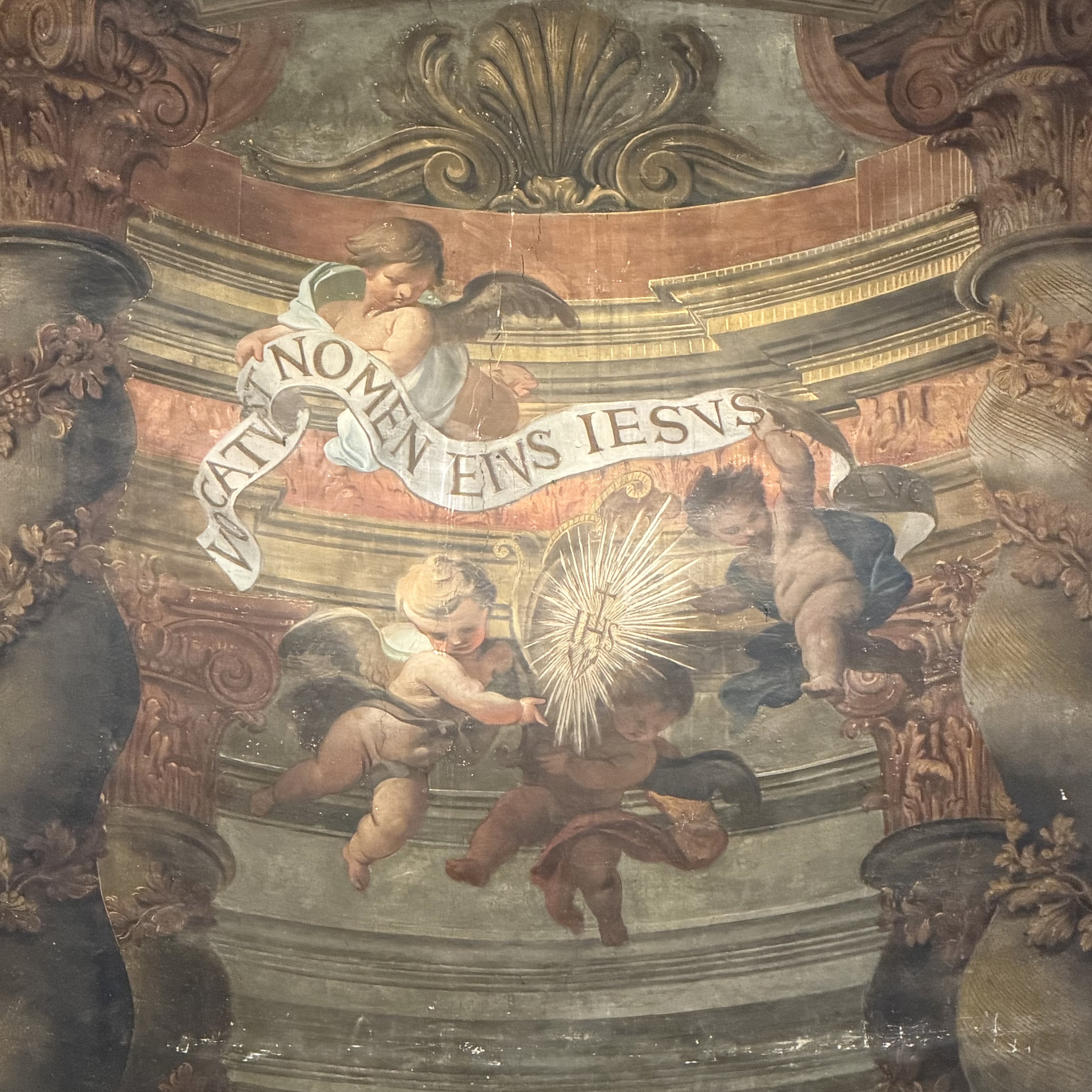
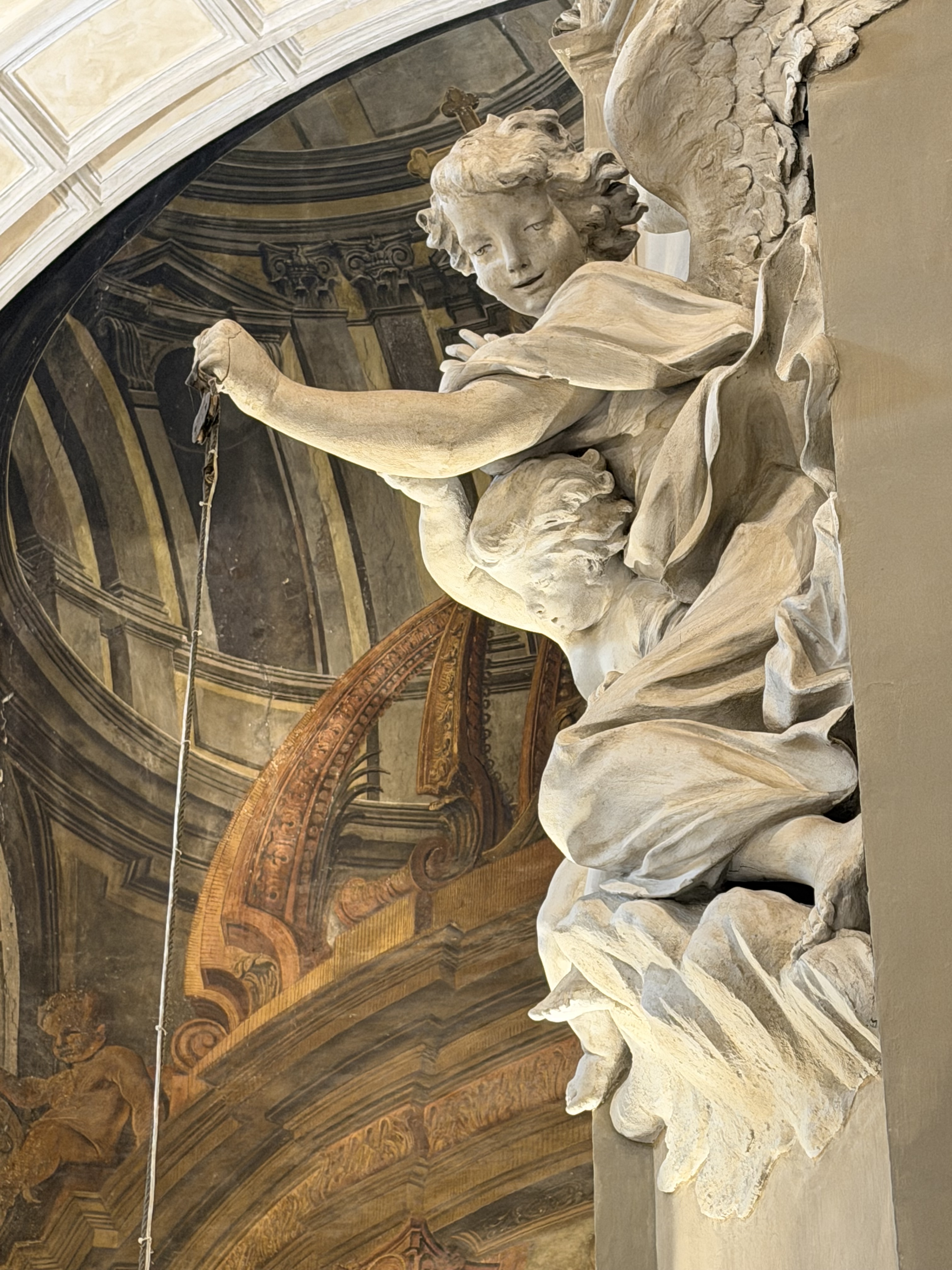
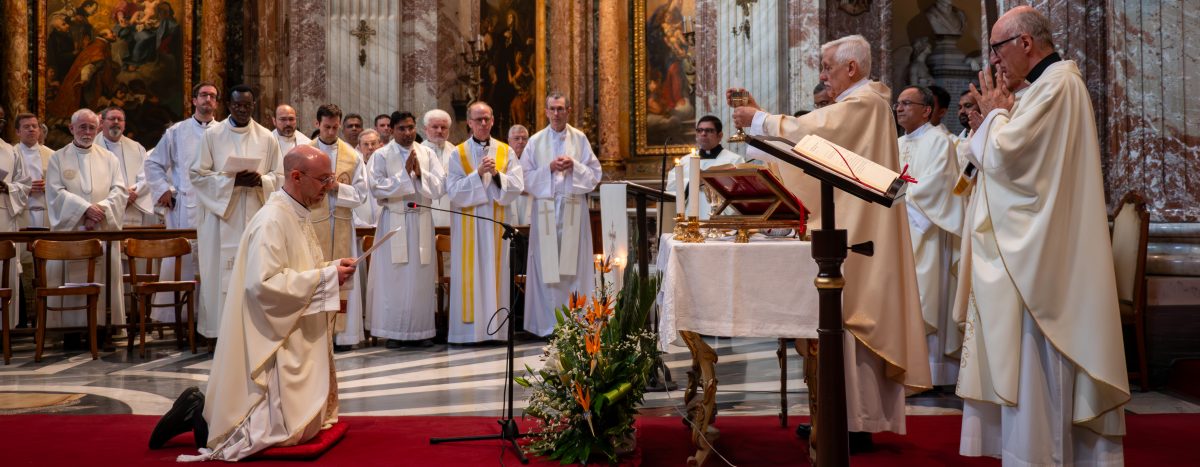
In addition to our visit to Villa Mondragone, we visited the town of Frascati and celebrated Mass at the Jesuit church in the town center. Also named the Chiesa del Gesù, it boasts some of the same baroque design features as the Jesuit mother church in Rome; its central altar is also adorned with a scene of the naming of the child Jesus in the Jerusalem Temple. (I think I like the Frascati version a bit more.) And like Rome’s Church of Sant’Ignazio, the Frascati Gesù’s interior includes a false dome.
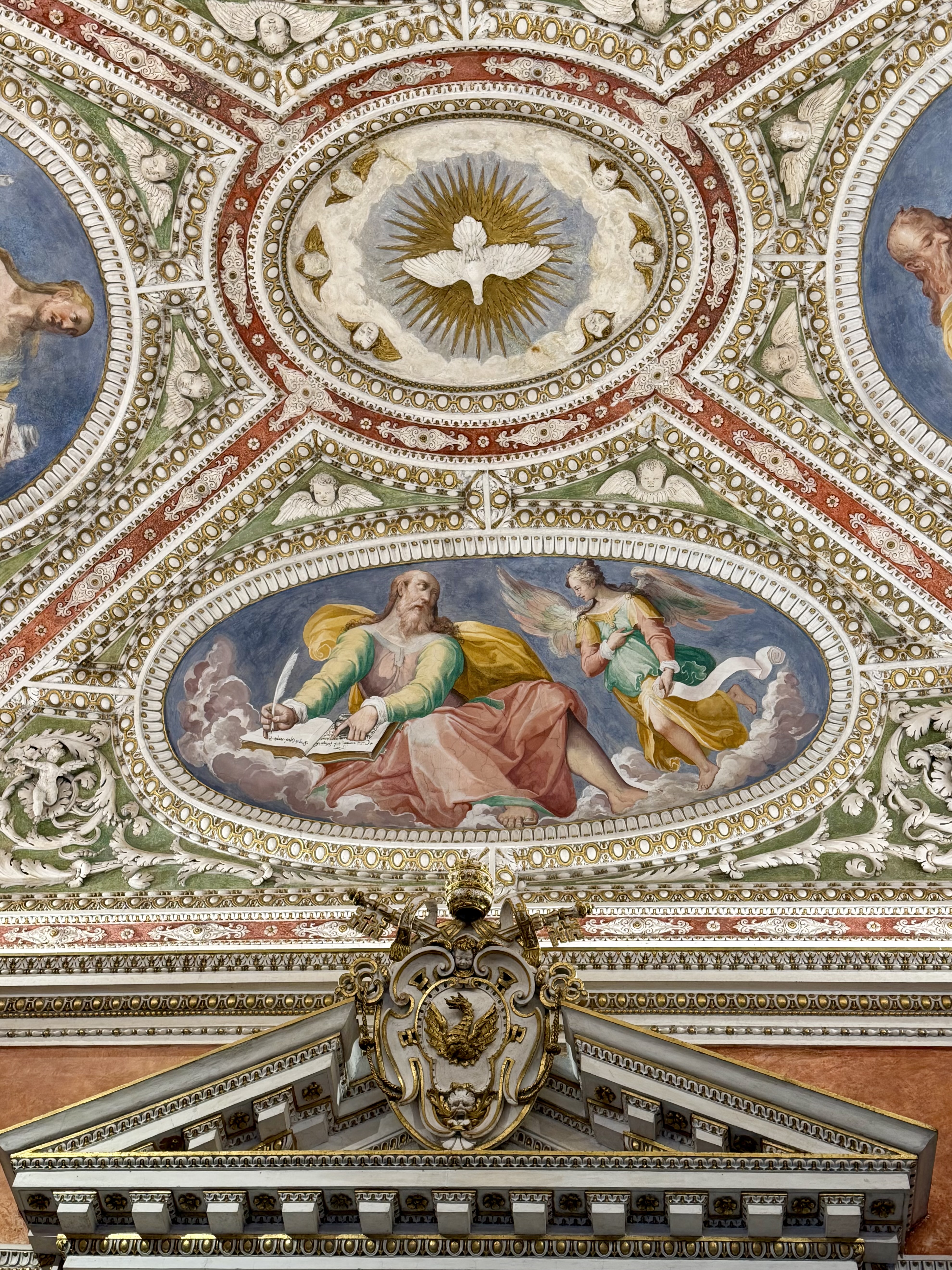
Villa Mondragone…
And the Gesù Church in Frascati…