Why literature?

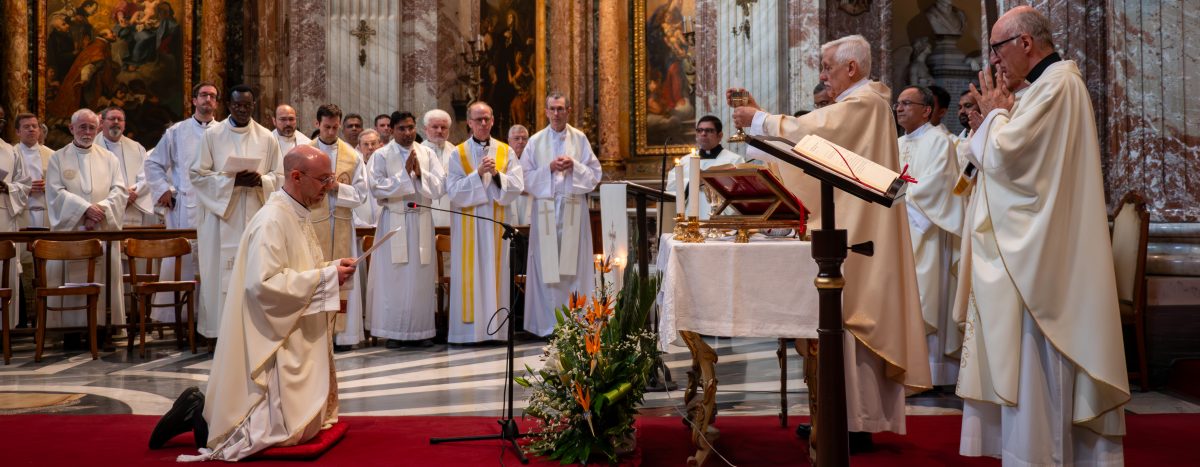
I was delighted earlier this month to be able to speak at the book presentation of a legendary member of the Gregorian faculty, Fr. Joseph Carola, S.J. Fr. Carola recently published his first novel Dragons: A Roman Requiem this summer and invited me to say a few words at the book presentation. The talk gave me the opportunity not only to talk up a great novel, but also to reflect on why we read and write literature to begin with.


Thank you, Fr. Bagasse, for the introduction, and thank you, Fr. Carola, for the invitation to speak today and for involving me in the entire process of the production of Dragons.  Outside of Tolkien or Game of Thrones, few people can say that they have witnessed the birth of dragons.  But I can now say that I have.

I followed the book’s gestation via energetic reports at the breakfast table in the Gregorian Jesuit community.  I heard descriptions of places that would appear in the novel—the aptly named Villa Mondragone in Frascati; the former Jesuit collegio in Orvieto; the famous breach in the wall near the Porta Pia as seen from Villa Bonaparte, the French embassy to the Holy See.  I found out that more—many more—exploratory trips went into the production of the novel, including a ferry ride across the English Channel—it’s a good thing, none of the novel’s characters fell overboard or Father Carola might have tried to swim it.

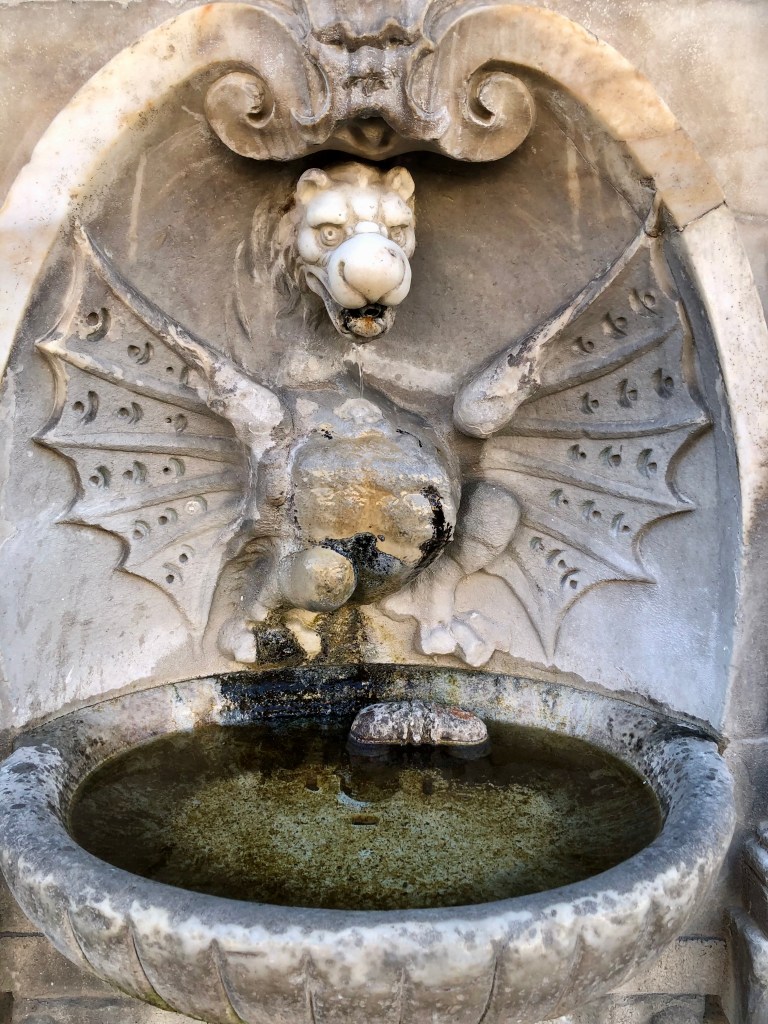
Eventually, I read drafts and witnessed the dragons begin to spread their wings.  I saw, as so often happens in that mysterious process by which literature comes into being, the author himself surprised as he realized what his own characters would do.  I found myself noticing—Roman readers beware, because this is a side-effect of the novel—I started noticing dragons everywhere—on buildings, in fountains, on floors, in mosaics, looking down from windows, peaking around corners.

For me, seeing the book emerge from the quarry of Father Carola’s imagination was part of the fun of the project.  And fun it was, and is.  Appropriately so.  The Roman poet Horace, after all, wrote that the purpose of literature is both to instruct and to delight.  And even though the novel’s subtitle “A Roman Requiem” hints at the somber trajectory of the events it describes, the book is not without its moments of fun: the saucy dialogue of the Jesuit brothers—Brother Paglia, Brother Pampana, and Brother Azzopardi—who provide color commentary on current events, rolling their eyes at the fathers upstairs who remain lost in their theology while making the practical preparations necessary for the community’s survival amid the nineteenth century’s revolutionary violence.

Continue reading “Why literature?”
Book launch, podcasts, and other news

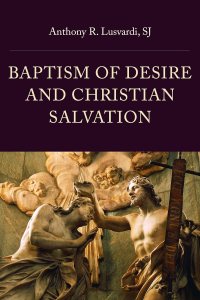
I am pleased to see Baptism of Desire and Christian Salvation in the news. Ralph Martin mentioned the book in his recent video Are All Religions a Path to God? As Dr. Martin points out, the research and arguments the book offers are highly relevant to some of the most difficult theological questions the Church faces today. As I’ve said before, perhaps the most urgent question the book raises has to do with whether we should still understand salvation to be at the heart of the Church’s mission. (Spoiler alert: Yes.)

With Dr. George Ceremuga at St. Isaac Jogues this summer.

I was also delighted to have a thoroughly enjoyable conversation a few weeks ago with Dr. George Ceremuga, friend and parishioner at St. Isaac Jogues parish in South Dakota, for the inaugural episode of his new Lead With Love podcast. We talked about Baptism of Desire and Christian Salvation as well as Dr. George’s new book My 50 Day Pentecost in the Holy Land, in which he recounts some of the encounters and insights he had on an amazing journey through the Holy Land last year. UPDATE: the podcast is now out here. I’m collecting info and reviews about baptism of desire here.

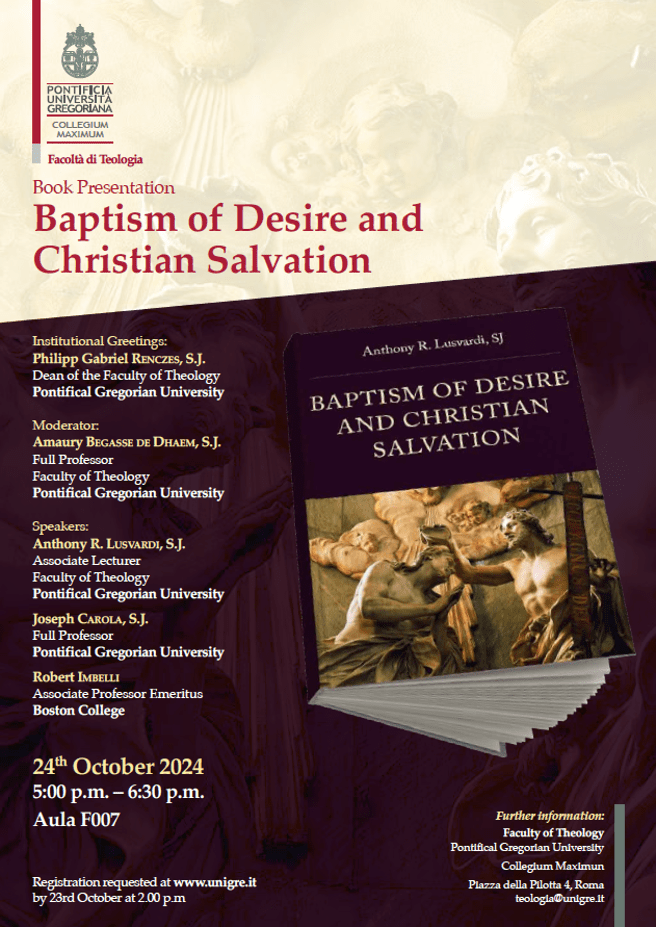
And finally, as you can see from the flyer at the top of this post, I’m pleased to announce that we will have a book launch for Baptism of Desire and Christian Salvation later this month at the Gregorian University. If you are in Rome, please come on Thursday October 24 to hear Fr. Robert Imbelli (coming all the way from New York!) and Fr. Joseph Carola discuss the book’s significance. The event will take place at 5:00 PM in room F007 of the Frascara Building at the Gregorian University. I’ll try to get the talks posted here, too, since it promises to be an interesting discussion.

And for something just a little bit different, you might want to check out the November issue of First Things. Just saying.

Baptism of Desire and Christian Salvation — now in print!

After a few delays, I am pleased to report that my book is now officially in print and copies have arrived for those who preordered. It seems to have been released on Good Friday no less.

If you’re still on the fence about whether it’s worth the read, I thought I’d share the very kind words of endorsement from Fr. Joseph Carola, SJ, my colleague at the Gregorian University and expert in both the Church Fathers and Nineteenth Century theology.

So take it from Fr. Carola:

Jesus instructed Nicodemus that, “unless one is born of water and the Spirit, he cannot enter the kingdom of God” (John 3:5).  Faithful to the Lord’s revelation, Christians have insisted for two millennia upon the necessity of baptism for salvation.  But already in the ancient Church, salvation’s rough edges, as Father Anthony Lusvardi creatively calls them, have challenged believers.  What is the fate of those who lived before Christ and therefore died without Christian baptism?  What happens to the catechumen who dies unexpectedly before being baptized?  Can unbaptized babies get to heaven?  Is there any hope for the salvation of non-Christians?  In his thoroughly historical and insightfully theological study of the baptism of desire, Father Lusvardi offers his readers a fresh perspective on this traditional notion often misunderstood and misapplied in contemporary theology and pastoral practice.  Providing a convincing response to the challenges that the hard cases present, Father Lusvardi especially appeals to the Catholic Church’s lex orandi in order to establish the Church’s lex credendi that simultaneously upholds the necessity of baptism, the need for evangelization, and the nuances of desire.  Historically informative, theologically rich, and occasionally even humorous, Baptism of Desire and Christian Salvation is a book not only for theologians, but perhaps even more so for pastors who labor on the rough edges of salvation.

Joseph Carola, S.J., S.T.D.

November 2, 2023

All Souls

The Pontifical Gregorian University, Rome