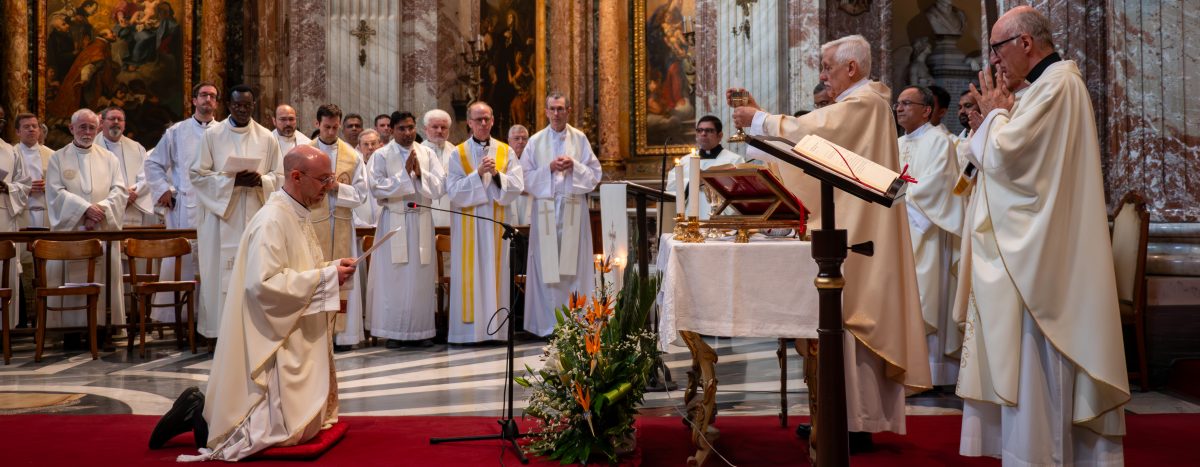
I was delighted earlier this month to be able to speak at the book presentation of a legendary member of the Gregorian faculty, Fr. Joseph Carola, S.J. Fr. Carola recently published his first novel Dragons: A Roman Requiem this summer and invited me to say a few words at the book presentation. The talk gave me the opportunity not only to talk up a great novel, but also to reflect on why we read and write literature to begin with.
Thank you, Fr. Bagasse, for the introduction, and thank you, Fr. Carola, for the invitation to speak today and for involving me in the entire process of the production of Dragons. Outside of Tolkien or Game of Thrones, few people can say that they have witnessed the birth of dragons. But I can now say that I have.
I followed the book’s gestation via energetic reports at the breakfast table in the Gregorian Jesuit community. I heard descriptions of places that would appear in the novel—the aptly named Villa Mondragone in Frascati; the former Jesuit collegio in Orvieto; the famous breach in the wall near the Porta Pia as seen from Villa Bonaparte, the French embassy to the Holy See. I found out that more—many more—exploratory trips went into the production of the novel, including a ferry ride across the English Channel—it’s a good thing, none of the novel’s characters fell overboard or Father Carola might have tried to swim it.
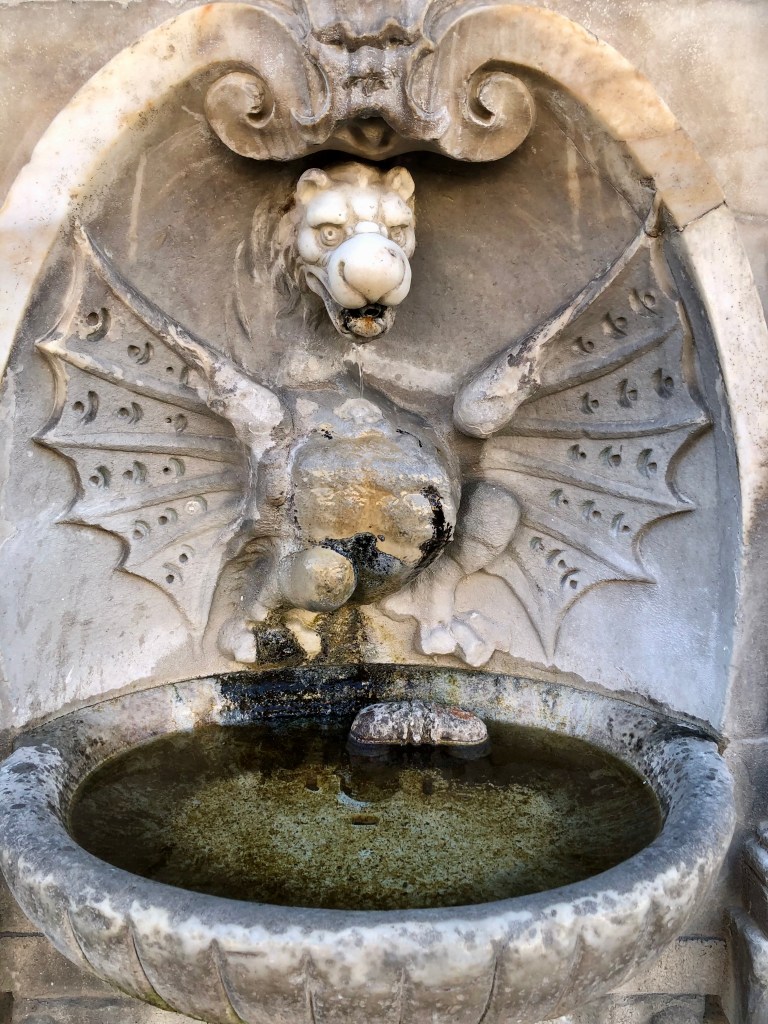
Eventually, I read drafts and witnessed the dragons begin to spread their wings. I saw, as so often happens in that mysterious process by which literature comes into being, the author himself surprised as he realized what his own characters would do. I found myself noticing—Roman readers beware, because this is a side-effect of the novel—I started noticing dragons everywhere—on buildings, in fountains, on floors, in mosaics, looking down from windows, peaking around corners.
For me, seeing the book emerge from the quarry of Father Carola’s imagination was part of the fun of the project. And fun it was, and is. Appropriately so. The Roman poet Horace, after all, wrote that the purpose of literature is both to instruct and to delight. And even though the novel’s subtitle “A Roman Requiem” hints at the somber trajectory of the events it describes, the book is not without its moments of fun: the saucy dialogue of the Jesuit brothers—Brother Paglia, Brother Pampana, and Brother Azzopardi—who provide color commentary on current events, rolling their eyes at the fathers upstairs who remain lost in their theology while making the practical preparations necessary for the community’s survival amid the nineteenth century’s revolutionary violence.
Continue reading “Why literature?”
