Sant’ Andrea al Quirinale — Bernini’s favorite church

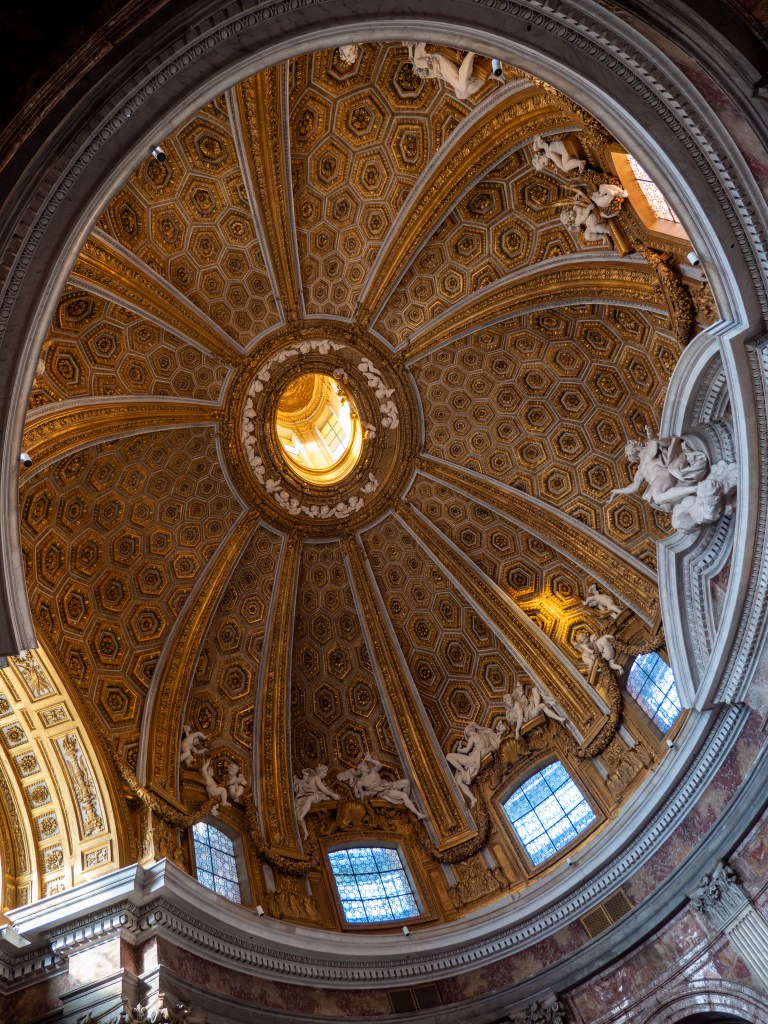
Dome of Sant’Andrea al Quirinale

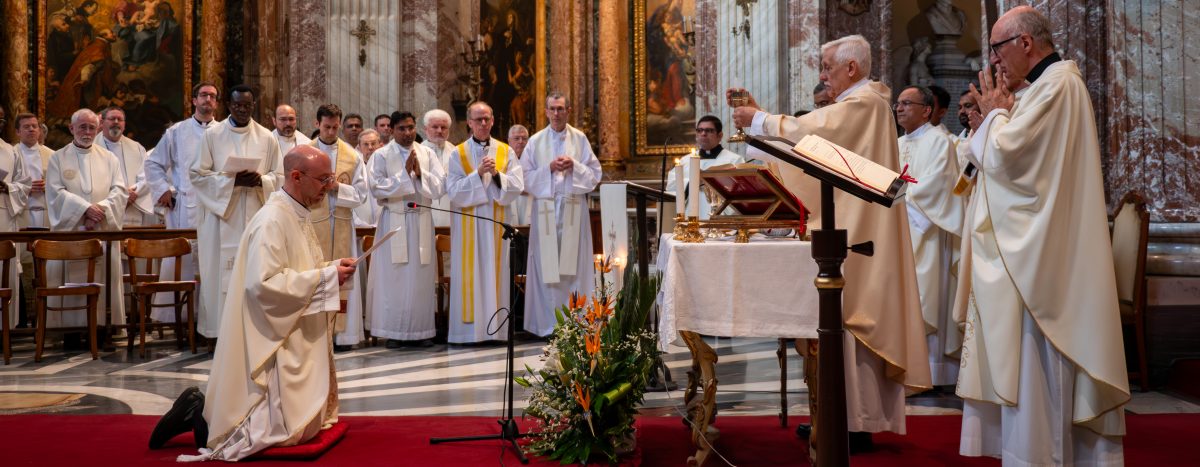
A few weeks ago I shared some reflections on taking my final vows as a Jesuit, a tremendously blessed moment for me. Today I thought I might add a few words and pictures about the place where I took those vows: the Church of Sant’Andrea al Quirinale.

Since Rome is packed with stunningly beautiful churches, sometimes those that would be at the top of the visitor’s itinerary anywhere else in the world end up being overlooked. Sant’Andrea al Quirinale is one of those. It should be numbered among the most important Jesuit churches in the world, but in Rome it has to compete with the Gesù–site of the body of St. Ignatius and the arm of St. Francis Xavier–and Sant’Ignazio–the onetime chapel of the Roman College, as the Gregorian University was first known. Both churches are enormous, paradigmatic examples of the baroque at its most overwhelming.

Sant’Andrea is tiny by comparison, but don’t let size mislead you. It was the chapel of the first Jesuit novitiate; in an adjoining room, one can visit the relics of St. Stanislaus Kostka, patron of Jesuit novices and of students, who died there in 1568 at the age of 17.
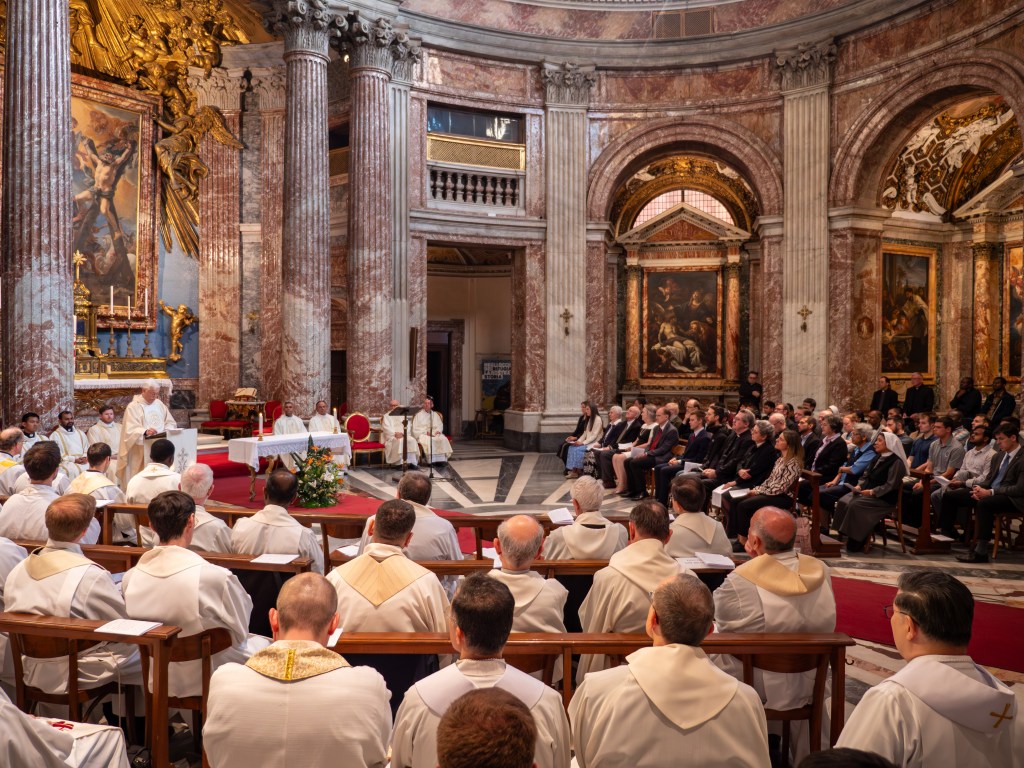
Sant’Andrea al Quirinale interior

While it stood on the site of an early church dedicated to Andrew the Apostle, the present Sant’Andrea (built in 1658) was designed by Gian Lorenzo Bernini. Bernini, who was busy at the time decorating the interior of St. Peter’s Basilica and building the colonnade for St. Peter’s Square, refused to take a commission for Sant’Andrea. It was said to be his favorite work, and, as he aged, the great artist was sometimes seen sitting alone inside the church, enjoying its peaceful atmosphere.

Continue reading “Sant’ Andrea al Quirinale — Bernini’s favorite church”
Book launch, podcasts, and other news

I am pleased to see Baptism of Desire and Christian Salvation in the news. Ralph Martin mentioned the book in his recent video Are All Religions a Path to God? As Dr. Martin points out, the research and arguments the book offers are highly relevant to some of the most difficult theological questions the Church faces today. As I’ve said before, perhaps the most urgent question the book raises has to do with whether we should still understand salvation to be at the heart of the Church’s mission. (Spoiler alert: Yes.)

With Dr. George Ceremuga at St. Isaac Jogues this summer.

I was also delighted to have a thoroughly enjoyable conversation a few weeks ago with Dr. George Ceremuga, friend and parishioner at St. Isaac Jogues parish in South Dakota, for the inaugural episode of his new Lead With Love podcast. We talked about Baptism of Desire and Christian Salvation as well as Dr. George’s new book My 50 Day Pentecost in the Holy Land, in which he recounts some of the encounters and insights he had on an amazing journey through the Holy Land last year. UPDATE: the podcast is now out here. I’m collecting info and reviews about baptism of desire here.

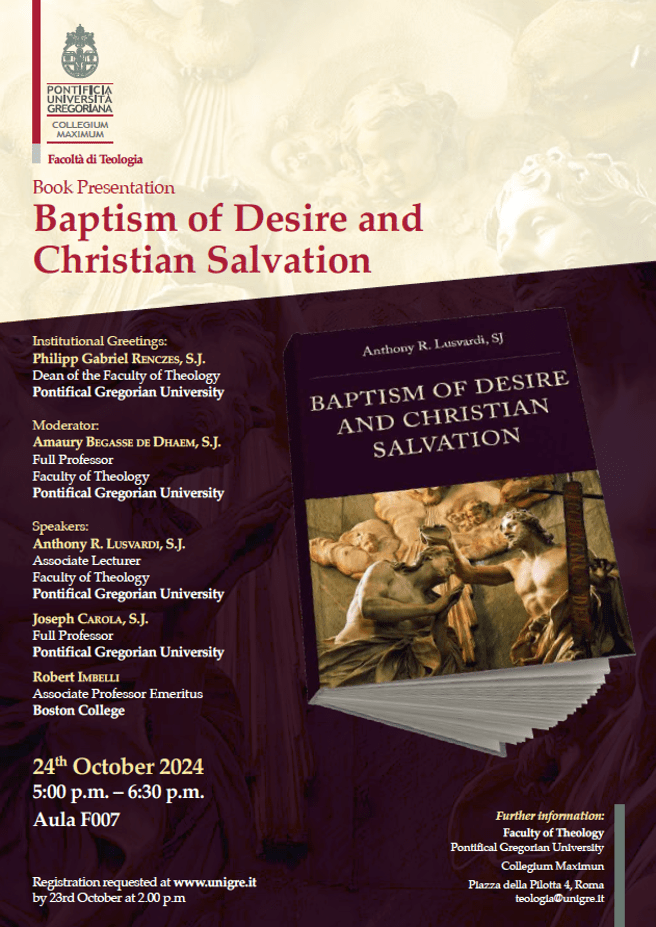
And finally, as you can see from the flyer at the top of this post, I’m pleased to announce that we will have a book launch for Baptism of Desire and Christian Salvation later this month at the Gregorian University. If you are in Rome, please come on Thursday October 24 to hear Fr. Robert Imbelli (coming all the way from New York!) and Fr. Joseph Carola discuss the book’s significance. The event will take place at 5:00 PM in room F007 of the Frascara Building at the Gregorian University. I’ll try to get the talks posted here, too, since it promises to be an interesting discussion.

And for something just a little bit different, you might want to check out the November issue of First Things. Just saying.

Rome for the holidays

Advent is one of my favorite times of the year to be in Rome. What they call winter here is nothing to a Minnesotan, and the shortening days are counterbalanced by the city’s delightful display of Christmas lights. These generally don’t start appearing until after the Immaculate Conception (December 8) and they don’t come down until after the Epiphany (January 6).

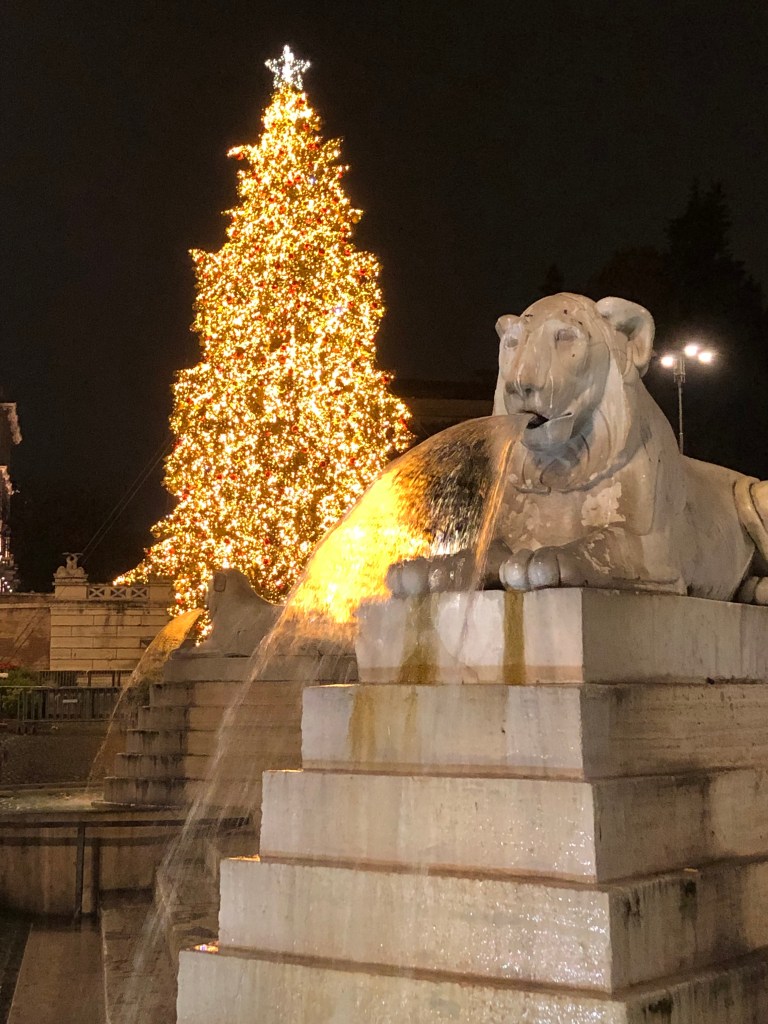
Rome’s Christmas tree, Piazza del Popolo

The city’s official Christmas tree, like the Vatican Nativity scene, is often the subject of local critique and Roman wit. This year, the tree got a new location due to construction work on Rome’s mythical new subway line–scheduled to open a few years after the Second Coming of Christ. The tree’s usual home, Piazza Venezia, is now a construction site, but its new location in Piazza del Popolo is a calmer setting away from the traffic. The official tree also has some competition from a glitzy counterpart at the Spanish Steps, given to the city by the fashion designer Dior.

Dior Christmas tree, Spanish Steps

I’d also be remiss not to mention what a delightful time of year Advent is to be at the Gregorian University, where the university’s international richness is on full display. Student groups from different countries take turns singing in the atrium between classes. It gives them an excuse to duck out of class early (ahem), but you’d have to be Ebenezer Scrooge not to appreciate the festive atmosphere. The Mexican college usually wins the prize for the best show not only because of their charm and energy but because you just can’t top a piñata. It’s a time to be grateful for our young priests, seminarians, religious, and lay students who are such a source of hope for me and for the Church.

Christmas at the Gregorian

Back to school

It’s back to school time in Rome. Yes, the Roman academic calendar starts and ends about a month later than the American schedule–which is a good thing since the first couple of weeks of September were too hot to think, let alone study.

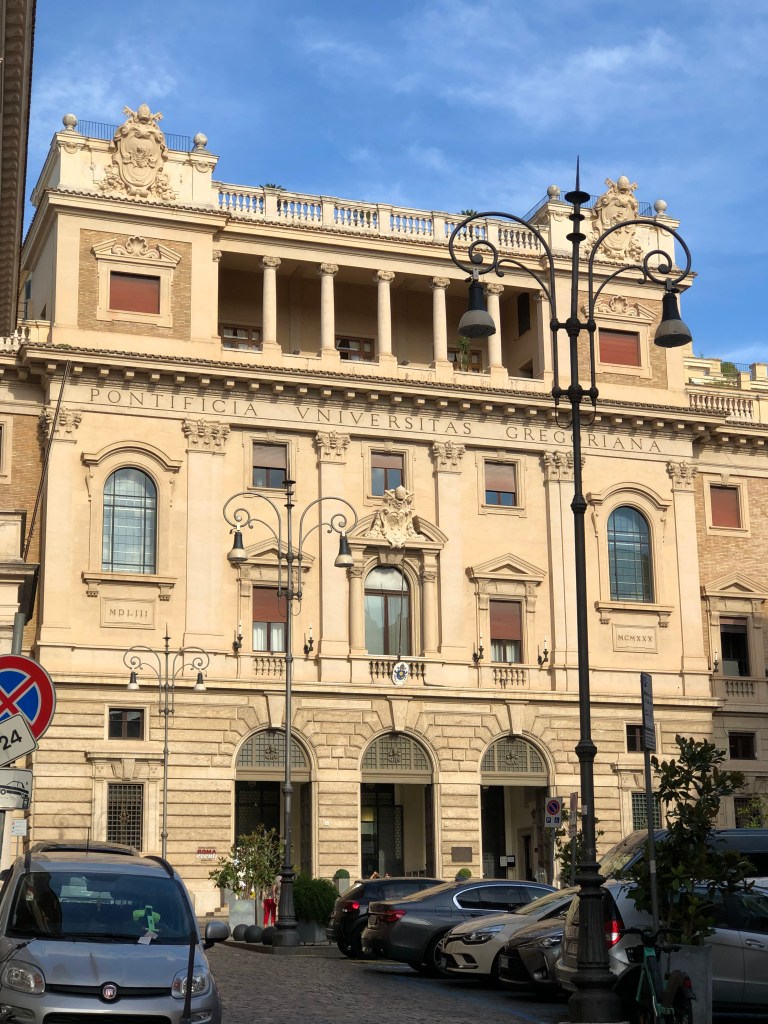
Gregorian University, Rome

And this year, for the first time since starting Kindergarten 1985, my student days are behind me. I’ll be on the other side of the classroom this year, teaching full time at the Pontifical Gregorian University in Rome. Since I have to get to class, I thought this week I’d post an interview with my new boss, the Gregorian’s new Rector, Fr. Mark Lewis, S.J. You’ll see why I’m excited to be teaching at the Greg and to be working for Fr. Lewis. His words on the perspective history provides are particularly valuable.