Sant’ Andrea al Quirinale — Bernini’s favorite church

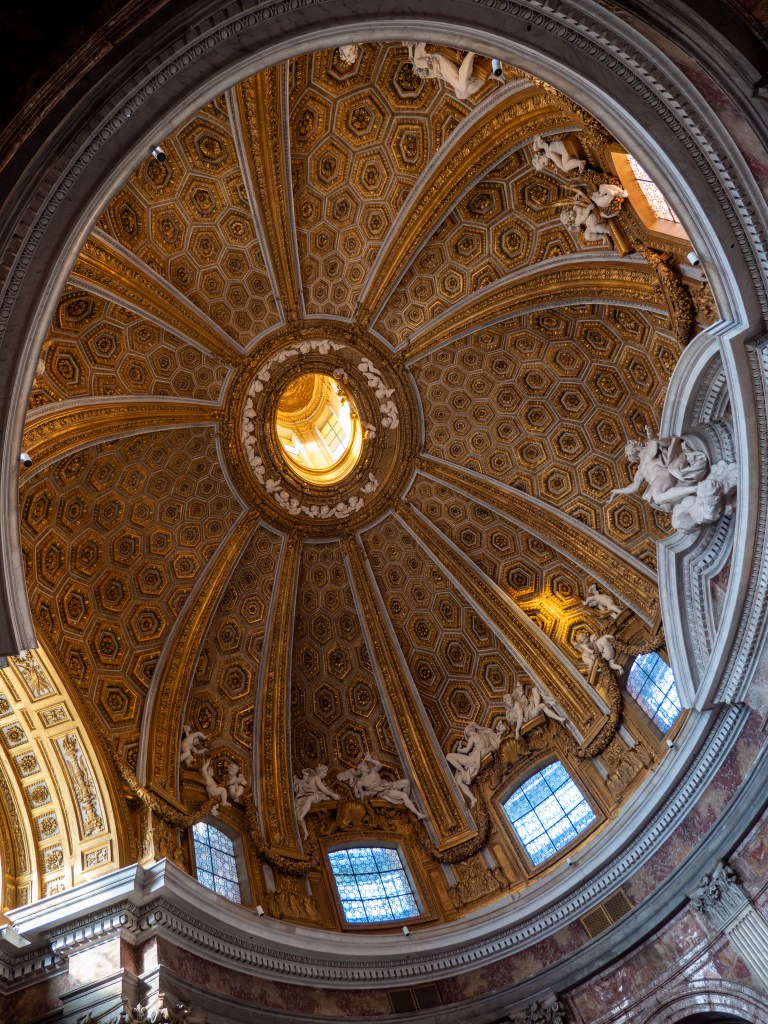
Dome of Sant’Andrea al Quirinale

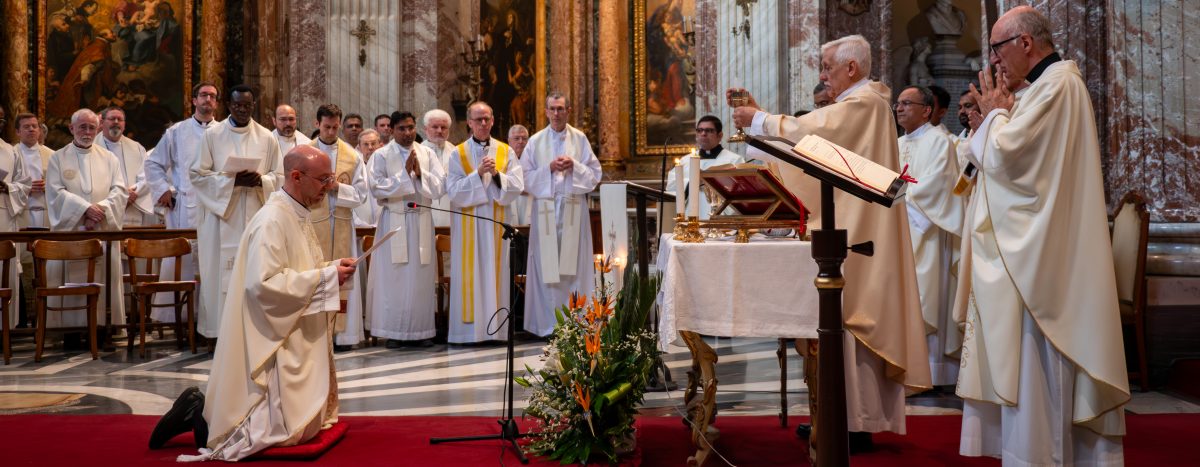
A few weeks ago I shared some reflections on taking my final vows as a Jesuit, a tremendously blessed moment for me. Today I thought I might add a few words and pictures about the place where I took those vows: the Church of Sant’Andrea al Quirinale.

Since Rome is packed with stunningly beautiful churches, sometimes those that would be at the top of the visitor’s itinerary anywhere else in the world end up being overlooked. Sant’Andrea al Quirinale is one of those. It should be numbered among the most important Jesuit churches in the world, but in Rome it has to compete with the Gesù–site of the body of St. Ignatius and the arm of St. Francis Xavier–and Sant’Ignazio–the onetime chapel of the Roman College, as the Gregorian University was first known. Both churches are enormous, paradigmatic examples of the baroque at its most overwhelming.

Sant’Andrea is tiny by comparison, but don’t let size mislead you. It was the chapel of the first Jesuit novitiate; in an adjoining room, one can visit the relics of St. Stanislaus Kostka, patron of Jesuit novices and of students, who died there in 1568 at the age of 17.
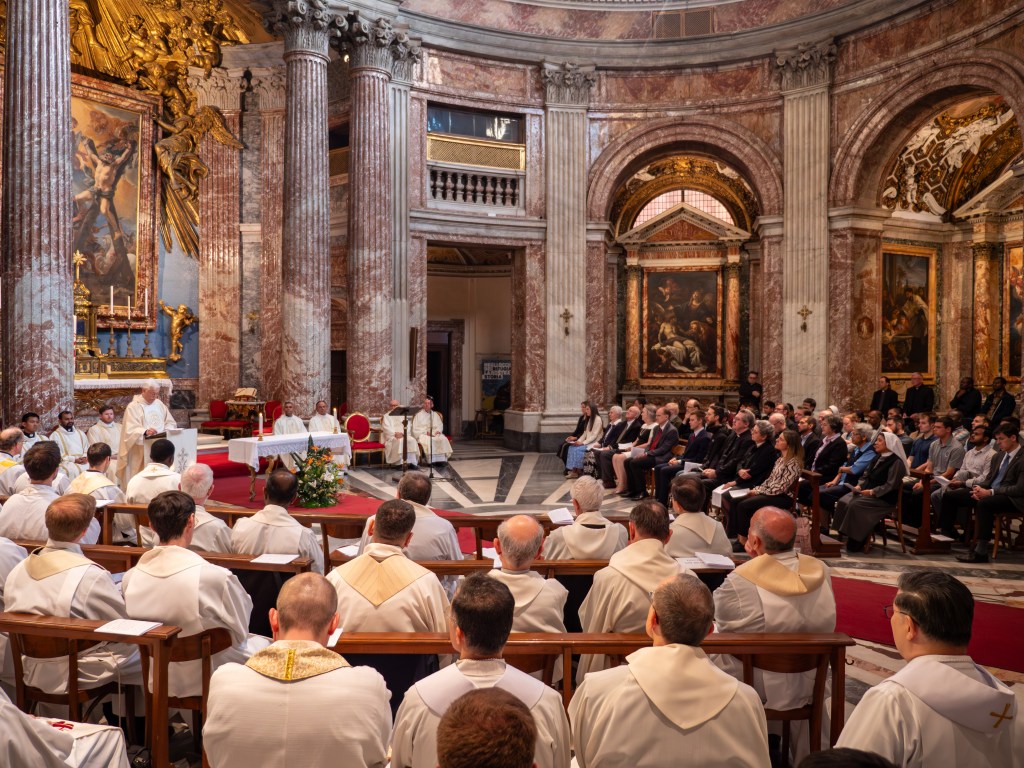
Sant’Andrea al Quirinale interior

While it stood on the site of an early church dedicated to Andrew the Apostle, the present Sant’Andrea (built in 1658) was designed by Gian Lorenzo Bernini. Bernini, who was busy at the time decorating the interior of St. Peter’s Basilica and building the colonnade for St. Peter’s Square, refused to take a commission for Sant’Andrea. It was said to be his favorite work, and, as he aged, the great artist was sometimes seen sitting alone inside the church, enjoying its peaceful atmosphere.

Continue reading “Sant’ Andrea al Quirinale — Bernini’s favorite church”

Bernini’s beads

Can you spot the rosary?

When I reached the end of the station pilgrimage the last time around, I was struck by the details.

For the sacramental theologian such as myself, there’s a deep lesson in the details of the journey. The Son of God’s Incarnation meant entering fully into the reality of human life, with all its diverse moments of suffering and disappointment, of hope and joy, of sometimes just getting by. The Passion narrative is the most vividly detailed part of the Gospels, and the Resurrection stories too, though reflecting the discombobulation of that utterly unprecedented event, also retain the sort of vivid details that stick out in one’s mind even when the world has just gone outside-in. Mary thinks Jesus is the gardener. Jesus eats a bit of fish. The sacraments depend on the details of the Lord’s life, too, on what he ate at his last meal.

Continue reading “Bernini’s beads”

Feast of the Chair of Peter

To celebrate today’s feast, I walked over to St. Peter’s Basilica this morning, especially keen to see the church decorated for the day–the candles lit on Bernini’s spectacular sculpture of the Cathedra Petri and the first pope’s statue decked out in his party regalia.

Cathedra Petri, Bernini

In the past I’ve always had class or other obligations or there were too many tourists or the world was closed for pandemic, so I’d never visited the basilica on this feast. Today, like Goldilocks but without the hair, I found everything just right. Just a smattering of visitors early in the morning, and as a bonus I was able to get to the altar of St. Leo the Great, which is in a part of the church that is sometimes blocked off. Leo is a favorite of mine because of his lapidary teaching that what was visible in Jesus when he walked the earth has passed over into the sacraments (Sermon 74).

Continue reading “Feast of the Chair of Peter”