Of all the corporal works of mercy, the one which is perhaps easiest to forget is the last, burying the dead. Yet, both Christians and Jews have counted giving the dead a decent burial among the most laudable of charitable acts. The plot of the Book of Tobit–one of the Old Testament’s forgotten gems–revolves around the protagonist’s stubborn determination to see that his exiled countrymen receive a proper burial. Joseph of Arimathea is named in all four Gospels for the decency he showed the Lord’s body even after it seemed that all was lost. In the rabbinic tradition, burying the dead is considered especially praiseworthy because the dead have no ability to repay the favor.
Burying the dead shows a concern with human dignity–in contrast to a merely utilitarian concern with maximizing pleasure and avoiding pain–and I think that sense of dignity spills over into how we think about the living. We are both body and soul and to treat the body as something insignificant is to fail to appreciate the precious gift of being human. For Christians, showing the body reverence reflects the belief that our bodies become consecrated objects in baptism and confirmation and, as St. Paul says (1 Cor 6:19), temples of the Holy Spirit.
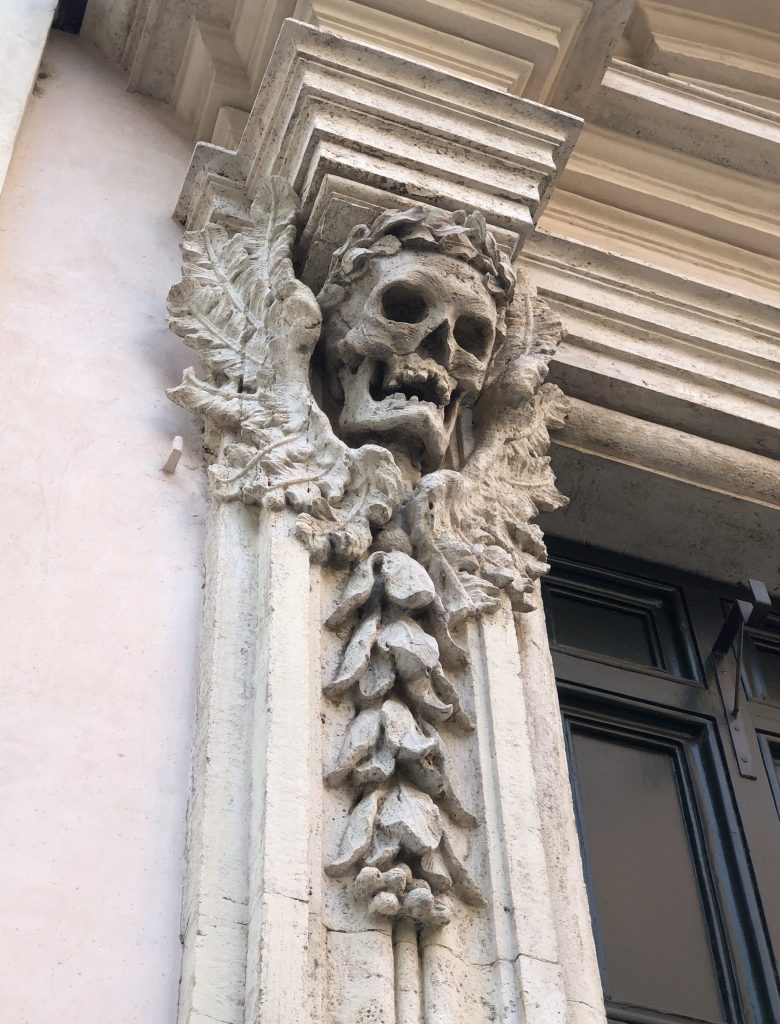
All of these reflections–on All Souls Day–are to introduce what might otherwise seem one of Rome’s strangest churches, the Church of Santa Maria dell’Orazione e Morte (St. Mary of Prayer and Death) located on the Via Giulia. It’s not one of the city’s better known churches and for many years was closed for restoration, but the skulls on its facade make it hard to forget.
Continue reading “Santa Maria dell’Orazione e Morte: a church for Rome’s forgotten”