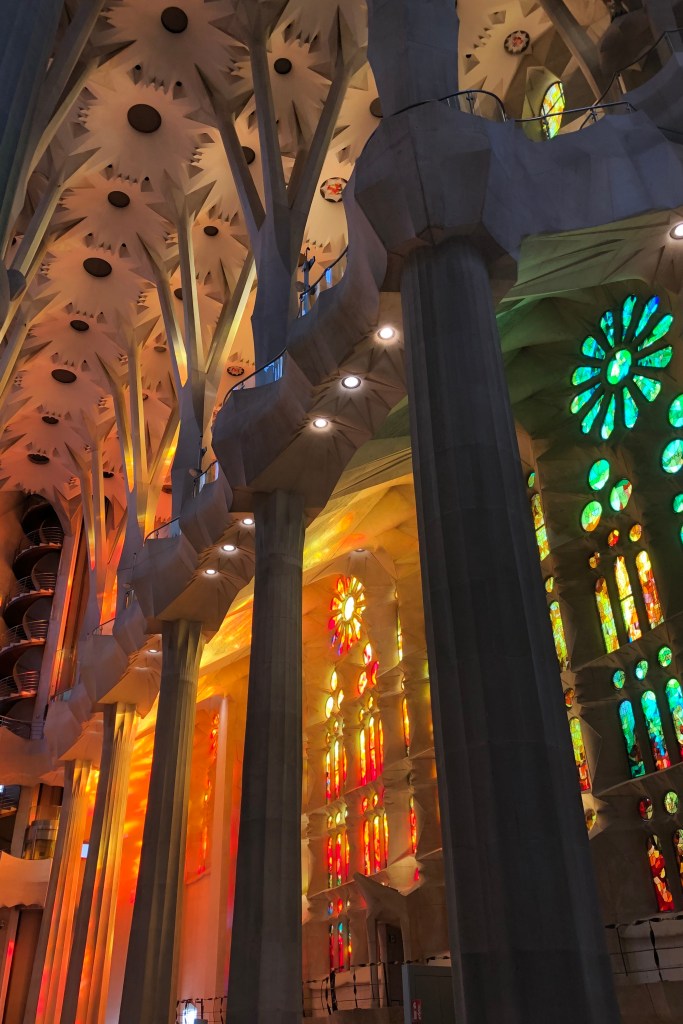
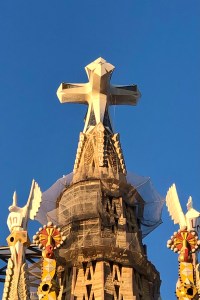
Next week Pope Leo XIV will visit the Basilica of the Sagrada Familia in Barcelona. I have been reflecting on this unique gem of modern architecture a lot since my trip to Barcelona this spring, especially in this essay in America magazine. Pope Leo will dedicate the basilica’s newly completed central tower; his visit got me thinking about the last time a pope visited the Sagrada Familia.
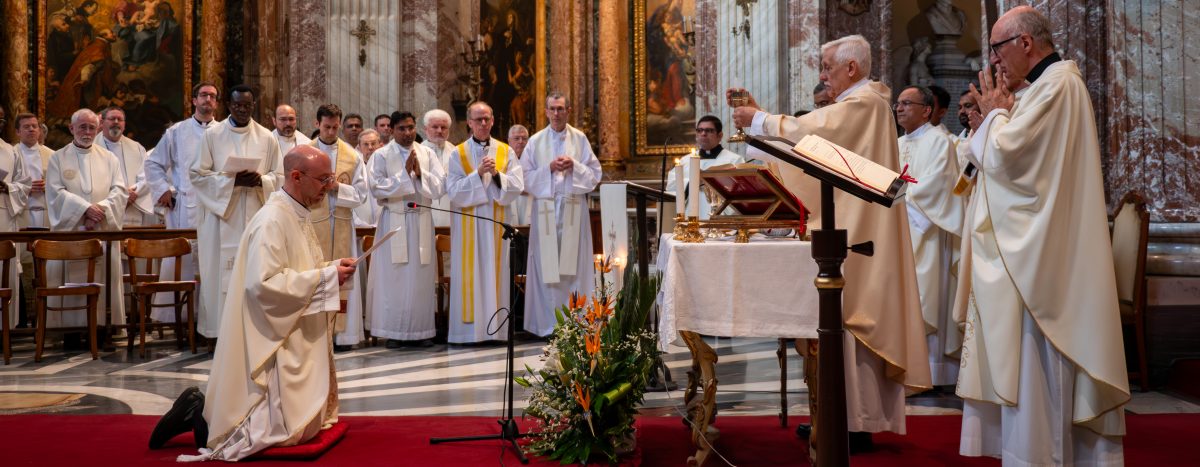
Sixteen years ago, Pope Benedict XVI dedicated the basilica’s central altar and gave a characteristically profound reflection to mark the occasion. I was studying philosophy at Loyola University Chicago at the time, and from the shores of Lake Michigan, I wrote a short reflection on the event, which I thought I’d reproduce here.
Beauty, Basilicas, and Barcelona
Beauty is one of mankind’s greatest needs.
—Benedict XVI
November 9, 2010.
On Sunday Pope Benedict consecrated the Basilica of the Sagrada Familia in Barcelona, Spain, a truly awesome rite. Construction of the basilica, Antoni Gaudí’s masterpiece, began in 1882 and is not expected to be complete for another decade and a half. In that respect, the Sagrada Familia is like many of the other great churches of Europe which took centuries to complete.
Today, the Church celebrates the dedication of another great basilica, St. John Lateran, Rome’s cathedral. To some, this might seem a rather strange feast on the liturgical calendar, commemorating as it does a building rather than an event in the life of Jesus or a saint. Some might even disapprove of lavishing such attention on a structure, a sentiment that finds expression in a line from my least favorite liturgical song, “Gather Us In.” “Gather us in,” the ditty goes, but “[n]ot in the dark of buildings confining.”
The idea of church buildings as “confining,” however, does not do justice to artistic marvels such as the Sagrada Familia or St. John Lateran, wonders as much spiritual as they are architectural. These buildings are, in fact, a true and profound expression of faith.
It takes an act of faith just to start a project such as the Sagrada Familia, especially knowing that one is unlikely to live to see it through. In Pope Benedict’s homily on Sunday he noted the deep faith of the architect Gaudí, who when confronted by setbacks and obstacles would exclaim, “St. Joseph will finish this church.” I’m reminded of Florence’s cathedral, Santa Maria del Fiore, which was designed to be topped by a massive dome—before anyone had developed the technology to make building such a dome possible. Buildings such as the Sagrada Familia and Santa Maria del Fiore represent man’s stretch beyond the limits of his abilities, beyond what seems possible; to start building such a project is always an act of hope.
Continue reading “Pope Benedict XVI at the Sagrada Familia sixteen years ago”