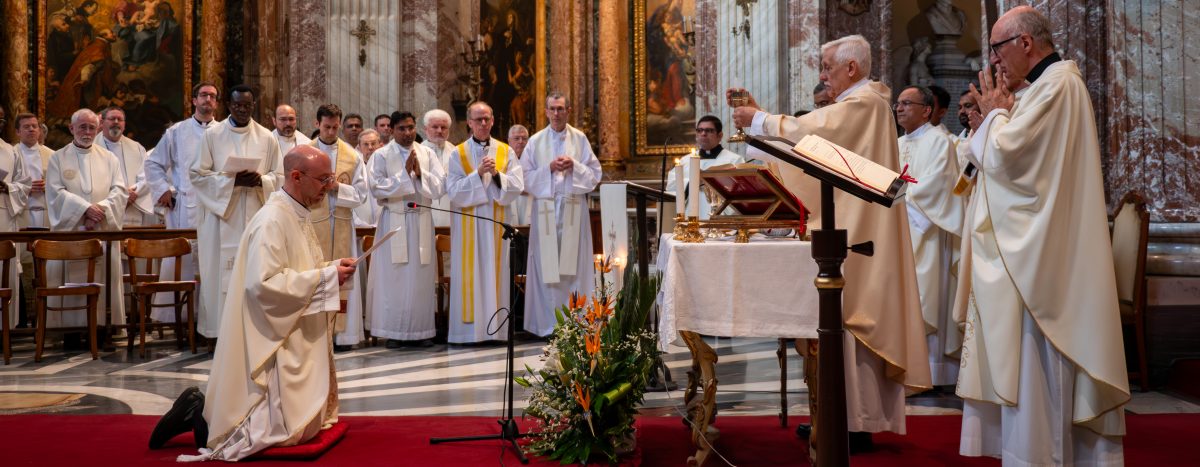
St. Paul and the Jews: Homily for the 19th Sunday of Ordinary Time

Homily for the Nineteenth Sunday in Ordinary Time (Year A)
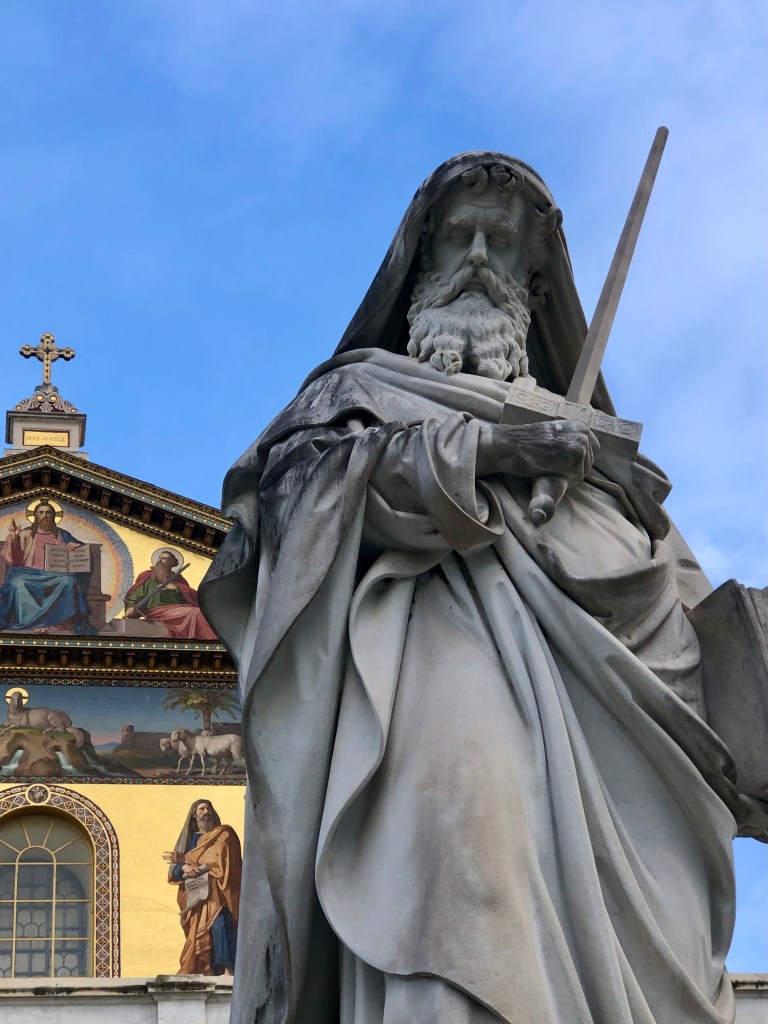
Basilica of St. Paul Outside the Walls, Rome

Today’s marvelous Gospel story of Jesus walking across a stormy sea shows us how faith grows from fear to true understanding.  The disciples move from a superstitious worldview, imagining that the Lord is a ghost, to true faith, confessing to Jesus, “Truly, you are the Son of God.”  But since the same reading came up at daily Mass earlier this week and some of you already heard what I had to say about it, I thought today I would step out onto a different kind of stormy sea: the second reading, taken from St. Paul’s Letter to the Romans.  The reason this particular passage from Romans means walking on turbulent waters is because it deals with St. Paul’s attitude toward his own people, the Jews.  It has implications, therefore, for what attitude Christians should take toward the Jewish people today.  

I decided to risk stepping out onto such waters this morning because over the past several years we have seen a sharp rise in anti-Semitic rhetoric and an increase in violence directed against Jews.  In March, a synagogue in West Bloomfield, Michigan was attacked and, soon after, the FBI thwarted a plot to firebomb synagogues in New York, Los Angeles, and Scottsdale, Arizona.  The situation in Europe is worse, and it should disturb anyone of good sense and good will that in the wake of Hamas’s attack on Israel in October 2023—which included murder, rape, and hostage-taking—anti-Semitic rhetoric in the West increased.

Continue reading “St. Paul and the Jews: Homily for the 19th Sunday of Ordinary Time”

Scholars react to Baptism of Desire and Christian Salvation

A number of reviews and reactions to Baptism of Desire and Christian Salvation have come out in the past few months from scholars who have recognized the book’s importance not only for the field of sacramental theology, but for other areas such as missiology and moral theology as well.

I was especially delighted to read Dom Hugh Somerville Knapman’s appreciative words in The Downside Review. Some very important — but today largely overlooked — debates over limbo, the eternal destiny of unbaptized infants, and baptism were hashed out in the pages of The Downside Review in the mid-twentieth century, and I cite some of them in Baptism of Desire and Christian Salvation. It is gratifying — and humbling — to see my own contribution become a part of this much longer and larger conversation.

Dom Knapman writes

It is to Anthony Lusvardi’s credit that he has revisited such an unfashionable doctrine, and so well… More importantly, even most importantly for this reader, Lusvardi confronts us with the centrality of baptism to the gift of salvation in Christ. Anyone who teaches baptism, especially at secondary and tertiary levels, will benefit enormously from Lusvardi’s work…

Lusvardi explains masterfully and accessibly how authentic doctrinal development plays out, as the Church addressed and overcame these apparent challenges to the fundamental doctrine of the necessity of sacramental baptism. What he reveals is that baptism always remains necessary, but also that in cases of strictly-defined inability, it can be attained by modes other than water, that is by blood or desire. Baptism by water, blood, or desire all achieve the same end: conformity to and participation in the death and resurrection of Christ.

While Dom Knapman appreciated the sacramental dimensions of the work, Dr. Gavin D’Costa, one of the world’s top scholars in the theology of world religions and missiology, notes its importance for those fields. In his review in Angelicum, D’Costa picked up on the parallels between my book’s historical analysis and Servais Pinckaers’s seminal The Sources of Christian Ethics, “where Pinckaers argued a similar thesis about Christian ethics — from Christologically centered praxis and the pursuit of virtue, to emphasizing duty, obligation and juridical categories.” Thinking about baptism or salvation primarily in terms of such categories, I argue, led to a distorted picture which began to come apart in the nineteenth and twentieth centuries.

Continue reading “Scholars react to Baptism of Desire and Christian Salvation”