Signs of hope and renewal for the Church in Europe

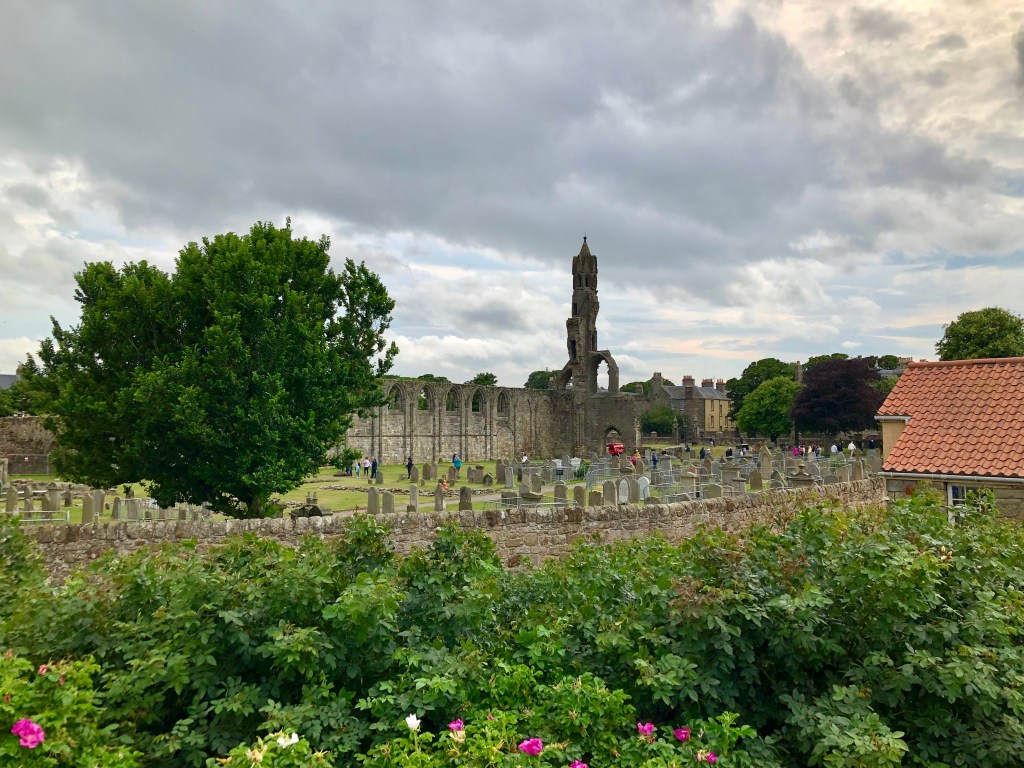
Ruins of St. Andrew’s Cathedral, Scotland

Today, the Church in Europe is sometimes portrayed as ready for last rites, and the decline in Church participation, vocations, and the general vibrancy of the faith there since the mid-1960s is undeniable. But, if the history of Christianity on the continent has taught us anything, it is that the Church can survive ups and downs because she is endowed with a supernatural capacity for renewal.

My own decade living in Europe has taught me that, in times like ours, we need to be attuned to the danger of historical determinism and cultural conformity. We must resist the temptation to think that history moves in an inevitable direction so we might as well just go along with the times. Such an attitude is a recipe for managed decline and eventual extinction.

In contrast, as I’ve noted in previous posts on the Church in Scandinavia (reflecting on my trip to Sweden and and the fine work of Norway’s Bishop Erik Varden), times such as ours present unexpected opportunities if we know where to look and are bold and unapologetic enough to seize them.

Continue reading “Signs of hope and renewal for the Church in Europe”

Finding hope in Jerusalem, Babylon, and Sweden: homily for the thirtieth Sunday on Ordinary Time

Uppsala domkyrko

Homily for the 30th Sunday in Ordinary Time (B)

Today I’m going to talk about Jerusalem, Babylon, and Sweden—all of them, in different ways, places of hope.

We are probably used to hearing messages of hope in church, so we could easily miss just how remarkable our first reading from the prophet Jeremiah really is.  This particular message of hope, if placed in context, is as startling as stumbling upon a lush citrus grove in the Arabian desert.  To appreciate the passage, it helps to remember a bit about the tragic and cantankerous life of Jeremiah.  This is the prophet, after all, whose name gives us the literary term “jeremiad” to describe a long speech bitterly denuncing something or someone.  In fact, the book of Jeremiah contains plenty of jeremiads.  The prophet denounces the elite of Jerusalem for straying from the law revealed to them by Moses, for their petty idolatry and corruption, for their self-satisfaction and complacency.  Their cowardly refusal to return to the faith of their ancestors has left the Kingdom of Judah weak and vulnerable to its enemies, Jeremiah warns, as had many prophets before him.  What sets Jeremiah apart from these other prophets of gloom is that he tells Jerusalem’s rulers that they have ignored God’s message for too long, and now it’s too late.  A superpower has risen in the East—Babylon—and nothing Judah’s rulers do now will stop it.  It is better, Jeremiah warns, to surrender.

Jeremiah’s message—“you’ve been leading us in the wrong direction for a generation, and you can’t escape the consequences of your actions”—did not win him popularity.  Judah’s rulers hired a more optimistic prophet, Hananiah, who delivered a message more to their liking.  But a few pages before today’s first reading, Hananiah drops dead, a none-too-subtle sign that the Lord does not approve his message.  As the Babylonians close in and a brutal siege begins, Jeremiah tells the people of Jerusalem, you will be defeated, your city destroyed, and then you will be dragged off into exile.

Continue reading “Finding hope in Jerusalem, Babylon, and Sweden: homily for the thirtieth Sunday on Ordinary Time”