Granados endorsement

Just a friendly reminder that if you haven’t yet ordered your copy of Baptism of Desire and Christian Salvation, at a mere 20 cents/page, it remains a bargain. And each page is jam-packed with non-stop theological action.

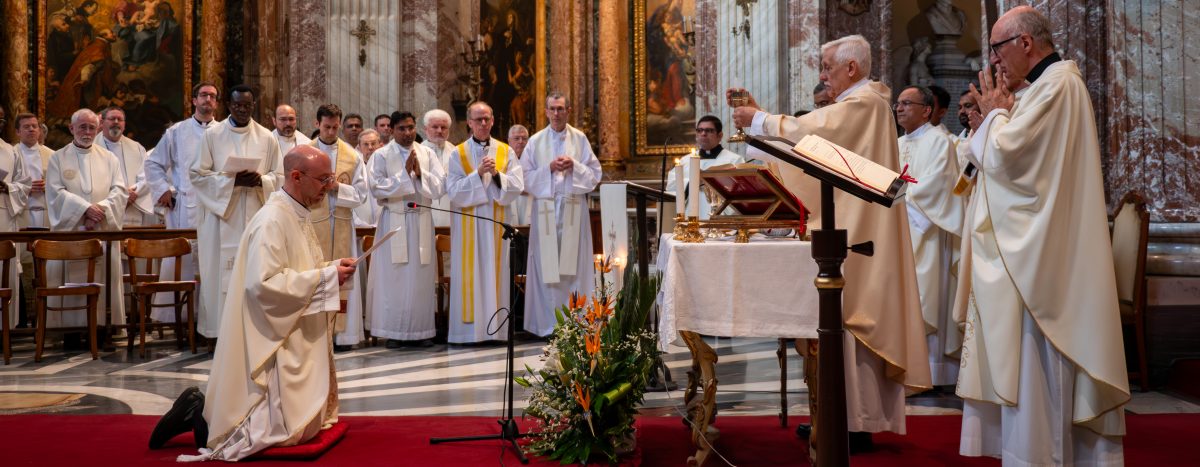
You might think I’m biased, but you don’t have to take my word for it. When the book came out, I was thrilled to see that CUA Press had arranged a review and endorsement from Fr. José Granados. Attentive readers will recall that I mentioned Fr. Granados’s superb Introduction to Sacramental Theology here before. (It’s now available in Italian under the title Teologia dei sacramenti: Segni di Cristo nella carne.)

Here’s his verdict:

Offers a very accurate historical analysis of the doctrine of baptism of desire, starting with St. Ambrose and St. Augustine up to Vatican II. Lusvardi does not only give information about the different Fathers and theologians but delineates a clear leading thread that allows us to follow the development of the idea. The analyses are precise, the bibliography is abundant and well chosen, the documentation is excellent, the theological approach very sound.

José Granados, author of Introduction to Sacramental Theology: Signs of Christ in the Flesh
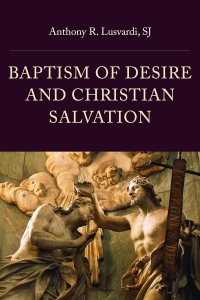
Baptism of Desire and Christian Salvation — now in print!

After a few delays, I am pleased to report that my book is now officially in print and copies have arrived for those who preordered. It seems to have been released on Good Friday no less.

If you’re still on the fence about whether it’s worth the read, I thought I’d share the very kind words of endorsement from Fr. Joseph Carola, SJ, my colleague at the Gregorian University and expert in both the Church Fathers and Nineteenth Century theology.

So take it from Fr. Carola:

Jesus instructed Nicodemus that, “unless one is born of water and the Spirit, he cannot enter the kingdom of God” (John 3:5).  Faithful to the Lord’s revelation, Christians have insisted for two millennia upon the necessity of baptism for salvation.  But already in the ancient Church, salvation’s rough edges, as Father Anthony Lusvardi creatively calls them, have challenged believers.  What is the fate of those who lived before Christ and therefore died without Christian baptism?  What happens to the catechumen who dies unexpectedly before being baptized?  Can unbaptized babies get to heaven?  Is there any hope for the salvation of non-Christians?  In his thoroughly historical and insightfully theological study of the baptism of desire, Father Lusvardi offers his readers a fresh perspective on this traditional notion often misunderstood and misapplied in contemporary theology and pastoral practice.  Providing a convincing response to the challenges that the hard cases present, Father Lusvardi especially appeals to the Catholic Church’s lex orandi in order to establish the Church’s lex credendi that simultaneously upholds the necessity of baptism, the need for evangelization, and the nuances of desire.  Historically informative, theologically rich, and occasionally even humorous, Baptism of Desire and Christian Salvation is a book not only for theologians, but perhaps even more so for pastors who labor on the rough edges of salvation.

Joseph Carola, S.J., S.T.D.

November 2, 2023

All Souls

The Pontifical Gregorian University, Rome

San Giovanni dei Fiorentini

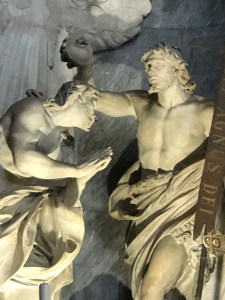
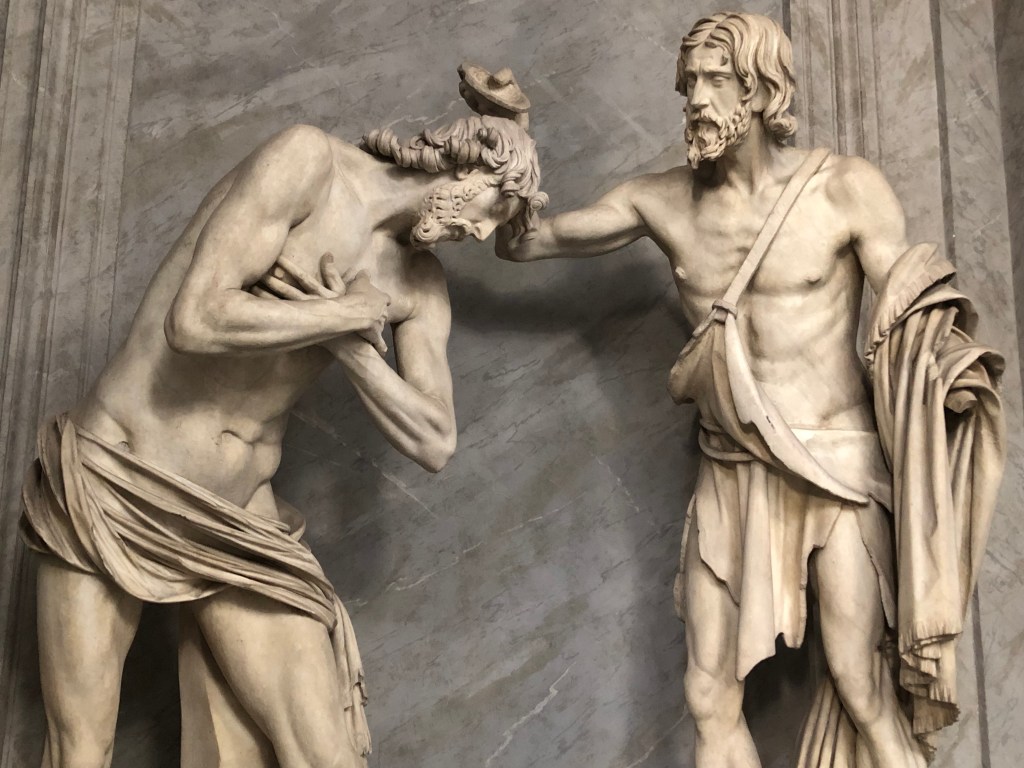
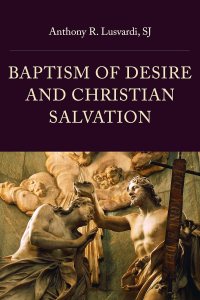
Baptism of Jesus, Antonio Raggi, San Giovanni dei Fiorentini, Rome

To celebrate the feast of the Baptism of the Lord–which this year falls unusually on a Monday–I thought I’d share a few photos from one of Rome’s lesser known churches, San Giovanni dei Fiorentini. A baroque church, it was built for the Florentine expats in Rome back when Florence was an independent city-state and named for the city’s patron, St. John the Baptist. The church contains a relic of Mary Magdalene (her foot), and is the burial place of the great–but tragically unhappy–baroque architect Francesco Borromini. It also contains a number of interesting artistic works featuring baptism. 

I’ve written before about the importance of baptism, but I have a personal reason to be particularly fond of San Giovanni dei Fiorentini. Its 17th century altarpiece, the Baptism of Jesus by Antonio Raggi, features on the beautifully designed cover of my book Baptism of Desire and Christian Salvation. Of course, I’d like to think that what’s inside the cover is pretty interesting as well, and I’m pleased that the book’s release date is coming up later this month–January 26. There’s more information on the website of Catholic University of America Press, and the book is available on other online sellers such as Amazon.

In the meantime enjoy the views of San Giovanni dei Fiorentini.

Thomas Aquinas on eternal life

The end of the liturgical year coincides with a number of gems from the Office of Readings, including this conference from St. Thomas Aquinas, which I’d never taken note of before. It reinforces a number of things that I’ve noticed over the past several years researching the theme of baptism of desire. The first–that eternal life means union with God–is perhaps the most important and, today, the most neglected. Heaven, in others words, does not mean having more treats, but communion with God. It’s maybe uncomfortable to say in our age of “moralistic therapeutic Deism”, but those who don’t desire communion with God don’t really want what we mean by heaven. In the end, heaven has more to do with how we love than with where we are.

Here’s how Thomas puts it:

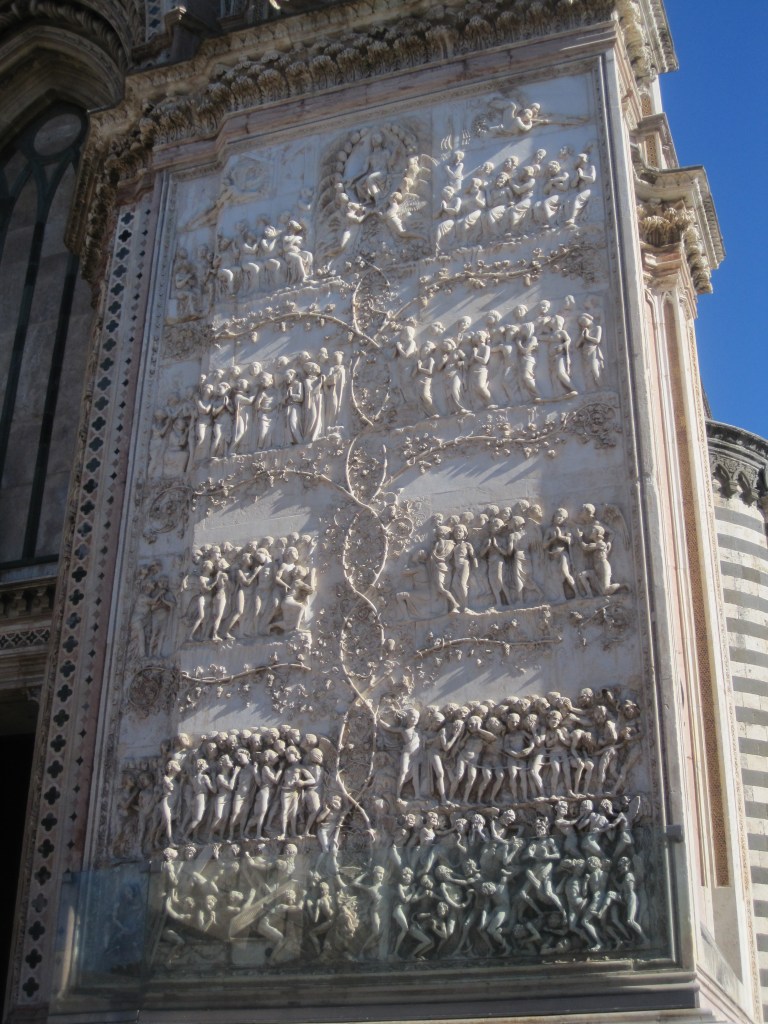
Final Judgment, Orvieto Cathedral

“The first point about eternal life is that man is united with God. For God himself is the reward and end of all our labors…

“Next it consists in perfect praise…

“It also consists in the complete satisfaction of desire, for there the blessed will be given more than they wanted or hoped for. The reason is that in this life no one can fulfill his longing, nor can any creature satisfy man’s desire. Only God satisfies, he infinitely exceeds all other pleasures. That is why man can rest in nothing but God. As Augustine says: You have made us for yourself, Lord, and our heart can find no rest until it rests in you…

“…eternal life consists of the joyous community of all the blessed, a community of supreme delight, since everyone will share all that is good with all the blessed. Everyone will love everyone else as himself…”

St. Thomas Aquinas, Credo in Deum

Office of Readings

Saturday of the Thirty-third week in Ordinary Time

Ritual and desire

A few weeks ago I mentioned José Granados’s fine new book Introduction to Sacramental Theology: Signs of Christ in the Flesh. It’s full of interesting insights. Since I’m working on putting the final touches on my book about baptism of desire, one line that indirectly touches on the theme of desire stood out.

I often point out that our rituals are meant to form us. They shape us and make us into new beings, especially the sacraments of initiation. In this regard, Granados points out that rituals form our desires as well.

“For in our action there is always more than what we have put into it; and for that reason we desire, when we act, more than what we think we desire.” (309)

The action of the liturgy, in other words, implies desiring certain things and in a certain way. When we participate in the liturgy, therefore, those desires become our own. This insight gets at what makes the sacraments irreducible, why they cannot be replaced with just having the right ideas, and what makes baptism of desire such a difficult and fascinating topic.

More on Augustine (and Ambrose)

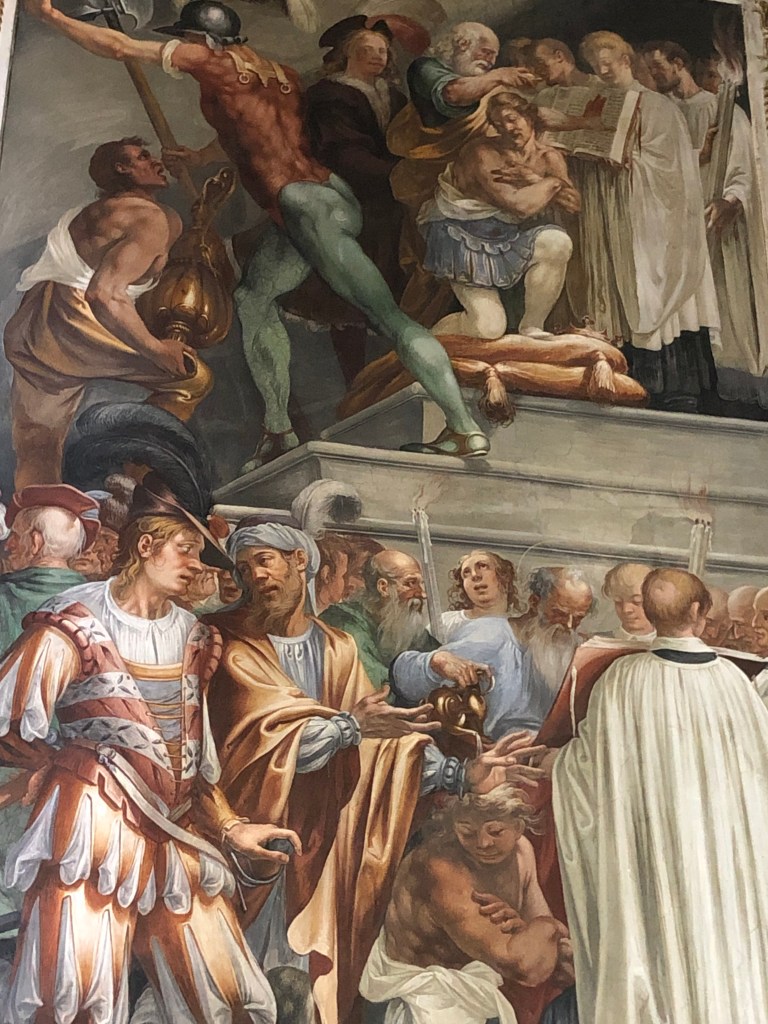
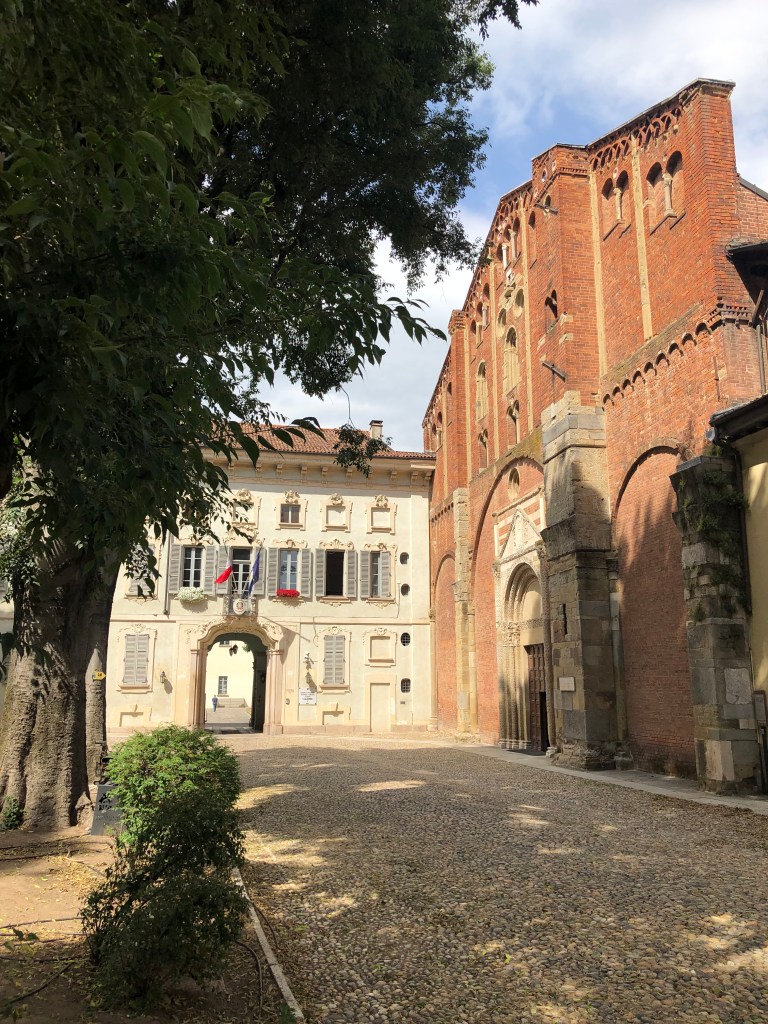
Last week, I mentioned visiting the church of San Pietro in Ciel d’Oro in Pavia, resting place of the relics of St. Augustine. This week, I thought I’d share a few more pictures of the church and the tomb, as well as a favorite panel from the monument, a scene of young Augustine listening to St. Ambrose preaching.

San Pietro in Ciel d’Oro, Pavia, Italy

Ambrose, then bishop of Milan, is another of my favorite theologians. He was the first Christian thinker to formulate the doctrine of baptism of desire, which–1530 years later–became the subject of my doctoral dissertation and book Baptism of Desire and Christian Salvation. (Augustine was the second… I’m not quite sure where I fall on the list, but it’s significantly farther down.)

In any case, below is Augustine’s description of his encounter with Ambrose to accompany the photos.

Continue reading “More on Augustine (and Ambrose)”

On Spiritual Communion

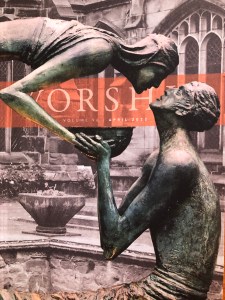
I was very pleased to get the new issue of Worship, where I have an article that brings together some thoughts from the early days of the COVID lockdown with research related to my work on baptism of desire. It provides some of the intellectual background for my thoughts on the limits of e-worship in America.

The article “Spiritual Communion or Desire for Communion?: Sacraments and Their Substitutes in the Time of COVID-19” appears in the April 2022 issue of Worship.

Here’s the abstract:

This article critiques the concept of “spiritual communion” in light of the COVID-19 pandemic. It traces the idea’s roots to the earlier doctrine of baptism of desire and explores how the scholastic distinction between the sacramentum and res sacramenti supports it. However, it argues that such a distinction runs the risk of reductivism, discounting the embodied and communal dimension of the celebration of the sacraments. It suggests that understanding the Eucharist to represent a single irreducible good which produces multiple secondary goods provides a better way to understand the sacrament. Such a framework is able to account for what is positive in such practices as spiritual communion or televised liturgies while avoiding the danger of presenting them as replacements for the sacrament itself.