Choose life, South Dakota: homily for the twentieth Sunday in Ordinary Time

Homily for the 20th Sunday in Ordinary Time (B)

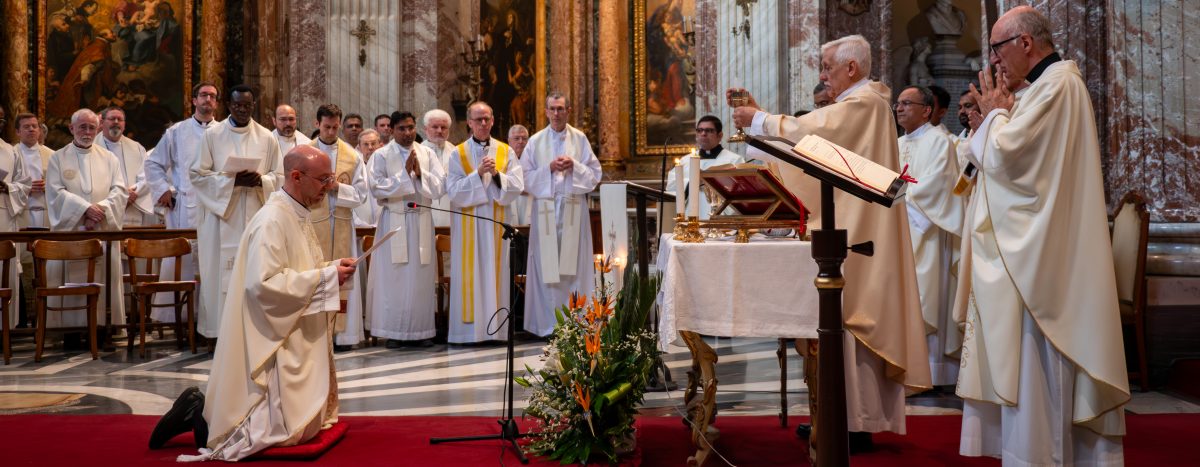
If there is one theme consistently present throughout the whole Bible, from the first chapter of Genesis to today’s Gospel, it is that God desires to give us life.  When he reveals the commandments to Moses on Mount Sinai, he tells the people of Israel, “I have set before you life and death, the blessing and the curse.  Choose life, then, that you and your descendants may live” (Dt 30:19).  Today the Eucharist too is presented as life-giving: “The bread that I will give is my flesh for the life of the world” (Jn 6:51). 

It is fitting that today’s readings would highlight God’s desire to give us life, because, as I mentioned last week, the bishops of South Dakota have asked us to speak these two Sundays about a particularly urgent social issue: a measure, Amendment G, has been placed on the ballot this November, which would add the right to abortion without significant limits to the South Dakota constitution.  As I pointed out last week, Christianity is not a political program, and Catholics can disagree about most political issues while still remaining faithful to the principles of our faith.  Amendment G, however, is impossible to reconcile with the fundamental principle that it is always wrong to deliberately kill an innocent human being.

This principle is something that both conservatives and liberals should be able to embrace.  Conservatives emphasize the government’s duty to protect and not usurp individual rights, and without the right to life no other rights are possible.  Even a libertarian “live and let live” philosophy only works if you let the other live.  Take away the right to life and you have neither conservative government nor a free people, but the oppression of the weak.  

Continue reading “Choose life, South Dakota: homily for the twentieth Sunday in Ordinary Time”

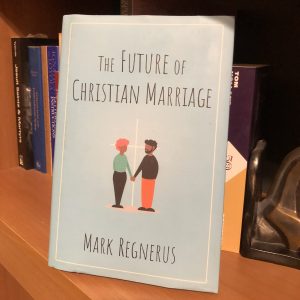
The Future of Christian Marriage

This week marks the end of the first semester at the Greg. One of the semester’s blessings has been the seminar I taught on the sacrament of marriage, which looked first at some classic theological texts on the subject and then attempted to grapple with the contemporary problems the Christian vision of marriage faces. No small task, and I learned much from the discussion. I’m grateful to my lively group of students.

To guide our discussion I assigned sociologist Mark Regnerus’s engaging and insightful book The Future of Christian Marriage (Oxford 2020). The book makes use of social surveys, Regnerus’s own extensive research on the subject, and 200 interviews conducted with young Christians in seven different countries. My students–who hailed from a total of eight different countries–found the book quite helpful for understanding the situation they themselves face. Having real-world data also improved our theological discussion, which, in today’s climate, can sometimes get bogged down in sloganeering.

At the root of Regnerus’s argument is the contention that attitudes toward marriage have changed from seeing it as a “foundation” to seeing it as a “capstone.” In other words, instead of a unit based on mutual exchange that helps a couple to weather life’s uncertainties, young people have increasingly come to see marriage as a capstone one acquires only after attaining personal, financial, and career success. This means that marriage is delayed, comes with more difficult-to-realize expectations of one’s spouse, and, for many, ultimately becomes unattainable. This is all part of the “atomization” of society as individuals become our primary social grouping at the expense of families.

Continue reading “The Future of Christian Marriage”

Our Great American Holiday

As an American abroad, I’ll readily confess to a bit of nostalgia come Thanksgiving time. As a national rite, the holiday is sublime in its simplicity: turkey, family, eating–and an implicit spirituality as unobtrusive and essential as bedrock. I do celebrate here in Rome with other expats, but the Italian interpretation of cranberry sauce, stuffing, and pumpkin pie, while sometimes whimsical and frequently tasty, is never quite the same. Thanksgiving is quintessentially American, expressing what is best about our country–and perhaps also something of what we seem to be losing.

Continue reading “Our Great American Holiday”

Confessing other people’s sins

Old St. Anges Church, Parmelee, South Dakota

In case you missed it, an essay of mine appeared recently in issue 19 of The Lamp, a relatively new Catholic magazine full of interesting and thoughtful writing (if I do say so myself).

“Public apologies for historical wrongs have multiplied in recent years… Yet we do not seem to have become a more reconciled and understanding society.”

This particular essay, “Confessing Other People’s Sins,” is among the most important things I’ve written. The essay draws on a lot — my experiences in South Dakota, as a confessor, and studying theology.

The hunger and the harvest are abundant: homily for the eleventh Sunday of Ordinary Time

Homily for the 11th Sunday in Ordinary Time (A)

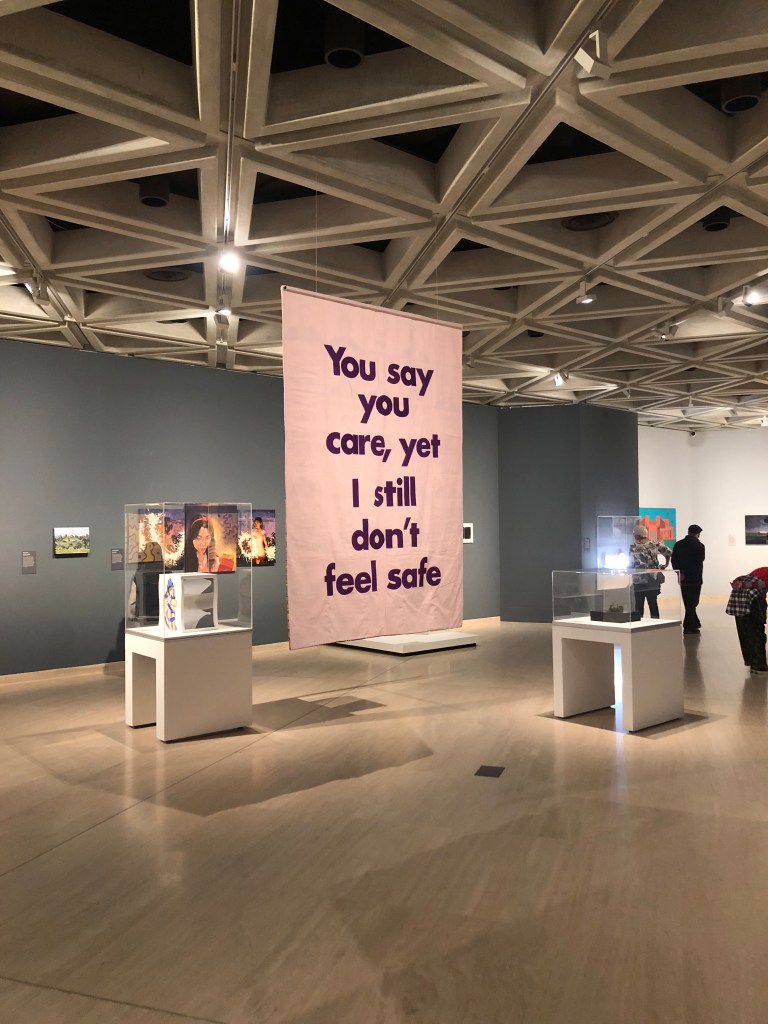
A couple of weeks ago I visited the Art Gallery of Western Australia, not very far from here, and I was moved by an exhibition of works by young artists, Year 12 Visual Arts graduates, from here in WA.  In addition to the talent of these young people, I was moved—even disturbed—by the pain that I saw expressed in their work.  Not youthful idealism, but pain.

Western Australia Pulse 2023 Exhibition, Perth

The pain that I saw expressed so honestly in art was not from material deprivation.  These young artists enjoyed all the advantages and opportunities of a state-of-the-art education system.  No generation has ever had the material advantages we enjoy today in the West.  Yet as I have traveled in America, in Australia, in Europe I have felt what I think many people today perceive, an ache, an emptiness—sometimes a sense of rootlessness, sometimes a vague, unspecified guilt, often a lack of purpose and meaning.  We claim to be free, yet fear of giving offense suffocates us.  We are hyperconnected through media and gadgets, yet no generation has ever been so lonely.  We boast of the diversity of our societies, yet we barely speak to those with whom we disagree.  Something is wrong, something is missing—something at the root of the hurt expressed in those young artists’ work.

In the popular culture of the West, the spiritual void is inescapable.  We have uncountable comforts.  In fact, I don’t think that our most characteristic compulsion is to acquire more stuff.  Instead, today, we are addicted to being entertained.  But our entertainment does not lift the soul—it is not like the art of Michelangelo.  It just keeps us occupied and keeps us paying.  How could we, beings created in the image of God, find this satisfying?  

Continue reading “The hunger and the harvest are abundant: homily for the eleventh Sunday of Ordinary Time”

Making sense of our post-Christian culture

San Galgano, Tuscany

In the West today, pessimism is warranted. Suicide, crime, and drug use are up; birthrates are down. In America, woke excess has undermined much of the progress made toward racial reconciliation over the course of the last century. The decline in religious practice has eroded those values that transcend political conflict and material consumption; we’re losing the shared cultural language with which we could talk to one another about matters touching on the common good. In the absence of a common cultural narrative and shared values, tribal loyalties have filled the void, becoming our false gods.

I don’t think it disloyal to admit that the Church has not adequately responded to the West’s malaise. Faced with Covid, we closed shop. Rome these days sometimes seems to be swimming in nostalgia for the 1960s. No doubt it was more pleasant to be a young cleric in the heady days of Vatican Council II–at least, before the seminaries emptied–but those are not our days.

Half a century ago, perhaps, Catholics in the West could still see their societies as Christian, though ones that were rapidly changing. So it seemed reasonable enough to hope that with a bit of updating around the edges, a little accommodation to the Zeitgeist, we might experience a new flourishing of Christian life. That didn’t happen, and it is no longer reasonable to expect that it will. We need a new response to today’s reality.

A recent article by Sydney’s Archbishop Anthony Fisher The West: Post- or Pre-Christian? provides a helpful, nuanced diagnosis of where we are.

Continue reading “Making sense of our post-Christian culture”

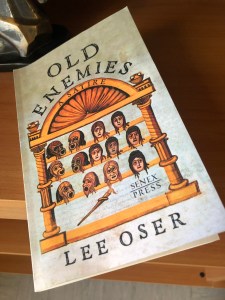
Hope and satire

I don’t have much time for leisure reading this semester, but I was pleased to pick up Lee Oser’s witty satire Old Enemies as I settled back into Roman life last month. It’s both funny and thought-provoking. In fact, you can read the thoughts it provoked in my review “Hope in the Ruins” published at Law & Liberty. I also muse about what grounds we have for hope during the West’s current self-destructive cultural moment.

Abortion, public policy, and the Catholic bishops

This article by Richard Doerflinger in America magazine “The U.S. bishops aren’t the extremists in the abortion debate” makes what I think are some very important points about the Catholic Church’s teaching on abortion and public policy. It answers a few questions I’m sometimes asked and clears up some misunderstandings.

Catholic teaching does, in fact, allow for an incremental approach to ending abortion, as Pope St. John Paul II taught in Evangelium Vitae, 73. This means that, while Catholic politicians can never legitimately vote for more permissive abortion laws, they can in good conscience make reasonable compromises when advancing pro-life legislation.

Continue reading “Abortion, public policy, and the Catholic bishops”

Go Irish!

I know it’s not an official day on the Church’s liturgical calendar, but today is Notre Dame’s opening football game. And it’s a big one, not least because ND’s new coach Marcus Freeman is squaring off against his former team, the #2 Ohio State Buckeyes. Unfortunately, I’ll be somewhere over the Atlantic during the game–oh, the sacrifices of religious life!

For your game day spiritual reading, I’d recommend this article and interview in the National Catholic Register: Coach Marcus Freeman Talks Faith, Fatherhood and Notre Dame Football. He has wise words on all of those subjects, and I was particularly struck by his unabashed embrace of ND’s Christian identity: “I want our guys to wonder about what it means to embrace Jesus Christ.” Maybe he could take over “Mission and Identity” at our Jesuit universities too.

There is a lot to like about Coach Freeman.