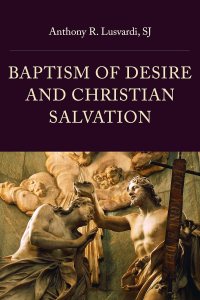
Baptism of Desire and Christian Salvation

My book Baptism of Desire and Christian Salvation is now available to order, though its shipping date will be a little later. Its official publication date was originally last Friday but now seems to have been bumped to March. I’ve been working on the topic of baptism of desire since my STL studies at Sant’Anselmo–a good six years ago–so it has been a long time coming. I think the result says some important things for Catholic theology and the evangelizing mission of the Church. So let me assure you, it’s worth the wait!

I’ll have more on the topic to say, of course, and I’ll share the reactions of others to the book so you don’t have to take my word for it. For now I’ll just share the official description from Catholic University of America Press. The book is available directly from CUA’s website as well as other online booksellers such as Amazon. This spring CUA is offering a 20% discount on new books with the promo code CT10. Make sure that your library gets a copy, too!

Baptism of Desire and Christian Salvation. Belief in the necessity of baptism for salvation is rooted in the New Testament and was forcefully affirmed by the Church Fathers, yet today this belief is treated with unease if not ignored altogether. Over the course of centuries, Catholic theology has wrestled with a doctrine—baptism of desire—that both preserves this fundamental principle and allows for salvation in hard cases, such as catechumens dying unexpectedly. Baptism of Desire and Christian Salvation traces this doctrine’s varied history, from its genesis in a fourth century funeral oration given by Ambrose of Milan to its uneasy position in the Anonymous Christianity of Karl Rahner. 

More than a history, however, this book raises questions about the nature of religious ritual and the sacraments, the mission of the Church, and the essence of salvation. Arguing that theologians of the past two centuries have tended to downplay the role of the sacraments when discussing salvation, Lusvardi suggests that baptism should remain our theological starting point. Engaging with the theological tradition and at times challenging the conventional wisdom, Baptism of Desire and Christian Salvation shows how such a sacramental approach can offer credible—and sometimes surprising—responses to questions related to the salvation of non-Christians, the fate of unbaptized infants, and the relevance of the Church’s mission today.

San Giovanni dei Fiorentini

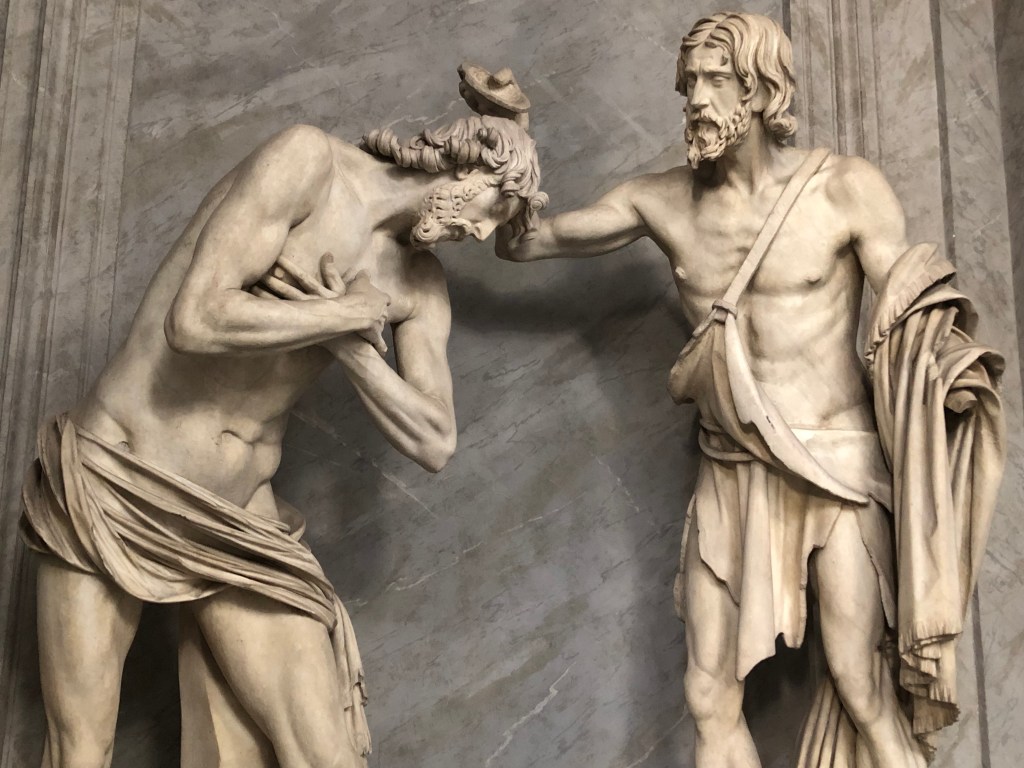
Baptism of Jesus, Antonio Raggi, San Giovanni dei Fiorentini, Rome

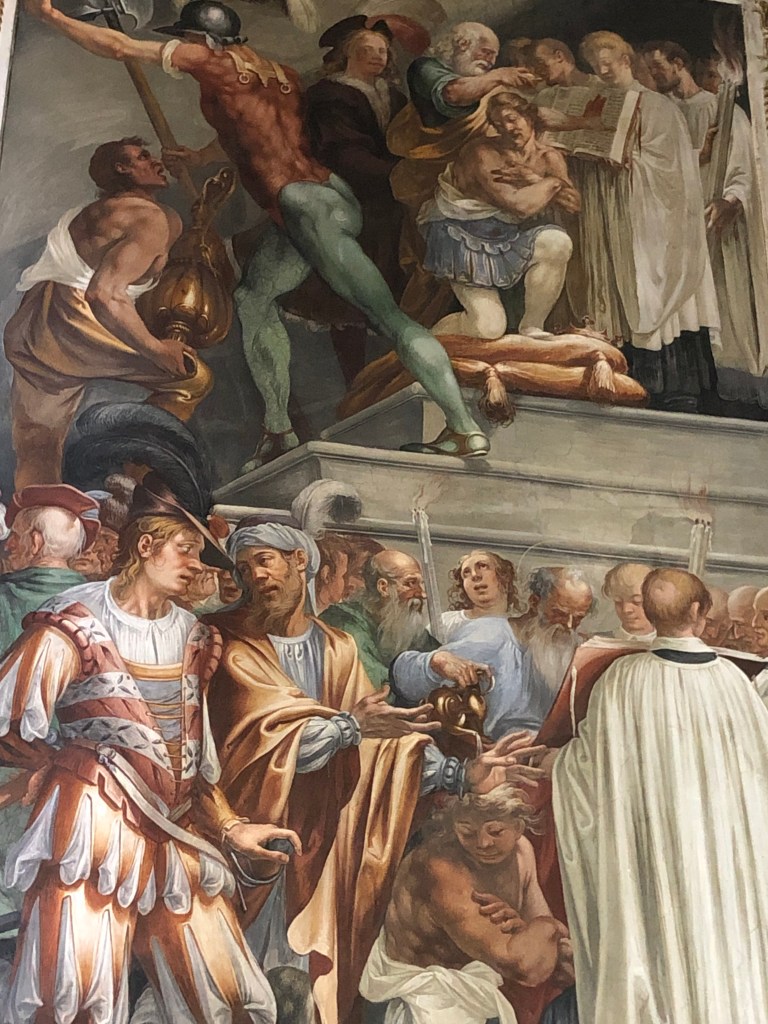
To celebrate the feast of the Baptism of the Lord–which this year falls unusually on a Monday–I thought I’d share a few photos from one of Rome’s lesser known churches, San Giovanni dei Fiorentini. A baroque church, it was built for the Florentine expats in Rome back when Florence was an independent city-state and named for the city’s patron, St. John the Baptist. The church contains a relic of Mary Magdalene (her foot), and is the burial place of the great–but tragically unhappy–baroque architect Francesco Borromini. It also contains a number of interesting artistic works featuring baptism. 

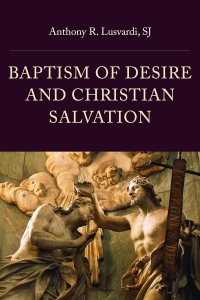
I’ve written before about the importance of baptism, but I have a personal reason to be particularly fond of San Giovanni dei Fiorentini. Its 17th century altarpiece, the Baptism of Jesus by Antonio Raggi, features on the beautifully designed cover of my book Baptism of Desire and Christian Salvation. Of course, I’d like to think that what’s inside the cover is pretty interesting as well, and I’m pleased that the book’s release date is coming up later this month–January 26. There’s more information on the website of Catholic University of America Press, and the book is available on other online sellers such as Amazon.

In the meantime enjoy the views of San Giovanni dei Fiorentini.

Baptism and Christian identity

El Greco, The Baptism of Christ

Sant’Agnese in Agone, the church in the center of Piazza Navona, is more beautiful than usual these days because it is hosting a special exhibit of three El Greco paintings. The largest and most impressive of these is the “Baptism of Christ,” a favorite theme of mine and something I think the Church would do well to reflect on more deeply–especially in these days of deep division and various lobbies jockeying for influence.

Sant’Agnese in Agone, Piazza Navona, Rome

At his baptism, the identity of Jesus is revealed by the Father: “This is my beloved Son, with whom I am well pleased.” As John the Baptist well knew, Jesus had no need of baptism; the event was for our benefit. The Lord’s baptism reveals what happens in our baptism: we become the children of God by adoption; we come to share in the Sonship of Jesus. The Father’s words come to apply to us. We become the beloved sons and daughters of God.

The reason I think this event is so important is because, for Christians, our status as God’s sons and daughters must become and remain our most fundamental identity. When some other form of identity becomes primary–our national identity, our identification with a particular political party or ideology, even our natural family–we go badly astray. This, it seems to me, is the most serious problem with contemporary LGBT ideology. The problem is certainly not with the people themselves, nor even so much with any particular sexual desires per se–living our sexuality with integrity has always been challenging, in different ways, for all Christians. The problem is when those sexual desires become ideology and ideology becomes identity, when one particular aspect of one’s personal make-up–one’s sexuality–becomes the dominant characteristic in one’s self-definition, the one ring to rule them all.

Continue reading “Baptism and Christian identity”

The waters of Australia

Peaceful Bay, Western Australia

After a couple of months in Western Australia and half a year Down Under, I am still amazed by the diversity of this island continent’s landscapes. This includes unparalleled bio-diversity–all the birds and marsupials and one-of-a-kind wonders, like the platypus, that look like something out of a Dr. Seuss book–as well as the geological curiosities.

The Twelve Apostles, Victoria, Australia

On this, the driest of Earth’s continents, I’ve been especially fascinated by water. Most of Australia’s population (almost 90%) live within 30 miles of the coast, and some of the country’s greatest wonders–the Great Barrier Reef, for example–lie underwater. My own fascination with water comes in part from its sacramental usage. Water is the one physical element necessary for baptism and, thus, entry into Christianity.

Continue reading “The waters of Australia”

Baptism, before and after: homily for the 17th Sunday of Ordinary Time

Homily for the seventeenth Sunday of Ordinary Time (C)

Today’s three readings can be read as something like before and after photos.  Not, however, photos advertising a particular diet, plastic surgery, or hair cream.  The middle reading, St. Paul’s letter to the Colossians, mentions one of my favorite subjects, baptism.  The first reading and the Gospel give us the before and after of baptism.  

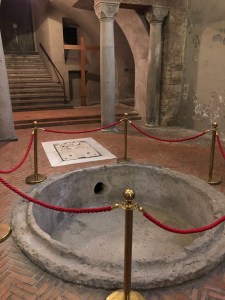
But before we get into the evidence of baptism’s effects in these before and after readings, take a look again at how St. Paul describes the first sacrament in Colossians: “You were buried with him in baptism, in which you were also raised with him through faith in the power of God, who raised him from the dead.”  Baptism means both death and life.  It means participating in the Paschal Mystery of Jesus, dying with him in order to rise with him.  You may already have heard me say that I think we lose something if we only think about baptism in terms of babies and don’t remember the way that the sacrament was celebrated in the early Church.  Then baptismal fonts were below floor-level and deep enough for adults being baptized to step down into and be fully immersed.  

Ancient Christian baptistry, Naples

Baptisms, in other words, were really dramatic events.  In Colossians, Paul uses dramatic language—the bond of our guilt, he says, is obliterated and nailed to the cross.  In Rapid City, we know the dramatic effects of water.  After a dry and scorching week, we remember that water brings life.  But we also know that in 1972 this city was destroyed by flood—in fact, this church was built here after the original St. Isaac Jogues was washed away.  The Bible uses two very different sets of images to talk about baptism: the water represent both the tomb, because it means being buried with Jesus, and the womb, because baptism is a second birth.  

Continue reading “Baptism, before and after: homily for the 17th Sunday of Ordinary Time”

Augustine’s baptism

The baptism of St. Augustine, San Pietro in Ciel d’Oro, Pavia, Italy

Anyone reading St. Augustine’s Confessions, of course, knows exactly where the book is leading, even if the story itself recounts a tortuous journey from doubt and confusion to faith. Augustine dedicates relatively few words to his baptism–at the time, Christians avoided describing what happened during the celebration of the sacraments to those not yet initiated–but what he does say reveals much about the power of the rite. Augustine was baptized by St. Ambrose in the baptistry of Milan’s cathedral on April 24, 387, along with his fifteen-year-old son Adeodatus. Adeodatus died only two years later. Looking up the passage anew, I was struck by the feeling in what Augustine wrote about his son:

“You had made him a fine person. He was about fifteen years old, and his intelligence surpassed that of many serious and well-educated men. I praise you for your gifts, my Lord God, Creator of all and with great power giving form to our deformities. For I contributed nothing to that boy other than sin… I learned many other remarkable things about him. His intelligence left me awestruck. Who but you could be the Maker of such wonders? Early on you took him away from life on earth. I recall him with no anxiety; there was nothing to fear in his boyhood or adolescence or indeed his manhood.”

Augustine goes on to describe his baptism, side by side with Adeodatus, both now reborn “the same age in grace”.

“We were baptized, and disquiet about our past life vanished from us. During those days I found an insatiable and amazing delight in considering the profundity of your purpose for the salvation of the human race. How I wept during your hymns and songs! I was deeply moved by the music of the sweet chants of your Church. The sounds flowed into my ears and the truth was distilled into my heart. This caused the feelings of devotion to overflow. Tears ran, and it was good for me to have that experience.”

St. Augustine, Confessions, Book IX, vi (14)

Baptism by fire: Homily for the Baptism of the Lord

Homily for the Baptism of the Lord (C)

“One mightier than I is coming… He will baptize you with the Holy Spirit and fire.”  Put aside for a moment everything you think you know about baptism, and imagine you are hearing John the Baptist’s words for the first time.  You’ve seen John calling sinners to repent, warning of punishments to come if they don’t, and then dunking them in the Jordan River as a sign of conversion.  And now he says a mightier one is coming, who will use fire instead of water.  Is it a promise or a warning?

Continue reading “Baptism by fire: Homily for the Baptism of the Lord”