Baptism and Christian identity

El Greco, The Baptism of Christ

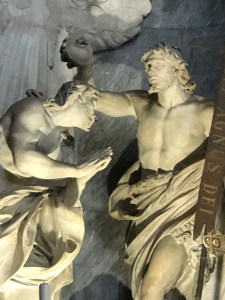
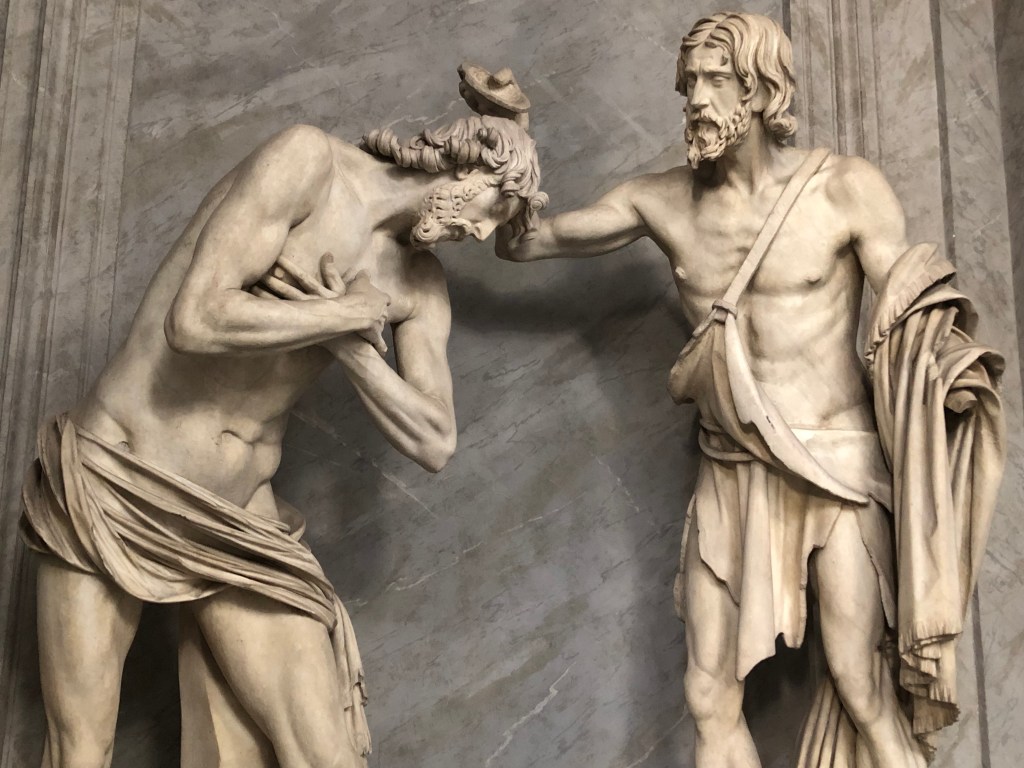
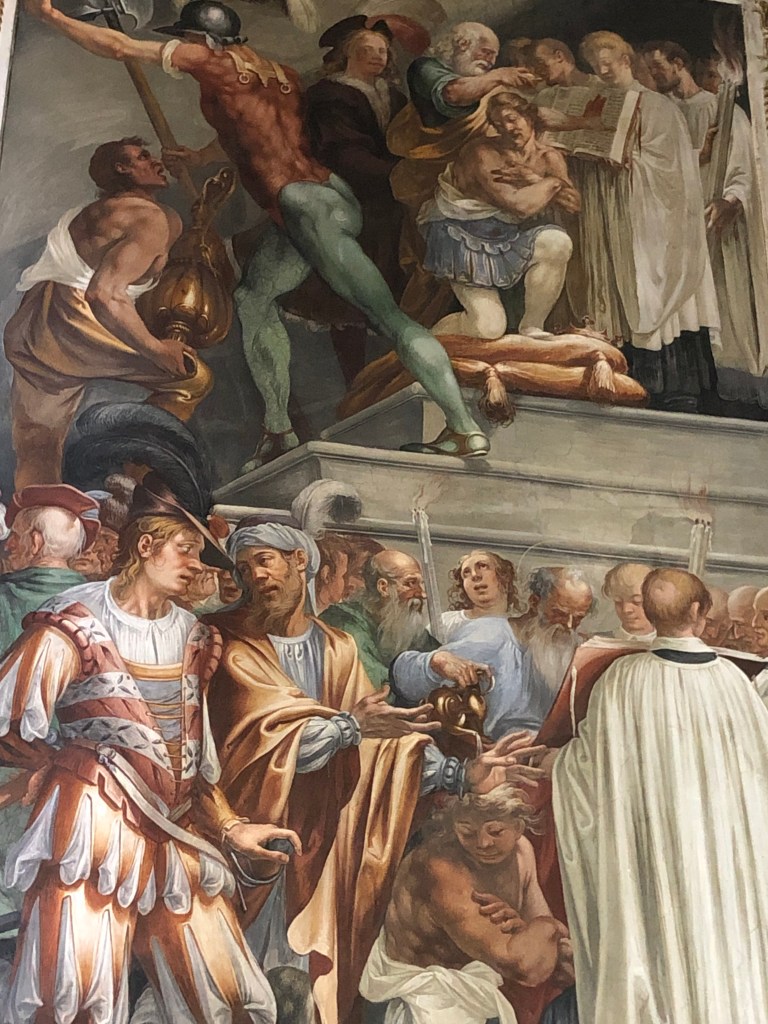
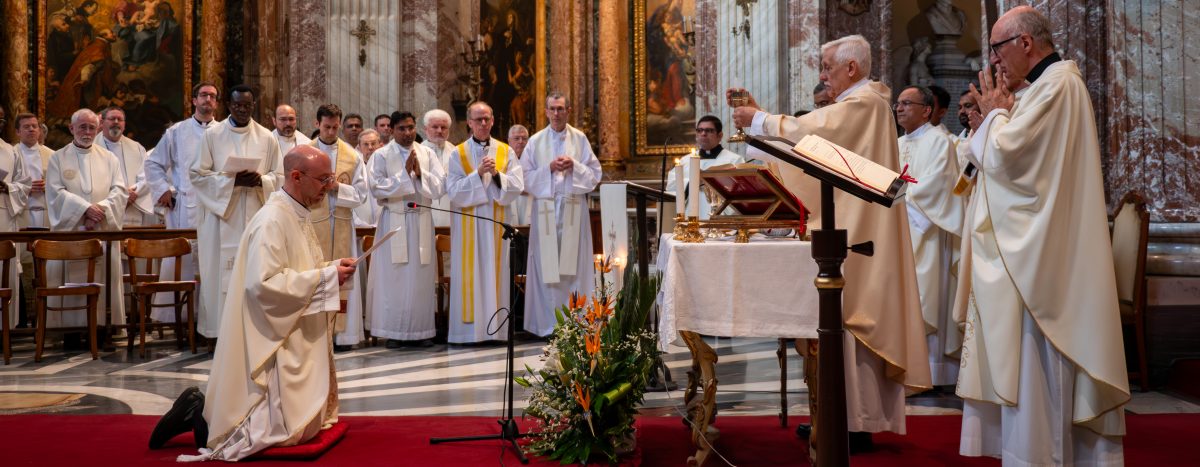
Sant’Agnese in Agone, the church in the center of Piazza Navona, is more beautiful than usual these days because it is hosting a special exhibit of three El Greco paintings. The largest and most impressive of these is the “Baptism of Christ,” a favorite theme of mine and something I think the Church would do well to reflect on more deeply–especially in these days of deep division and various lobbies jockeying for influence.

Sant’Agnese in Agone, Piazza Navona, Rome

At his baptism, the identity of Jesus is revealed by the Father: “This is my beloved Son, with whom I am well pleased.” As John the Baptist well knew, Jesus had no need of baptism; the event was for our benefit. The Lord’s baptism reveals what happens in our baptism: we become the children of God by adoption; we come to share in the Sonship of Jesus. The Father’s words come to apply to us. We become the beloved sons and daughters of God.

The reason I think this event is so important is because, for Christians, our status as God’s sons and daughters must become and remain our most fundamental identity. When some other form of identity becomes primary–our national identity, our identification with a particular political party or ideology, even our natural family–we go badly astray. This, it seems to me, is the most serious problem with contemporary LGBT ideology. The problem is certainly not with the people themselves, nor even so much with any particular sexual desires per se–living our sexuality with integrity has always been challenging, in different ways, for all Christians. The problem is when those sexual desires become ideology and ideology becomes identity, when one particular aspect of one’s personal make-up–one’s sexuality–becomes the dominant characteristic in one’s self-definition, the one ring to rule them all.

Continue reading “Baptism and Christian identity”

Gargoyles, east and west

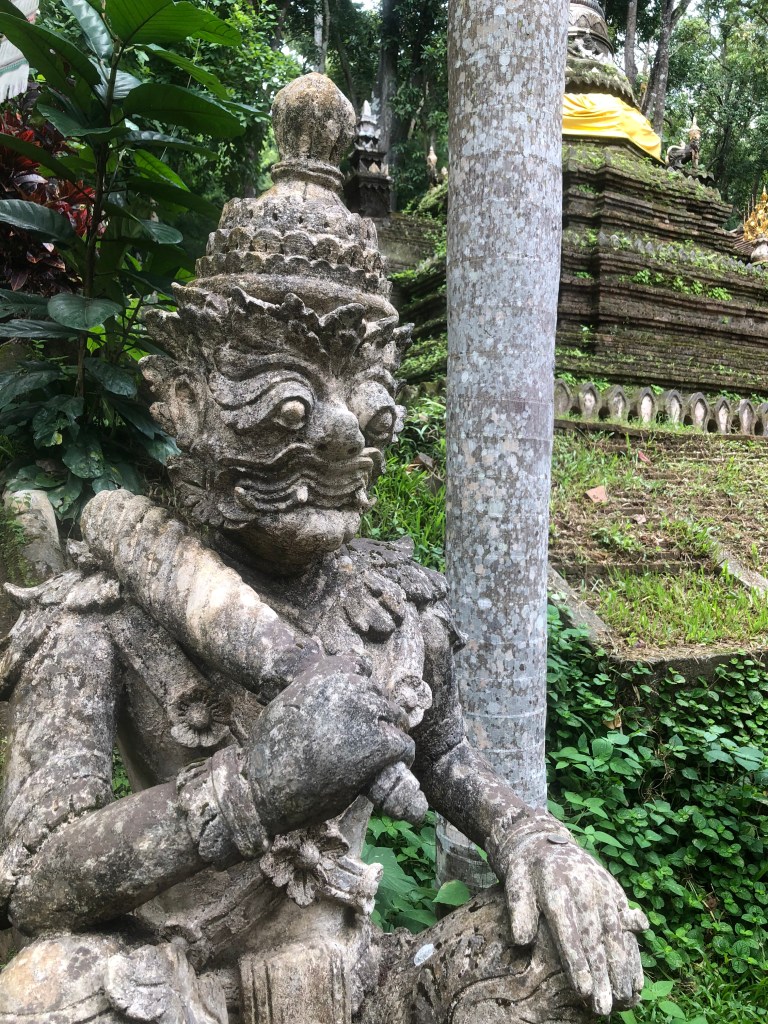
Wat Pha Lat, Chiangmai, Thailand

One of the highlights of my recent travels through Asia was visiting a number of quite impressive Buddhist temples and shrines. This was particularly the case in Thailand, though Chinese temples in Singapore, Taiwan, and Hong Kong were also filled with rich carvings, colorful statues, and piles of offerings including fruit, flowers, and burning incense. The warm red–the color of prosperity–of the Chinese temples reminded me of the red color with which the ancient Romans frescoed the inside of their homes. The desire for a warm hearth is written deeply in the human psyche.

Thian Hock Keng Temple, Singapore

A place of worship that makes an absorbing appeal to the senses is of course nothing new to me. I live in Rome, city of the baroque, where tales of religious ecstasy are told and retold in marble, mosaic, and fresco. The impulse of Christianity to express itself in art goes back to the Incarnation itself, to God revealing himself by entering into the world of the flesh, expressing his divinity in the matter of creation. We Catholics believe that he continues to communicate his grace to us through the sacraments. Artistic expressions using color, smell, and sound to amplify this divine work come naturally enough to a sacramental faith.

But what about Buddhism? Such expressions would seem to me, an outsider, to fit less naturally within Buddhist philosophy, with its distrust of all desire and negation of the world of pleasure and pain. Incarnation and Nirvana are two radically different beliefs. Yet how else to describe the gilded wats of Thailand, the cascades of angels and demons in glittering ceramic, than Buddhist baroque?

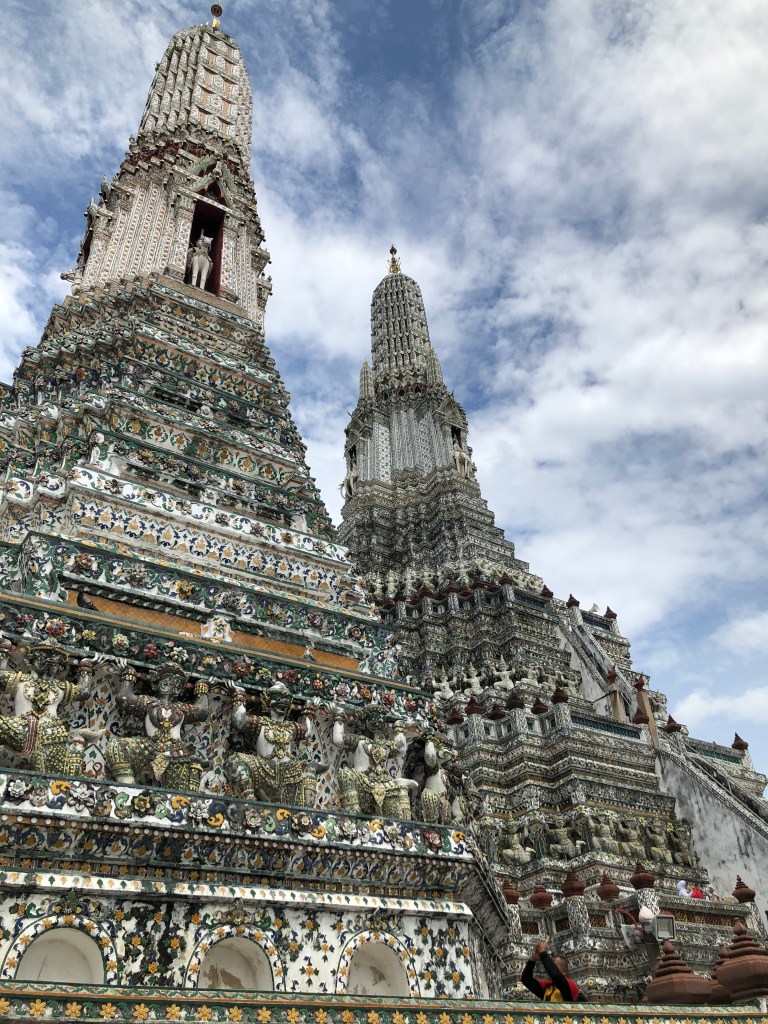
Wat Arun Ratchawaramahawihan, Bangkok

Of course, Thailand’s wats are not the architectural expression of pure Buddhist philosophy but a kind of non-culinary Asian fusion–Buddhism grafted into a still older mix of traditional folk beliefs, legends, and superstitions. How cogent such a mix is, I can’t evaluate. But there’s something human about that folk mix that I find more compelling than Buddhism in its purity, which I’ve always thought a little chilly.

Continue reading “Gargoyles, east and west”

Jonah, the most bumbling prophet

Jonah sarcophagus (ca. AD 300), Vatican Museums

Those at daily Mass this week get to enjoy the special treat of hearing the book of Jonah. The book is such a good tale–who doesn’t love a giant sea monster? or a cantankerous prophet?–that I imagine the story originally told dramatically aloud. I think we’re meant to laugh at Jonah, the Mr. Bean of prophets.
Of course, there is a serious message to the book that goes beyond whale innards and the prophet’s pouty attachment to his gourd plant. Jonah reveals the sweeping reach of God’s mercy, extending even to the most wicked of cities–Nineveh, grrr—when those within it seek conversion. Students in my classes are probably sick of hearing it, but one way to get under my skin is to claim that the grumpy “God of the Old Testament” has been replaced by the groovy “God of the New Testament.” There’s only one God. He’s infinitely merciful and revealed in both the Old and New Testaments. And the book of Jonah proves it.

Continue reading “Jonah, the most bumbling prophet”

Van Gogh and the Sower

Last year, Rome’s Palazzo Bonaparte hosted a special exhibition of the work of Vincent Van Gogh (1853-1890). It highlighted, among other things, the deep religiosity of this son of a Protestant minister. Van Gogh’s life was marked by inner turmoil, culminating in a horrendously painful suicide. The exhibition made me appreciate the ways in which faith, failure, sin, turmoil, and hope intersected in Van Gogh’s work. The artist’s tragic struggle gave his work its unique power.

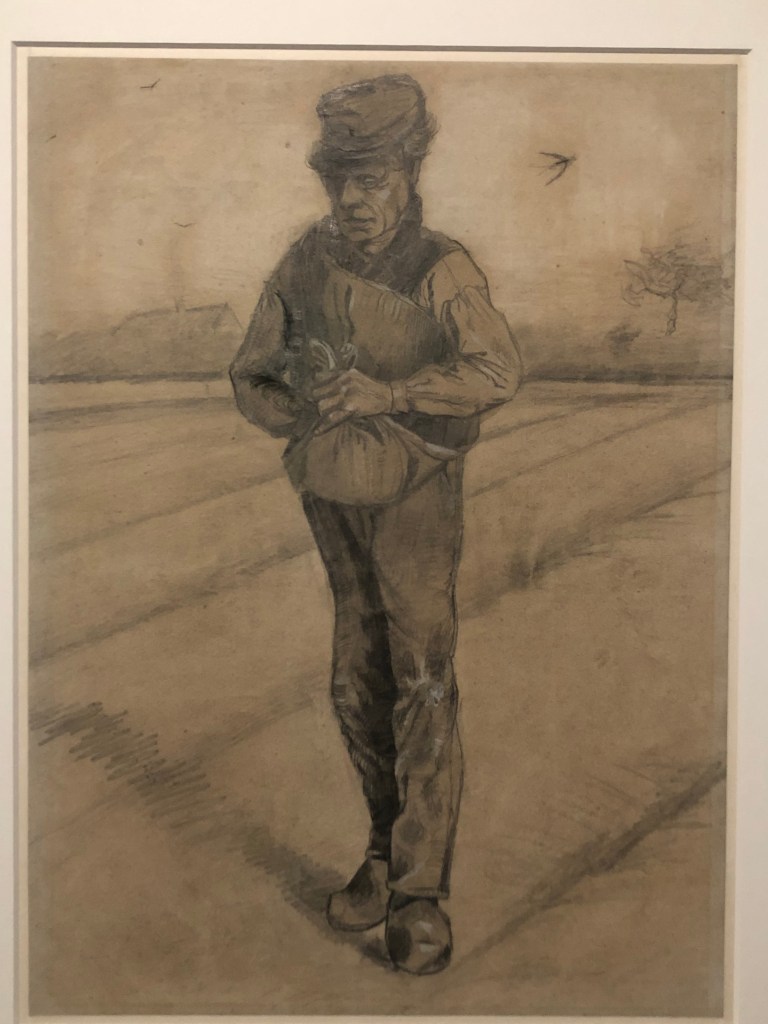
Vincent Van Gogh, The Sower, pencil, chalk, and watercolor

One of the themes to which Van Gogh repeatedly returned was the parable of the sower. Something about the the way the parable combines both failure and fecundity with the life cycle of the seed–being buried in order to give life–seemed to fascinate Van Gogh.

Continue reading “Van Gogh and the Sower”

Merry Christmas

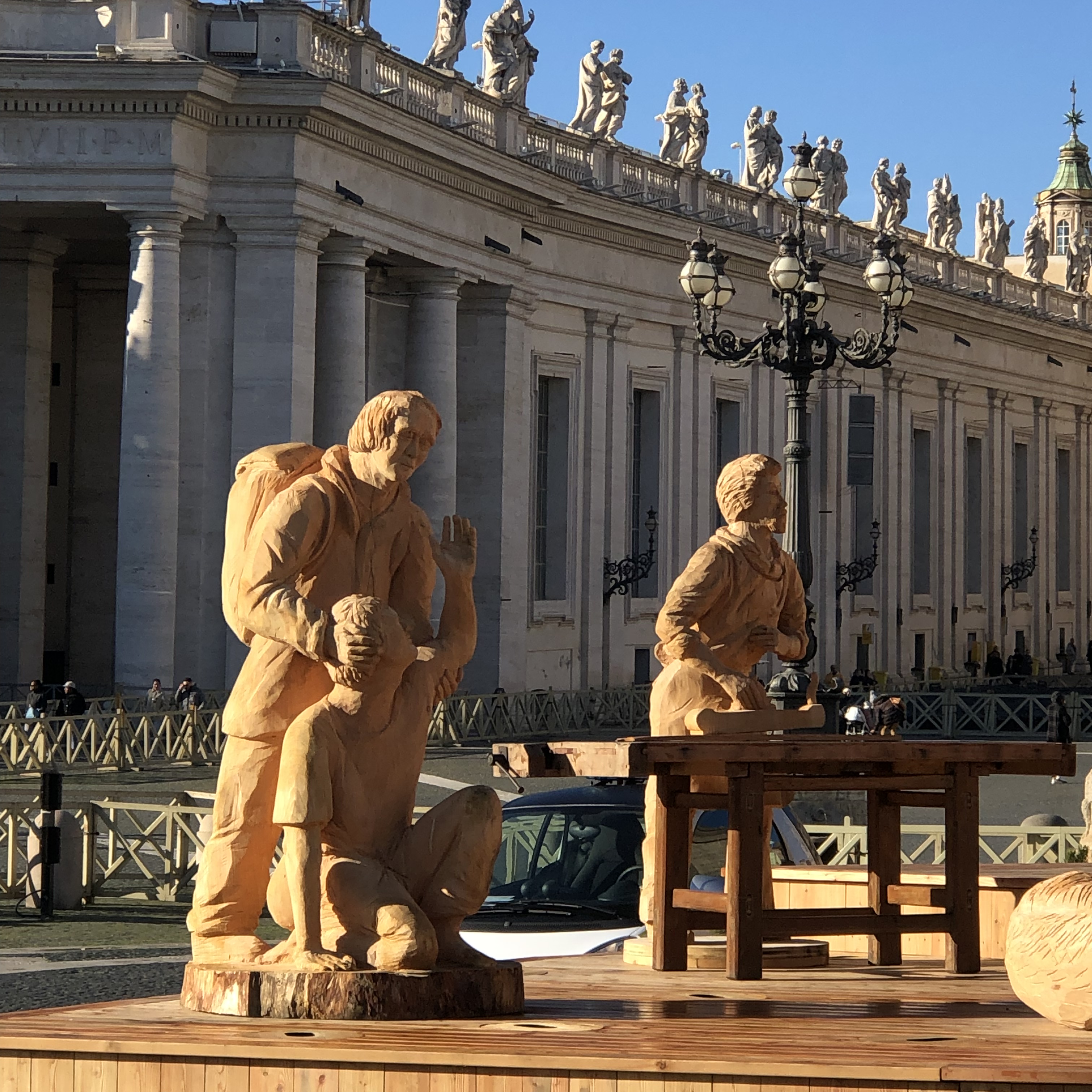
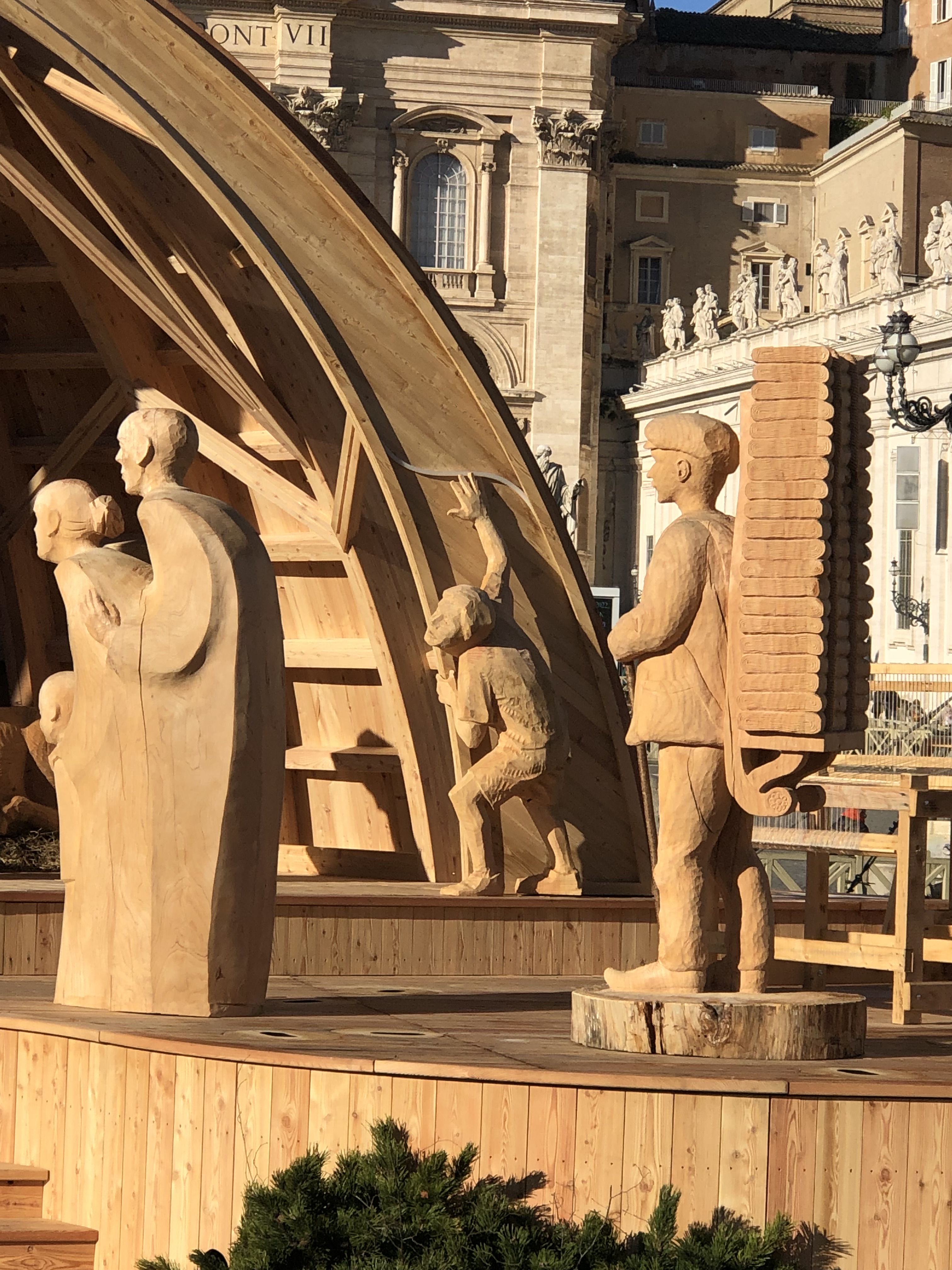
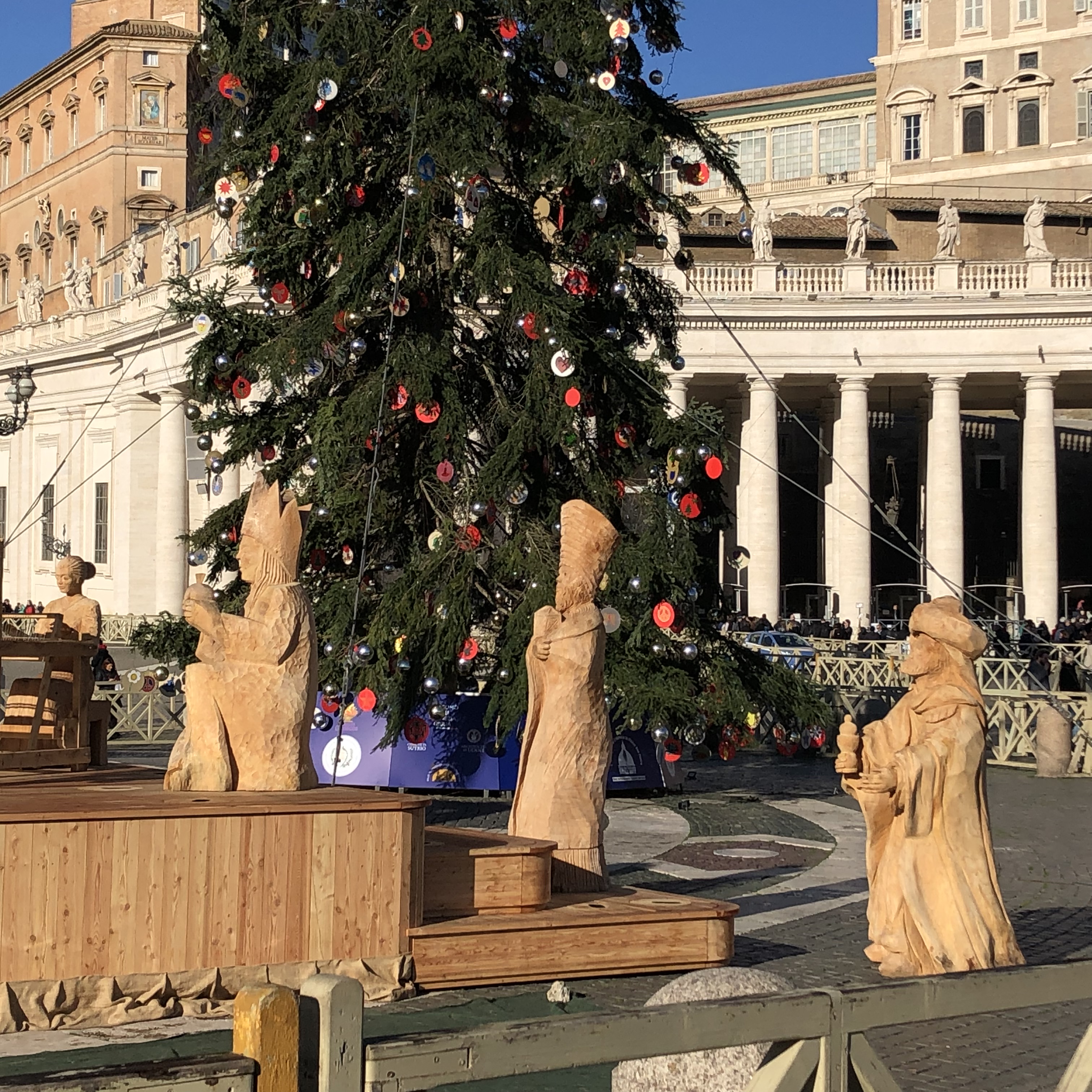
Since St. Francis of Assisi introduced the idea 800 years ago, Italy has been the land of Nativity scenes. And there is no more prominent location for a Nativity scene in the world than St. Peter’s Square. The scene is different every year and–along with the Christmas tree in Piazza Venezia–is usually subject to intense comment and critique from Romans and visitors alike. There’ve been a few doozies in my years here, but this year’s scene from Friuli Venezia Giulia does not seem to have aroused great protests.

Here’s a peak at the scene, still waiting for the child who makes all things complete.

Christmas blessings to one and all!

“In the fullness of time, chosen in the unfathomable depths of God’s wisdom, the Son of God took for himself our common humanity in order to reconcile it with its creator.” (Pope St. Leo the Great)

Faces of Medieval Rome

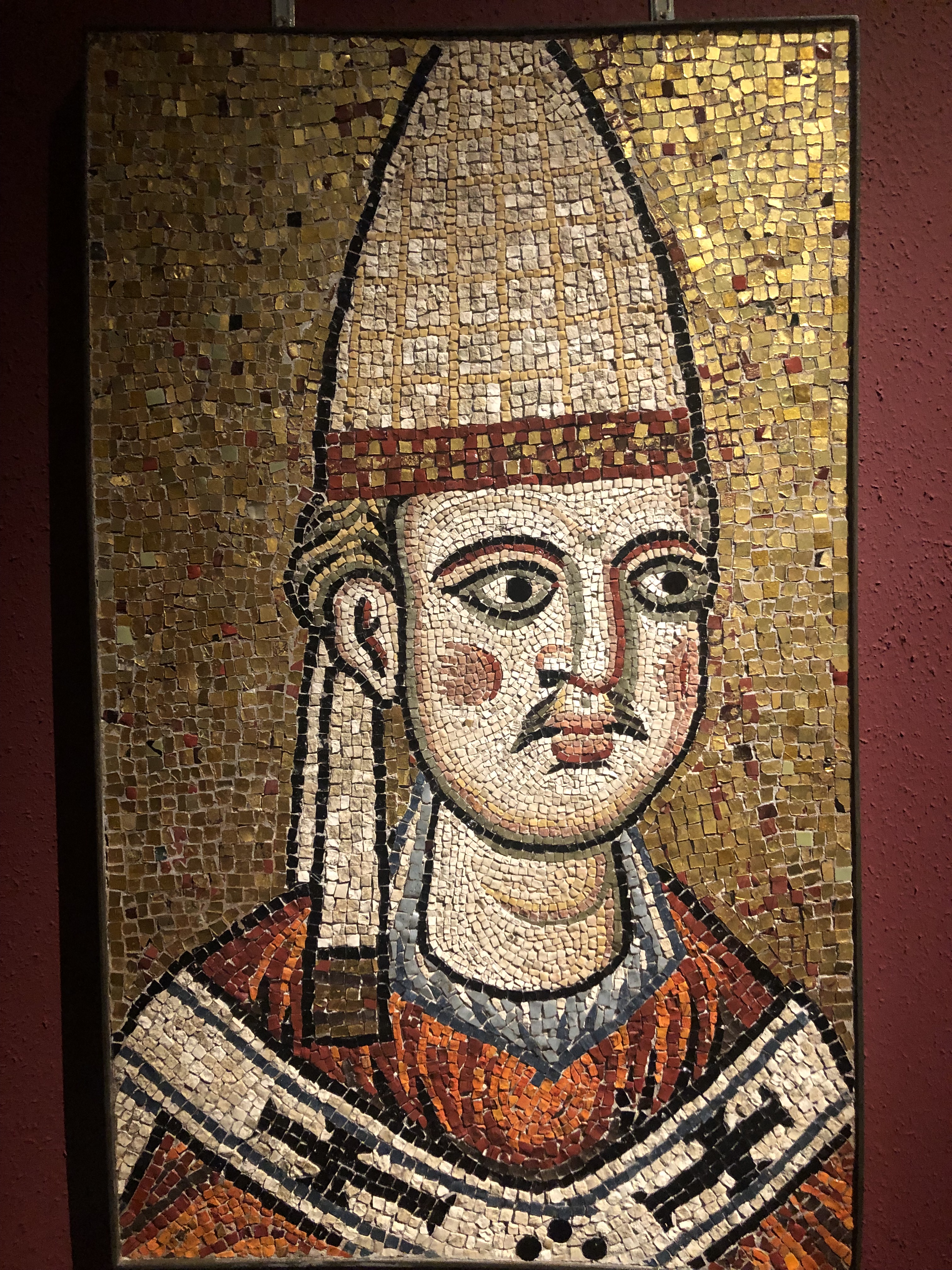
Visitors to St. Peter’s Basilica in Rome often don’t realize that the magnificent baroque church is built over the site of a still more ancient basilica, built by Constantine and then torn down completely by Pope Julius II during the Renaissance. Over the course of the next century, today’s basilica was rebuilt by the likes of Bramante, Giulio da Sangallo, Raphael, Michelangelo, Carlo Maderno, and Bernini.

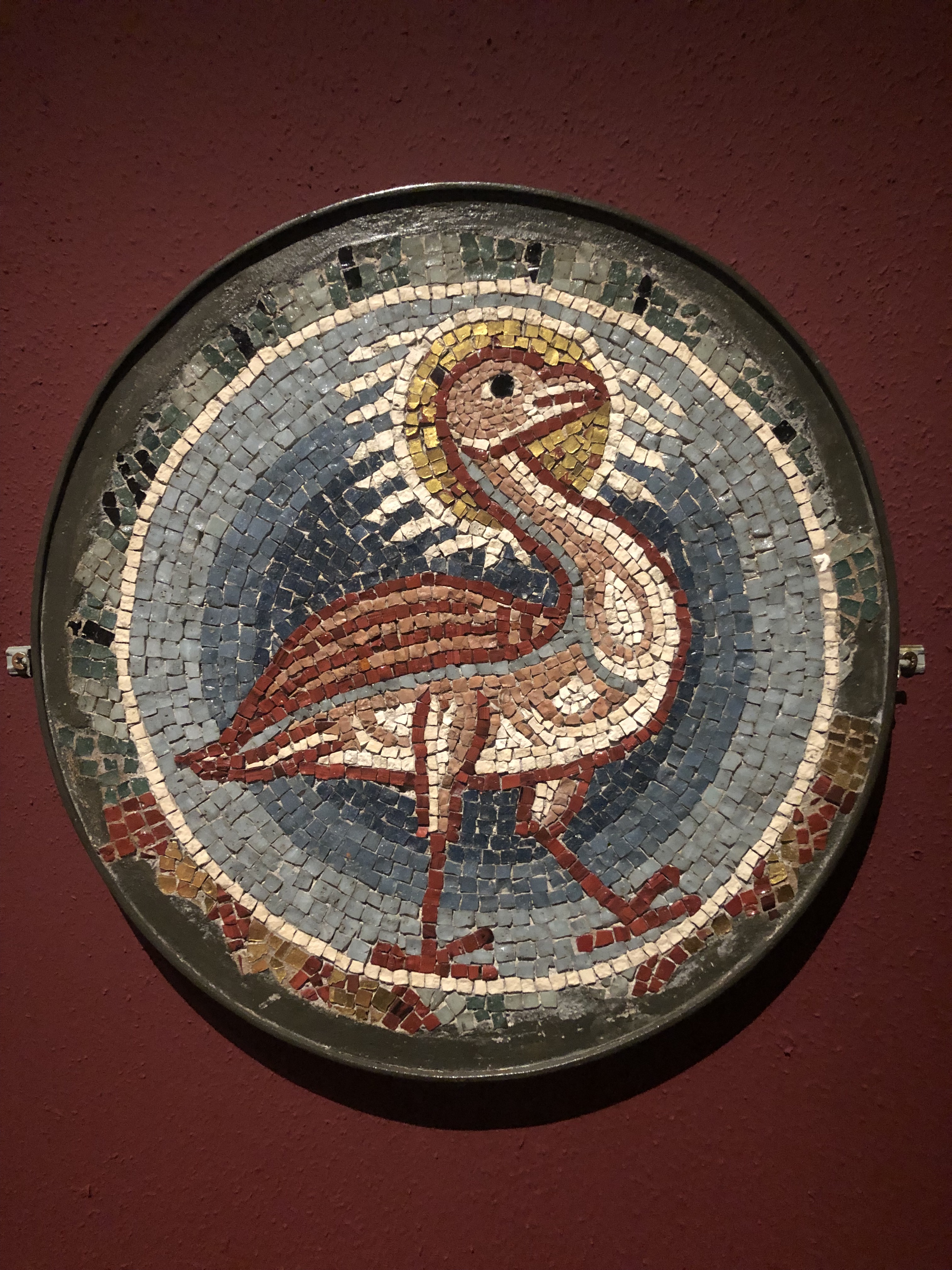
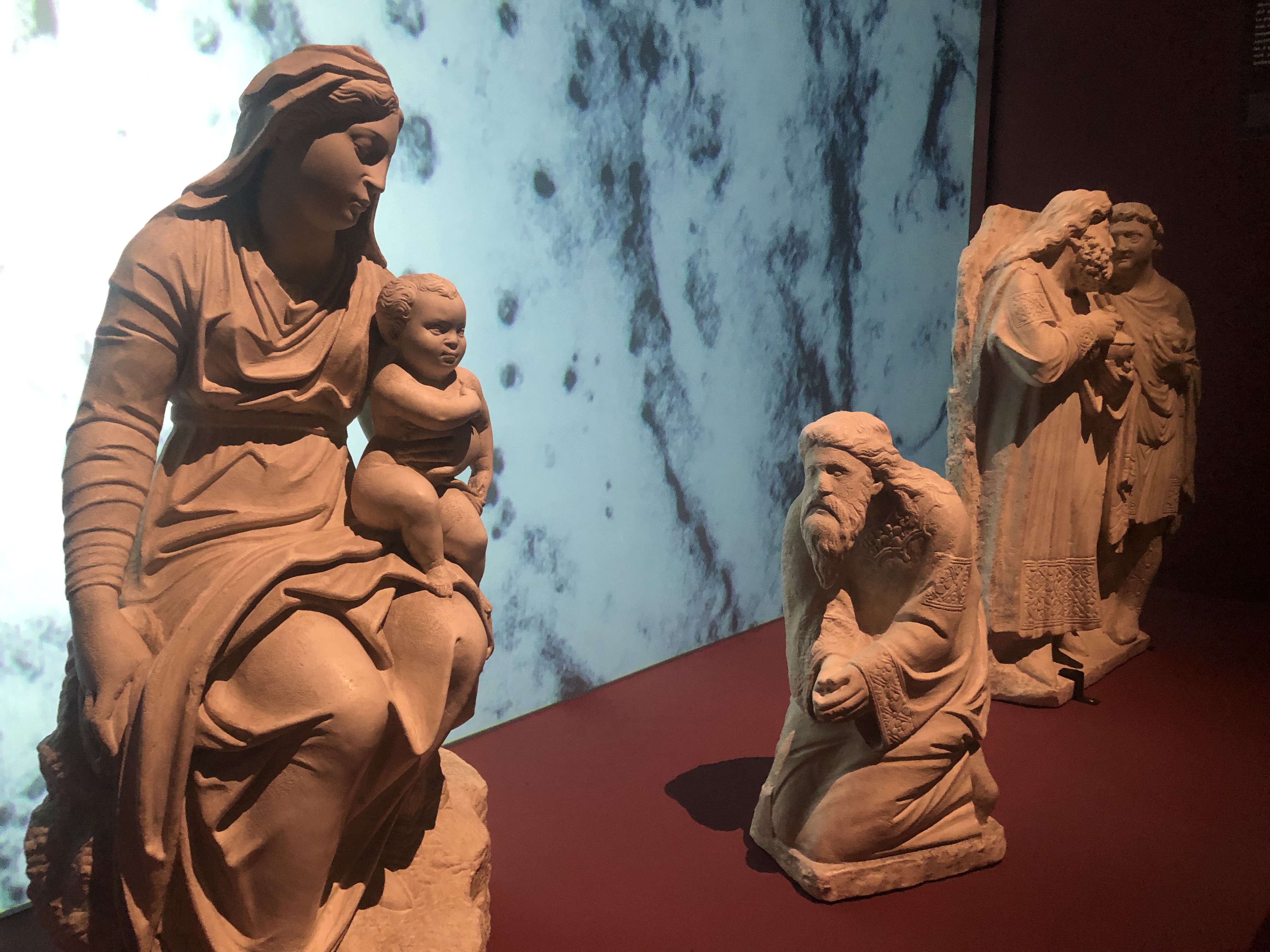
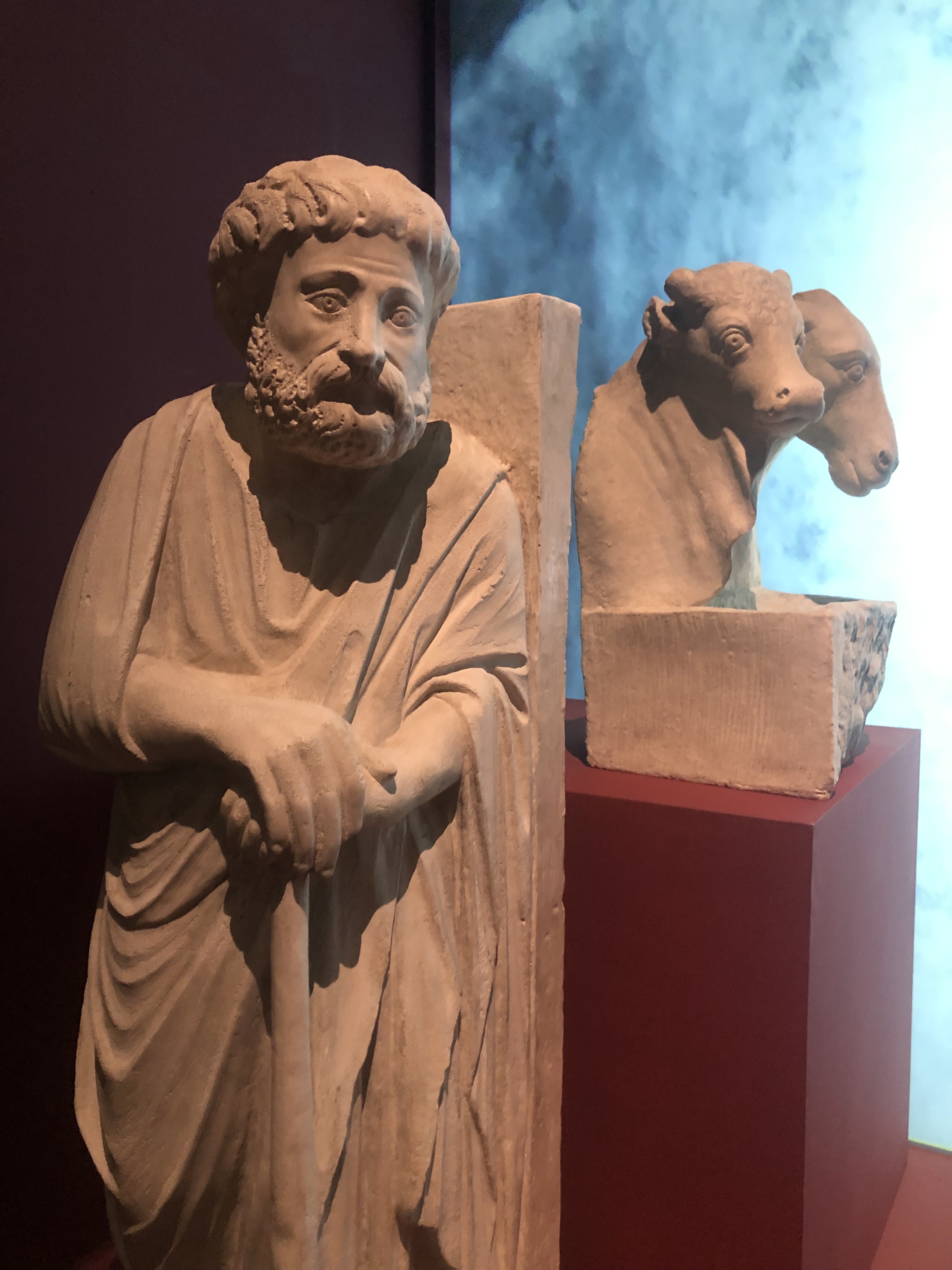
Surprisingly little of the original church remains, so I was fascinated this week to see a few of the mosaics saved from the first basilica at a special exhibition on medieval Rome at the Museo di Roma. The exhibition displayed work from the other four major basilicas, each of which has a unique history. The complex around St. John Lateran, another Constantinian construction, has changed greatly over the centuries and the interior of the church was redone by Francesco Borromini in the 17th century, though the shape of the basilica remains basically the same. St. Mary Major preserves the magnificent mosaics from its Roman days, but St. Paul Outside the Walls was entirely rebuilt after a fire burnt it down in the early 1800s.

Here are a few pictures form the papal basilicas’ medieval past.

Bernini’s beads

Can you spot the rosary?

When I reached the end of the station pilgrimage the last time around, I was struck by the details.

For the sacramental theologian such as myself, there’s a deep lesson in the details of the journey. The Son of God’s Incarnation meant entering fully into the reality of human life, with all its diverse moments of suffering and disappointment, of hope and joy, of sometimes just getting by. The Passion narrative is the most vividly detailed part of the Gospels, and the Resurrection stories too, though reflecting the discombobulation of that utterly unprecedented event, also retain the sort of vivid details that stick out in one’s mind even when the world has just gone outside-in. Mary thinks Jesus is the gardener. Jesus eats a bit of fish. The sacraments depend on the details of the Lord’s life, too, on what he ate at his last meal.

Continue reading “Bernini’s beads”

Holy Saturday

The Harrowing of Hell, Andrea di Bonaiuto, Santa Maria Novella, Florence

Today’s reading from the Office of Readings put me in mind of the fresco of Christ’s descent into the limbo of the patriarchs in the chapter room of Santa Maria Novella in Florence. Note the demon crushed under the doors of hell at Christ’s feet and the other bewildered devils on the right. (Don’t feel sorry for them.) It’s what the Middle Ages had instead of superhero movies.

Continue reading “Holy Saturday”

Rome’s Cosmatesque floors

Italy is such living sculpture that one could easily fill a coffee table book with pictures of otherwise mundane objects that, here, have have taken on artistic flare. You could fill a profitable day just searching out interesting door knockers or doorways, drinking fountains or the weeds that sprout from rooftop tiles. We owe much of this picturesqueness to the medieval spirit that allowed craftsmanship and creativity to flourish on a human scale–and which has become less common in our age of planned obsolescence and Made in China.

Making the station church pilgrimage this year, I’ve been looking at the ground. I wrote before of the marvelous Cosmatesque floors in so many of Rome’s churches. This style is named after the Cosmati family, the medieval craftsmen who made use of Rome’s overflow of broken marble to turn what would otherwise have been refuse into charming and sometimes Escher-esque designs. It’s especially appropriate that the Cosmati’s work paves Christian churches, where sins are absolved and, picking up the fragments left by our mistakes, we are reminded that, with the help of grace, we can still manage something beautiful.

So here’s a slideshow of a handful of Rome’s graceful floors…

Beating the mid-Lent blues

This week we passed Lent’s midpoint, which always seems the most grueling part of the journey, the part where you’re most tempted to ask, “Are we there yet?” The excitement of starting something new has worn off, and the end still seems distant. It’s the part of Lent where hitting the snooze button one more time comes oh-so-easily.

And here the Church again gives us a little boost with Laetare Sunday and the simple joy that comes from listening to your parish priest insist that his vestment is not pink, not mauve, not pepto-bismal, but rose, darn it, it’s rose.

Santa Pudenziana.

My own personal mid-Lent boost came this week from the remarkable apse mosaics in the week’s station churches. I’ve always found mosaics mesmerizing, the fragments that make up a greater whole, the way the light glistens off each piece. The mosaics in Rome’s station churches are particularly precious because they are so old. Santa Pudenziana’s dates from the 5th century, Ss. Cosma e Damiano’s from the 6th.

Continue reading “Beating the mid-Lent blues”