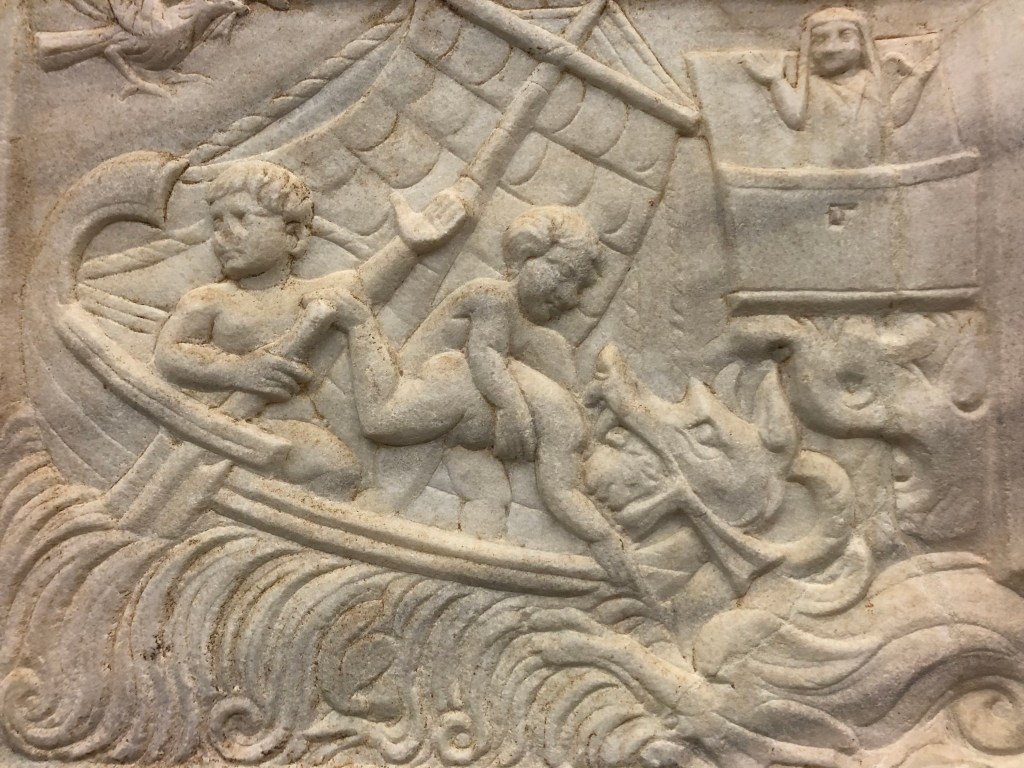

Those at daily Mass this week get to enjoy the special treat of hearing the book of Jonah. The book is such a good tale–who doesn’t love a giant sea monster? or a cantankerous prophet?–that I imagine the story originally told dramatically aloud. I think we’re meant to laugh at Jonah, the Mr. Bean of prophets.
Of course, there is a serious message to the book that goes beyond whale innards and the prophet’s pouty attachment to his gourd plant. Jonah reveals the sweeping reach of God’s mercy, extending even to the most wicked of cities–Nineveh, grrr—when those within it seek conversion. Students in my classes are probably sick of hearing it, but one way to get under my skin is to claim that the grumpy “God of the Old Testament” has been replaced by the groovy “God of the New Testament.” There’s only one God. He’s infinitely merciful and revealed in both the Old and New Testaments. And the book of Jonah proves it.
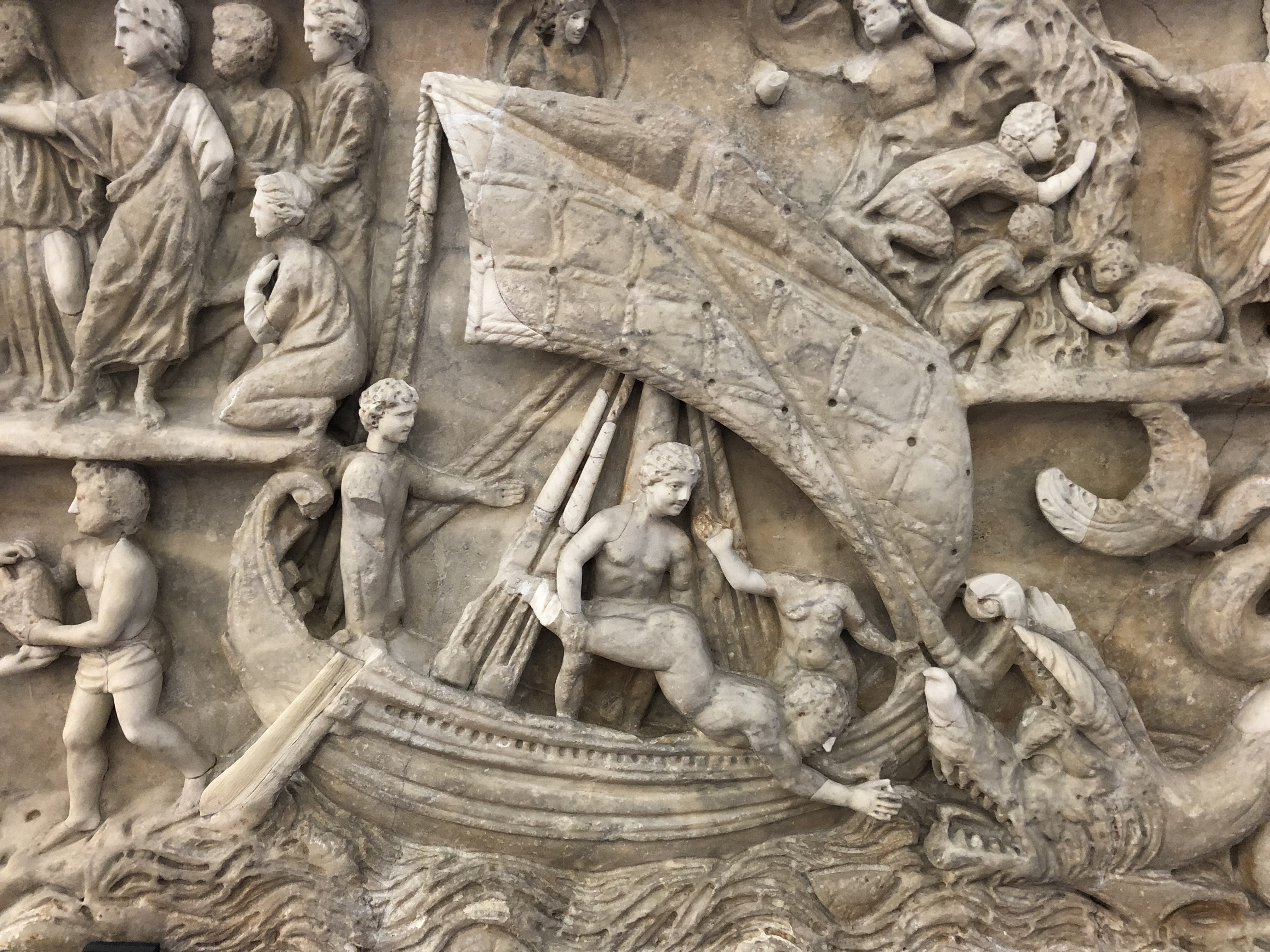
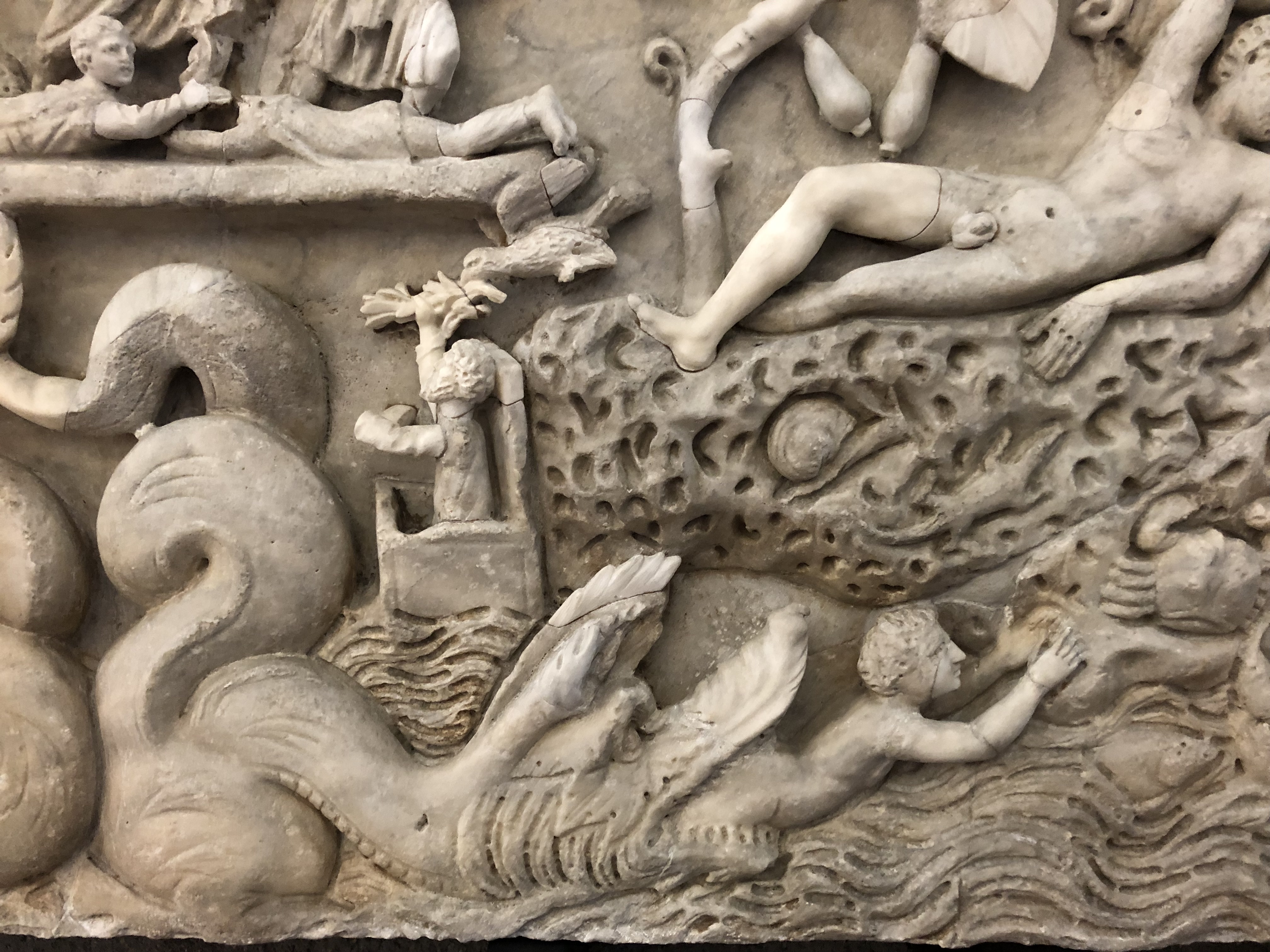
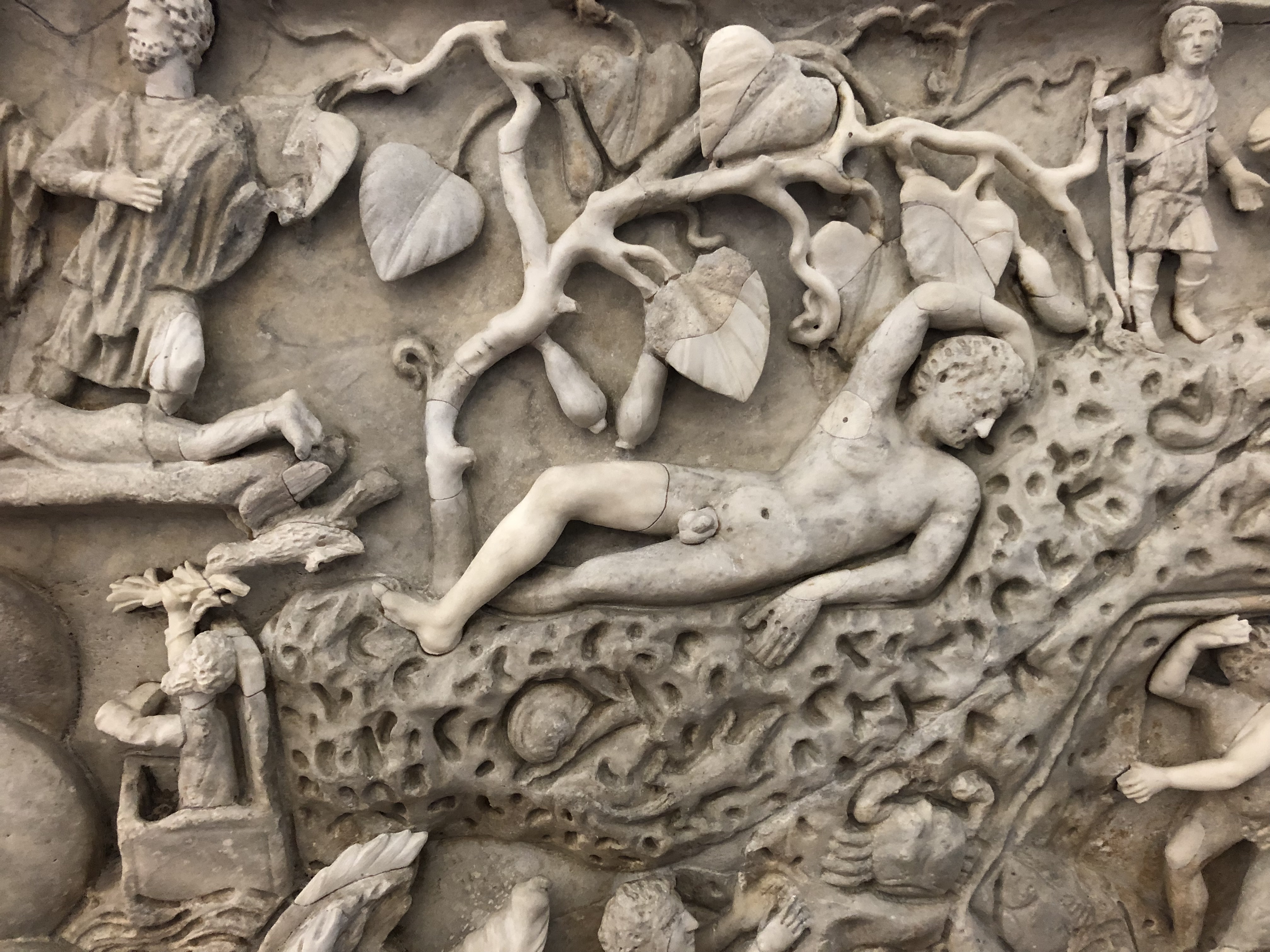
Last month I went on a fantastic tour of the collection of early Christian art in the Vatican’s Museo Pio Cristiano with art historian Elizabeth Lev, who pointed out that Jonah was a favorite theme of ancient Christians. In addition to the book’s narrative merits, early Christians saw Jonah’s adventures as a prefiguration of the resurrection. Three days in the belly of the whale, three days in the tomb, then rebirth, mercy and new life revealed–you get the drift.
Here are a few pictures of the museum’s “Jonah sarcophagus” from the early fourth century. And below, as a bonus, another carving from the same period of Jonah being fed to the fish. That’s Noah making a cameo in a boxy ark in the corner.