Rome’s Cosmatesque floors

Italy is such living sculpture that one could easily fill a coffee table book with pictures of otherwise mundane objects that, here, have have taken on artistic flare. You could fill a profitable day just searching out interesting door knockers or doorways, drinking fountains or the weeds that sprout from rooftop tiles. We owe much of this picturesqueness to the medieval spirit that allowed craftsmanship and creativity to flourish on a human scale–and which has become less common in our age of planned obsolescence and Made in China.

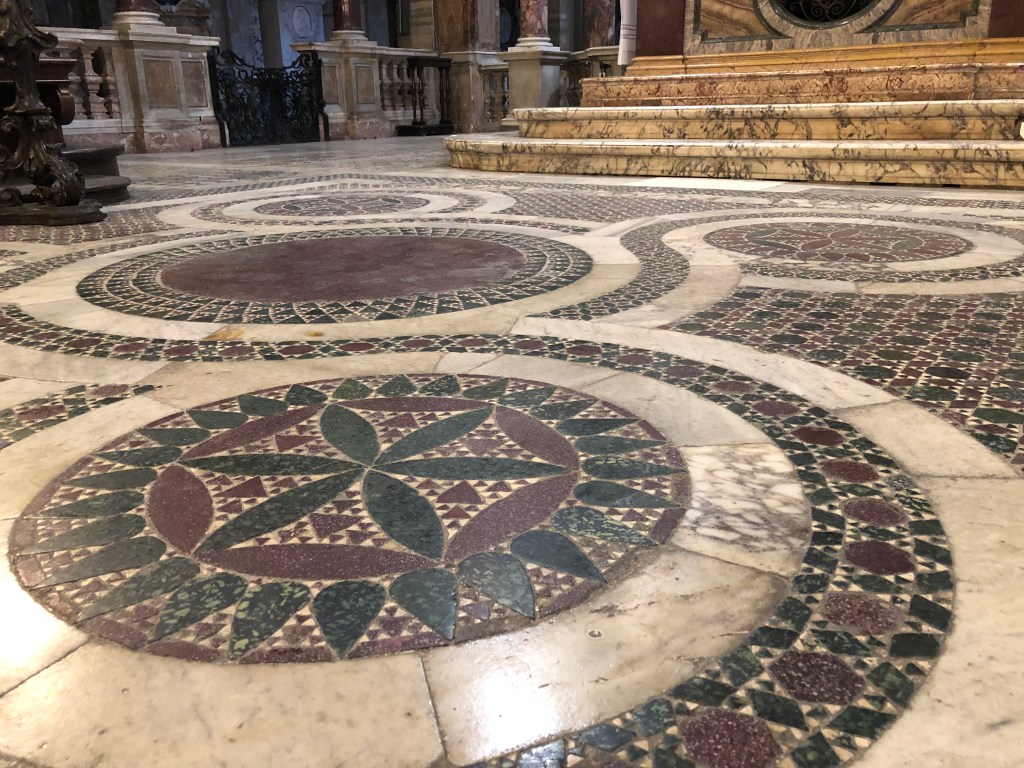
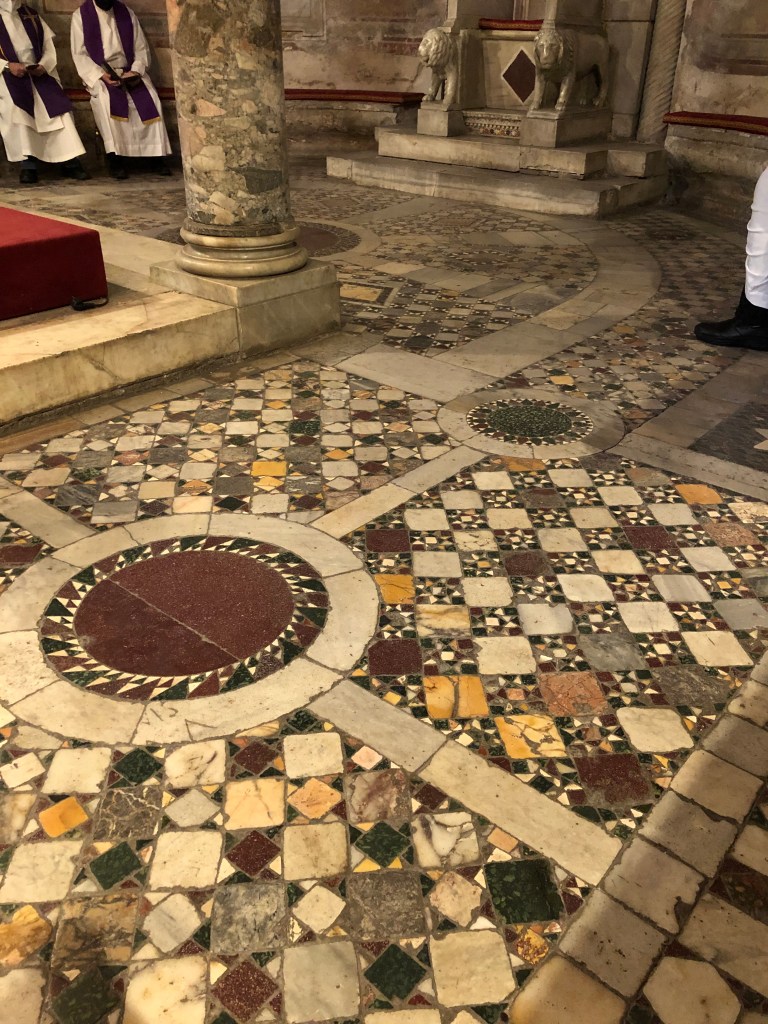
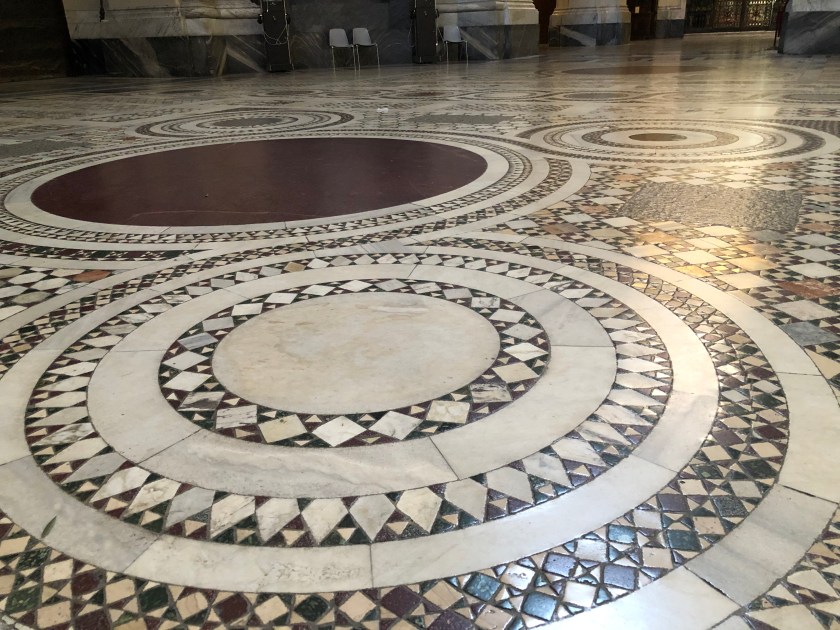
Making the station church pilgrimage this year, I’ve been looking at the ground. I wrote before of the marvelous Cosmatesque floors in so many of Rome’s churches. This style is named after the Cosmati family, the medieval craftsmen who made use of Rome’s overflow of broken marble to turn what would otherwise have been refuse into charming and sometimes Escher-esque designs. It’s especially appropriate that the Cosmati’s work paves Christian churches, where sins are absolved and, picking up the fragments left by our mistakes, we are reminded that, with the help of grace, we can still manage something beautiful.

So here’s a slideshow of a handful of Rome’s graceful floors…

Beating the mid-Lent blues

This week we passed Lent’s midpoint, which always seems the most grueling part of the journey, the part where you’re most tempted to ask, “Are we there yet?” The excitement of starting something new has worn off, and the end still seems distant. It’s the part of Lent where hitting the snooze button one more time comes oh-so-easily.

And here the Church again gives us a little boost with Laetare Sunday and the simple joy that comes from listening to your parish priest insist that his vestment is not pink, not mauve, not pepto-bismal, but rose, darn it, it’s rose.

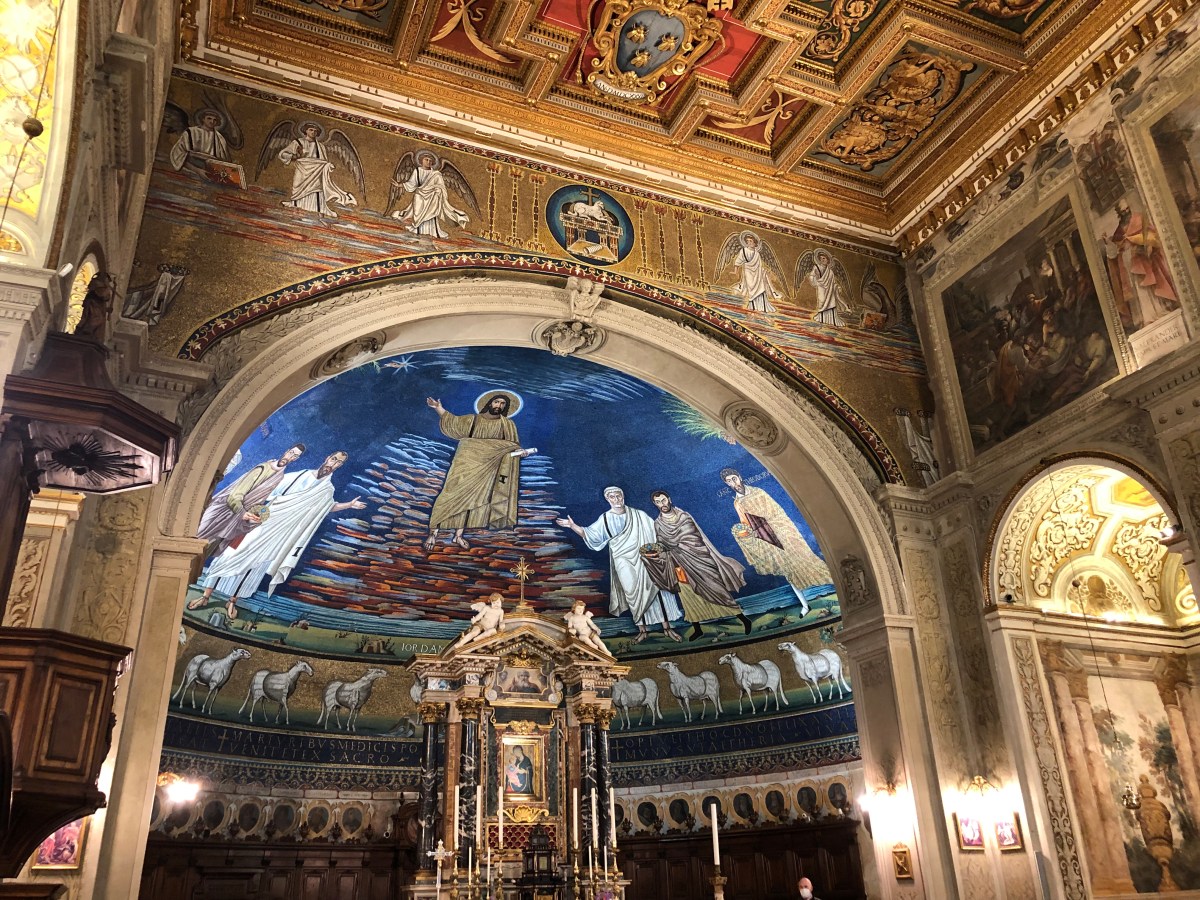
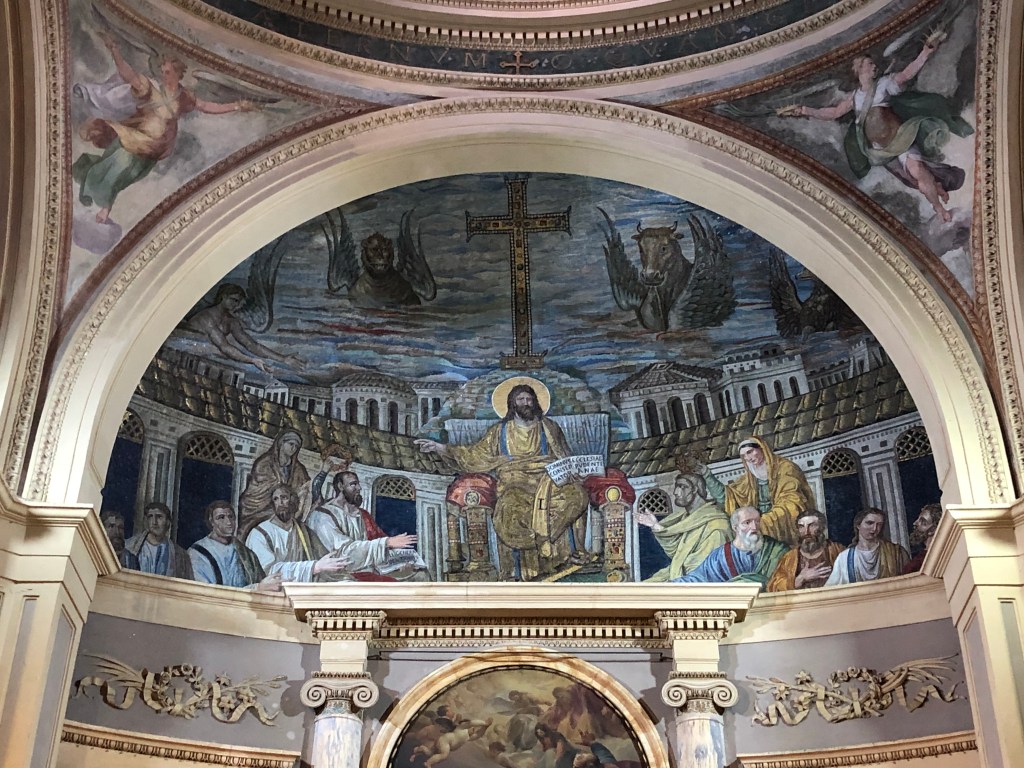
Santa Pudenziana.

My own personal mid-Lent boost came this week from the remarkable apse mosaics in the week’s station churches. I’ve always found mosaics mesmerizing, the fragments that make up a greater whole, the way the light glistens off each piece. The mosaics in Rome’s station churches are particularly precious because they are so old. Santa Pudenziana’s dates from the 5th century, Ss. Cosma e Damiano’s from the 6th.

Continue reading “Beating the mid-Lent blues”

Feast of the Chair of Peter

To celebrate today’s feast, I walked over to St. Peter’s Basilica this morning, especially keen to see the church decorated for the day–the candles lit on Bernini’s spectacular sculpture of the Cathedra Petri and the first pope’s statue decked out in his party regalia.

Cathedra Petri, Bernini

In the past I’ve always had class or other obligations or there were too many tourists or the world was closed for pandemic, so I’d never visited the basilica on this feast. Today, like Goldilocks but without the hair, I found everything just right. Just a smattering of visitors early in the morning, and as a bonus I was able to get to the altar of St. Leo the Great, which is in a part of the church that is sometimes blocked off. Leo is a favorite of mine because of his lapidary teaching that what was visible in Jesus when he walked the earth has passed over into the sacraments (Sermon 74).

Continue reading “Feast of the Chair of Peter”

The Conversion of St. Paul

The Conversion of St. Paul, Michelangelo Merisi da Caravaggio (1571-1610)

It looks like a picture of a horse’s… well, of the back part of a horse. Caravaggio’s painting of the conversion of St. Paul in the church of Santa Maria del Popolo in Rome puts the story’s equine character front and center. What gives? The practical joke of a roguish artist?

Continue reading “The Conversion of St. Paul”