The Vatican Nativity scene, 2023

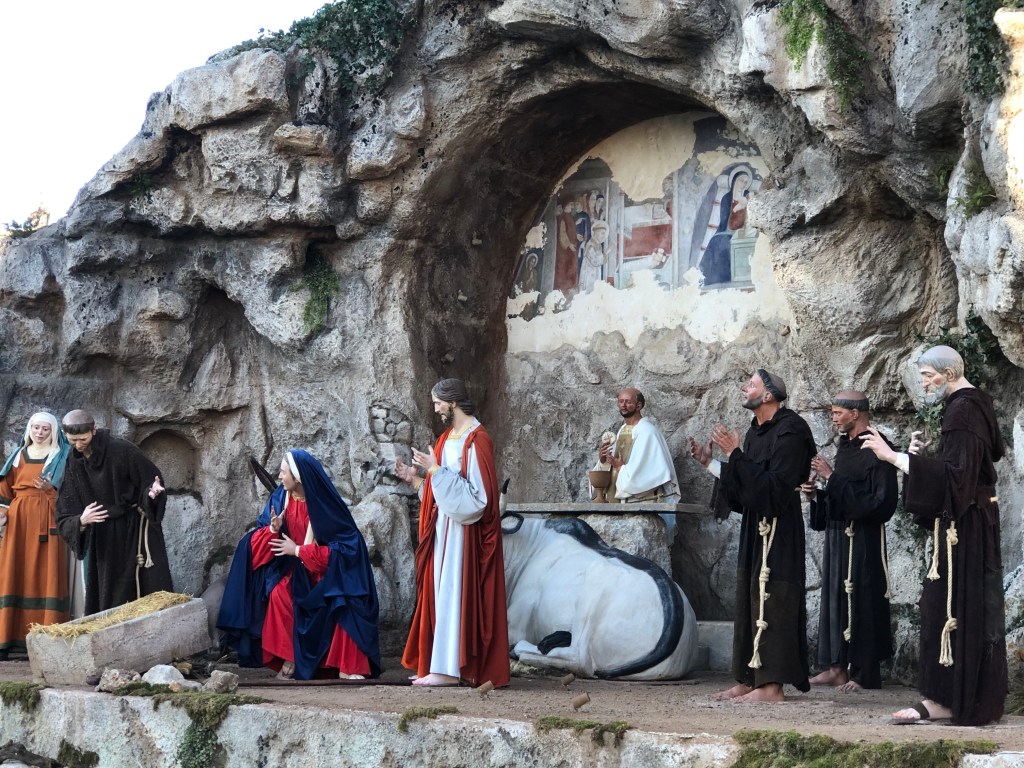
Nativity scene, St. Peter’s Square, 2023

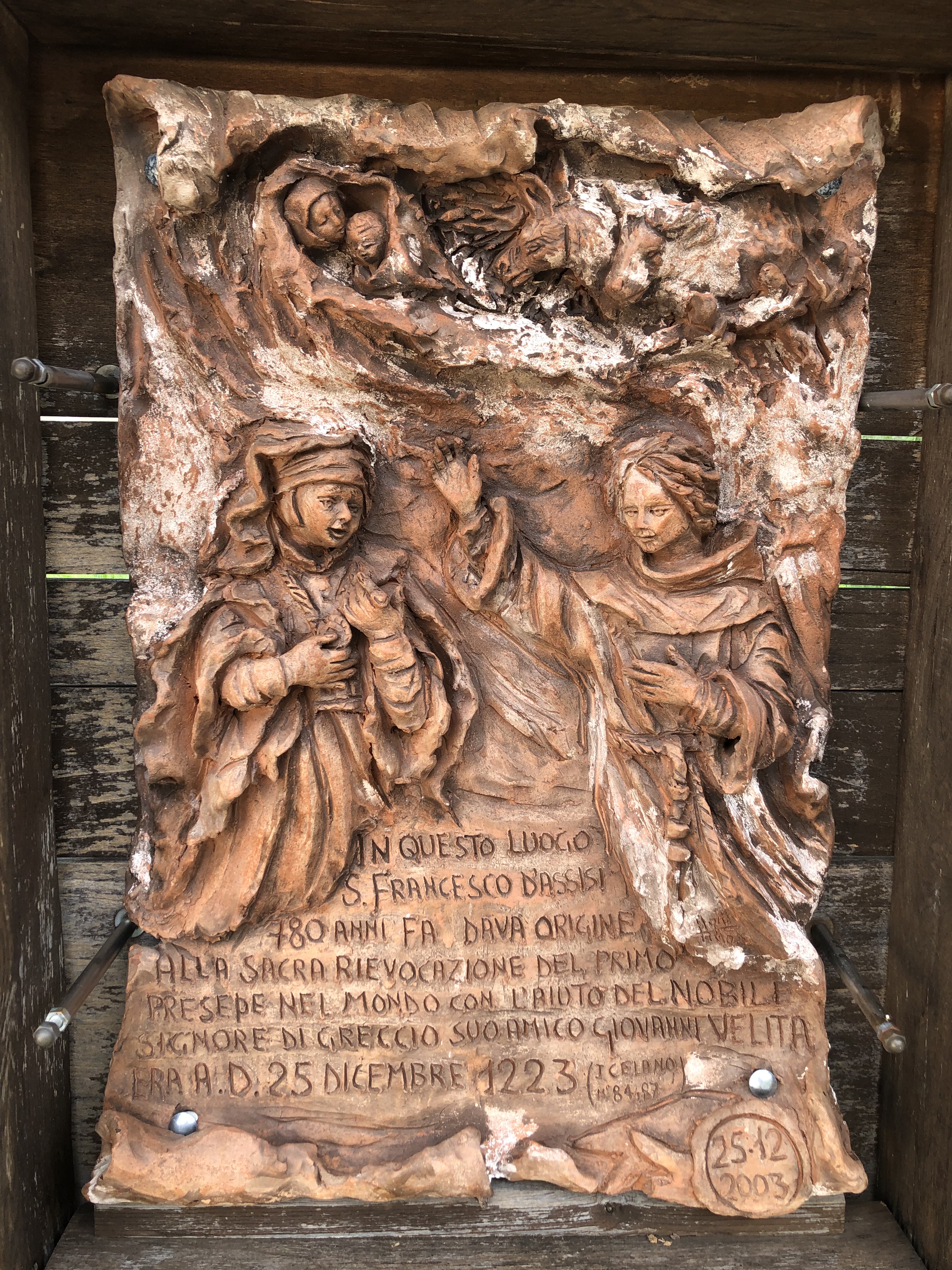
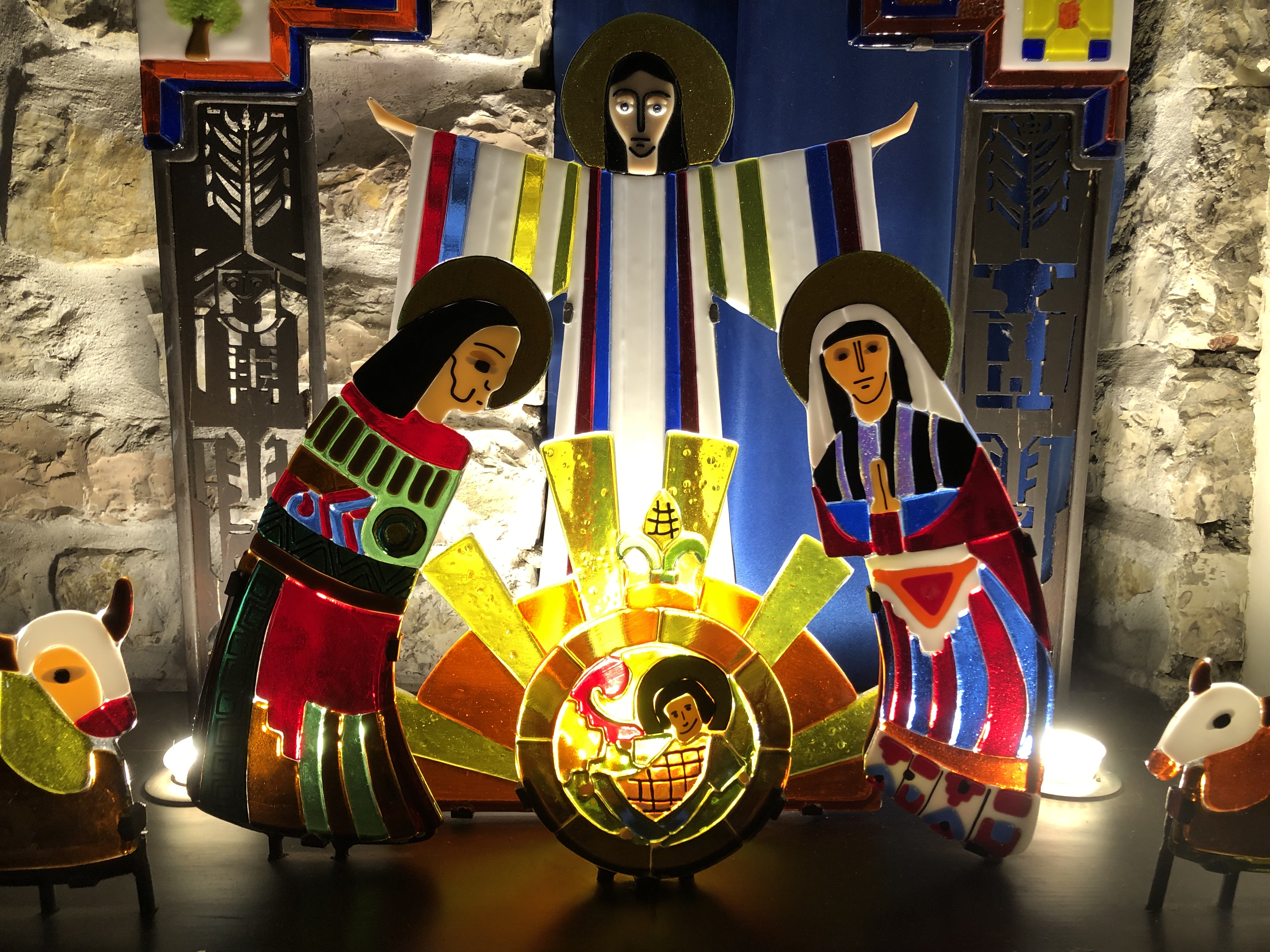
Over the past few weeks, I’ve noted (here and here) that 2023 marks the 800th anniversary of the first Nativity scene set up by St. Francis in the little town of Greccio. The Vatican’s Nativity scene this year also reflects that anniversary. 

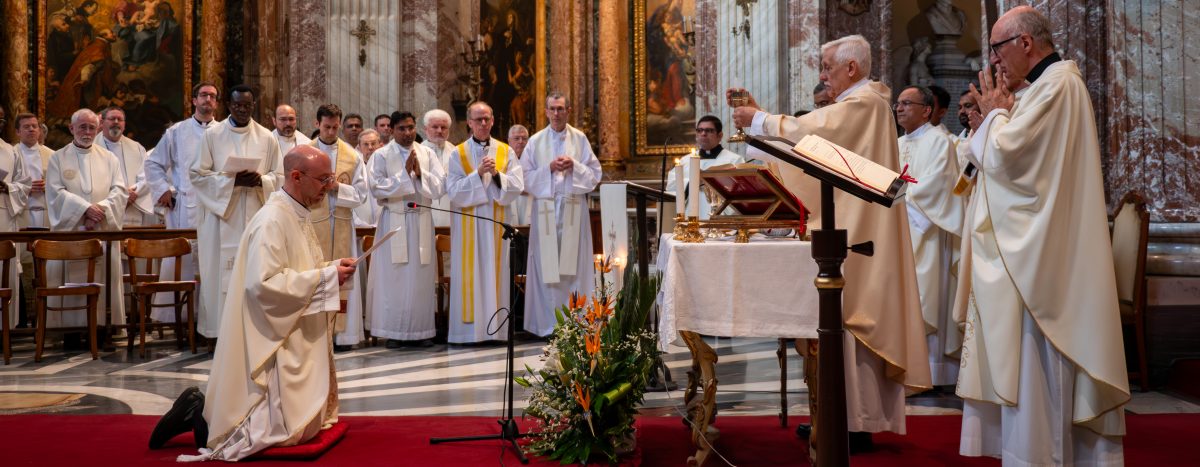
This year’s scene doesn’t aim for historical accuracy–thus, St. Francis alongside Mary and Joseph and the three friars replacing the three kings. (Oh, and there’s a priest celebrating Mass in the background too.) The fresco on the wall behind them is a replica of the one in the cave in Greccio.

The figures, perhaps, aren’t exquisitely beautiful. (And, come to think of it, the priest in the background seems a tad confused about what he’s supposed to be doing–too much realism?) But at least this year’s Nativity scene isn’t aggressively weird (like the aliens from 2020) or trying too hard to be modern (like… well, there are too many examples).

You’ll notice that the manger itself is empty. As per the tradition, the Baby Jesus doesn’t arrive until Christmas itself. This year he won’t find a perfect Nativity scene, a perfect Church, or a perfect world, but he’ll come nonetheless and we need him all the more because of it.

Nativity scene, St. Peter’s Square, 2023

Rome for the holidays

Advent is one of my favorite times of the year to be in Rome. What they call winter here is nothing to a Minnesotan, and the shortening days are counterbalanced by the city’s delightful display of Christmas lights. These generally don’t start appearing until after the Immaculate Conception (December 8) and they don’t come down until after the Epiphany (January 6).

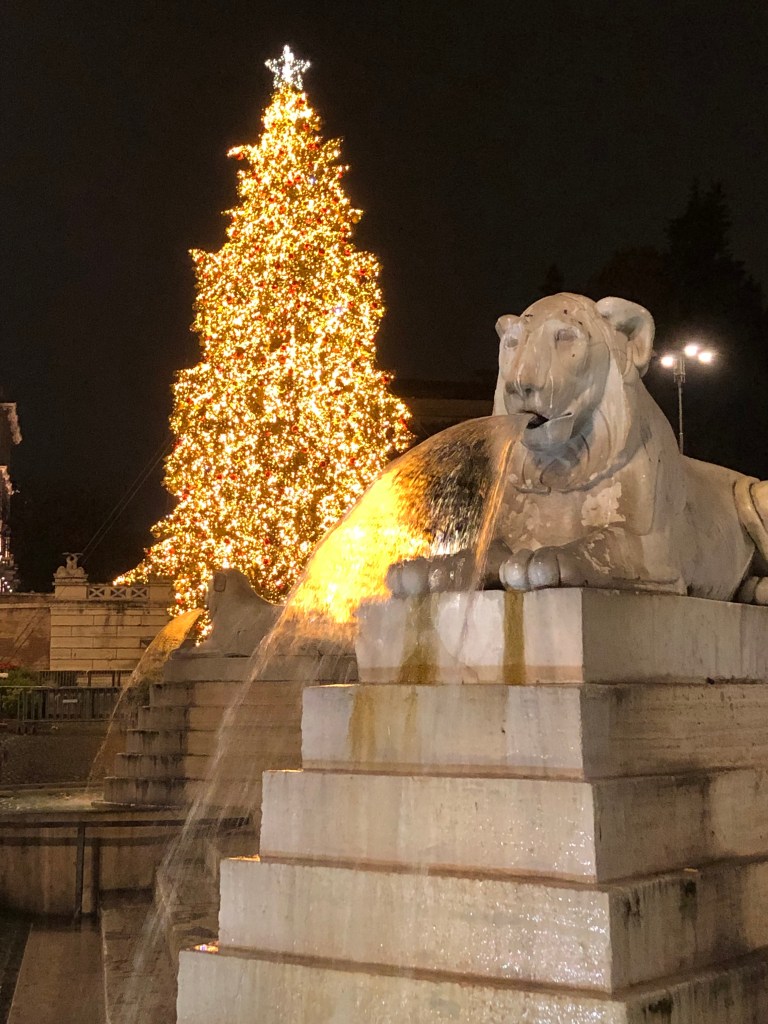
Rome’s Christmas tree, Piazza del Popolo

The city’s official Christmas tree, like the Vatican Nativity scene, is often the subject of local critique and Roman wit. This year, the tree got a new location due to construction work on Rome’s mythical new subway line–scheduled to open a few years after the Second Coming of Christ. The tree’s usual home, Piazza Venezia, is now a construction site, but its new location in Piazza del Popolo is a calmer setting away from the traffic. The official tree also has some competition from a glitzy counterpart at the Spanish Steps, given to the city by the fashion designer Dior.

Dior Christmas tree, Spanish Steps

I’d also be remiss not to mention what a delightful time of year Advent is to be at the Gregorian University, where the university’s international richness is on full display. Student groups from different countries take turns singing in the atrium between classes. It gives them an excuse to duck out of class early (ahem), but you’d have to be Ebenezer Scrooge not to appreciate the festive atmosphere. The Mexican college usually wins the prize for the best show not only because of their charm and energy but because you just can’t top a piñata. It’s a time to be grateful for our young priests, seminarians, religious, and lay students who are such a source of hope for me and for the Church.

Christmas at the Gregorian

More from Greccio

Chiesa di San Michele Arcangelo, Greccio

Last week, I mentioned my pilgrimage to Greccio, the little town on the edge of Lazio where St. Francis put up the first Nativity scene. I thought I’d share a few more pictures from the (grandly named) Museo Internazionale del Presepio and the Franciscan Sanctuary just outside of town, which was built around the Grotto of the Presepio. Last week I mentioned the series The Chosen and how it demonstrates the same instinct behind the Nativity scene–to use the imagination to draw closer to Jesus in the flesh.

It occurred to me that The Chosen‘s great success–against the odds, without Hollywood backing–shows that the Gospel story remains just as compelling as ever. The commercial success of Mel Gibson’s 2004 The Passion of the Christ showed the same thing. In fact, given the commercial success of such projects, it’s perhaps surprising that the entertainment industry doesn’t try to tap the religious market more often. Then again, Hollywood’s attempts to do religion tend to fall flat because they’re so patently inauthentic–remember Noah (2014)? You didn’t miss much. Martin Scorsese’s 2016 Silence was also a bit of a dud.

Despite these films’ massive budgets, the talent behind them, and slick special effects, they weren’t all that compelling. Perhaps the missing element was simply faith. I suppose it’s something like the difference between a foreigner speaking a language and a native speaker; no matter the foreigner’s wealth or education, he’ll never be as eloquent as a peasant speaking his native tongue. Faith has no substitutes.

The Nativity scene at 800

Santuario Francescano del Presepe, Greccio

A few weeks before Christmas in the year 1223, St. Francis told one of his brothers that he wished to celebrate the holiday in Greccio, a hamlet about halfway between Assisi and Rome. He added something more: that he wanted to see with his own eyes the baby born in Bethlehem and the crude stable where he lay.

The brother went on ahead and arranged everything as the saint had asked in a little grotto just outside the town, a scene now familiar to us–figures of Mary and Joseph, the shepherds, the ox and the ass. The sight drew men and women from around Greccio and delighted Francis, who served as a deacon at Mass that Christmas night. The tradition of the Christmas manger scene was born.

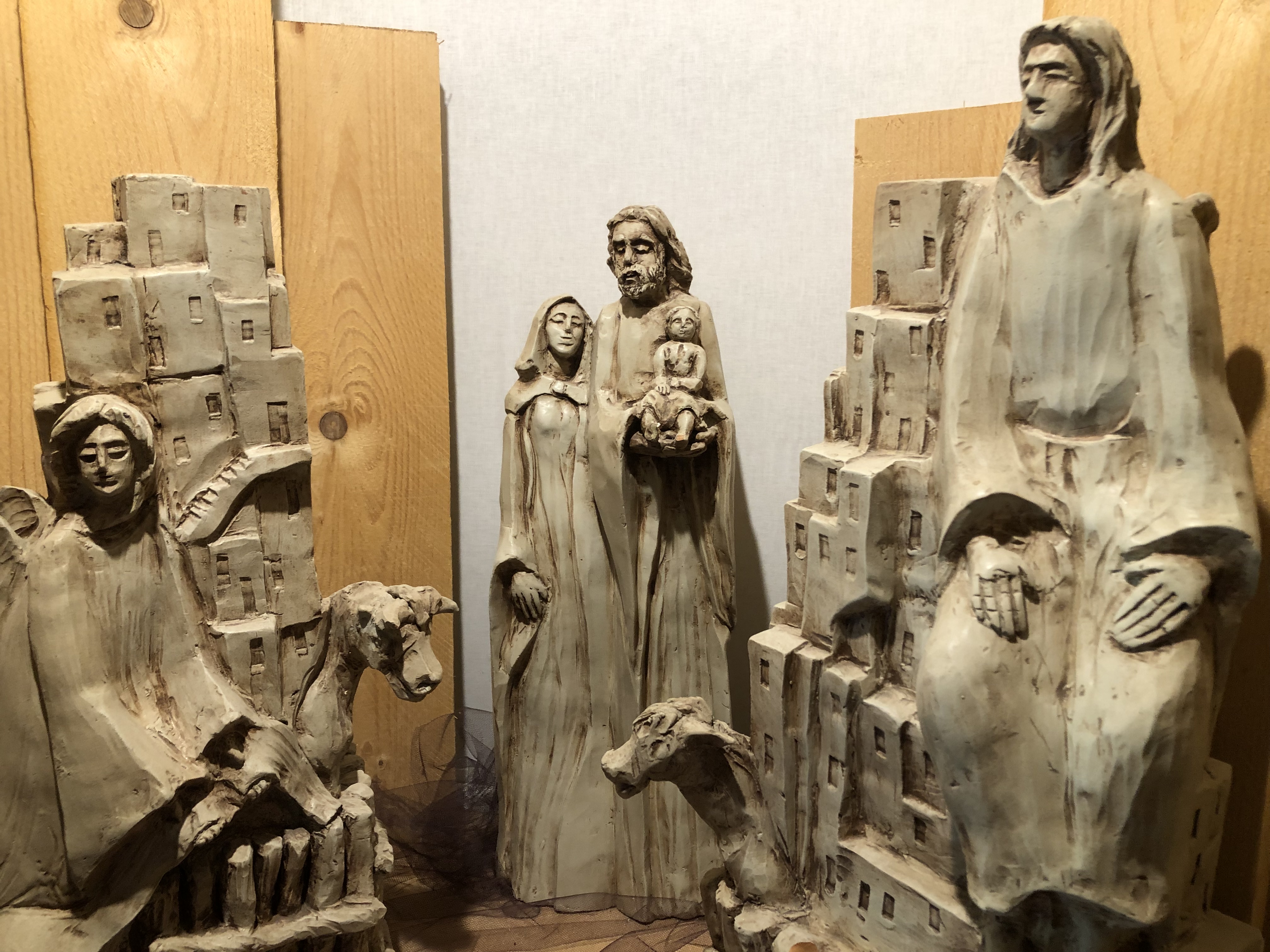
It’s a tradition that thrives all over the world, but especially in Italy. It’s also an example of what is known to theologians as “inculturation,” the way the Gospel enters into different cultures and finds ever-new expression in their traditions. The traditional Nativity scenes of Italy, especially Naples, often include dozens, even hundreds, of figures going about the tasks of daily life–shopkeepers, bakers, fruit vendors, beggars, musicians, servants, housewives, children, farmers, you name it. Dress and architecture in the scenes reflect the daily life of those who create them.

Continue reading “The Nativity scene at 800”

Memento mori

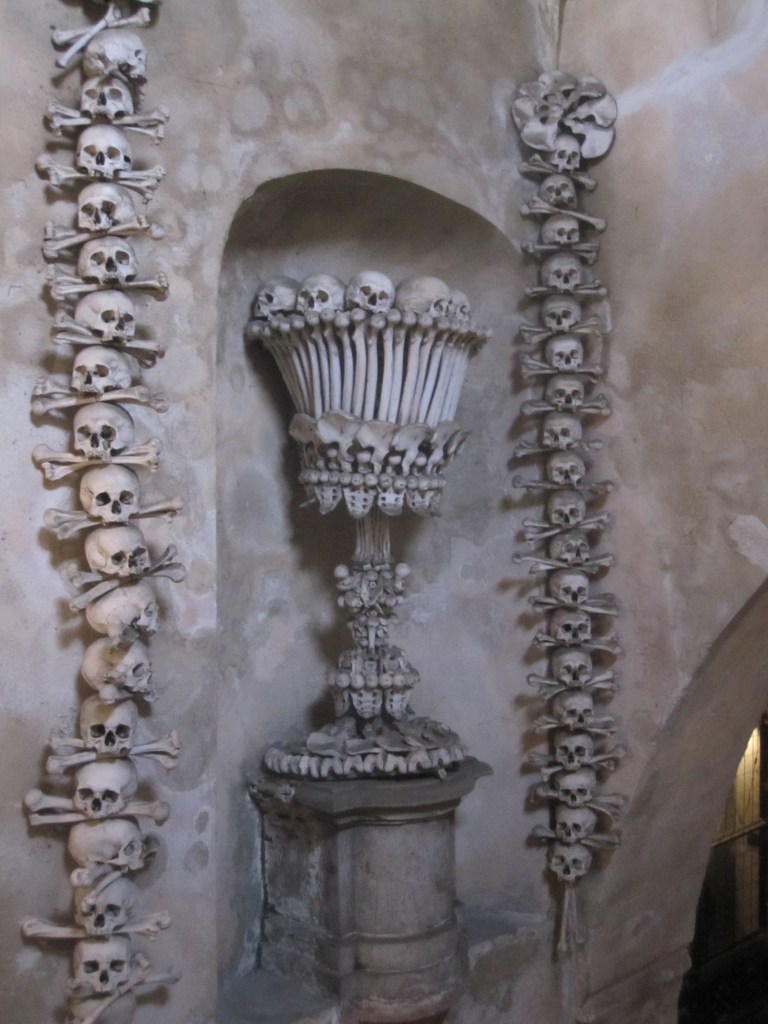
As I noted at the beginning of the month, November is a month dedicated to praying for the dead. It is also a time in which the readings begin to take on a somewhat apocalyptic flare. The theme of the end of things echoes with the changing seasons; at least in the northern hemisphere, this is the time when fall turns into winter.

Sedlec Ossuary, Kutna Hora, Czech Republic

It might seem macabre to dedicate a particular season to considering death, but it doesn’t have to be. In any case, not thinking about death will not prevent it from happening to each one of us. One reason to pray for the dead, as I wrote a few weeks ago, is to help them on their journey through purgatory. Another is to give us the proper attitude toward life. The things in this world are temporary; our relationship with God is eternal. We should plan accordingly.

Continue reading “Memento mori”

Gargoyles, east and west

Wat Pha Lat, Chiangmai, Thailand

One of the highlights of my recent travels through Asia was visiting a number of quite impressive Buddhist temples and shrines. This was particularly the case in Thailand, though Chinese temples in Singapore, Taiwan, and Hong Kong were also filled with rich carvings, colorful statues, and piles of offerings including fruit, flowers, and burning incense. The warm red–the color of prosperity–of the Chinese temples reminded me of the red color with which the ancient Romans frescoed the inside of their homes. The desire for a warm hearth is written deeply in the human psyche.

Thian Hock Keng Temple, Singapore

A place of worship that makes an absorbing appeal to the senses is of course nothing new to me. I live in Rome, city of the baroque, where tales of religious ecstasy are told and retold in marble, mosaic, and fresco. The impulse of Christianity to express itself in art goes back to the Incarnation itself, to God revealing himself by entering into the world of the flesh, expressing his divinity in the matter of creation. We Catholics believe that he continues to communicate his grace to us through the sacraments. Artistic expressions using color, smell, and sound to amplify this divine work come naturally enough to a sacramental faith.

But what about Buddhism? Such expressions would seem to me, an outsider, to fit less naturally within Buddhist philosophy, with its distrust of all desire and negation of the world of pleasure and pain. Incarnation and Nirvana are two radically different beliefs. Yet how else to describe the gilded wats of Thailand, the cascades of angels and demons in glittering ceramic, than Buddhist baroque?

Wat Arun Ratchawaramahawihan, Bangkok

Of course, Thailand’s wats are not the architectural expression of pure Buddhist philosophy but a kind of non-culinary Asian fusion–Buddhism grafted into a still older mix of traditional folk beliefs, legends, and superstitions. How cogent such a mix is, I can’t evaluate. But there’s something human about that folk mix that I find more compelling than Buddhism in its purity, which I’ve always thought a little chilly.

Continue reading “Gargoyles, east and west”

Jonah, the most bumbling prophet

Jonah sarcophagus (ca. AD 300), Vatican Museums

Those at daily Mass this week get to enjoy the special treat of hearing the book of Jonah. The book is such a good tale–who doesn’t love a giant sea monster? or a cantankerous prophet?–that I imagine the story originally told dramatically aloud. I think we’re meant to laugh at Jonah, the Mr. Bean of prophets.

Of course, there is a serious message to the book that goes beyond whale innards and the prophet’s pouty attachment to his gourd plant. Jonah reveals the sweeping reach of God’s mercy, extending even to the most wicked of cities–Nineveh, grrr—when those within it seek conversion. Students in my classes are probably sick of hearing it, but one way to get under my skin is to claim that the grumpy “God of the Old Testament” has been replaced by the groovy “God of the New Testament.” There’s only one God. He’s infinitely merciful and revealed in both the Old and New Testaments. And the book of Jonah proves it.

Continue reading “Jonah, the most bumbling prophet”

A poem and a prayer for Australia (and Jesuits!)

St. Patrick’s Cathedral, Melbourne, Australia

After a very blessed time of tertianship–the final formal part of Jesuit formation–and travel afterwards, I arrived back in Rome this week to begin preparing for the semester ahead. For me, this new beginning is also a time to look back with gratitude at my time in Australia’s tertianship program. I thought I’d share this poem from Australian poet James McAuley (1917-1976), a prayer for his remarkable country that could just as easily be a prayer for us Jesuits.

The poem is a part of a fountain outside of Melbourne’s cathedral that runs from the doors of the church out toward the city–evoking Ezekiel’s image of the waters of life flowing from the temple. The sculpture includes quotations from both the Old and New Testaments (John 4:14, Ps 23:2-3). It is inspired by the words of Revelation: “Then [the angel] showed me the river of the water of life, bright as crystal, flowing from the throne of God and of the Lamb through the middle of the street of the city; also, on either side of the river, the tree of life […] and the leaves of the tree were for the healing of the nations” (Rv 22:1-2).

St. Patrick’s Cathedral, Melbourne, Australia

Here’s McAuley’s poem:

Incarnate Word,

in whom all nature lives,

cast flame upon the earth:

raise up contemplatives

among us, men who walk within the fire

of ceaseless prayer,

impetuous desire.

Set pools of silence in this thirsty land.

James McAuley (1917-1976), Australian poet
St. Patrick’s Cathedral, Melbourne, Australia

The waters of Australia

Peaceful Bay, Western Australia

After a couple of months in Western Australia and half a year Down Under, I am still amazed by the diversity of this island continent’s landscapes. This includes unparalleled bio-diversity–all the birds and marsupials and one-of-a-kind wonders, like the platypus, that look like something out of a Dr. Seuss book–as well as the geological curiosities.

The Twelve Apostles, Victoria, Australia

On this, the driest of Earth’s continents, I’ve been especially fascinated by water. Most of Australia’s population (almost 90%) live within 30 miles of the coast, and some of the country’s greatest wonders–the Great Barrier Reef, for example–lie underwater. My own fascination with water comes in part from its sacramental usage. Water is the one physical element necessary for baptism and, thus, entry into Christianity.

Continue reading “The waters of Australia”
The Spiritual Exercises in South Australia

Our Lady of the Vines, Sevenhill, Australia

It is hard to know what to say to those who ask about one’s experience of the 30-day Spiritual Exercises of St. Ignatius Loyola. The experience is profound, intense, and deeply personal. It is also experience, not knowledge or information that can be transferred to another. To be sure, the retreat does have objective content–the life of Christ, God’s creation of the world, the moral law. It is not just a process for personal growth; it is an encounter with the Son of God who revealed himself in first century Palestine, who we know through the accounts that his followers handed on to the Church. Fundamentally, the content of the retreat is simply Christianity, nothing more and nothing less.

That said, the experience of encountering that content varies from person to person. We can either look at Jesus from a distance or approach him, talk to him, get to know him. The Spiritual Exercises are a way of getting to know him–spending time with God with other distractions removed, recognizing God’s work in our lives up to this point, discovering his hopes for us. Like meeting your future spouse or holding a newborn child for the first time, you can describe what happened, but the experience itself can never be fully captured in words. Spending thirty days getting to know Jesus more deeply in prayer is a similarly ineffable experience.

St. Aloysius Church, Sevenhill

Of course, some aspects of the retreat can be more easily shared, and I thought I’d start with one that might seem secondary but isn’t–the location. Christianity is an embodied, incarnational religion that acknowledges the influence of where we are on who we are. During the Spiritual Exercises St. Ignatius frequently invites us to begin by imagining the places where Jesus lived, “the synagogues, villages, and towns” where he preached or the hills and valleys between Nazareth and Bethlehem. Even on an interior journey, location matters.

Continue reading “The Spiritual Exercises in South Australia”