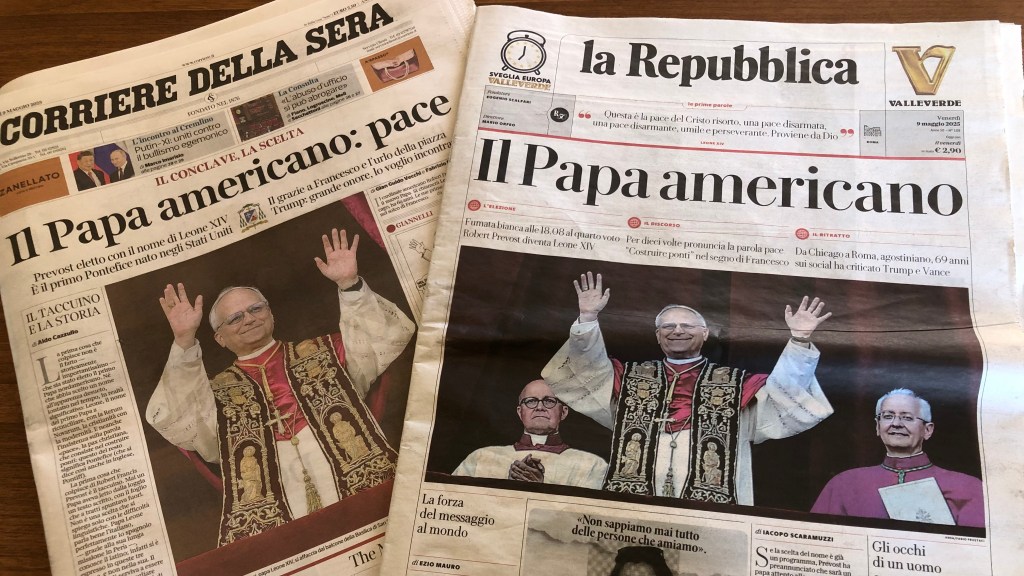
Pope Leo: an ever-ancient, ever-new beginning for the Church

Just over a week ago I stood among the throng in St. Peter’s Square waiting for Pope Leo XIV’s Mass of installation. As the new pope emerged on the back of a white truck and made the rounds through the square, one of the priests who was with me to concelebrate whispered, “It still feels surreal.”

It still does.

The one iron-clad rule of papal elections, after all, used to be that the cardinals would never elect an American pope. And now we have a pope who grew up cheering for the Chicago White Sox. Going into the conclave, the Church seemed tired and divided. Yet Pope Leo has managed to evoke good will on all sides, and he hasn’t had to resort to any particular gimmicks to do so. Rome is elated.

What is perhaps most striking about our new Holy Father is the paradoxical way in which he seems both totally at ease in his new role–as if he’d been pope-ing for years already–and at the same time totally unassuming. One could imagine sitting next to him at a baseball game and him introducing himself as “Bob from Chicago.” At the same time, seeing him on the balcony of St. Peter’s Basilica or meeting world leaders in the robes of his office, one senses the quiet dignity of a successor of the Apostles.

A lot has already been written about Pope Leo on the basis of relatively scant pre-conclave writings and interviews. I was particularly impressed by the first homily he gave to the cardinals after his election. His brief address to the Synod of Bishops on evangelization more than a decade ago equally impressed me because he seemed to grasp one of the central problems facing the Church: the role of the media in communicating–and sometimes miscommunicating–our message. I remember an interview given by the late Cardinal Avery Dulles to Charlie Rose, in which the cardinal observed that the biggest problem faced by the Church was that most Catholics learn what they know about Catholicism not from the Church herself, but from the media. Leo XIV understands that dynamic–and he is alert to the equally challenging frontiers now being opened by artificial intelligence.

Continue reading “Pope Leo: an ever-ancient, ever-new beginning for the Church”

Build back baptistries! A trip to the Baptistry of San Giovanni in Fonte

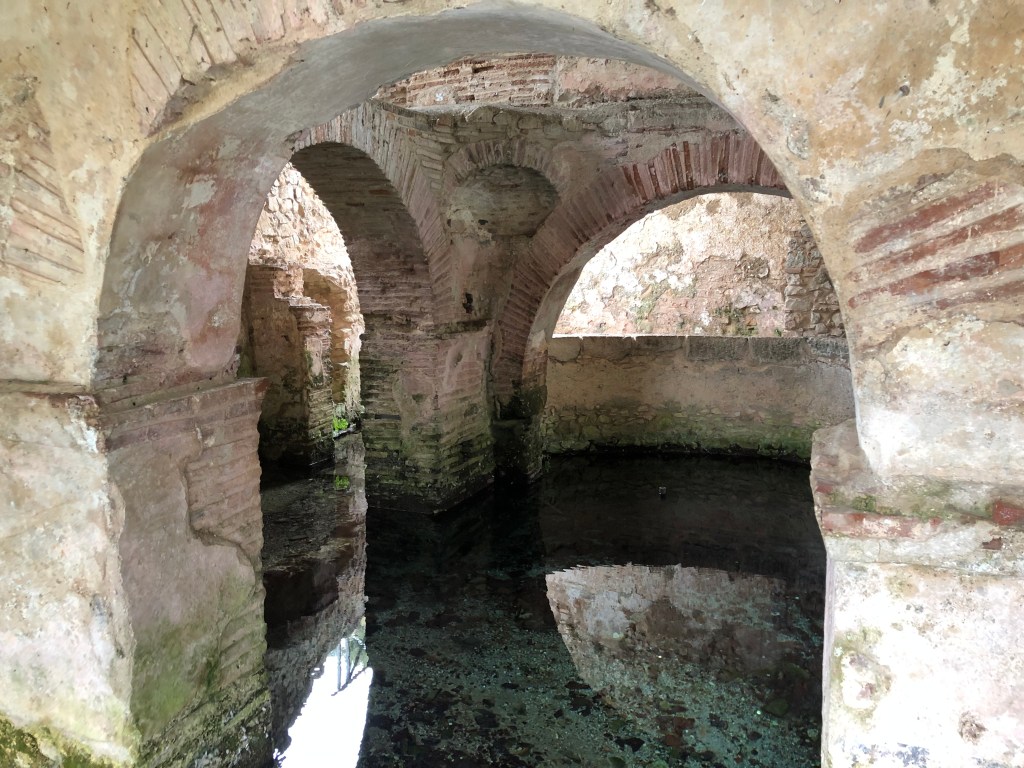
An unexpected discovery on my recent trip to Italy’s Cilento was the Baptistry of San Giovanni in Fonte, just outside of Padula. Also known as the Battistero Marcelliano, after Pope Marcellus, it dates from the fourth century, putting it among the oldest Christian structures in the world. A letter from Cassiodorus in AD 527 mentions a miracle occurring at the baptistry, its water level rising unexpectedly while a priest was pronouncing the prayer over the baptismal waters on the vigil of the feast of St. Cyprian.

Battistero di San Giovanni in Fonte, Paula, Italy

The structure itself sits on the site of a natural spring, so the baptismal font was a pool of “living” water. The baptistry was built on the ruins of an earlier pagan structure and underwent several renovations and expansions throughout history. Hints of a fresco, dating from the 11th century when the structure was converted into a chapel, remain on the wall. The remains of still earlier frescoes from the 6th and 7th centuries were removed and taken to a local museum.

Rising water levels caused the chapel to be abandoned in the 19th century, though the site of the remains and spring, down a winding country road, are quite a pleasant spot today.

This reminder of baptism from Christianity’s earliest days is worth reflecting on during the Easter season. I discuss some of the theological and practical consequences of the shift away from the patristic catechumenate and toward near-universal infant baptism in the Christian cultures of the Middle Ages in Baptism of Desire and Christian Salvation, but the subject is worth more reflection than what I’m able to give it there.

Reflecting on early Christian baptismal practices is important because we are moving into a new phase in Christian history that in some ways will more closely resemble the Church of the Fathers — in which Christianity was a minority — than medieval Christendom. Some of our sacramental practices, I am convinced, will have to shift to respond to this new reality. This may not be entirely a bad thing. When it comes to baptism, for example, too often the sacrament, celebrated in a minimalistic way, has become a mere formality with little connection new life in Christ.

Continue reading “Build back baptistries! A trip to the Baptistry of San Giovanni in Fonte”

Susanna and the wicked judges

Monday of the fifth week of Lent brings one of the Bible’s great courtroom dramas — the story of Susanna and the elders from the Book of Daniel. It’s one of the longest readings in the lectionary, but one that deserves to be read with relish. An innocent woman does what is right even at the cost of her life. Two powerful and corrupt men, overthrown by lust, suppress their consciences, and compound debauchery with vindictiveness. And a lone idealistic voice, indignant at the injustice of the crowd, speaks out — and the old goats are snared in the net they’ve woven.

Susanna and the Elders, Guercino, 1617

There’s something refreshing about the story. It’s not hard to tell the bad guys from the good gal, and for once justice is throughly vindicated. A few weeks ago in my post about Guercino, I mentioned the baroque era’s love of drama (one might be excused for saying “melodrama”). I was happy to see Guercino take up the story of Susanna. Quite a lot could be said about tale — the Lord hears the cry of the innocent even when everyone else seems deaf — but it is, first of all, a great yarn. As we look forward to Holy Week, Susanna’s travail is a reminder that, even if it doesn’t always happen quickly — or even in this life — justice will ultimately prevail.

Susanna and the Elders, Guercino, 1617

The Church of Sant’Agnese in Agone

Sant’Agnese in Agone, Rome

This week’s liturgical calendar includes two prominent–and very different– Roman martyrs. The first, St. Sebastian, a third century soldier originally from Milan, was sentenced to death after converting to Christianity. Tied to a column, he was shot through with arrows but miraculously survived and was nursed back to health by a Roman matron named Irene. He went right back to preaching and, after warning the Emperor Diocletian to repent–a gutsy move if there ever was one–was beaten to death and thrown into Rome’s sewers.

No less courageous, St. Agnes sought to dedicate her life entirely to God while very young. This meant refusing the advances of several powerful suitors, who were enraged by the rejection. Agnes’s pagan father sided with the suitors. She was humiliated, even dragged naked through the streets of Rome, burnt at the stake and when that failed–as with the first attempt to kill St. Sebastian–eventually beheaded.

The courage of such martyrs–one a solider, the other a mere girl, barely a teenager–is fundamental, I think, to appreciating the full significance of Christian faith in eternal life. At least some of the ennui that one can perceive in the Church over the past several decades perhaps comes from deemphasizing the witness of the martyrs just when we need it most.

Continue reading “The Church of Sant’Agnese in Agone”

Post-election thoughts from Rome

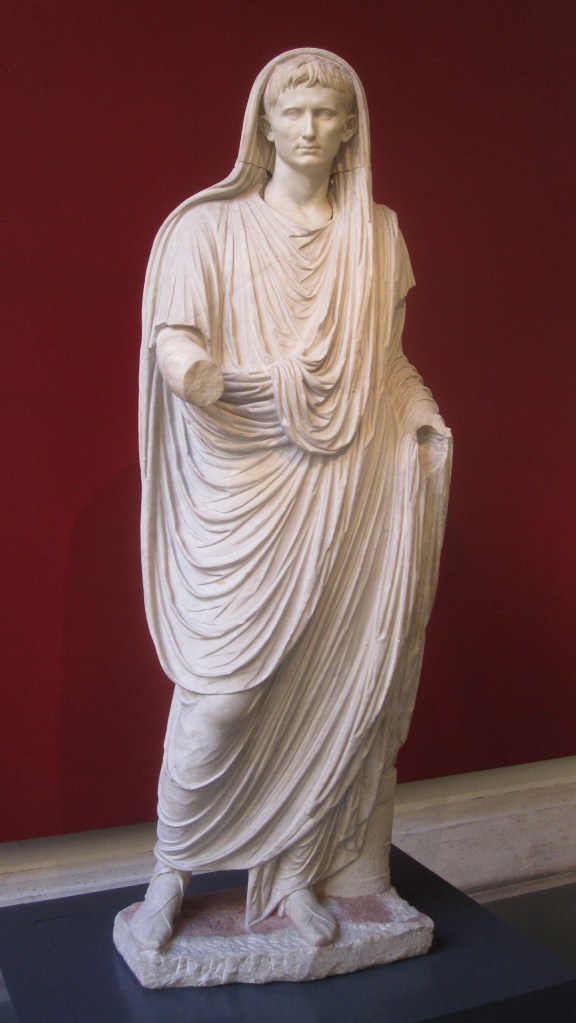
Augustus Caesar in the robes of supreme pontiff, Palazzo Massimo, Rome

As a follow up to my piece at The Catholic Thing on elections as civic rituals, America magazine asked me to reflect on how the US Presidential election looked from Rome. So here are my thoughts from an election morning walk to the Mausoleum of Caesar Augustus: Caesars, presidents and apostles: Viewing the presidential election from Rome. I was happy to see some pieces of our election rituals restored this time around; President Biden’s invitation of President-elect Trump to the White House was a gracious moment, more important as a symbol than because of anything said between the two men.

With the election now behind us, I also thought it worth sharing what for me was one of the more interesting–even edifying–reflections to come out of campaign. When he converted to Catholicism, Vice-President-elect JD Vance penned a thoughtful account of what led him to the faith in The Lamp (where yours truly has also published). Regardless of what you think of his politics, it is refreshing to read about a public figure’s faith journey, both personal and intellectual. I was particularly interested to read about the role René Girard’s work played in Vance’s conversion. From 2020, “How I joined the resistance” is worth a read.


Those who weren’t able to be at the book launch of Baptism of Desire and Christian Salvation last month might be interested to read Jonathan Liedl’s account of the event–with a tie-in to one of Rome’s most unique Jesuit relics–in The Catholic Spirit: What a severed arm can tell us about evangelization. A reminder that the discount code CT10 gives 20% off on new releases when purchasing directly from the CUA Press website. The book is also available on Amazon and seems to be in stock again. In Italy, it might be faster to order through IBS or La Feltrinelli. The Libreria Sole across from the Gregorian University was also supposed to order copies. I hope to have a video of the talks from the book launch up on the Baptism of Desire page soon.

Launched: book, articles, interview

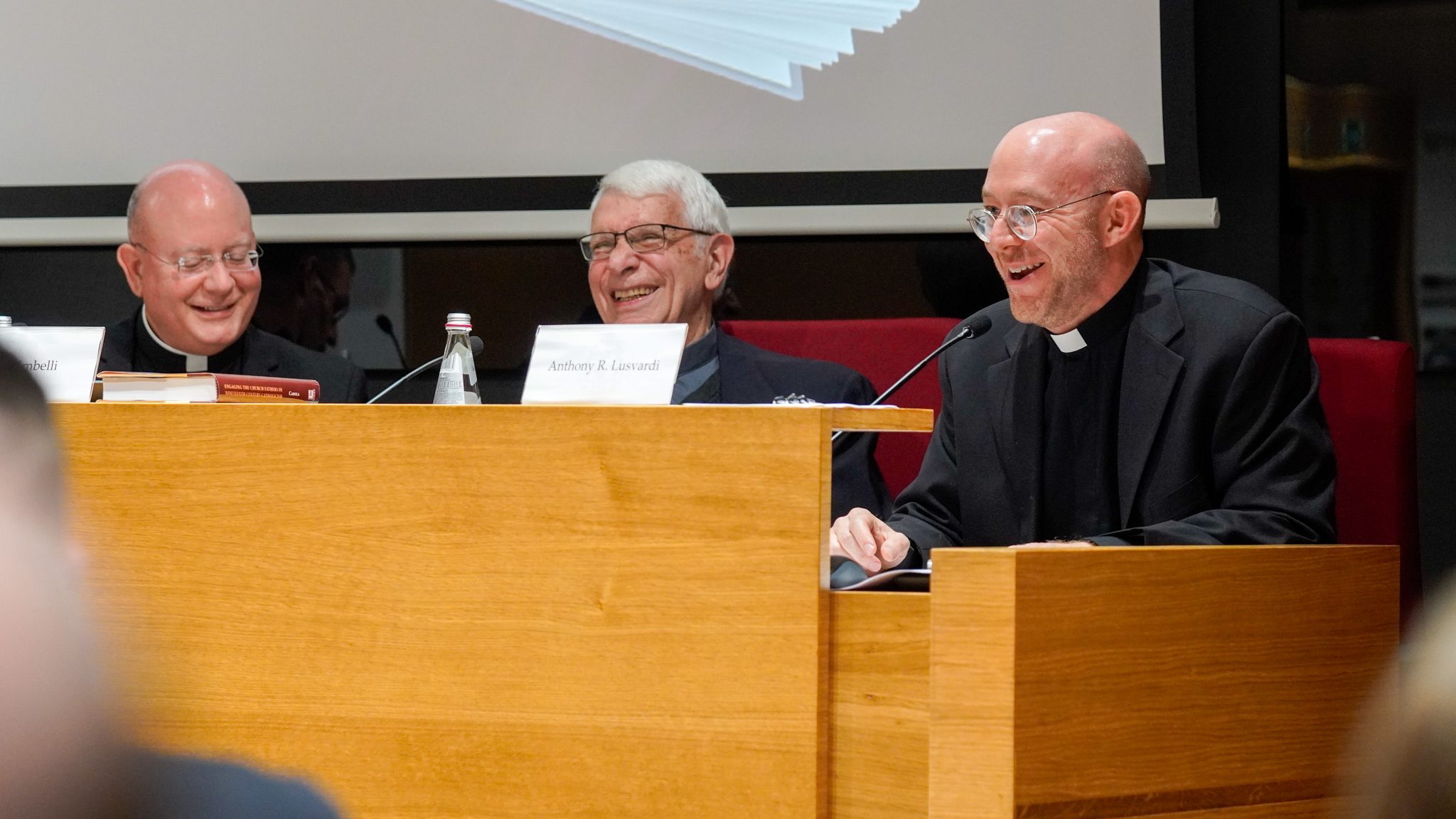
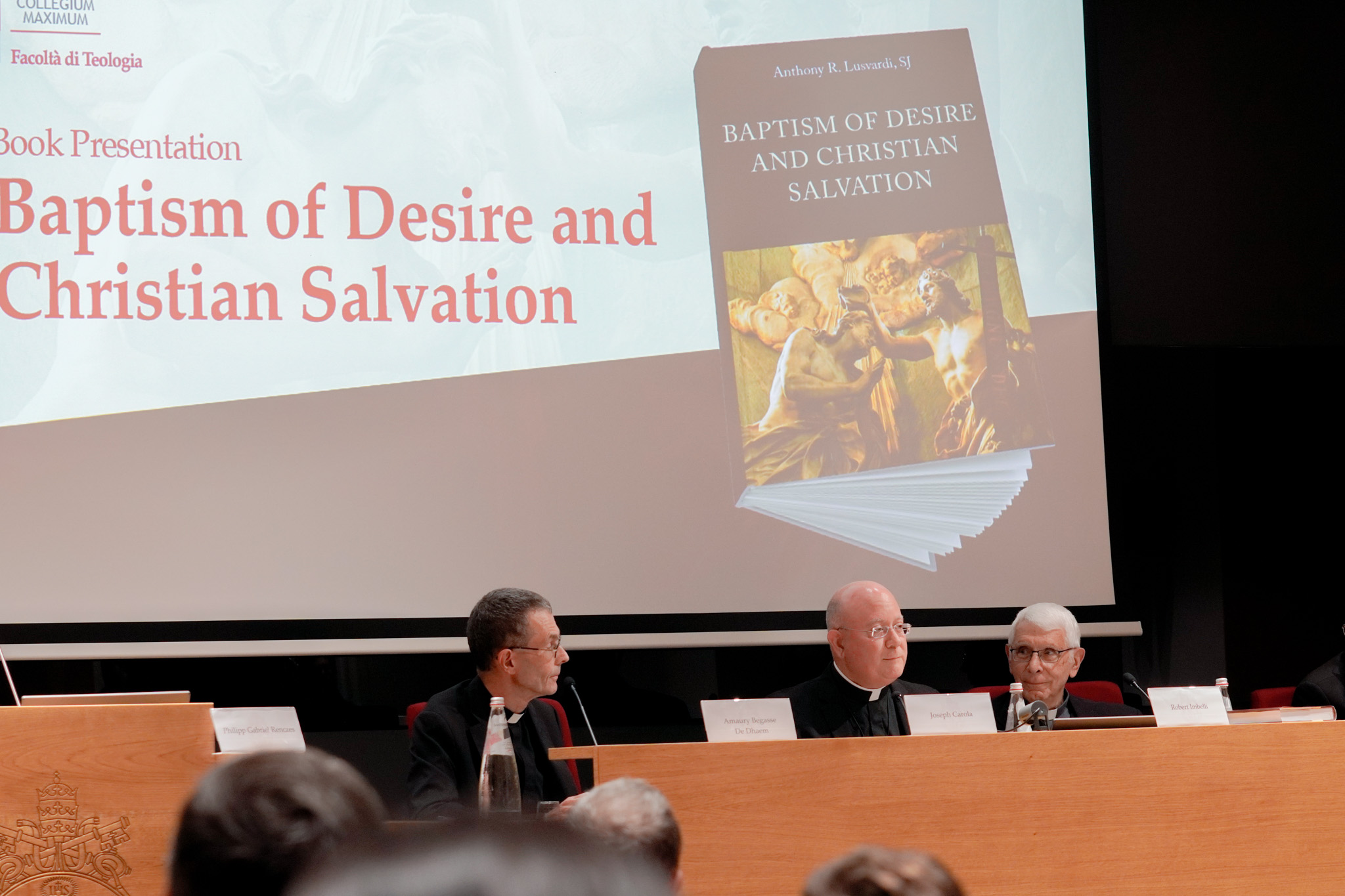
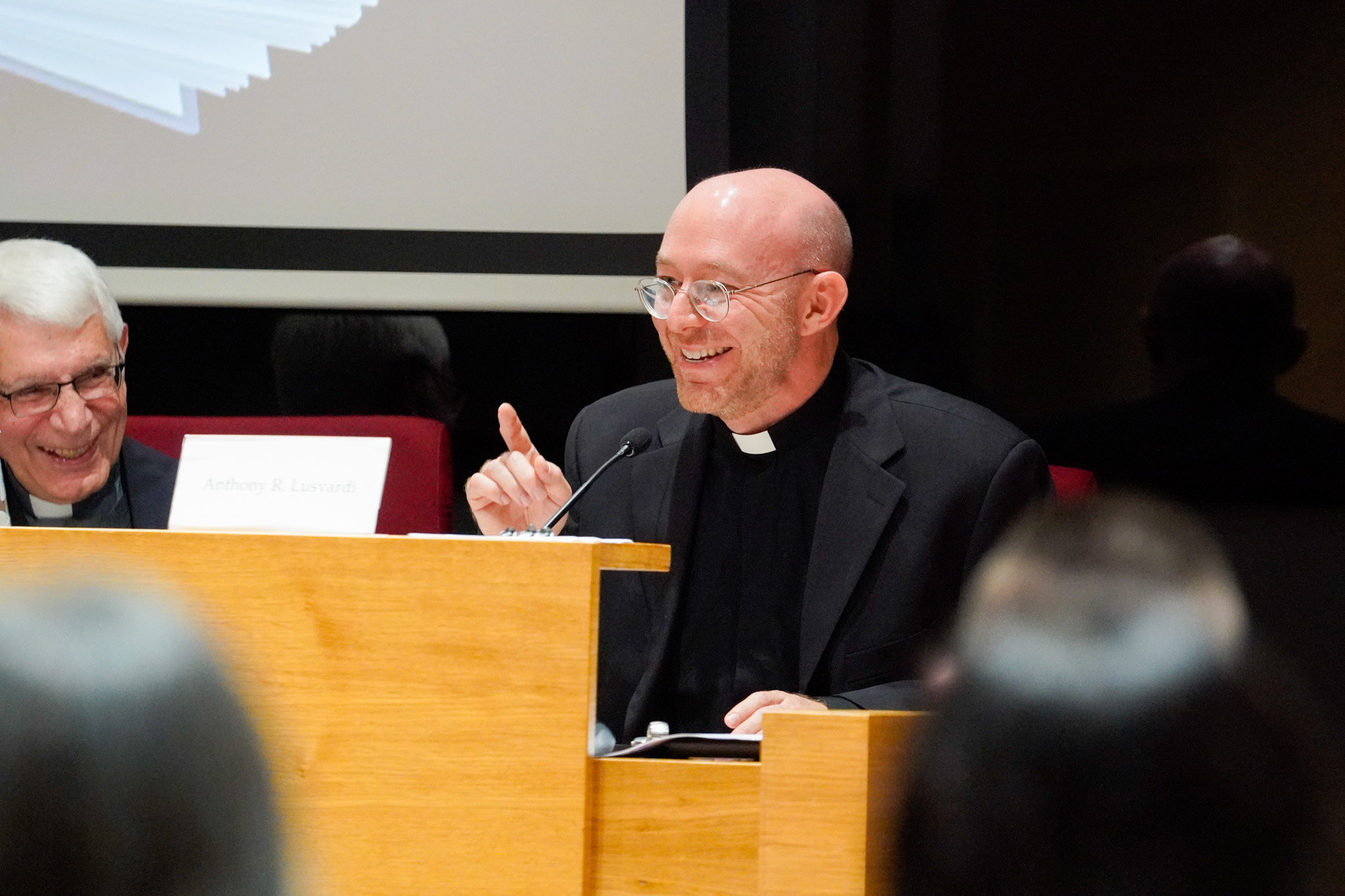
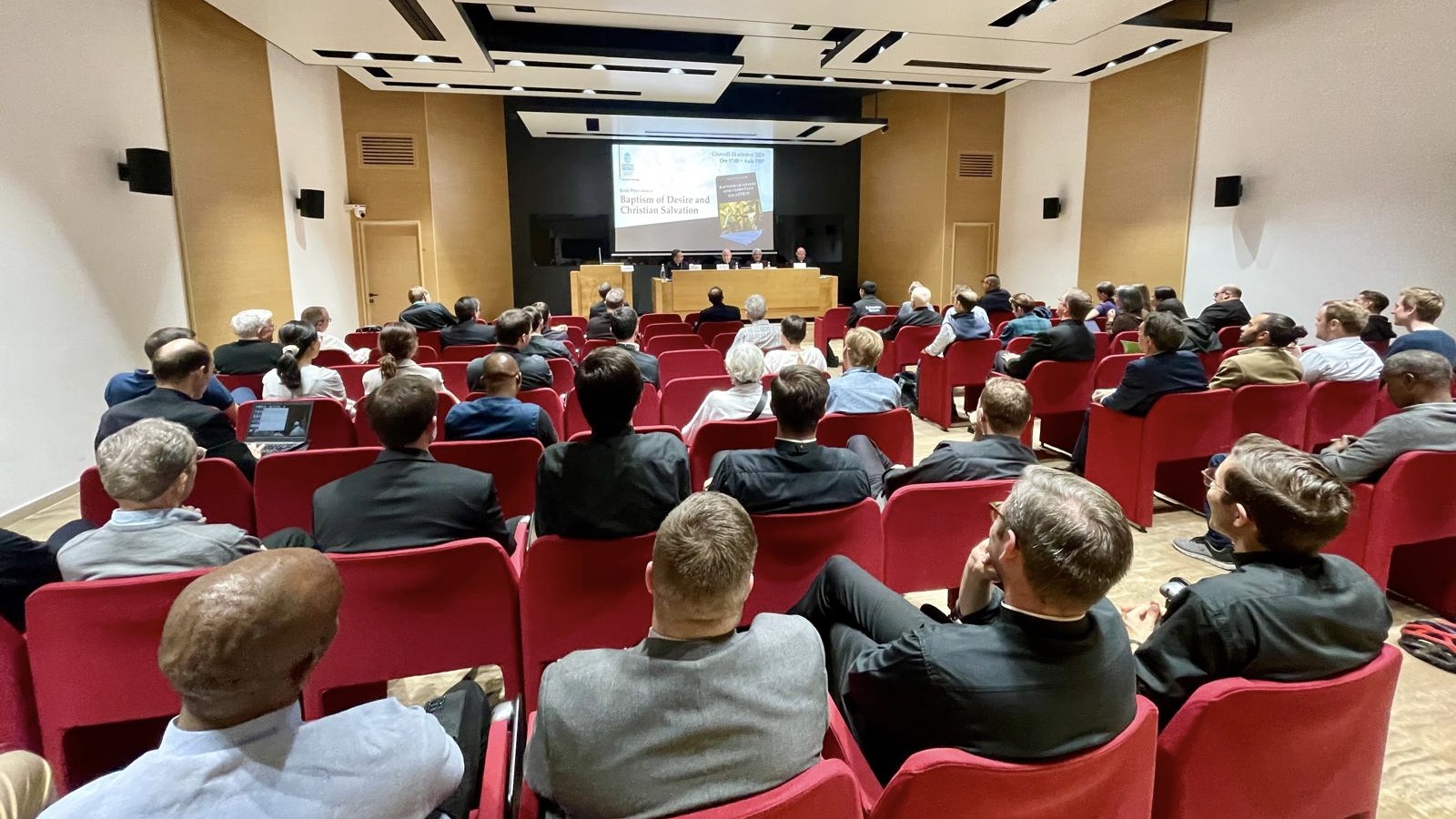
Baptism of Desire and Christian Salvation is now in orbit after an excellent turnout at the official book launch at the Gregorian last Thursday. More good news: the code CT10 still gives you a 20% discount if ordering the book directly from Catholic University of America Press. At the presentation of the book, Fr. Joseph Carola gave an overview of its content and shared some stories from personal experience to illustrate its pastoral relevance. Fr. Bob Imbelli drew on other contemporary thinkers, such as Khaled Anatolios, Charles Taylor, and William Cavanaugh to demonstrate its relevance. I hope to have video of the presentations up on the Baptism of Desire page soon.

Fr. Joseph Carola, S.J., Fr. Robert Imbelli, Fr. Anthony Lusvardi, S.J.

Just a week before, I was also pleased to talk about the book with my old friend Sean Salai at Catholic World Report. Read the interview here: Defending the necessity of baptism: An interview with Fr. Anthony Lusvardi, S.J.

On another note, in this month’s First Things I return to an issue I raised a few years ago in an article in America magazine, the effects of technology on the liturgy. Here’s the new article: “Screens and Sacraments.” The original from 2020 is here.

And, finally, if you’re looking for some pre-election reading that isn’t about either Donald or Kamala, but instead about the way voting functions as a civic ritual, check out my latest at The Catholic Thing: “Rites (and Wrongs) of Democracy.“

Summer roundup

Chocolate Hills, Bohol, Philippines

As you could probably tell from last week’s post, I’m back in Rome getting ready for the start of the new academic year next month. It was a full and eventful summer more than a restful one. It started out with my first trip to the Philippines for a meeting of the Jungmann Society, the international association of Jesuit liturgists, where I gave a talk on daily Mass in Jesuit communities. It was encouraging to meet many young Jesuits interested in the liturgy, especially those from Asia. Some new initiatives are coming out of the meeting as well. The initiative I am most excited about is an eight-day retreat for Jesuits I am preparing for next summer: “Praying the Liturgy,” which will be offered June 29 – July 7, 2025 at the Jesuit Retreat Center in Parma, OH. It is open to all Jesuits.

I also spent some quality time at St. Isaac Jogues in Rapid City and back at home in Minnesota, connecting with friends. For the first time, I led a retreat at the gorgeous new retreat center Cloisters on the Platte outside of Omaha, and attended a really excellent conference in Mundelein, IL on the divergent theologies of Karl Rahner and Joseph Ratzinger organized by Prof. Matthew Levering and the Greg’s own Fr. Aaron Pidel, SJ. Some theological all-stars there. A book will be coming out at a later date with papers from the conference, including my own contribution on the two theologians and the liturgy, arguing that Ratzinger continues the project of the Liturgical Movement while Rahner’s attitude toward the liturgy is an extension of pre-Vatican II scholasticism.

I’m also happy to have had a handful of new publications over the summer, including a pair of articles in America. One is about the sin of presumption, scientism, and Michael Jordan’s shoes, the other a broader perspective on the ‘Last Supper’ controversy at the Paris Olympics. Check ’em out if you haven’t already.

Also, if you didn’t get a chance, you might enjoy my article “Getting Back in the Baptizing Business” in The Catholic Thing which explains why I think my book on baptism of desire is important.

And speaking of Baptism of Desire and Christian Salvation, I was pleased to be able to bring my summer to a close by giving several talks on the book in Sweden. I had an enjoyable discussion with the participants of the Hörge seminariet at the Newman Institute in Uppsala and was deeply encouraged by the large and energetic group of young adults at Sankta Eugenia in Stockholm. It is great to see the book both resonating with people and provoking discussion.

More on Baptism of Desire and Christian Salvation will be coming soon, including an official “book launch” here in Rome…

Stockholm, Sweden

The Last Supper, the French Revolution, and Aleksandr Solzhenitsyn

Readers of this blog might be interested in this article America asked me to write on the Last Supper Olympics controversy. A bit of historic context and a bit of tongue-in-cheek… I may have had a warrant issued for my arrest in France.

I think Solzhenitsyn’s critique of the French Revolution is particularly important and something I hope to follow up on in the next book project.

And speaking of books, if you haven’t already ordered your copy of Baptism of Desire and Christian Salvation, do so quick. They’re selling like hotcakes here in Rapid City…

Intentions, motives, and what makes for a valid sacrament

The question of invalid baptisms has been in the news recently. In my commentary on the question in La Civiltà Cattolica, I pointed out that the Vatican’s most recent document on the question, Gestis verbisque, gives renewed attention to the minister’s intention. For a sacrament to be valid, a minister must intend to do what the Church does when celebrating that sacrament. And that means that if he changes what the Church prescribes in her official liturgical texts–by inserting his own words or deleting something required to be there–then he manifests an intention to do something else. It’s just as straightforward as it sounds. The proof is not in the pudding, but in the action.

Baptismal font, St. Peter’s Basilica

Last week, however, another question was sent to the Vatican about what sort of intention might invalidate a sacrament, this time an ordination. The question proposed the distasteful case of a bishop who ordained a man with whom he had engaged in an illicit sexual relationship. Could he possibly have the right intention? Wouldn’t such a sinful situation invalidate the ordination?

The article in which this question was raised described it as “potentially explosive.” Fortunately, this grenade was defused by St. Augustine in the fifth century. The great theologian was responding to controversy about the validity of baptisms, whether the sinfulness of a minster invalidated the sacrament. He responded no. Augustine’s principle has remained a bedrock of sacramental theology ever since. It is really Christ who baptizes, Augustine said, and he can do so even through profoundly imperfect human instruments. The same goes for ordinations. Augustine sagely realized that if perfection were required of ministers in order for sacraments to be valid, then we simply wouldn’t have sacraments.

So how does Augustine’s principle fit with the requirement that one has to have the right intention to celebrate a sacrament validly? Here we have to make what might at first seem like a rather technical distinction but is, once you’ve thought the question through, also rather straightforward. The distinction is between intention and motive.

Continue reading “Intentions, motives, and what makes for a valid sacrament”

Popular piety and tradition in Sardinia

I was fortunate this year to have spent Holy Week and Easter in Maracalagonis, Sardinia, a small town about a 20 minute drive from the center of Cagliari. It was a good break from the classroom and a wonderful taste of parish life.

Chiesa della Santa Vergine degli Angeli, Maracalagonis, Sardinia

The religious atmosphere I experienced was both warm and traditional. Masses were full; I heard confessions all week long; I met deeply committed Catholic families. I was especially impressed by the enthusiasm for traditional popular devotions. Teams of parishioners take responsibility for organizing different devotions throughout the year. Of particular note during Holy Week were the su Scravamentu, in which the nails are removed from the Lord’s hands and feet and he is taken down from the Cross after the Good Friday liturgy, and the many processions through the town streets–Stations of the Cross, Palm Sunday, Holy Thursday, the Sorrows of Mary on Good Friday, and then the S’Incontru on Easter morning.

Continue reading “Popular piety and tradition in Sardinia”