One of the reasons I find the season of Advent so compelling is its central symbol of light growing in the darkness, as simple as it is powerful. The fifth of the O antiphons always strikes me as particularly poignant:
O Radiant Dawn, splendor of eternal light, sun of justice: come shine on those who dwell in darkness and the shadow of death.
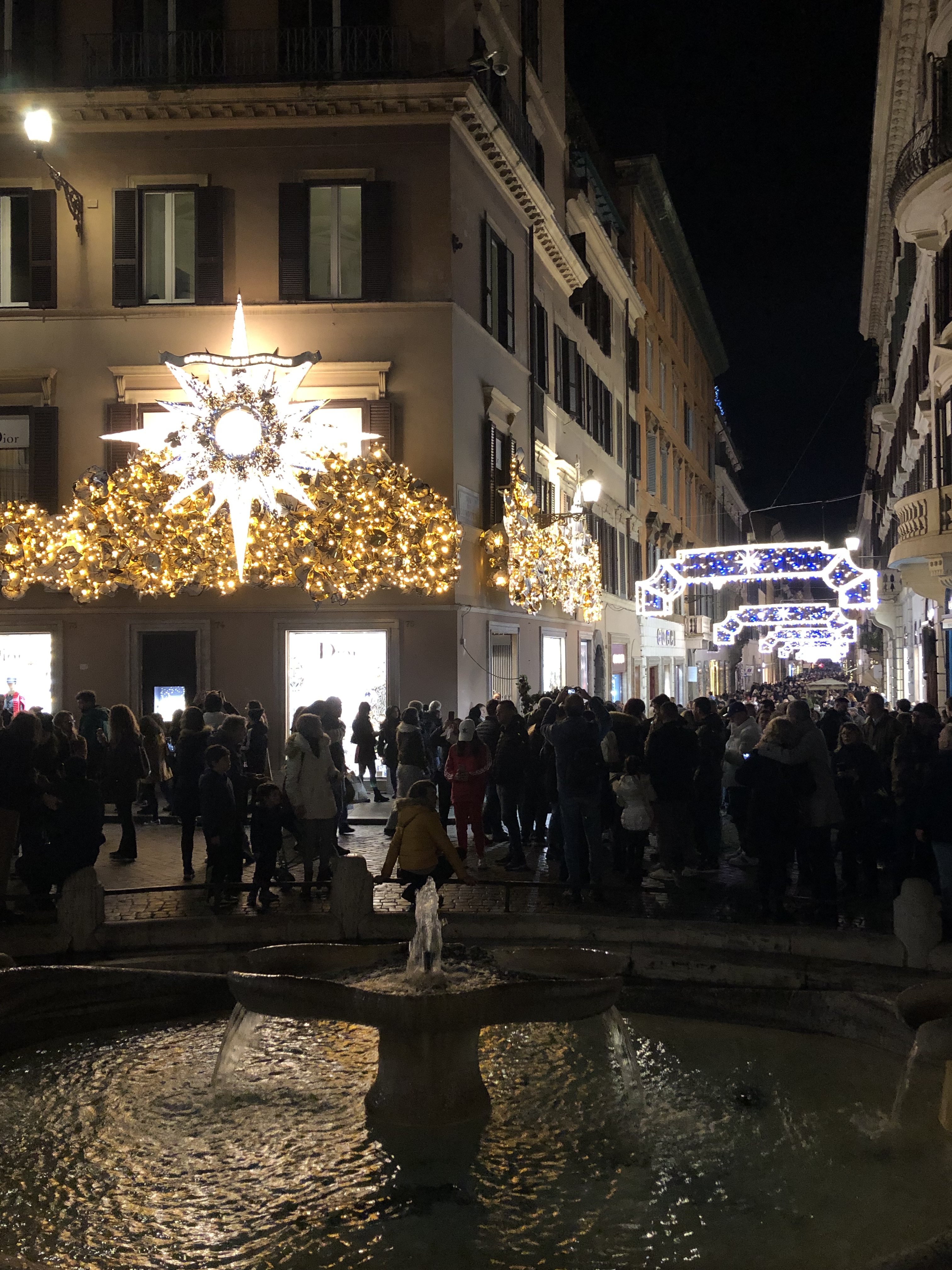
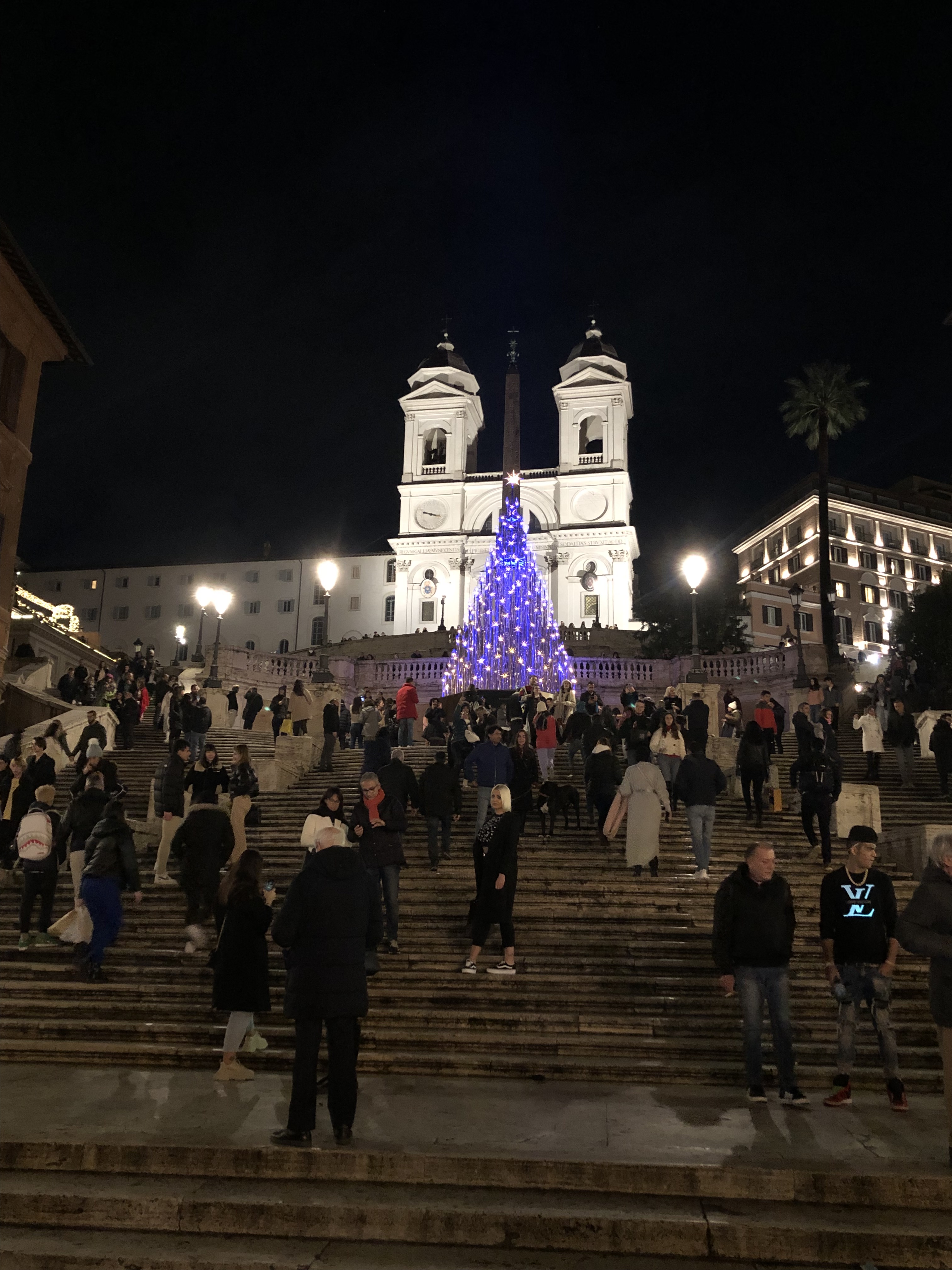
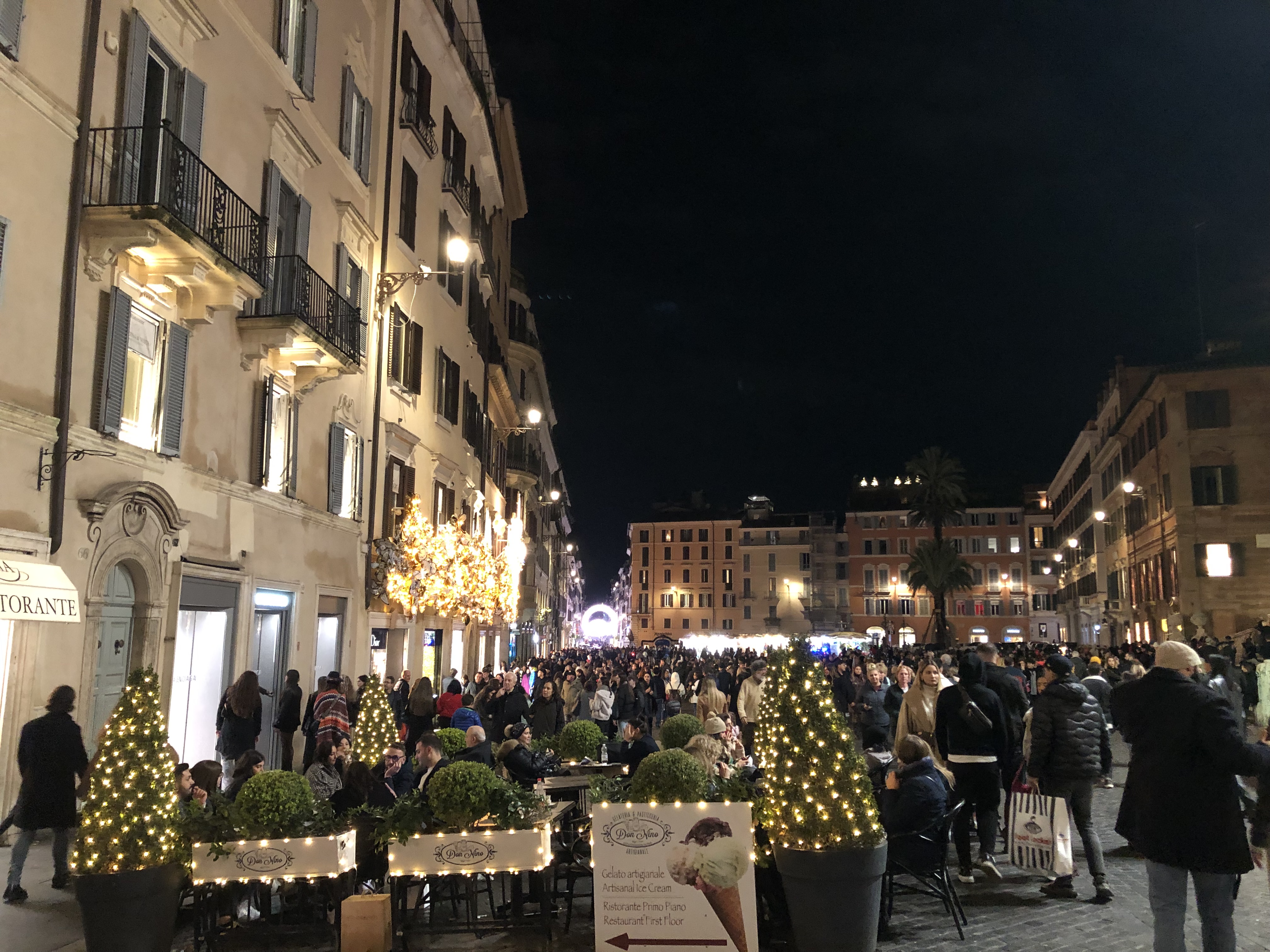
Mid-December also coincides with a slight lull in the crush of tourists here; between the Immaculate Conception and Christmas the streets are a tad calmer and one can get out and enjoy the decorations. In the northern hemisphere it is one of the darkest times of the year, but that only makes the lights all the more delightful.
In Italy the pre-Christmas countdown begins in earnest after the Immaculate Conception on December 8. One of the country’s less-known charms is that Holy Days of Obligation are national holidays, so the Immaculate Conception means a day off, and if, like this year, it falls on a Thursday, this means a long-weekend for many, rather like Thanksgiving.
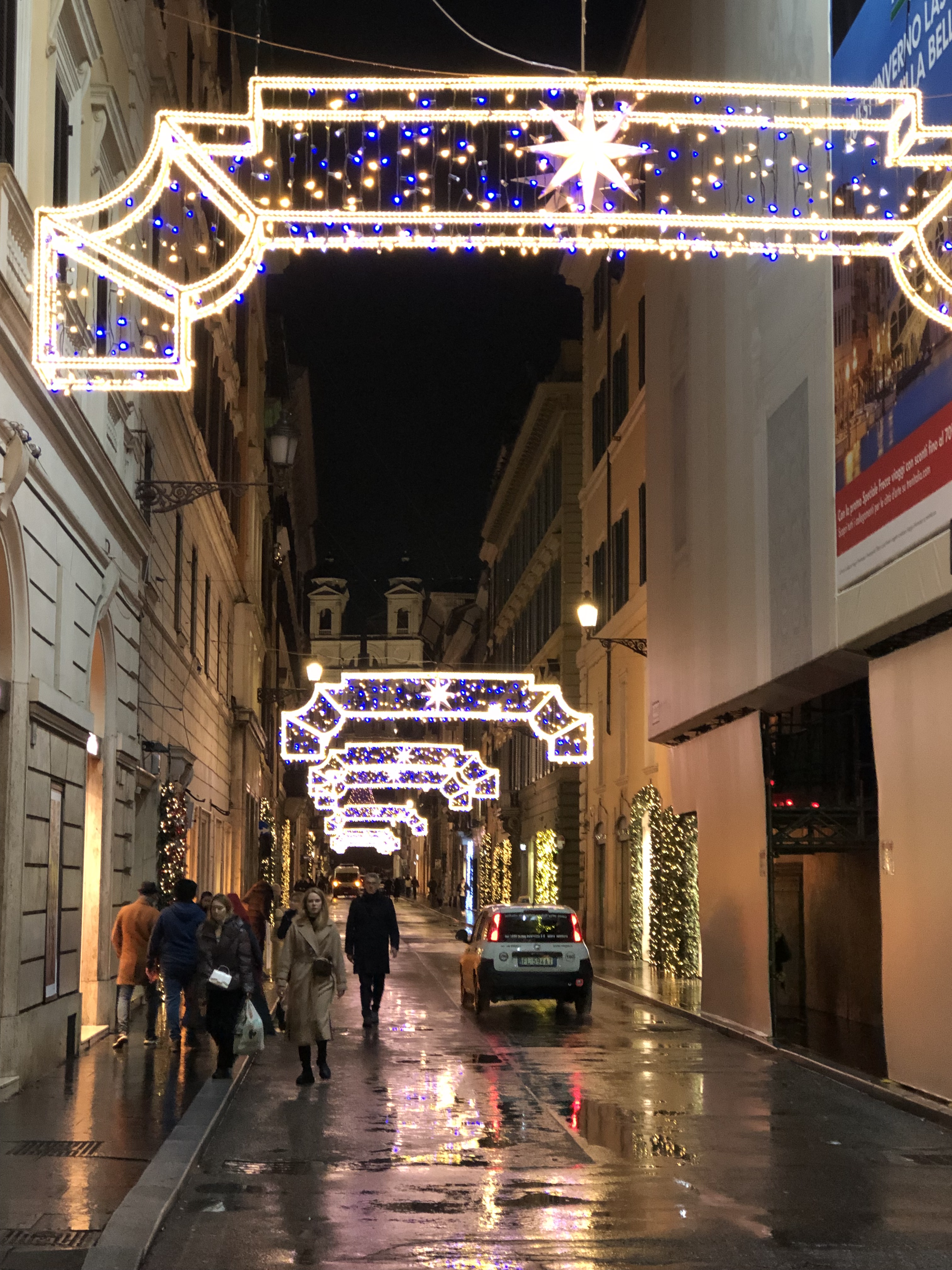
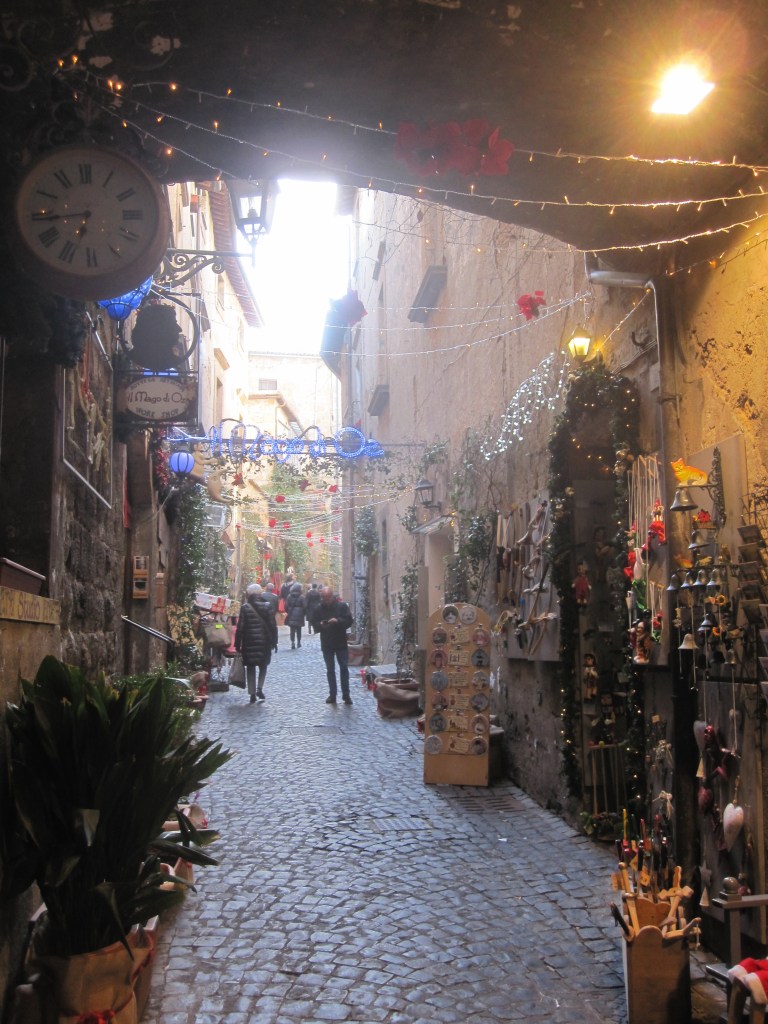
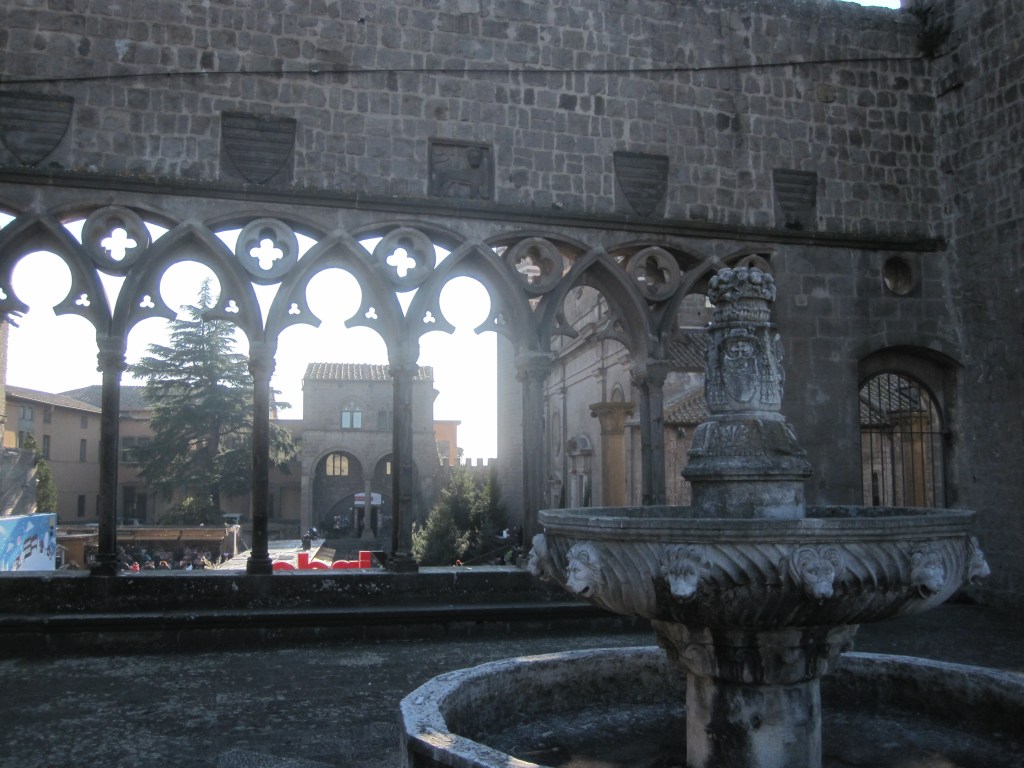
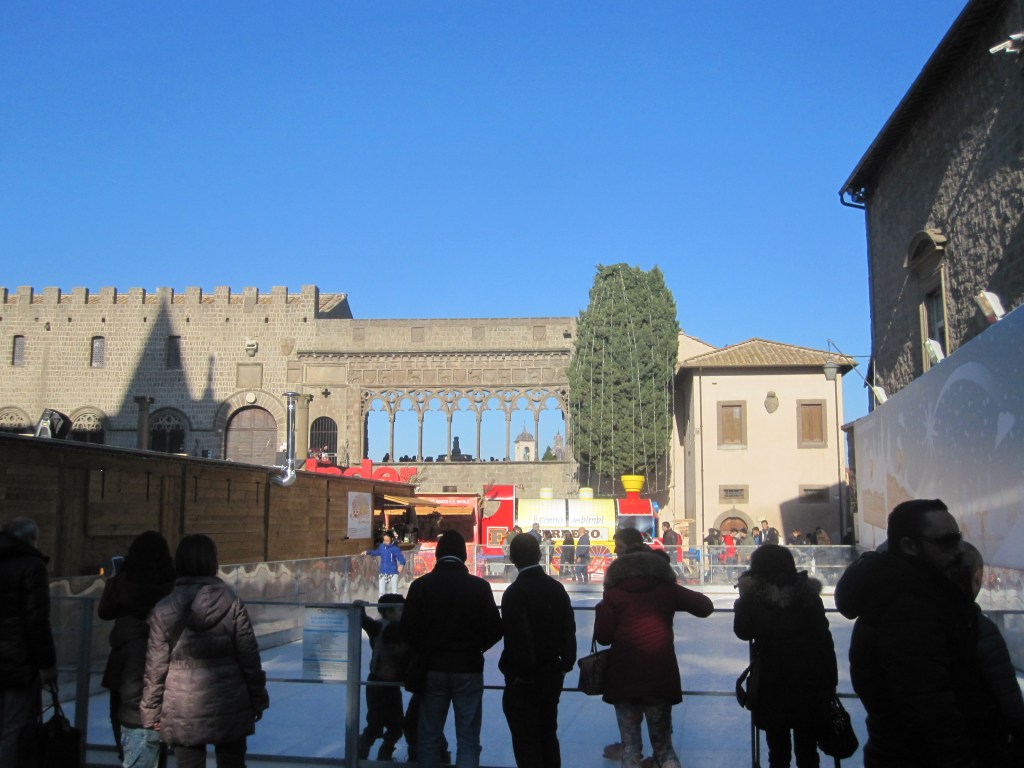
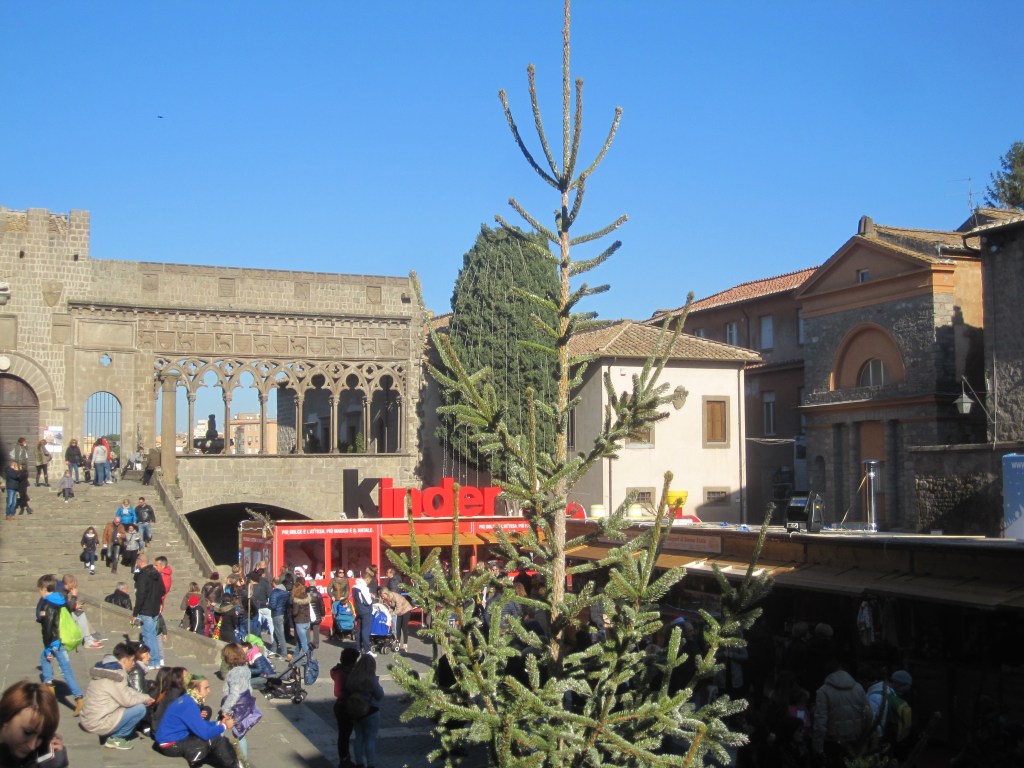
Advent is one of my favorite seasons, and, as the lights go up and manger scenes come out, I find it one of Italy’s most charming as well. (Christmas lights, fireworks, and outdoor summer operas are among the ways Italians take delight in being delightful.) Unfortunately, this year I was not among those to get last Friday off and the end of the semester is keeping me at my desk–so for this Gaudete Sunday , I rummaged through pictures of Advent trips past. Here’s a handful from Orvieto and Viterbo, the sort of small towns that are charming any time, but especially decked out for the season.
Happy Gaudete Sunday!
Rejoice in the Lord always; again I say, rejoice. Indeed, the Lord is near.
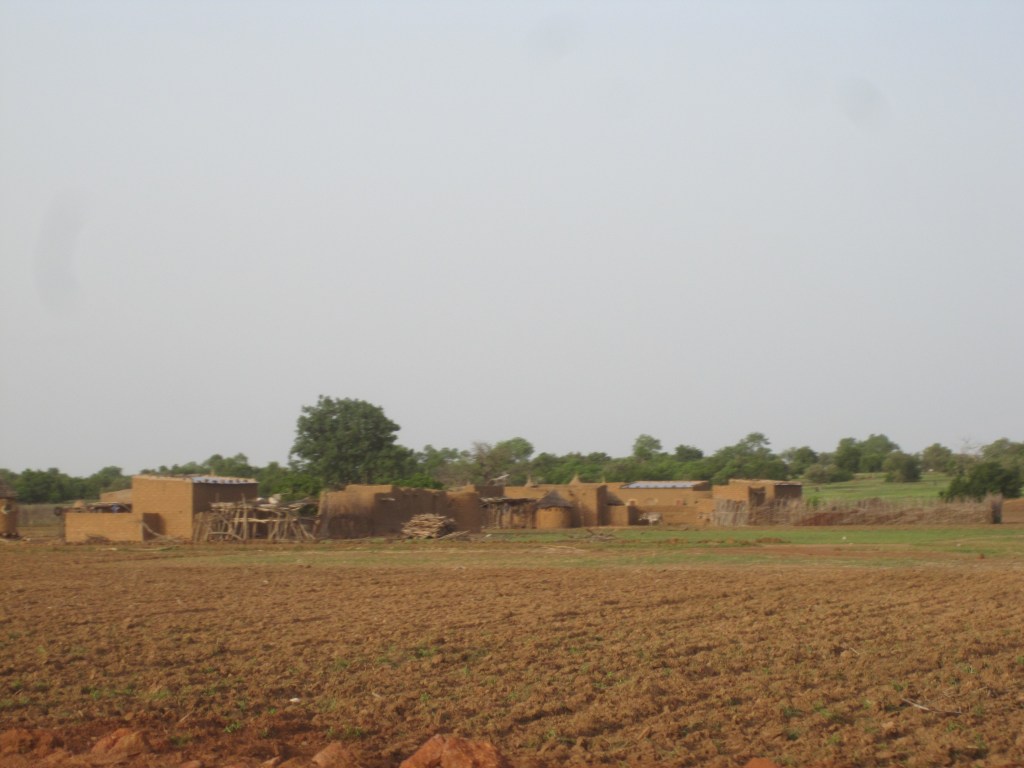
I have a new piece this week at the excellent Plough Quarterly magazine on one of my favorite themes, travel. It was fun to write, letting me look back at visits to Jesuit brothers in Burkina Faso, my Peace Corps days in Kazakhstan, and my one time riding a helicopter in the Alps. Plus thinking about Chinua Achebe’s great novel Things Fall Apart. Here is a link to the essay “Between Continents“.
Visitors to St. Peter’s Basilica in Rome often don’t realize that the magnificent baroque church is built over the site of a still more ancient basilica, built by Constantine and then torn down completely by Pope Julius II during the Renaissance. Over the course of the next century, today’s basilica was rebuilt by the likes of Bramante, Giulio da Sangallo, Raphael, Michelangelo, Carlo Maderno, and Bernini.
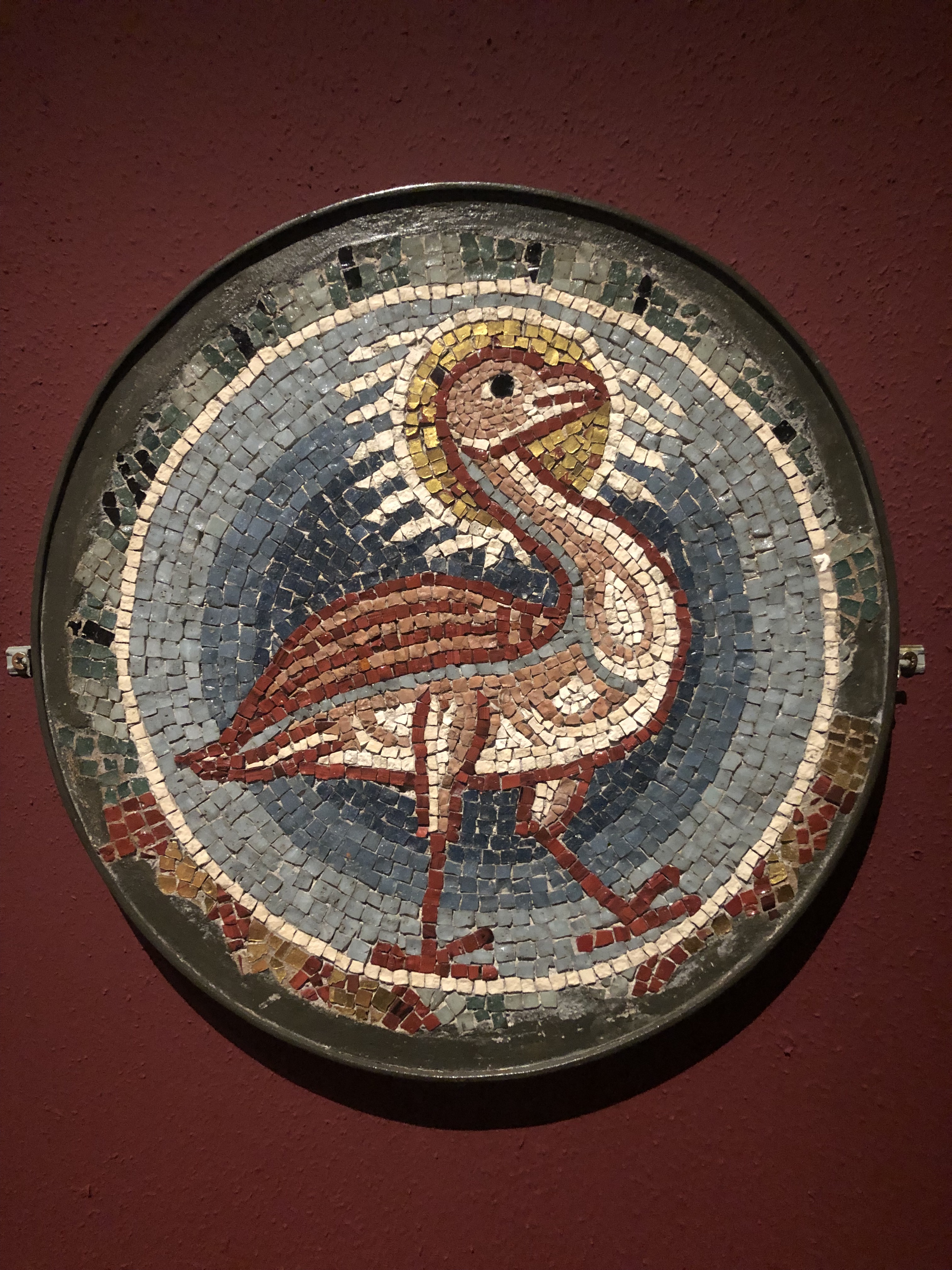
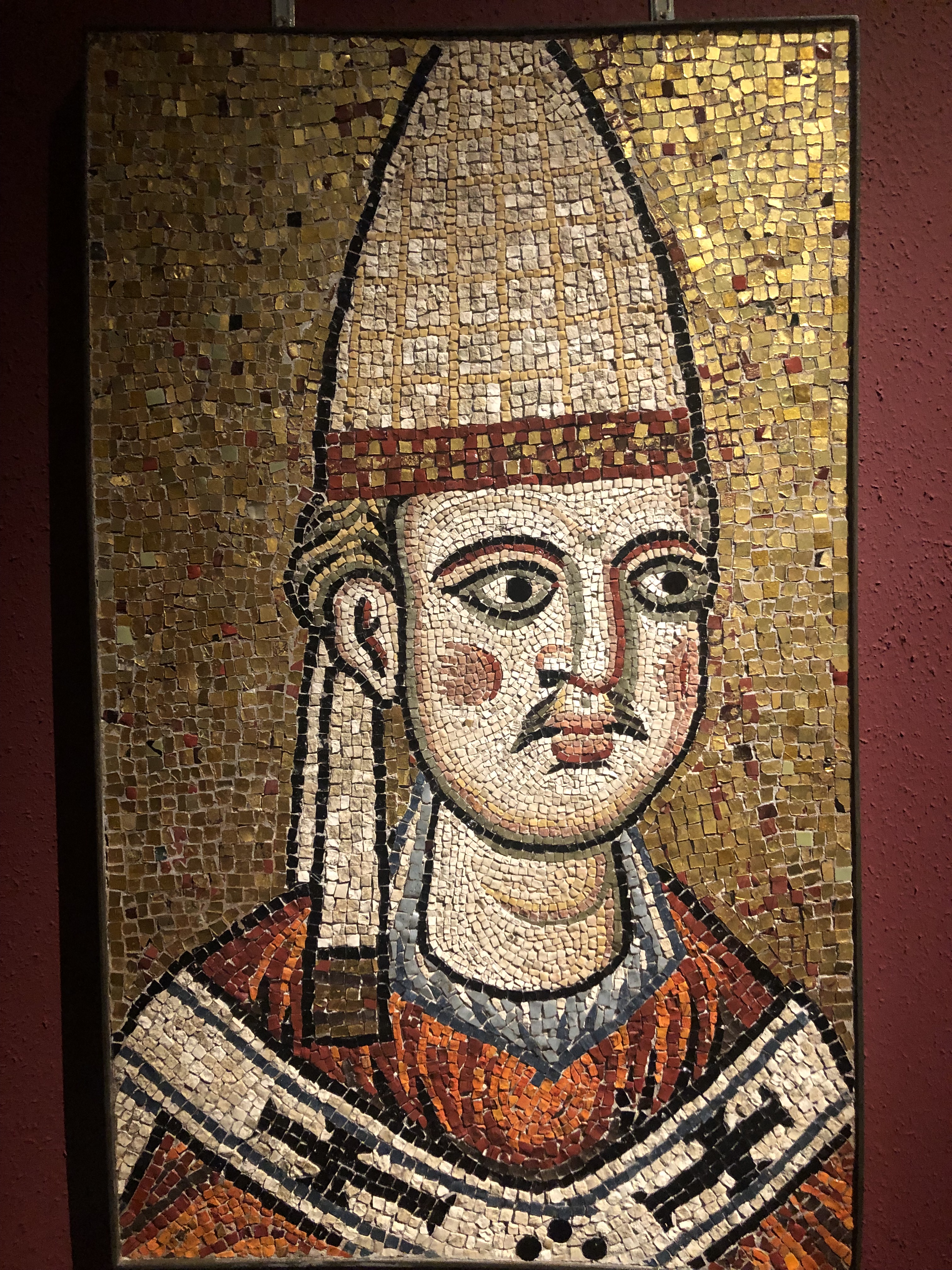
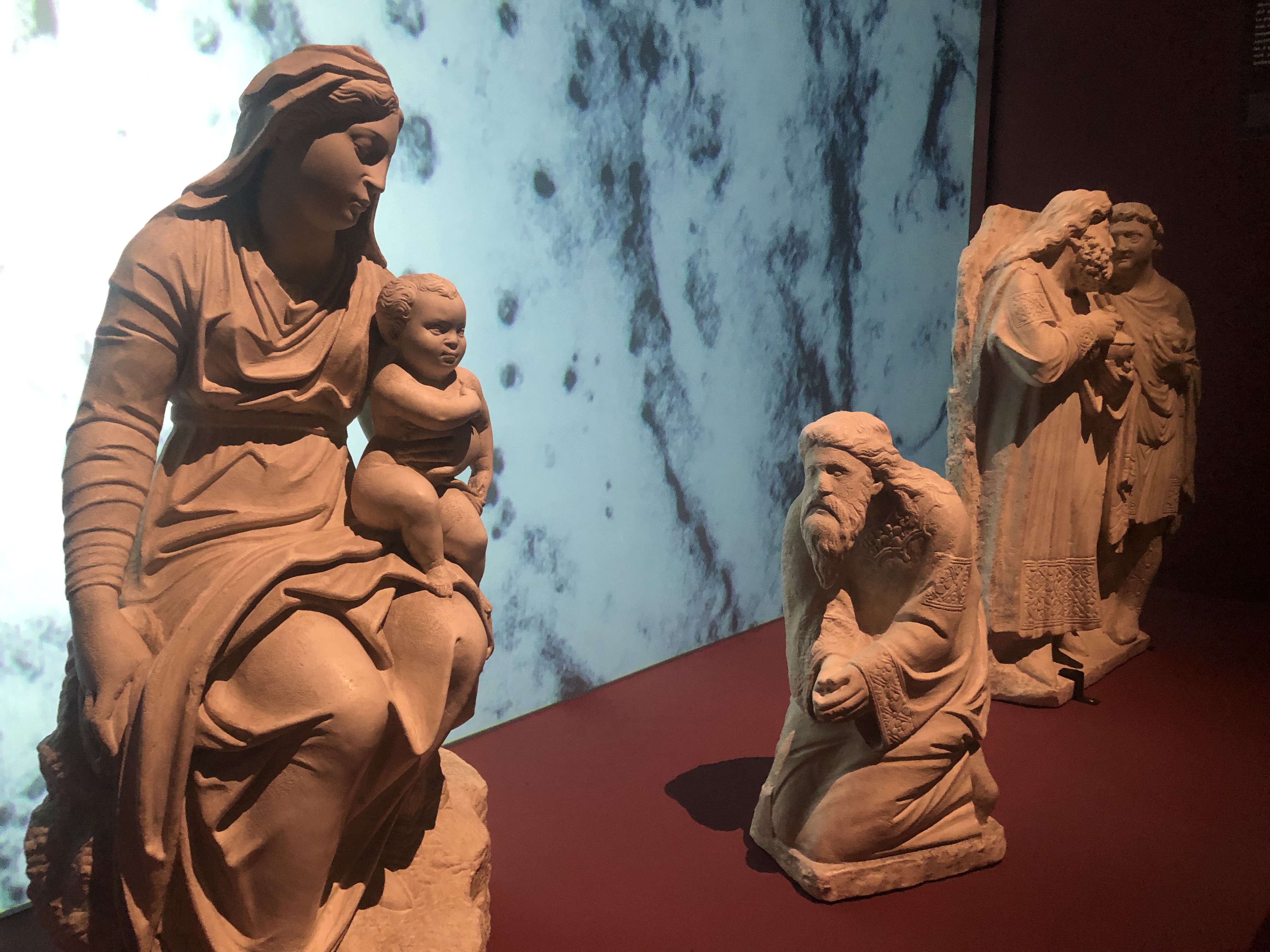
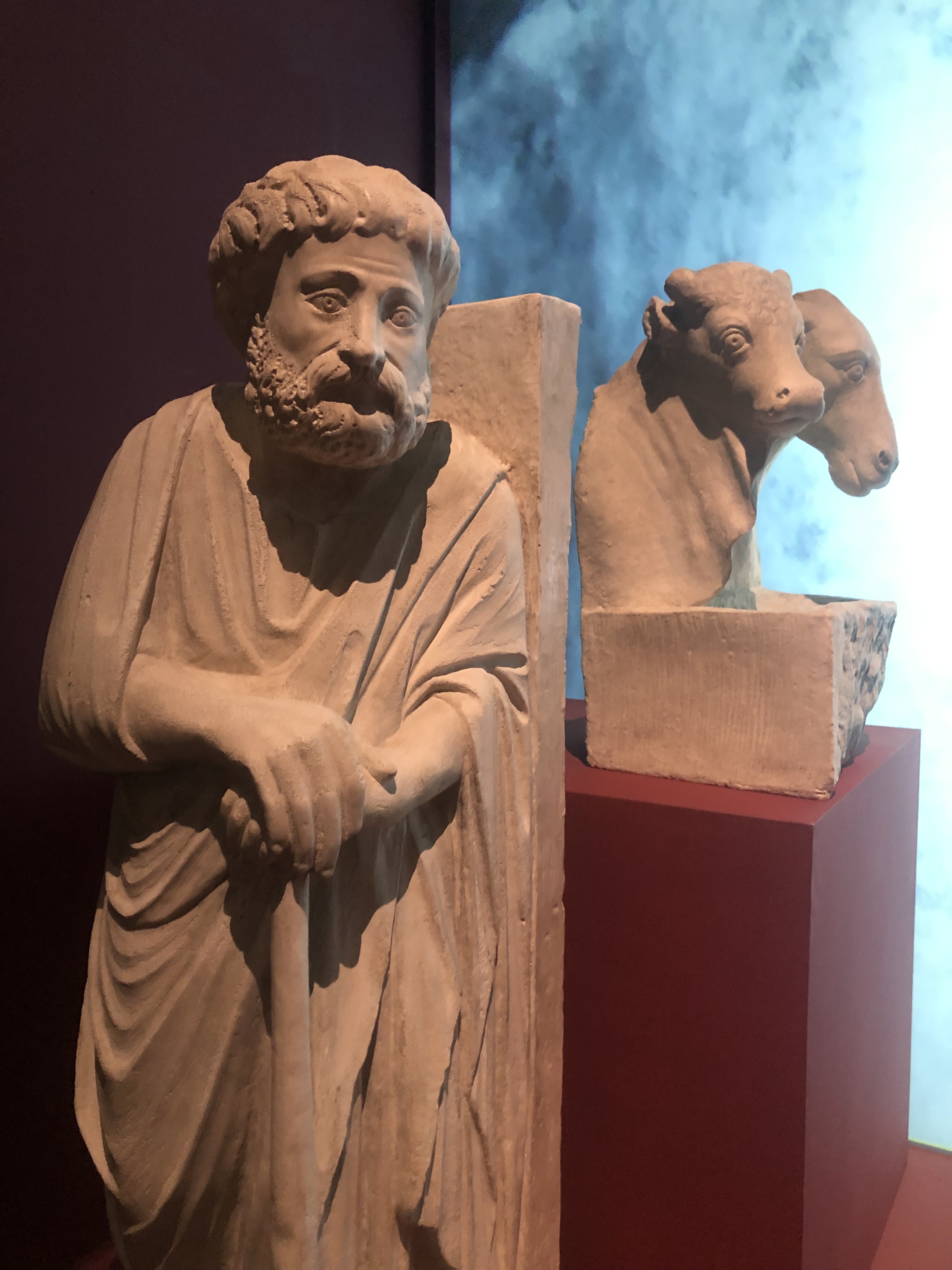
Surprisingly little of the original church remains, so I was fascinated this week to see a few of the mosaics saved from the first basilica at a special exhibition on medieval Rome at the Museo di Roma. The exhibition displayed work from the other four major basilicas, each of which has a unique history. The complex around St. John Lateran, another Constantinian construction, has changed greatly over the centuries and the interior of the church was redone by Francesco Borromini in the 17th century, though the shape of the basilica remains basically the same. St. Mary Major preserves the magnificent mosaics from its Roman days, but St. Paul Outside the Walls was entirely rebuilt after a fire burnt it down in the early 1800s.
Here are a few pictures form the papal basilicas’ medieval past.
The baptism of St. Augustine, San Pietro in Ciel d’Oro, Pavia, Italy
Anyone reading St. Augustine’s Confessions, of course, knows exactly where the book is leading, even if the story itself recounts a tortuous journey from doubt and confusion to faith. Augustine dedicates relatively few words to his baptism–at the time, Christians avoided describing what happened during the celebration of the sacraments to those not yet initiated–but what he does say reveals much about the power of the rite. Augustine was baptized by St. Ambrose in the baptistry of Milan’s cathedral on April 24, 387, along with his fifteen-year-old son Adeodatus. Adeodatus died only two years later. Looking up the passage anew, I was struck by the feeling in what Augustine wrote about his son:
“You had made him a fine person. He was about fifteen years old, and his intelligence surpassed that of many serious and well-educated men. I praise you for your gifts, my Lord God, Creator of all and with great power giving form to our deformities. For I contributed nothing to that boy other than sin… I learned many other remarkable things about him. His intelligence left me awestruck. Who but you could be the Maker of such wonders? Early on you took him away from life on earth. I recall him with no anxiety; there was nothing to fear in his boyhood or adolescence or indeed his manhood.”
Augustine goes on to describe his baptism, side by side with Adeodatus, both now reborn “the same age in grace”.
“We were baptized, and disquiet about our past life vanished from us. During those days I found an insatiable and amazing delight in considering the profundity of your purpose for the salvation of the human race. How I wept during your hymns and songs! I was deeply moved by the music of the sweet chants of your Church. The sounds flowed into my ears and the truth was distilled into my heart. This caused the feelings of devotion to overflow. Tears ran, and it was good for me to have that experience.”
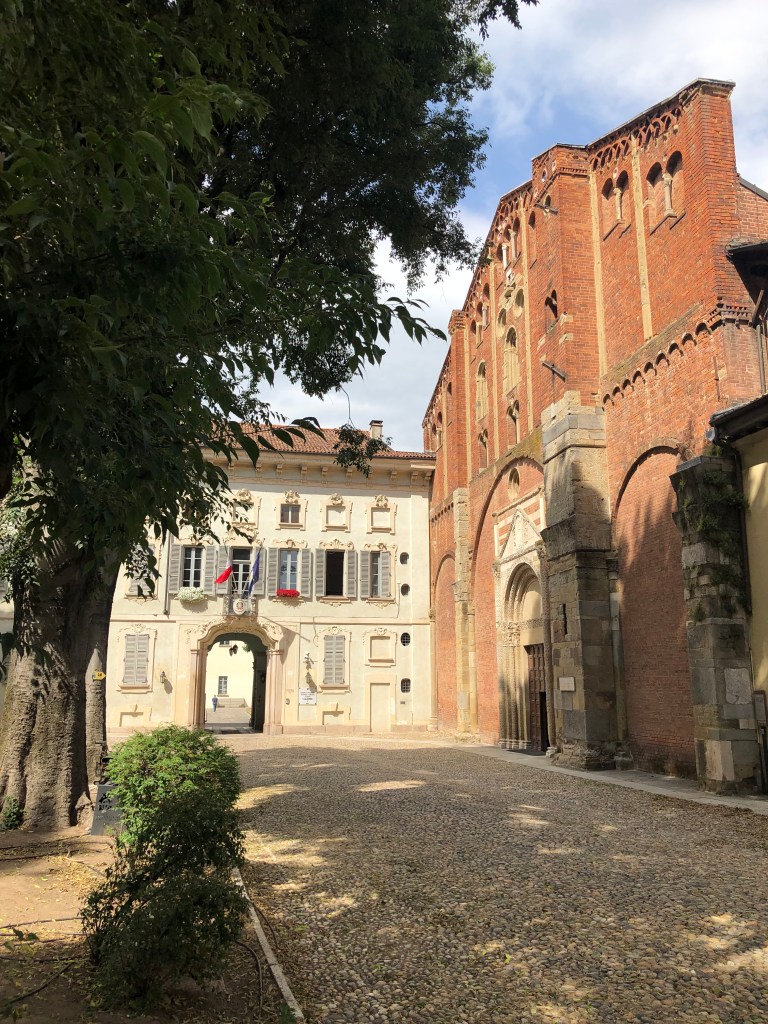
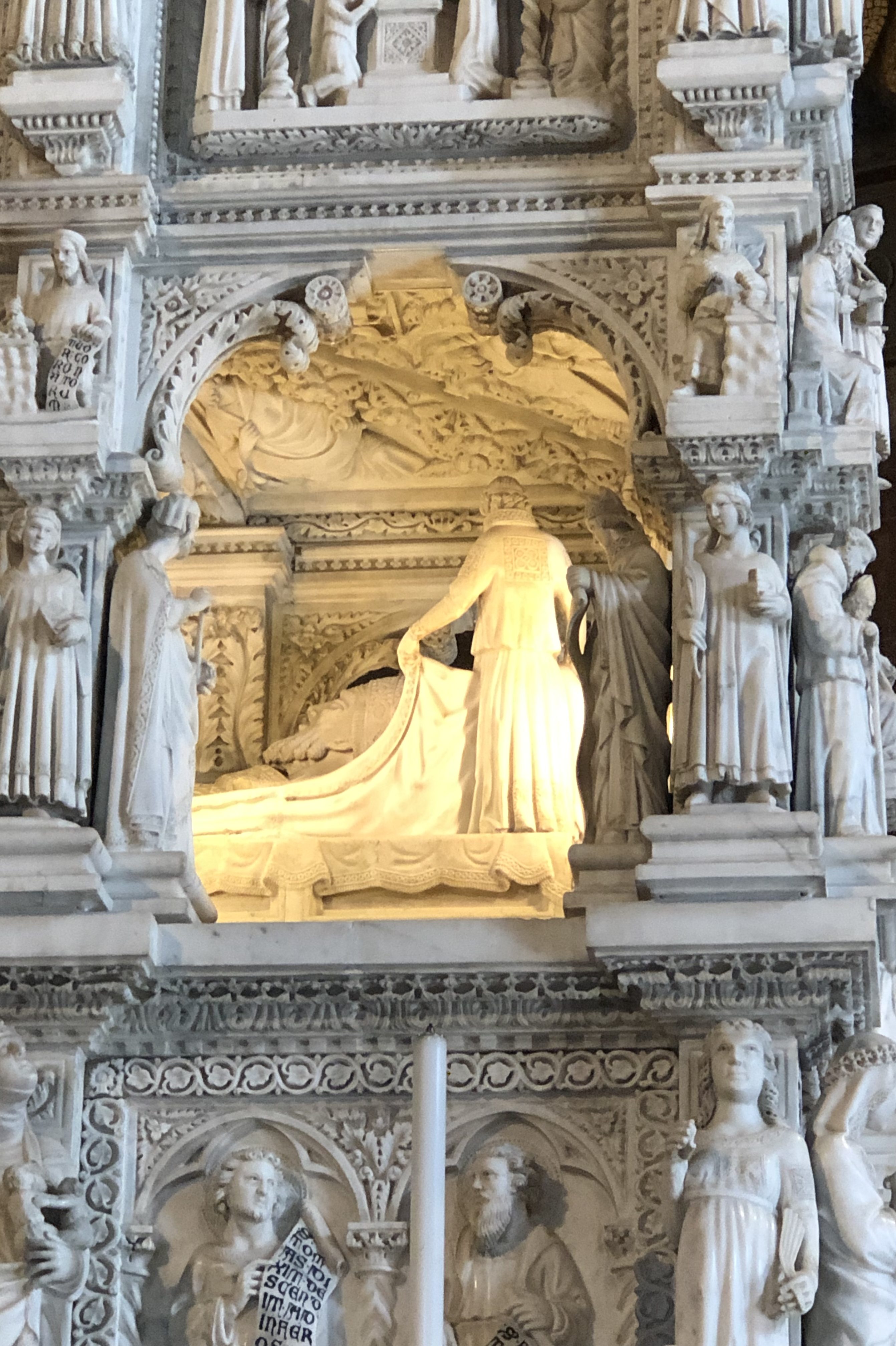
Last week, I mentioned visiting the church of San Pietro in Ciel d’Oro in Pavia, resting place of the relics of St. Augustine. This week, I thought I’d share a few more pictures of the church and the tomb, as well as a favorite panel from the monument, a scene of young Augustine listening to St. Ambrose preaching.
San Pietro in Ciel d’Oro, Pavia, Italy
Ambrose, then bishop of Milan, is another of my favorite theologians. He was the first Christian thinker to formulate the doctrine of baptism of desire, which–1530 years later–became the subject of my doctoral dissertation and book Baptism of Desire and Christian Salvation. (Augustine was the second… I’m not quite sure where I fall on the list, but it’s significantly farther down.)
In any case, below is Augustine’s description of his encounter with Ambrose to accompany the photos.
Arca di Sant’Agostino (1362), San Pietro in Ciel d’Oro, Pavia, Italy
Theologian don’t have a G.O.A.T. designation. (That’s “Greatest of All Time” for those who aren’t as hip as yours truly.) But if we did, Augustine of Hippo would probably get my vote. Sure, he’s not as systematic as Thomas Aquinas, but he more than makes up for it with humanity and passion, the way you can feel him throw himself so completely into the quest for God in his sermons and treatises. If you read Augustine’s sermons out loud, you can feel the power of his rhetoric. I’ve had many a conversation with the saint as I worked on my book Baptism of Desire and Christian Salvation. Augustine, alongside Ambrose of Milan, can be considered one of the doctrine’s fathers.
So it was quite a thrill–like visiting Graceland, or Disney World before it went woke–to spend an afternoon at the tomb of St. Augustine in Pavia last week. You might reasonably wonder how the North African theologian’s bones ended up in a smallish city in the north of Italy. Pavia, today sensible and pleasant, was the capital of the Kingdom of the Lombards in the 8th century. After his death, Augustine’s relics had been hustled out of Hippo to save them from the Vandals (today the tribe would be called the Mostly Peaceful Protesters) who lay siege to Hippo as its bishop lay dying. The saint’s body ended up in Sardinia, which, like much of the Mediterranean coastline in the Middle Ages, was subject to vicious Saracen raiding. For safekeeping, Liutprand, King of the Lombards–who is buried in the same church–had the bones brought to Pavia. There they reside in the church of San Pietro in Ciel d’Oro.
With more than 900 churches, as I’ve noted before, if you’re looking for church-related curiosities, there’s no place like Rome. A friend recently pointed out an oddity that seemed to take the cake. Atop a church between the Pantheon and Piazza Navona is what seems to be a stag with a cross between its antlers, which looks suspiciously like it was taken straight from… a Jägermeister bottle.
With winter now banished, one of my favorite signs of Roman spring is here — flowers sprouting from the tile rooftops. Above, my favorite, the corner of St. Ignatius Church seen from the terrace of our building, below a more modest view from my room. I’m not sure what this annual effusion of greenery means for the structural integrity of the tiles — and, I guess, I don’t really care. I find the flowers exuberant and surprising and, yes, just a tad reckless. In other words, a perfect sign of Easter.
I’ve always thought the flowers — life and beauty — breaking through the tiles a nice metaphor for the Resurrection, like the angels dressed in dazzling white among the scattered tombstones. This year they’ve also put me in mind of Peter. Peter is, after all, a slightly reckless figure, the desires of his heart a step ahead of his own moral capacities. His love for Jesus leads him to boast of his fidelity on Holy Thursday — “Lord, I am ready to go with you to prison and to death” — and then to find that his steadfastness has fallen short of his aspirations. It is devastating to read of Peter’s betrayal; one can imagine how much more devastating it was to live it.
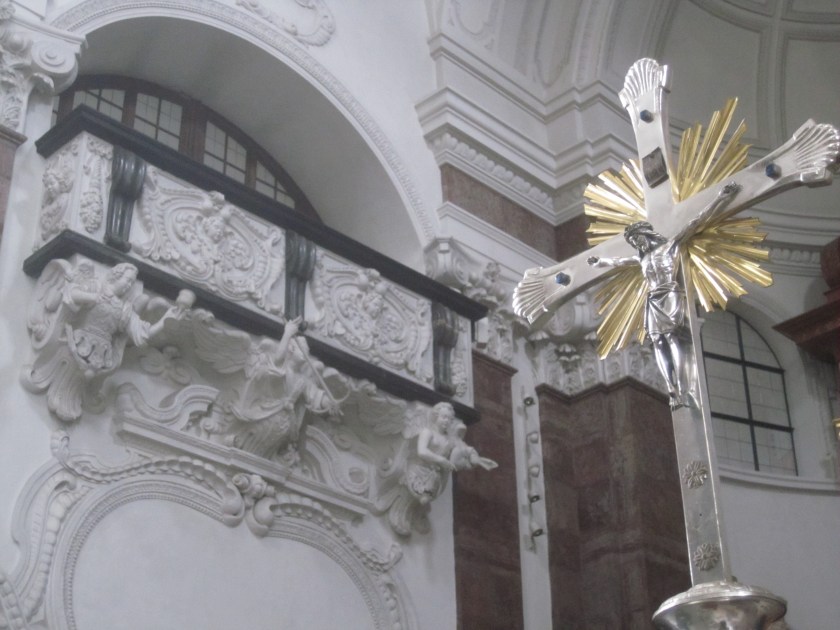
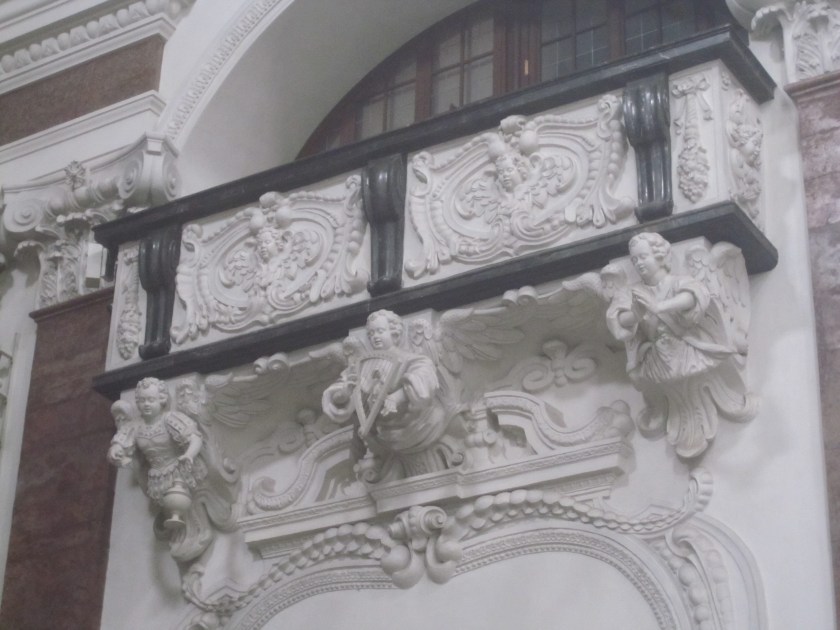
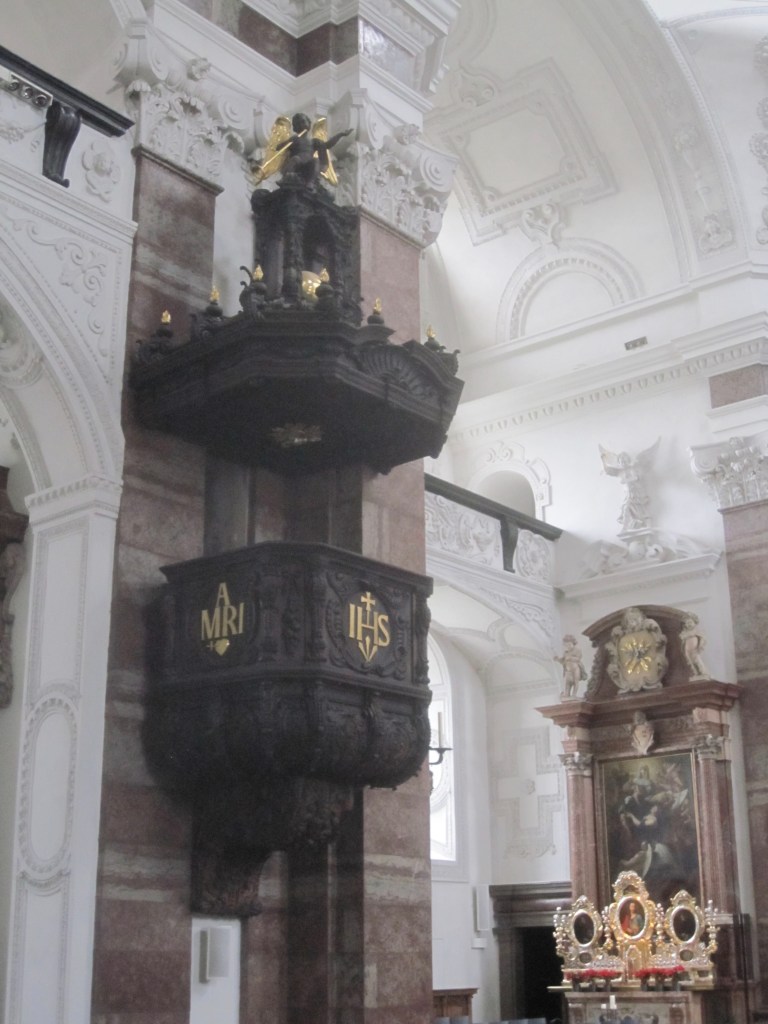
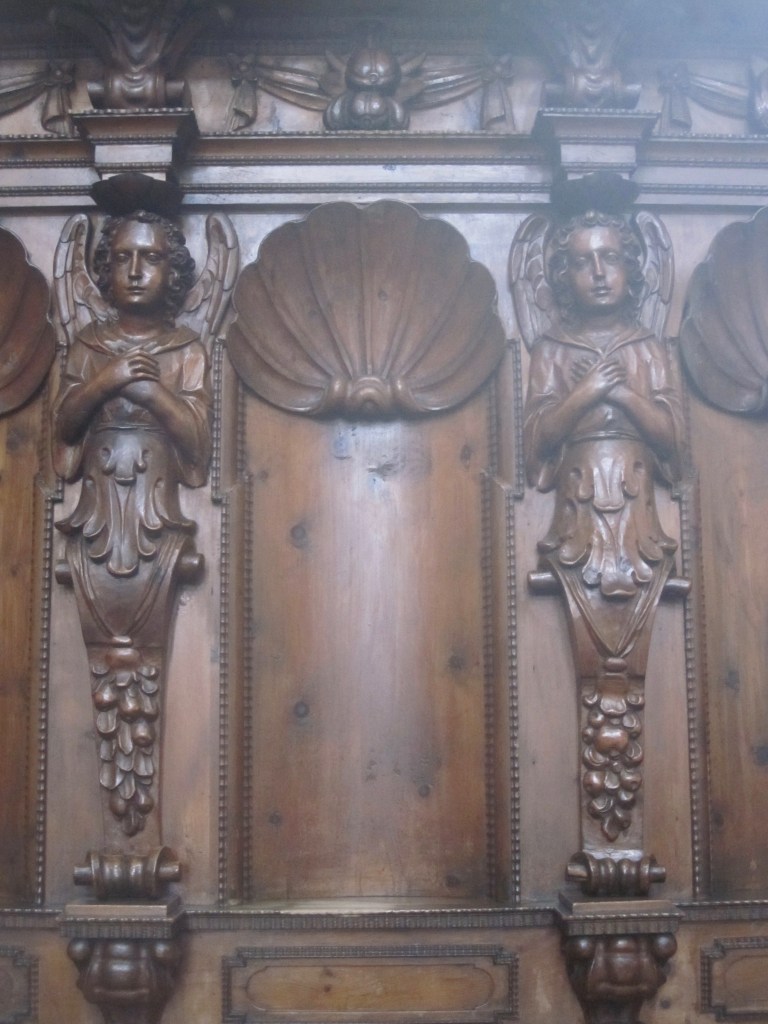
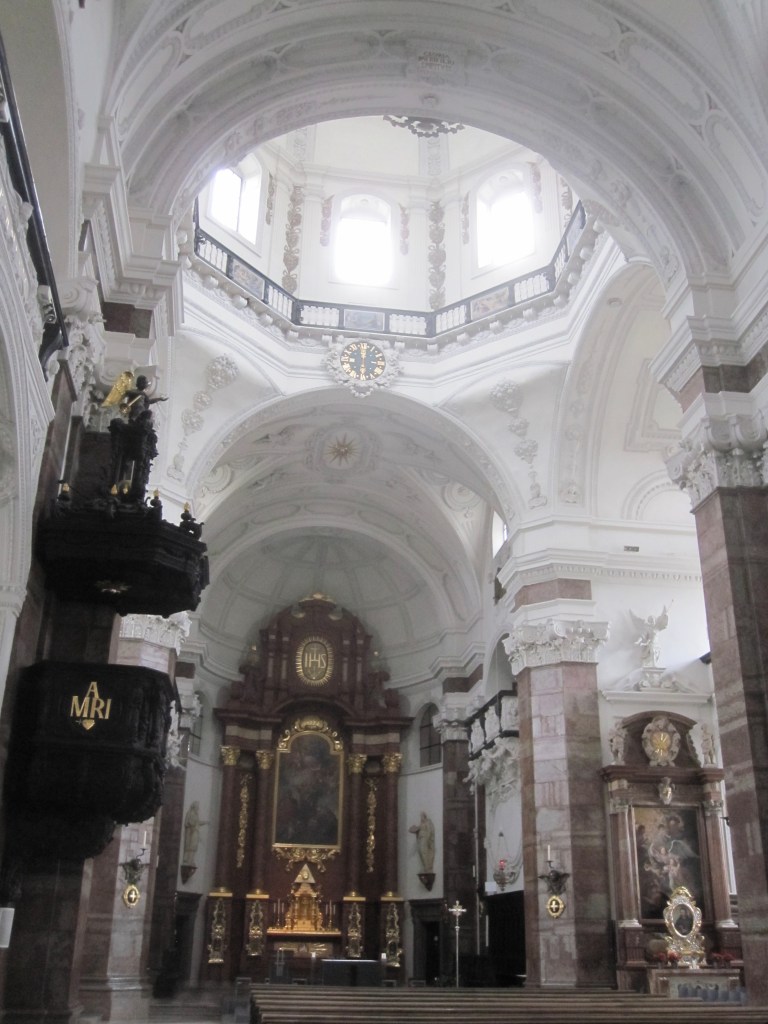
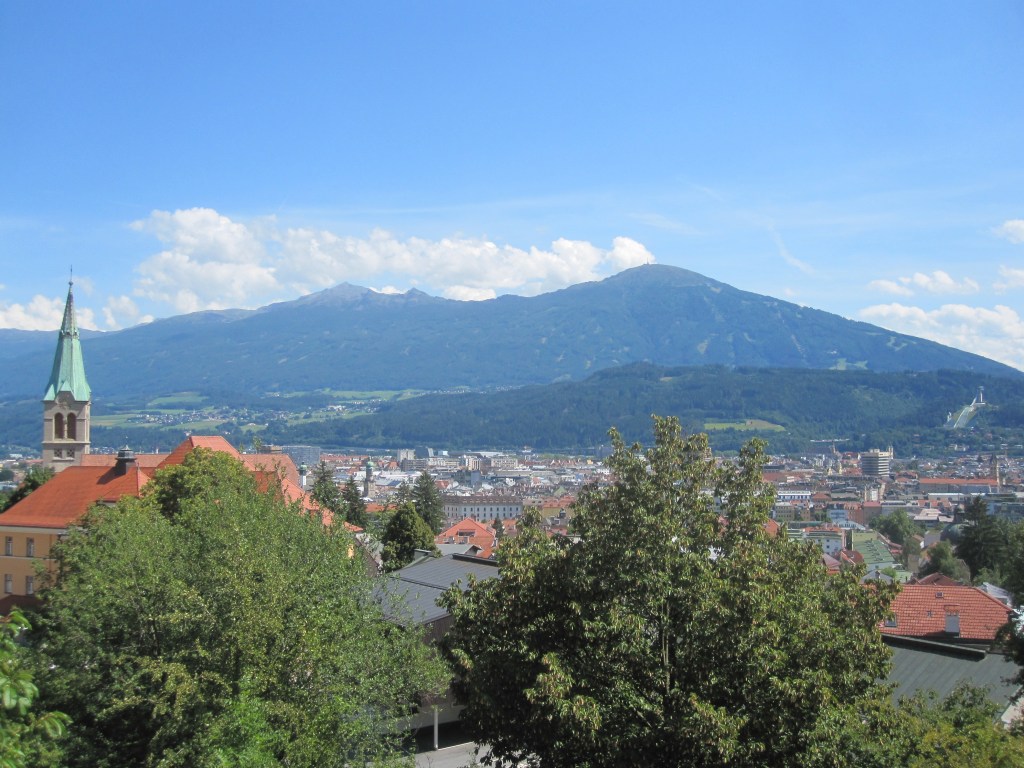
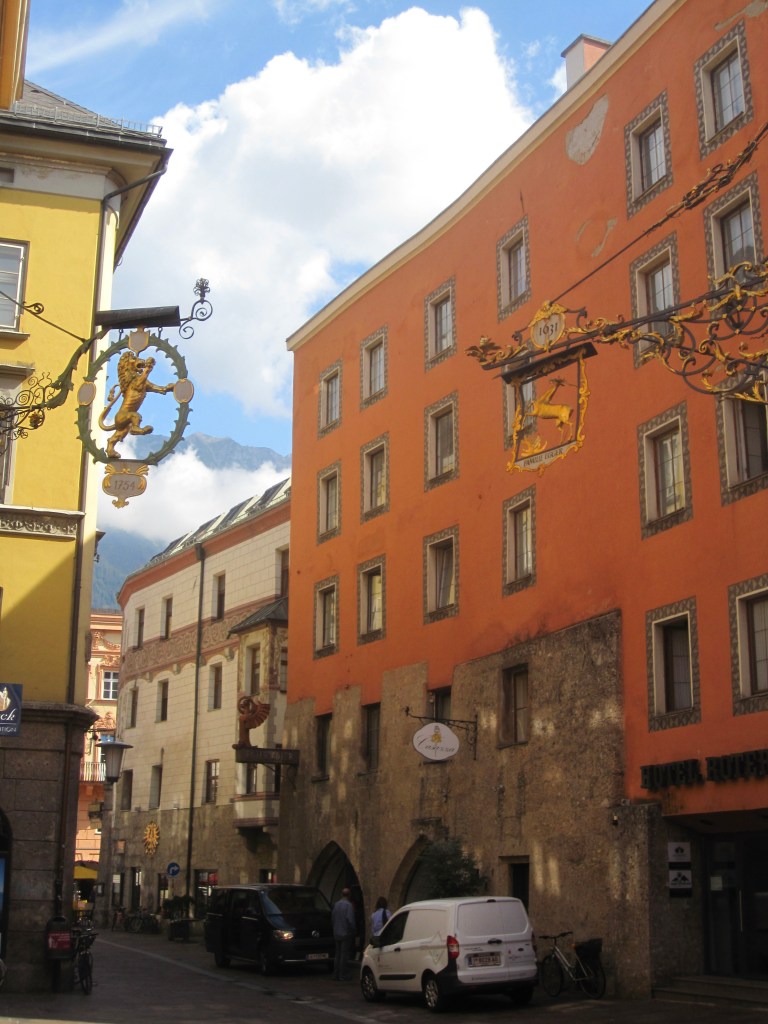
I was thrilled to get the news this week that my essay “Angels in Innsbruck” was selected by Dappled Things as the winner of their 2021 Jacques Maritain Prize for Nonfiction. Dappled Things is a wonderful literary journal, the only one I know of with the explicit mission of publishing Catholic literature. They’re both online and in print; the print journal features some really beautiful artwork and is well worth the subscription.
To celebrate the occasion, I thought I’d post a few pictures from my summer in Innsbruck to go along along with the essay. First the angels in the Jesuit church…




















 Tony Lusvardi, S.J.