From John Paul II’s “Letter to Artists”

Every genuine artistic intuition goes beyond what the senses perceive and, reaching beneath reality’s surface, strives to interpret its hidden mystery. The intuition itself springs from the depths of the human soul, where the desire to give meaning to one’s own life is joined by the fleeting vision of beauty and of the mysterious unity of things. All artists experience the unbridgeable gap which lies between the work of their hands, however successful it may be, and the dazzling perfection of the beauty glimpsed in the ardour of the creative moment: what they manage to express in their painting, their sculpting, their creating is no more than a glimmer of the splendour which flared for a moment before the eyes of their spirit.
Believers find nothing strange in this: they know that they have had a momentary glimpse of the abyss of light which has its original wellspring in God. Is it in any way surprising that this leaves the spirit overwhelmed as it were, so that it can only stammer in reply? True artists above all are ready to acknowledge their limits and to make their own the words of the Apostle Paul, according to whom “God does not dwell in shrines made by human hands” so that “we ought not to think that the Deity is like gold or silver or stone, a representation by human art and imagination” (Acts 17:24, 29). If the intimate reality of things is always “beyond” the powers of human perception, how much more so is God in the depths of his unfathomable mystery!  […]

Beauty is a key to the mystery and a call to transcendence. It is an invitation to savour life and to dream of the future. That is why the beauty of created things can never fully satisfy. It stirs that hidden nostalgia for God which a lover of beauty like Saint Augustine could express in incomparable terms: “Late have I loved you, beauty so old and so new: late have I loved you!”

From Pope St. John Paul II, Letter to Artists (1999)

Saint Emilianus of Trevi

St. Emilianus of Trevi is perhaps destined to be overshadowed by St. Thomas Aquinas with whom he shares a feast day, January 28. He was one of the many bishops martyred during Roman persecution who provided inspiration and strength to their local communities but today are little know, the details of their biographies mingled with legend.

From the Martyrdom of St. Emilianus of Trevi, 12th century, Spoleto

I came across a striking set of 12th century carvings depicting the martyrdom of the saint in Spoleto last year and was taken by their vividness. St. Emilianus hailed originally from Armenia and came to Italy in the third century, where he was made the first bishop of Trevi. He was martyred during the persecution under Emperor Diocletian in 304, and his relics are preserved in Spoleto Cathedral.

He was condemned to die by a Roman proconsul for his refusal to sacrifice to the gods, but–as the panels from Spoleto recount–the first attempts to put him to death failed. The wild beasts sent to kill him instead bowed before him, and when he was tied up to be burnt the torches of his would be executioners fizzled out as they approached him. Finally, he was beheaded. The last panel of the work depicts Christ enthroned in heaven welcoming the martyr.

The Virtue of Penance

Last week, I mentioned the seminar I taught this past semester about the sacrament of marriage. I also taught a course about the sacrament of penance. (I learned to be careful when describing my course load to make clear that those were, in fact, two different courses and not a sly commentary on marriage!)

Jonah sarcophagus (ca. AD 300), Vatican Museums

The sacrament of penance has a fascinating history, and the way in which it has been practiced over the centuries has varied more than perhaps any other sacrament. A major theme of the class, however, was that the sacrament itself is not the only way that Christians practice penance. As Thomas Aquinas pointed out (in the Summa Theologiae III q. 85), penance is not only a sacrament but also a virtue. He didn’t come up with that particular insight himself, of course, but was summarizing the theological tradition before him.

Continue reading “The Virtue of Penance”

The Future of Christian Marriage

This week marks the end of the first semester at the Greg. One of the semester’s blessings has been the seminar I taught on the sacrament of marriage, which looked first at some classic theological texts on the subject and then attempted to grapple with the contemporary problems the Christian vision of marriage faces. No small task, and I learned much from the discussion. I’m grateful to my lively group of students.

To guide our discussion I assigned sociologist Mark Regnerus’s engaging and insightful book The Future of Christian Marriage (Oxford 2020). The book makes use of social surveys, Regnerus’s own extensive research on the subject, and 200 interviews conducted with young Christians in seven different countries. My students–who hailed from a total of eight different countries–found the book quite helpful for understanding the situation they themselves face. Having real-world data also improved our theological discussion, which, in today’s climate, can sometimes get bogged down in sloganeering.

At the root of Regnerus’s argument is the contention that attitudes toward marriage have changed from seeing it as a “foundation” to seeing it as a “capstone.” In other words, instead of a unit based on mutual exchange that helps a couple to weather life’s uncertainties, young people have increasingly come to see marriage as a capstone one acquires only after attaining personal, financial, and career success. This means that marriage is delayed, comes with more difficult-to-realize expectations of one’s spouse, and, for many, ultimately becomes unattainable. This is all part of the “atomization” of society as individuals become our primary social grouping at the expense of families.

Continue reading “The Future of Christian Marriage”

San Giovanni dei Fiorentini

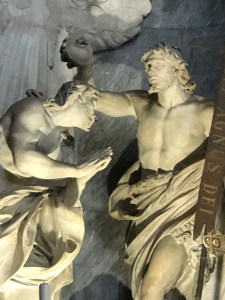
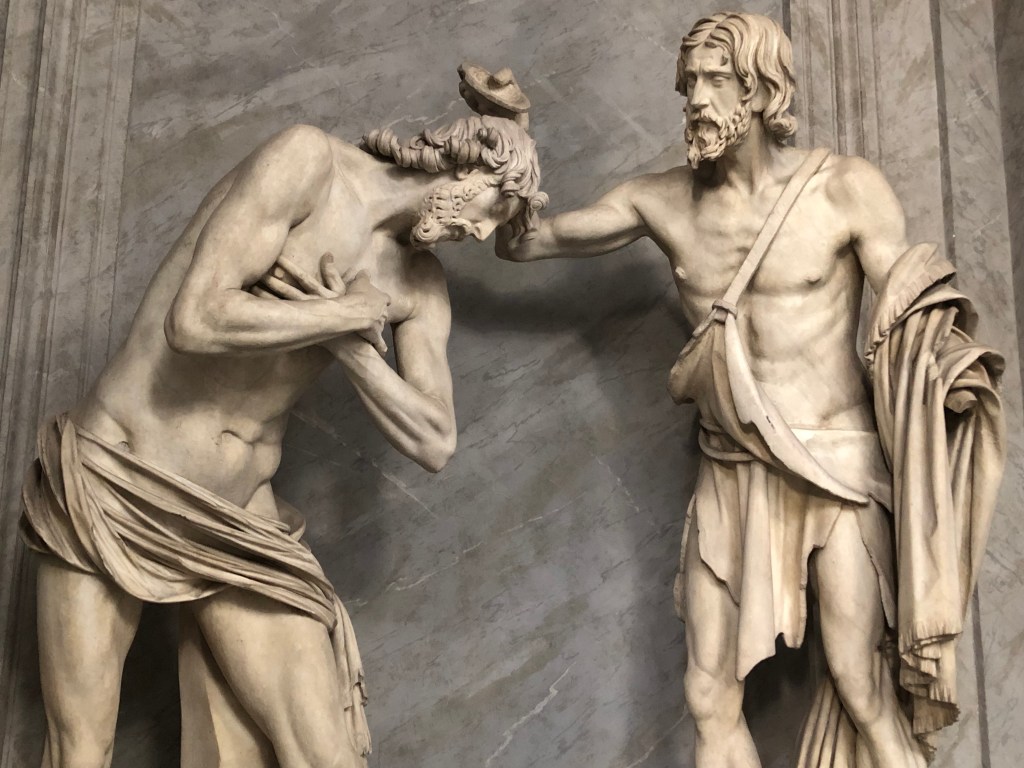
Baptism of Jesus, Antonio Raggi, San Giovanni dei Fiorentini, Rome

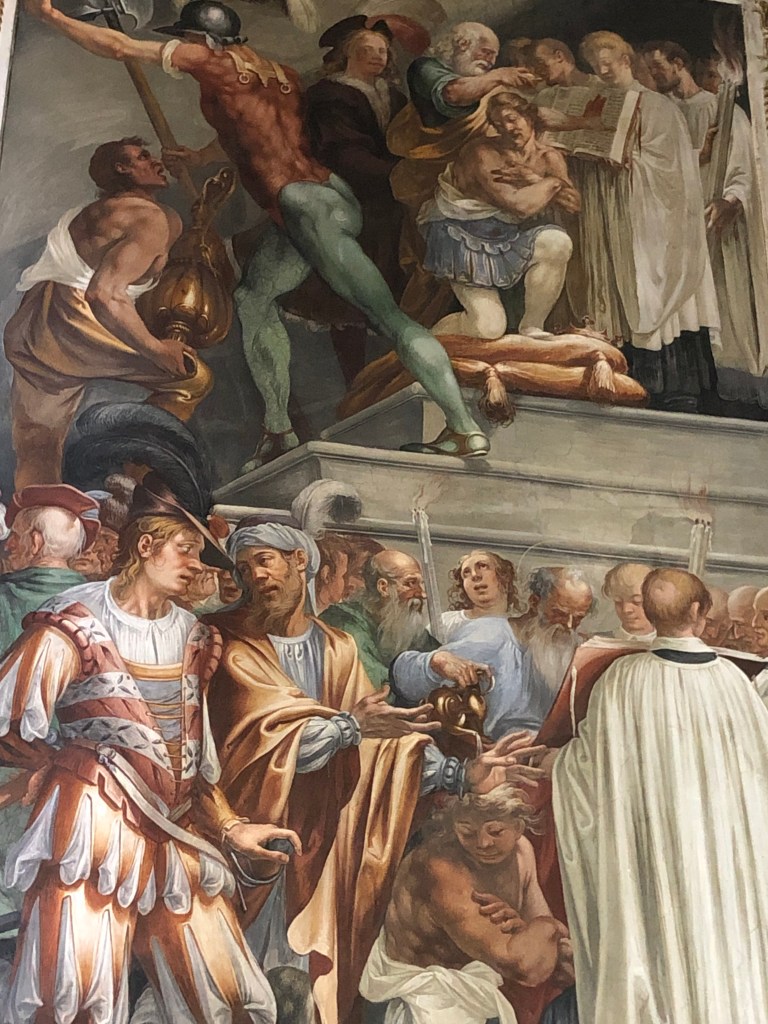
To celebrate the feast of the Baptism of the Lord–which this year falls unusually on a Monday–I thought I’d share a few photos from one of Rome’s lesser known churches, San Giovanni dei Fiorentini. A baroque church, it was built for the Florentine expats in Rome back when Florence was an independent city-state and named for the city’s patron, St. John the Baptist. The church contains a relic of Mary Magdalene (her foot), and is the burial place of the great–but tragically unhappy–baroque architect Francesco Borromini. It also contains a number of interesting artistic works featuring baptism. 

I’ve written before about the importance of baptism, but I have a personal reason to be particularly fond of San Giovanni dei Fiorentini. Its 17th century altarpiece, the Baptism of Jesus by Antonio Raggi, features on the beautifully designed cover of my book Baptism of Desire and Christian Salvation. Of course, I’d like to think that what’s inside the cover is pretty interesting as well, and I’m pleased that the book’s release date is coming up later this month–January 26. There’s more information on the website of Catholic University of America Press, and the book is available on other online sellers such as Amazon.

In the meantime enjoy the views of San Giovanni dei Fiorentini.

Mary the Mother of God and the relationships that define us: homily for the Solemnity

Madonna and Child, Umbrian , 14th century, Spoleto

Homily for the Solemnity of Mary, the Mother of God

Today we celebrate the Solemnity of Mary Mother of God.  Fortunately, as you came into church this morning, you did not see armed troops guarding the doors, nor bishops jostling and shouting angrily at each other in Greek.  We should be grateful for such peace and calm this New Year’s Day, 2024.  Sixteen-hundred years ago, you might have seen just that.  At that time, the fiercest controversy in the Catholic Church was over whether the title “Mother of God” could be applied to Mary, a controversy settled by the Council of Ephesus in 431.  Before the Council of Ephesus, Nestorius, the bishop of Constantinople, had claimed that Mary could be called the “Mother of Christ” or the “Mother of Jesus” but not the “Mother of God.”

If you think for a minute about what is at stake in the title, you’ll realize that the controversy was not really about the identity of Mary, but the identity of her son.  Mary can only be called “Mother of God” if Jesus is, in fact, fully man and fully God.  The Council of Ephesus declared Nestorius a heretic for obscuring what we celebrate this Christmas season: that the Son of God has become man, that from the moment of his conception in Mary’s womb Jesus was and is God.

But today is a Marian feast.  What does this title tell us about Mary?  You have probably heard many times that Mary always points to Christ.  Her final words recorded in Scripture are to the servants at Cana, after she has dropped an unsubtle hint to Jesus about the need for more wine at the party: “Do whatever he tells you,” she says (Jn 2:5).  It is hard to think of a more exalted title to bestow on anyone than “Mother of God,” yet there’s a humility in the title too because by exalting Mary we are first exalting her son.

Mary is a woman of both humility and strength, of contemplation and action, of wisdom and patience, of courage and compassion, and yet her greatness—what makes her the greatest woman to have lived, worthy of the title of today’s feast—is the relationship she has with her son.  And there is a lesson here for us, a lesson about the importance of relationships.

Continue reading “Mary the Mother of God and the relationships that define us: homily for the Solemnity”

A jaunt to Spoleto

The Coronation of the Virgin, Filippo Lippi, Spoleto Cathedral

Compared to the first half of 2023, the past few months back at my day job have kept me mostly at my desk or in the classroom. I can’t complain. My students at the Gregorian University are a source of real encouragement and hope, and, even though preparing new classes is a daunting task, I always learn things in the process. This year’s new courses included penance–the sacrament and the virtue–and a seminar on marriage. The history of penance probably contains more twists and turns than that of any other sacrament, and I’ve particularly enjoyed the discussion in my marriage seminar provoked by Mark Regnerus’s excellent study The Future of Christian Marriage. 

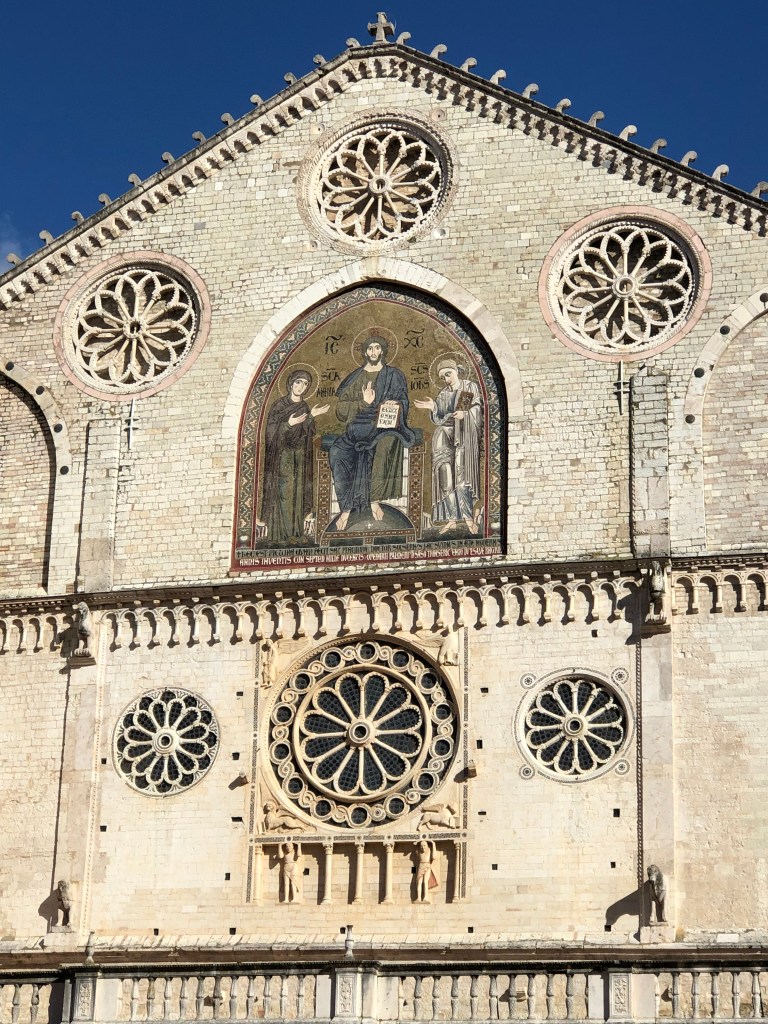
Duomo, Spoleto
Filippo Lippi (self-portrait in the Dormition, Spoleto Cathedral)

Every semester the Jesuits in the Gregorian community also get away for a day trip, which involves a bit of relaxation together and a very big meal. This year’s trip was to the Umbrian hill town of Spoleto, the sort of place where one finds Italy at its most picturesque. Highlights include a fortress that became a papal and then state prison and a 12th century cathedral. The cathedral’s highlight is an apse fresco of the Life of the Virgin Mary (started in 1467) by the Renaissance master Fra Filippo Lippi. I’ve shared some of the frescoes on my Facebook page at Christmas time, but the colorful Coronation seems an apt scene for the Solemnity of Mary Mother of God (January 1). The work also contains a hint of scandal–Lippi, a Carmelite friar, painted himself into the scene along with Lucrezia Buti, a novice in a Florentine convent who became the artist’s model and then his, ahem, mistress. Perhaps they got a pastoral, but not a liturgical, blessing.

The Vatican Nativity scene, 2023

Nativity scene, St. Peter’s Square, 2023

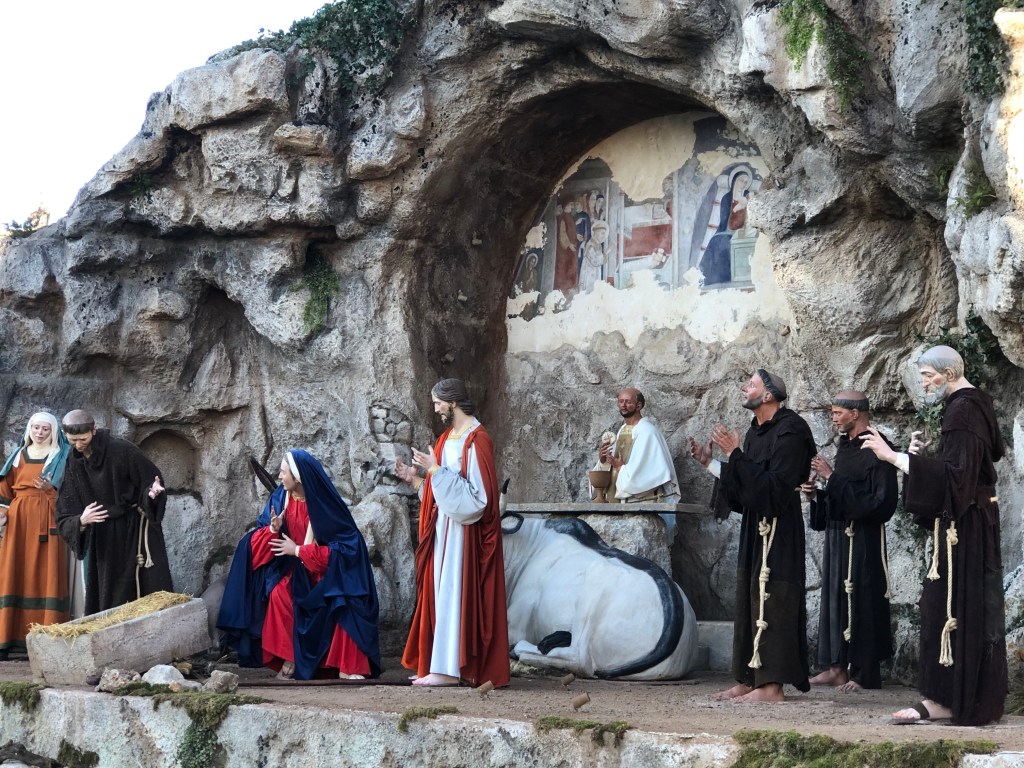
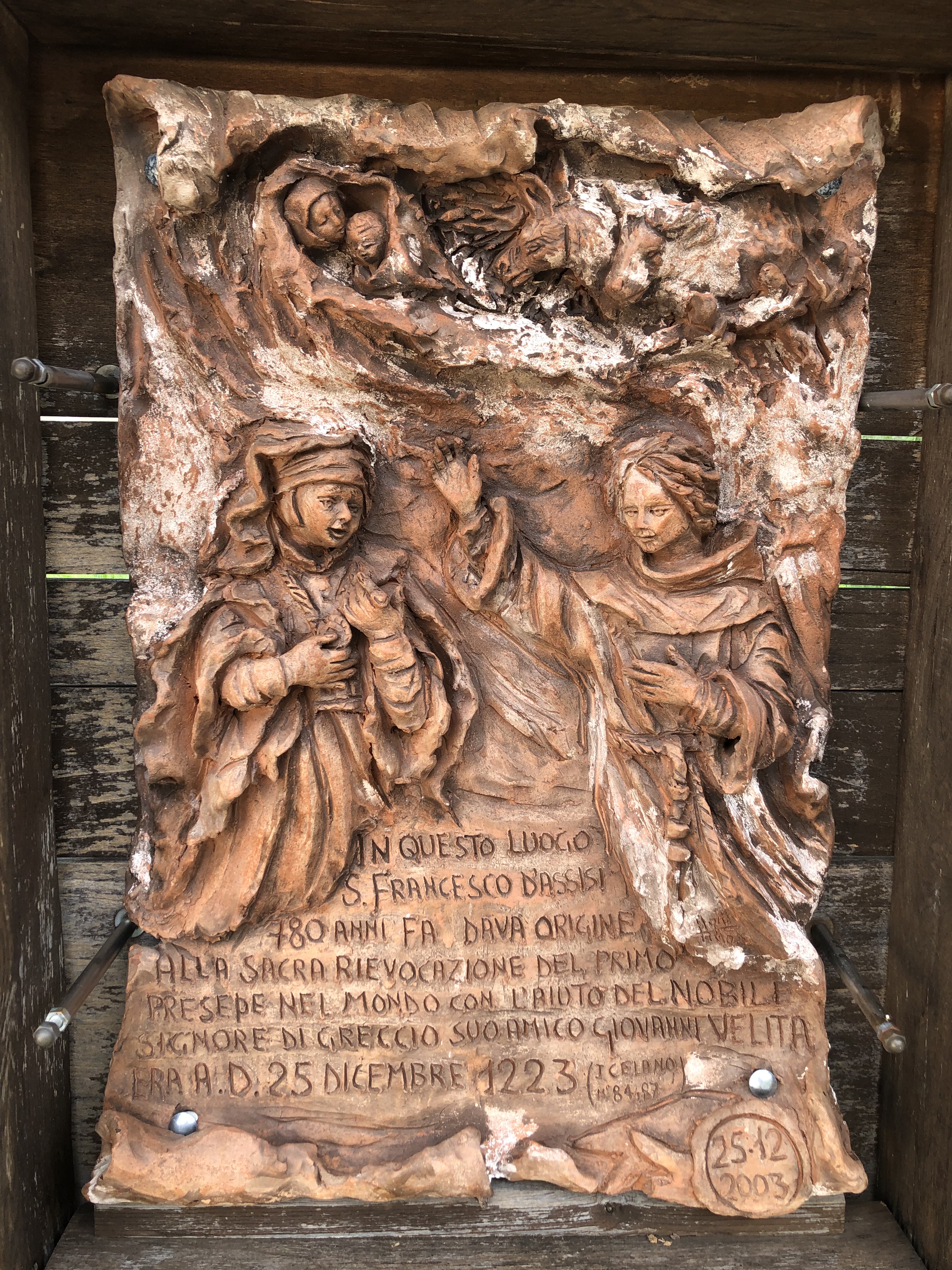
Over the past few weeks, I’ve noted (here and here) that 2023 marks the 800th anniversary of the first Nativity scene set up by St. Francis in the little town of Greccio. The Vatican’s Nativity scene this year also reflects that anniversary. 

This year’s scene doesn’t aim for historical accuracy–thus, St. Francis alongside Mary and Joseph and the three friars replacing the three kings. (Oh, and there’s a priest celebrating Mass in the background too.) The fresco on the wall behind them is a replica of the one in the cave in Greccio.

The figures, perhaps, aren’t exquisitely beautiful. (And, come to think of it, the priest in the background seems a tad confused about what he’s supposed to be doing–too much realism?) But at least this year’s Nativity scene isn’t aggressively weird (like the aliens from 2020) or trying too hard to be modern (like… well, there are too many examples).

You’ll notice that the manger itself is empty. As per the tradition, the Baby Jesus doesn’t arrive until Christmas itself. This year he won’t find a perfect Nativity scene, a perfect Church, or a perfect world, but he’ll come nonetheless and we need him all the more because of it.

Nativity scene, St. Peter’s Square, 2023

Rome for the holidays

Advent is one of my favorite times of the year to be in Rome. What they call winter here is nothing to a Minnesotan, and the shortening days are counterbalanced by the city’s delightful display of Christmas lights. These generally don’t start appearing until after the Immaculate Conception (December 8) and they don’t come down until after the Epiphany (January 6).

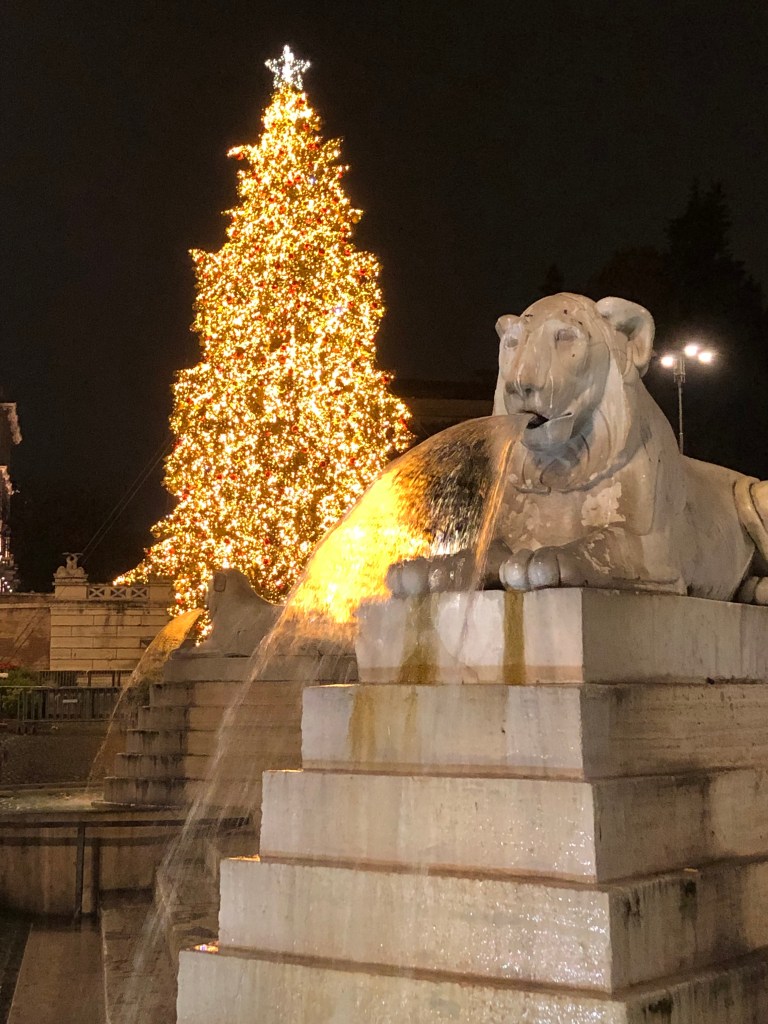
Rome’s Christmas tree, Piazza del Popolo

The city’s official Christmas tree, like the Vatican Nativity scene, is often the subject of local critique and Roman wit. This year, the tree got a new location due to construction work on Rome’s mythical new subway line–scheduled to open a few years after the Second Coming of Christ. The tree’s usual home, Piazza Venezia, is now a construction site, but its new location in Piazza del Popolo is a calmer setting away from the traffic. The official tree also has some competition from a glitzy counterpart at the Spanish Steps, given to the city by the fashion designer Dior.

Dior Christmas tree, Spanish Steps

I’d also be remiss not to mention what a delightful time of year Advent is to be at the Gregorian University, where the university’s international richness is on full display. Student groups from different countries take turns singing in the atrium between classes. It gives them an excuse to duck out of class early (ahem), but you’d have to be Ebenezer Scrooge not to appreciate the festive atmosphere. The Mexican college usually wins the prize for the best show not only because of their charm and energy but because you just can’t top a piñata. It’s a time to be grateful for our young priests, seminarians, religious, and lay students who are such a source of hope for me and for the Church.

Christmas at the Gregorian

More from Greccio

Chiesa di San Michele Arcangelo, Greccio

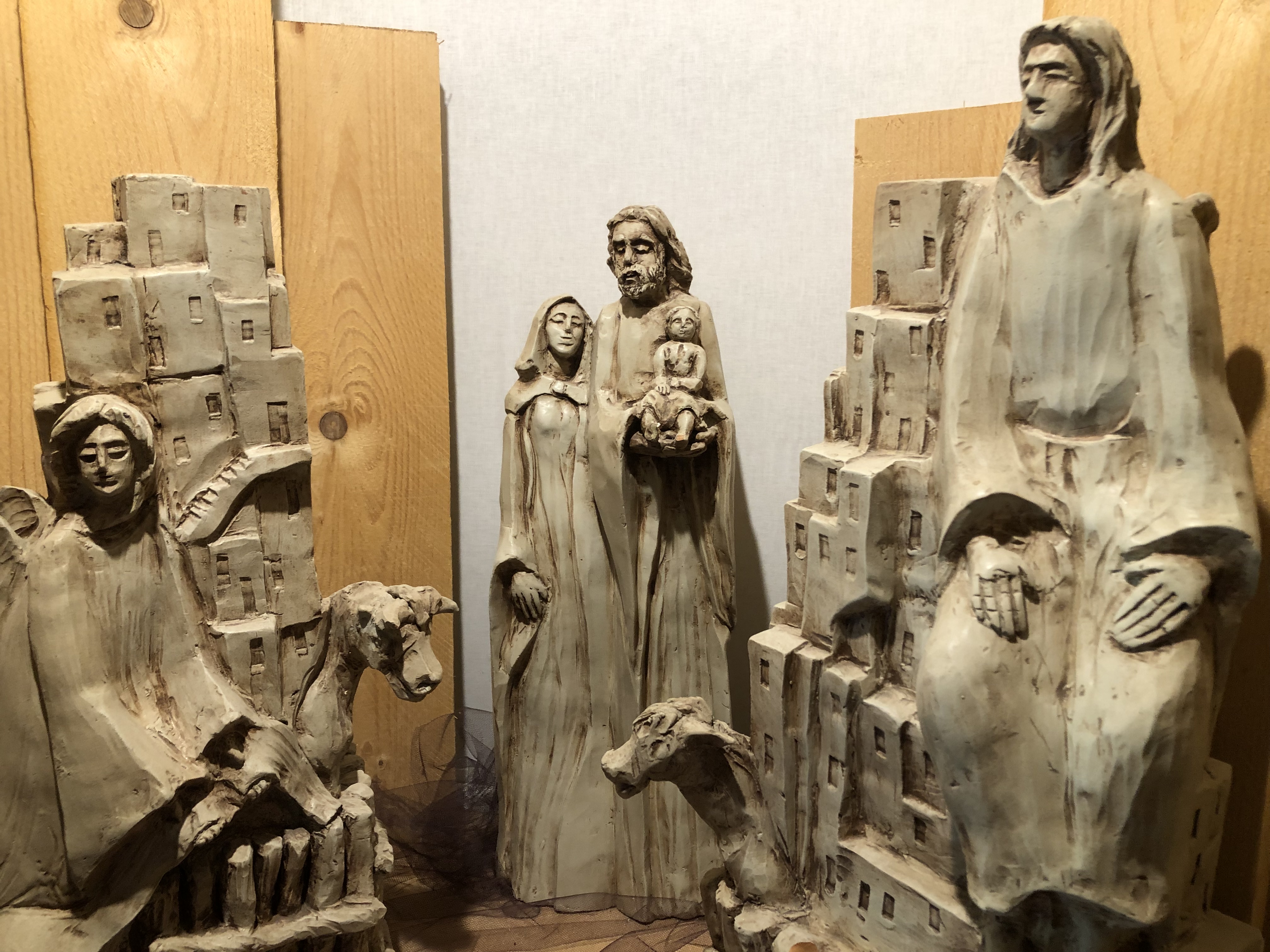
Last week, I mentioned my pilgrimage to Greccio, the little town on the edge of Lazio where St. Francis put up the first Nativity scene. I thought I’d share a few more pictures from the (grandly named) Museo Internazionale del Presepio and the Franciscan Sanctuary just outside of town, which was built around the Grotto of the Presepio. Last week I mentioned the series The Chosen and how it demonstrates the same instinct behind the Nativity scene–to use the imagination to draw closer to Jesus in the flesh.

It occurred to me that The Chosen‘s great success–against the odds, without Hollywood backing–shows that the Gospel story remains just as compelling as ever. The commercial success of Mel Gibson’s 2004 The Passion of the Christ showed the same thing. In fact, given the commercial success of such projects, it’s perhaps surprising that the entertainment industry doesn’t try to tap the religious market more often. Then again, Hollywood’s attempts to do religion tend to fall flat because they’re so patently inauthentic–remember Noah (2014)? You didn’t miss much. Martin Scorsese’s 2016 Silence was also a bit of a dud.

Despite these films’ massive budgets, the talent behind them, and slick special effects, they weren’t all that compelling. Perhaps the missing element was simply faith. I suppose it’s something like the difference between a foreigner speaking a language and a native speaker; no matter the foreigner’s wealth or education, he’ll never be as eloquent as a peasant speaking his native tongue. Faith has no substitutes.