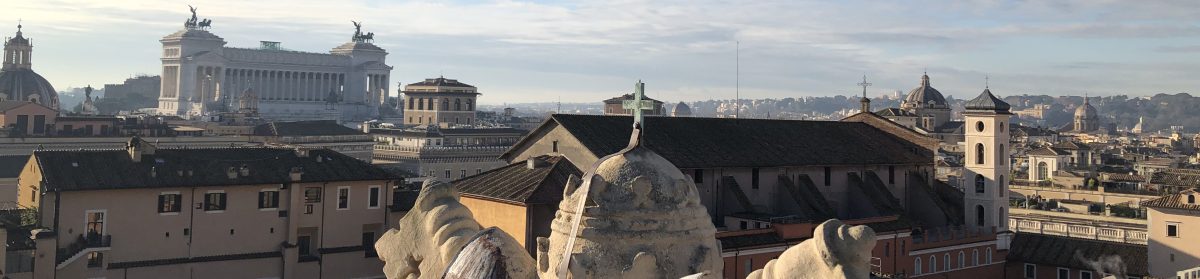
San Giovanni dei Fiorentini

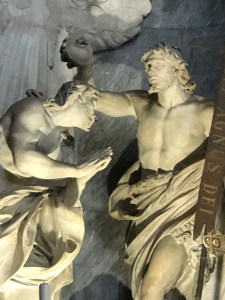
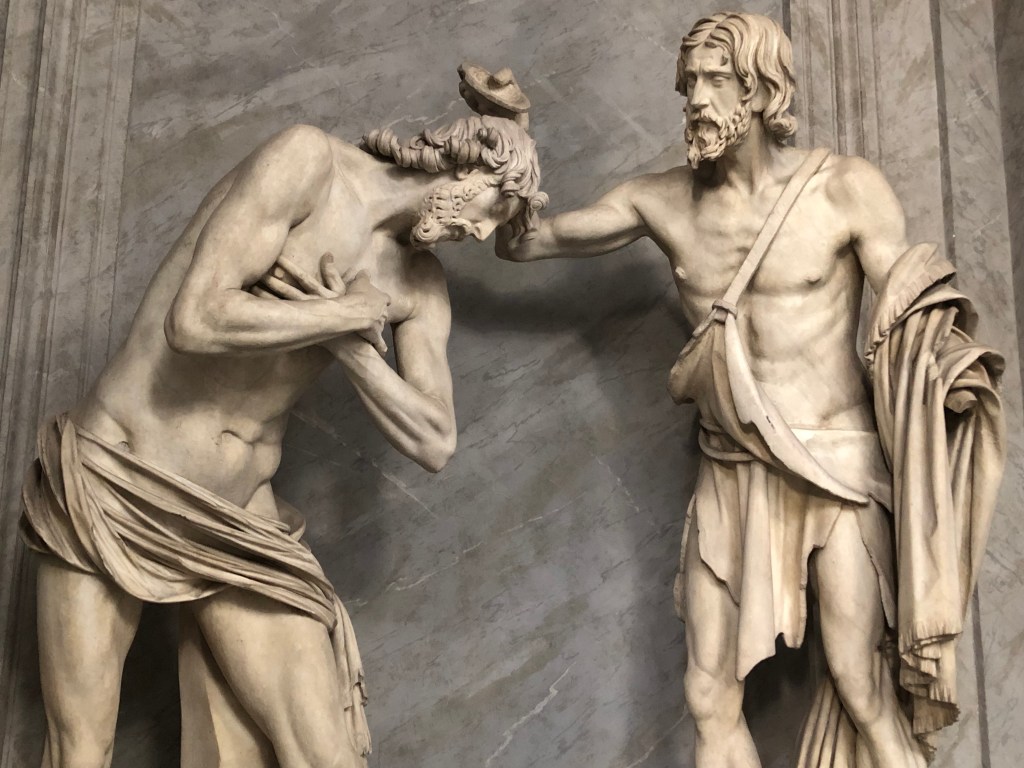
Baptism of Jesus, Antonio Raggi, San Giovanni dei Fiorentini, Rome

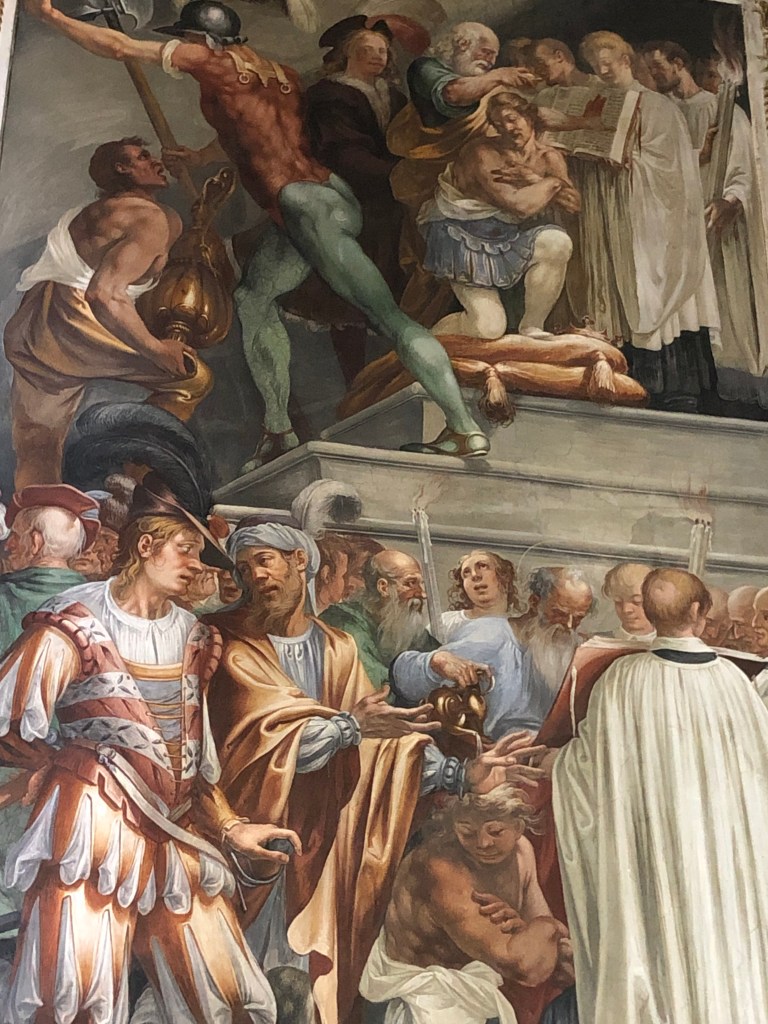
To celebrate the feast of the Baptism of the Lord–which this year falls unusually on a Monday–I thought I’d share a few photos from one of Rome’s lesser known churches, San Giovanni dei Fiorentini. A baroque church, it was built for the Florentine expats in Rome back when Florence was an independent city-state and named for the city’s patron, St. John the Baptist. The church contains a relic of Mary Magdalene (her foot), and is the burial place of the great–but tragically unhappy–baroque architect Francesco Borromini. It also contains a number of interesting artistic works featuring baptism. 

I’ve written before about the importance of baptism, but I have a personal reason to be particularly fond of San Giovanni dei Fiorentini. Its 17th century altarpiece, the Baptism of Jesus by Antonio Raggi, features on the beautifully designed cover of my book Baptism of Desire and Christian Salvation. Of course, I’d like to think that what’s inside the cover is pretty interesting as well, and I’m pleased that the book’s release date is coming up later this month–January 26. There’s more information on the website of Catholic University of America Press, and the book is available on other online sellers such as Amazon.

In the meantime enjoy the views of San Giovanni dei Fiorentini.

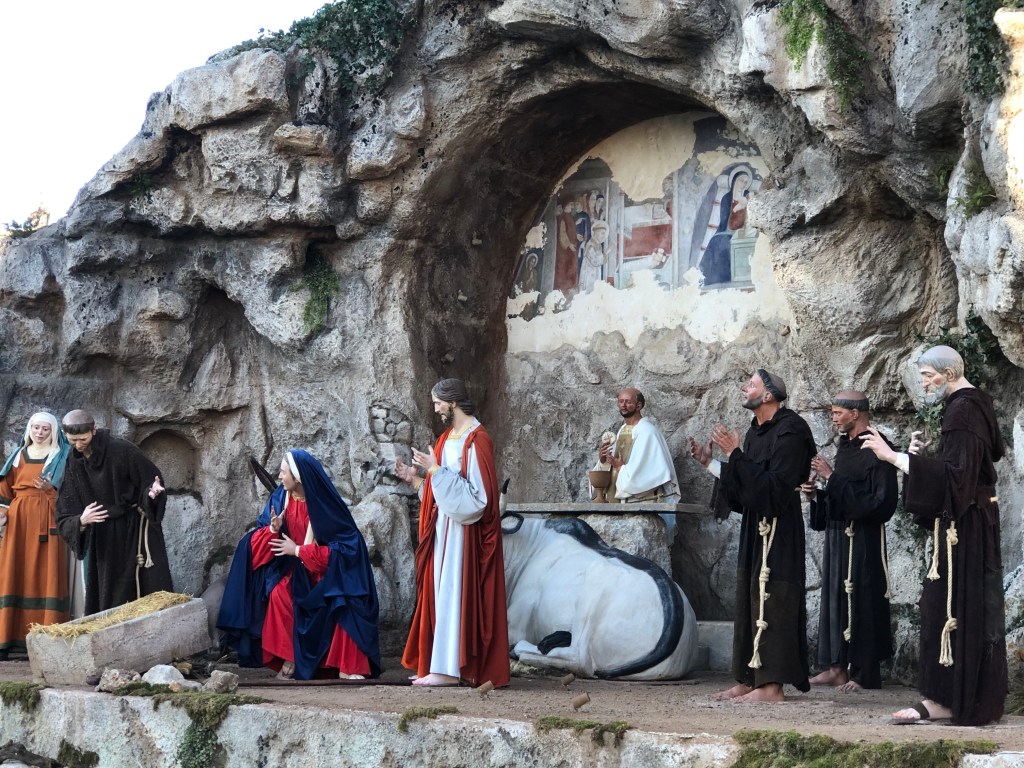
The Vatican Nativity scene, 2023

Nativity scene, St. Peter’s Square, 2023

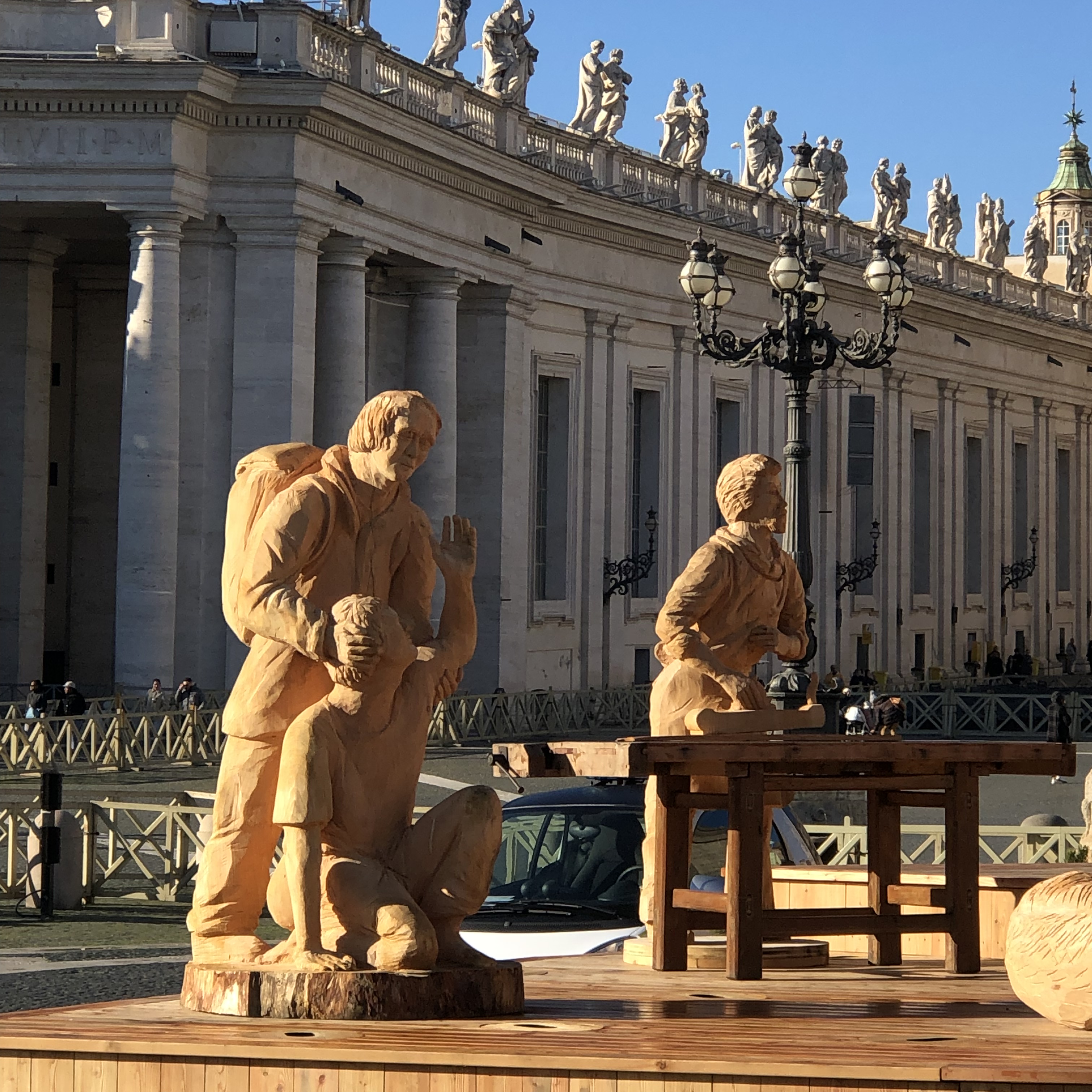
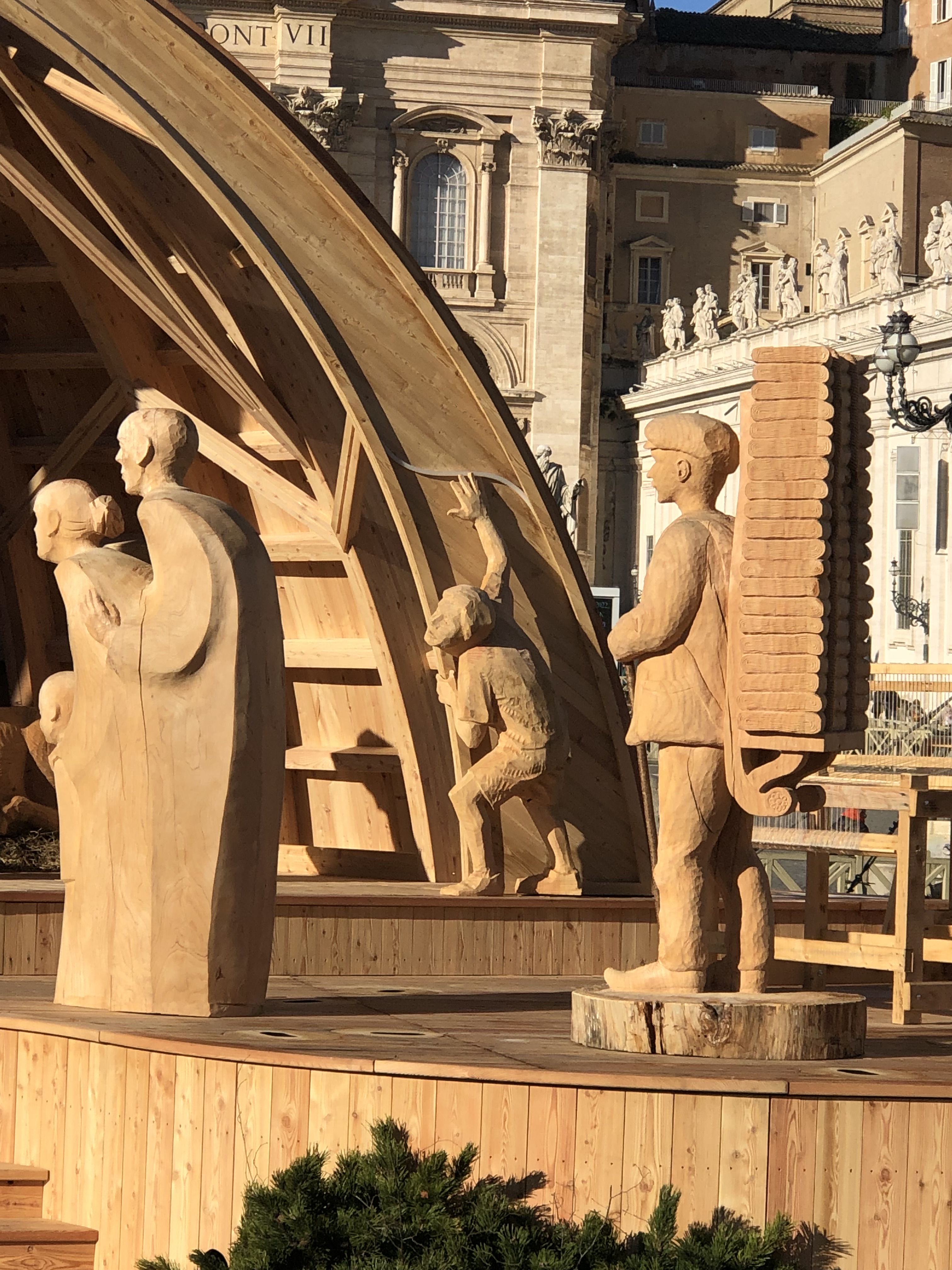
Over the past few weeks, I’ve noted (here and here) that 2023 marks the 800th anniversary of the first Nativity scene set up by St. Francis in the little town of Greccio. The Vatican’s Nativity scene this year also reflects that anniversary. 

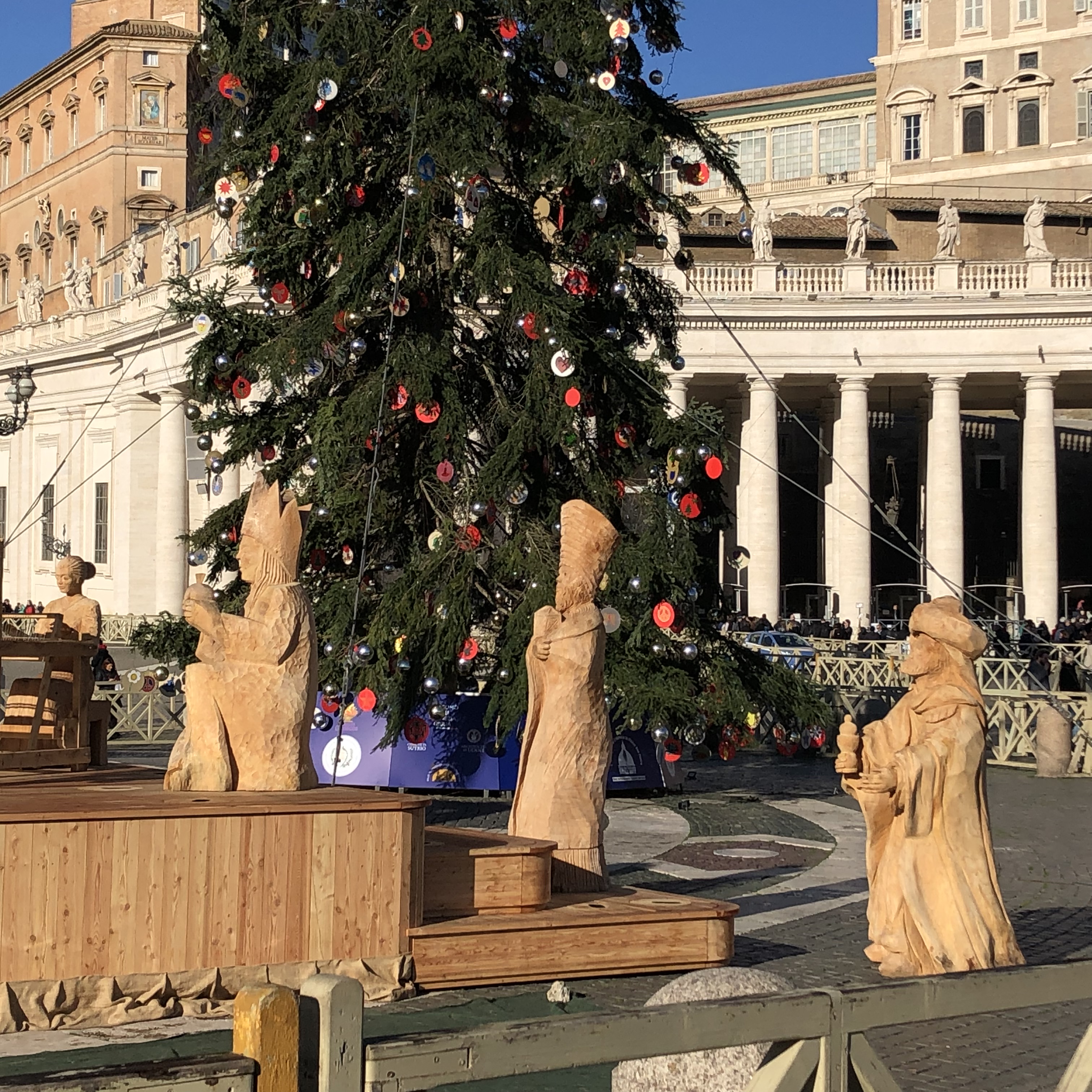
This year’s scene doesn’t aim for historical accuracy–thus, St. Francis alongside Mary and Joseph and the three friars replacing the three kings. (Oh, and there’s a priest celebrating Mass in the background too.) The fresco on the wall behind them is a replica of the one in the cave in Greccio.

The figures, perhaps, aren’t exquisitely beautiful. (And, come to think of it, the priest in the background seems a tad confused about what he’s supposed to be doing–too much realism?) But at least this year’s Nativity scene isn’t aggressively weird (like the aliens from 2020) or trying too hard to be modern (like… well, there are too many examples).

You’ll notice that the manger itself is empty. As per the tradition, the Baby Jesus doesn’t arrive until Christmas itself. This year he won’t find a perfect Nativity scene, a perfect Church, or a perfect world, but he’ll come nonetheless and we need him all the more because of it.

Nativity scene, St. Peter’s Square, 2023

Rome for the holidays

Advent is one of my favorite times of the year to be in Rome. What they call winter here is nothing to a Minnesotan, and the shortening days are counterbalanced by the city’s delightful display of Christmas lights. These generally don’t start appearing until after the Immaculate Conception (December 8) and they don’t come down until after the Epiphany (January 6).

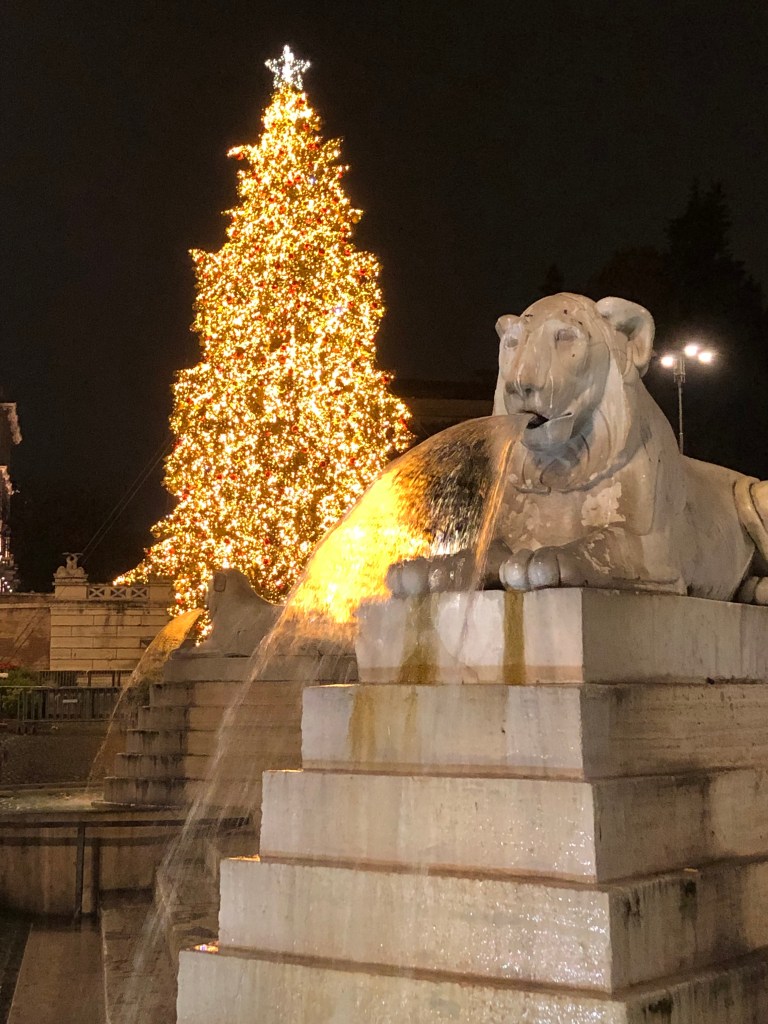
Rome’s Christmas tree, Piazza del Popolo

The city’s official Christmas tree, like the Vatican Nativity scene, is often the subject of local critique and Roman wit. This year, the tree got a new location due to construction work on Rome’s mythical new subway line–scheduled to open a few years after the Second Coming of Christ. The tree’s usual home, Piazza Venezia, is now a construction site, but its new location in Piazza del Popolo is a calmer setting away from the traffic. The official tree also has some competition from a glitzy counterpart at the Spanish Steps, given to the city by the fashion designer Dior.

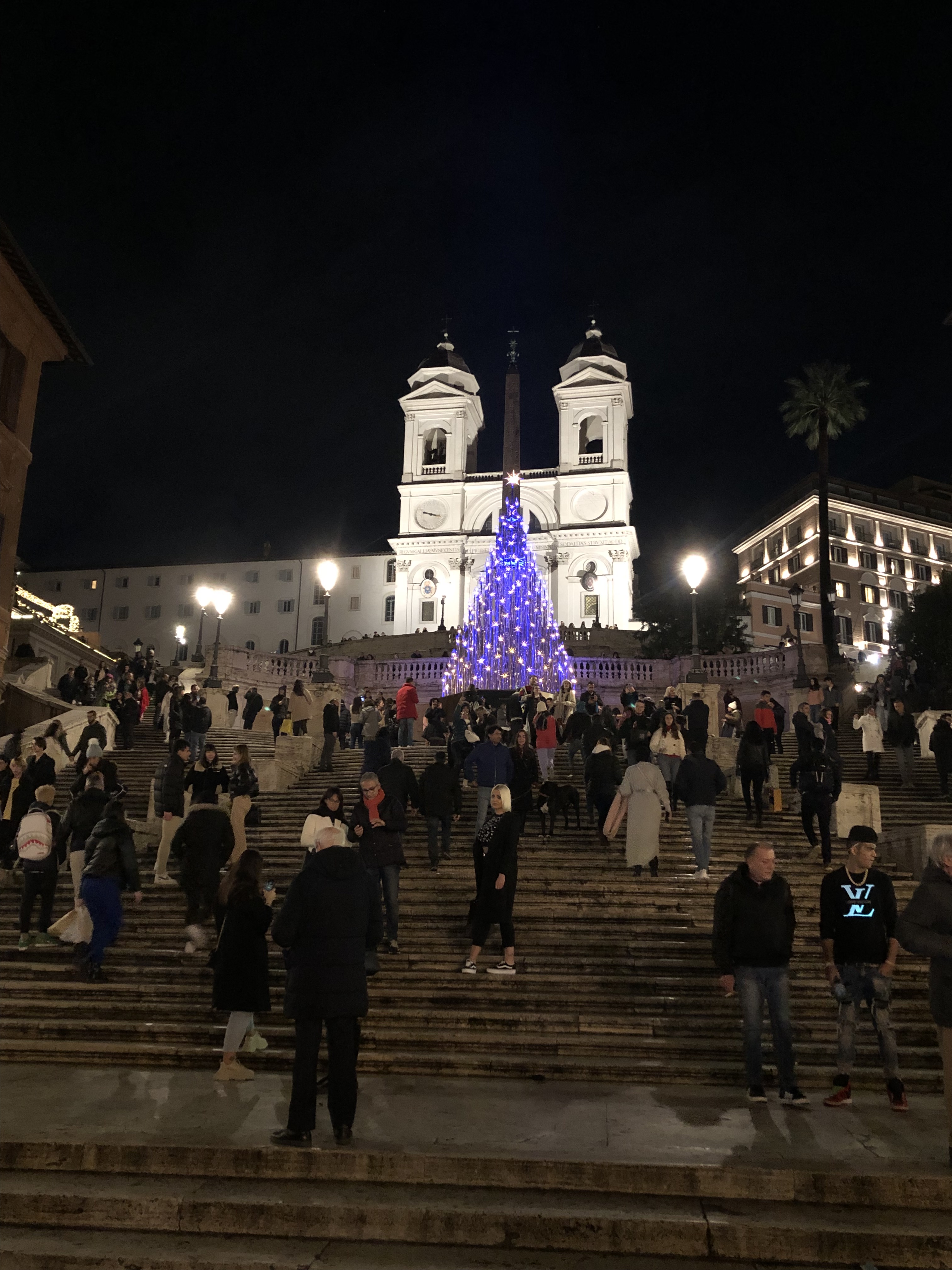
Dior Christmas tree, Spanish Steps

I’d also be remiss not to mention what a delightful time of year Advent is to be at the Gregorian University, where the university’s international richness is on full display. Student groups from different countries take turns singing in the atrium between classes. It gives them an excuse to duck out of class early (ahem), but you’d have to be Ebenezer Scrooge not to appreciate the festive atmosphere. The Mexican college usually wins the prize for the best show not only because of their charm and energy but because you just can’t top a piñata. It’s a time to be grateful for our young priests, seminarians, religious, and lay students who are such a source of hope for me and for the Church.

Christmas at the Gregorian

Jonah, the most bumbling prophet

Jonah sarcophagus (ca. AD 300), Vatican Museums

Those at daily Mass this week get to enjoy the special treat of hearing the book of Jonah. The book is such a good tale–who doesn’t love a giant sea monster? or a cantankerous prophet?–that I imagine the story originally told dramatically aloud. I think we’re meant to laugh at Jonah, the Mr. Bean of prophets.

Of course, there is a serious message to the book that goes beyond whale innards and the prophet’s pouty attachment to his gourd plant. Jonah reveals the sweeping reach of God’s mercy, extending even to the most wicked of cities–Nineveh, grrr—when those within it seek conversion. Students in my classes are probably sick of hearing it, but one way to get under my skin is to claim that the grumpy “God of the Old Testament” has been replaced by the groovy “God of the New Testament.” There’s only one God. He’s infinitely merciful and revealed in both the Old and New Testaments. And the book of Jonah proves it.

Continue reading “Jonah, the most bumbling prophet”

Merry Christmas

Since St. Francis of Assisi introduced the idea 800 years ago, Italy has been the land of Nativity scenes. And there is no more prominent location for a Nativity scene in the world than St. Peter’s Square. The scene is different every year and–along with the Christmas tree in Piazza Venezia–is usually subject to intense comment and critique from Romans and visitors alike. There’ve been a few doozies in my years here, but this year’s scene from Friuli Venezia Giulia does not seem to have aroused great protests.

Here’s a peak at the scene, still waiting for the child who makes all things complete.

Christmas blessings to one and all!

“In the fullness of time, chosen in the unfathomable depths of God’s wisdom, the Son of God took for himself our common humanity in order to reconcile it with its creator.” (Pope St. Leo the Great)

Advent lights

One of the reasons I find the season of Advent so compelling is its central symbol of light growing in the darkness, as simple as it is powerful. The fifth of the O antiphons always strikes me as particularly poignant:

O Radiant Dawn, splendor of eternal light, sun of justice: come shine on those who dwell in darkness and the shadow of death.

Mid-December also coincides with a slight lull in the crush of tourists here; between the Immaculate Conception and Christmas the streets are a tad calmer and one can get out and enjoy the decorations. In the northern hemisphere it is one of the darkest times of the year, but that only makes the lights all the more delightful.

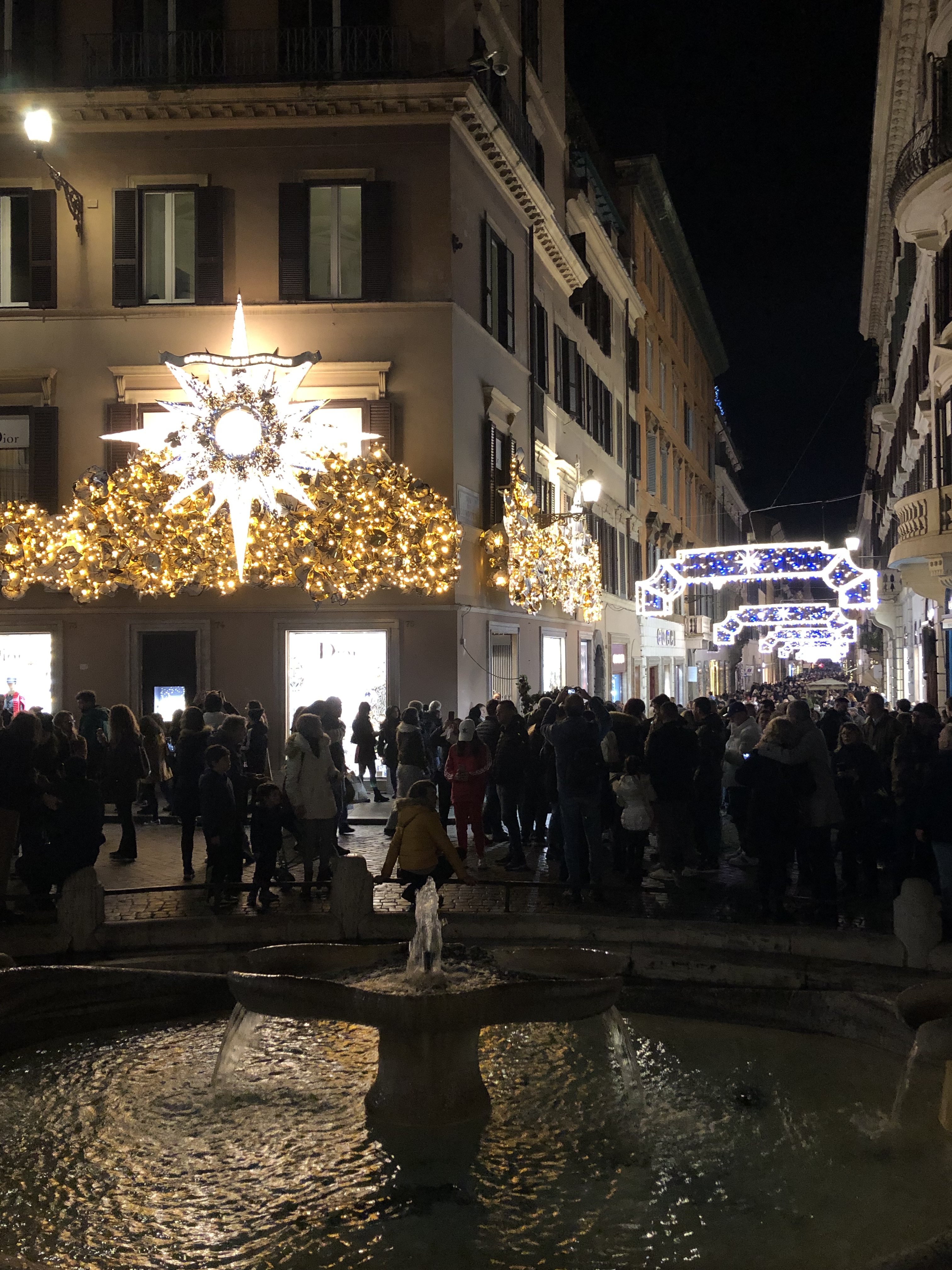
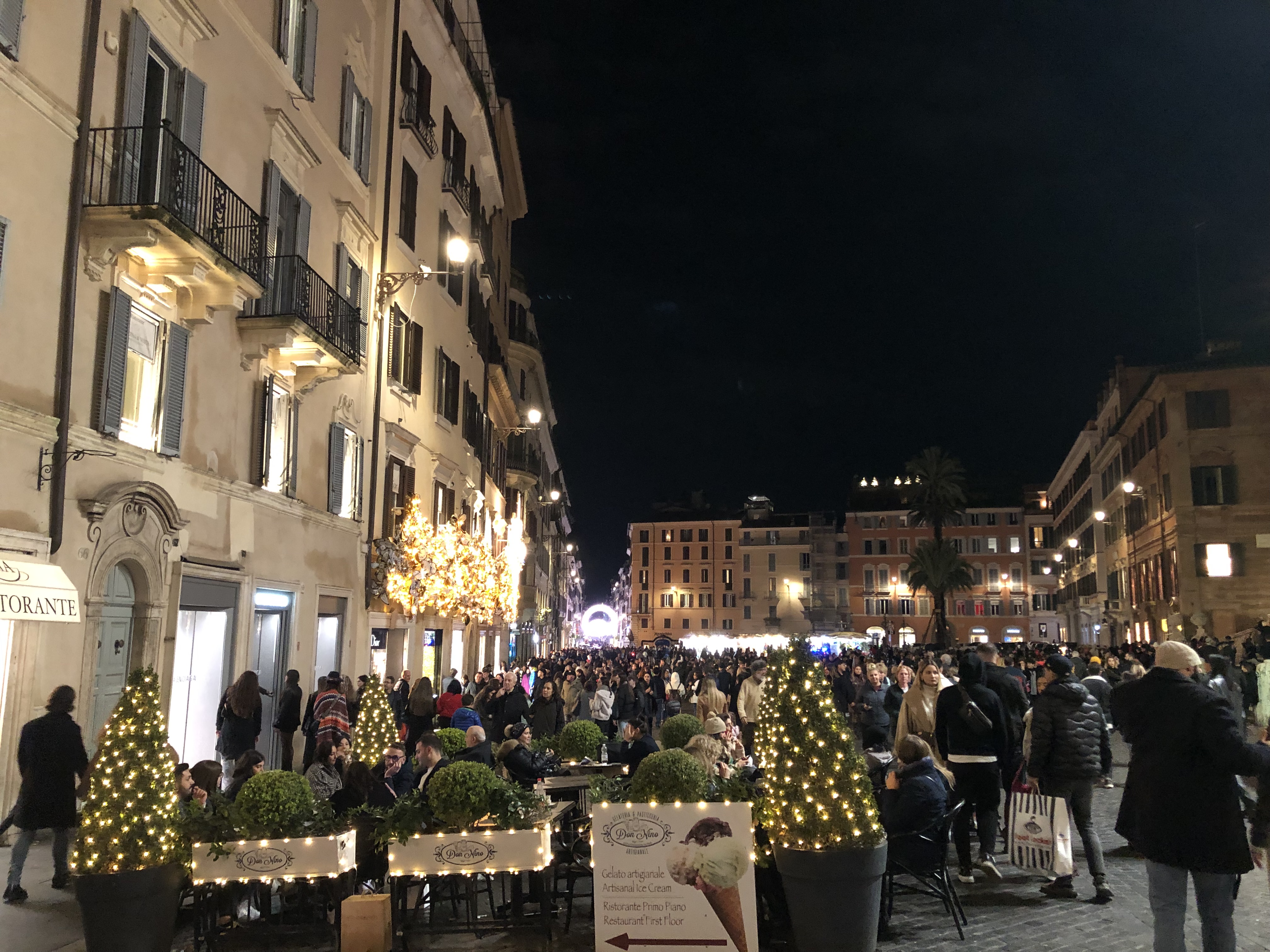
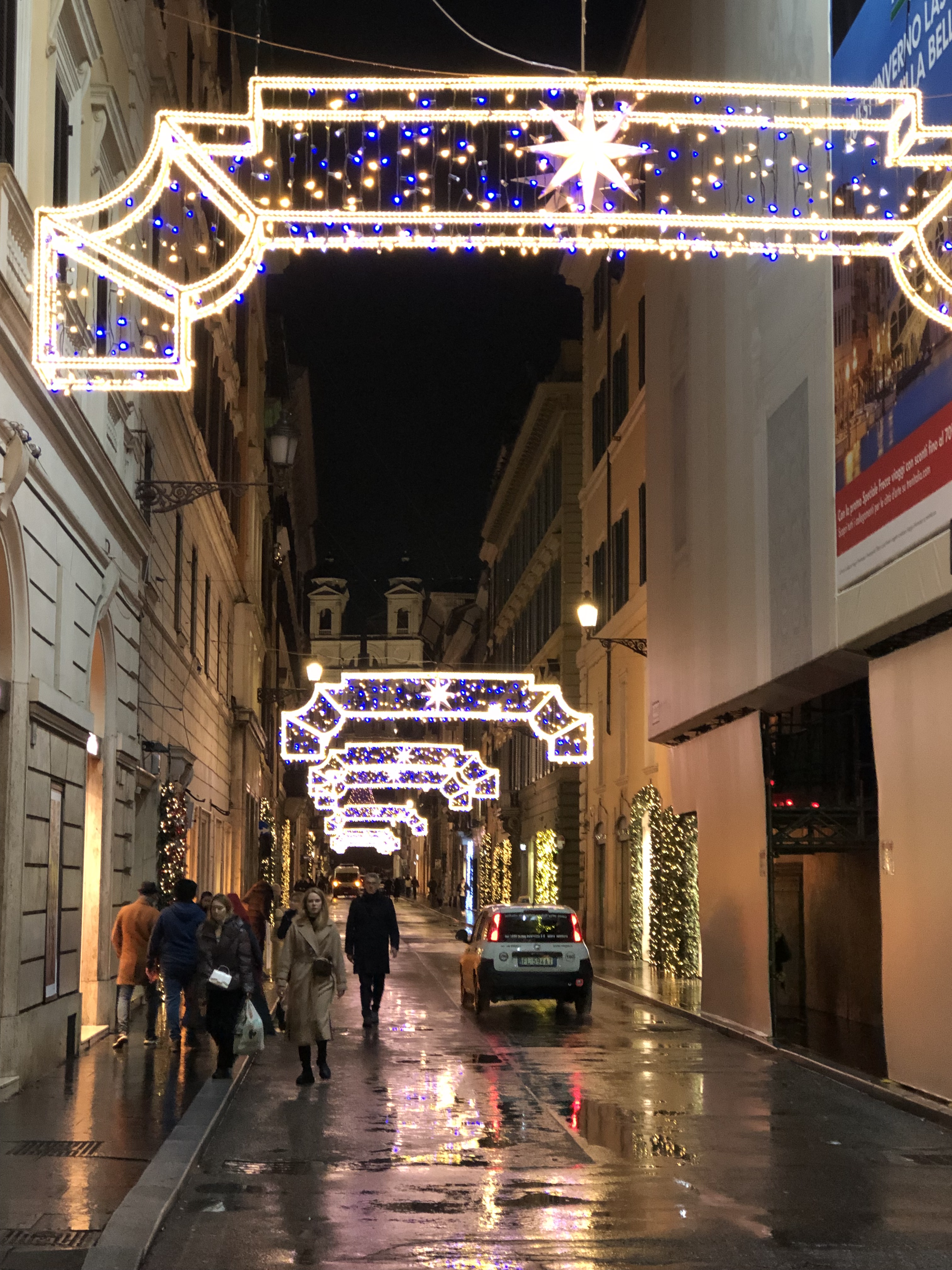
Here are a few shots of Rome’s lights…

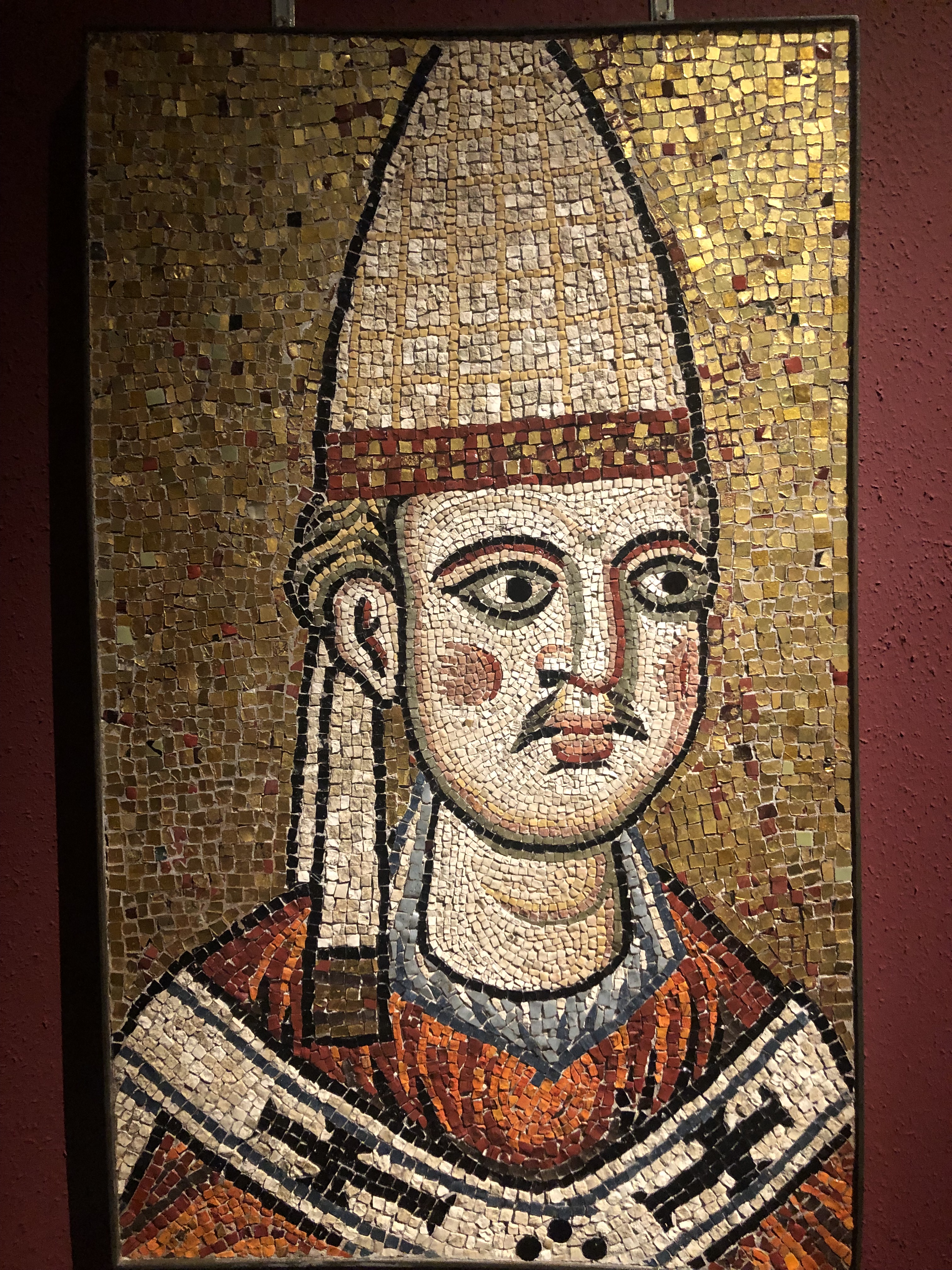
Faces of Medieval Rome

Visitors to St. Peter’s Basilica in Rome often don’t realize that the magnificent baroque church is built over the site of a still more ancient basilica, built by Constantine and then torn down completely by Pope Julius II during the Renaissance. Over the course of the next century, today’s basilica was rebuilt by the likes of Bramante, Giulio da Sangallo, Raphael, Michelangelo, Carlo Maderno, and Bernini.

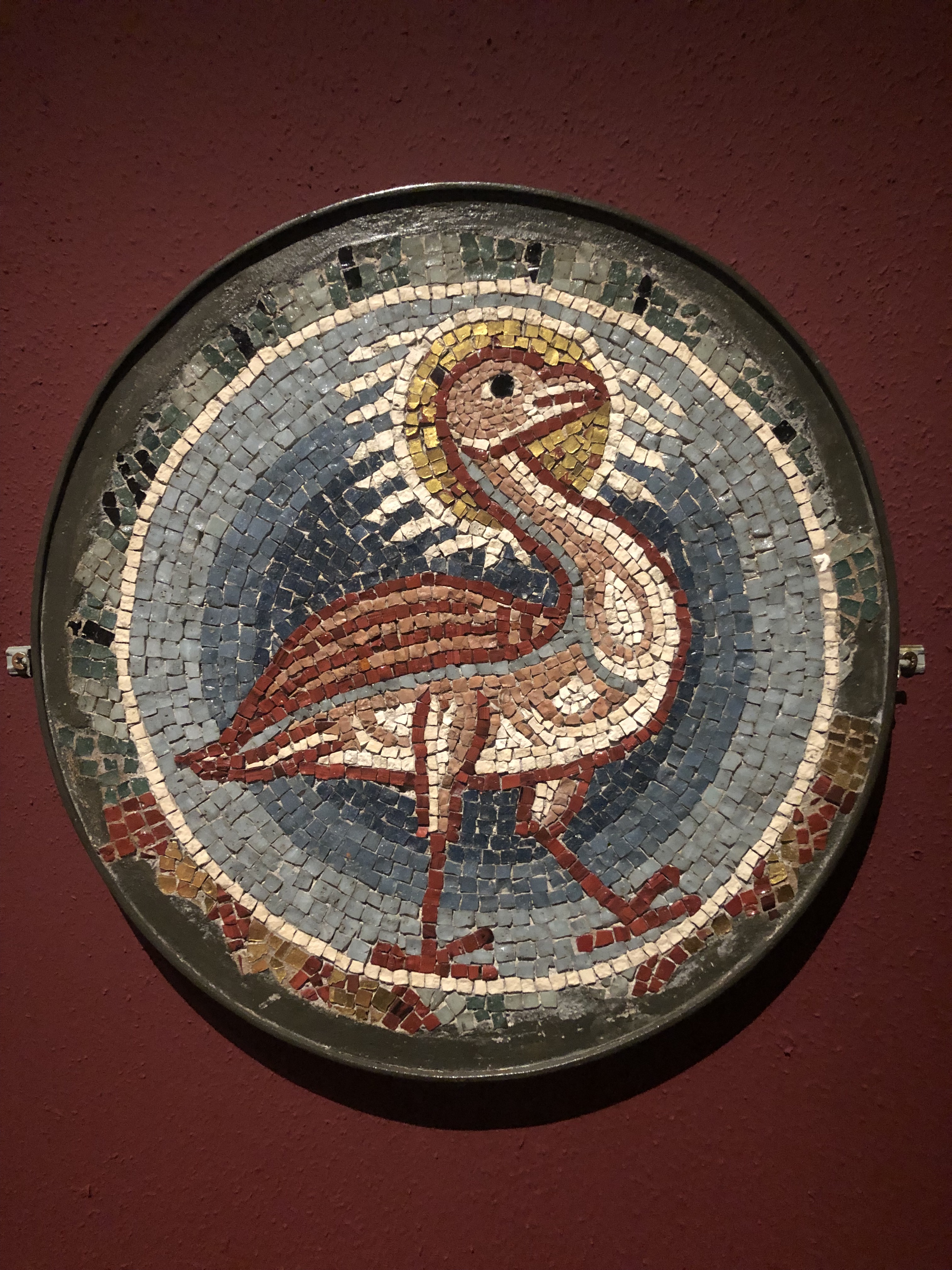
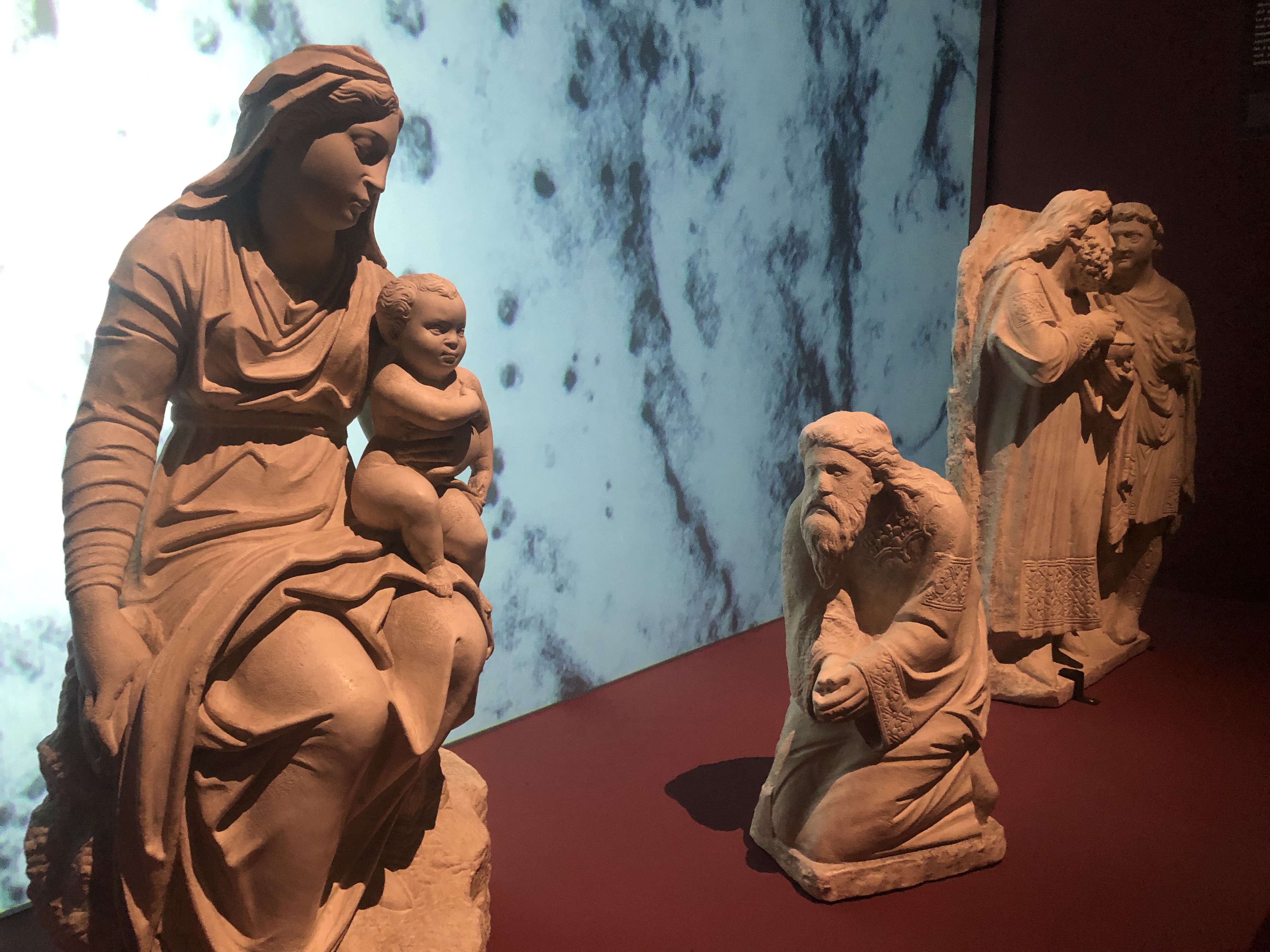
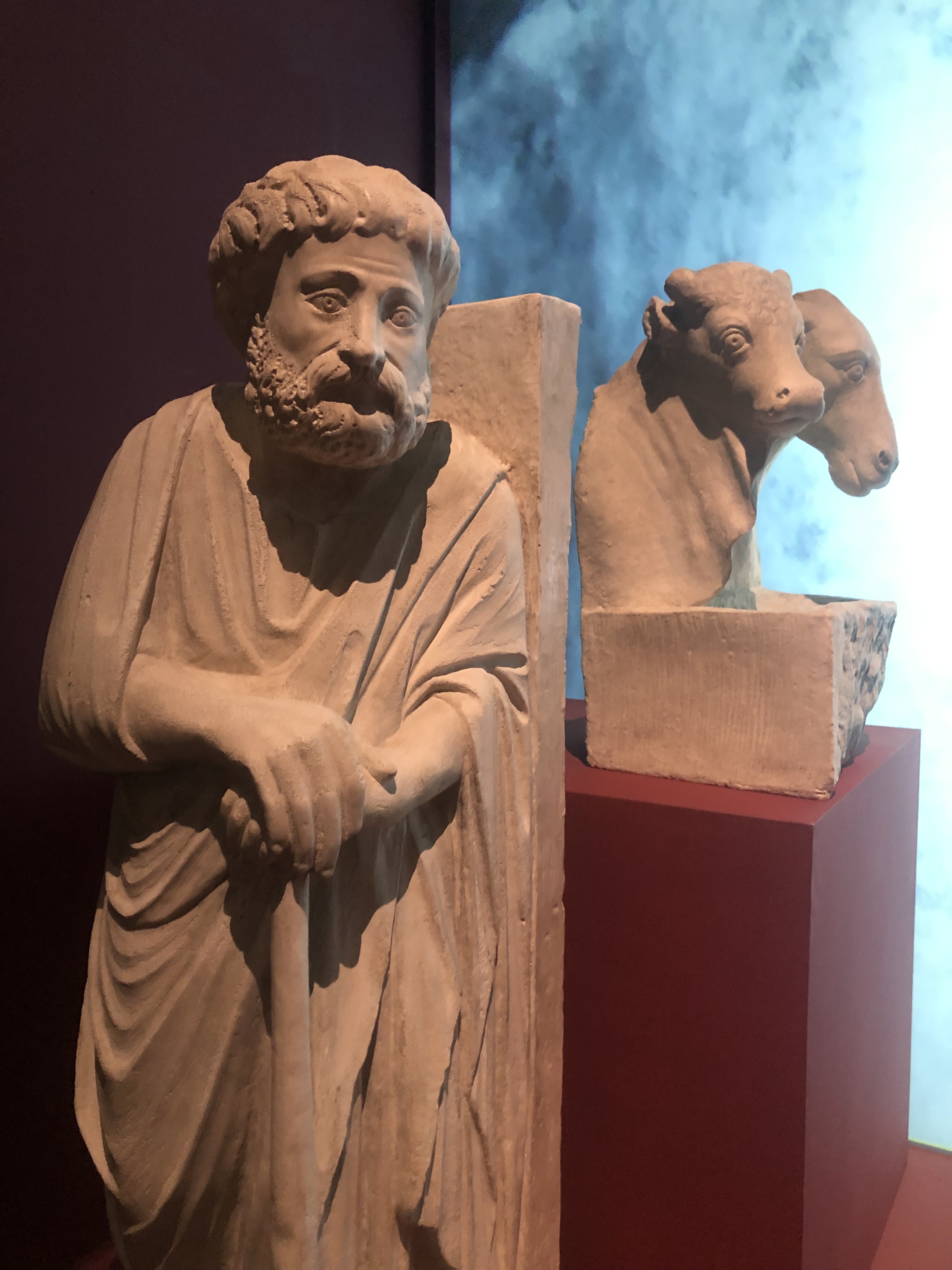
Surprisingly little of the original church remains, so I was fascinated this week to see a few of the mosaics saved from the first basilica at a special exhibition on medieval Rome at the Museo di Roma. The exhibition displayed work from the other four major basilicas, each of which has a unique history. The complex around St. John Lateran, another Constantinian construction, has changed greatly over the centuries and the interior of the church was redone by Francesco Borromini in the 17th century, though the shape of the basilica remains basically the same. St. Mary Major preserves the magnificent mosaics from its Roman days, but St. Paul Outside the Walls was entirely rebuilt after a fire burnt it down in the early 1800s.

Here are a few pictures form the papal basilicas’ medieval past.

St. Jägermeister?

Sant’Eustachio, Rome

With more than 900 churches, as I’ve noted before, if you’re looking for church-related curiosities, there’s no place like Rome. A friend recently pointed out an oddity that seemed to take the cake. Atop a church between the Pantheon and Piazza Navona is what seems to be a stag with a cross between its antlers, which looks suspiciously like it was taken straight from… a Jägermeister bottle.

Continue reading “St. Jägermeister?”

Signs of Easter

With winter now banished, one of my favorite signs of Roman spring is here — flowers sprouting from the tile rooftops. Above, my favorite, the corner of St. Ignatius Church seen from the terrace of our building, below a more modest view from my room. I’m not sure what this annual effusion of greenery means for the structural integrity of the tiles — and, I guess, I don’t really care. I find the flowers exuberant and surprising and, yes, just a tad reckless. In other words, a perfect sign of Easter.

I’ve always thought the flowers — life and beauty — breaking through the tiles a nice metaphor for the Resurrection, like the angels dressed in dazzling white among the scattered tombstones. This year they’ve also put me in mind of Peter. Peter is, after all, a slightly reckless figure, the desires of his heart a step ahead of his own moral capacities. His love for Jesus leads him to boast of his fidelity on Holy Thursday — “Lord, I am ready to go with you to prison and to death” — and then to find that his steadfastness has fallen short of his aspirations. It is devastating to read of Peter’s betrayal; one can imagine how much more devastating it was to live it.

Continue reading “Signs of Easter”

Bernini’s beads

Can you spot the rosary?

When I reached the end of the station pilgrimage the last time around, I was struck by the details.

For the sacramental theologian such as myself, there’s a deep lesson in the details of the journey. The Son of God’s Incarnation meant entering fully into the reality of human life, with all its diverse moments of suffering and disappointment, of hope and joy, of sometimes just getting by. The Passion narrative is the most vividly detailed part of the Gospels, and the Resurrection stories too, though reflecting the discombobulation of that utterly unprecedented event, also retain the sort of vivid details that stick out in one’s mind even when the world has just gone outside-in. Mary thinks Jesus is the gardener. Jesus eats a bit of fish. The sacraments depend on the details of the Lord’s life, too, on what he ate at his last meal.

Continue reading “Bernini’s beads”