From John Paul II’s “Letter to Artists”

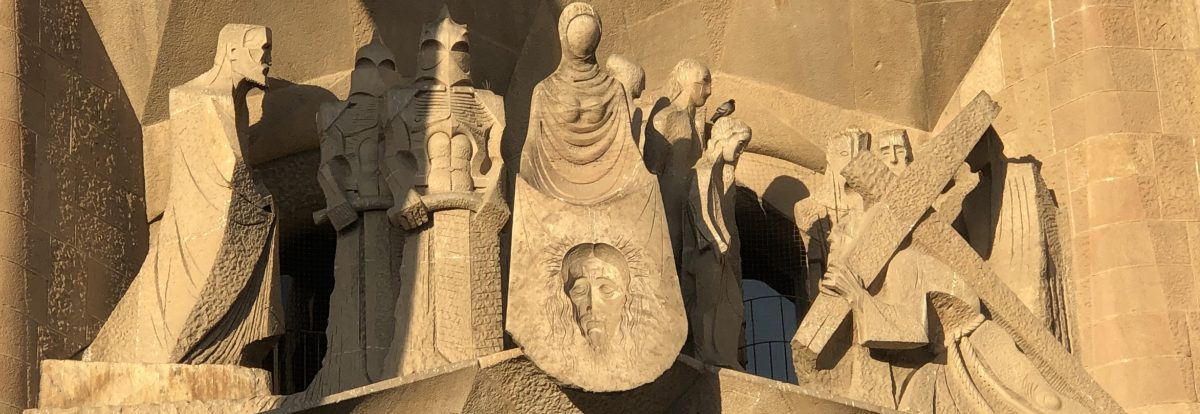
Every genuine artistic intuition goes beyond what the senses perceive and, reaching beneath reality’s surface, strives to interpret its hidden mystery. The intuition itself springs from the depths of the human soul, where the desire to give meaning to one’s own life is joined by the fleeting vision of beauty and of the mysterious unity of things. All artists experience the unbridgeable gap which lies between the work of their hands, however successful it may be, and the dazzling perfection of the beauty glimpsed in the ardour of the creative moment: what they manage to express in their painting, their sculpting, their creating is no more than a glimmer of the splendour which flared for a moment before the eyes of their spirit.

Believers find nothing strange in this: they know that they have had a momentary glimpse of the abyss of light which has its original wellspring in God. Is it in any way surprising that this leaves the spirit overwhelmed as it were, so that it can only stammer in reply? True artists above all are ready to acknowledge their limits and to make their own the words of the Apostle Paul, according to whom “God does not dwell in shrines made by human hands” so that “we ought not to think that the Deity is like gold or silver or stone, a representation by human art and imagination” (Acts 17:24, 29). If the intimate reality of things is always “beyond” the powers of human perception, how much more so is God in the depths of his unfathomable mystery!  […]

Beauty is a key to the mystery and a call to transcendence. It is an invitation to savour life and to dream of the future. That is why the beauty of created things can never fully satisfy. It stirs that hidden nostalgia for God which a lover of beauty like Saint Augustine could express in incomparable terms: “Late have I loved you, beauty so old and so new: late have I loved you!”

From Pope St. John Paul II, Letter to Artists (1999)

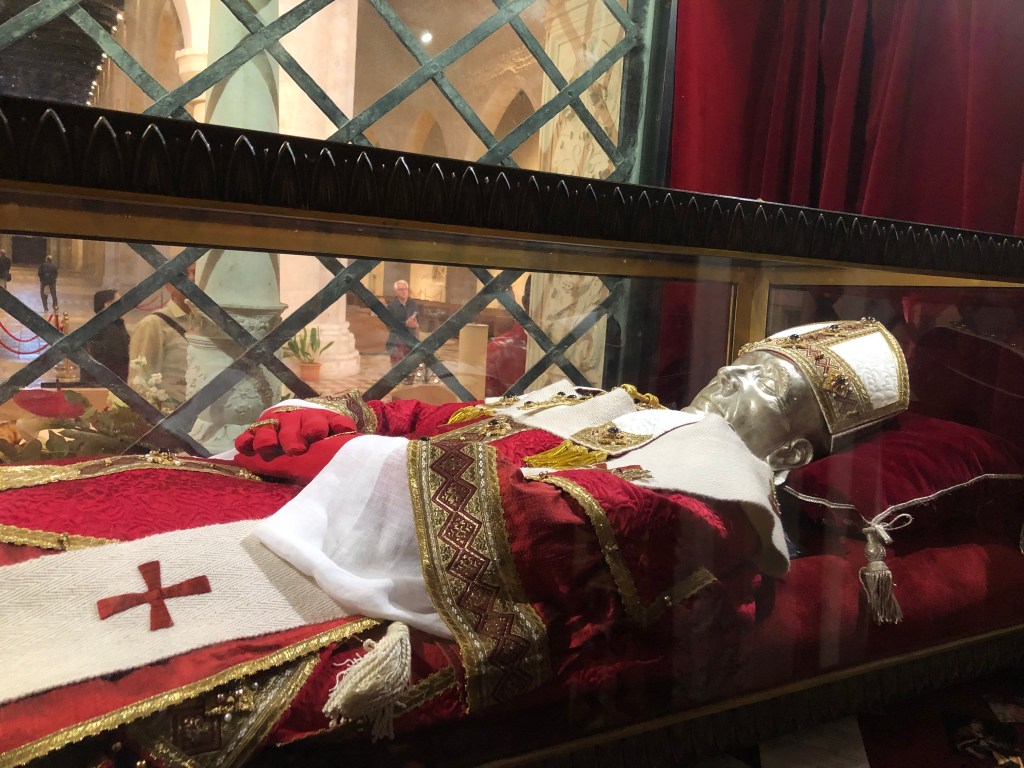
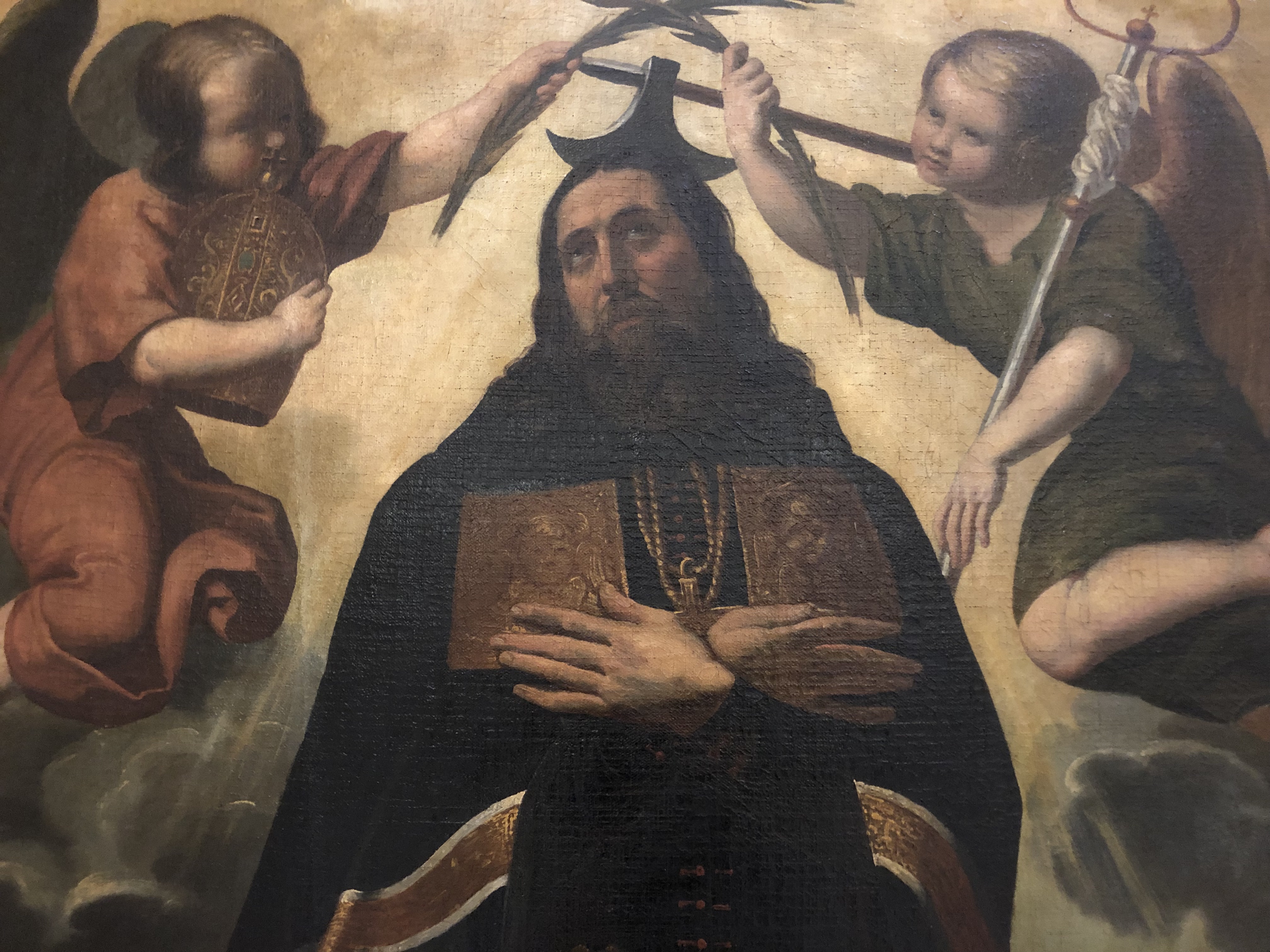
Saint Emilianus of Trevi

St. Emilianus of Trevi is perhaps destined to be overshadowed by St. Thomas Aquinas with whom he shares a feast day, January 28. He was one of the many bishops martyred during Roman persecution who provided inspiration and strength to their local communities but today are little know, the details of their biographies mingled with legend.

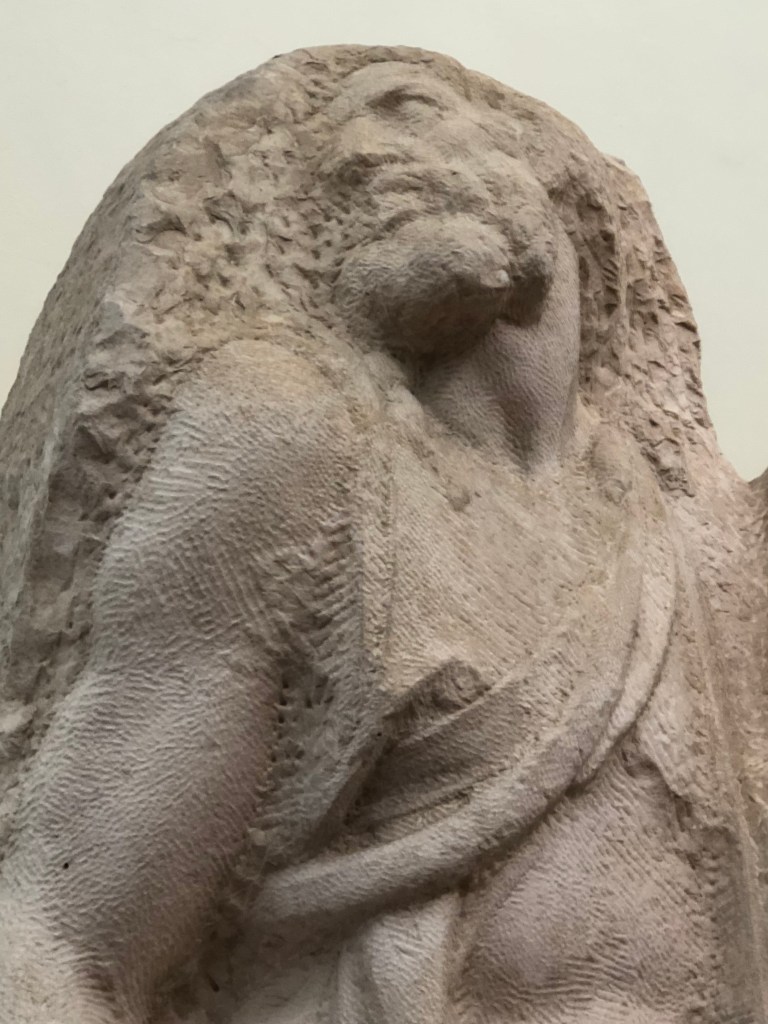
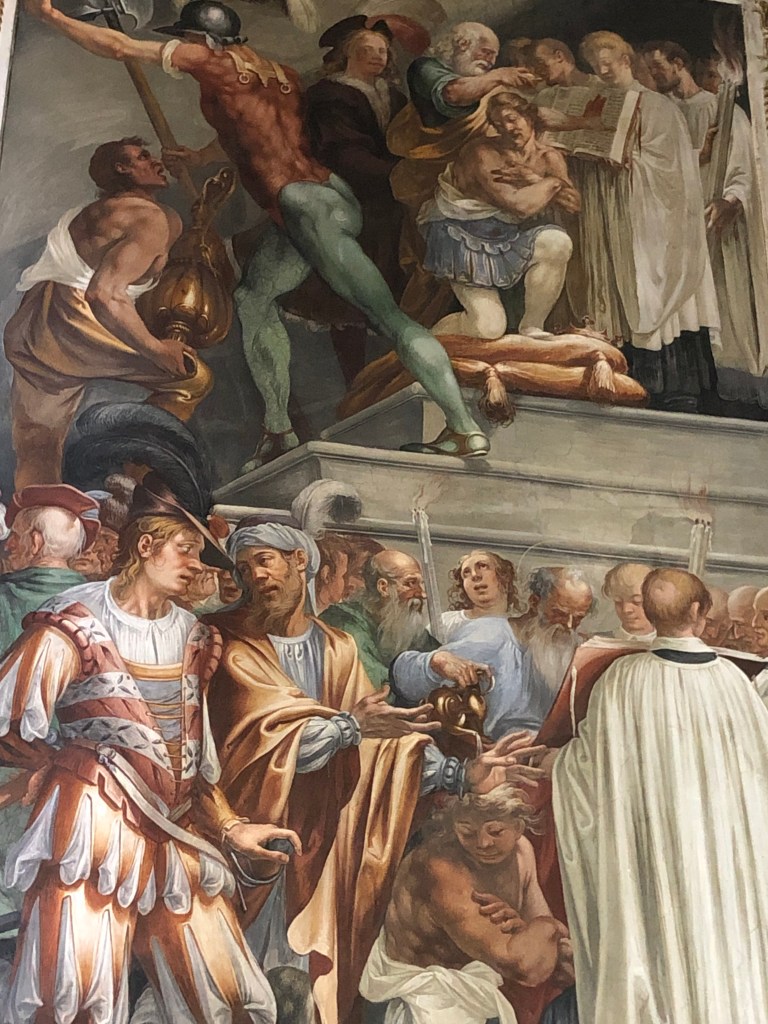
From the Martyrdom of St. Emilianus of Trevi, 12th century, Spoleto

I came across a striking set of 12th century carvings depicting the martyrdom of the saint in Spoleto last year and was taken by their vividness. St. Emilianus hailed originally from Armenia and came to Italy in the third century, where he was made the first bishop of Trevi. He was martyred during the persecution under Emperor Diocletian in 304, and his relics are preserved in Spoleto Cathedral.

He was condemned to die by a Roman proconsul for his refusal to sacrifice to the gods, but–as the panels from Spoleto recount–the first attempts to put him to death failed. The wild beasts sent to kill him instead bowed before him, and when he was tied up to be burnt the torches of his would be executioners fizzled out as they approached him. Finally, he was beheaded. The last panel of the work depicts Christ enthroned in heaven welcoming the martyr.

San Giovanni dei Fiorentini

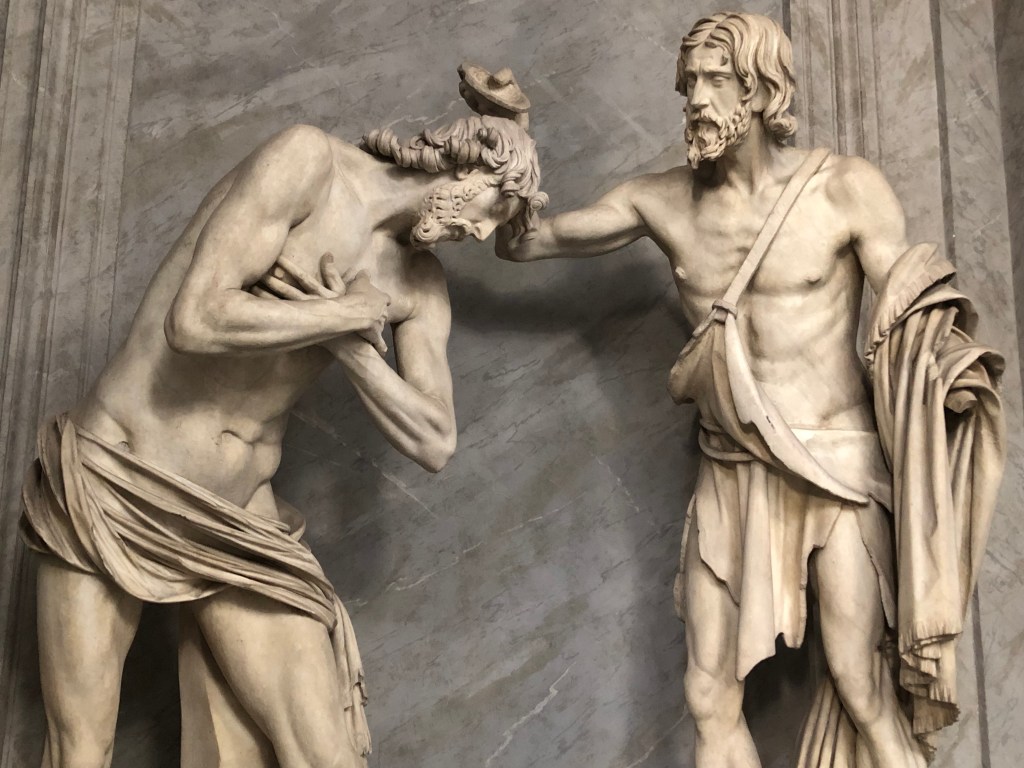
Baptism of Jesus, Antonio Raggi, San Giovanni dei Fiorentini, Rome

To celebrate the feast of the Baptism of the Lord–which this year falls unusually on a Monday–I thought I’d share a few photos from one of Rome’s lesser known churches, San Giovanni dei Fiorentini. A baroque church, it was built for the Florentine expats in Rome back when Florence was an independent city-state and named for the city’s patron, St. John the Baptist. The church contains a relic of Mary Magdalene (her foot), and is the burial place of the great–but tragically unhappy–baroque architect Francesco Borromini. It also contains a number of interesting artistic works featuring baptism. 

I’ve written before about the importance of baptism, but I have a personal reason to be particularly fond of San Giovanni dei Fiorentini. Its 17th century altarpiece, the Baptism of Jesus by Antonio Raggi, features on the beautifully designed cover of my book Baptism of Desire and Christian Salvation. Of course, I’d like to think that what’s inside the cover is pretty interesting as well, and I’m pleased that the book’s release date is coming up later this month–January 26. There’s more information on the website of Catholic University of America Press, and the book is available on other online sellers such as Amazon.

In the meantime enjoy the views of San Giovanni dei Fiorentini.

A jaunt to Spoleto

The Coronation of the Virgin, Filippo Lippi, Spoleto Cathedral

Compared to the first half of 2023, the past few months back at my day job have kept me mostly at my desk or in the classroom. I can’t complain. My students at the Gregorian University are a source of real encouragement and hope, and, even though preparing new classes is a daunting task, I always learn things in the process. This year’s new courses included penance–the sacrament and the virtue–and a seminar on marriage. The history of penance probably contains more twists and turns than that of any other sacrament, and I’ve particularly enjoyed the discussion in my marriage seminar provoked by Mark Regnerus’s excellent study The Future of Christian Marriage. 

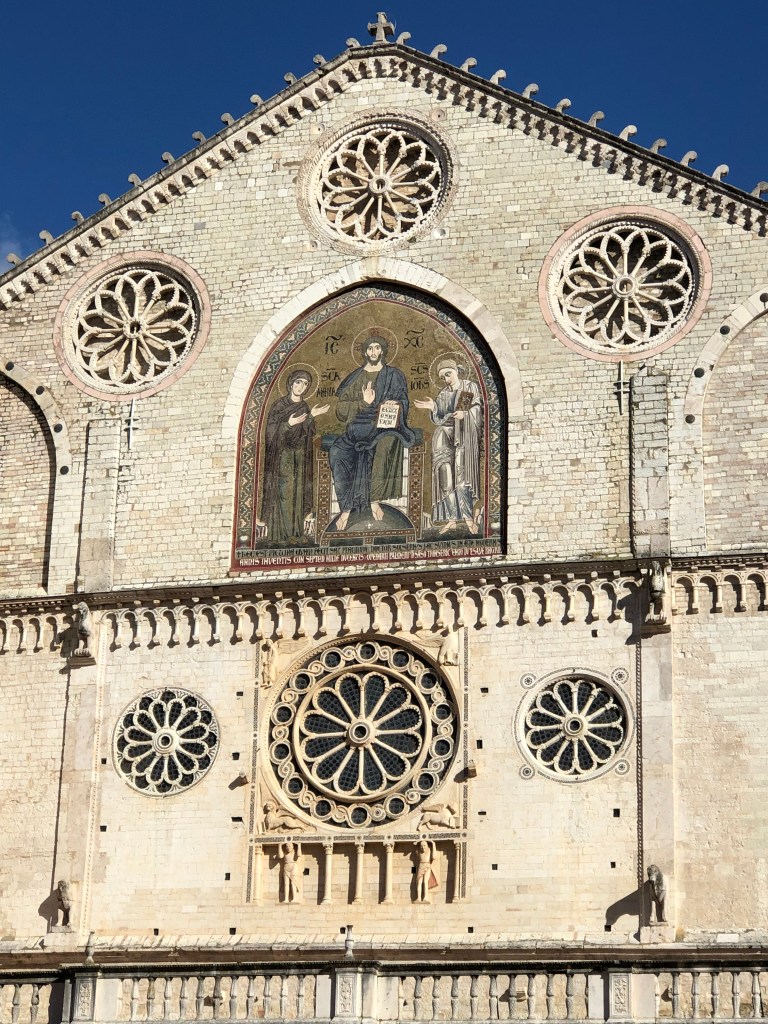
Duomo, Spoleto
Filippo Lippi (self-portrait in the Dormition, Spoleto Cathedral)

Every semester the Jesuits in the Gregorian community also get away for a day trip, which involves a bit of relaxation together and a very big meal. This year’s trip was to the Umbrian hill town of Spoleto, the sort of place where one finds Italy at its most picturesque. Highlights include a fortress that became a papal and then state prison and a 12th century cathedral. The cathedral’s highlight is an apse fresco of the Life of the Virgin Mary (started in 1467) by the Renaissance master Fra Filippo Lippi. I’ve shared some of the frescoes on my Facebook page at Christmas time, but the colorful Coronation seems an apt scene for the Solemnity of Mary Mother of God (January 1). The work also contains a hint of scandal–Lippi, a Carmelite friar, painted himself into the scene along with Lucrezia Buti, a novice in a Florentine convent who became the artist’s model and then his, ahem, mistress. Perhaps they got a pastoral, but not a liturgical, blessing.

St. Josaphat Kuntsevych

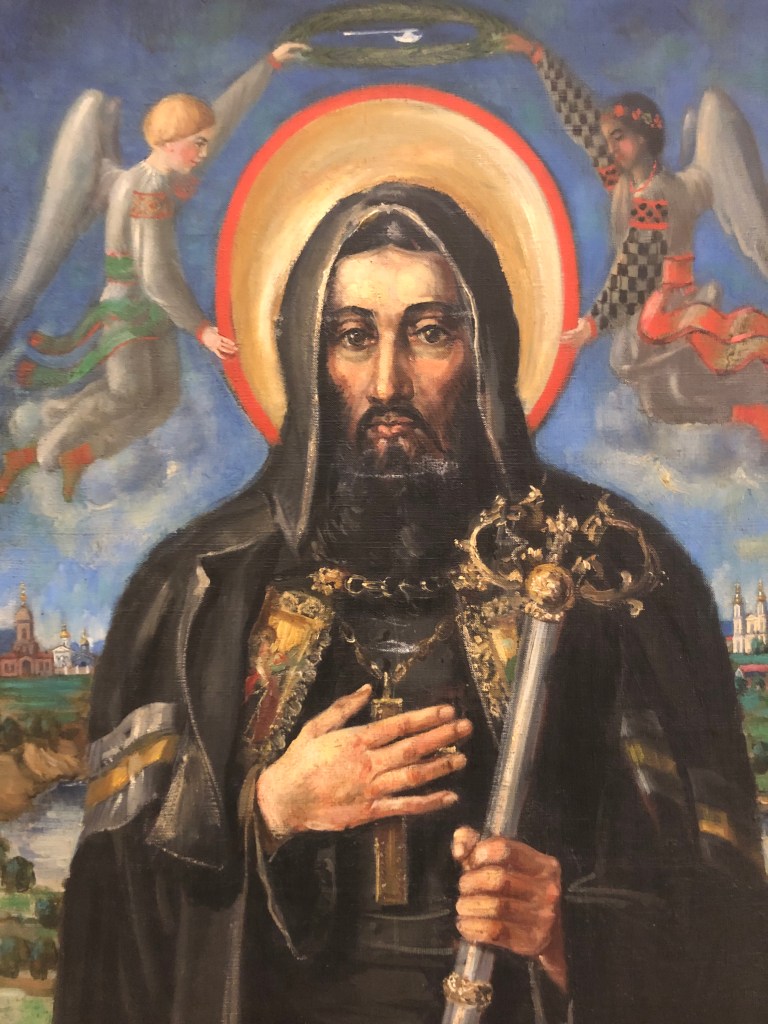
Sunday November 12 will mark the 400th anniversary of the martyrdom of the Ukrainian Catholic bishop St. Josaphat Kuntsevych. During his lifetime St. Josaphat worked for the reunion of eastern rite Christians with the Catholic Church. He was murdered by an Orthodox mob in 1623.

St. Josaphat, Mykola Azovskyj, 1946

St. Josaphat lived and worked, first as a Basilian monk and then as an archbishop in the part of the world that today includes Poland, Lithuania, and Ukraine. The anniversary is an opportunity to seek St. Josaphat’s intercession for the suffering people of Ukraine as they continue to fight for their nation’s freedom.

To celebrate the 400th anniversary of St. Josaphat’s martyrdom, the Gregorian University is sponsoring a conference on his life and legacy as well as an art show. I have to admit, I knew rather little about St. Josaphat before strolling through the display–though he is the patron of Milwaukee’s most beautiful church–and I have never seen so many paintings of the saint before. Here’s a sampling, showing all aspects of his life, from his calling to his monastic vocation, his ministry as bishop and his eventual martyrdom.

Baptism and Christian identity

El Greco, The Baptism of Christ

Sant’Agnese in Agone, the church in the center of Piazza Navona, is more beautiful than usual these days because it is hosting a special exhibit of three El Greco paintings. The largest and most impressive of these is the “Baptism of Christ,” a favorite theme of mine and something I think the Church would do well to reflect on more deeply–especially in these days of deep division and various lobbies jockeying for influence.

Sant’Agnese in Agone, Piazza Navona, Rome

At his baptism, the identity of Jesus is revealed by the Father: “This is my beloved Son, with whom I am well pleased.” As John the Baptist well knew, Jesus had no need of baptism; the event was for our benefit. The Lord’s baptism reveals what happens in our baptism: we become the children of God by adoption; we come to share in the Sonship of Jesus. The Father’s words come to apply to us. We become the beloved sons and daughters of God.

The reason I think this event is so important is because, for Christians, our status as God’s sons and daughters must become and remain our most fundamental identity. When some other form of identity becomes primary–our national identity, our identification with a particular political party or ideology, even our natural family–we go badly astray. This, it seems to me, is the most serious problem with contemporary LGBT ideology. The problem is certainly not with the people themselves, nor even so much with any particular sexual desires per se–living our sexuality with integrity has always been challenging, in different ways, for all Christians. The problem is when those sexual desires become ideology and ideology becomes identity, when one particular aspect of one’s personal make-up–one’s sexuality–becomes the dominant characteristic in one’s self-definition, the one ring to rule them all.

Continue reading “Baptism and Christian identity”

Gargoyles, east and west

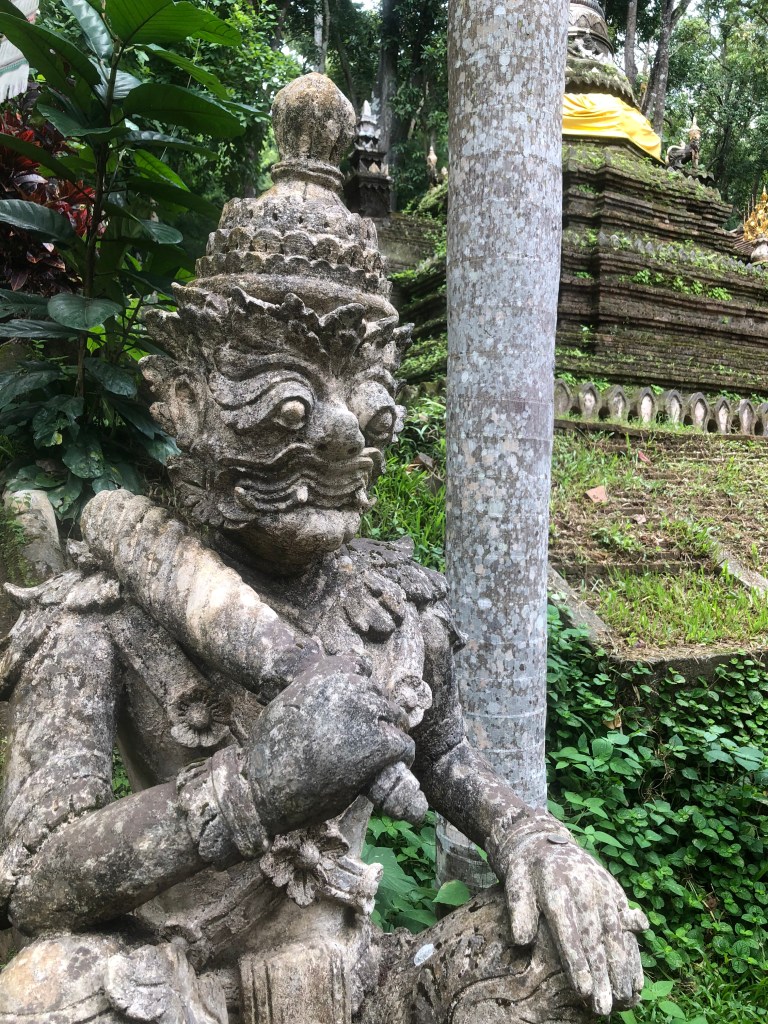
Wat Pha Lat, Chiangmai, Thailand

One of the highlights of my recent travels through Asia was visiting a number of quite impressive Buddhist temples and shrines. This was particularly the case in Thailand, though Chinese temples in Singapore, Taiwan, and Hong Kong were also filled with rich carvings, colorful statues, and piles of offerings including fruit, flowers, and burning incense. The warm red–the color of prosperity–of the Chinese temples reminded me of the red color with which the ancient Romans frescoed the inside of their homes. The desire for a warm hearth is written deeply in the human psyche.

Thian Hock Keng Temple, Singapore

A place of worship that makes an absorbing appeal to the senses is of course nothing new to me. I live in Rome, city of the baroque, where tales of religious ecstasy are told and retold in marble, mosaic, and fresco. The impulse of Christianity to express itself in art goes back to the Incarnation itself, to God revealing himself by entering into the world of the flesh, expressing his divinity in the matter of creation. We Catholics believe that he continues to communicate his grace to us through the sacraments. Artistic expressions using color, smell, and sound to amplify this divine work come naturally enough to a sacramental faith.

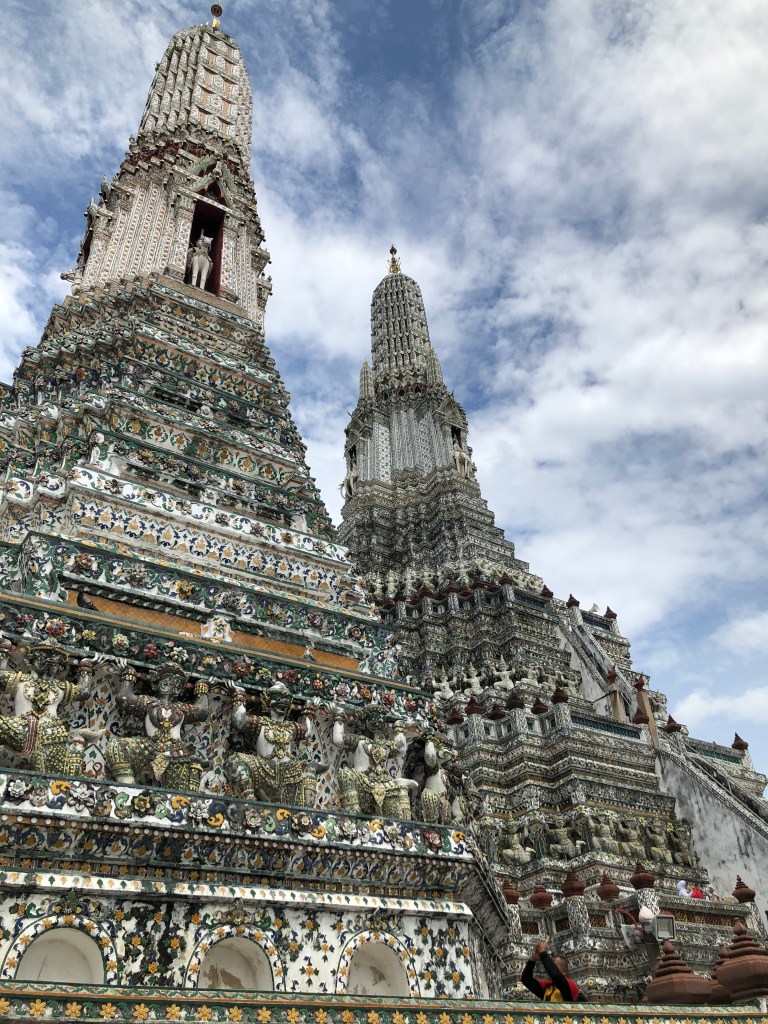
But what about Buddhism? Such expressions would seem to me, an outsider, to fit less naturally within Buddhist philosophy, with its distrust of all desire and negation of the world of pleasure and pain. Incarnation and Nirvana are two radically different beliefs. Yet how else to describe the gilded wats of Thailand, the cascades of angels and demons in glittering ceramic, than Buddhist baroque?

Wat Arun Ratchawaramahawihan, Bangkok

Of course, Thailand’s wats are not the architectural expression of pure Buddhist philosophy but a kind of non-culinary Asian fusion–Buddhism grafted into a still older mix of traditional folk beliefs, legends, and superstitions. How cogent such a mix is, I can’t evaluate. But there’s something human about that folk mix that I find more compelling than Buddhism in its purity, which I’ve always thought a little chilly.

Continue reading “Gargoyles, east and west”

Jonah, the most bumbling prophet

Jonah sarcophagus (ca. AD 300), Vatican Museums

Those at daily Mass this week get to enjoy the special treat of hearing the book of Jonah. The book is such a good tale–who doesn’t love a giant sea monster? or a cantankerous prophet?–that I imagine the story originally told dramatically aloud. I think we’re meant to laugh at Jonah, the Mr. Bean of prophets.

Of course, there is a serious message to the book that goes beyond whale innards and the prophet’s pouty attachment to his gourd plant. Jonah reveals the sweeping reach of God’s mercy, extending even to the most wicked of cities–Nineveh, grrr—when those within it seek conversion. Students in my classes are probably sick of hearing it, but one way to get under my skin is to claim that the grumpy “God of the Old Testament” has been replaced by the groovy “God of the New Testament.” There’s only one God. He’s infinitely merciful and revealed in both the Old and New Testaments. And the book of Jonah proves it.

Continue reading “Jonah, the most bumbling prophet”

Van Gogh and the Sower

Last year, Rome’s Palazzo Bonaparte hosted a special exhibition of the work of Vincent Van Gogh (1853-1890). It highlighted, among other things, the deep religiosity of this son of a Protestant minister. Van Gogh’s life was marked by inner turmoil, culminating in a horrendously painful suicide. The exhibition made me appreciate the ways in which faith, failure, sin, turmoil, and hope intersected in Van Gogh’s work. The artist’s tragic struggle gave his work its unique power.

Vincent Van Gogh, The Sower, pencil, chalk, and watercolor

One of the themes to which Van Gogh repeatedly returned was the parable of the sower. Something about the the way the parable combines both failure and fecundity with the life cycle of the seed–being buried in order to give life–seemed to fascinate Van Gogh.

Continue reading “Van Gogh and the Sower”

Merry Christmas

Since St. Francis of Assisi introduced the idea 800 years ago, Italy has been the land of Nativity scenes. And there is no more prominent location for a Nativity scene in the world than St. Peter’s Square. The scene is different every year and–along with the Christmas tree in Piazza Venezia–is usually subject to intense comment and critique from Romans and visitors alike. There’ve been a few doozies in my years here, but this year’s scene from Friuli Venezia Giulia does not seem to have aroused great protests.

Here’s a peak at the scene, still waiting for the child who makes all things complete.

Christmas blessings to one and all!

“In the fullness of time, chosen in the unfathomable depths of God’s wisdom, the Son of God took for himself our common humanity in order to reconcile it with its creator.” (Pope St. Leo the Great)