Launched: book, articles, interview

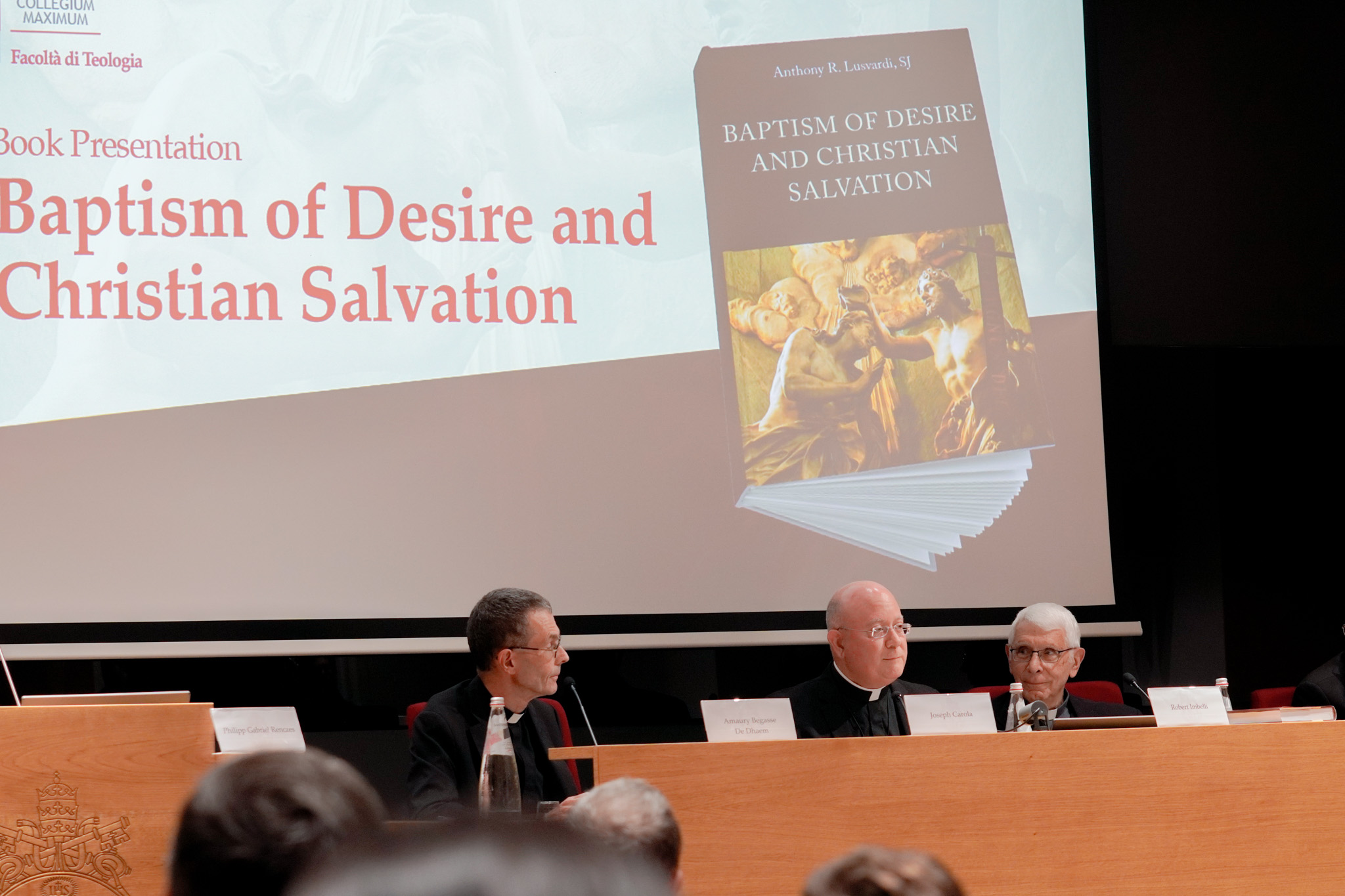
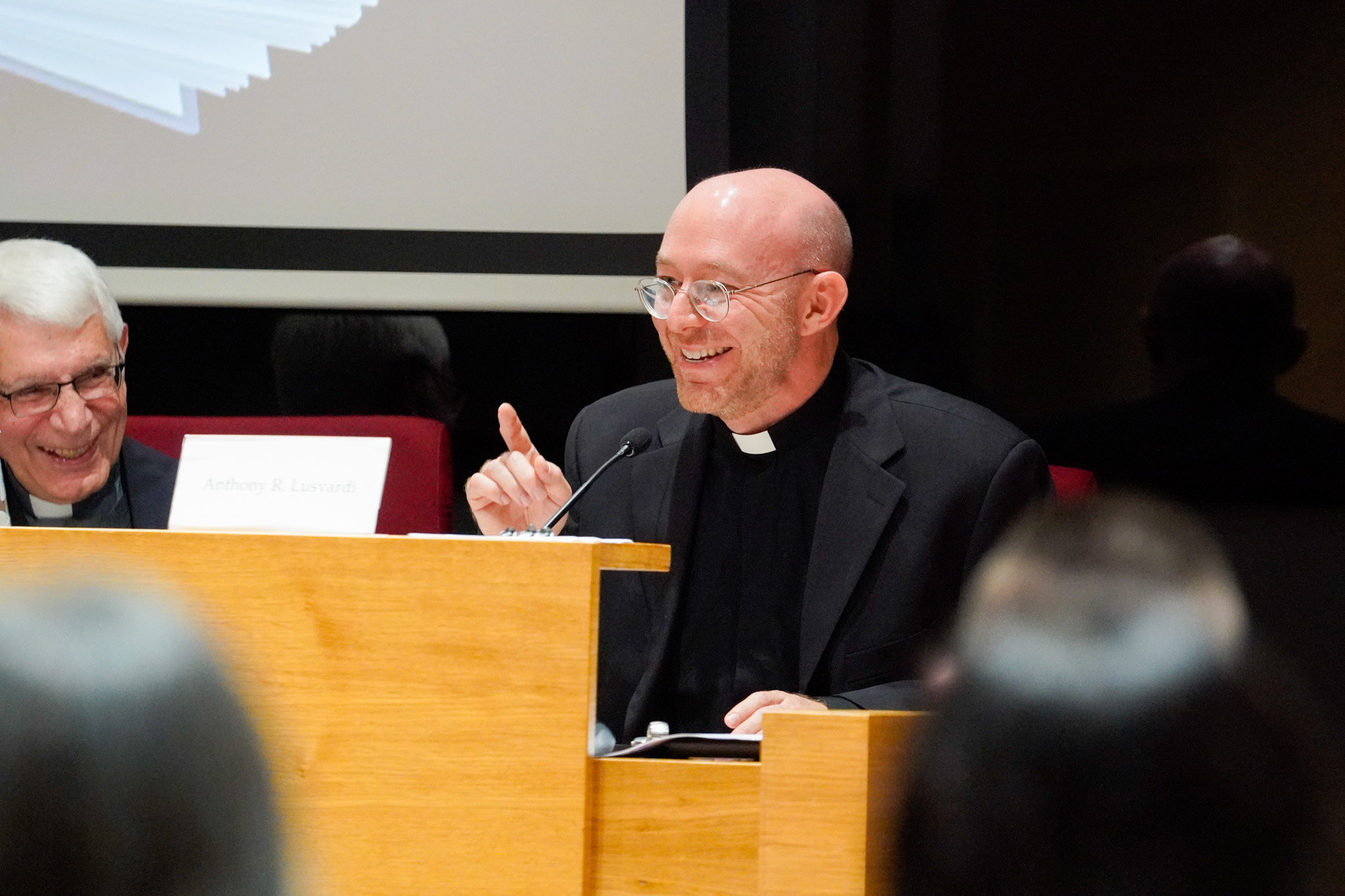
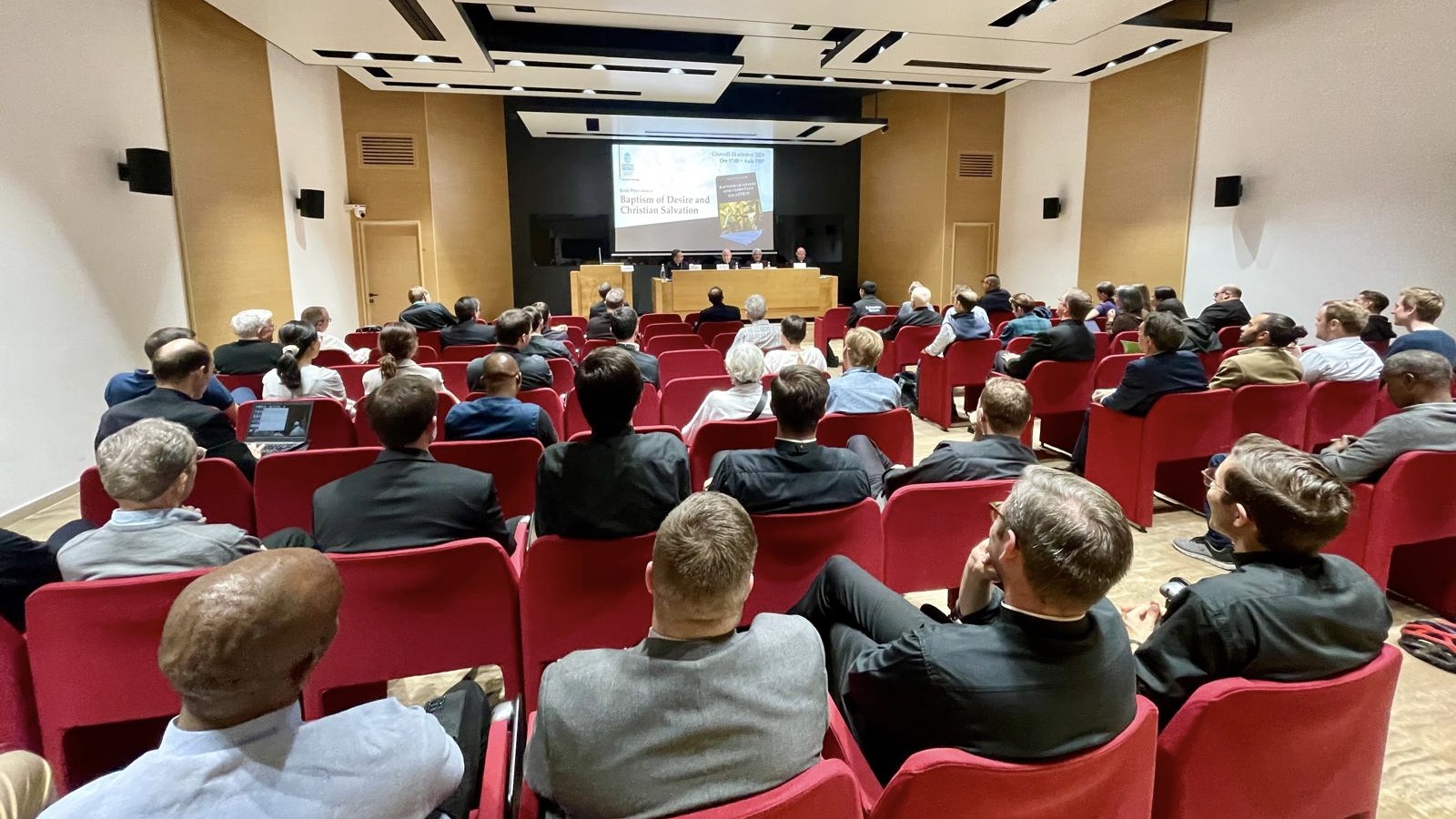
Baptism of Desire and Christian Salvation is now in orbit after an excellent turnout at the official book launch at the Gregorian last Thursday. More good news: the code CT10 still gives you a 20% discount if ordering the book directly from Catholic University of America Press. At the presentation of the book, Fr. Joseph Carola gave an overview of its content and shared some stories from personal experience to illustrate its pastoral relevance. Fr. Bob Imbelli drew on other contemporary thinkers, such as Khaled Anatolios, Charles Taylor, and William Cavanaugh to demonstrate its relevance. I hope to have video of the presentations up on the Baptism of Desire page soon.
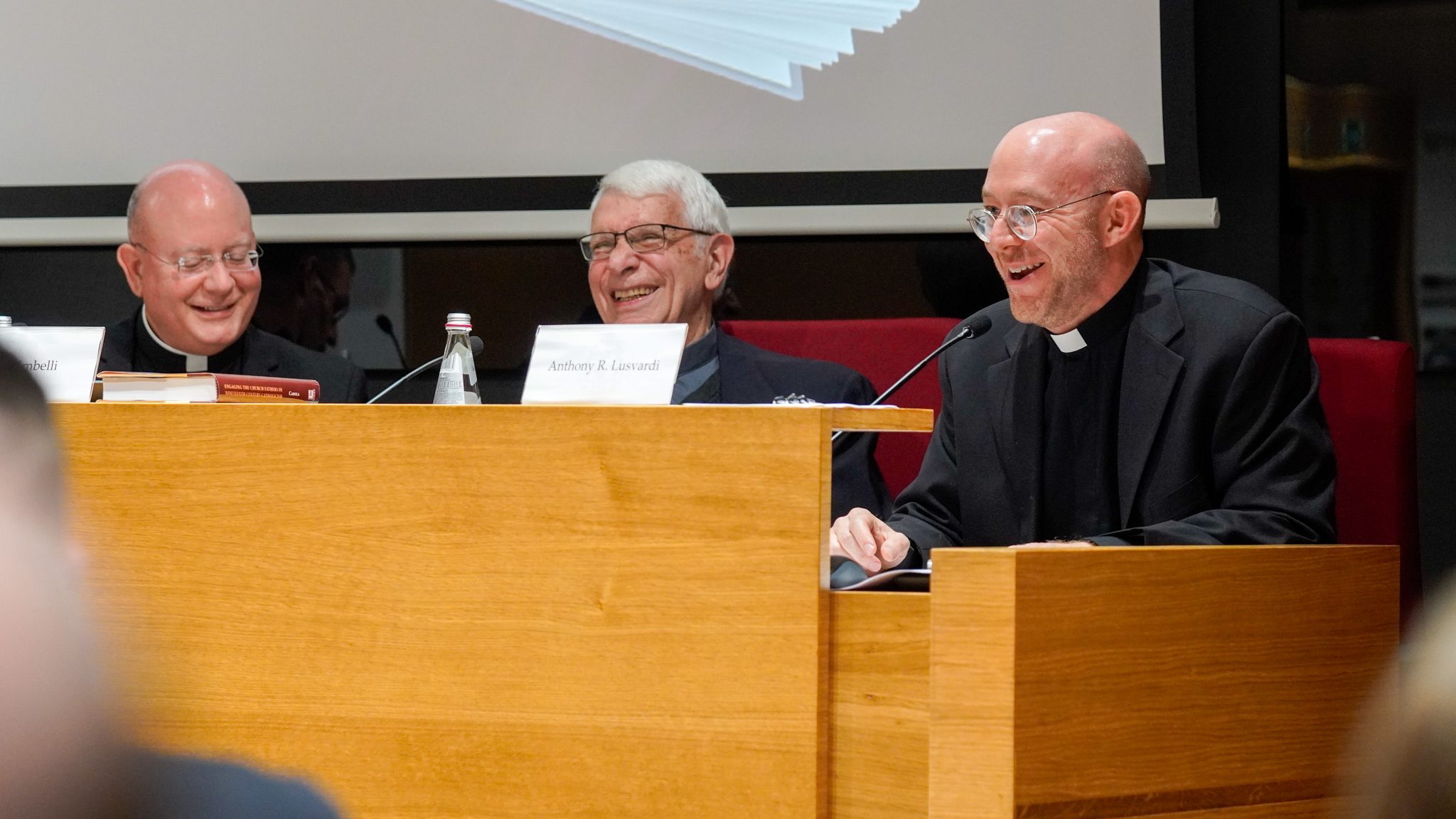
Fr. Joseph Carola, S.J., Fr. Robert Imbelli, Fr. Anthony Lusvardi, S.J.

Just a week before, I was also pleased to talk about the book with my old friend Sean Salai at Catholic World Report. Read the interview here: Defending the necessity of baptism: An interview with Fr. Anthony Lusvardi, S.J.

On another note, in this month’s First Things I return to an issue I raised a few years ago in an article in America magazine, the effects of technology on the liturgy. Here’s the new article: “Screens and Sacraments.” The original from 2020 is here.

And, finally, if you’re looking for some pre-election reading that isn’t about either Donald or Kamala, but instead about the way voting functions as a civic ritual, check out my latest at The Catholic Thing: “Rites (and Wrongs) of Democracy.

Finding hope in Jerusalem, Babylon, and Sweden: homily for the thirtieth Sunday on Ordinary Time

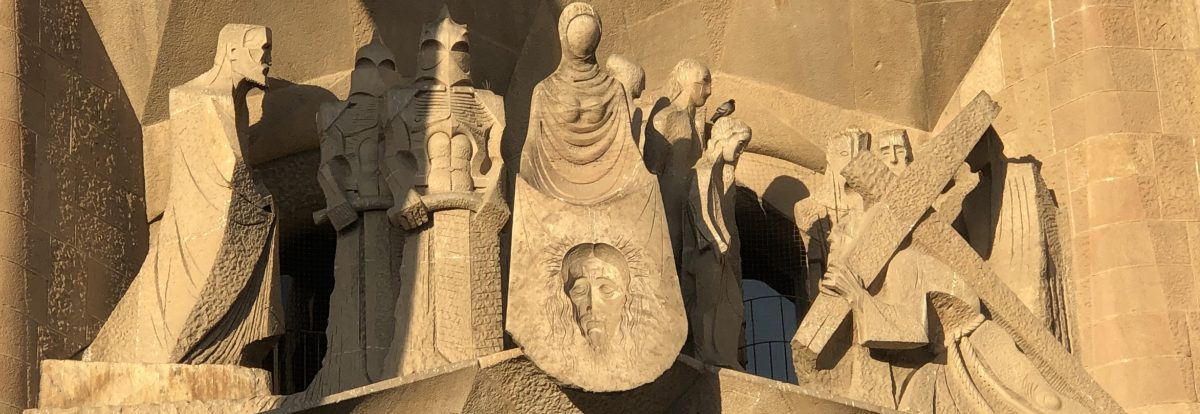
Uppsala domkyrko

Homily for the 30th Sunday in Ordinary Time (B)

Today I’m going to talk about Jerusalem, Babylon, and Sweden—all of them, in different ways, places of hope.

We are probably used to hearing messages of hope in church, so we could easily miss just how remarkable our first reading from the prophet Jeremiah really is.  This particular message of hope, if placed in context, is as startling as stumbling upon a lush citrus grove in the Arabian desert.  To appreciate the passage, it helps to remember a bit about the tragic and cantankerous life of Jeremiah.  This is the prophet, after all, whose name gives us the literary term “jeremiad” to describe a long speech bitterly denuncing something or someone.  In fact, the book of Jeremiah contains plenty of jeremiads.  The prophet denounces the elite of Jerusalem for straying from the law revealed to them by Moses, for their petty idolatry and corruption, for their self-satisfaction and complacency.  Their cowardly refusal to return to the faith of their ancestors has left the Kingdom of Judah weak and vulnerable to its enemies, Jeremiah warns, as had many prophets before him.  What sets Jeremiah apart from these other prophets of gloom is that he tells Jerusalem’s rulers that they have ignored God’s message for too long, and now it’s too late.  A superpower has risen in the East—Babylon—and nothing Judah’s rulers do now will stop it.  It is better, Jeremiah warns, to surrender.

Jeremiah’s message—“you’ve been leading us in the wrong direction for a generation, and you can’t escape the consequences of your actions”—did not win him popularity.  Judah’s rulers hired a more optimistic prophet, Hananiah, who delivered a message more to their liking.  But a few pages before today’s first reading, Hananiah drops dead, a none-too-subtle sign that the Lord does not approve his message.  As the Babylonians close in and a brutal siege begins, Jeremiah tells the people of Jerusalem, you will be defeated, your city destroyed, and then you will be dragged off into exile.

Continue reading “Finding hope in Jerusalem, Babylon, and Sweden: homily for the thirtieth Sunday on Ordinary Time”

Book launch, podcasts, and other news

I am pleased to see Baptism of Desire and Christian Salvation in the news. Ralph Martin mentioned the book in his recent video Are All Religions a Path to God? As Dr. Martin points out, the research and arguments the book offers are highly relevant to some of the most difficult theological questions the Church faces today. As I’ve said before, perhaps the most urgent question the book raises has to do with whether we should still understand salvation to be at the heart of the Church’s mission. (Spoiler alert: Yes.)

With Dr. George Ceremuga at St. Isaac Jogues this summer.

I was also delighted to have a thoroughly enjoyable conversation a few weeks ago with Dr. George Ceremuga, friend and parishioner at St. Isaac Jogues parish in South Dakota, for the inaugural episode of his new Lead With Love podcast. We talked about Baptism of Desire and Christian Salvation as well as Dr. George’s new book My 50 Day Pentecost in the Holy Land, in which he recounts some of the encounters and insights he had on an amazing journey through the Holy Land last year. UPDATE: the podcast is now out here. I’m collecting info and reviews about baptism of desire here.

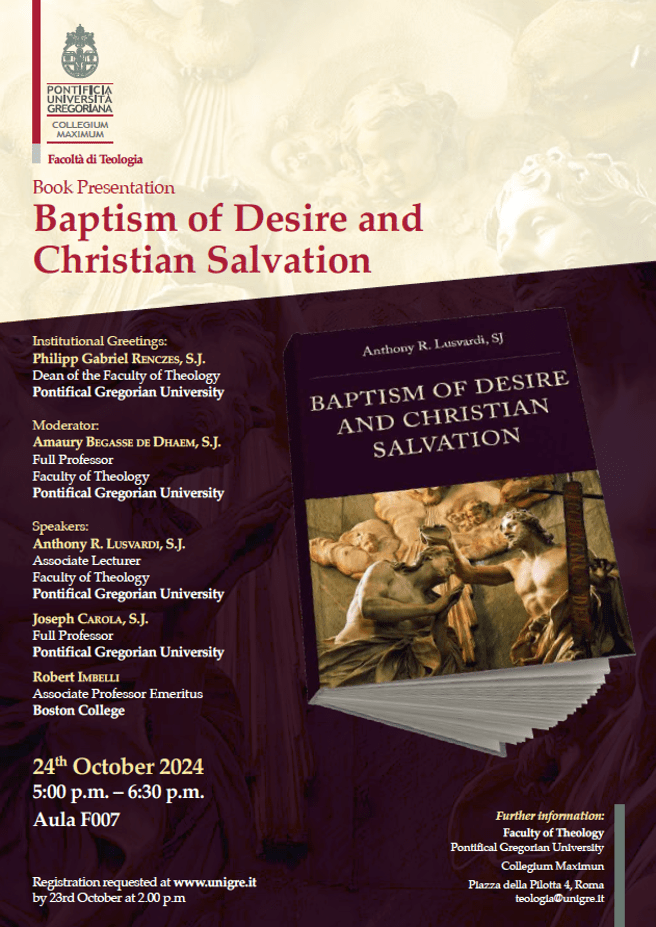
And finally, as you can see from the flyer at the top of this post, I’m pleased to announce that we will have a book launch for Baptism of Desire and Christian Salvation later this month at the Gregorian University. If you are in Rome, please come on Thursday October 24 to hear Fr. Robert Imbelli (coming all the way from New York!) and Fr. Joseph Carola discuss the book’s significance. The event will take place at 5:00 PM in room F007 of the Frascara Building at the Gregorian University. I’ll try to get the talks posted here, too, since it promises to be an interesting discussion.

And for something just a little bit different, you might want to check out the November issue of First Things. Just saying.

Homily for the Feast of St. Ignatius

The feast of St. Ignatius was back in July, of course, but I thought the reflections on discernment in my homily might be helpful in any season. Last year, I was asked for some thoughts on the process of communal discernment used by the Synod on Synodality. These reflections build on those observations.

Inigo the Pilgrim (2017), Church of St. Ignatius, Norwood, South Australia

You might have had the experience of the warning light on your dashboard coming on while you’re driving, signaling that you are low on gas, near the minimum.  Here in South Dakota especially–where outside of the city gas stations can be few and far between–you don’t want to fall below that minimum.  You might end up out in the cold or in this merciless heat—both dangerous circumstances—and in need of a good Samaritan to rescue you.

If you keep your tank filled, however, and don’t fall below the minimum, you can drive wherever you like.  You just plug the destination into the GPS and go.

The warning light and the GPS are both helpful, but they serve different functions—the warning light tells us not to drop below the minimum and the GPS gives us directions.  The readings for today’s feast of St. Ignatius, I think, point to a way of living the Christian faith that goes beyond the minimum.

If we think about the commandments, they are very useful for giving us the minimal rules of the road necessary to avoid an accident or a breakdown by the roadside. Because of this function, most of the commandments are written in a negative form—“Thou shall not…”  Even those that aren’t prohibitions—“Keep holy the Sabbath” and “Honor thy father and mother”—set a minimum of necessary behaviors.  Sunday Mass is the minimum necessary worship if we are to do justice to God, and fulfilling our family duties is the minimum necessary social obligation if we’re to maintain a functional social harmony.

But just doing the minimum isn’t enough to live a fulfilling life or to live a life of discipleship.  If I put on my to-do list for tomorrow, “Don’t kill anyone, don’t commit adultery, don’t steal,” I’ll end up rather bored.  The minimum tells us what to avoid, but not much of what to do.

Continue reading “Homily for the Feast of St. Ignatius”