Buildings that speak to us: Homily for the dedication of the Lateran Basilica

Homily for the Feast of the Dedication of the Lateran Basilica (2023).

From the cloister of St. John Lateran, Rome

The feast we celebrate today is particularly special for us in Rome. We celebrate the dedication of our cathedral. It is a magnificent building, and probably all of us have been there to appreciate the beauty of this splendid and ancient church.

The anniversaries of church dedications are important in the Church calendar because churches are the places where we gather to celebrate the Christian liturgy, the holy mysteries of salvation. Here in Rome, however, we live in an unusual situation because there are many beautiful and ancient churches–but when we enter them, often we find few of the faithful.

We should not be discouraged; instead we should remember the faithful who still speak to us through these monuments of their faith. The churches they built and left us are not mere buildings; they are their testimony. There is a message in these buildings that the saints of past times wanted to convey to us.

But more than a message, there is still a presence. When we celebrate the liturgy, we are not alone; we enter into the presence of the saints. They are with us. On November 1, we entered the season in which we remember the saints. Churches–from St. John Lateran to this little chapel–are more than museums where we learn from the past; they are places where we encounter the saints, where eternity becomes the present.

(Original: Italian)

Readings: Ez 47:1-2, 8-9, 12; 1 Cor 3:9c-11, 16-17; John 2:13-22

Gregorian University Chapel

November 9, 2023

From the cloister of St. John Lateran, Rome

Pope Leo: an ever-ancient, ever-new beginning for the Church

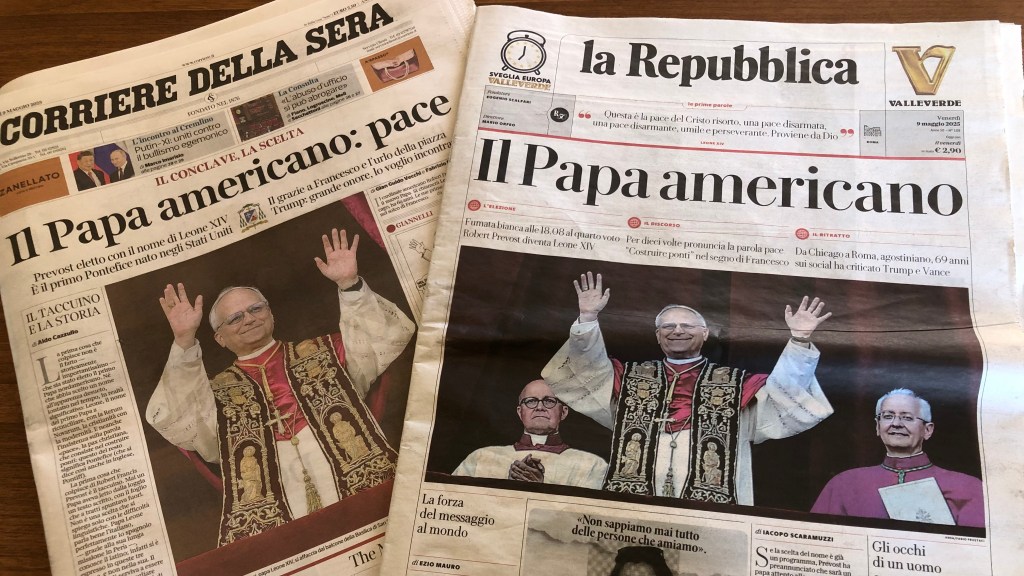
Just over a week ago I stood among the throng in St. Peter’s Square waiting for Pope Leo XIV’s Mass of installation. As the new pope emerged on the back of a white truck and made the rounds through the square, one of the priests who was with me to concelebrate whispered, “It still feels surreal.”

It still does.

The one iron-clad rule of papal elections, after all, used to be that the cardinals would never elect an American pope. And now we have a pope who grew up cheering for the Chicago White Sox. Going into the conclave, the Church seemed tired and divided. Yet Pope Leo has managed to evoke good will on all sides, and he hasn’t had to resort to any particular gimmicks to do so. Rome is elated.

What is perhaps most striking about our new Holy Father is the paradoxical way in which he seems both totally at ease in his new role–as if he’d been pope-ing for years already–and at the same time totally unassuming. One could imagine sitting next to him at a baseball game and him introducing himself as “Bob from Chicago.” At the same time, seeing him on the balcony of St. Peter’s Basilica or meeting world leaders in the robes of his office, one senses the quiet dignity of a successor of the Apostles.

A lot has already been written about Pope Leo on the basis of relatively scant pre-conclave writings and interviews. I was particularly impressed by the first homily he gave to the cardinals after his election. His brief address to the Synod of Bishops on evangelization more than a decade ago equally impressed me because he seemed to grasp one of the central problems facing the Church: the role of the media in communicating–and sometimes miscommunicating–our message. I remember an interview given by the late Cardinal Avery Dulles to Charlie Rose, in which the cardinal observed that the biggest problem faced by the Church was that most Catholics learn what they know about Catholicism not from the Church herself, but from the media. Leo XIV understands that dynamic–and he is alert to the equally challenging frontiers now being opened by artificial intelligence.

Continue reading “Pope Leo: an ever-ancient, ever-new beginning for the Church”

Guercino, Rome, and the Jesuit baroque

Guercino, Moses

One is always discovering new artists in Rome, and earlier this year, thanks to a special exhibit at the Scuderie del Quirinale and the recommendation of a friend, I discovered Guercino (1591-1666). Born Giovanni Francesco Barbieri in Cento (Emilia-Romagna), he worked in Rome when baroque art was at its zenith.

Guercino, Gregory XV, ca. 1621

The exhibit was of particular interest to me because Guercino’s time in Rome corresponded to the period when the Jesuits were also at their zenith. The pope who proved to be Guercino’s great patron, Gregory XV (Alessandro Ludovisi), also favored the Society of Jesus, especially in its mission of spreading Catholicism around the globe.

The Jesuits have often been associated with the baroque because it was the artistic style in vogue around the time of our founding, so our great Roman churches, the Gesù and Sant’Ignazio — and all the other Jesuit churches around the world built to imitate them — are classic examples of baroque architecture.

Guercino, St. Peter Raising Tabitha, 1618
Continue reading “Guercino, Rome, and the Jesuit baroque”

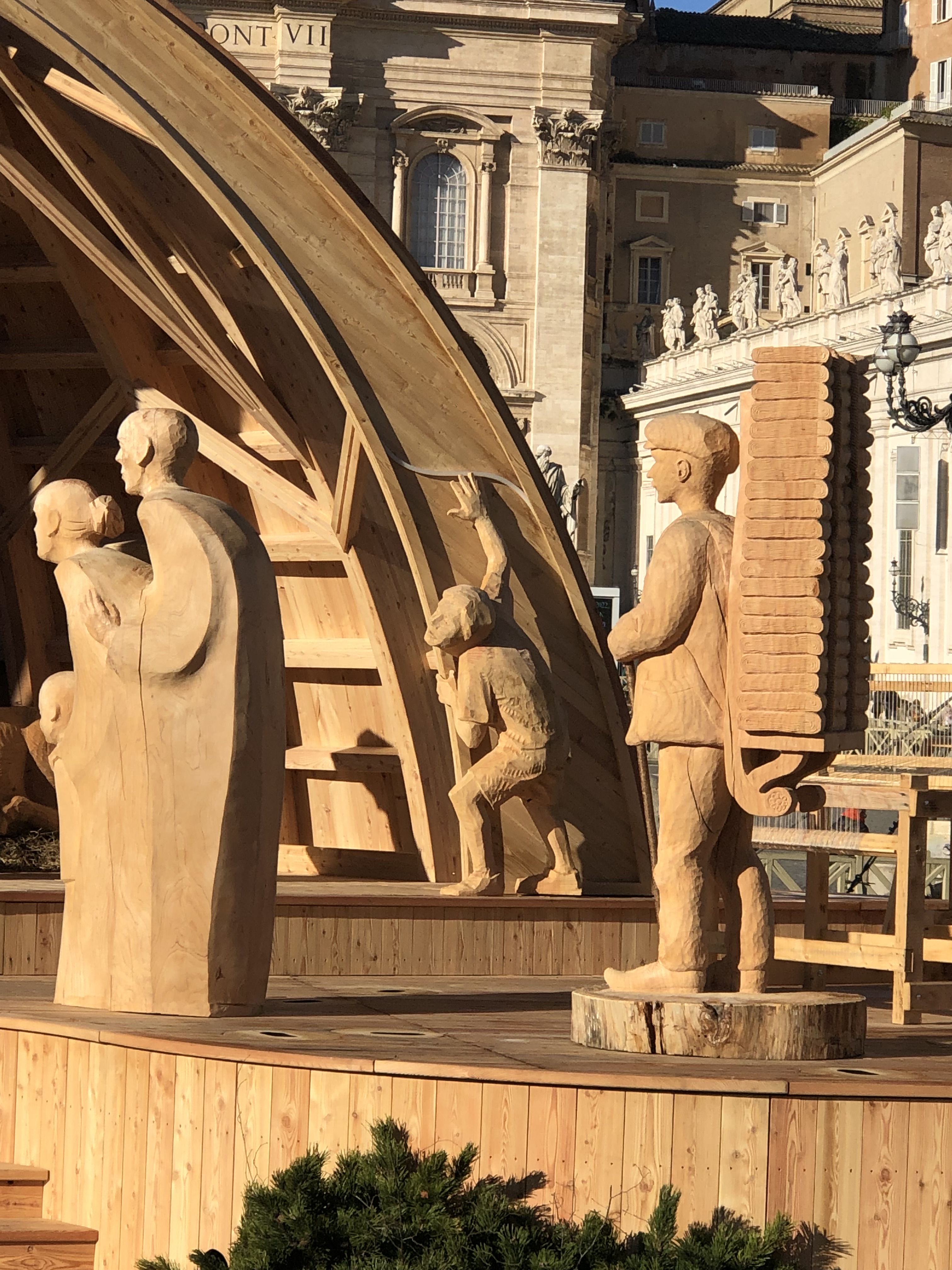
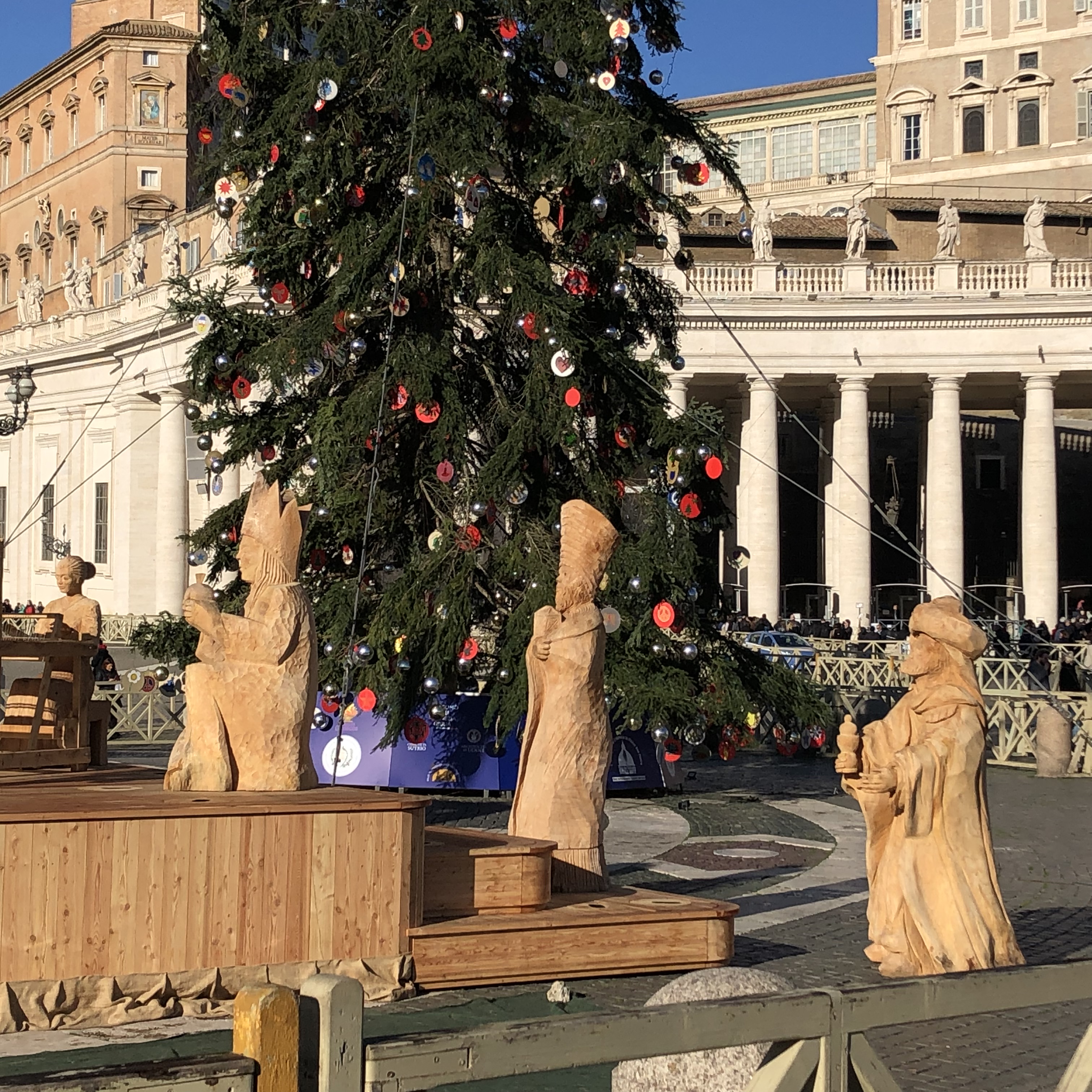
The Vatican Nativity scene, 2023

Nativity scene, St. Peter’s Square, 2023

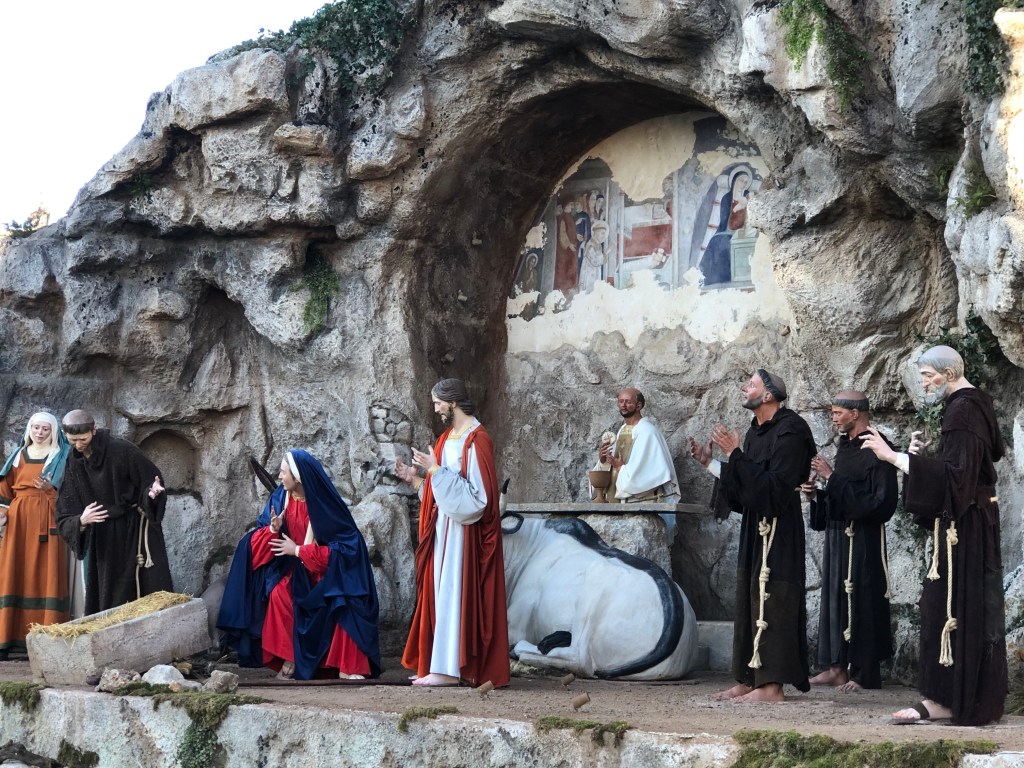
Over the past few weeks, I’ve noted (here and here) that 2023 marks the 800th anniversary of the first Nativity scene set up by St. Francis in the little town of Greccio. The Vatican’s Nativity scene this year also reflects that anniversary. 

This year’s scene doesn’t aim for historical accuracy–thus, St. Francis alongside Mary and Joseph and the three friars replacing the three kings. (Oh, and there’s a priest celebrating Mass in the background too.) The fresco on the wall behind them is a replica of the one in the cave in Greccio.

The figures, perhaps, aren’t exquisitely beautiful. (And, come to think of it, the priest in the background seems a tad confused about what he’s supposed to be doing–too much realism?) But at least this year’s Nativity scene isn’t aggressively weird (like the aliens from 2020) or trying too hard to be modern (like… well, there are too many examples).

You’ll notice that the manger itself is empty. As per the tradition, the Baby Jesus doesn’t arrive until Christmas itself. This year he won’t find a perfect Nativity scene, a perfect Church, or a perfect world, but he’ll come nonetheless and we need him all the more because of it.

Nativity scene, St. Peter’s Square, 2023

Rome for the holidays

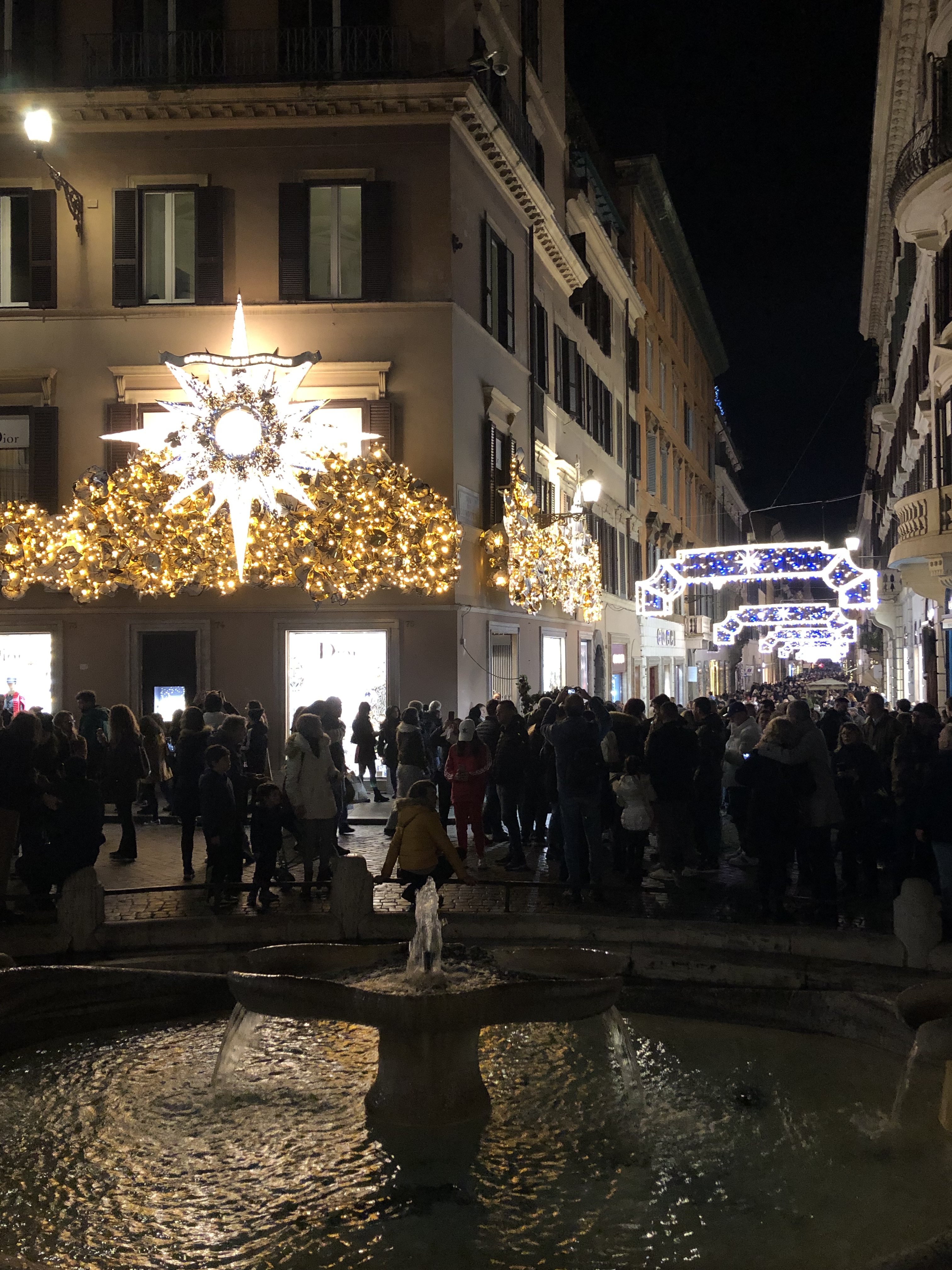
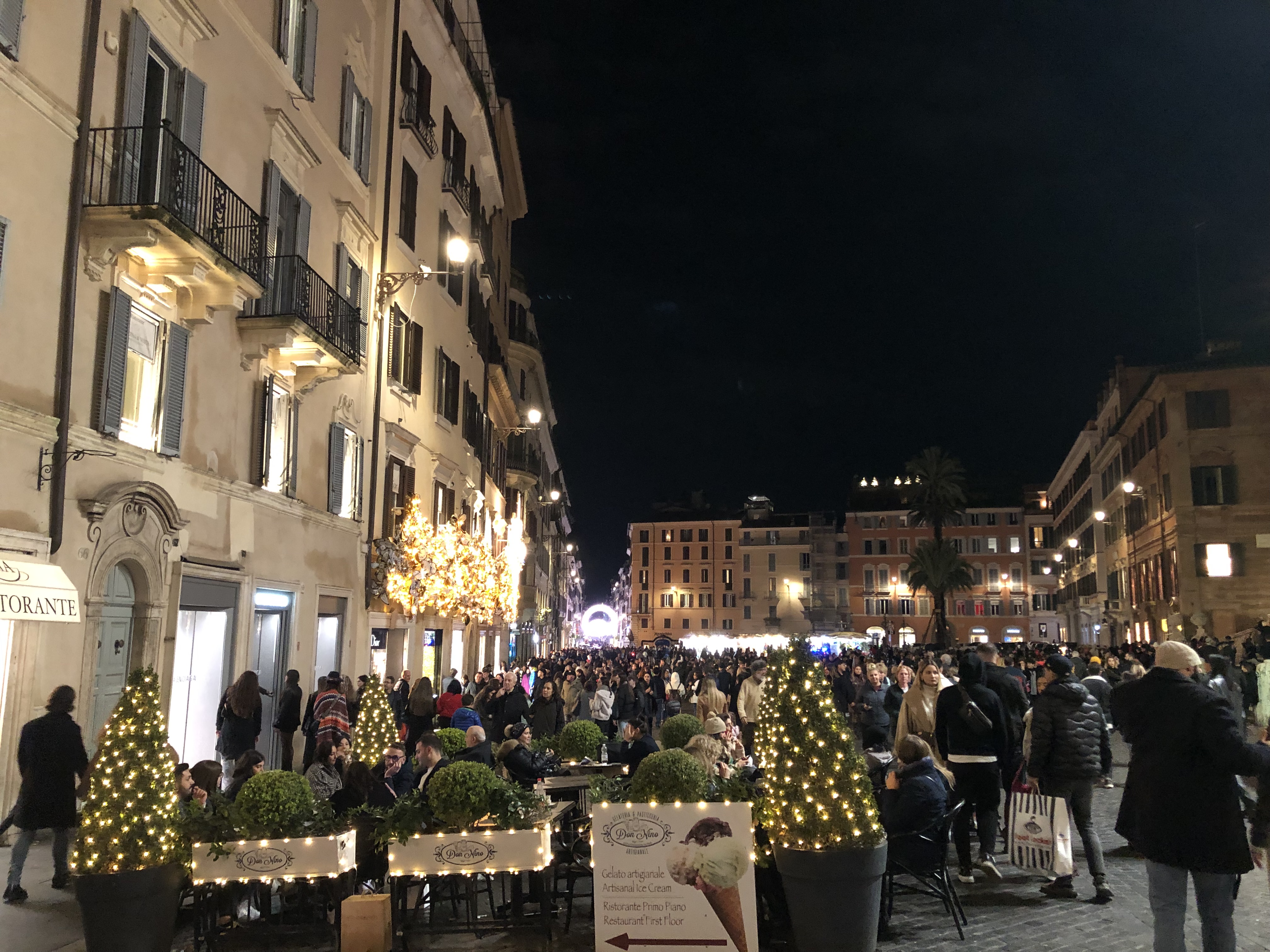
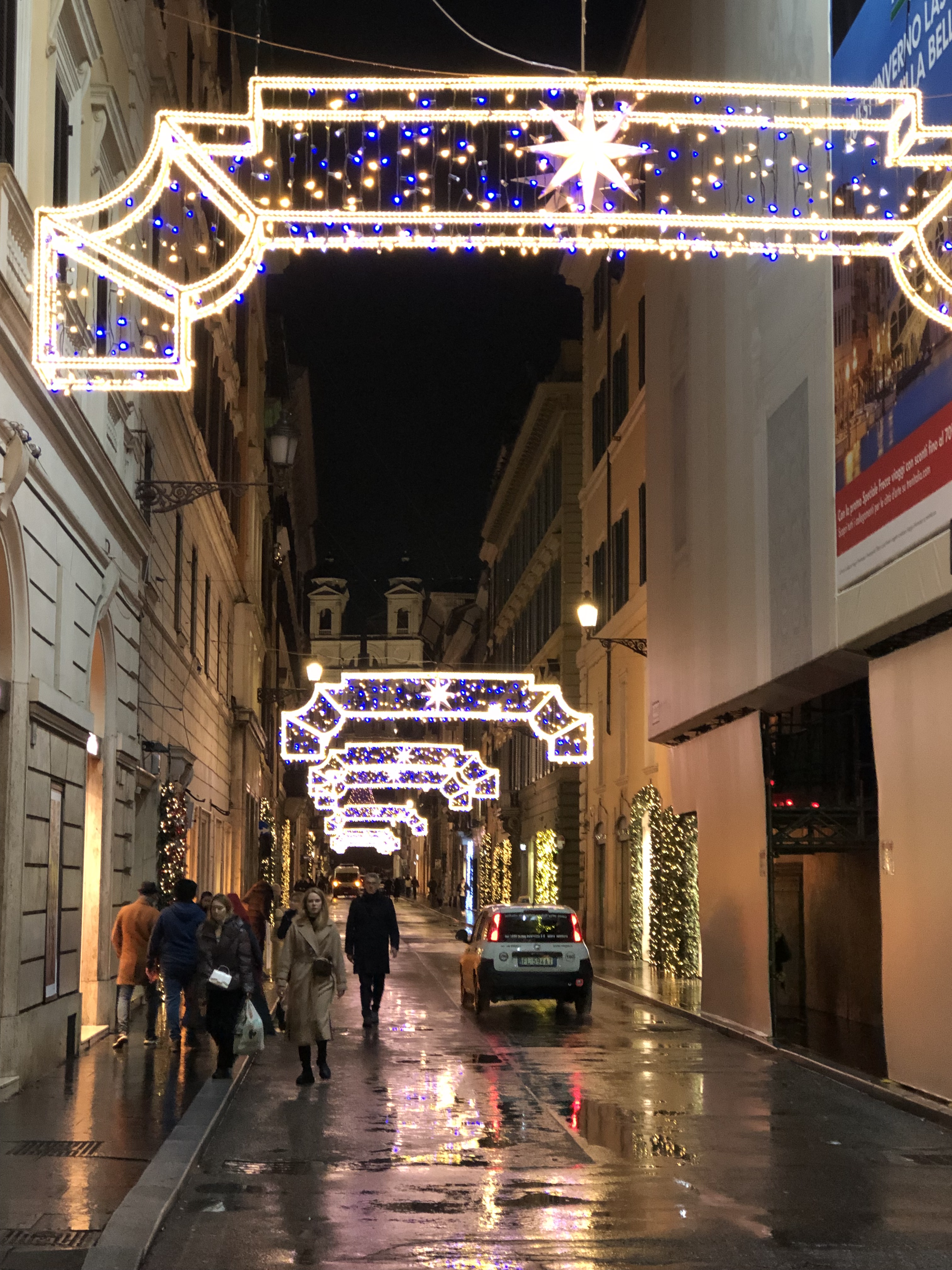
Advent is one of my favorite times of the year to be in Rome. What they call winter here is nothing to a Minnesotan, and the shortening days are counterbalanced by the city’s delightful display of Christmas lights. These generally don’t start appearing until after the Immaculate Conception (December 8) and they don’t come down until after the Epiphany (January 6).

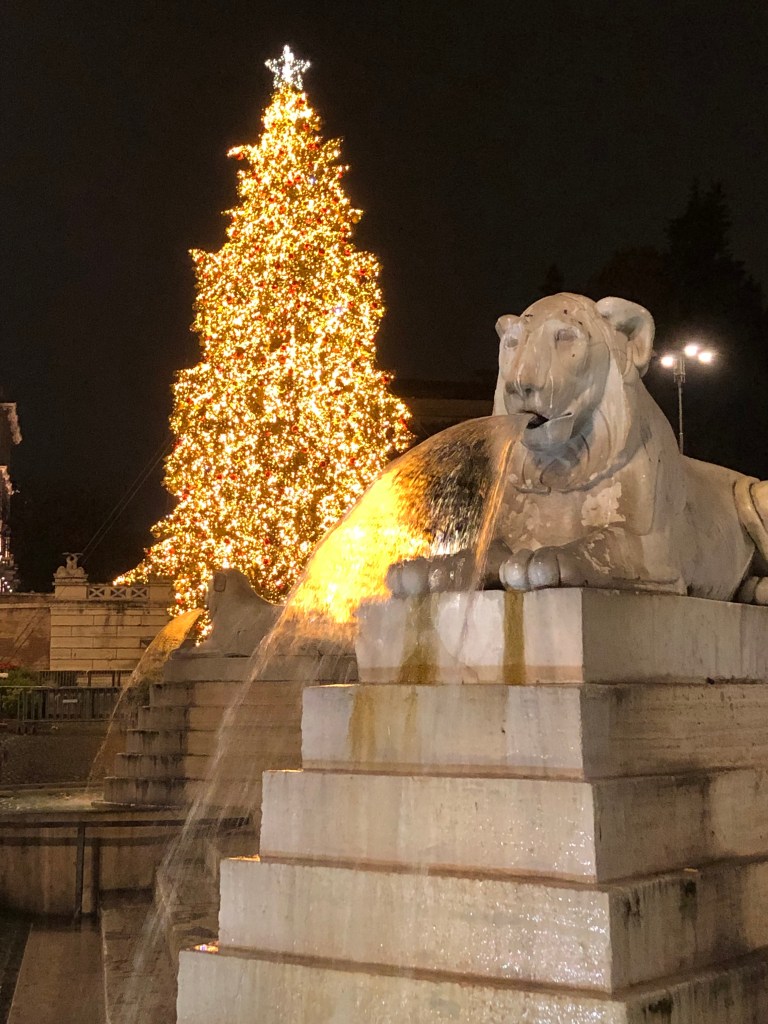
Rome’s Christmas tree, Piazza del Popolo

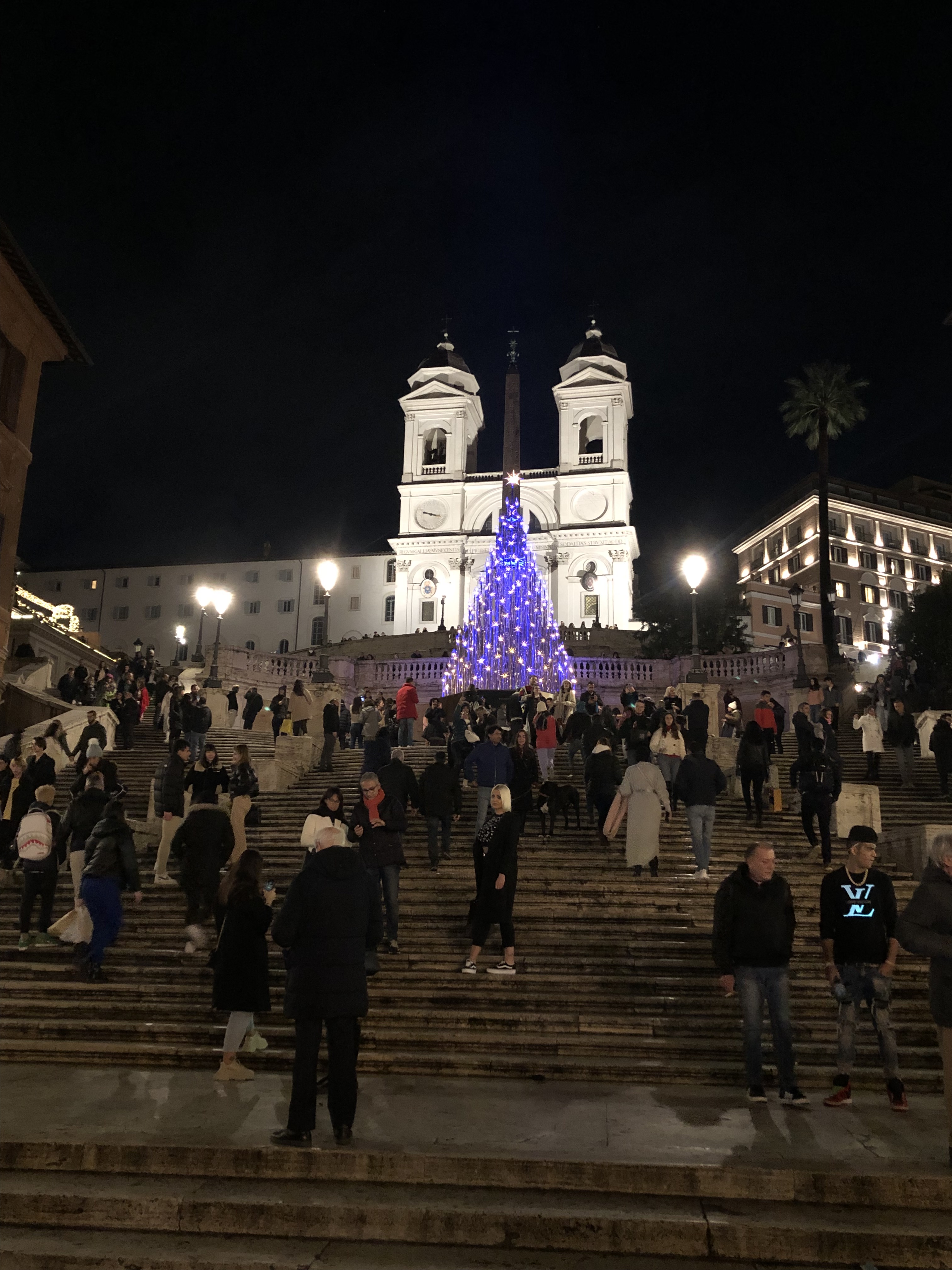
The city’s official Christmas tree, like the Vatican Nativity scene, is often the subject of local critique and Roman wit. This year, the tree got a new location due to construction work on Rome’s mythical new subway line–scheduled to open a few years after the Second Coming of Christ. The tree’s usual home, Piazza Venezia, is now a construction site, but its new location in Piazza del Popolo is a calmer setting away from the traffic. The official tree also has some competition from a glitzy counterpart at the Spanish Steps, given to the city by the fashion designer Dior.

Dior Christmas tree, Spanish Steps

I’d also be remiss not to mention what a delightful time of year Advent is to be at the Gregorian University, where the university’s international richness is on full display. Student groups from different countries take turns singing in the atrium between classes. It gives them an excuse to duck out of class early (ahem), but you’d have to be Ebenezer Scrooge not to appreciate the festive atmosphere. The Mexican college usually wins the prize for the best show not only because of their charm and energy but because you just can’t top a piñata. It’s a time to be grateful for our young priests, seminarians, religious, and lay students who are such a source of hope for me and for the Church.

Christmas at the Gregorian

Merry Christmas

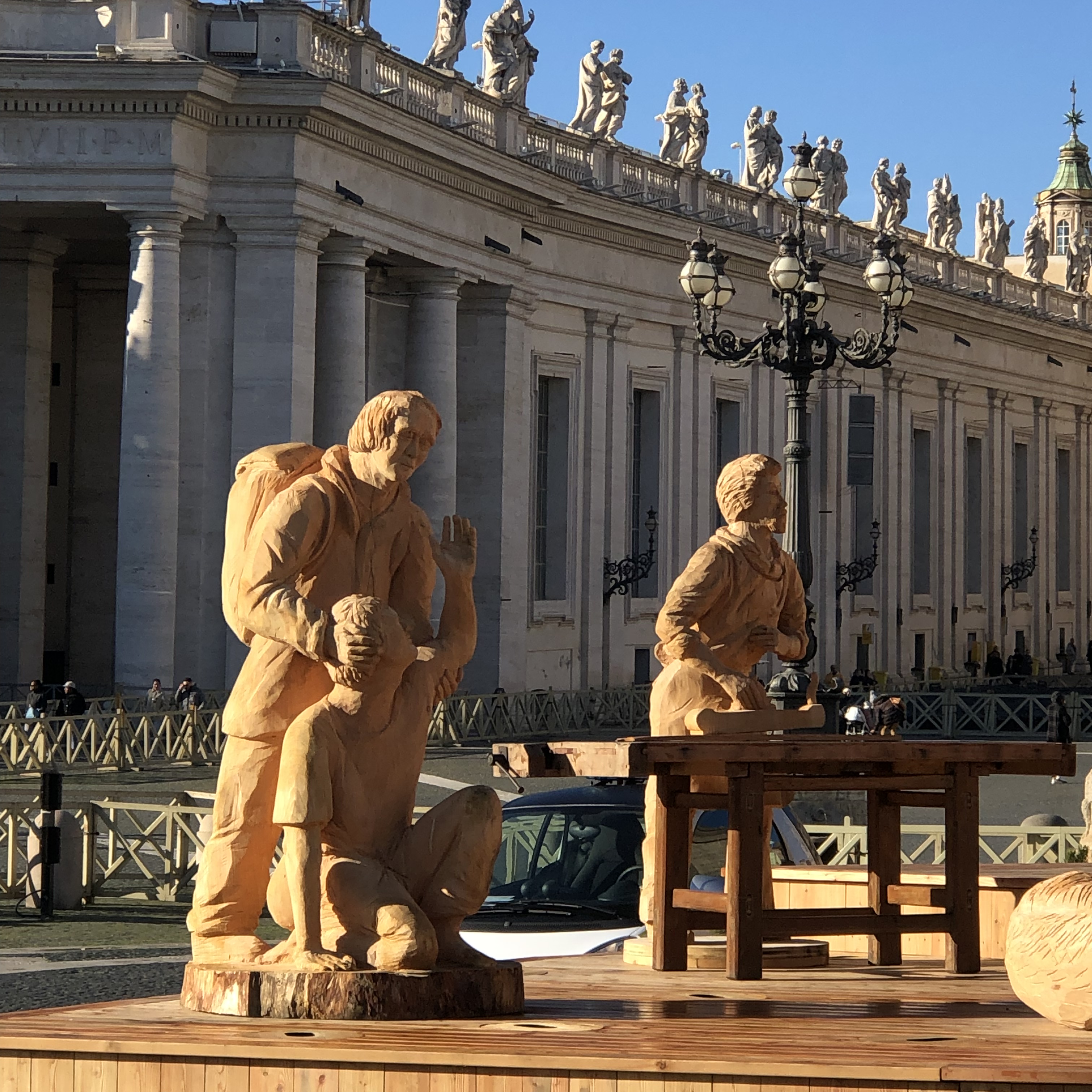
Since St. Francis of Assisi introduced the idea 800 years ago, Italy has been the land of Nativity scenes. And there is no more prominent location for a Nativity scene in the world than St. Peter’s Square. The scene is different every year and–along with the Christmas tree in Piazza Venezia–is usually subject to intense comment and critique from Romans and visitors alike. There’ve been a few doozies in my years here, but this year’s scene from Friuli Venezia Giulia does not seem to have aroused great protests.

Here’s a peak at the scene, still waiting for the child who makes all things complete.

Christmas blessings to one and all!

“In the fullness of time, chosen in the unfathomable depths of God’s wisdom, the Son of God took for himself our common humanity in order to reconcile it with its creator.” (Pope St. Leo the Great)

Advent lights

One of the reasons I find the season of Advent so compelling is its central symbol of light growing in the darkness, as simple as it is powerful. The fifth of the O antiphons always strikes me as particularly poignant:

O Radiant Dawn, splendor of eternal light, sun of justice: come shine on those who dwell in darkness and the shadow of death.

Mid-December also coincides with a slight lull in the crush of tourists here; between the Immaculate Conception and Christmas the streets are a tad calmer and one can get out and enjoy the decorations. In the northern hemisphere it is one of the darkest times of the year, but that only makes the lights all the more delightful.

Here are a few shots of Rome’s lights…

St. Jägermeister?

Sant’Eustachio, Rome

With more than 900 churches, as I’ve noted before, if you’re looking for church-related curiosities, there’s no place like Rome. A friend recently pointed out an oddity that seemed to take the cake. Atop a church between the Pantheon and Piazza Navona is what seems to be a stag with a cross between its antlers, which looks suspiciously like it was taken straight from… a Jägermeister bottle.

Continue reading “St. Jägermeister?”

Bernini’s beads

Can you spot the rosary?

When I reached the end of the station pilgrimage the last time around, I was struck by the details.

For the sacramental theologian such as myself, there’s a deep lesson in the details of the journey. The Son of God’s Incarnation meant entering fully into the reality of human life, with all its diverse moments of suffering and disappointment, of hope and joy, of sometimes just getting by. The Passion narrative is the most vividly detailed part of the Gospels, and the Resurrection stories too, though reflecting the discombobulation of that utterly unprecedented event, also retain the sort of vivid details that stick out in one’s mind even when the world has just gone outside-in. Mary thinks Jesus is the gardener. Jesus eats a bit of fish. The sacraments depend on the details of the Lord’s life, too, on what he ate at his last meal.

Continue reading “Bernini’s beads”

Rome’s Cosmatesque floors

Italy is such living sculpture that one could easily fill a coffee table book with pictures of otherwise mundane objects that, here, have have taken on artistic flare. You could fill a profitable day just searching out interesting door knockers or doorways, drinking fountains or the weeds that sprout from rooftop tiles. We owe much of this picturesqueness to the medieval spirit that allowed craftsmanship and creativity to flourish on a human scale–and which has become less common in our age of planned obsolescence and Made in China.

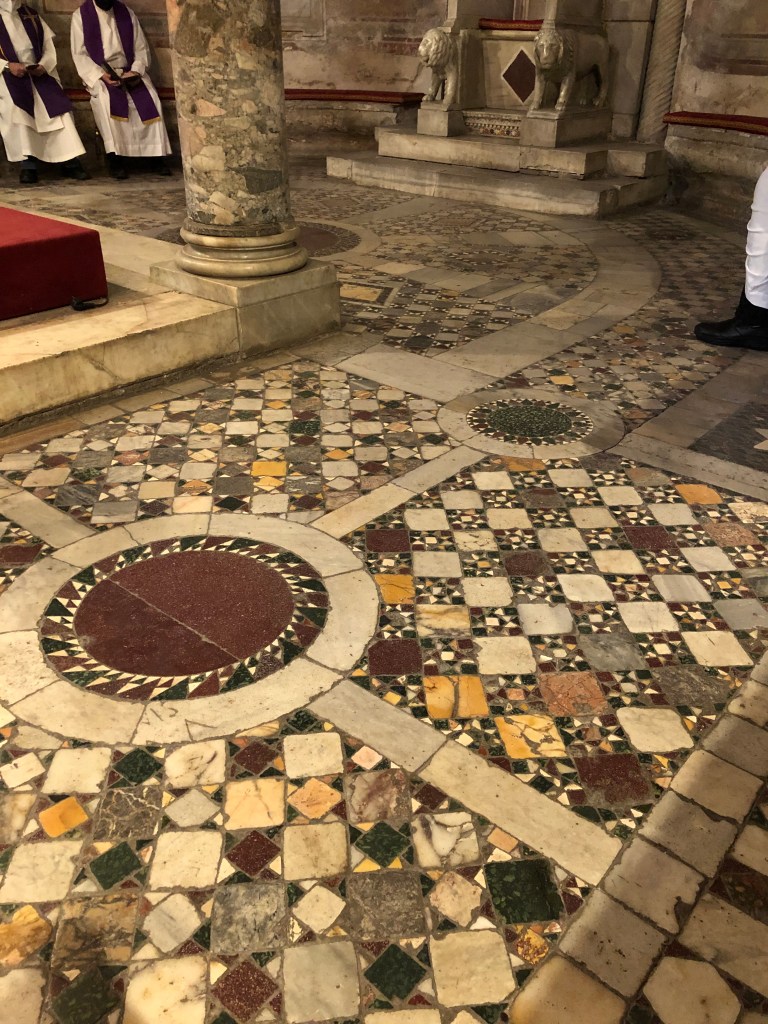
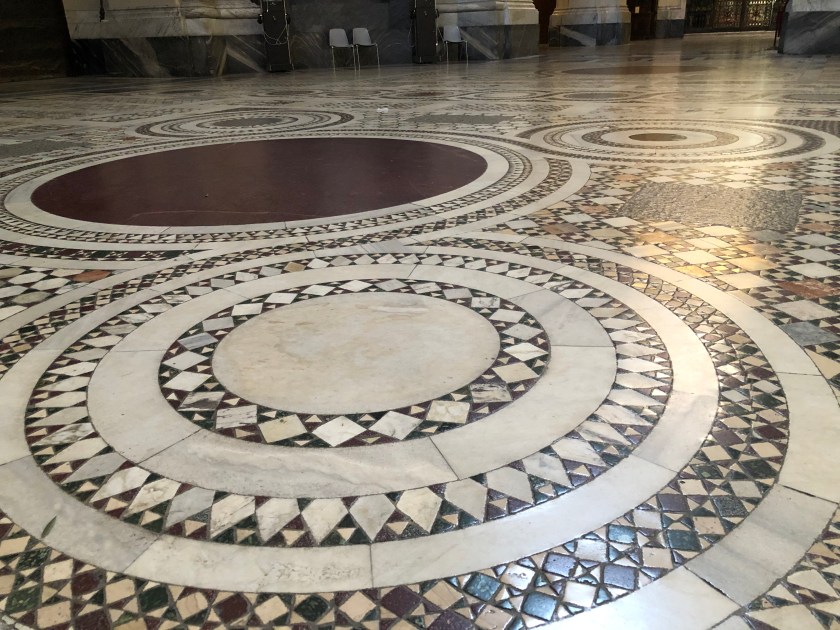
Making the station church pilgrimage this year, I’ve been looking at the ground. I wrote before of the marvelous Cosmatesque floors in so many of Rome’s churches. This style is named after the Cosmati family, the medieval craftsmen who made use of Rome’s overflow of broken marble to turn what would otherwise have been refuse into charming and sometimes Escher-esque designs. It’s especially appropriate that the Cosmati’s work paves Christian churches, where sins are absolved and, picking up the fragments left by our mistakes, we are reminded that, with the help of grace, we can still manage something beautiful.

So here’s a slideshow of a handful of Rome’s graceful floors…