The Immaculate Conception: God’s own Advent preparation

Homily for the Immaculate Conception (2019. Note, that year, the Solemnity fell on a Sunday.)

On the first Sunday of Advent, I cleaned my room. I must admit, it needed it—there were coffee stains on the desk; the trash can was overflowing; I found forgotten lists of things not to forget. But Advent is the beginning of a new liturgical year, the season when we prepare for Christmas, and it seemed right to start with a clean room. In the coming weeks, there will be many other things to prepare: food, gifts, decorations, travel.

Column of the Immaculate Conception, Rome

This is the second Sunday of Advent, and normally the readings highlight the figure of St. John the Baptist, who speaks of another kind of preparation, another kind of cleaning—in fact, a much deeper cleaning than coffee stains. John the Baptist warns of the need for inner cleansing, moral and spiritual conversion. And this too is part of the preparation for Christmas. As a confessor, I have to do a little advertising for my profession, strangely absent from all the Black Friday advertising we received last month. But I must say that our special offer—the forgiveness of sins, eternal life—is truly the best deal in the world.

However, this year is a bit special, because this second Sunday of Advent is December 8, the Solemnity of the Immaculate Conception of Mary, the Mother of Jesus. This coincidence of dates is interesting because the Immaculate Conception is also a feast of preparation. But not the preparation we do during this season. The preparation that God has done for us.

Continue reading “The Immaculate Conception: God’s own Advent preparation”

Capernaum’s centurion: a man of faith and hope

Homily for Monday of the first week of Advent (2019).

The figure we encounter today in the Gospel, the centurion of Capernaum, helps us to prepare. We use his adapted words to prepare for communion: “Lord, I am not worthy that you should enter under my roof, but only say the word and my soul shall be healed.” And today, at the beginning of Advent, the season when we prepare for the coming of the Lord, the centurion appears in the readings.

A season of preparation is a season of faith and hope—and I think the centurion of Capernaum appears today because he is a figure of faith and hope.

Both of these virtues exist in imperfect situations. We need hope because of something we lack in the present; we need faith because there is something doubtful about the situation in which we find ourselves.

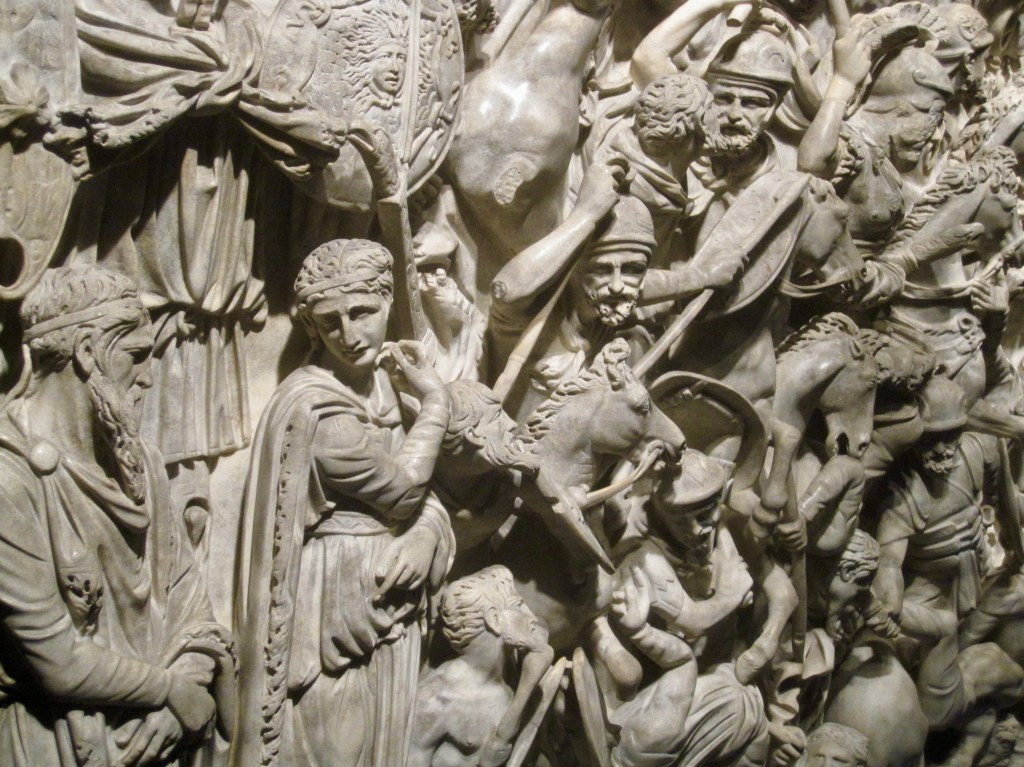
Roman Sarcophagus, Palazzo Massimo, Rome

The centurion comes to Jesus asking for help. And his words—“I am not worthy that you should enter under my roof”—are poignant because in them we hear the unvarnished truth. We can easily imagine that the centurion, an officer in the imperial army, has seen terrible things and perhaps–even if only out of duty–has had to do terrible things as well. His sense of unworthiness, however, does not prevent him from turning to the Lord.

Continue reading “Capernaum’s centurion: a man of faith and hope”

Apocalypse when? Homily for the 33rd Sunday in Ordinary Time

Homily for the 33rd Sunday in Ordinary Time (C). November 2019.

Reflecting on this Sunday’s readings, I turned to that great source of theological wisdom, Amazon Video. In November, at the end of the liturgical year, the liturgy speaks of the Apocalypse. Well, I discovered that there are also many films on this theme. I found earthquakes, hurricanes, volcanoes–even alien invasions. And lots and lots of zombies.

The name of one film–at a discounted price–was “Apocalypse 2012.” This film provoked the question: has the Apocalypse already happened? Was I distracted and didn’t notice? As I thought about it, I remember hearing in 1999, “The end is near. At midnight, our computers will no longer work, there will be a total collapse of civilization. Buy canned food.”

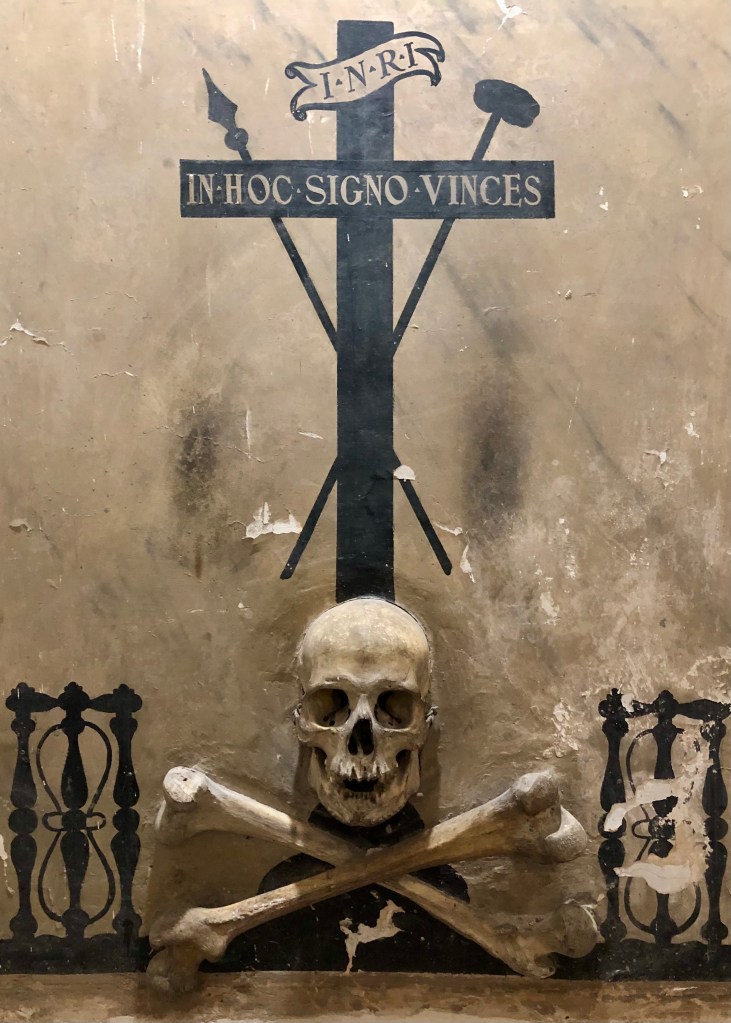
From the Church of Santa Maria dell’Orazione e Morte, Rome

Then in 2012, I did an interview for an American Catholic radio program, and they asked me about the Mayan calendar. It was about to end on December 21, 2012, they said, and asked, “Is it true that the world will end? Should we buy canned food?”

Even today, when we talk about the environment—an important issue—there is often an apocalyptic element. And this element, in my opinion, probably does not help us deal with this complex problem in a sober manner.

Perhaps you are now thinking, “But, Father, are you saying that there will be no Apocalypse?” Absolutely not. The Apocalypse is a recurring theme in Jesus’ preaching, and since time of the apostles, the Church has never ceased to proclaim the urgency of being prepared for this event. There have been many false prophets who have proclaimed “the time is near,” but that does not mean we should not be prepared. Even if the Mayan astrologers were wrong about the date, our life is short.

However, with these recent examples of false prophecies, I would like to point out that in today’s culture, the idea of the Apocalypse continues to exist but has become secularized. Earthquakes, hurricanes, aliens, computers, astrologers, pollution, zombies—in all this apocalyptic talk, the one thing missing is the most important thing: Jesus Christ.

Continue reading “Apocalypse when? Homily for the 33rd Sunday in Ordinary Time”

Why pray? Homily for the 29th Sunday in Ordinary Time

Homily for the 29th Sunday in Ordinary Time (C). Translation of a homily, originally given in Italian in October 2019.

Why pray? Because the other team’s fans are praying, and we don’t want to give them any advantage? Because God seems a little indecisive, and maybe he needs our good advice? Because to get what we want, it helps to have powerful friends?

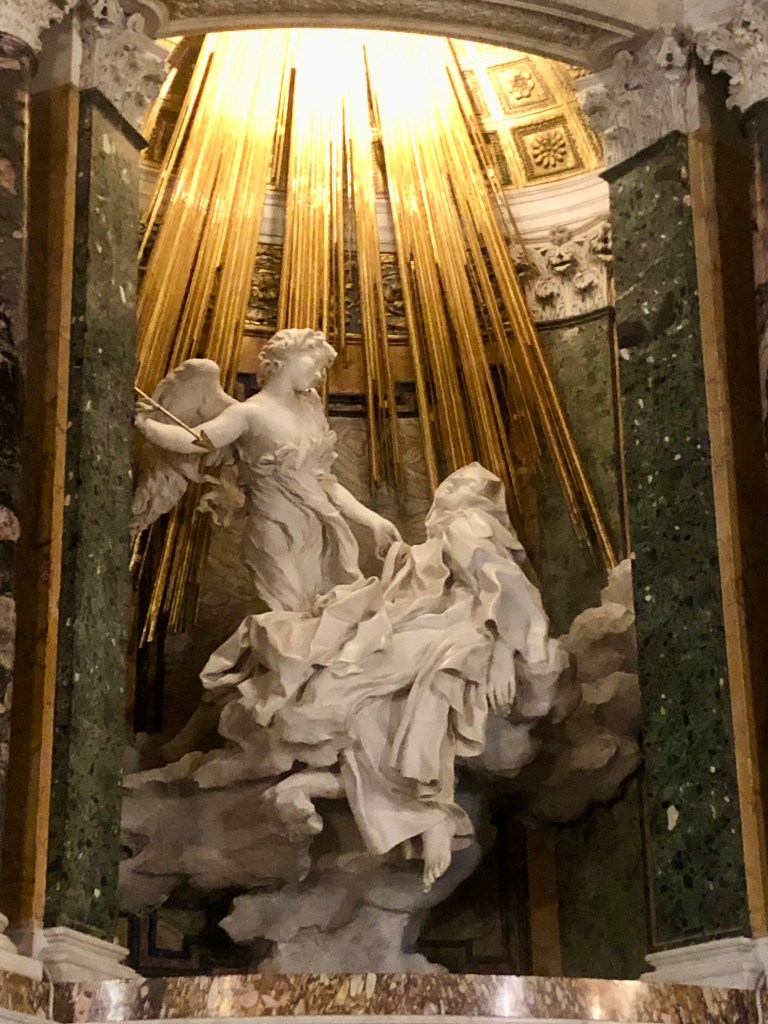
Ecstasy of St. Teresa, Gian Lorenzo Bernini, 1652

Unless we walked into church this morning by mistake, each of us believes that prayer is important in some way. In fact, we may feel that it is necessary. Maybe we can’t explain it, but we need prayer. Maybe we’ve learned from experience, maybe from hard experience, how necessary prayer is.

Continue reading “Why pray? Homily for the 29th Sunday in Ordinary Time”

Caveat emptor! Investing in the Kingdom of Heaven: Homily for the 25th Sunday of Ordinary Time

Homily for the twenty-fifth Sunday of Ordinary Time (C).

Detail of the statue of St. Matthew (St. John Lateran)

In 1920, Charles Ponzi devised a scheme to buy international postal coupons in Europe and sell them for a profit in the United States.  So many people invested in Ponzi’s plan that he couldn’t keep up with demand, so he used the money from new investors to pay off old investors, which worked as long as there were more new investors.  And, then, when there weren’t, the whole scheme went kaput.  For a while, Mr. Ponzi made a lot of money using a financial trick without actually producing anything real.  Today similar scams are known as “Ponzi schemes.”  

The parable of the dishonest steward, which Jesus tells in the Gospel, is rather like a first century Ponzi scheme.  The steward, learning that he is about to be fired, retires debts to his master at a steep discount.  Doing so doesn’t cost him anything but comes at his master’s expense.  His master’s debtors will now owe him for their savings, so he’ll have many grateful new friends when he becomes unemployed.  What is surprising about the parable is that the master does not condemn his conniving steward but seems to think his trick is rather clever.  

The explanation Jesus gives of the parable also surprises us because you’d expect the Lord to condemn obvious fraudulent behavior.  But, instead, Jesus uses the story to make a different—very ironic—point.  Jesus’ point is that people—like the steward—put so much cleverness and effort into making money that when it comes to what really matters—their relationship with God—they’re rather careless.  So, he says, “Go ahead, make friends with dishonest wealth.  Invest in the Ponzi scheme.  Then, when it fails, and you see how clever you really were, maybe, then, you’ll start thinking about your eternal dwelling.”  After all, if the steward had worked half as hard for his master as he did to save his own skin, he wouldn’t have been fired to begin with.

Continue reading “Caveat emptor! Investing in the Kingdom of Heaven: Homily for the 25th Sunday of Ordinary Time”

Humility is our glory: homily for the 22nd Sunday in Ordinary Time

Homily for the twenty-second Sunday in Ordinary Time (C).

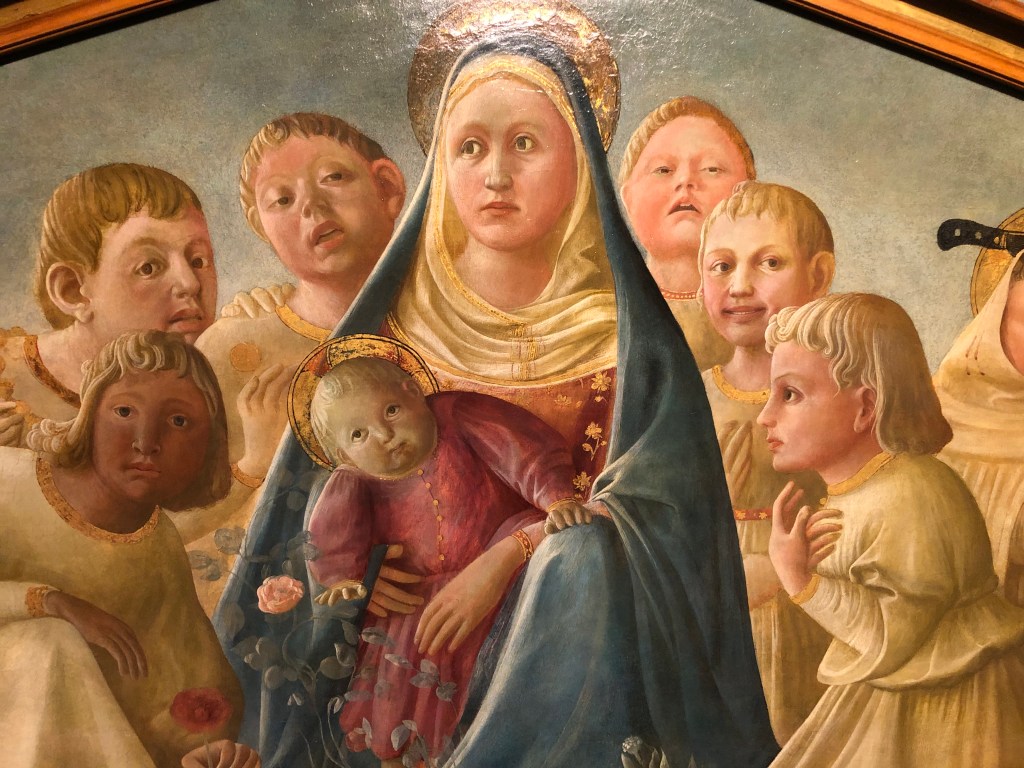
Filippo Lippi, Madonna of Humility, 1420

Humility is the virtue that stands out both in today’s Gospel reading and in Sirach’s advice to “conduct your affairs with humility” and to “humble yourself the more, the greater you are.”  I’ve been thinking about humility a lot this summer because I’ve been thinking about my grandfathers.  One passed away in June, the other fourteen years ago, and “humble” is one of the first words that comes to mind when I think of either of them—perhaps in both cases because my grandfathers were the quiet ones, and my grandmothers were the talkers!  One grandfather was a baker, the other lived his whole life in the same small town in Minnesota.  I think of them both as great men not because they sought attention or prestige, but because they didn’t.  Because they dedicated themselves to others, to their families and to their communities, without making a fuss about it, and left the lives of many better as a result.  In the homely etiquette lesson Jesus offers in the Gospel—take the lower place instead of elbowing your way to the head of the table—he points to one way in which a humble act can leave one better off in the long run.

Continue reading “Humility is our glory: homily for the 22nd Sunday in Ordinary Time”

Heaven without God? Homily for the 21st Sunday of Ordinary Time

Luca Signorelli, The Last Judgment (1499-1504), Orvieto Cathedral

Homily for the twenty-first Sunday in Ordinary Time (C)

Attention: this homily contains spoilers.  A few years ago, Ted Danson and Kristen Bell stared in a comedy on NBC called “The Good Place.”  The premise was that Kristen Bell’s character, Eleanor Shellstrop, had died and in the afterlife ended up in the “Good Place.”  The only problem was that Eleanor was a shallow and selfish person.  There had apparently been a mix-up in the calculations—points were awarded for good actions and subtracted for bad ones—and she had been confused with a much better woman also named Eleanor who happened to die at exactly the same moment.  After not too long, Eleanor realizes that there had been an error and that she needs to hide her true identity to avoid being sent to the Bad Place, where she belongs.  Since she had spent her whole life being petty, mean, and vulgar, she has no idea how to act and keeps slipping up and almost blowing her cover.  

The show presents a picture of a very common understanding of heaven.  It is a pleasant place, a never-ending vacation, tailored to the preferences—dietary, decorating, recreational—of its inhabitants.  It is more or less religiously neutral; it’s a reward for good behavior, that’s it.  In fact, though there are angels in the show—including Michael, played by Ted Danson—God is not mentioned at all.  If you watch the show in light of Christian revelation—the way the Gospel talks about heaven—you figure out pretty quickly that the Good Place is most certainly not heaven.  Understanding where the show goes wrong can help us to understand a bit better what makes the Christian offer of heaven so unique and surprising, and it can also help us to understand Jesus’ admonitory words in the Gospel today.

Continue reading “Heaven without God? Homily for the 21st Sunday of Ordinary Time”

“Eyes fixed on Jesus”: Homily for the 20th Sunday of Ordinary Time

Homily for the twentieth Sunday in Ordinary Time (C).

The word “Jesuit” was first used to mock the early followers of St. Ignatius of Loyola.  These first members of my religious order, the Society of Jesus, were derided for talking so much about Jesus and were given the name “Jesuit,” condescendingly, by those who apparently thought they had something better to talk about.  Those first Jesuits took the criticism as a compliment, and the name stuck.

The letter to the Hebrews tells us to keep our eyes fixed on Jesus, and the Gospel’s hard words make the same point in dramatic fashion.  We’ll return to the Gospel in a minute, but I want to start with the striking passage from Hebrews.  The letter tells us to keep our eyes fixed on Jesus so that we can “persevere in running the race that lies before us.”  Races, by definition, are challenging events.  It is possible to lose a race by giving up, by going off course, by laziness, by getting tripped up on some obstacle.  Hebrews tells us to “rid ourselves of every burden and sin that clings to us.”  Sins are the sort of thing that will slow us down, trip us up, or send us running in the wrong direction.  Running a race usually requires training, and Christianity is no different.  We aren’t born Christians.  Perhaps a century or two ago when our whole society was Christian, it was possible to imagine that we were, that being a Christian was the same thing as being a good citizen or an agreeable person, just going with the flow. That was always an illusion, and it is even more so today when the forces that shape our culture are often hostile or indifferent to Christianity.

Continue reading ““Eyes fixed on Jesus”: Homily for the 20th Sunday of Ordinary Time”

Homily for the Solemnity of Saints Peter and Paul

Throughout this month, I’ve been reposting the homilies I wrote for the Homiletic and Pastoral Review. You can check them all out on their site, as well as Friday’s Homily for the Sacred Heart. This feast seems especially joyful this year, coming so soon after the election of Pope Leo XIV.


Homily for the Solemnity of Saints Peter and Paul

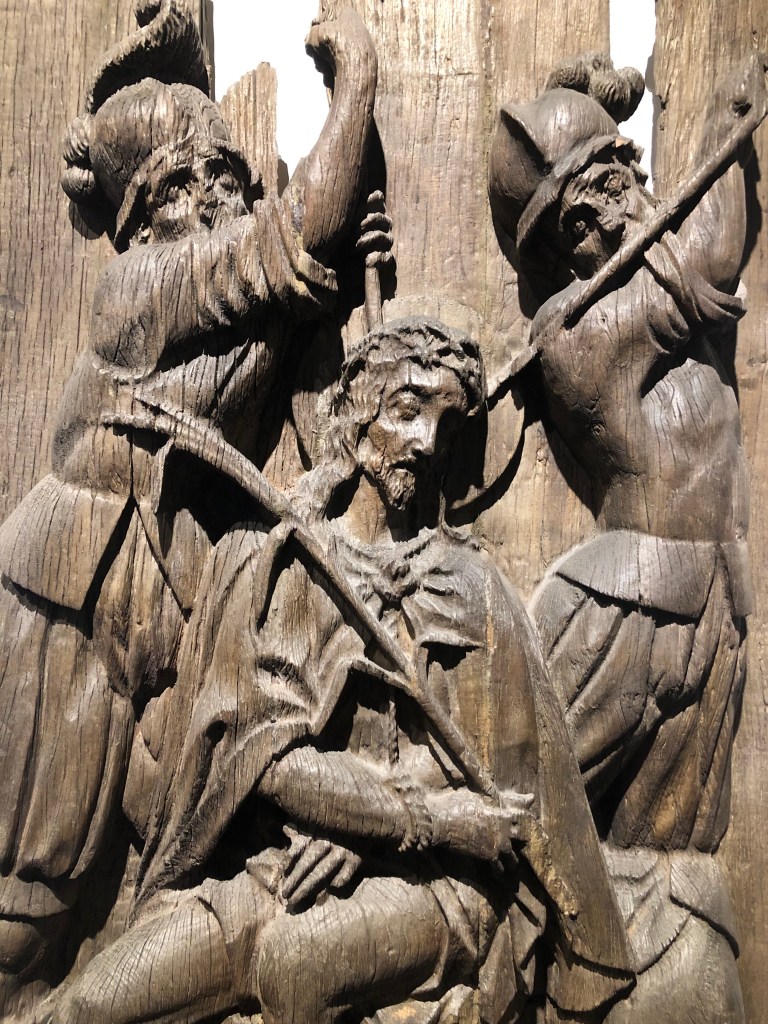
Martyrdom of St. Peter (Doors of the Basilica of St. Paul Outside the Walls, Rome)
Martyrdom of St. Paul (Doors of the Basilica of St. Paul Outside the Walls, Rome)

Peter and Paul were great men.  It is common in preaching to hear about Peter’s failures—his weaknesses and false steps, which the Gospels make no attempt to hide.  And we first meet Paul, of course, when he is persecuting the Church.  Peter and Paul were both flawed men, but nonetheless they are great men.

In fact, one of the things that makes them both great is that they acknowledge their flaws. Practically the first words out of Simon Peter’s mouth in the Gospel of Luke are, “Depart from me, Lord, for I am a sinful man” (Lk 5:8).  In one of his letters, Paul claims to boast in his weakness (2 Cor 12:9).

Yet, in the Acts of the Apostles, Peter raises the dead to life.  Paul becomes the most remarkable missionary in history.  The faithful of Jerusalem bring their sick into the streets just so that Peter’s shadow will fall upon them.  And in today’s Gospel we hear those remarkable words from the mouth of the Lord himself, “You are Peter, and upon this rock I will build my Church, and gates of the netherworld shall not prevail against it.”  The greatness of both Peter and Paul comes from Jesus.

Continue reading “Homily for the Solemnity of Saints Peter and Paul”

Melchizedek, Jesus, and perfect sacrifice: Homily for Corpus Christi

This month I’ve been asked to contribute Sunday homilies to the Homiletic and Pastoral Review. You can find the rest of the month’s homilies there as well. Here’s this week’s contribution:


Homily for the Most Holy Body and Blood of Christ (C)

I thought I’d begin today by saying a word about Melchizedek. I’d wager most of you don’t know much of anything about Melchizedek. It’s a safe wager because nobody knows much about Melchizedek. His biographical details are limited to what you just heard in the first reading. But Melchizedek turns out to be an important figure. In the first reading, in Genesis, he seems to come out of nowhere. It turns out, when we get to the Letter to the Hebrews in the New Testament, that this mysterious origin is what makes him interesting. The New Testament speaks of Melchizedek as a forerunner of Jesus, the great high priest who has neither beginning nor end. Melchizedek, the Letter to the Hebrews says, represents an eternal priesthood — the priesthood of Jesus Christ.

In fact, perhaps it’s surprising that Genesis would mention Melchizedek at all. Even more surprising is that it mentions the sacrifice that he offers — bread and wine. At the time, bread and wine were not particularly impressive sacrifices. In the ancient world, if you wanted to impress, you offered meat. Birds were OK, lamb was better, a bull best of all. Bread and wine were not the sort of sacrifice a king would brag about.

Continue reading “Melchizedek, Jesus, and perfect sacrifice: Homily for Corpus Christi”