Judgments and Judgmentalism: homily for the sixteenth Sunday of Ordinary Time

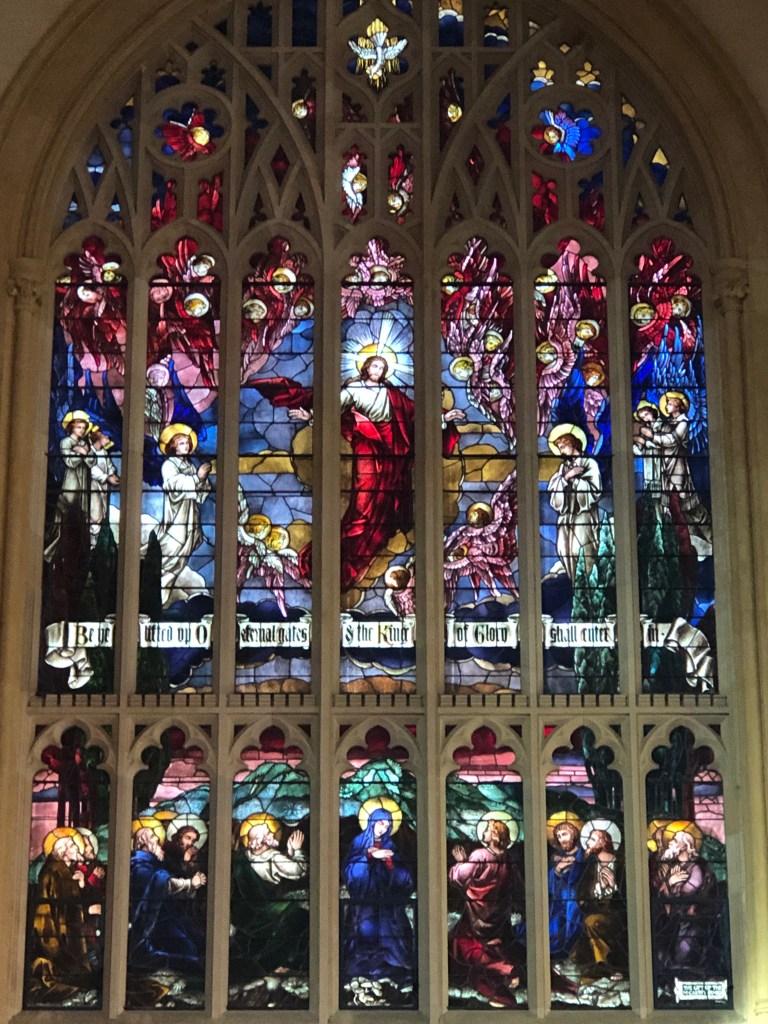
Orvieto Cathedral

Homily for the 16th Sunday of Ordinary Time (A)

At the end of one of the great 20th century Catholic novels Brideshead Revisited there’s a dramatic deathbed scene.  The novel is about a British Catholic aristocratic family. Early on in the story the patriarch of the family, Lord Marchmain, abandons his wife and goes off to live with an Italian mistress who is younger than his children.  Needless to say, he becomes very hostile toward the Church and its teachings.  At the end of the novel, sick and dying, he comes back to the family estate in England, and all of his children—and even his Italian mistress—beg him to see a priest and be reconciled before he dies.  He refuses.  They call the local priest to visit the house several times, and each time Lord Marchmain angrily chases him away.  

The story is narrated by a friend of the family, Charles, who is an atheist.  Charles, the narrator, gets angry at the family for continuing to call the priest even though Lord Marchmain has chased him away again and again.  Finally, when Lord Marchmain really is dying, when he’s still conscious but no longer able to speak, the priest comes again and begins the last rites.  And Charles, the narrator, is indignant.  The dying man starts to move his hand, and Charles thinks, “Look, he’s trying to swat the priest away one last time.”  And the shaking old hand moves up to his forehead, and then down to his stomach and then across his chest.  The Sign of the Cross.

Now deathbed conversions are probably more common in literature than in real life, though they happen in real life too.  But there’s a reason deathbed conversions, though small in number, are important in our Catholic worldview.  This is because the fact that deathbed conversions are even possible tells us something important about God:  that his mercy is infinite, that his mercy is patient, that his mercy is more powerful than a lifetime of sin, that his mercy directs us toward a life that only begins in this world.  

The parables that Jesus tells today about the wheat and the weeds, about the mustard seed and the yeast, reflect this understanding of God.  God’s power is capable of bringing forth a good harvest even from a field that seems choked with weeds, of bringing forth a flowering tree from a tiny mustard seed, of bringing forth nourishing bread from what looks like a handful of dust.  

Continue reading “Judgments and Judgmentalism: homily for the sixteenth Sunday of Ordinary Time”
Van Gogh and the Sower

Last year, Rome’s Palazzo Bonaparte hosted a special exhibition of the work of Vincent Van Gogh (1853-1890). It highlighted, among other things, the deep religiosity of this son of a Protestant minister. Van Gogh’s life was marked by inner turmoil, culminating in a horrendously painful suicide. The exhibition made me appreciate the ways in which faith, failure, sin, turmoil, and hope intersected in Van Gogh’s work. The artist’s tragic struggle gave his work its unique power.

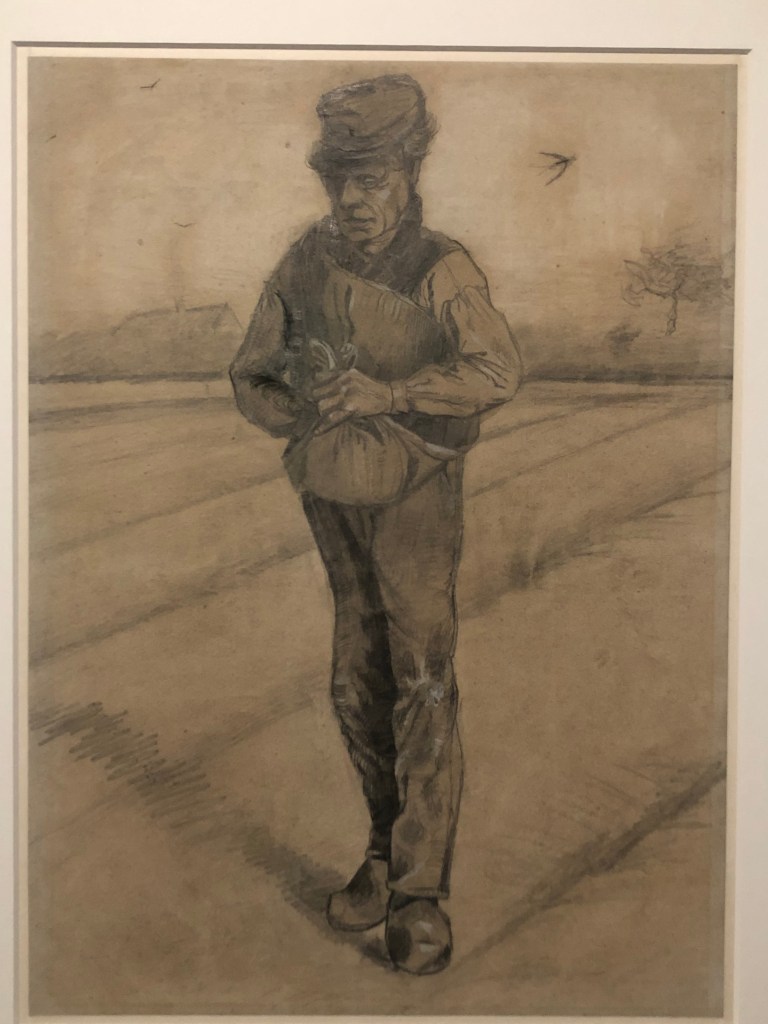
Vincent Van Gogh, The Sower, pencil, chalk, and watercolor

One of the themes to which Van Gogh repeatedly returned was the parable of the sower. Something about the the way the parable combines both failure and fecundity with the life cycle of the seed–being buried in order to give life–seemed to fascinate Van Gogh.

Continue reading “Van Gogh and the Sower”

The waters of Australia

Peaceful Bay, Western Australia

After a couple of months in Western Australia and half a year Down Under, I am still amazed by the diversity of this island continent’s landscapes. This includes unparalleled bio-diversity–all the birds and marsupials and one-of-a-kind wonders, like the platypus, that look like something out of a Dr. Seuss book–as well as the geological curiosities.

The Twelve Apostles, Victoria, Australia

On this, the driest of Earth’s continents, I’ve been especially fascinated by water. Most of Australia’s population (almost 90%) live within 30 miles of the coast, and some of the country’s greatest wonders–the Great Barrier Reef, for example–lie underwater. My own fascination with water comes in part from its sacramental usage. Water is the one physical element necessary for baptism and, thus, entry into Christianity.

Continue reading “The waters of Australia”

St. Aloysius Gonzaga and giving God your all: homily for St. Aloysius

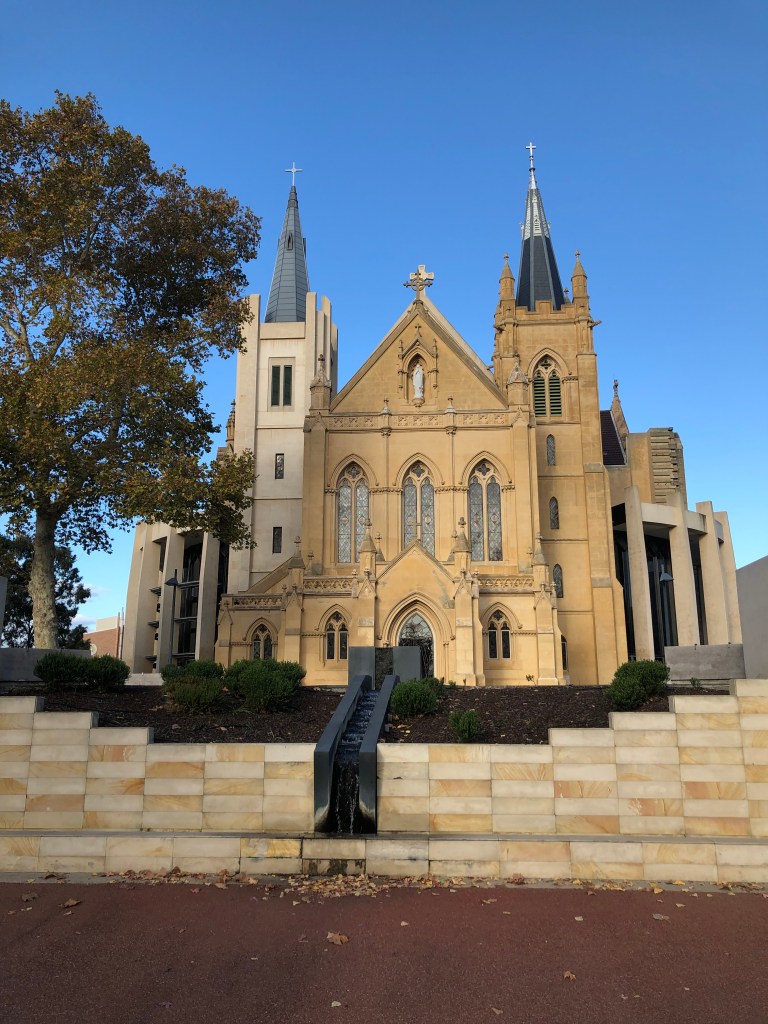
St. Mary’s Cathedral, Perth

The readings for our celebration of the life of St. Aloysius Gonzaga tell us to show our love for God by keeping his commandments.  Sometimes people talk about love and the commandments as if there were a contradiction between the two, but Jesus teaches us otherwise.  

For Jesus, love isn’t a feeling.  Don’t confuse love with romance, which can be produced with mood lighting and champagne.  For Jesus, love is life-giving.  God, the creator, first shows his love for us by giving us life.  And Jesus, the Son of God, shows the power and depth of his love by giving up his own life so that we might have eternal life.

But life is a delicate thing.  If you plant a garden, you have to know the right amount of water to give the seeds—too much and they’ll rot, too little and they’ll dry up.  I’ve killed a few houseplants learning this lesson.  If you just leave your garden alone to do whatever it wants, it will soon choke with weeds and die.  Keeping plants alive sometimes requires trimming them.  Nurturing life requires rules.

Continue reading “St. Aloysius Gonzaga and giving God your all: homily for St. Aloysius”

The hunger and the harvest are abundant: homily for the eleventh Sunday of Ordinary Time

Homily for the 11th Sunday in Ordinary Time (A)

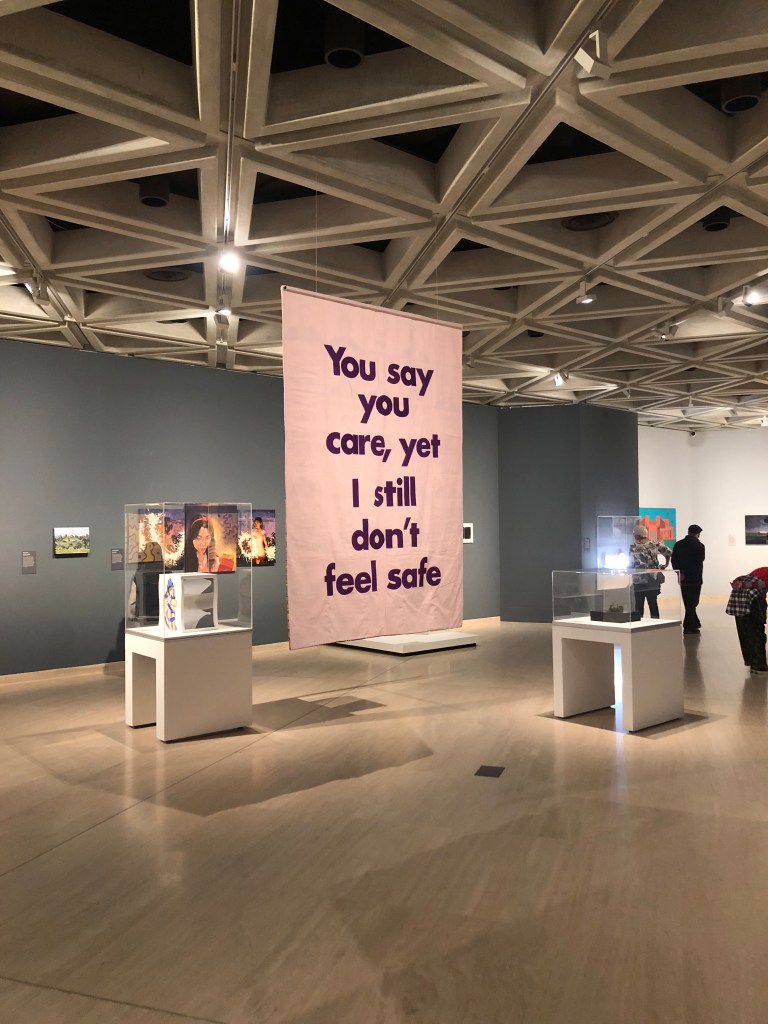
A couple of weeks ago I visited the Art Gallery of Western Australia, not very far from here, and I was moved by an exhibition of works by young artists, Year 12 Visual Arts graduates, from here in WA.  In addition to the talent of these young people, I was moved—even disturbed—by the pain that I saw expressed in their work.  Not youthful idealism, but pain.

Western Australia Pulse 2023 Exhibition, Perth

The pain that I saw expressed so honestly in art was not from material deprivation.  These young artists enjoyed all the advantages and opportunities of a state-of-the-art education system.  No generation has ever had the material advantages we enjoy today in the West.  Yet as I have traveled in America, in Australia, in Europe I have felt what I think many people today perceive, an ache, an emptiness—sometimes a sense of rootlessness, sometimes a vague, unspecified guilt, often a lack of purpose and meaning.  We claim to be free, yet fear of giving offense suffocates us.  We are hyperconnected through media and gadgets, yet no generation has ever been so lonely.  We boast of the diversity of our societies, yet we barely speak to those with whom we disagree.  Something is wrong, something is missing—something at the root of the hurt expressed in those young artists’ work.

In the popular culture of the West, the spiritual void is inescapable.  We have uncountable comforts.  In fact, I don’t think that our most characteristic compulsion is to acquire more stuff.  Instead, today, we are addicted to being entertained.  But our entertainment does not lift the soul—it is not like the art of Michelangelo.  It just keeps us occupied and keeps us paying.  How could we, beings created in the image of God, find this satisfying?  

Continue reading “The hunger and the harvest are abundant: homily for the eleventh Sunday of Ordinary Time”

Sacred Heart of Jesus homily

Sometimes certain people get on my nerves, and it’s hard to love them.  Sometimes people behave badly toward others, and it’s hard to love them, too.  Sometimes people have hurt me; it’s hard enough to forgive them and even harder to love them.  

The first letter of John tells us that God is love, and remaining in his love means loving others as he does.  In the Sermon on the Mount, Jesus commands us to love our enemies, just as our heavenly Father loves them.  From the cross, he even prays for the forgiveness of those who crucified him.  

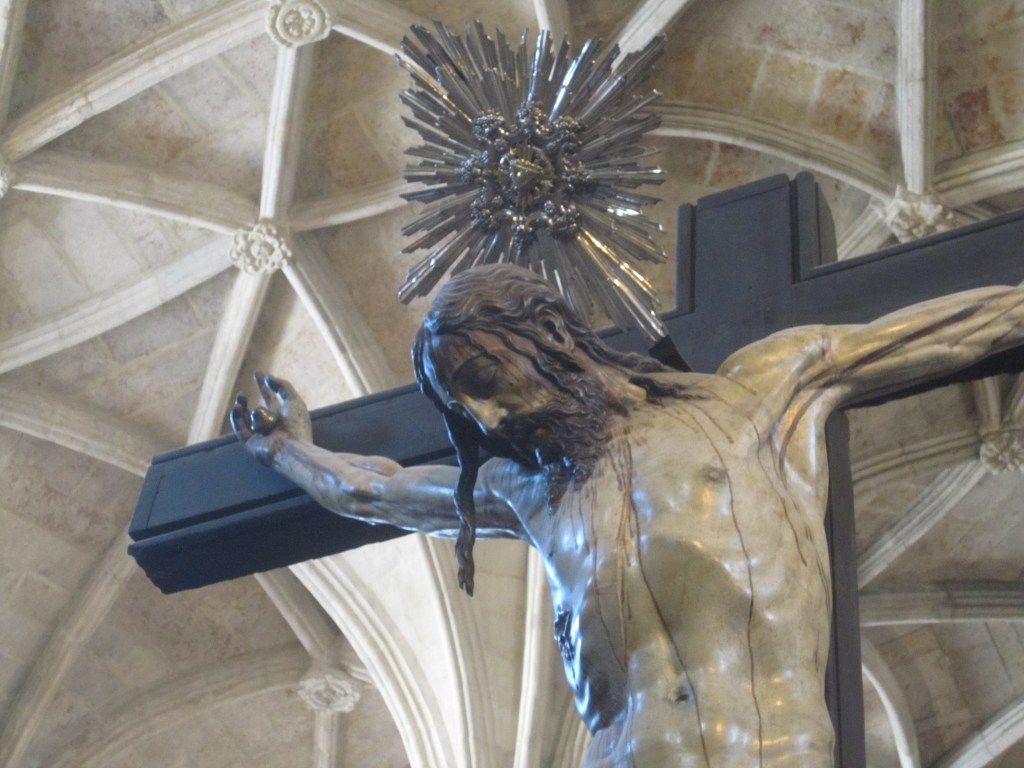
Jerónimos Monastery, Belén, Portugal

But it’s hard to love those who irritate me or who’ve hurt me or who behave obnoxiously or cruelly.  With effort, I succeed in being kind and fair to them maybe 75% of the time, though that percentage falls quickly if I’m tired or hungry or disappointed.  Sometimes I want to say to Jesus, “This yoke doesn’t seem easy to me.” 

Continue reading “Sacred Heart of Jesus homily”

Corpus Christi homily

Chapel of the Corporal, Orvieto Cathedral

“Unless you eat the flesh of the Son of Man and drink his blood, you do not have life within you.”  A few years ago, in Boston, I was talking to a group of kids preparing for their first communion, and one of them asked me, “If we eat the body of Jesus, does that mean we’re cannibals?”  

I thought it was a good question.  What Jesus teaches us about the Eucharist is not easy to understand.  In the Gospel, Jesus’ teaching provokes arguments and even causes some of his disciples to leave him.  But he doesn’t back down.  The Catholic Church, I’m happy to say, has also never backed down from the faith that the Eucharist is the Body and Blood of Jesus.  It’s not a prop in a play. It is not a mere symbolic reminder.  It’s not a visual aid from before the days of PowerPoint.  It may not look or taste like flesh and blood, but Jesus forces us to make a choice—do we believe our own senses or do we believe him?  It’s the same choice required to believe in eternal life, which we have never seen.  Do we trust his words?  And if we do, does that make us cannibals?

Continue reading “Corpus Christi homily”

Trinity Sunday homily

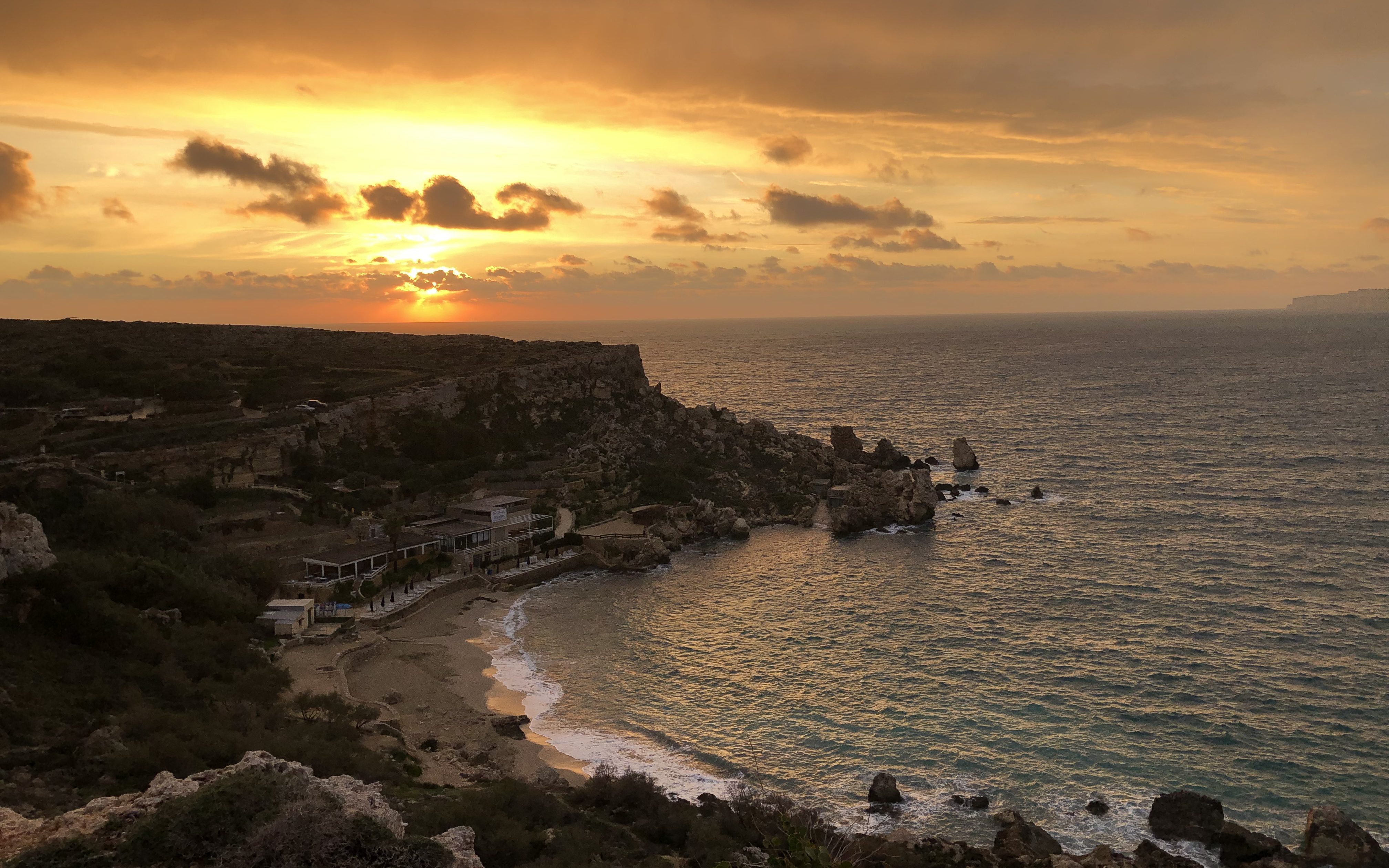
If you go to Mass on Trinity Sunday, there’s a very good chance that you will hear the word “mystery.”  What does that word “mystery” mean?  When we’re talking about a mystery of faith, it doesn’t mean a detective story.  A mystery of faith is something we can always understand more deeply, something we can never reach the end of, something that never gets old.  No matter how many times you see the sunset across the ocean, the beauty of it is always new, the colors always a little different each time.

Sunset, Malta

Trinity Sunday is a celebration of the mystery of God.  To be more precise, it’s a celebration of the fact that God has given us a starting point to discover him, to know him, and to be united with him.  God is so different than anything we know that without his help we could say almost nothing about him.  God is not a very big thing.  He’s not like a gas that gets into the nooks and crannies of everything.  He’s not nature and the universe.  We know he’s the Creator of the universe because the universe exists, but nothing in the universe is capable of creating the universe.  And it’s true that he exists and we exist, but even his way of existing is different than ours.  You know who Harry Potter is, so in a way he exists.  But he doesn’t exist in the same way that J.K. Rowlings exists.  They have different ways of being.  And it’s the same with us and God.

Continue reading “Trinity Sunday homily”

Pentecost homily

This weekend we celebrate Pentecost, which is sometimes called the birthday of the Church.  You might remember that Jesus told his disciples that he had to go—he had to ascend into heaven—so that he could send the Holy Spirit to them.  On Pentecost the Holy Spirit arrives.  Before that, the disciples could see Jesus because he was a man—both God and man.  So they could see him just as you can see me and I can see you.  The Holy Spirit is God, too, but he’s Spirit, and spirits, by definition, are not physical things.  You can’t see spirits.  

St. Mary’s Cathedral, Perth, Australia

So at Pentecost, the disciples don’t see the Holy Spirit.  Instead, they see his signs.  Those signs are a driving wind and flames shaped like tongues over the heads of the people there.  One sign in particular tells us a lot about the Church.  The people at Pentecost come from different countries, and they speak different languages, so normally they wouldn’t be able to understand each other.  But when the Holy Spirit comes, they do understand each other.  The Holy Spirit changes something inside of them.

Continue reading “Pentecost homily”

Ascension homily

St. Mary’s Cathedral, Perth, Australia

Think about someone you know very well and love.  If you heard his voice, would you recognize it? Certainly.  If you saw her in the distance, would you recognize the way she walks?  Probably.  If it’s someone you love and know very well, you would recognize his laugh—and know the sort of things he finds funny, the jokes he tells or laughs it.  You might know her favorite foods, the kind of gestures that she makes.  You might even be able to recognize someone you know very well from the smell of the shampoo she uses.

Now another question.  If it’s someone that you love and maybe lives far away, if you had a choice, would you rather send him an email or make a phone call or zoom or see him in person and spend time with him?  I think all of us know it means so much more to spend time with someone we love in person, in the flesh.  You can’t give a hug over zoom.

What’s missing in a text message or a zoom call?  We could list a lot of things, those sorts of things I just mentioned—touch, our way of reacting to things, lots of little things, things it’s hard to describe exactly.  Let’s put a word on all these things—our humanity.

Continue reading “Ascension homily”