Trinity Sunday homily

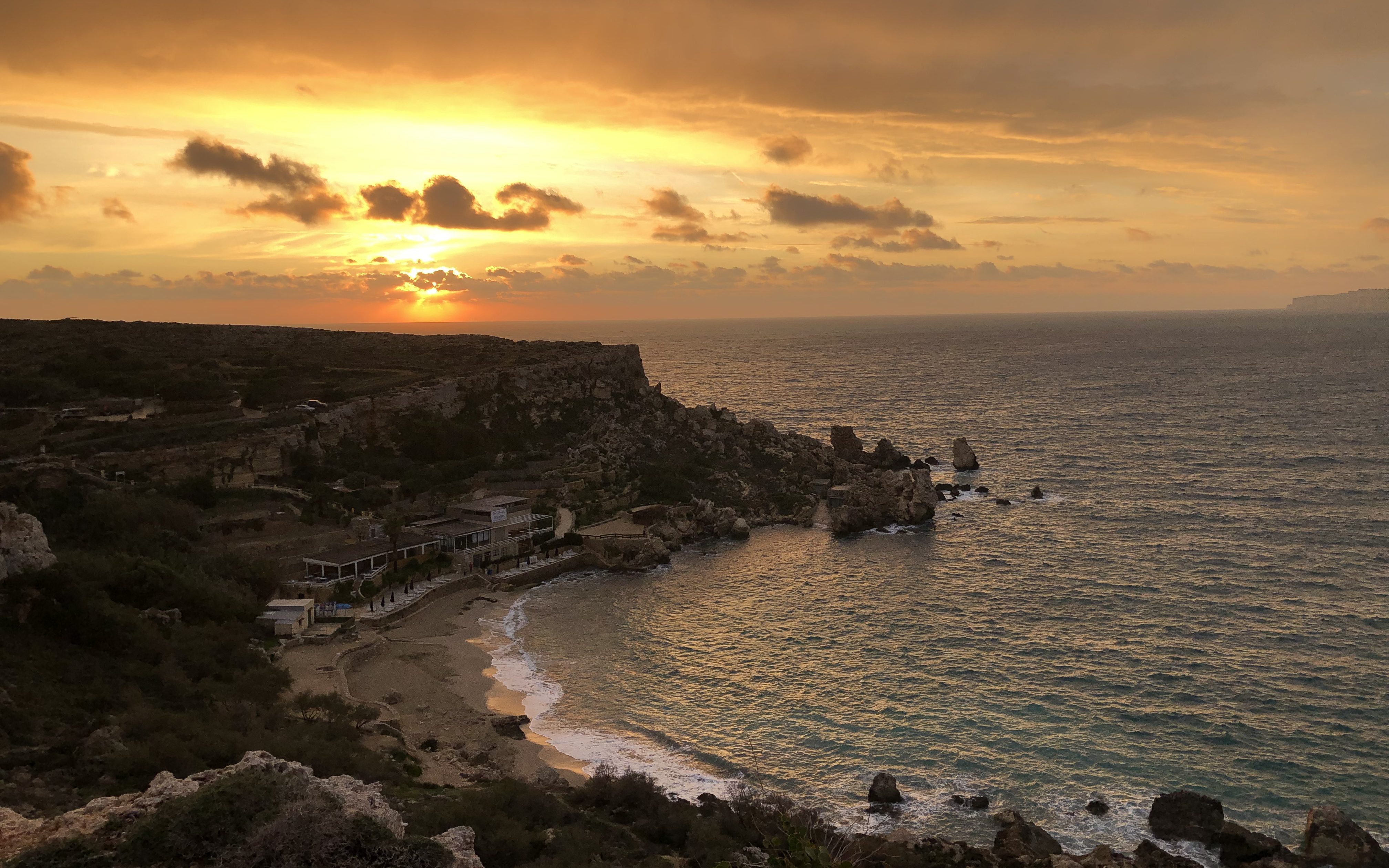
If you go to Mass on Trinity Sunday, there’s a very good chance that you will hear the word “mystery.”  What does that word “mystery” mean?  When we’re talking about a mystery of faith, it doesn’t mean a detective story.  A mystery of faith is something we can always understand more deeply, something we can never reach the end of, something that never gets old.  No matter how many times you see the sunset across the ocean, the beauty of it is always new, the colors always a little different each time.

Sunset, Malta

Trinity Sunday is a celebration of the mystery of God.  To be more precise, it’s a celebration of the fact that God has given us a starting point to discover him, to know him, and to be united with him.  God is so different than anything we know that without his help we could say almost nothing about him.  God is not a very big thing.  He’s not like a gas that gets into the nooks and crannies of everything.  He’s not nature and the universe.  We know he’s the Creator of the universe because the universe exists, but nothing in the universe is capable of creating the universe.  And it’s true that he exists and we exist, but even his way of existing is different than ours.  You know who Harry Potter is, so in a way he exists.  But he doesn’t exist in the same way that J.K. Rowlings exists.  They have different ways of being.  And it’s the same with us and God.

Continue reading “Trinity Sunday homily”

Pentecost homily

This weekend we celebrate Pentecost, which is sometimes called the birthday of the Church.  You might remember that Jesus told his disciples that he had to go—he had to ascend into heaven—so that he could send the Holy Spirit to them.  On Pentecost the Holy Spirit arrives.  Before that, the disciples could see Jesus because he was a man—both God and man.  So they could see him just as you can see me and I can see you.  The Holy Spirit is God, too, but he’s Spirit, and spirits, by definition, are not physical things.  You can’t see spirits.  

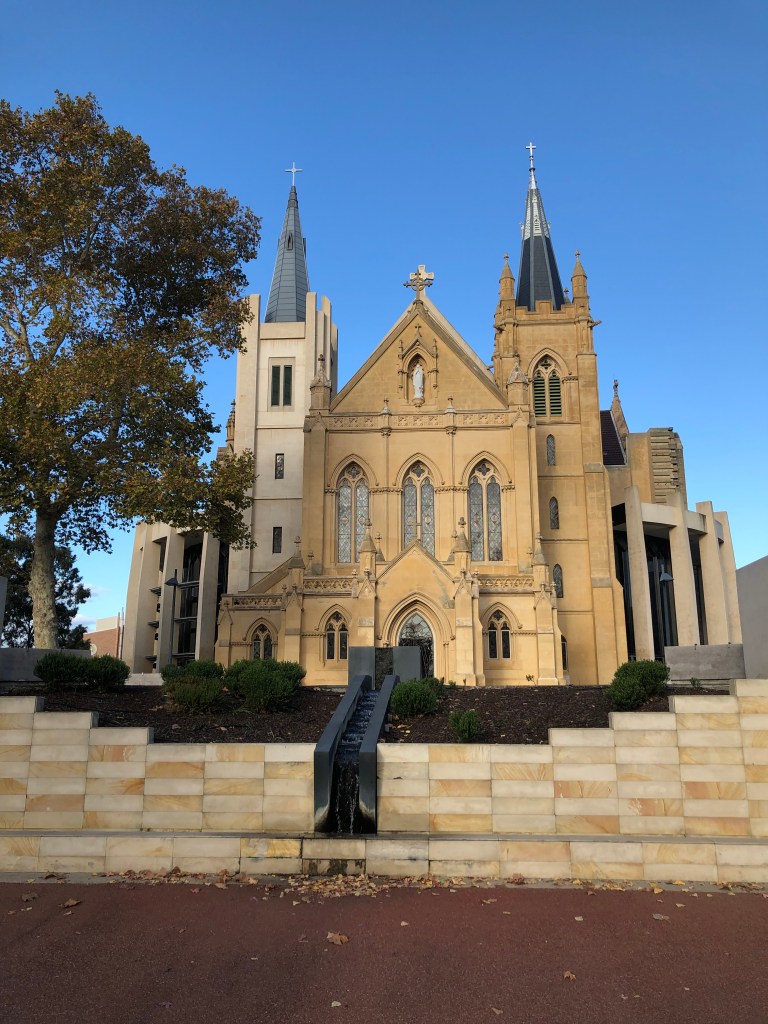
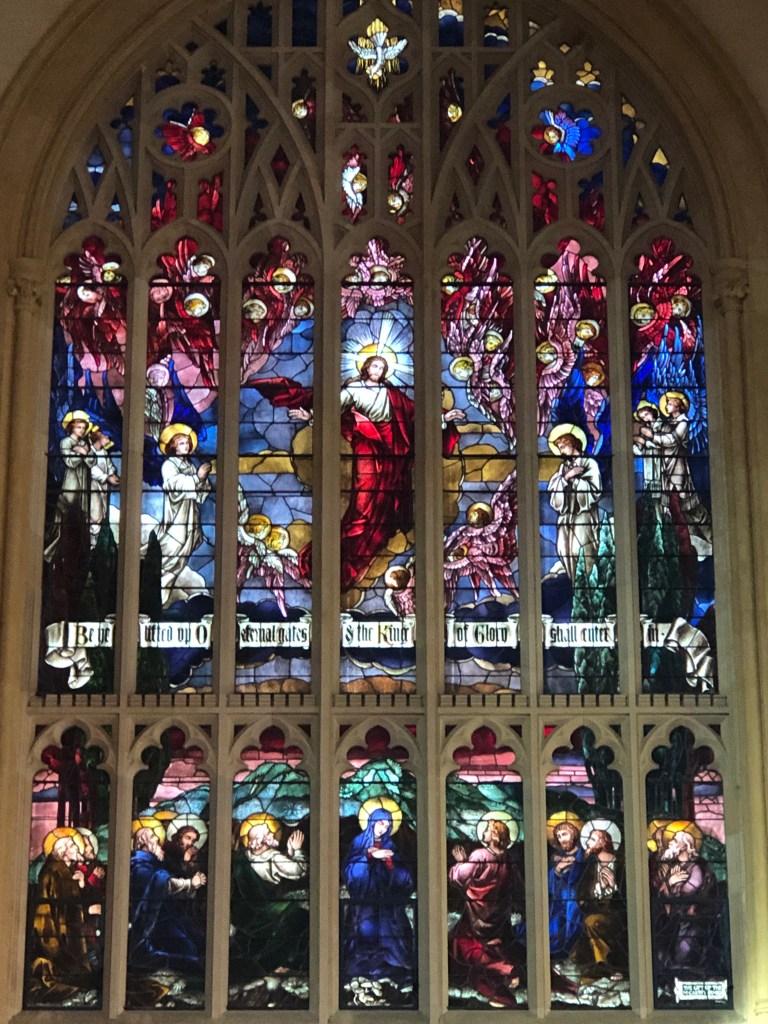
St. Mary’s Cathedral, Perth, Australia

So at Pentecost, the disciples don’t see the Holy Spirit.  Instead, they see his signs.  Those signs are a driving wind and flames shaped like tongues over the heads of the people there.  One sign in particular tells us a lot about the Church.  The people at Pentecost come from different countries, and they speak different languages, so normally they wouldn’t be able to understand each other.  But when the Holy Spirit comes, they do understand each other.  The Holy Spirit changes something inside of them.

Continue reading “Pentecost homily”

Ascension homily

St. Mary’s Cathedral, Perth, Australia

Think about someone you know very well and love.  If you heard his voice, would you recognize it? Certainly.  If you saw her in the distance, would you recognize the way she walks?  Probably.  If it’s someone you love and know very well, you would recognize his laugh—and know the sort of things he finds funny, the jokes he tells or laughs it.  You might know her favorite foods, the kind of gestures that she makes.  You might even be able to recognize someone you know very well from the smell of the shampoo she uses.

Now another question.  If it’s someone that you love and maybe lives far away, if you had a choice, would you rather send him an email or make a phone call or zoom or see him in person and spend time with him?  I think all of us know it means so much more to spend time with someone we love in person, in the flesh.  You can’t give a hug over zoom.

What’s missing in a text message or a zoom call?  We could list a lot of things, those sorts of things I just mentioned—touch, our way of reacting to things, lots of little things, things it’s hard to describe exactly.  Let’s put a word on all these things—our humanity.

Continue reading “Ascension homily”

The Spiritual Exercises in South Australia

Our Lady of the Vines, Sevenhill, Australia

It is hard to know what to say to those who ask about one’s experience of the 30-day Spiritual Exercises of St. Ignatius Loyola. The experience is profound, intense, and deeply personal. It is also experience, not knowledge or information that can be transferred to another. To be sure, the retreat does have objective content–the life of Christ, God’s creation of the world, the moral law. It is not just a process for personal growth; it is an encounter with the Son of God who revealed himself in first century Palestine, who we know through the accounts that his followers handed on to the Church. Fundamentally, the content of the retreat is simply Christianity, nothing more and nothing less.

That said, the experience of encountering that content varies from person to person. We can either look at Jesus from a distance or approach him, talk to him, get to know him. The Spiritual Exercises are a way of getting to know him–spending time with God with other distractions removed, recognizing God’s work in our lives up to this point, discovering his hopes for us. Like meeting your future spouse or holding a newborn child for the first time, you can describe what happened, but the experience itself can never be fully captured in words. Spending thirty days getting to know Jesus more deeply in prayer is a similarly ineffable experience.

St. Aloysius Church, Sevenhill

Of course, some aspects of the retreat can be more easily shared, and I thought I’d start with one that might seem secondary but isn’t–the location. Christianity is an embodied, incarnational religion that acknowledges the influence of where we are on who we are. During the Spiritual Exercises St. Ignatius frequently invites us to begin by imagining the places where Jesus lived, “the synagogues, villages, and towns” where he preached or the hills and valleys between Nazareth and Bethlehem. Even on an interior journey, location matters.

Continue reading “The Spiritual Exercises in South Australia”

Doubt and bearing witness: a homily for the second Sunday of Easter

Explaining St. Paul’s first letter to the Corinthians, St. Thomas Aquinas says that in heaven there will be no faith. We will not need faith when we experience the beatific vision. We need faith now because we live in a world of uncertainties.

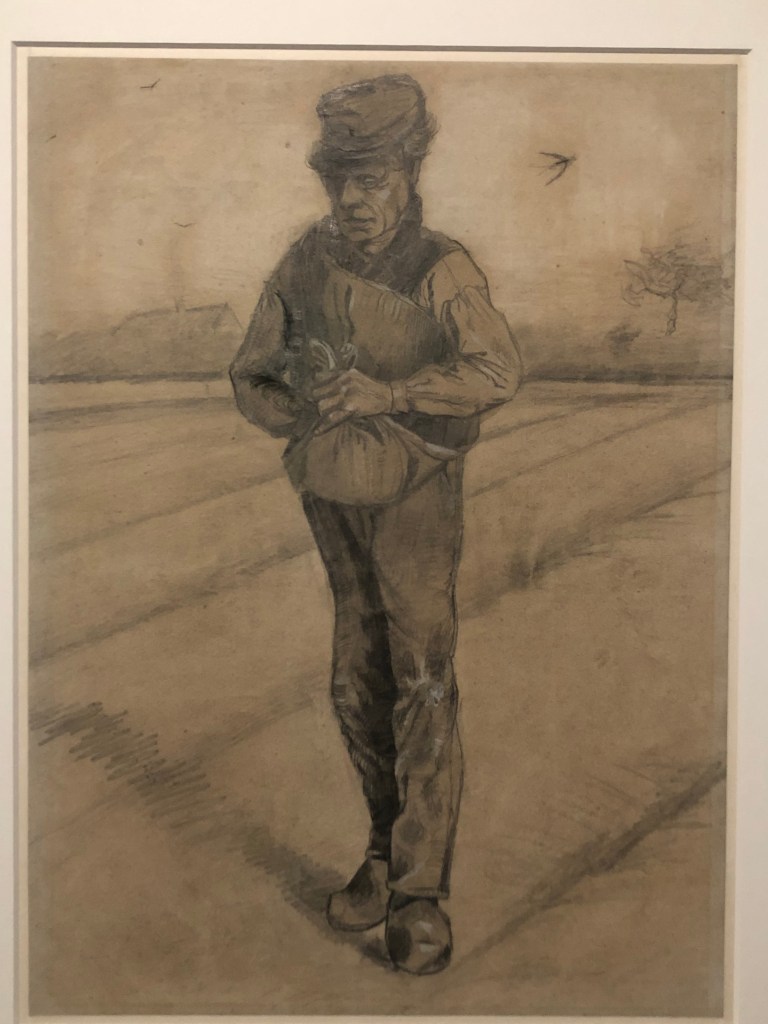
Palazzo Venezia, Rome (collection)

We live with doubts. Sometimes these doubts are justified. We doubt our political and church leadership when those in power are not honest, when they use words to hide the truth instead of expressing it. We doubt our abilities when we recognize the same tendency in our own hearts or when, despite our sincerity, our strength is insufficient and we fail. When the world changes unexpectedly, we doubt the future.

Why does Thomas doubt? From one point of view, uncertainty seems justifiable. Believing that a man has come back from the dead is not easy. But it would not have been the first time that Thomas witnessed such an event. He was present at the resurrection of Lazarus. And it seems unlikely that the other disciples had fabricated this story only to deceive him–it is hardly clear what motive they would have had to make up such a lie.

It is true that Thomas speaks of evidence, of what he can see and what he can touch, but his doubt is not really based on a lack of empirical evidence. He does not express the need for more study before coming to a conclusion. He expresses the refusal to believe, the decision not to believe: “I will not believe.”

Continue reading “Doubt and bearing witness: a homily for the second Sunday of Easter”

Light in Holy Week

Jesuit Retreat Center, Sevenhill, Australia

Today is unofficially known as “Spy Wednesday” on the Church calendar because the Gospel reading recounts the story of Judas’s betrayal. I spent this Lent doing the 30-day Spiritual Exercises of St. Ignatius Loyola, and, for me, the most moving part of the retreat was contemplating the Lord’s Passion, in which, through the liturgy, we participate during Holy Week.

There is much to say about the retreat and much to say about Holy Week–but having been away for over a month, I also have a fair bit of catching up to do. So for now, I’ll share just one thought.

Until we reach Easter Sunday, this week is incredibly dark. Judas is present at the Last Supper and his impending betrayal colors everything else. Even before the Lord’s arrest, Jesus suffers because of his disciple’s mendacity. Peter’s courage and good intentions fail. The physical torture–scourging, beating, the nails, exposure and slow suffocation on the cross–is inhuman, enough to turn one’s stomach just thinking about it. And then, the cravenness of Pilate, the calculated cruelty of Jerusalem’s religious leaders, the callous and fickle crowd. What is most sobering of all is the realization that there is some of Judas and Pilate and Peter in each one of us. The Lord suffers for our sins.

Continue reading “Light in Holy Week”

First principle for Lent… and for life

Tomb of St. Ignatius, Church of the Gesù, Rome

Ash Wednesday is once again upon us. This year my Lent will be mostly taken up with doing, for the second time in my life, the 30-day Spiritual Exercises of St. Ignatius Loyola. So I’ll be off-line and in silence until Holy Week.

As a consideration for the beginning of Lent, then, I thought I’d offer the principle St. Ignatius places at the beginning of the Spiritual Exercises, what he calls the “First Principle and Foundation”. It’s his way of expressing the truth of the First Commandment: nothing else is as important as right relationship with God, and we should never allow anything else to take God’s place. The value of all the other goods we encounter in this life is entirely relative to whether they help us grow closer to God. In fact, if anything damages or gets in the way of our relationship with God, it is no longer good.

That’s all straightforward enough in theory, but Ignatius gives the consideration a specificity that bites. Giving concreteness to this principle is where the hard work of putting our lives in the right order begins. And that, I suppose, is what Lent is about–giving God his rightful place at the center of our lives.

Here is how Ignatius puts it, and the words I’ll leave you with until Easter… In the meantime, please pray for me as I make my retreat!

FIRST PRINCIPLE AND FOUNDATION

Man is created to praise, reverence, and serve God our Lord, and by this means to save his soul. 

The other things on the face of the earth are created for man to help him in attaining the end for which he is created.  

Hence, man is to make use of them in as far as they help him in the attainment of his end, and he must rid himself of them in as far as they prove a hindrance to him.

Therefore, we must make ourselves indifferent to all created things, as far as we are allowed free choice and are not under any prohibition. Consequently, as far as we are concerned, we should not prefer health to sickness, riches to poverty, honor to dishonor, a long life to a short life. The same holds for all other things.

Our one desire and choice should be what is more conducive to the end for which we are created.

Making sense of our post-Christian culture

San Galgano, Tuscany

In the West today, pessimism is warranted. Suicide, crime, and drug use are up; birthrates are down. In America, woke excess has undermined much of the progress made toward racial reconciliation over the course of the last century. The decline in religious practice has eroded those values that transcend political conflict and material consumption; we’re losing the shared cultural language with which we could talk to one another about matters touching on the common good. In the absence of a common cultural narrative and shared values, tribal loyalties have filled the void, becoming our false gods.

I don’t think it disloyal to admit that the Church has not adequately responded to the West’s malaise. Faced with Covid, we closed shop. Rome these days sometimes seems to be swimming in nostalgia for the 1960s. No doubt it was more pleasant to be a young cleric in the heady days of Vatican Council II–at least, before the seminaries emptied–but those are not our days.

Half a century ago, perhaps, Catholics in the West could still see their societies as Christian, though ones that were rapidly changing. So it seemed reasonable enough to hope that with a bit of updating around the edges, a little accommodation to the Zeitgeist, we might experience a new flourishing of Christian life. That didn’t happen, and it is no longer reasonable to expect that it will. We need a new response to today’s reality.

A recent article by Sydney’s Archbishop Anthony Fisher The West: Post- or Pre-Christian? provides a helpful, nuanced diagnosis of where we are.

Continue reading “Making sense of our post-Christian culture”

More on nature and spirituality

Omarama, New Zealand

My trip to New Zealand last week put me in mind of previous travels in the American West. If I could make one recommendation for travelers to the USA, it would be to visit our National Parks. New Zealand offers similar pristine landscapes, though on a more compact scale. Of course, both landscapes boast their own unique treasures. New Zealand has its fiords and temperate rain forests; the American West, its vast expanses and the red rock sculptures of Utah that look like a landscape dreamed up by Antoni Gaudí.

The trip had me rummaging through old photos of my trips out West and looking up old notes. I had a few thoughts about travel published in Plough a few weeks ago, and that reminded me of an older article in the same magazine inspired by a long drive out West. Here’s that older article: Nature is Your Church? And, to go with it, a few pictures of places mentioned in Montana and Wyoming –Devil’s Canyon, Fort Phil Kearney, Yellowstone, the Grand Tetons, and Glacier.

Benedict XVI on creation

Mount Cook, New Zealand

The new year came early for me this year–while in America 2022 still had almost a full day left to go, I was as close to the International Date Line as I’ve ever been watching fireworks erupt from the Sky Tower in Auckland, New Zealand. I will be spending the first half of the year doing Jesuit “tertianship” in Melbourne, Australia. Tertianship is the final formal stage of Jesuit formation in which we do the 30-day Spiritual Exercises again and have a chance to reflect on all that’s happened so far.

New Year’s Eve also brought the sad news of the passing of Pope Emeritus Benedict XVI, someone I have immensely admired as a man whose character balanced both courage and humility, as a Christian for whom Jesus was the center of everything, and as a theologian capable of expressing the most profound truths with luminous clarity. Benedict knew how to cut through both theological jargon and political rhetoric to get to the heart of the matter– always the absolutely unique encounter with Jesus Christ.

Rotorua, New Zealand

Shortly after Benedict’s death I was contacted by a scholar of Lakota Catholicism, Damian Costello, who wrote this article highlighting an under-appreciated aspect of Benedict’s work, his focus on creation: The unexpected way Pope Benedict helped me learn to pray with all creation. Dr. Costello’s work came to my attention last year in an insightful article in America magazine about Native American religious sensibilities and the Latin Mass. His book Black Elk: Colonialism and Lakota Catholicism makes an important and original argument, and it’s on my to-read list.

Clay Cliffs, Omarama, New Zealand
Continue reading “Benedict XVI on creation”