Do we still desire holiness? Homily for the Feast of All Saints and Blesseds of the Society of Jesus

November 5 is a special feast day on the Jesuit liturgical calendar–the Feast of All Saints and Blesseds of the Society of Jesus, a kind of All Saints Day for Jesuits. Five years ago, in 2020, at the height of the pandemic, I celebrated Mass in our formation community in Rome on that day. The homily, translated into English, is below.

We need saints.

Today more than ever, I feel this need. In these days of isolation, loneliness, anxiety, and disillusionment, we need companions. We need to know that we are not alone—even in the dark nights when we cannot sleep. And when we are confused, afraid, full of doubts, we need companions who have experienced confusion, opposition, doubt, sin and penance, and yet have come to peace.

Today we celebrate the great consolation that we have such companions. As Jesuits, we celebrate the fact that among all the saints recognized by the Church, there are many who made the same choice we have made, who prayed as we pray–who have, we might say, eaten with us in the refectory. As Moses says of the word of God, these companions are not across the sea but are near to us. In the long winter we are experiencing, we need only open our mouths in prayer, and these companions will be present at our side.

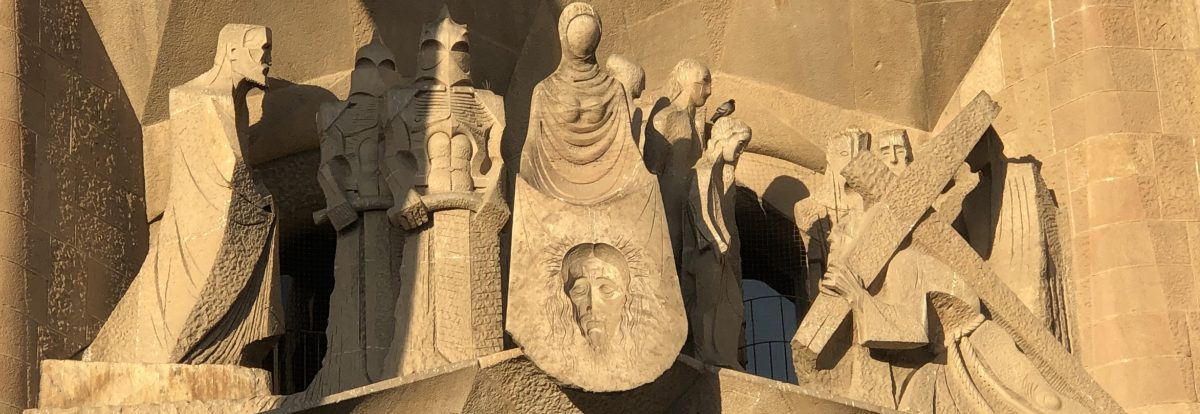
Church of St. Ignatius (ceiling), Rome

Today we remember not only the great names—Robert Bellarmine, who cheers us on in our studies, and Francis Xavier, who reminds us that our studies are only a means to spread the Gospel. Among these heavenly friends, there are many less famous ones, perhaps even some companions we have known in this life who are now in the Father’s house.

Every year when we reach the second half of Ordinary Time and volume four of the breviary, I find the holy card of Bob Araujo, a Jesuit who taught me in Chicago and greatly encouraged me in my studies and advised me during some doubtful moments of my formation. Bob suffered quite a bit in his life, first, from opposition in his career and, then, from a slow and painful cancer. He died in October 2015. When he died, the words of St. Paul came to mind: “I have fought the good fight; I have finished the race; I have kept the faith.” When he died, another companion said to me, “He’ll get right in.” Now I talk to Bob from time to time, and I ask him, “What do you think? How am I doing? Do you have any advice for me?” I imagine you also have such companions.

But when we talk about saints and Jesuit saints, I must admit that there is also something that disturbs me, just as there is something that disturbs us in the Gospel passage chosen for this feast: “Whoever loves his life loses it, and whoever hates his life in this world will preserve it for eternal life.”

Continue reading “Do we still desire holiness? Homily for the Feast of All Saints and Blesseds of the Society of Jesus”
Infants and baptism of desire: one theologian’s perspective

Spisska Kapitula, Slovakia

As I mentioned earlier, over the summer God’s providence brought me into contact with a group of people dedicated to sharing the story of Baby Brian Gallagher. The circumstances of Baby Brian’s short life raise the question of babies who die before baptism and baptism of desire, and the group asked me to write up a one page summary of the argument I present in my book Baptism of Desire and Christian Salvation. Of course, for the full story–and much else besides–buy the book! What I wrote is not intended as a full pastoral response to those who have lost a child too soon, but a very brief sketch of the theological issues involved.

Theologians have a precise mission within the Church. Our task is not to “create” the truth, but to use the tools of reason and study to understand better what God has revealed to us. When it comes to salvation, theologians don’t “decide” what the Church believes; we merely try to express with greater clarity what we find in Christian revelation. 

Good theologians, then, must be humble and cautious in what they claim. Historically, theologians have found the question of what happens to babies who die before baptism particularly difficult. We know that baptism is necessary for salvation (John 3:5) because baptism is the unique way Jesus has revealed for us to participate in his death and resurrection (Romans 6:3-5). At the same time, the doctrine of baptism of desire has found strong support among theologians and in the Church’s official teaching. Baptism of desire does not deny the necessity of baptism or create an alternative to the sacrament. Instead, the doctrine means that those who desire the sacrament but are prevented by circumstances beyond their control from receiving it can still obtain baptism’s effect—rebirth to eternal life. 

Historically, most—but not all—theologians have had trouble seeing how baptism of desire could apply in the case of infants who are too young to formulate a desire of their own. After a decade studying baptism of desire, however, I believe that these theologians have tended to leave out a decisive piece of evidence: our practice of the sacrament of baptism. The key theological principle that has been neglected up until now is known as lex orandi—lex credendi, which means “the law of prayer is the law of belief.” In other words, the way we celebrate the sacraments is itself a guide to what is true. In this case, the Church’s firmly-established practice invites us to look more deeply into how to understand the desire for baptism in regard to infants.

Continue reading “Infants and baptism of desire: one theologian’s perspective”

Why pray? Homily for the 29th Sunday in Ordinary Time

Homily for the 29th Sunday in Ordinary Time (C). Translation of a homily, originally given in Italian in October 2019.

Why pray? Because the other team’s fans are praying, and we don’t want to give them any advantage? Because God seems a little indecisive, and maybe he needs our good advice? Because to get what we want, it helps to have powerful friends?

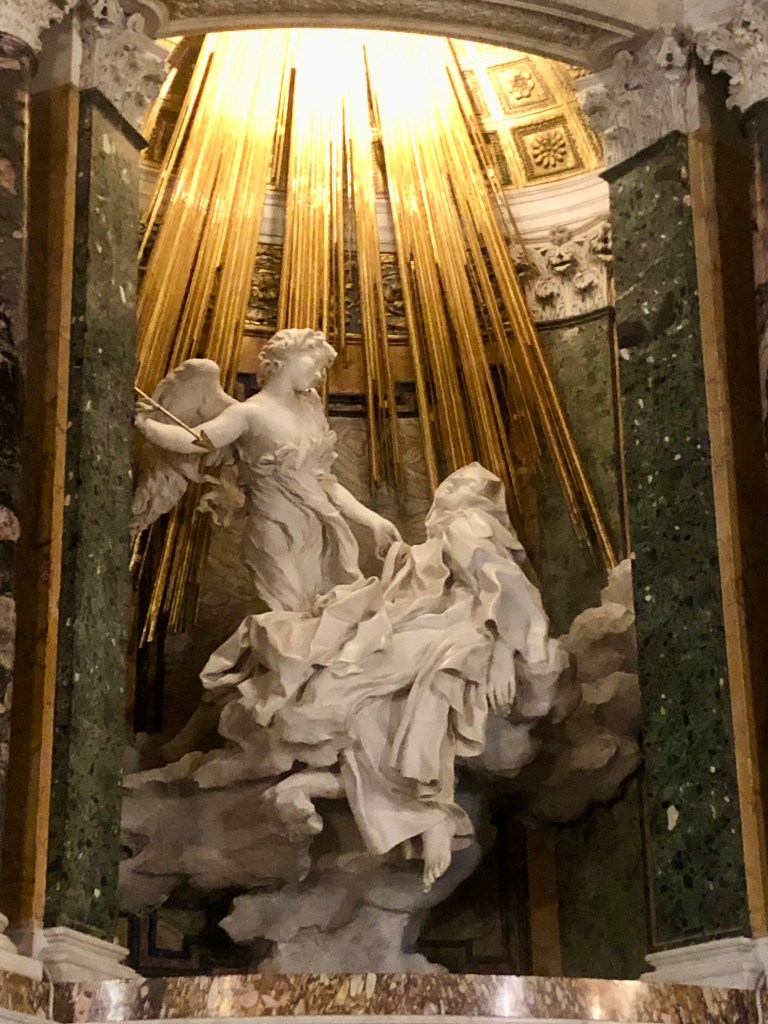
Ecstasy of St. Teresa, Gian Lorenzo Bernini, 1652

Unless we walked into church this morning by mistake, each of us believes that prayer is important in some way. In fact, we may feel that it is necessary. Maybe we can’t explain it, but we need prayer. Maybe we’ve learned from experience, maybe from hard experience, how necessary prayer is.

Continue reading “Why pray? Homily for the 29th Sunday in Ordinary Time”

Remember to say “Thank you”: Homily for the 28th Sunday of Ordinary Time

Homily for the twenty-eighth Sunday of Ordinary Time (C).

One of the lessons I remember being drilled into me as a child was the importance of saying “thank you.”  As with so many of the lessons we learn in childhood, I may not have appreciated its importance at the time, but now I’m grateful for it.  The next time I see my mom and dad, I’ll have to remember to thank them.

Today’s readings are all about remembering—and forgetting—to give thanks.  The attention that Sacred Scripture dedicates to the theme suggests that we are dealing with something much deeper than polite social convention.  Gratitude does make for more pleasant social interactions, but it is also necessary for us to see the world truthfully.  And it is something we easily forget.

Certosa di San Martino, Naples

Today’s Gospel passage, in fact, hints that perhaps we are more inclined to forget to give thanks than to remember.  Ten lepers were cleansed, Jesus points out, but only one returned to thank him.  Busyness can distract us from gratitude—we need to move on to the next thing, we don’t have time.  When we get what we want, often our tendency, instead of saying thank you, is to try to get more.  This is part of what theologians call “concupiscence,” the habit of selfishness burned into human nature by original sin.  Today we can add a sense of entitlement to concupiscence.  We like to speak of our rights—and politicians like to promise more rights—but while the rights we claim for ourselves multiply exponentially, our sense of responsibility never quite seems to keep pace.  We forget that we would have no rights whatsoever if these hadn’t been granted to us by our Creator.  To this forgetfulness we can add advertising that pushes us to buy more, to watch more, to scroll more, to consume more, and not to waste time remembering where we came from.  My parents did well to drill saying “thank you” into me because there are so many other voices saying, “Don’t worry—just give me your credit card.”

The loss of a sense of gratitude makes a truly Christian life impossible.  It’s no accident that the word that describes the central action in the life of the Church—“Eucharist”—comes from the Greek word for thanksgiving.  In some ways, this might seem surprising because in the celebration of the Eucharist, God’s action, and not ours, is central.  It is Jesus who gives himself to us; it is his power that transforms bread and wine into his Body and Blood, his living presence among us.  What we do in this sacrament we do only because he gave us the instructions.  The initiative is always God’s.  The same can be said of all of creation.  Everything that is is an unmerited gift.

Continue reading “Remember to say “Thank you”: Homily for the 28th Sunday of Ordinary Time”

Lessons from Slovakia

Spiš Castle, Slovakia

With classes starting up again this week at the Greg, I’ve been looking back with gratitude on a full summer. Among the highlights was a unexpected trip to Slovakia to accompany the Free Society Seminar organized by the Faith & Reason Institute and the Kolégium Antona Neuwirtha. It was a delight to meet a diverse group of curious and insightful young people from Slovakia, Poland, and the States, all of them committed in one way or another to serving their societies and the common good. The faculty was equally a joy to be with.

In addition to chaplain duties, I was able to lead a seminar on the theme of “civil religion,” taking an article I wrote for The Catholic Thing last year “Rites (and Wrongs) of Democracy” and Robert Bellah’s 1967 article “Civil Religion in America” as jumping off points. Another article I wrote about public apologies and how we deal with historical wrongs, “Confessing Other People’s Sins,” produced an even livelier discussion, enriched by the diverse eastern European perspectives.

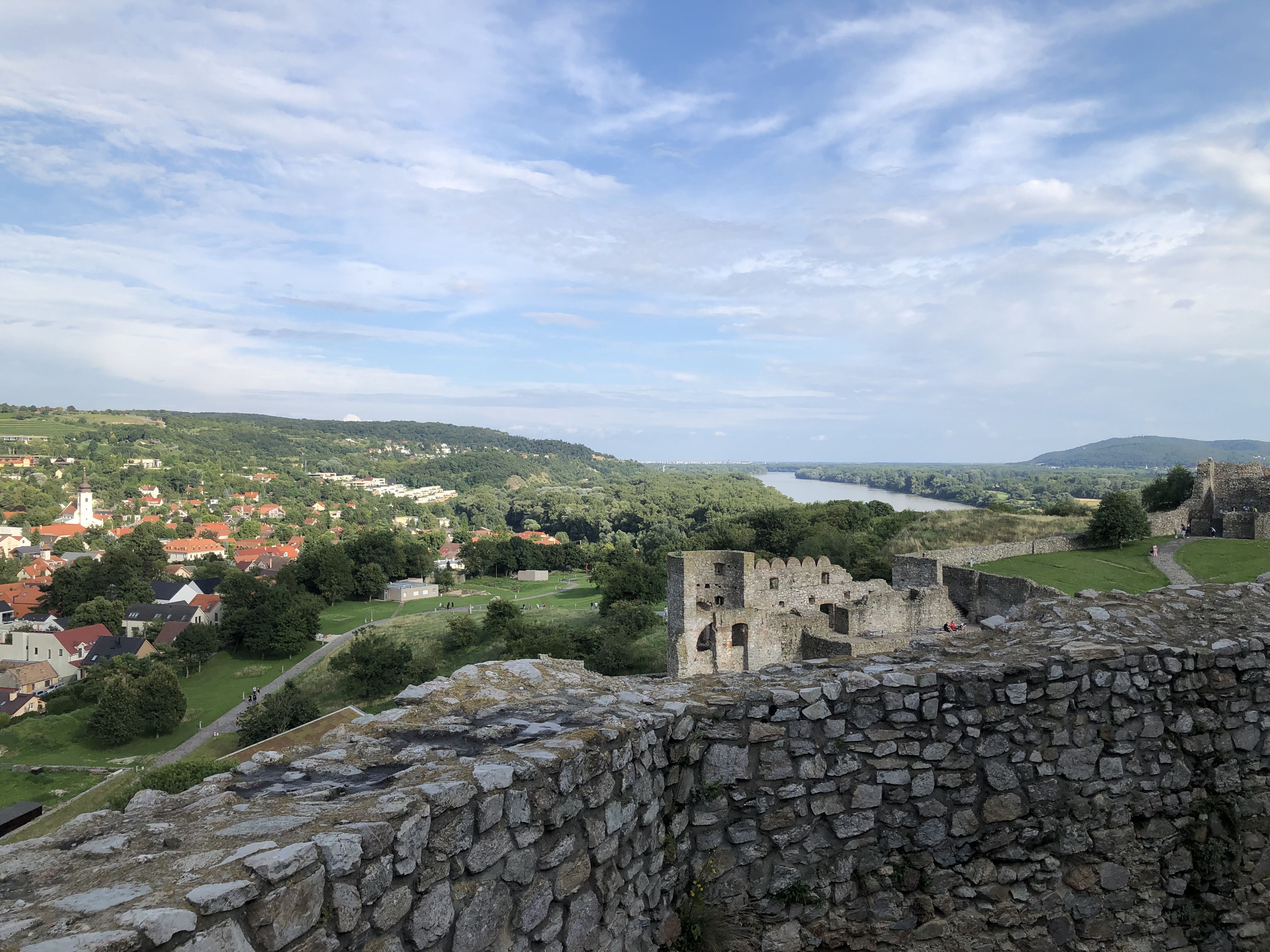
Slovakia is a country of castles, idyllic landscapes, and beautiful churches, but one of the trips’s most haunting memories has to do with the legacy of communism. We visited the Victims of Communism Museum in Košice, which seeks to keep the history of that dark time alive. The geography of Slovakia also provided a vivid reminder of the desperation that system produced. The ancient and strategically placed Devín Castle overlooks the Danube, with Austria–and during the Cold War, freedom–just on the other side. Displays detail the brutal lengths to which the border guards went to prevent Czechoslovak citizens from escaping. Some tried to swim the Danube at the narrow point by Devín. Thousands were imprisoned for illegally trying to cross the Czechoslovak-Austria frontier, and 42 people lost their lives.

Continue reading “Lessons from Slovakia”