
With yesterday’s feast of the Baptism of the Lord reminding us of the beauty and uniqueness of the sacrament of baptism, it seemed an opportune moment for an update on my work on baptism of desire. I’ve continued to do a bit of research on the question of infants that die before baptism and posted some reflections on the issue here and here late last year.


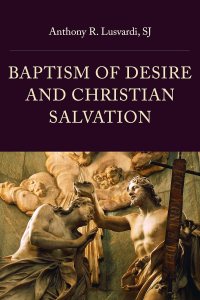
Reviews of Baptism of Desire and Christian Salvation continue to come out, so far all deeply appreciative. Theology today is no longer an exclusively European enterprise, so I’m especially excited to have an international response to the book. The Hekima Review, Africa’s leading theological journal, recommends it for both “Catholic clergy and lay people as it foregrounds the pastoral implications of the doctrine and the need for evangelisation.” Meanwhile, India’s top theological journal, the Vidyajyoti Journal of Theological Reflection published a particularly detailed and insightful review, which noted the specific value of the book in the context of Indian religious pluralism. It expressed the hope that the book would become the standard “theological ‘textbook'” for discussing such issues. The reviewer also picked up on the way the work responds to the deeper philosophical currents of the twentieth century:
This work belongs to what the dogmatic theologian José Granados has identified as a corporeal turn in theology, an emphasis on the body after the heady years of the twentieth century that – whether primarily or exclusively – emphasized cognition. This corporeal turn has meant a returning emphasis on not just the body, but the embodied nature of the Christian faith. It recognizes that the embrace of the faith cannot be restricted to some conceptual nod, but must necessarily embrace ritual, and recognize that the materiality of ritual is important. As Lusvardi writes “The instinct of the early Church to emphasize the ritual was not wrong, for the ritual says and does what nothing else can” (p. 342). In stressing the importance of the corporeal, Lusvardi’s work also becomes part of the corpus of the critique of modernity, which consciously, or unconsciously, seeks to restore a holistic view of the world, sundered through modernity’s adoption of Cartesian binaries, and has powered so much of Indian post-colonial thought.
Closer to home, The New Ressourcement journal said:
Lusvardi’s excellent book … is a must-read for anyone interested in the history of baptism, the nature of sin and salvation, or the hope for non-Christians and infants. It is hard to do justice to the extensive ground this book covers. In a compelling way, it draws the reader to see that the good news of Christian salvation is truly good news for its hearers precisely because the experience of Christ’s saving death and life is available to all in baptism.

The reviewer also offered a defense of the standard scholastic approach to the doctrine, aspects of which I call into question in the book–evidence, I think, that the issues the book raises are worthy of robust theological examination and debate.
So put it on your reading list for the new year!
Baptism of Desire and Christian Salvation is available from Catholic University of America Press (20% discount with the code CT10), Amazon, and other online booksellers. I have collected reviews, interviews, and other news here.




 Tony Lusvardi, S.J.