Homily for the 29th Sunday in Ordinary Time (C). Translation of a homily, originally given in Italian in October 2019.
Why pray? Because the other team’s fans are praying, and we don’t want to give them any advantage? Because God seems a little indecisive, and maybe he needs our good advice? Because to get what we want, it helps to have powerful friends?
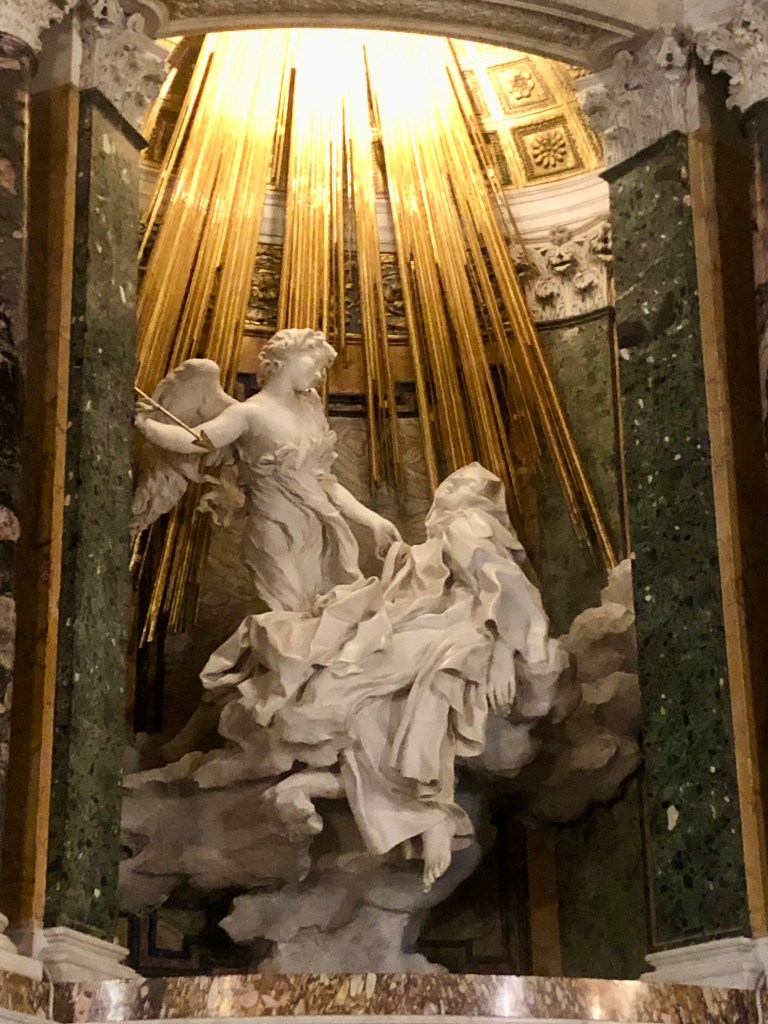
Ecstasy of St. Teresa, Gian Lorenzo Bernini, 1652
Unless we walked into church this morning by mistake, each of us believes that prayer is important in some way. In fact, we may feel that it is necessary. Maybe we can’t explain it, but we need prayer. Maybe we’ve learned from experience, maybe from hard experience, how necessary prayer is.
Homily for the twenty-second Sunday in Ordinary Time (C).
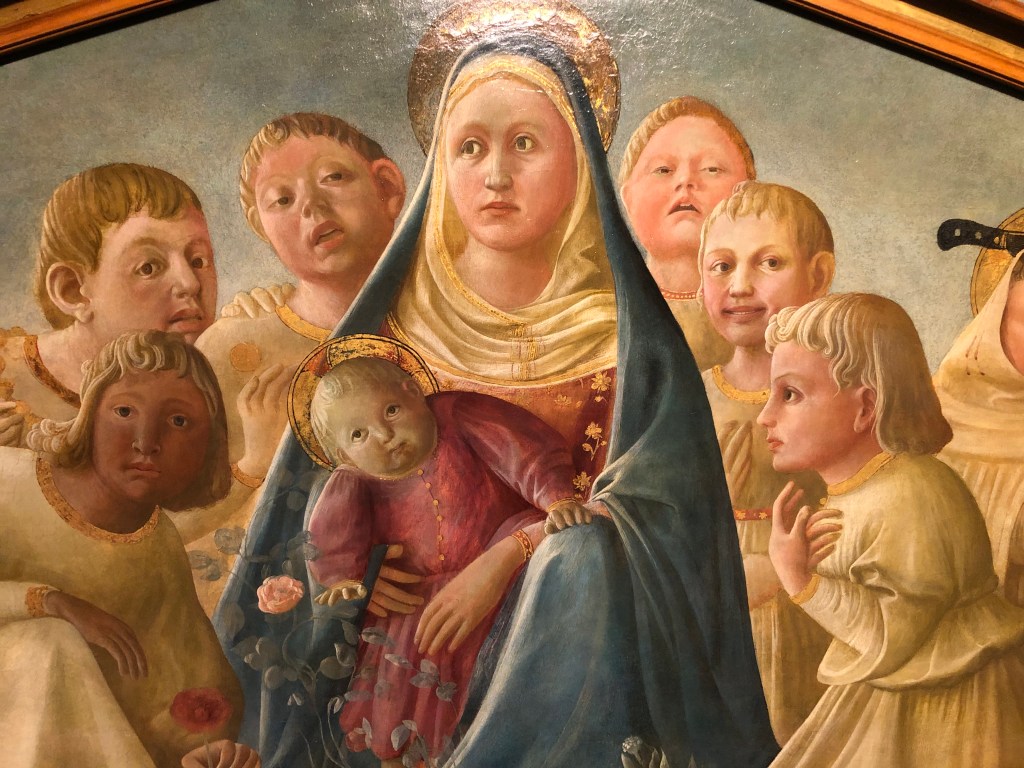
Filippo Lippi, Madonna of Humility, 1420
Humility is the virtue that stands out both in today’s Gospel reading and in Sirach’s advice to “conduct your affairs with humility” and to “humble yourself the more, the greater you are.” I’ve been thinking about humility a lot this summer because I’ve been thinking about my grandfathers. One passed away in June, the other fourteen years ago, and “humble” is one of the first words that comes to mind when I think of either of them—perhaps in both cases because my grandfathers were the quiet ones, and my grandmothers were the talkers! One grandfather was a baker, the other lived his whole life in the same small town in Minnesota. I think of them both as great men not because they sought attention or prestige, but because they didn’t. Because they dedicated themselves to others, to their families and to their communities, without making a fuss about it, and left the lives of many better as a result. In the homely etiquette lesson Jesus offers in the Gospel—take the lower place instead of elbowing your way to the head of the table—he points to one way in which a humble act can leave one better off in the long run.
Homily for the seventeenth Sunday in Ordinary Time (C)
Guido Reni, Trinity of the Pilgrims (1625-6)
Readings: Gn 18:20-32; Col 2:12-14; Lk 11:1-13
A few weeks ago, some friends were talking about watching a movie. They knew that it took a dark twist at the end, so they hit the stop button early to avoid the tragic finish. That’s exactly what happens in today’s first reading. The wickedness of Sodom and Gomorrah becomes too great for God to ignore, and he decides to destroy the cities. Abraham questions him, as if bargaining him down. If just ten innocent people remain, God will spare the cities. But, as you probably know, if you read on, God does destroy the cities. They did not contain even ten good men. They were corrupt from top to bottom.
Still, it’s not an accident that today’s reading stops where it does. The premature ending focuses our attention on God’s reaction to human corruption. He is not eager for destruction or motived by vindictiveness. To use the terms of later Christian theology, we could say that the destruction of Sodom and Gomorrah is one of the many stories in the Book of Genesis that express the reality of Original Sin. The Biblical message is clear: None of us is innocent. Mankind is corrupt from top to bottom. God’s reaction to Abraham—his desire to spare the innocent—shows that the destruction wrought by Original Sin is not what God wants. Our sinfulness is self-destructive.
If self-destruction were the end of the movie, we could understand turning it off early. But God’s full response to human sinfulness, which unfolds in the New Testament, is not to strike a deal, to plea bargain, or to negotiate. Nor is it to ignore our sinfulness or to excuse it. It is not to declare a new paradigm in which there are no longer any moral absolutes and what was once sinful is now OK, if circumstances are right or you get your pastor’s permission. No, God’s reaction is something else entirely. As St. Paul tells the Colossians, God has removed sinfulness from our midst by “nailing it to the cross.”

 Tony Lusvardi, S.J.