As is traditional for the First Week of Lent, the Pope and the Roman Curia will spend several days making their annual spiritual exercises. This year’s retreat is being preached by Bishop Erik Varden of Trondeim, Norway. Some readers might know Bishop Varden already from his wonderful blog Coram Fratribus. A convert and then a Trappist monk, Bishop Varden has a gift for communication comparable to our own great Robert Barron, though with his own unique style.
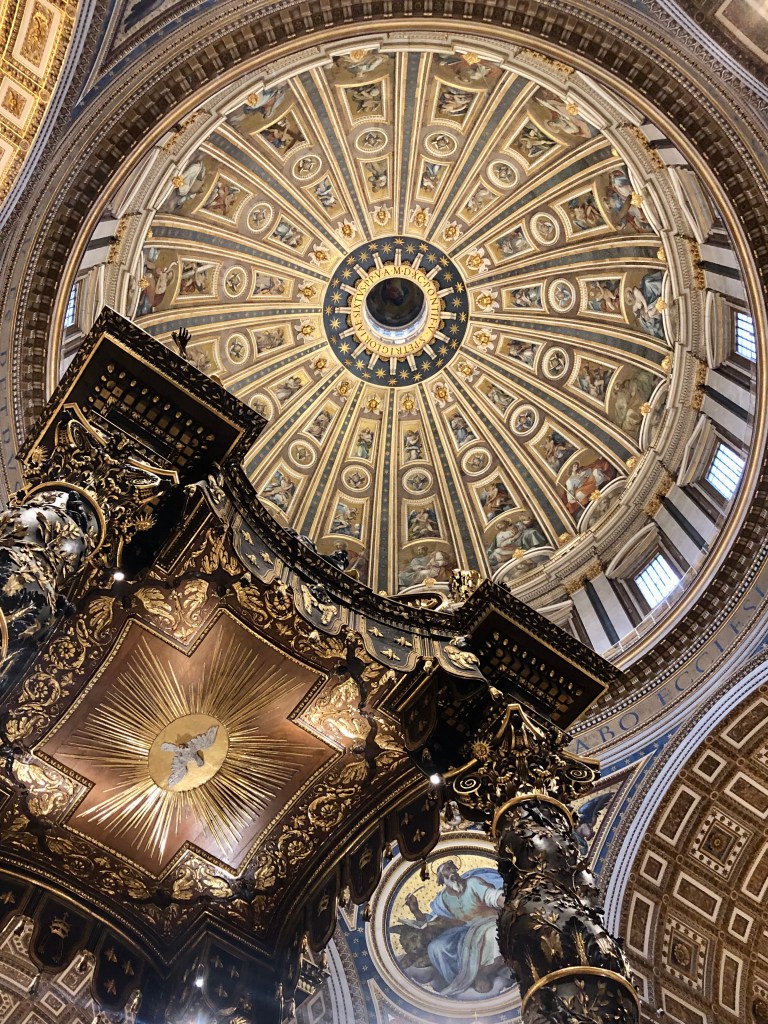
St. Peter’s Basilica, Rome
At a mere 51 years old, Bishop Varden also represents something of a turning of the page in the life of the Church. I’ve written before (here and here) that the zealous and youthful Church I encountered in Scandinavia hints at what fidelity and evangelization must look like in an increasingly secularized world. Bishop Varden–articulate, orthodox, cultured, and creative–seems to understand how to respond to our twenty-first century reality.
Last year I read Bishop Varden’s profound book Chastity: Reconciliation of the Senses, and I thought this week would be a good opportunity to share a few of its many insights…
Homily for the Fifth Sunday in Ordinary Time (Year A).
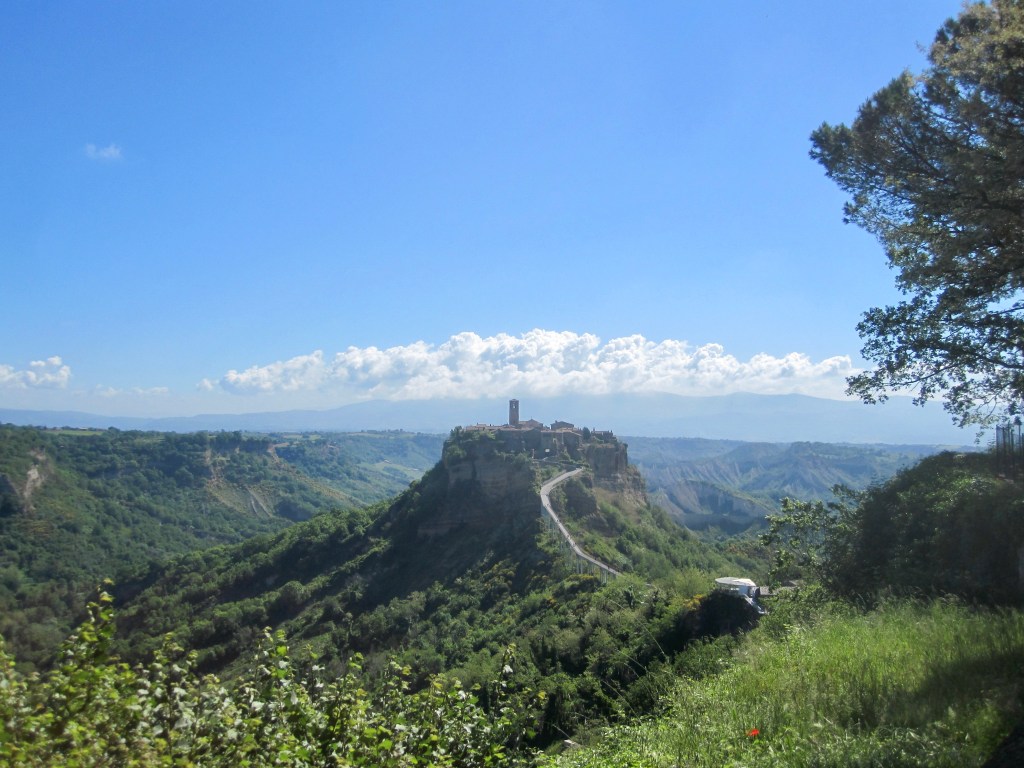
Bagnoregio, Italy
After the Christmas break another Jesuit in our community returned to Rome after having had corrective eye surgery. The surgery went so well that for a week after he returned, he wore sunglasses at all times of day, even indoors; of course, we gave him a hard time about imagining that he had become a movie star. What happened was that, with his vision corrected, at first his pupils were letting in too much light—so much light that he couldn’t see. For our eyes to work, we need light, but we also need contrasts. Some parts of our field of vision must be lighter or darker than others, otherwise we’ll end up falling down the stairs and running into walls.
If there is no light, of course, we cannot see. But too much light can blind us too. In the Biblical world, before electric lighting, the risk of darkness was almost always greater than having too much light. In the Bible the metaphor of light is usually good, though occasionally the light of God is overwhelming—think of Jesus appearing to St. Paul on the road to Damascus. Paul is knocked over and blinded by the vision. If we were to be hit right now with heaven’s light in all its purity, we would probably be paralyzed too. In order to experience that light, we need to grow, to be re-formed—the same way my confrere’s eyes had to convert after surgery and our own eyes have to adjust when we step outside at midday. We might, in fact, say that God’s light shines even on those in hell, and that their darkness is the result of eyes grown used to the shadows, forever unwilling to adjust to the daylight. However, this world in which we live right now contains both light and darkness. In order to navigate in this world, we need to be able to recognize the contrasts.
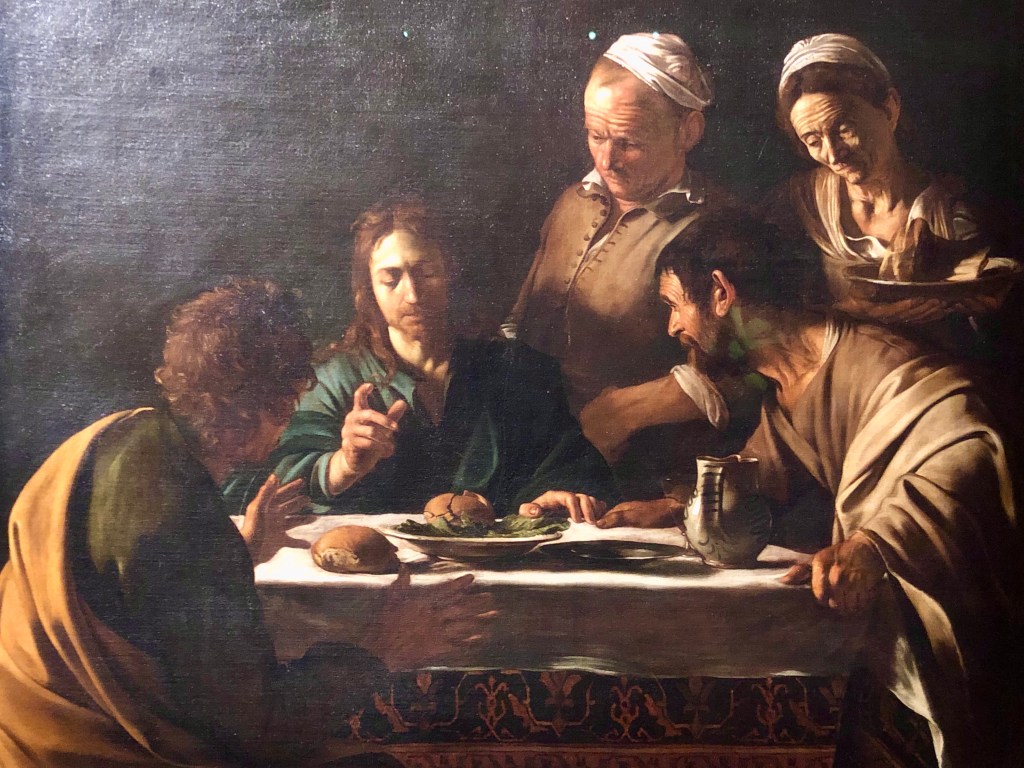
Several weeks ago I spent a wonderful afternoon at a special exhibit of 24 paintings by Caravaggio brought together in Palazzo Barberini and dubbed Caravaggio 2025. The exhibition made me wonder at Caravaggio’s extraordinary popularity. Why is Caravaggio so popular today? And what does this tell us about where we are spiritually? I think the answer is not unrelated to the other recent events in Rome: the election of a missionary as Pope Leo XIV; our new Holy Father’s goal of steering the Church faithfully through the digital revolution, just as Leo XIII provided guidance during the industrial revolution; and this Jubilee year’s theme of hope.
While you’re at it, check out some reflections from a few months back on the artist’s spectacular St. Matthew cycleand a different conversion of St. Paul. And there’s plenty of other great work at The Catholic Thing, including, if you missed it, an explanation of why I think my book on baptism of desire is so important at this time when renewing the Church’s missionary spirit is such a vital challenge: Getting Back into the Baptizing Business. The price on Amazon seems to have dropped a bit recently.
When I get near the end of my time in Rapid City every summer—or this year, fall—I feel a little nostalgic. It helps me to imagine how St. Paul would have felt throughout his ministry, founding communities and then having to move on. He invested himself completely into each one; he made friends; he faced opposition, persecution, and disease; sometimes he owed his survival to the care he received from the Christians in each place. And because it was much harder for Paul to travel by foot and ship across the Mediterranean than it is for me to book an airline ticket across the Atlantic, I find the yearning and love expressed in his letters particularly poignant. This is especially the case in his letter to the Philippians.
Not all of Paul’s letters are as warm as the one to the Philippians. (The Philippians, just so we’re clear, were residents of the city of Philippi in northern Greece, not to be confused with Filipinos who come from islands in the Pacific.) In some letters—to the Corinthians, for example—Paul is in battle mode, trying to straighten out bad behavior. He wrote his letter to the Romans before he arrived in Rome, so it’s sort of an introduction and also a fundraising appeal. But Paul knows the Philippians well; he describes them as his partners for the Gospel from the first day. His letter to them was written from prison, probably in Rome. Contemplating the quarantine that awaits me on my own return to Rome, this is also something I can relate to. But despite these circumstances, Paul’s letter to the Philippians overflows with joy and peace. It’s obvious that his affection for the little church in Philippi is a comfort to him even in imprisonment. He writes, “I am confident… that the one who began a good work in you will continue to complete it until the day of Christ Jesus.” Paul knows that we can never just tread water in the life of discipleship. We must always keep striving. So the letter is an exhortation to continue to grow in Christ, but its tone is more that of encouragement than a call to repent.
Now you are probably used to being told not to take certain parts of the Bible literally. Today, however, I’m going to tell you to do the opposite. Read St. Paul’s words to the Philippians, and take them as if they were addressed to you, as if the letter began, “to all the holy ones of Christ Jesus who are in Rapid City.” And take these words literally: “If there is any encouragement in Christ, any solace in love, any participation in the Spirit, any compassion and mercy, complete my joy by being of the same mind, with the same love, united in heart, thinking one thing. Do nothing out of selfishness or out of vainglory; rather, humbly regard others as more important than yourselves, each looking out not for his own interests, but also for those of others. Have in you the same attitude that is also in Christ Jesus.”
In the West today, pessimism is warranted. Suicide, crime, and drug use are up; birthrates are down. In America, woke excess has undermined much of the progress made toward racial reconciliation over the course of the last century. The decline in religious practice has eroded those values that transcend political conflict and material consumption; we’re losing the shared cultural language with which we could talk to one another about matters touching on the common good. In the absence of a common cultural narrative and shared values, tribal loyalties have filled the void, becoming our false gods.
I don’t think it disloyal to admit that the Church has not adequately responded to the West’s malaise. Faced with Covid, we closed shop. Rome these days sometimes seems to be swimming in nostalgia for the 1960s. No doubt it was more pleasant to be a young cleric in the heady days of Vatican Council II–at least, before the seminaries emptied–but those are not our days.
Half a century ago, perhaps, Catholics in the West could still see their societies as Christian, though ones that were rapidly changing. So it seemed reasonable enough to hope that with a bit of updating around the edges, a little accommodation to the Zeitgeist, we might experience a new flourishing of Christian life. That didn’t happen, and it is no longer reasonable to expect that it will. We need a new response to today’s reality.
A recent article by Sydney’s Archbishop Anthony Fisher The West: Post- or Pre-Christian? provides a helpful, nuanced diagnosis of where we are.



 Tony Lusvardi, S.J.