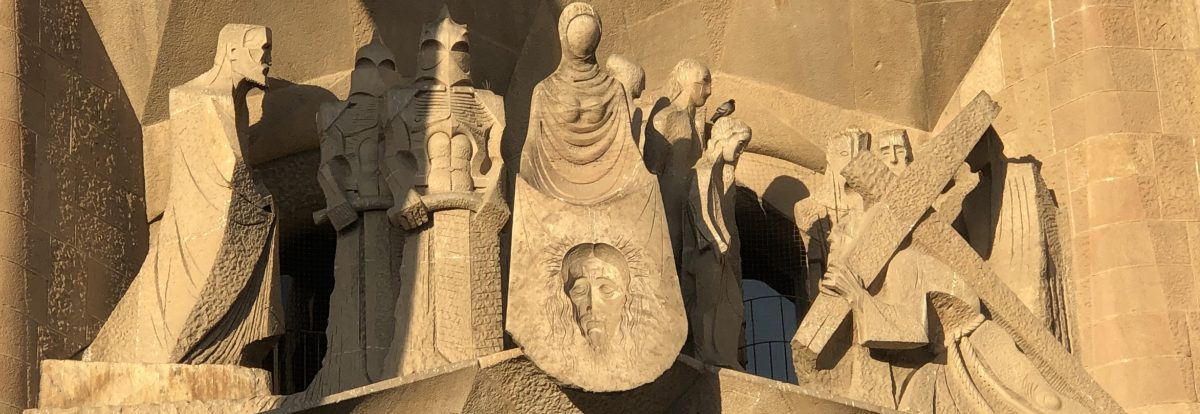
Lent’s moment of choice

Homily for Friday of the Fifth Week of Lent
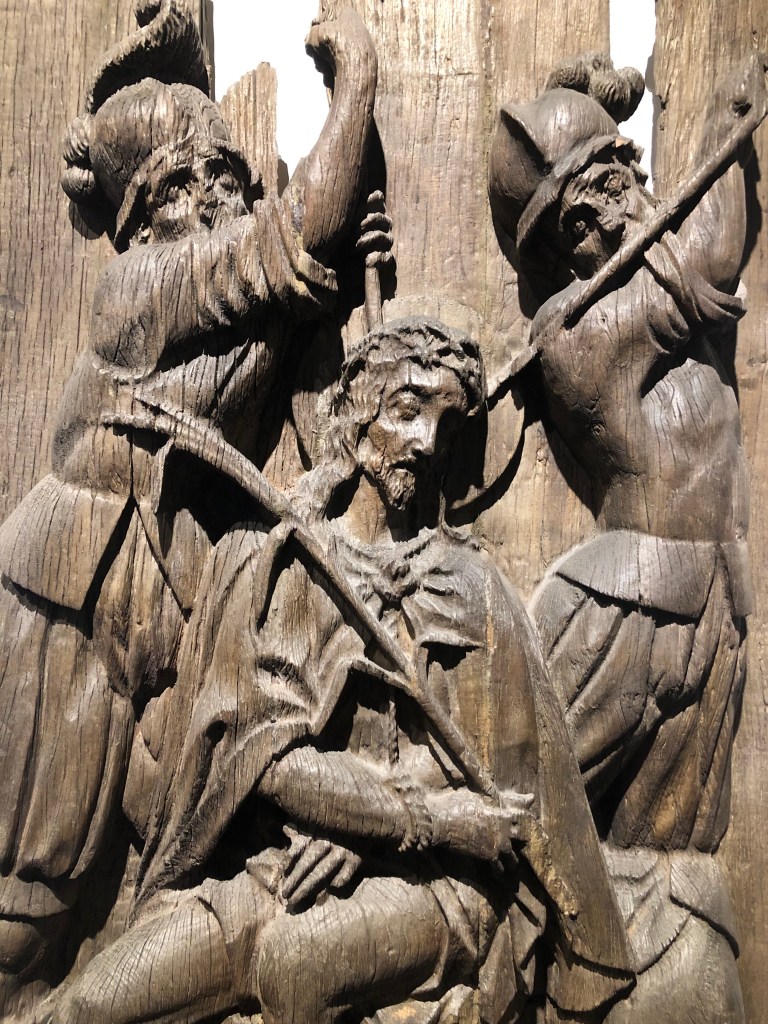
Jesus crowned with thorns, 18th century, Molave wood, San Augustin Museum, Manila

We have reached the final days of Lent. Five weeks ago, this penitential season began with an emphasis on prayer, fasting, and almsgiving. The austere sign of ashes reminded us of our mortality and challenged us to conversion. Prayer, fasting, and almsgiving are the classic means of conversion. Perhaps we have examined our lives, sought to grow in certain virtues, and made personal resolutions. And perhaps now, at the end of these five weeks of Lent, we realize that we have grown—or that we have not been very faithful to our resolutions. Or, more likely, we find that the results have been mixed: some growth, some failure.

In any case, we have reached a new moment. You may have noticed that, in this week’s liturgy, we have stopped using the Lenten prefaces at the beginning of the Eucharistic prayer and have begun to use the Passion preface. And today’s readings strongly orient us toward the Passion. Jeremiah speaks of slander and betrayal, and we naturally think of the sufferings that the Lord will face within a week. In the Gospel, opposition to Jesus grows, becoming increasingly violent, and his identity becomes clearer. It is no longer possible to maintain a moderate position toward him. It is no longer possible to respect him simply as a good teacher, a prophet, or a philosopher with interesting ideas: he is either the Son of God or a blasphemer. Everyone must choose.

This is the moment in Lent when we forget ourselves. Even our desire for conversion takes a back seat, because our attention is focused entirely on Jesus. Perhaps at this very moment, even our unsuccessful resolutions and failures help us understand how much we need a Savior. We are leaving the time of resolutions and moral growth and entering the time of the Savior. This time is his. It is the time of the Son of God, the time of the One who is greater than John and all the prophets, the time of our only Lord and only Savior. Thanks to our efforts—or perhaps despite our efforts—we have arrived here, at this moment. But this is the time of Jesus.

Readings: Jeremiah 20:10-13, John 10:31-42

Original: Italian

Gregorian University Chapel

2025
Freedom and Life: the two guiding lights of Lent

Homily for Wednesday of the Fourth Week of Lent

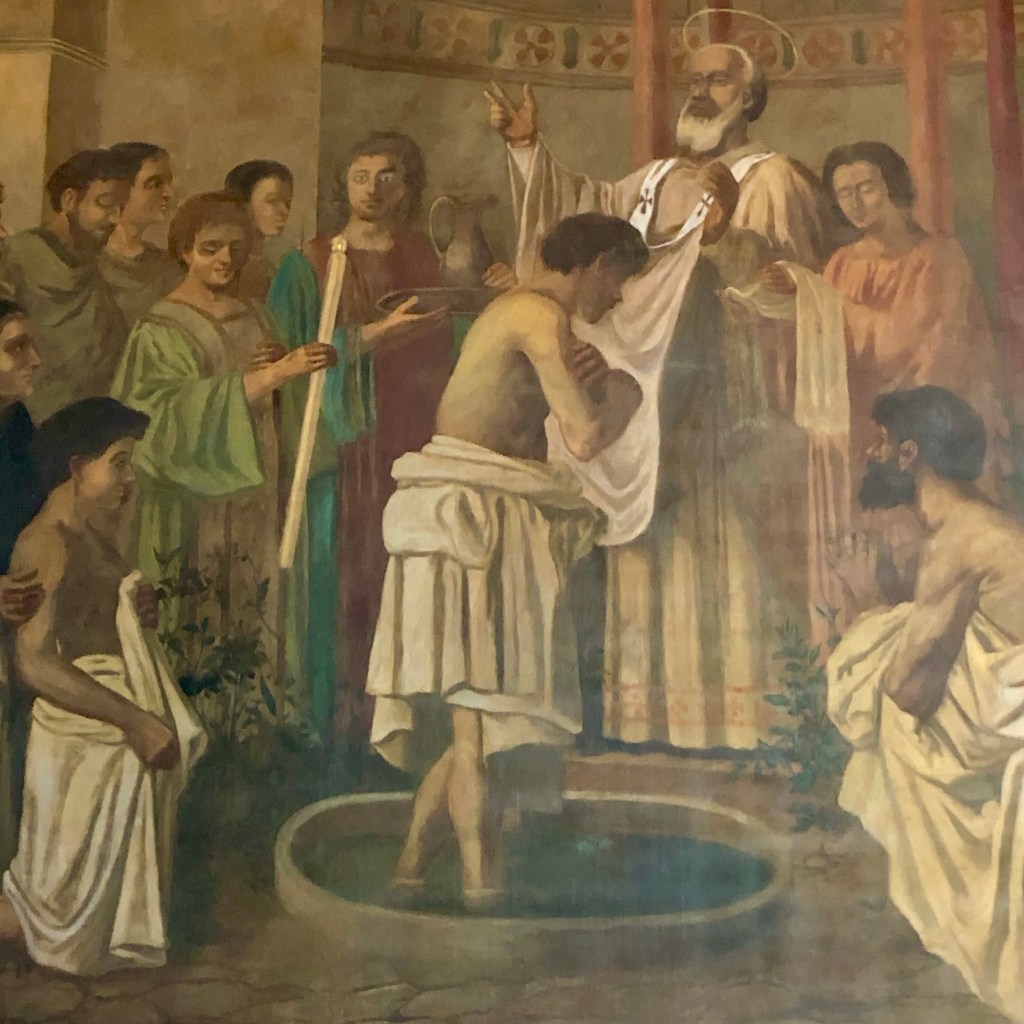
Baptism of St. Augustine (copy), Tito Troya, San Augstin Museum (Manila0

In these two readings, we see the two points of the compass for our Lenten journey. These points are also the two sides of the sacrament of baptism, to which this journey is directed.

The first reading speaks of freedom from evil: freedom from war and oppression; the end of exile in a devastated land; liberation from captivity, darkness, hunger, thirst, and abandonment. The joy that the prophet Isaiah expresses comes from the defeat of these evils that oppress us. The ascetic dimension of Lent is motivated by the desire to be freed from the forces that hold us captive: sin and selfishness.

But the purpose of Lent is not empty freedom. Rather, it is a freedom that allows us to live in a new relationship with the Lord. In the Gospel, Jesus emphasizes his relationship with the Father. And we, at the end of this Lenten journey, hope to renew the gift that was given to us in baptism: the gift of a new relationship with the Father, the gift of being reborn as his adopted children, the gift of the Spirit of Jesus who transforms us. Jesus speaks of intimacy with God.

Continue reading “Freedom and Life: the two guiding lights of Lent”

Prophets of doom or prophets of truth?

Homily for Wednesday of the Second Week of Lent (translated from Italian).

When I was little, I liked a series of children’s books and cartoons called “Winnie the Pooh.” In this series there was a character called Eeyore—in Italian I think it’s “Ih-Oh”—a gray donkey who talks sadly and sl-ow-ly. Poor Eeyore is always pessimistic and depressed. Eeyore is not a bad character; he is just a melancholic person—or, rather, a melancholic donkey.

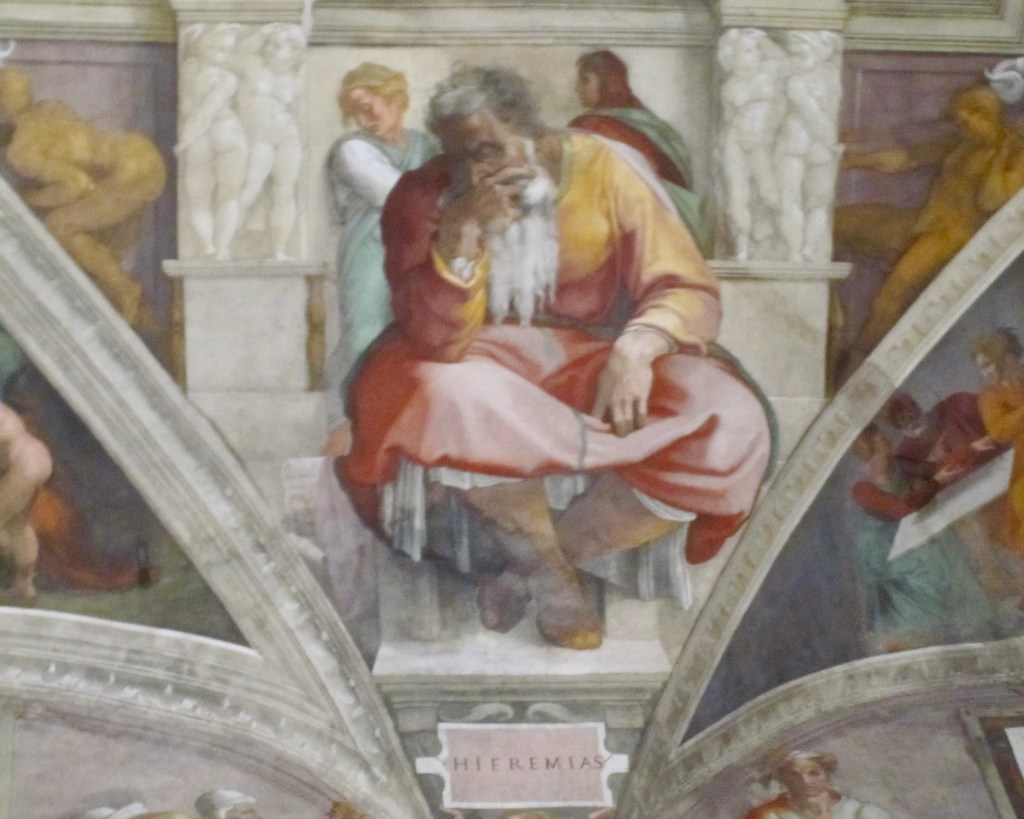
Jeremiah (Michelangelo, Sistine Chapel)

I think Eeyore would like today’s readings. The prophet Jeremiah is a prophet of doom. The message he receives from God to tell the citizens of Jerusalem is pessimistic. Destruction will come to the holy city, Jeremiah says. The king of Jerusalem and his advisors do not want to hear this message, so they find a more optimistic prophet, Hananiah, and plot to throw Jeremiah into a pit.

Jesus’ words today are also, in a way, words of doom. He repeats the prophecy of his crucifixion, which the disciples consistently try to avoid. Here, instead of listening to him, they immediately turn to church politics—who will have the highest position.

Continue reading “Prophets of doom or prophets of truth?”

Bishop Erik Varden on beauty, chastity, and the contemporary world

As is traditional for the First Week of Lent, the Pope and the Roman Curia will spend several days making their annual spiritual exercises. This year’s retreat is being preached by Bishop Erik Varden of Trondeim, Norway. Some readers might know Bishop Varden already from his wonderful blog Coram Fratribus. A convert and then a Trappist monk, Bishop Varden has a gift for communication comparable to our own great Robert Barron, though with his own unique style.

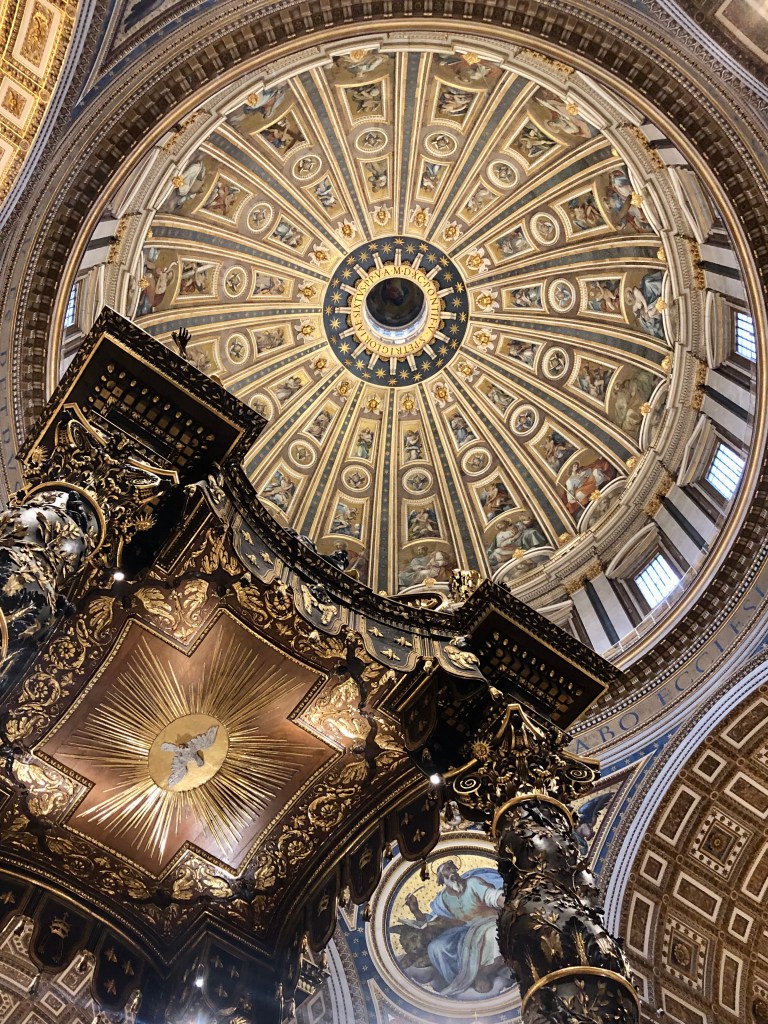
St. Peter’s Basilica, Rome

At a mere 51 years old, Bishop Varden also represents something of a turning of the page in the life of the Church. I’ve written before (here and here) that the zealous and youthful Church I encountered in Scandinavia hints at what fidelity and evangelization must look like in an increasingly secularized world. Bishop Varden–articulate, orthodox, cultured, and creative–seems to understand how to respond to our twenty-first century reality.

Last year I read Bishop Varden’s profound book Chastity: Reconciliation of the Senses, and I thought this week would be a good opportunity to share a few of its many insights…

Continue reading “Bishop Erik Varden on beauty, chastity, and the contemporary world”

Ash Wednesday homily

Chiesa di S. Maria dell’Orazione e Morte, Rome

Last year’s (brief) homily for Ash Wednesday. Original Italian.

In the readings with which we begin Lent today, we see two sides to this season of conversion. There is a public side. In the first reading, Joel calls the people to gather together, to declare a public fast, and to renew their worship. In the second reading, too, we are called to public witness: we are “ambassadors” of Christ, says St. Paul.

It might seem that there is a certain tension between these readings and the Gospel, which exhorts us to perform pious practices in private. However, there is no contradiction, because both of these aspects are part of the mission of a Christian in this world. The Gospel is a warning against hypocrisy, against the temptation to try to gain something—even if only the esteem of others—through our religious observances. All our practices—almsgiving, fasting, prayer—must be directed to the glory of God and not to our own glory.

During this season of Lent, let us seek above all purity of heart, integrity of public conduct, and an interior life consistent with the great call to follow the Lord Jesus as his disciples.

Readings: Joel 2:12-18; 2 Cor 5:20-6:2; Matt 6:1-6, 16-18

(Original: Italian)

Gregorian University Chapel

2025
Susanna and the wicked judges

Monday of the fifth week of Lent brings one of the Bible’s great courtroom dramas — the story of Susanna and the elders from the Book of Daniel. It’s one of the longest readings in the lectionary, but one that deserves to be read with relish. An innocent woman does what is right even at the cost of her life. Two powerful and corrupt men, overthrown by lust, suppress their consciences, and compound debauchery with vindictiveness. And a lone idealistic voice, indignant at the injustice of the crowd, speaks out — and the old goats are snared in the net they’ve woven.

Susanna and the Elders, Guercino, 1617

There’s something refreshing about the story. It’s not hard to tell the bad guys from the good gal, and for once justice is throughly vindicated. A few weeks ago in my post about Guercino, I mentioned the baroque era’s love of drama (one might be excused for saying “melodrama”). I was happy to see Guercino take up the story of Susanna. Quite a lot could be said about tale — the Lord hears the cry of the innocent even when everyone else seems deaf — but it is, first of all, a great yarn. As we look forward to Holy Week, Susanna’s travail is a reminder that, even if it doesn’t always happen quickly — or even in this life — justice will ultimately prevail.

Susanna and the Elders, Guercino, 1617

Serpents, Cyrus, and salvation: homily for the fourth Sunday of Lent

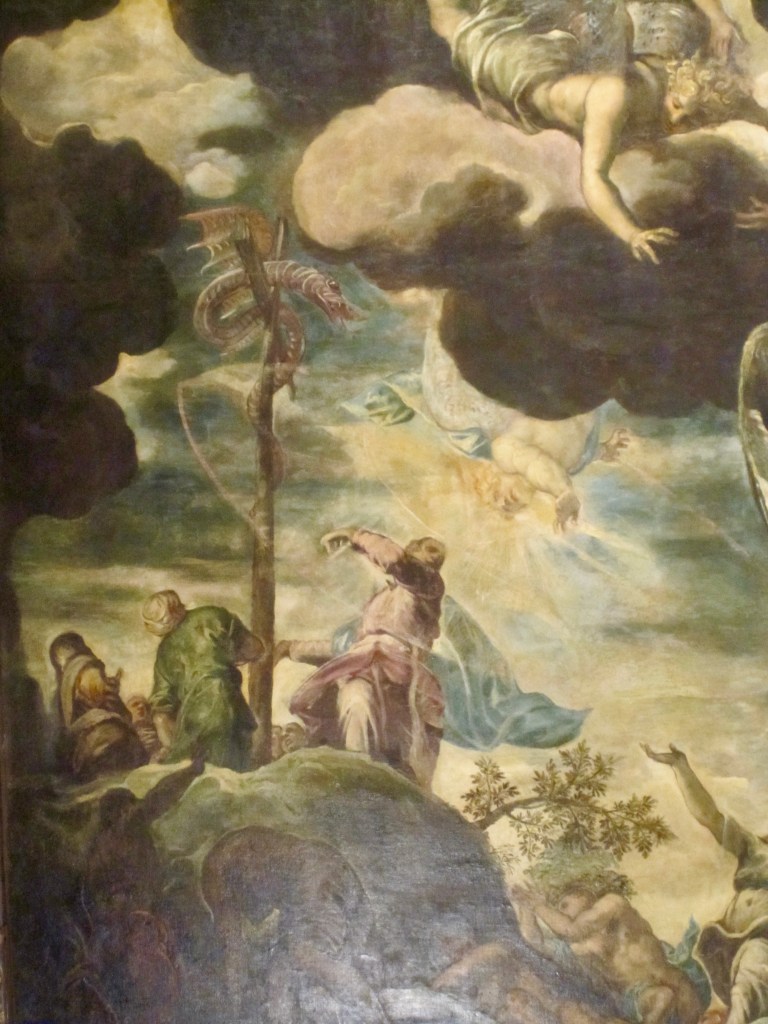
Miracle of the Bronze Serpent, Tintoretto (Scuola Grande di San Rocco, Venice, 1564-1587)

Homily for the 4th Sunday of Lent (B)

Today’s readings are a workout.  The serpent in the desert, God’s love and the refusal of many to accept it, faith and works, the prophets, Israel’s exile in Babylon, and King Cyrus, a Gentile who saves the day.  Getting through today’s readings means not just getting in your spiritual steps for the day—it’s more like earning a medal for the decathlon.

For a bit of mid-Lent spiritual exercise, the first image from today’s Gospel is a good place to start.  At first glance, it might seem a bit obscure.  What was Moses doing lifting up a serpent in the desert?  Jesus is referring to an incident during Israel’s wandering in the desert found in the Book of Numbers.  The Israelites, as seems to be their habit, complain against God and against Moses, saying “There is no food” and “We loathe this worthless food.”  The complaint does raise the question, which is it?  Is there no food or just food the Israelites don’t like?  There seems to be a bit of manipulative use of language in the Israelites’ rebelliousness, perhaps even a bit of self-delusion.  The phenomenon is not unique to the ancient world.  Today our political and social divisions are often made worse because we use exaggerated terms to describe our opponents and their intentions—or to mask uncomfortable facts we do not want to hear—and then we start to believe our own rhetoric.  The result is poisonous.  And, in fact, in the Book of Numbers, God punishes the people of Israel for their rebellion by sending fiery serpents to bite them.

Continue reading “Serpents, Cyrus, and salvation: homily for the fourth Sunday of Lent”

Be made clean: Homily for the Sixth Sunday of Ordinary Time

Homily for the Sixth Sunday of Ordinary Time (B)

Five years ago, if we had read this passage from Leviticus, we might have looked rather harshly at the Old Testament rules for the treatment of lepers.  Making a man shout “Unclean, unclean!” and dwell apart, outside the camp—quarantined—might have seemed unenlightened.  

Church of St. Ignatius (ceiling), Rome

Four years ago, about this time of year, all those purity laws in Leviticus started to look a lot more familiar.  We made each other dwell apart outside the camp, in quarantine, not because a scab or pustule or blotch had appeared, but because it might, you never know, you can never be too safe.  Suddenly those purity laws were not so unreasonable after all.

When we read the Gospel, we usually imagine that of course we would take the side of Jesus instead of the Pharisees.  But I wonder.  Look at Jesus in today’s Gospel passage.  No six feet of social distancing, no mask, no respect for the opinion of the experts, touching the infected without hand sanitizer before or after—would we really take the side of Jesus?

Continue reading “Be made clean: Homily for the Sixth Sunday of Ordinary Time”

The Virtue of Penance

Last week, I mentioned the seminar I taught this past semester about the sacrament of marriage. I also taught a course about the sacrament of penance. (I learned to be careful when describing my course load to make clear that those were, in fact, two different courses and not a sly commentary on marriage!)

Jonah sarcophagus (ca. AD 300), Vatican Museums

The sacrament of penance has a fascinating history, and the way in which it has been practiced over the centuries has varied more than perhaps any other sacrament. A major theme of the class, however, was that the sacrament itself is not the only way that Christians practice penance. As Thomas Aquinas pointed out (in the Summa Theologiae III q. 85), penance is not only a sacrament but also a virtue. He didn’t come up with that particular insight himself, of course, but was summarizing the theological tradition before him.

Continue reading “The Virtue of Penance”

First principle for Lent… and for life

Tomb of St. Ignatius, Church of the Gesù, Rome

Ash Wednesday is once again upon us. This year my Lent will be mostly taken up with doing, for the second time in my life, the 30-day Spiritual Exercises of St. Ignatius Loyola. So I’ll be off-line and in silence until Holy Week.

As a consideration for the beginning of Lent, then, I thought I’d offer the principle St. Ignatius places at the beginning of the Spiritual Exercises, what he calls the “First Principle and Foundation”. It’s his way of expressing the truth of the First Commandment: nothing else is as important as right relationship with God, and we should never allow anything else to take God’s place. The value of all the other goods we encounter in this life is entirely relative to whether they help us grow closer to God. In fact, if anything damages or gets in the way of our relationship with God, it is no longer good.

That’s all straightforward enough in theory, but Ignatius gives the consideration a specificity that bites. Giving concreteness to this principle is where the hard work of putting our lives in the right order begins. And that, I suppose, is what Lent is about–giving God his rightful place at the center of our lives.

Here is how Ignatius puts it, and the words I’ll leave you with until Easter… In the meantime, please pray for me as I make my retreat!

FIRST PRINCIPLE AND FOUNDATION

Man is created to praise, reverence, and serve God our Lord, and by this means to save his soul. 

The other things on the face of the earth are created for man to help him in attaining the end for which he is created.  

Hence, man is to make use of them in as far as they help him in the attainment of his end, and he must rid himself of them in as far as they prove a hindrance to him.

Therefore, we must make ourselves indifferent to all created things, as far as we are allowed free choice and are not under any prohibition. Consequently, as far as we are concerned, we should not prefer health to sickness, riches to poverty, honor to dishonor, a long life to a short life. The same holds for all other things.

Our one desire and choice should be what is more conducive to the end for which we are created.