Homily for Passion Sunday

I recently read something in a book written by an American sociologist that struck me–and disturbed me. This sociologist is a very good scholar and has conducted studies in several different countries and written a number of topics. In one of these studies, as an aside, he mentioned that, in general, people care more about being normal than about being good. For the majority of people it is more important to feel normal than to be good.

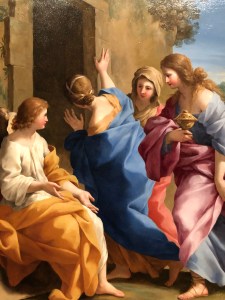
Holy Stairs, Rome

This disturbing observation struck me because it seemed hard to deny. And the truth of this observation is evident on no other day more than on this one, Palm Sunday. The celebration begins with Jesus’ triumphal entry into Jerusalem. The people welcome him as a hero, as a king. They throw their cloaks before him and cheer him enthusiastically, “Hosanna!” And in the space of a week, the same crowd will shout with the same enthusiasm, “Crucify him!”

On no other day do we feel so acutely the fickleness of the crowd or the inconstancy of the human heart.

Continue reading “Homily for Passion Sunday”

Be made clean: Homily for the Sixth Sunday of Ordinary Time

Homily for the Sixth Sunday of Ordinary Time (B)

Five years ago, if we had read this passage from Leviticus, we might have looked rather harshly at the Old Testament rules for the treatment of lepers.  Making a man shout “Unclean, unclean!” and dwell apart, outside the camp—quarantined—might have seemed unenlightened.  

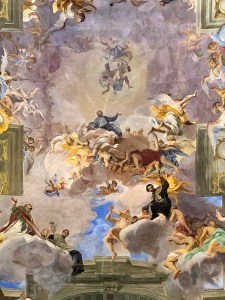
Church of St. Ignatius (ceiling), Rome

Four years ago, about this time of year, all those purity laws in Leviticus started to look a lot more familiar.  We made each other dwell apart outside the camp, in quarantine, not because a scab or pustule or blotch had appeared, but because it might, you never know, you can never be too safe.  Suddenly those purity laws were not so unreasonable after all.

When we read the Gospel, we usually imagine that of course we would take the side of Jesus instead of the Pharisees.  But I wonder.  Look at Jesus in today’s Gospel passage.  No six feet of social distancing, no mask, no respect for the opinion of the experts, touching the infected without hand sanitizer before or after—would we really take the side of Jesus?

Continue reading “Be made clean: Homily for the Sixth Sunday of Ordinary Time”

When God puts us to the test: homily for the twentieth Sunday of Ordinary Time

Homily for the 20th Sunday in Ordinary Time (A)

Jesus is the Son of God, the savior of the world, the Prince of Peace, King of kings, and Lord of lords. He would also have been a public relations firm’s nightmare.  He is constantly saying things that are unpopular and confusing, offending all the important people, alienating even his own relatives, not taking the advice of his inner circle, and in today’s Gospel he gets caught on the record making ethnically insensitive comments.  No wonder Fr. Ed left town for this Sunday’s readings!

Today’s Gospel raises two difficult issues I’d like to touch on this morning.  The first is the way Jesus gives this woman such a hard time, as if he doesn’t want to help her.  Why?  The second issue is the role ethnicity plays in today’s readings; the woman speaking to Jesus is a Canaanite—a Gentile, not a Jew.  This issue is perhaps especially important given how much talk of racism has been in the news recently.  

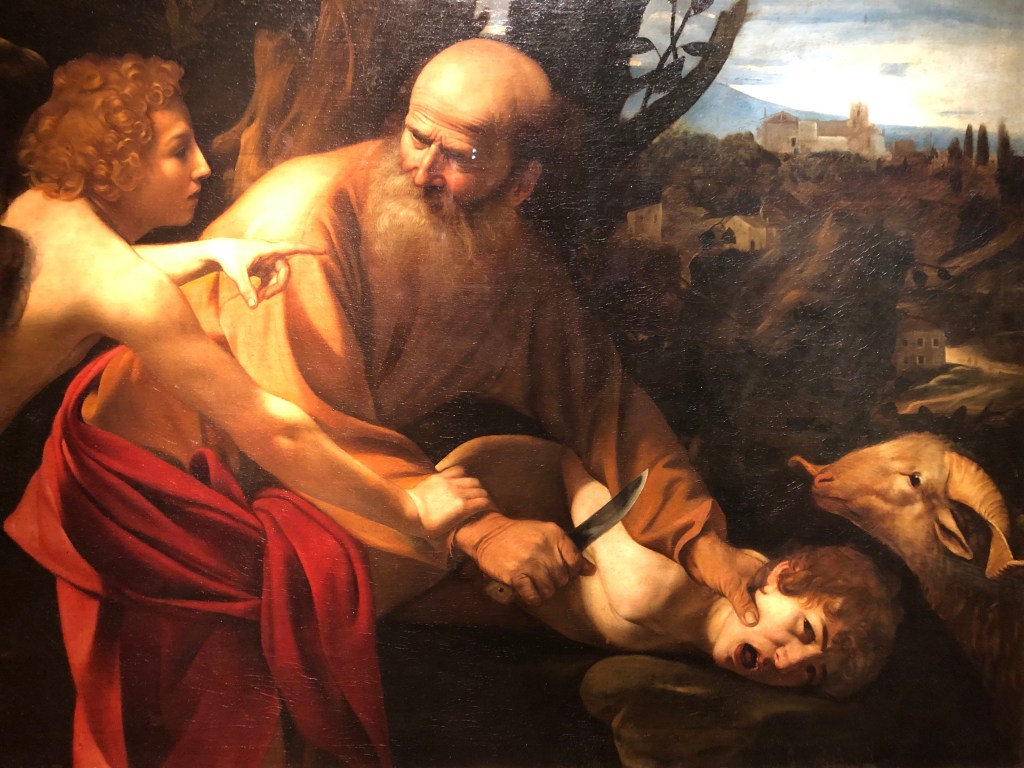
Sacrifice of Isaac, Caravaggio (1603), Uffizi Gallery, Florence

But first, why does Jesus give this woman such a hard time?  She comes to him obviously in distress because of a suffering child, the sort of situation we’ve seen Jesus handle with great compassion before, and first he gives her the silent treatment.  Then it gets worse.  Then he tells her, “We don’t serve your kind here.”  If you cringed a little bit when you heard Jesus’ words this morning, you were hearing them correctly:  “It is not right to take the food of the children and throw it to the dogs.”  Does Jesus have an evil twin?

Continue reading “When God puts us to the test: homily for the twentieth Sunday of Ordinary Time”

St. Aloysius Gonzaga and giving God your all: homily for St. Aloysius

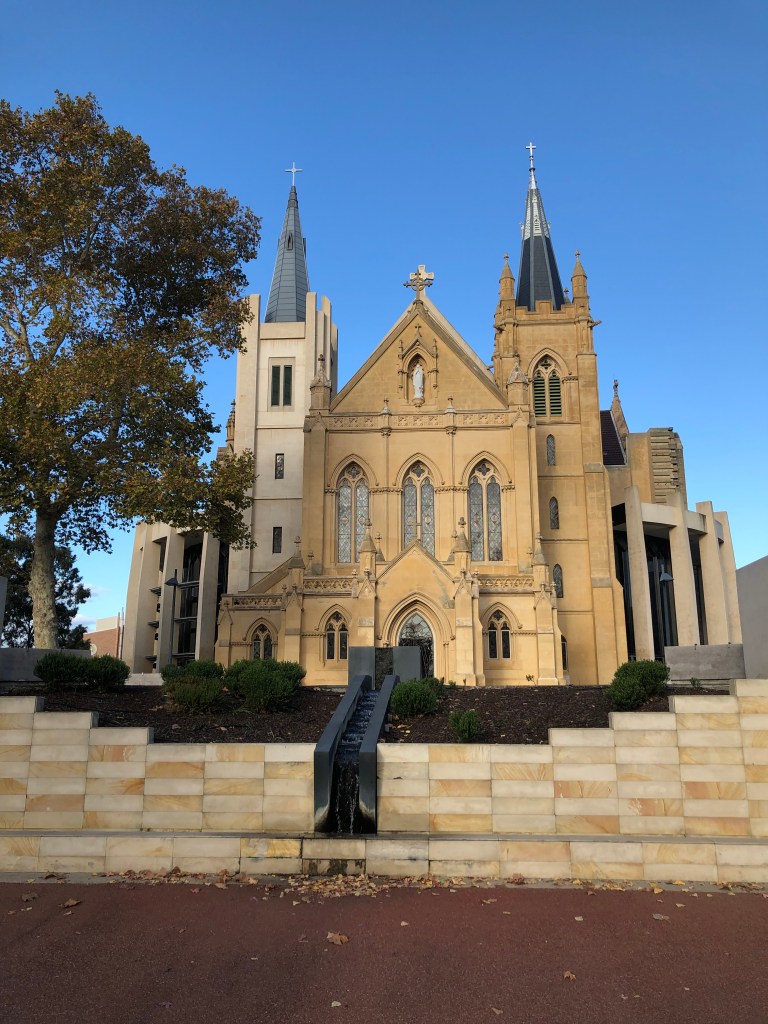
St. Mary’s Cathedral, Perth

The readings for our celebration of the life of St. Aloysius Gonzaga tell us to show our love for God by keeping his commandments.  Sometimes people talk about love and the commandments as if there were a contradiction between the two, but Jesus teaches us otherwise.  

For Jesus, love isn’t a feeling.  Don’t confuse love with romance, which can be produced with mood lighting and champagne.  For Jesus, love is life-giving.  God, the creator, first shows his love for us by giving us life.  And Jesus, the Son of God, shows the power and depth of his love by giving up his own life so that we might have eternal life.

But life is a delicate thing.  If you plant a garden, you have to know the right amount of water to give the seeds—too much and they’ll rot, too little and they’ll dry up.  I’ve killed a few houseplants learning this lesson.  If you just leave your garden alone to do whatever it wants, it will soon choke with weeds and die.  Keeping plants alive sometimes requires trimming them.  Nurturing life requires rules.

Continue reading “St. Aloysius Gonzaga and giving God your all: homily for St. Aloysius”

Sacred Heart of Jesus homily

Sometimes certain people get on my nerves, and it’s hard to love them.  Sometimes people behave badly toward others, and it’s hard to love them, too.  Sometimes people have hurt me; it’s hard enough to forgive them and even harder to love them.  

The first letter of John tells us that God is love, and remaining in his love means loving others as he does.  In the Sermon on the Mount, Jesus commands us to love our enemies, just as our heavenly Father loves them.  From the cross, he even prays for the forgiveness of those who crucified him.  

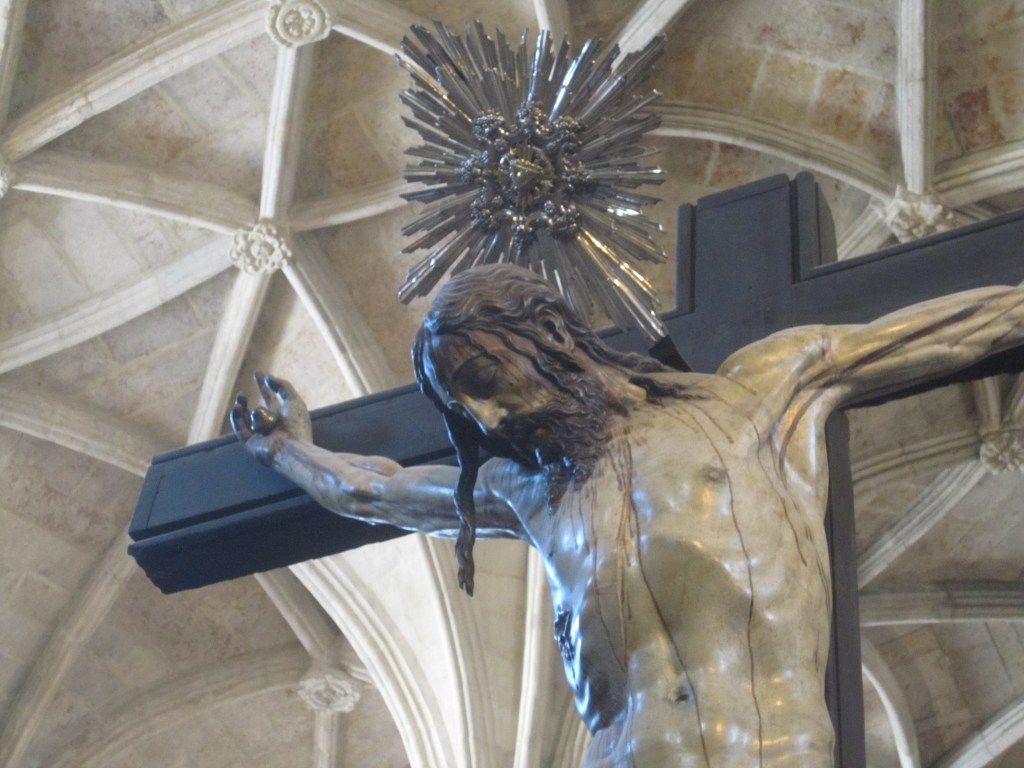
Jerónimos Monastery, Belén, Portugal

But it’s hard to love those who irritate me or who’ve hurt me or who behave obnoxiously or cruelly.  With effort, I succeed in being kind and fair to them maybe 75% of the time, though that percentage falls quickly if I’m tired or hungry or disappointed.  Sometimes I want to say to Jesus, “This yoke doesn’t seem easy to me.” 

Continue reading “Sacred Heart of Jesus homily”

Corpus Christi homily

Chapel of the Corporal, Orvieto Cathedral

“Unless you eat the flesh of the Son of Man and drink his blood, you do not have life within you.”  A few years ago, in Boston, I was talking to a group of kids preparing for their first communion, and one of them asked me, “If we eat the body of Jesus, does that mean we’re cannibals?”  

I thought it was a good question.  What Jesus teaches us about the Eucharist is not easy to understand.  In the Gospel, Jesus’ teaching provokes arguments and even causes some of his disciples to leave him.  But he doesn’t back down.  The Catholic Church, I’m happy to say, has also never backed down from the faith that the Eucharist is the Body and Blood of Jesus.  It’s not a prop in a play. It is not a mere symbolic reminder.  It’s not a visual aid from before the days of PowerPoint.  It may not look or taste like flesh and blood, but Jesus forces us to make a choice—do we believe our own senses or do we believe him?  It’s the same choice required to believe in eternal life, which we have never seen.  Do we trust his words?  And if we do, does that make us cannibals?

Continue reading “Corpus Christi homily”

Pentecost homily

This weekend we celebrate Pentecost, which is sometimes called the birthday of the Church.  You might remember that Jesus told his disciples that he had to go—he had to ascend into heaven—so that he could send the Holy Spirit to them.  On Pentecost the Holy Spirit arrives.  Before that, the disciples could see Jesus because he was a man—both God and man.  So they could see him just as you can see me and I can see you.  The Holy Spirit is God, too, but he’s Spirit, and spirits, by definition, are not physical things.  You can’t see spirits.  

St. Mary’s Cathedral, Perth, Australia

So at Pentecost, the disciples don’t see the Holy Spirit.  Instead, they see his signs.  Those signs are a driving wind and flames shaped like tongues over the heads of the people there.  One sign in particular tells us a lot about the Church.  The people at Pentecost come from different countries, and they speak different languages, so normally they wouldn’t be able to understand each other.  But when the Holy Spirit comes, they do understand each other.  The Holy Spirit changes something inside of them.

Continue reading “Pentecost homily”

Ascension homily

St. Mary’s Cathedral, Perth, Australia

Think about someone you know very well and love.  If you heard his voice, would you recognize it? Certainly.  If you saw her in the distance, would you recognize the way she walks?  Probably.  If it’s someone you love and know very well, you would recognize his laugh—and know the sort of things he finds funny, the jokes he tells or laughs it.  You might know her favorite foods, the kind of gestures that she makes.  You might even be able to recognize someone you know very well from the smell of the shampoo she uses.

Now another question.  If it’s someone that you love and maybe lives far away, if you had a choice, would you rather send him an email or make a phone call or zoom or see him in person and spend time with him?  I think all of us know it means so much more to spend time with someone we love in person, in the flesh.  You can’t give a hug over zoom.

What’s missing in a text message or a zoom call?  We could list a lot of things, those sorts of things I just mentioned—touch, our way of reacting to things, lots of little things, things it’s hard to describe exactly.  Let’s put a word on all these things—our humanity.

Continue reading “Ascension homily”

Light in Holy Week

Jesuit Retreat Center, Sevenhill, Australia

Today is unofficially known as “Spy Wednesday” on the Church calendar because the Gospel reading recounts the story of Judas’s betrayal. I spent this Lent doing the 30-day Spiritual Exercises of St. Ignatius Loyola, and, for me, the most moving part of the retreat was contemplating the Lord’s Passion, in which, through the liturgy, we participate during Holy Week.

There is much to say about the retreat and much to say about Holy Week–but having been away for over a month, I also have a fair bit of catching up to do. So for now, I’ll share just one thought.

Until we reach Easter Sunday, this week is incredibly dark. Judas is present at the Last Supper and his impending betrayal colors everything else. Even before the Lord’s arrest, Jesus suffers because of his disciple’s mendacity. Peter’s courage and good intentions fail. The physical torture–scourging, beating, the nails, exposure and slow suffocation on the cross–is inhuman, enough to turn one’s stomach just thinking about it. And then, the cravenness of Pilate, the calculated cruelty of Jerusalem’s religious leaders, the callous and fickle crowd. What is most sobering of all is the realization that there is some of Judas and Pilate and Peter in each one of us. The Lord suffers for our sins.

Continue reading “Light in Holy Week”

Merry Christmas

Since St. Francis of Assisi introduced the idea 800 years ago, Italy has been the land of Nativity scenes. And there is no more prominent location for a Nativity scene in the world than St. Peter’s Square. The scene is different every year and–along with the Christmas tree in Piazza Venezia–is usually subject to intense comment and critique from Romans and visitors alike. There’ve been a few doozies in my years here, but this year’s scene from Friuli Venezia Giulia does not seem to have aroused great protests.

Here’s a peak at the scene, still waiting for the child who makes all things complete.

Christmas blessings to one and all!

“In the fullness of time, chosen in the unfathomable depths of God’s wisdom, the Son of God took for himself our common humanity in order to reconcile it with its creator.” (Pope St. Leo the Great)