Homily for Wednesday of the Second Week of Lent (translated from Italian).
When I was little, I liked a series of children’s books and cartoons called “Winnie the Pooh.” In this series there was a character called Eeyore—in Italian I think it’s “Ih-Oh”—a gray donkey who talks sadly and sl-ow-ly. Poor Eeyore is always pessimistic and depressed. Eeyore is not a bad character; he is just a melancholic person—or, rather, a melancholic donkey.
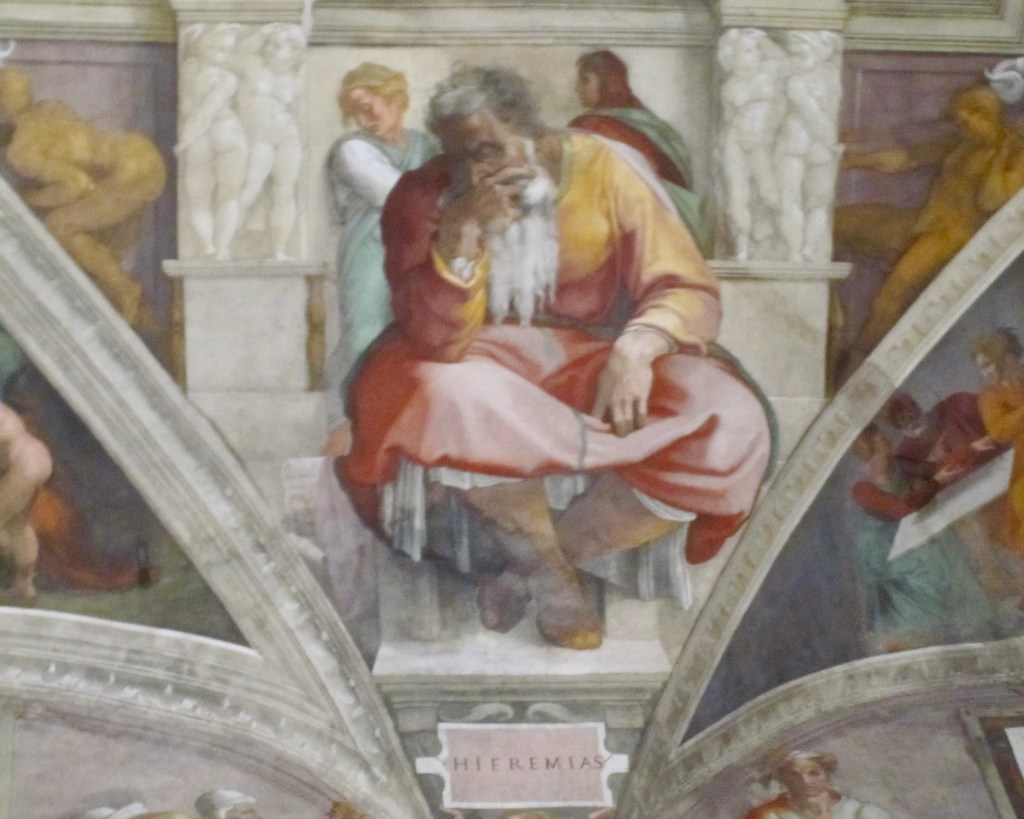
Jeremiah (Michelangelo, Sistine Chapel)
I think Eeyore would like today’s readings. The prophet Jeremiah is a prophet of doom. The message he receives from God to tell the citizens of Jerusalem is pessimistic. Destruction will come to the holy city, Jeremiah says. The king of Jerusalem and his advisors do not want to hear this message, so they find a more optimistic prophet, Hananiah, and plot to throw Jeremiah into a pit.
Jesus’ words today are also, in a way, words of doom. He repeats the prophecy of his crucifixion, which the disciples consistently try to avoid. Here, instead of listening to him, they immediately turn to church politics—who will have the highest position.
Homily for the Immaculate Conception (2019. Note, that year, the Solemnity fell on a Sunday.)
On the first Sunday of Advent, I cleaned my room. I must admit, it needed it—there were coffee stains on the desk; the trash can was overflowing; I found forgotten lists of things not to forget. But Advent is the beginning of a new liturgical year, the season when we prepare for Christmas, and it seemed right to start with a clean room. In the coming weeks, there will be many other things to prepare: food, gifts, decorations, travel.
Column of the Immaculate Conception, Rome
This is the second Sunday of Advent, and normally the readings highlight the figure of St. John the Baptist, who speaks of another kind of preparation, another kind of cleaning—in fact, a much deeper cleaning than coffee stains. John the Baptist warns of the need for inner cleansing, moral and spiritual conversion. And this too is part of the preparation for Christmas. As a confessor, I have to do a little advertising for my profession, strangely absent from all the Black Friday advertising we received last month. But I must say that our special offer—the forgiveness of sins, eternal life—is truly the best deal in the world.
However, this year is a bit special, because this second Sunday of Advent is December 8, the Solemnity of the Immaculate Conception of Mary, the Mother of Jesus. This coincidence of dates is interesting because the Immaculate Conception is also a feast of preparation. But not the preparation we do during this season. The preparation that God has done for us.
Homily for Monday of the first week of Advent (2019).
The figure we encounter today in the Gospel, the centurion of Capernaum, helps us to prepare. We use his adapted words to prepare for communion: “Lord, I am not worthy that you should enter under my roof, but only say the word and my soul shall be healed.” And today, at the beginning of Advent, the season when we prepare for the coming of the Lord, the centurion appears in the readings.
A season of preparation is a season of faith and hope—and I think the centurion of Capernaum appears today because he is a figure of faith and hope.
Both of these virtues exist in imperfect situations. We need hope because of something we lack in the present; we need faith because there is something doubtful about the situation in which we find ourselves.
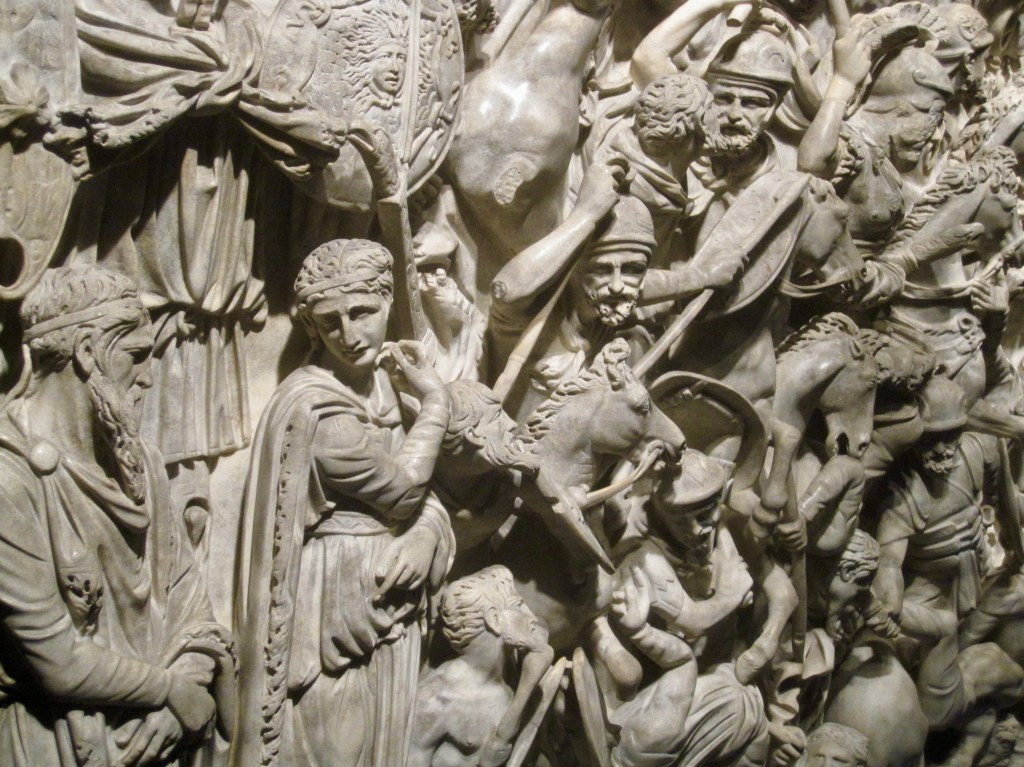
Roman Sarcophagus, Palazzo Massimo, Rome
The centurion comes to Jesus asking for help. And his words—“I am not worthy that you should enter under my roof”—are poignant because in them we hear the unvarnished truth. We can easily imagine that the centurion, an officer in the imperial army, has seen terrible things and perhaps–even if only out of duty–has had to do terrible things as well. His sense of unworthiness, however, does not prevent him from turning to the Lord.
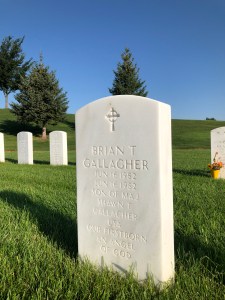
Those of you who have been following this blog know that over the summer I was put in touch with a group of people dedicated to telling the story of baby Brian Gallagher, an infant who died shortly after his birth but whose body was discovered to be apparently incorrupt 37 years after his burial. Because Brian was not baptized before he died, the story raised the question of the eternal destiny of babies who die before baptism and my work on baptism of desire.
That story has started to get attention in several Catholic media outlets, and last week I had the chance to talk about baptism of desire on Real Presence Radio; you can listen to the interview here .
Hats off also to Dr. Kody Cooper for his opinion piece about baptism of desire and infants on the Word on Fire site. The author comes to similar conclusions to my own, arguing that baptism of desire is the best theological doctrine with which to consider this tough case, even citing Cardinal Cajetan who I discuss in my book . Baptism of desire seems to me a superior approach to what the author calls the “post-conciliar view,” which means hoping that the babies will be saved while remaining agnostic about the means. This approach, it seems to me, has two serious flaws. It seems to invite hope in a kind of divine Plan B which turns out to be more effective than those means revealed to us by Jesus. Revelation, then, seems not so revealing. At the same time, precisely because whatever those means happen to be can’t be found in revelation, such hope remains necessarily vague and not particularly well-grounded.
Baptism of desire, on the other hand, identifies our grounds for hope in the Church’s sacramental practice — the practice of a sacrament instituted by Jesus Christ and declared by him to be necessary for salvation (John 3:5). I posted a brief description of my position on the question here a few weeks ago.
As I mentioned earlier, over the summer God’s providence brought me into contact with a group of people dedicated to sharing the story of Baby Brian Gallagher. The circumstances of Baby Brian’s short life raise the question of babies who die before baptism and baptism of desire, and the group asked me to write up a one page summary of the argument I present in my book Baptism of Desire and Christian Salvation. Of course, for the full story–and much else besides–buy the book! What I wrote is not intended as a full pastoral response to those who have lost a child too soon, but a very brief sketch of the theological issues involved.
Theologians have a precise mission within the Church. Our task is not to “create” the truth, but to use the tools of reason and study to understand better what God has revealed to us. When it comes to salvation, theologians don’t “decide” what the Church believes; we merely try to express with greater clarity what we find in Christian revelation.
Good theologians, then, must be humble and cautious in what they claim. Historically, theologians have found the question of what happens to babies who die before baptism particularly difficult. We know that baptism is necessary for salvation (John 3:5) because baptism is the unique way Jesus has revealed for us to participate in his death and resurrection (Romans 6:3-5). At the same time, the doctrine of baptism of desire has found strong support among theologians and in the Church’s official teaching. Baptism of desire does not deny the necessity of baptism or create an alternative to the sacrament. Instead, the doctrine means that those who desire the sacrament but are prevented by circumstances beyond their control from receiving it can still obtain baptism’s effect—rebirth to eternal life.
Historically, most—but not all—theologians have had trouble seeing how baptism of desire could apply in the case of infants who are too young to formulate a desire of their own. After a decade studying baptism of desire, however, I believe that these theologians have tended to leave out a decisive piece of evidence: our practice of the sacrament of baptism. The key theological principle that has been neglected up until now is known as lex orandi—lex credendi, which means “the law of prayer is the law of belief.” In other words, the way we celebrate the sacraments is itself a guide to what is true. In this case, the Church’s firmly-established practice invites us to look more deeply into how to understand the desire for baptism in regard to infants.
This Homily for Easter Sunday comes from 2019 and was given just a few days after the fire at Notre Dame Cathedral in Paris — thus the reference to the rose window at the end. Seems appropriate this year when Notre Dame has been reopened…
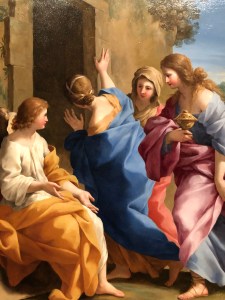
Occasionally the most erudite theologians overlook the most obvious things. This morning’s gospel contains a curious detail that has provoked a great deal of discussion among theologians: why do Mary of Magdala and John, the other disciple, not enter the tomb? Mary sees the stone removed from the tomb and returns to the apostles. John, running and perhaps a bit younger than Peter, arrives at the tomb first, but remains outside. Why? Biblical exegetes have explained this event symbolically–maybe John represents prophecy and Peter represents the institutional Church–but in my opinion the reason is simpler.
It’s a tomb. They were afraid.
Sometimes the simplest explanations are also the most profound. We know that Jesus is risen–maybe this announcement has become too familiar and gets taken for granted–but at that moment Mary, John and Peter did not have that advantage. We must imagine their psychological state that morning. Two days ago, they had seen the humiliation and killing of their Lord, teacher and friend at the hands of evil men. We must imagine the darkness of those days, when violence, lies and selfishness defeated the truth.
Going through homilies from Lents past, I came upon this post, which happened to date from shortly after the Russian invasion of Ukraine three years ago. The Ukrainian resistance to that invasion, I noted, was something of a jolt to a West that had grown somnolent with self-indulgence, a reminder that some things are worth fighting for.
Just over a week ago, Archbishop Sviatoslav Shevhcuk issued a statement on behalf of Ukraine’s Greek Catholic bishops that should again jolt the conscience of a world gone loopy with self-absorption. “We have not become a people defined by war — we have become a people defined by sacrifice,” the bishops write. For the bishops and for their people, this war is not a card game or great television, not, as the Vice-President of the United States to his great shame recently suggested, a “propaganda tour.”
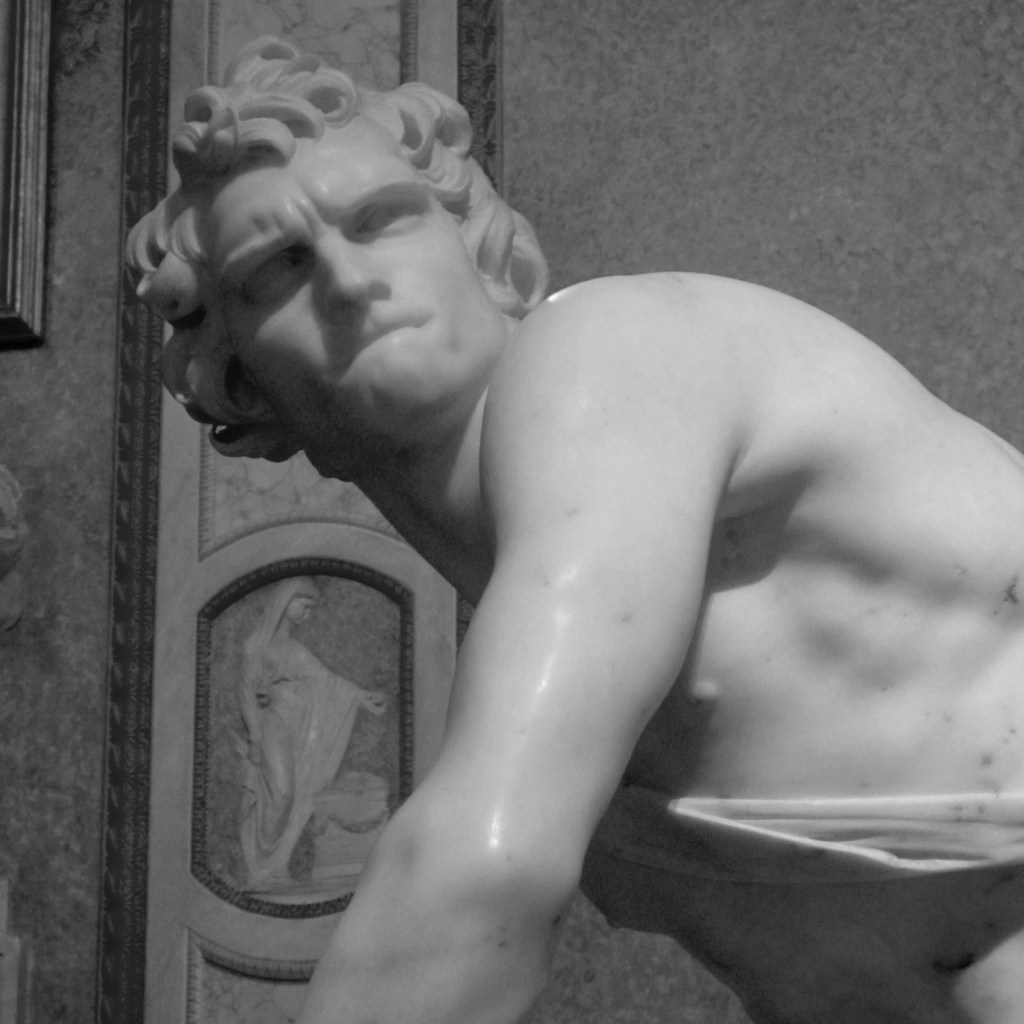
David, Gian Lorenzo Bernini
Noting the staggering trauma and destruction inflicted on their country, the bishops write: “But we have not come to terms with our losses—each one hurts. Every fallen defender, every innocent life lost remains in the memory of God and people. We remember and pray. We support and uphold. We stand and fight, ever mindful of the God-given dignity that no force on earth can take from us.”
It is obvious enough that the bishops want peace, but they also know that “peace” on Putin’s terms does not mean the end of killing Ukrainians, of kidnappings, or of brutality. The bishops know that Russian occupation will almost certainly include the persecution of Catholics; Archbishop Schevchuk was himself targeted for assassination by Russian invaders attacking Kyiv. No serious Christian should be taken in by Vladimir Putin’s pose as a defender of Christian values. His regime and its ideology are idolatrous.
Ludovico Carracci, Presentation of Jesus in the Temple, 1613-1616
Homily for the Presentation of the Lord (C)
Simeon and Anna appear so briefly in the Gospel that we might almost miss them. They are a part of the story of the life of Jesus for just a few minutes, yet the few words that Luke writes about them reveal two remarkable lives. It is especially moving, I think, to reflect on those lives in this Jubilee year because in Simeon and Anna we feel the challenge of hope.
Neither Simeon nor Anna, it seems, lived an easy life. There is a tiredness in Simeon’s words after he takes the baby Jesus in his arms: “Now, Master, you may let your servant go in peace.” Simeon had received a special revelation that he would not see death before he had seen the Messiah, and his words hint that it might not have been easy to hang on until that moment. Perhaps you know of friends or relatives who have held on to life to see one special event—a wedding or a graduation or the birth of a child—and then let go soon after. I think of a dear friend whose grandfather passed away minutes after watching his ordination, and I think there is something of that letting go—with gratitude for one last precious gift—in Simeon’s words.
But Simeon, too, still has something to give in that moment. Today his words form part of the Church’s Night Prayer, and his prophecy to Mary would stay with her in the decades ahead. To the blessing he received, Simeon responded with a blessing.
There is something moving, too, about what just a glance of God’s glory means for Simeon. After all, he sees the Messiah only as a baby. He will never hear the Sermon on the Mount, see Jesus cure the sick or raise Lazarus; he will never receive the sacraments; and, though his words to Mary allude to the crucifixion, he himself will not be there. His eyes do see the salvation God has prepared in the sight of all the peoples—because salvation is Jesus Christ—but only just barely. And that’s enough. Jesus, before he can speak, before he can walk—but present—is enough. Simeon has lived his life in hope for the moment that we see in the Gospel, and yet that hope fulfilled is itself a promise of more to come. He is led from hope into hope, I suppose, much as our celebration of the Eucharist leads us to hope for the banquet promised us in heaven.
Last week I mentioned the Church of Sant’ Agnese in Agone, one of Rome’s architectural gems and a monument to the city’s martyrs.
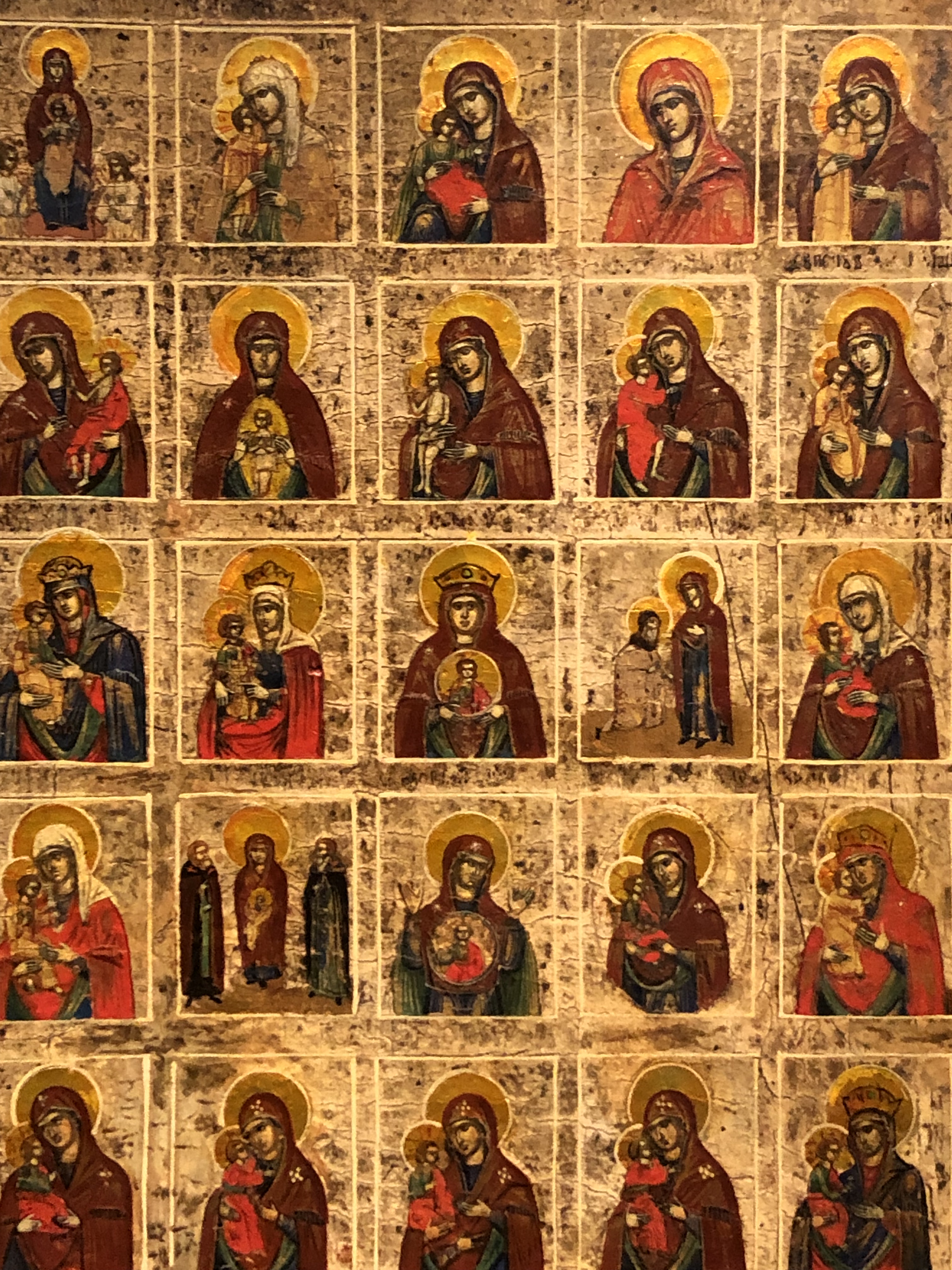
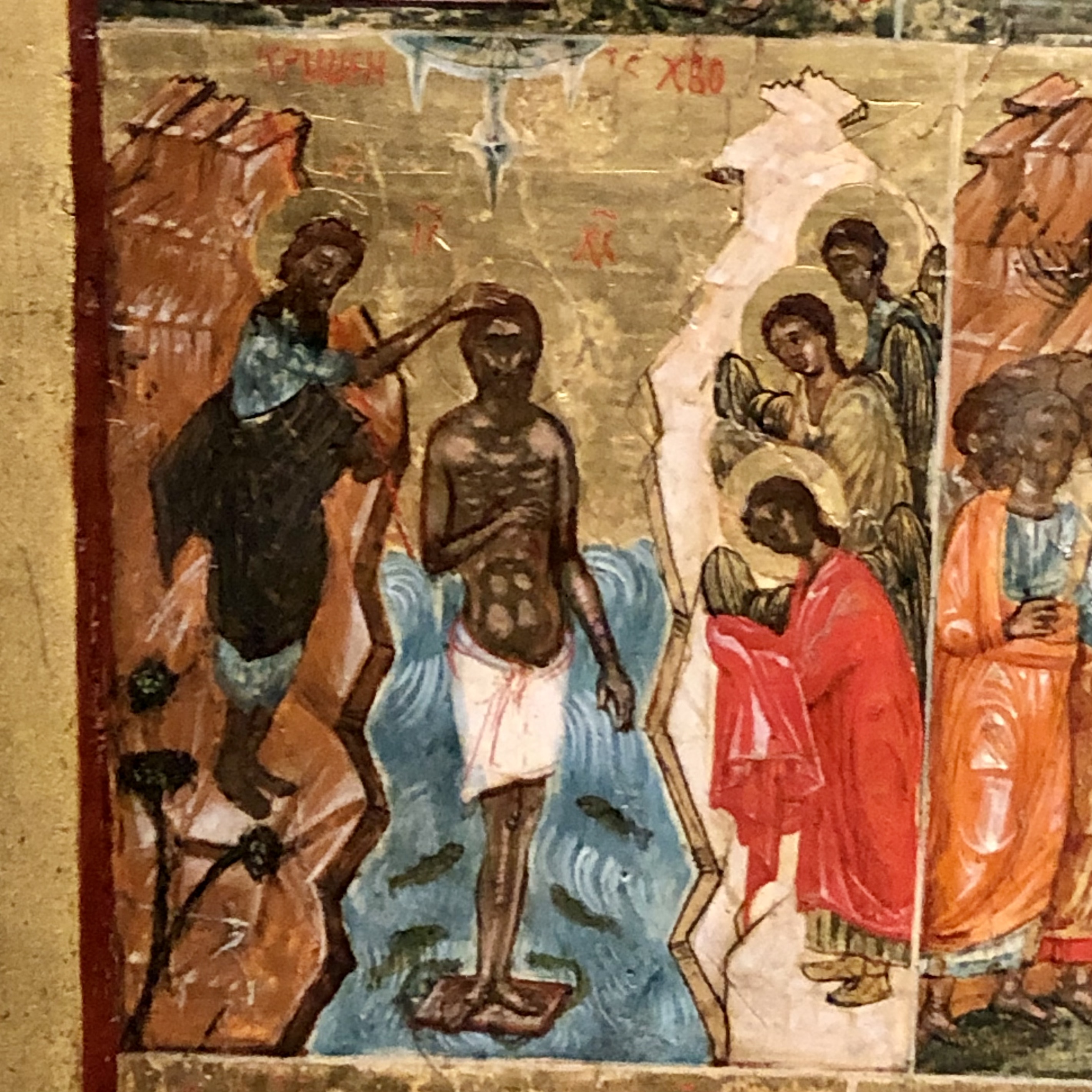
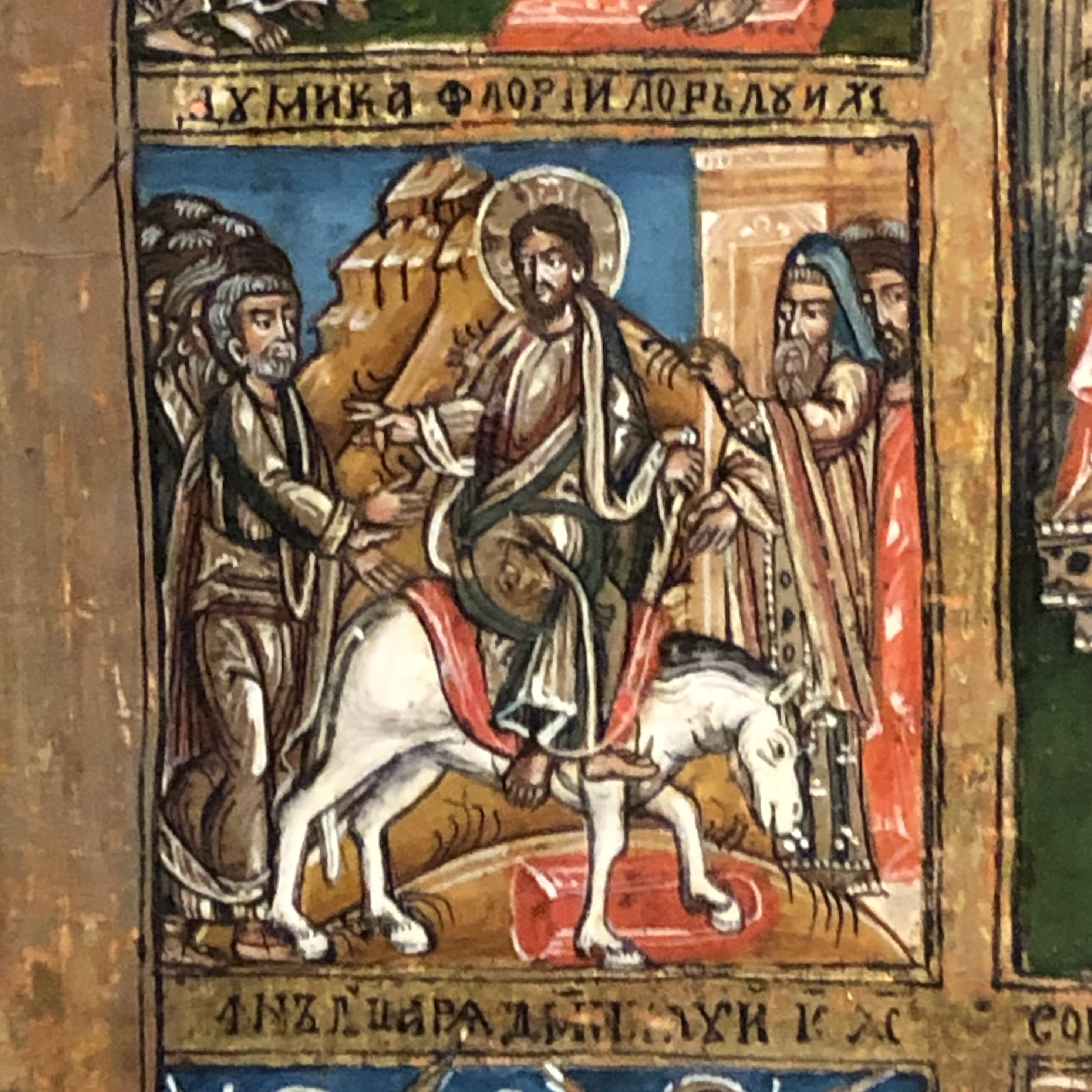
The last time I visited Sant’Agnese, I found that the Church was hosting a special display for the Jubilee (until February 16) dedicated to the theme “Icons of Hope.” The display brings together a number of icons from the Vatican Museum.
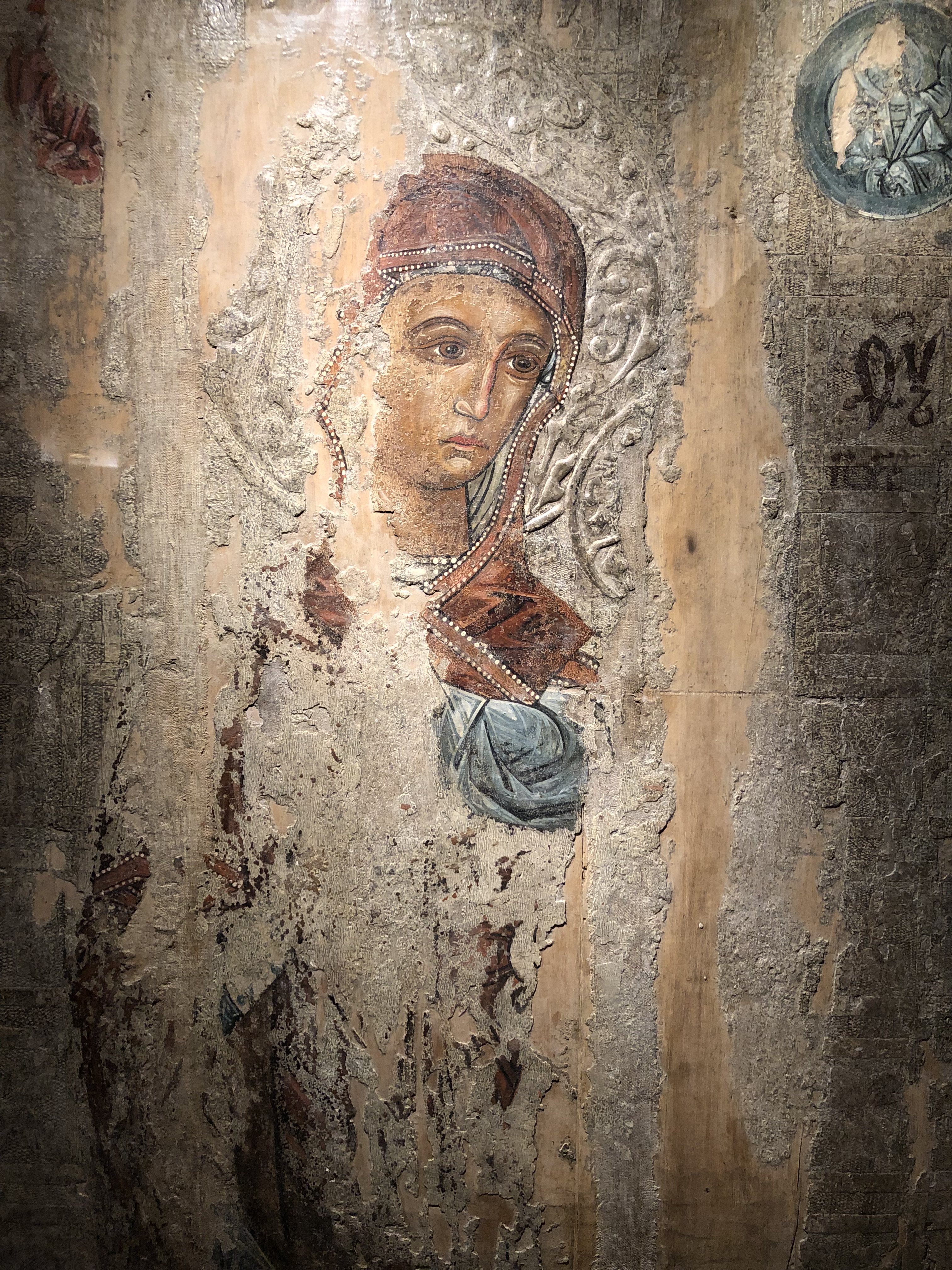
Virgin Hodegetria, Ukrainian, 17th-18th century
The most moving piece in the exhibition had to be the Ukrainian Virgin Hodegetria (17th/18th century). The engraved silver on a wood panel has been damaged over time, but the icon is all the more hauntingly beautiful. The Virgin’s face is still clearly visible, her eyes clear and sad, the expression that of someone who has known suffering but lost none of her dignity.
It is, of course, impossible to view the icon and not see in it the image of the suffering of the Ukrainian people as the Russian assault on their country every day grows more cruel and barbaric. Last week I wrote about the courage of the martyrs. Ukraine’s defense of its freedom and right to exist as a country has perhaps stung the conscience of the world because, in a self-indulgent age, the country’s display of genuine courage is bracing. And as George Weigel has pointed out, “Ukraine is fighting for all of us.”
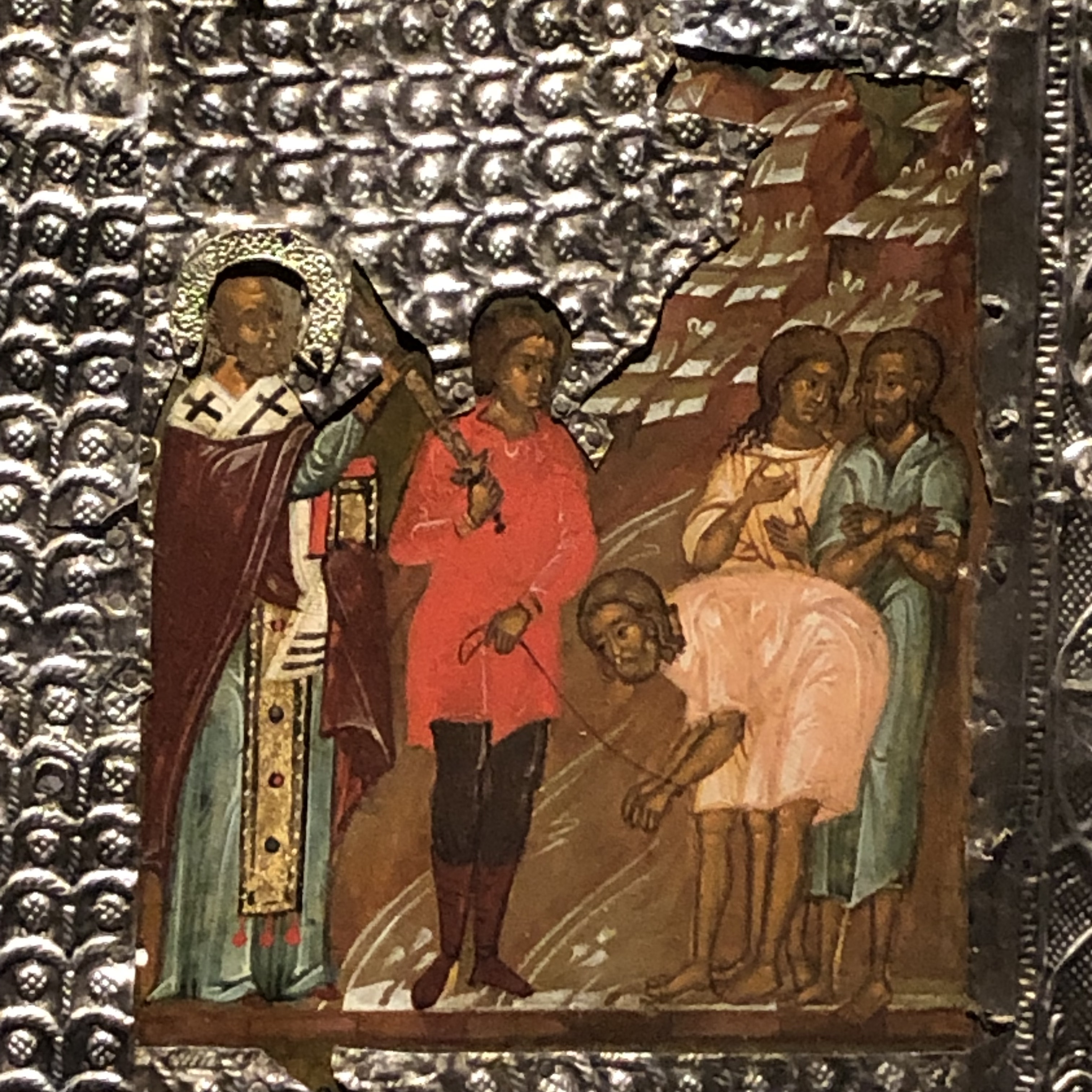
The display also contains icons from other eastern European countries–a sampling below.
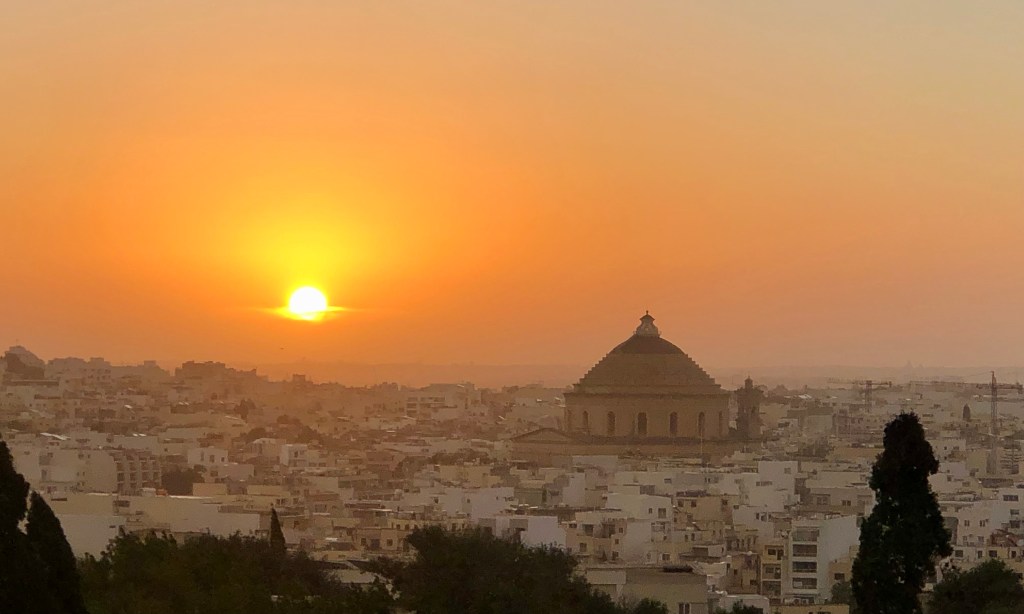
“Look to my coming,” Gandolf tells Aragorn in the second installment of the Lord of the Ringstrilogy, The Two Towers. “At dawn on the fifth day, look east.” Those familiar with the story, know that Gandolf’s words come at a particularly dramatic moment in the epic, when the last holdouts of Rohan—one of the two remaining kingdoms of men not to succumb to the forces of evil—have retreated to their mountain stronghold, Helms Deep, and the walls of the fortress have begun to crumble, its gates to give way, and its doors to crack under the onslaught of a massive army sent by the turncoat wizard Saruman, who, seduced by power, has joined the forces of darkness. And as Aragorn, the king in exile, prepares for one final charge with what knights remain, he remembers the words of the faithful wizard Gandolf, who had left five days before to seek aid. “At dawn on the fifth day, look east.”
We read a similar instruction in the Book of Baruch, directed to the holy city, “Up, Jerusalem! Stand upon the heights; look to the east.” These words are echoed in the Advent hymn familiar to many of us, “People, Look East.” There is something primordial in this call, in the instinct to look in hope to the east. When I worked among the Lakota Sioux in South Dakota, I learned that in their traditional religion, east was the direction of prayer. I found some Lakota Christians very insistent on a Christian tradition—which I did not know about—of burying the dead facing east. The Christian tradition of prayer facing east goes back to the first centuries. St. Ambrose talks about catechumens, after their baptism, turning from the west to the east as a sign of the new orientation of their lives.







 Tony Lusvardi, S.J.