Recently, I was fortunate to be able to take a brief trip to Barcelona for a research project (more on that to come). I spent as much time as I could at Antoni Gaudí’s marvel, La Sagrada Família (more on that, as well).
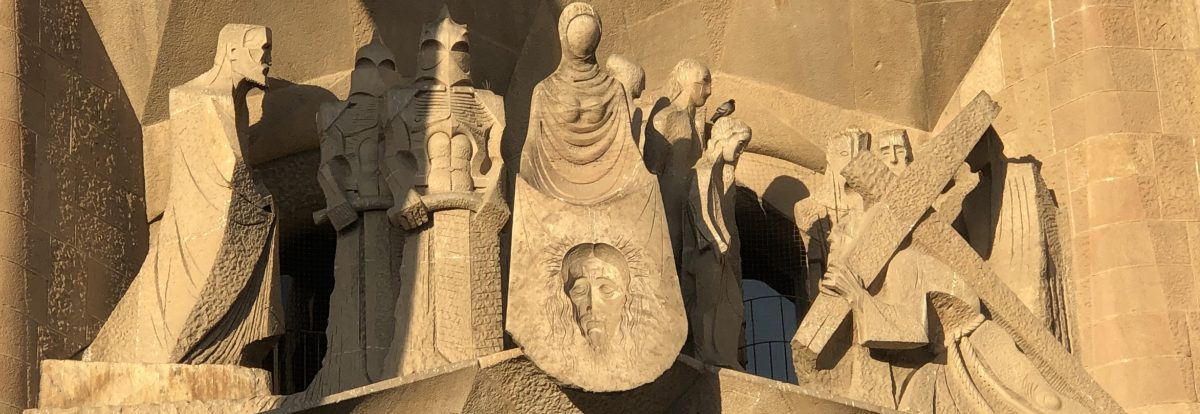
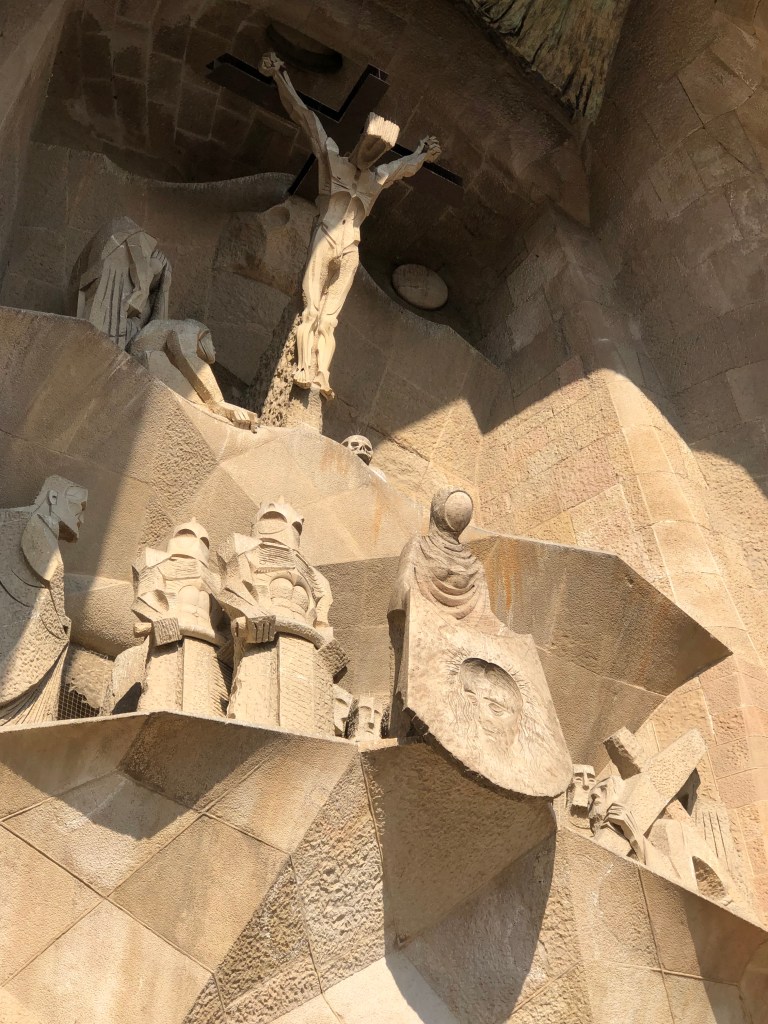
The entire basilica is a marvel, a deeply spiritual and prophetic building. This Holy Week, I thought it would be appropriate to share some photos of the Façana de la Passió, the Passion Facade. The sculptures broadly follow Gaudí’s instructions, though they are the work of Josep Maria Subirachs. If anything, the sculptures are even more harsh and austere than Gaudí’s original sketches. The hardness of the work is actually in keeping with Gaudí’s instructions.
Homily for Wednesday of the Second Week of Lent (translated from Italian).
When I was little, I liked a series of children’s books and cartoons called “Winnie the Pooh.” In this series there was a character called Eeyore—in Italian I think it’s “Ih-Oh”—a gray donkey who talks sadly and sl-ow-ly. Poor Eeyore is always pessimistic and depressed. Eeyore is not a bad character; he is just a melancholic person—or, rather, a melancholic donkey.
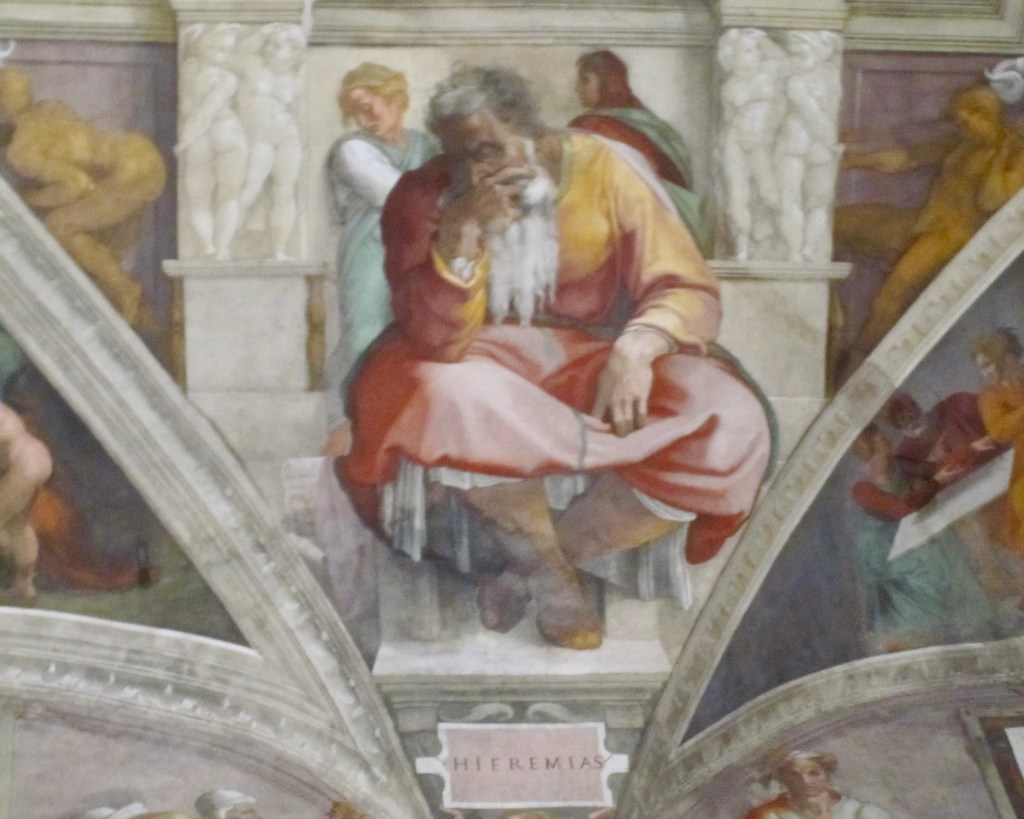
Jeremiah (Michelangelo, Sistine Chapel)
I think Eeyore would like today’s readings. The prophet Jeremiah is a prophet of doom. The message he receives from God to tell the citizens of Jerusalem is pessimistic. Destruction will come to the holy city, Jeremiah says. The king of Jerusalem and his advisors do not want to hear this message, so they find a more optimistic prophet, Hananiah, and plot to throw Jeremiah into a pit.
Jesus’ words today are also, in a way, words of doom. He repeats the prophecy of his crucifixion, which the disciples consistently try to avoid. Here, instead of listening to him, they immediately turn to church politics—who will have the highest position.
“True reverence for the Lord’s passion means fixing the eyes of our heart on Jesus crucified and recognizing in him our own humanity.
“The earth–our earthly nature–should tremble at the suffering of its Redeemer…. No one, however weak, is denied a share in the victory of the cross. No one is beyond the help of the prayer of Christ. His prayer brought benefit to the multitude that raged against him. How much more does it bring to those who turn to him in repentance… Everything that he did or suffered was for our salvation: he wanted his body to share the goodness of its head.
“First of all, in taking our human nature while remaining God, so that the Word became man, he left no member of the human race, the unbeliever excepted, without a share in his mercy. Who does not share a common nature with Christ if he has welcomed Christ, who took our nature, and is reborn in the Spirit through whom Christ was conceived?
“Again, who cannot recognize in Christ his own infirmities? Who would not recognize that Christ’s eating and sleeping, his sadness and his shedding of tears of love are marks of the nature of a slave? …
“The body that lay lifeless in the tomb is ours. The body that rose again on the third day is ours. The body that ascended above all the heights of heaven to the right hand of the Father’s glory is ours. If then we walk in the way of his commandments, and are not ashamed to acknowledge the price he paid for our salvation in a lowly body, we too are to rise to share his glory.”
 Tony Lusvardi, S.J.