Buildings that speak to us: Homily for the dedication of the Lateran Basilica

Homily for the Feast of the Dedication of the Lateran Basilica (2023).

From the cloister of St. John Lateran, Rome

The feast we celebrate today is particularly special for us in Rome. We celebrate the dedication of our cathedral. It is a magnificent building, and probably all of us have been there to appreciate the beauty of this splendid and ancient church.

The anniversaries of church dedications are important in the Church calendar because churches are the places where we gather to celebrate the Christian liturgy, the holy mysteries of salvation. Here in Rome, however, we live in an unusual situation because there are many beautiful and ancient churches–but when we enter them, often we find few of the faithful.

We should not be discouraged; instead we should remember the faithful who still speak to us through these monuments of their faith. The churches they built and left us are not mere buildings; they are their testimony. There is a message in these buildings that the saints of past times wanted to convey to us.

But more than a message, there is still a presence. When we celebrate the liturgy, we are not alone; we enter into the presence of the saints. They are with us. On November 1, we entered the season in which we remember the saints. Churches–from St. John Lateran to this little chapel–are more than museums where we learn from the past; they are places where we encounter the saints, where eternity becomes the present.

(Original: Italian)

Readings: Ez 47:1-2, 8-9, 12; 1 Cor 3:9c-11, 16-17; John 2:13-22

Gregorian University Chapel

November 9, 2023

From the cloister of St. John Lateran, Rome

San Giovanni dei Fiorentini

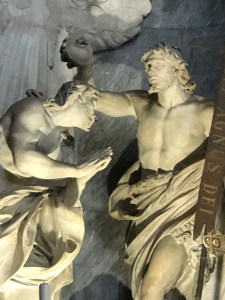
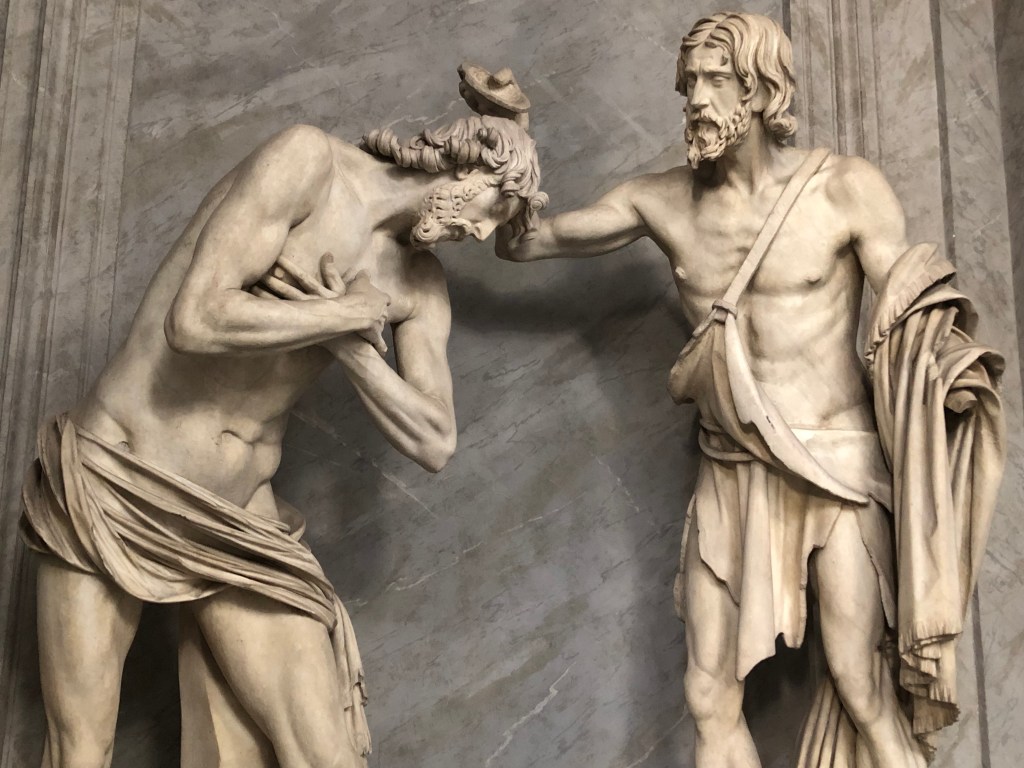
Baptism of Jesus, Antonio Raggi, San Giovanni dei Fiorentini, Rome

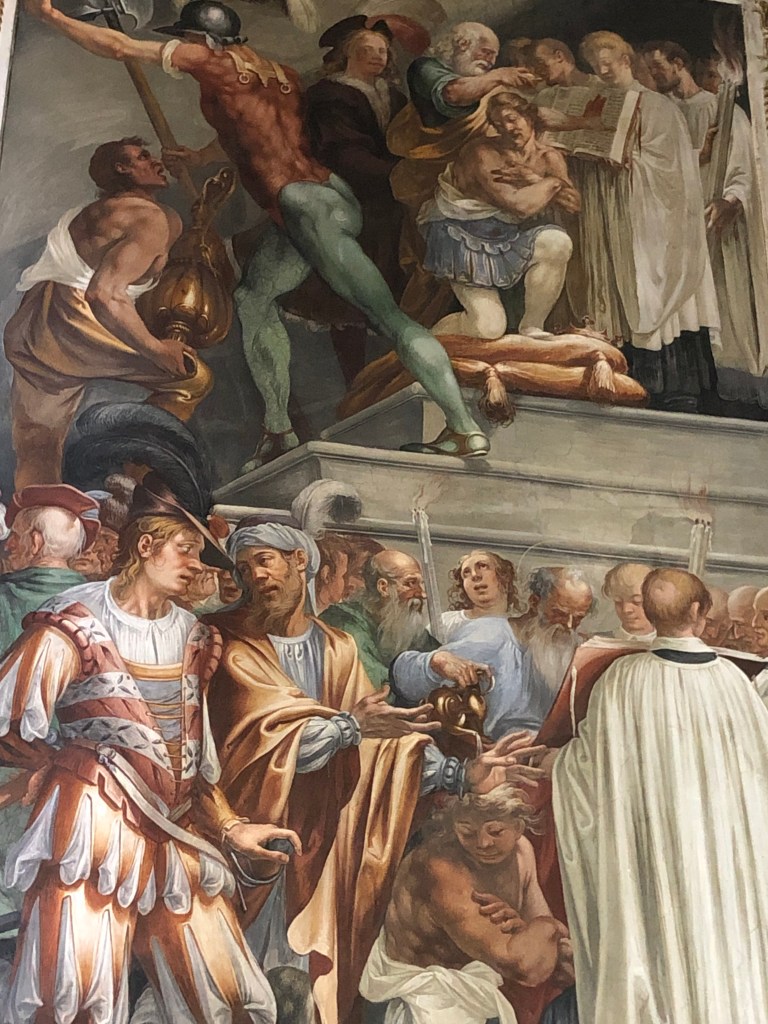
To celebrate the feast of the Baptism of the Lord–which this year falls unusually on a Monday–I thought I’d share a few photos from one of Rome’s lesser known churches, San Giovanni dei Fiorentini. A baroque church, it was built for the Florentine expats in Rome back when Florence was an independent city-state and named for the city’s patron, St. John the Baptist. The church contains a relic of Mary Magdalene (her foot), and is the burial place of the great–but tragically unhappy–baroque architect Francesco Borromini. It also contains a number of interesting artistic works featuring baptism. 

I’ve written before about the importance of baptism, but I have a personal reason to be particularly fond of San Giovanni dei Fiorentini. Its 17th century altarpiece, the Baptism of Jesus by Antonio Raggi, features on the beautifully designed cover of my book Baptism of Desire and Christian Salvation. Of course, I’d like to think that what’s inside the cover is pretty interesting as well, and I’m pleased that the book’s release date is coming up later this month–January 26. There’s more information on the website of Catholic University of America Press, and the book is available on other online sellers such as Amazon.

In the meantime enjoy the views of San Giovanni dei Fiorentini.

Faces of Medieval Rome

Visitors to St. Peter’s Basilica in Rome often don’t realize that the magnificent baroque church is built over the site of a still more ancient basilica, built by Constantine and then torn down completely by Pope Julius II during the Renaissance. Over the course of the next century, today’s basilica was rebuilt by the likes of Bramante, Giulio da Sangallo, Raphael, Michelangelo, Carlo Maderno, and Bernini.

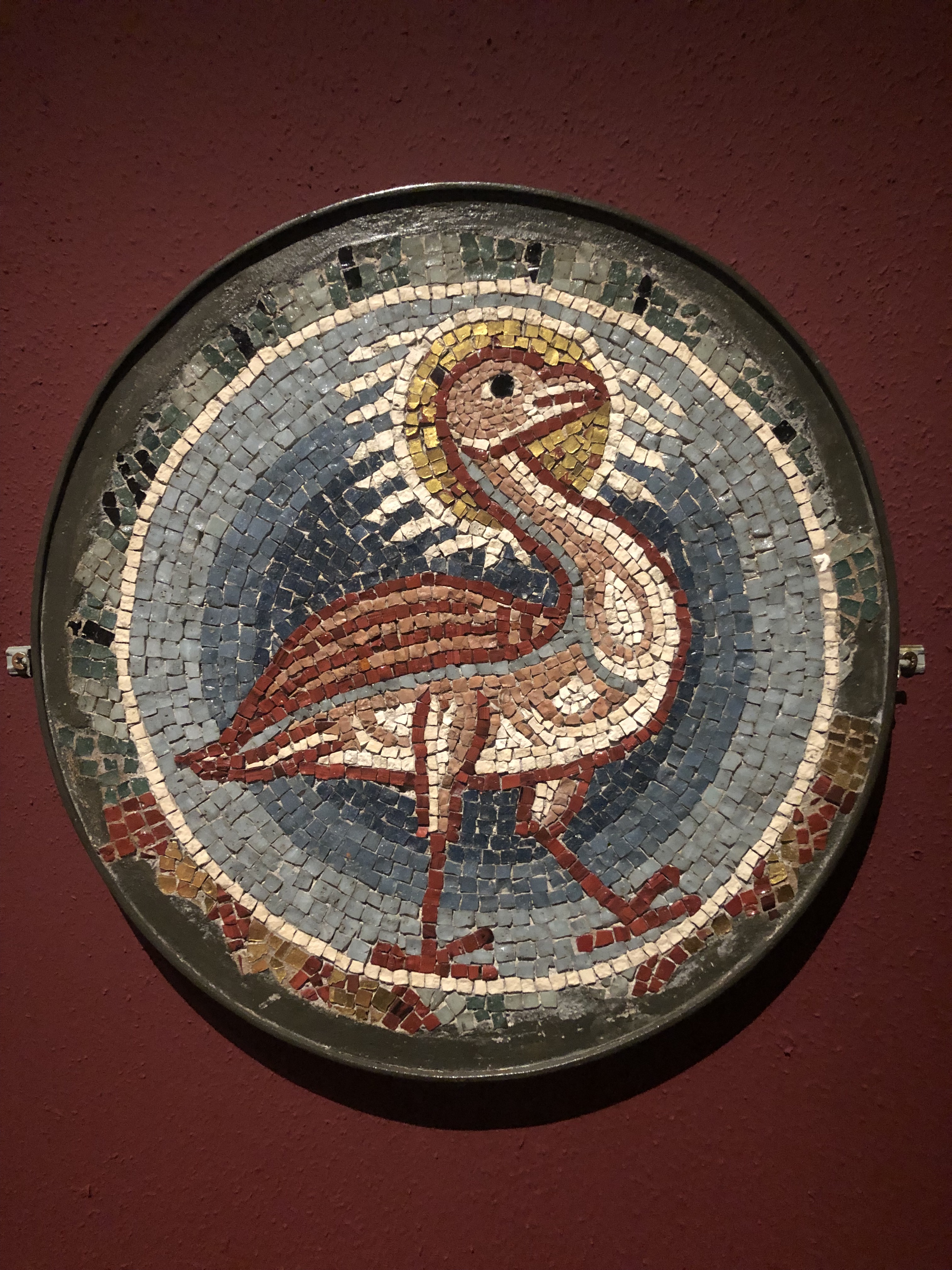
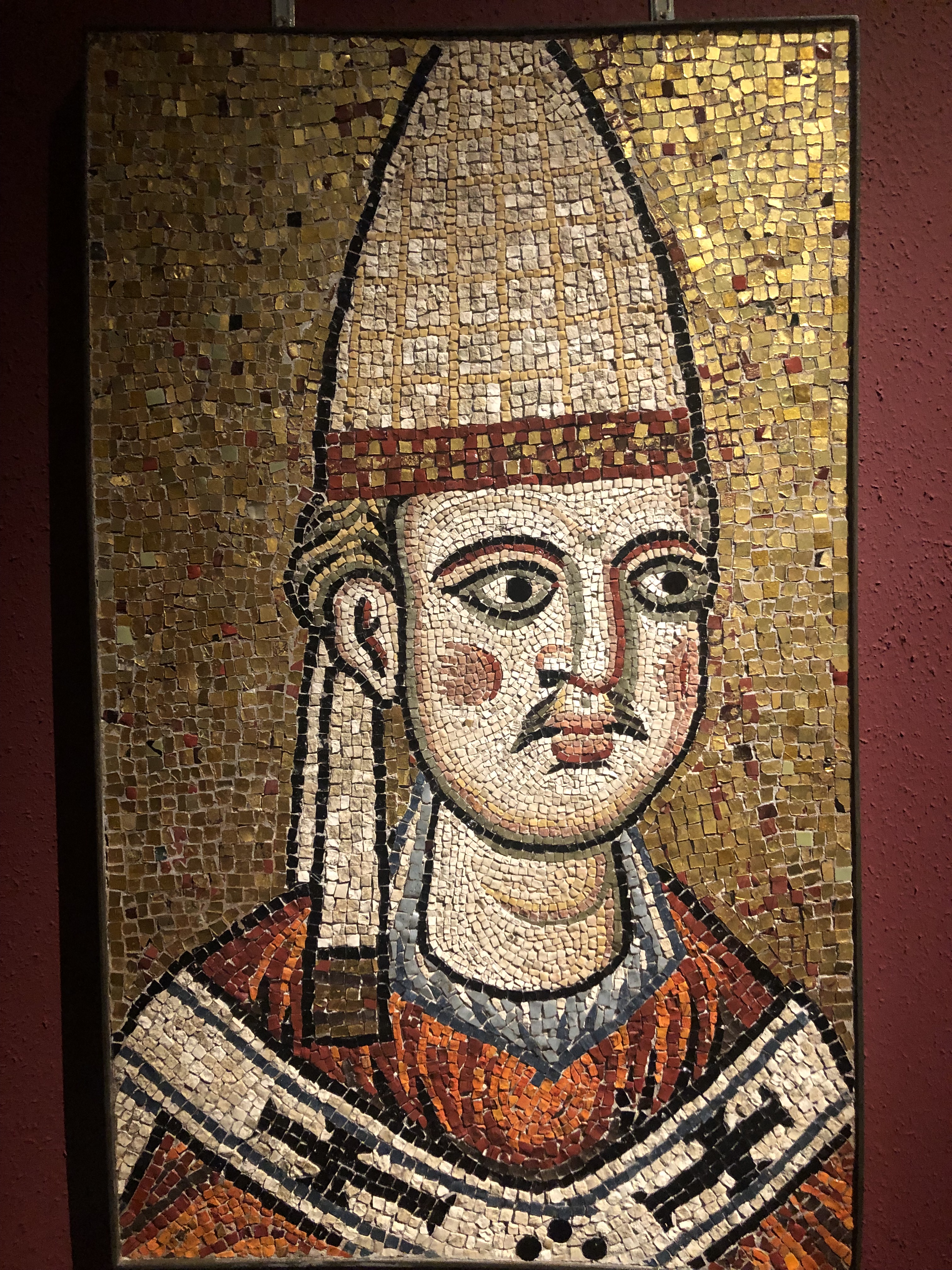
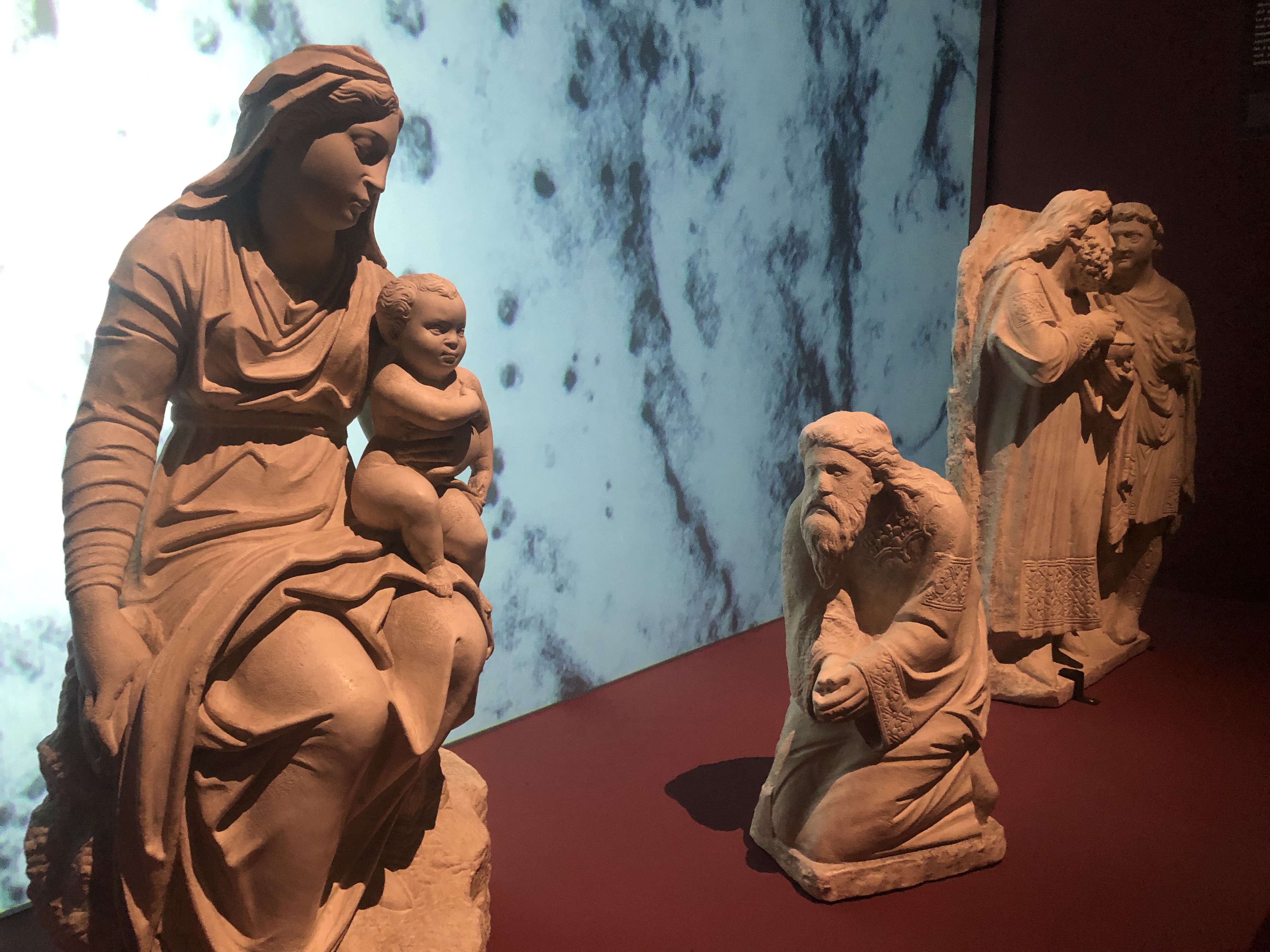
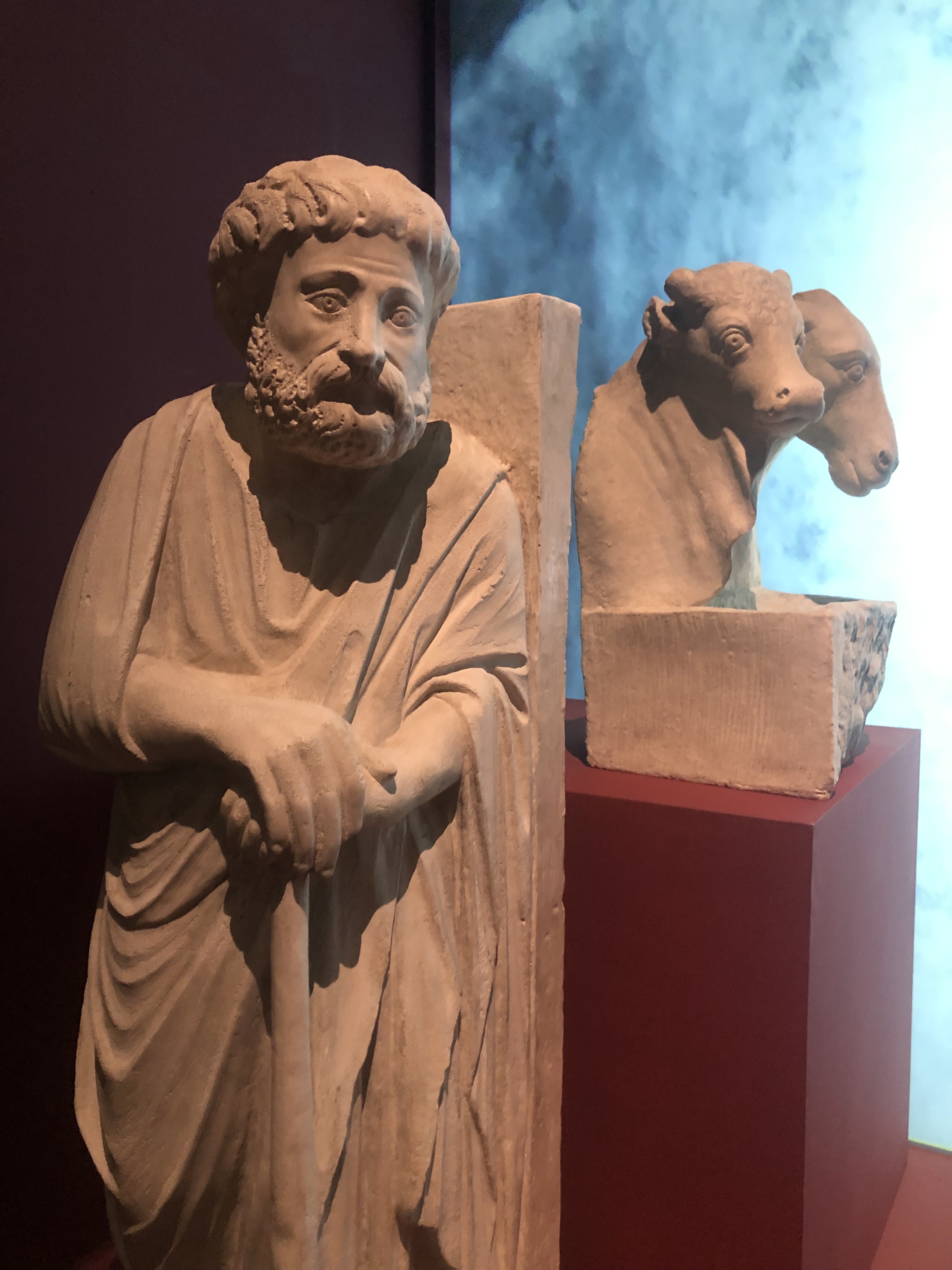
Surprisingly little of the original church remains, so I was fascinated this week to see a few of the mosaics saved from the first basilica at a special exhibition on medieval Rome at the Museo di Roma. The exhibition displayed work from the other four major basilicas, each of which has a unique history. The complex around St. John Lateran, another Constantinian construction, has changed greatly over the centuries and the interior of the church was redone by Francesco Borromini in the 17th century, though the shape of the basilica remains basically the same. St. Mary Major preserves the magnificent mosaics from its Roman days, but St. Paul Outside the Walls was entirely rebuilt after a fire burnt it down in the early 1800s.

Here are a few pictures form the papal basilicas’ medieval past.

St. Jägermeister?

Sant’Eustachio, Rome

With more than 900 churches, as I’ve noted before, if you’re looking for church-related curiosities, there’s no place like Rome. A friend recently pointed out an oddity that seemed to take the cake. Atop a church between the Pantheon and Piazza Navona is what seems to be a stag with a cross between its antlers, which looks suspiciously like it was taken straight from… a Jägermeister bottle.

Continue reading “St. Jägermeister?”

The churches of Trastevere

There are a lot of churches in Rome. I’ve heard 900-something, but I’m not really sure. There are eight or nine chapels in the building I live in, but I might be forgetting some. Needless to say, it seems a little too late for a master plan to ensure efficiency.

Santa Maria in Trastevere

The closest Rome ever came to an efficient program of church construction was probably right at the beginning, with the tituli, which were really just the houses of prominent Christians where the faithful gathered to worship, sometimes in secret. Titulus refers to the name of the owner, usually written on a plaque by the door. These centers weren’t laid out in any logical plan, but depended on whoever had a big enough living room (well, courtyard) to accommodate the whole proto-parish. When Christianity came out into the open after the Edict of Milan, the city’s faithful erected church buildings on the site of the tituli, which often enough coincided with sites of martyrdom. A few of the station churches are also built on the site of an old diaconia, basically an early Christian charitable distribution center.

Continue reading “The churches of Trastevere”