Recently, I was fortunate to be able to take a brief trip to Barcelona for a research project (more on that to come). I spent as much time as I could at Antoni Gaudí’s marvel, La Sagrada Família (more on that, as well).
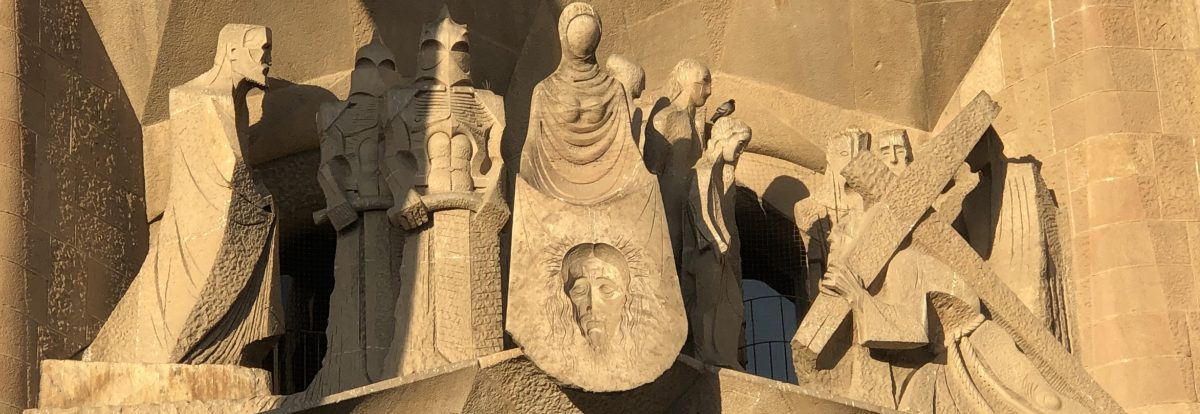
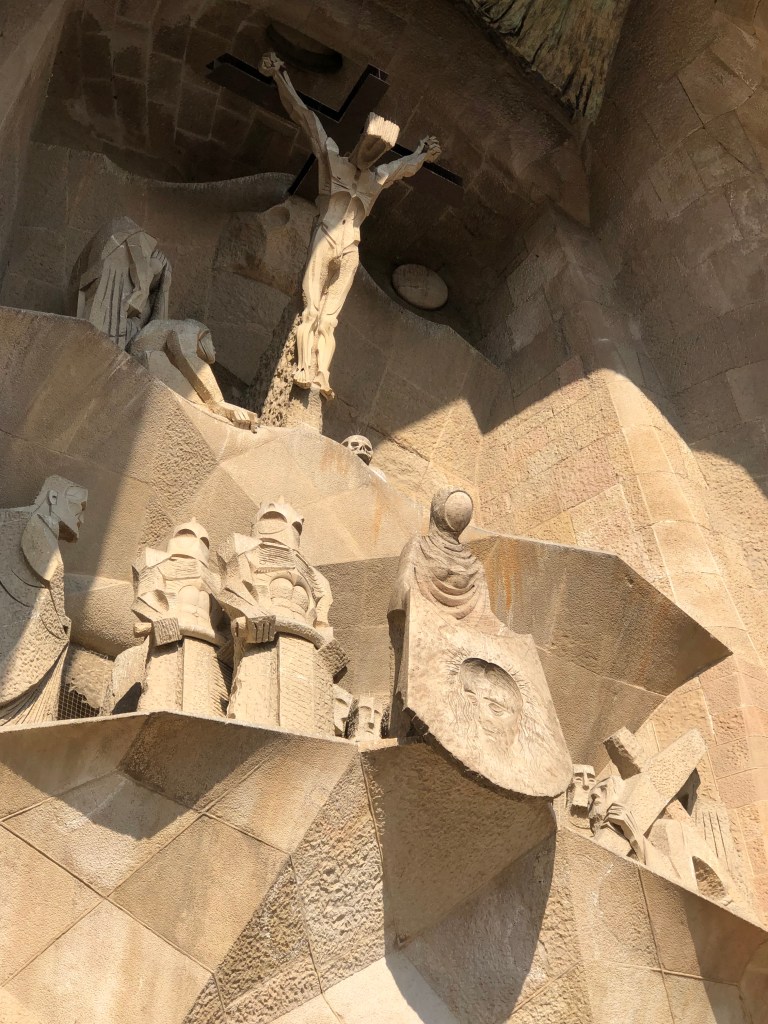
The entire basilica is a marvel, a deeply spiritual and prophetic building. This Holy Week, I thought it would be appropriate to share some photos of the Façana de la Passió, the Passion Facade. The sculptures broadly follow Gaudí’s instructions, though they are the work of Josep Maria Subirachs. If anything, the sculptures are even more harsh and austere than Gaudí’s original sketches. The hardness of the work is actually in keeping with Gaudí’s instructions.
As I mentioned last week, this month I’ve been asked to contribute Sunday homilies to the Homiletic and Pastoral Review. Be sure to pay them a visit. Here’s this week’s contribution:
Homily for Pentecost (C)
Guido Reni, Trinity of the Pilgrims (1625-6)
Today’s feast of Pentecost is a great reminder to give credit where credit is due. For us Christians, both as individuals and as a Church, credit is due to the Holy Spirit.
This is something that is easy to forget because the Holy Spirit, being spirit, is unseen. The Son of God, the second Person of the Trinity, becomes visible to us in the Incarnation. And in the Gospel, Jesus explains that when we see him, we see the Father. He makes God accessible to us in a visible, human way. Not everyone who sees Jesus, of course, recognizes him as God. Recognizing Jesus for who he is requires a certain openness from us, and, for some people—probably for most—it requires being opened up by the Holy Spirit. It requires the Holy Spirit to break through our blindness.
The necessity of the Holy Spirit’s intervention is made especially clear in the events we celebrate today. Jesus promises to send the Holy Spirit to his disciples after the Ascension. They certainly need it. We remember, of course, the behavior of the apostles at the time of the crucifixion—Peter denying Christ and the rest of the group scattering. Even after the Resurrection, the disciples seem uncertain. Out of fear, they lock themselves indoors. After the Ascension, they seem dumfounded by the event and require two angels to appear and shake them from their paralysis. I can’t blame them, actually; the events that they had witnessed were beyond any human experience. Knowing how to respond to them was beyond any normal human capacity. They needed the Spirit that Christ would send.
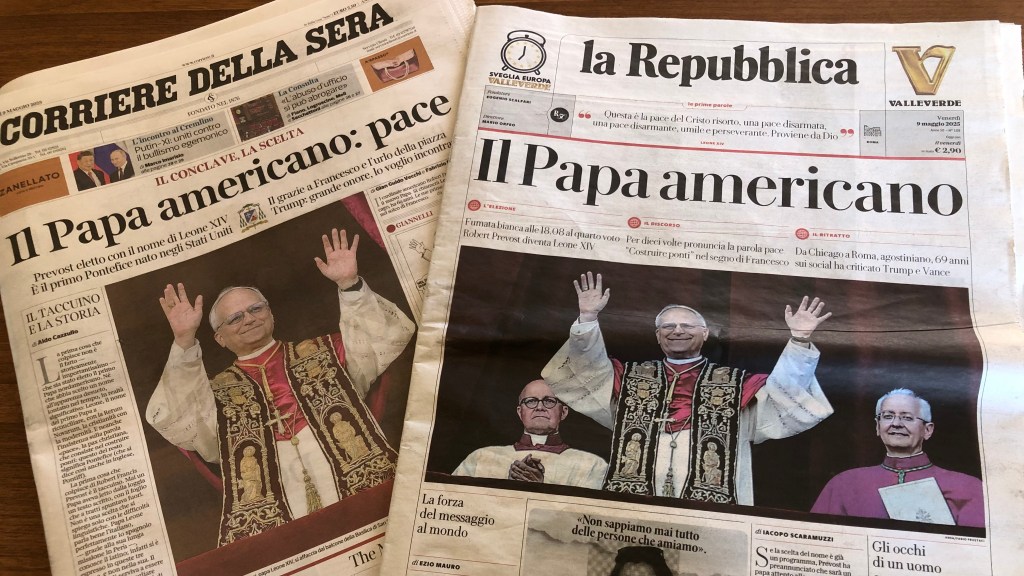
Just over a week ago I stood among the throng in St. Peter’s Square waiting for Pope Leo XIV’s Mass of installation. As the new pope emerged on the back of a white truck and made the rounds through the square, one of the priests who was with me to concelebrate whispered, “It still feels surreal.”
It still does.
The one iron-clad rule of papal elections, after all, used to be that the cardinals would never elect an American pope. And now we have a pope who grew up cheering for the Chicago White Sox. Going into the conclave, the Church seemed tired and divided. Yet Pope Leo has managed to evoke good will on all sides, and he hasn’t had to resort to any particular gimmicks to do so. Rome is elated.
What is perhaps most striking about our new Holy Father is the paradoxical way in which he seems both totally at ease in his new role–as if he’d been pope-ing for years already–and at the same time totally unassuming. One could imagine sitting next to him at a baseball game and him introducing himself as “Bob from Chicago.” At the same time, seeing him on the balcony of St. Peter’s Basilica or meeting world leaders in the robes of his office, one senses the quiet dignity of a successor of the Apostles.
A lot has already been written about Pope Leo on the basis of relatively scant pre-conclave writings and interviews. I was particularly impressed by the first homily he gave to the cardinals after his election. His brief address to the Synod of Bishops on evangelization more than a decade ago equally impressed me because he seemed to grasp one of the central problems facing the Church: the role of the media in communicating–and sometimes miscommunicating–our message. I remember an interview given by the late Cardinal Avery Dulles to Charlie Rose, in which the cardinal observed that the biggest problem faced by the Church was that most Catholics learn what they know about Catholicism not from the Church herself, but from the media. Leo XIV understands that dynamic–and he is alert to the equally challenging frontiers now being opened by artificial intelligence.
Brothers and sisters, papam non habemus. We do not have a pope. Not yet.
We live in uncertain and, often, disturbing times. I’m not talking only about the sede vacante in the Church of Rome. The last few years–the last few decades, really–have been a difficult time for the Catholic Church. The Church sometimes seems confused and divided from within, and opposed by powerful forces from without. And today we also live with all the uncertainty of a papal election.
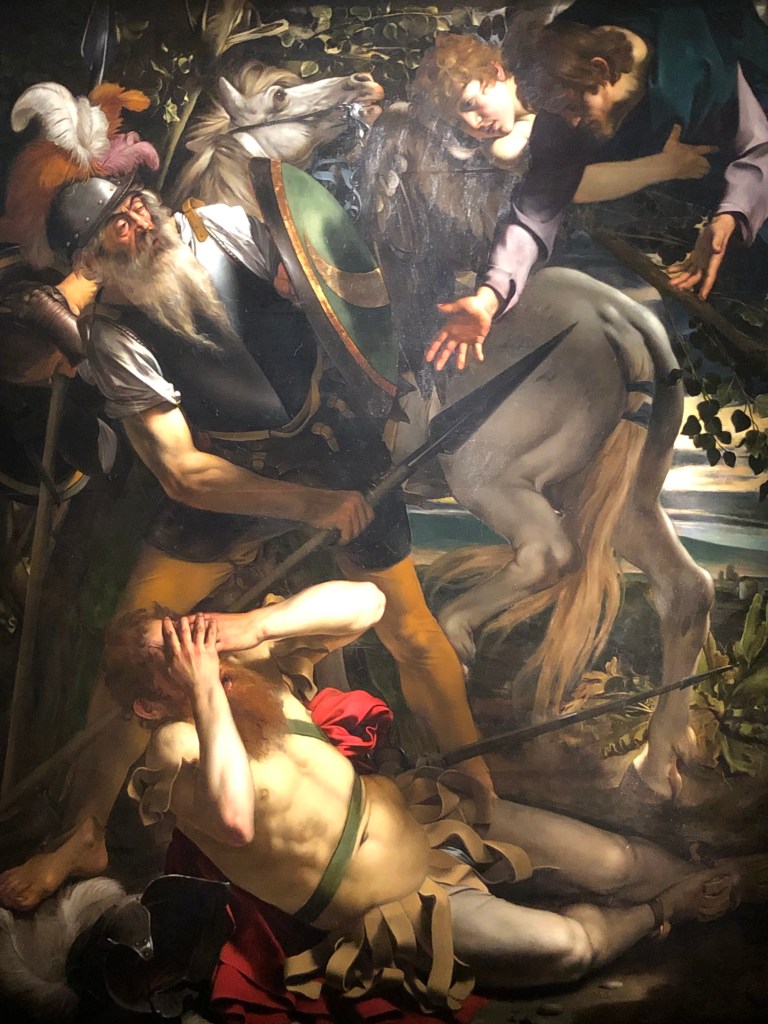
In this uncertain moment, today’s first reading reminds us of a simple but profound lesson: things have been worse. Much worse. Here we see the Church at its very beginning, tiny and persecuted. Stephen, one of the first deacons, has just been killed. The faithful are scattered. Those who persecute the Church are full of zeal, backed by the age’s political powers in all their strength. It seems like a catastrophic moment for the nascent Church, but it becomes a moment of triumph, a moment of growth. The dispersion of the faithful–even if caused by persecution–becomes the condition for the spread of the Word. Soon, we know, even the great persecutor, Saul, will convert and become the greatest missionary in the history of the Church.
Caravaggio, The Conversion of St. Paul, 1600-1
What I most want to emphasize today is the response of the disciples, who transformed this apparent catastrophe into a moment of growth: They continued to preach Jesus. Without panic, without discouragement. They returned and remained steadfast in the most fundamental mission of the Christian: to bear witness to the life, death and resurrection of Jesus Christ.
Today’s Gospel reading also calls us back to the heart of our Catholic faith: “I am the bread of life,” says Jesus. There is no action more important for the Catholic than to encounter the Lord in the Eucharist, in his true body and in his true blood.
Brothers and sisters, despite our anxieties and our doubts, despite the moments of uncertainty that alternate with moments of glory in the life of the Church, this message remains our rock. If we continue to proclaim it, we cannot go wrong. In a few days we will have a new pope, but our mission will not change. Times change. Popes change. Jesus Christ does not change.
Jesus Christ is the bread of life. Jesus Christ is Lord.
Readings: Acts 8:1b-8; John 6:35-40
(Original: Italian)
May 7, 2025
Gregorian University Chapel, Rome
Those interested can see my interview on the CBS Evening News with Maurice Dubois here.
Last week I was pleased to take part in a conference organized by at the Gregorian University’s Faculty of History and Culture and the Institute of Liturgy at the University of Santa Croce entitled L’edificio di culto e gli artisti: A 25 anni dal primo Giubileo degli Artisti (2000-2025). The theme was church architecture and art over the past 25 years. The conference brought together an impressive group of international architects, artists, and theologians.
My own rather modest contribution was to extend the reflection I began in November’s issue of First Things on “Screens and Sacraments.” The talk seemed to produce a good deal of agreement that we need to be more discerning in how we allow technology to intrude on our sacred spaces.
Pulpit, Church of the Gesù, Rome
On a related note, I was also happy to read a quite generous response to my article from Kevin Martin of Raleigh, North Carolina in the January 2025 issue of First Things. He reports being “strong-armed against [his] better judgement into Zooming the liturgy during the first year of the pandemic,” but eventually abandoning the practice because it felt wrong for many of the reasons I discussed in my article. He wonders, however, if I do not concede too much by suggesting that it might be OK to continue to broadcast the Liturgy of the Word, while stopping at the Liturgy of the Eucharist.
It’s a thoughtful question. I’d begin by saying that I am by no means arguing that one must broadcast any form of worship, and I have no quarrel with the decision of Rev. Martin’s church to give up streaming altogether. At the same time, I’m not an absolutist when it comes to technology, and some of the goods that people claim from broadcast Masses are real. Sick parishioners in particular can be helped to pray by seeing images of the liturgy online and comforted by the sight of their home church and familiar faces. These might supplement pastoral outreach to the homebound, without replacing it. I’m a little more skeptical about the evangelical or formative value of e-liturgy, since I think its appeal is mainly to those who have already been sufficiently formed by real liturgy.
“Look to my coming,” Gandolf tells Aragorn in the second installment of the Lord of the Ringstrilogy, The Two Towers. “At dawn on the fifth day, look east.” Those familiar with the story, know that Gandolf’s words come at a particularly dramatic moment in the epic, when the last holdouts of Rohan—one of the two remaining kingdoms of men not to succumb to the forces of evil—have retreated to their mountain stronghold, Helms Deep, and the walls of the fortress have begun to crumble, its gates to give way, and its doors to crack under the onslaught of a massive army sent by the turncoat wizard Saruman, who, seduced by power, has joined the forces of darkness. And as Aragorn, the king in exile, prepares for one final charge with what knights remain, he remembers the words of the faithful wizard Gandolf, who had left five days before to seek aid. “At dawn on the fifth day, look east.”
We read a similar instruction in the Book of Baruch, directed to the holy city, “Up, Jerusalem! Stand upon the heights; look to the east.” These words are echoed in the Advent hymn familiar to many of us, “People, Look East.” There is something primordial in this call, in the instinct to look in hope to the east. When I worked among the Lakota Sioux in South Dakota, I learned that in their traditional religion, east was the direction of prayer. I found some Lakota Christians very insistent on a Christian tradition—which I did not know about—of burying the dead facing east. The Christian tradition of prayer facing east goes back to the first centuries. St. Ambrose talks about catechumens, after their baptism, turning from the west to the east as a sign of the new orientation of their lives.
The question of invalid baptisms has been in the news recently. In my commentary on the question in La Civiltà Cattolica, I pointed out that the Vatican’s most recent document on the question, Gestis verbisque, gives renewed attention to the minister’s intention. For a sacrament to be valid, a minister must intend to do what the Church does when celebrating that sacrament. And that means that if he changes what the Church prescribes in her official liturgical texts–by inserting his own words or deleting something required to be there–then he manifests an intention to do something else. It’s just as straightforward as it sounds. The proof is not in the pudding, but in the action.
Baptismal font, St. Peter’s Basilica
Last week, however, another question was sent to the Vatican about what sort of intention might invalidate a sacrament, this time an ordination. The question proposed the distasteful case of a bishop who ordained a man with whom he had engaged in an illicit sexual relationship. Could he possibly have the right intention? Wouldn’t such a sinful situation invalidate the ordination?
The article in which this question was raised described it as “potentially explosive.” Fortunately, this grenade was defused by St. Augustine in the fifth century. The great theologian was responding to controversy about the validity of baptisms, whether the sinfulness of a minster invalidated the sacrament. He responded no. Augustine’s principle has remained a bedrock of sacramental theology ever since. It is really Christ who baptizes, Augustine said, and he can do so even through profoundly imperfect human instruments. The same goes for ordinations. Augustine sagely realized that if perfection were required of ministers in order for sacraments to be valid, then we simply wouldn’t have sacraments.
So how does Augustine’s principle fit with the requirement that one has to have the right intention to celebrate a sacrament validly? Here we have to make what might at first seem like a rather technical distinction but is, once you’ve thought the question through, also rather straightforward. The distinction is between intention and motive.
Homily for Second Sunday of Easter (B), Divine Mercy Sunday
Raphael, Coronation of the Virgin, Vatican Museums
Were the first Christians communists? Today’s first reading from Acts of the Apostles says that in the first community of believers, no one claimed any possessions of his own, but they held everything in common. If you teach Acts of the Apostles in a high school, when you get to this passage some kid will inevitably raise his hand and say, “So the apostles—they were communists, huh?”
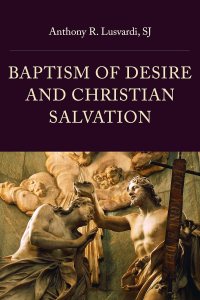
My book Baptism of Desire and Christian Salvation is now available to order, though its shipping date will be a little later. Its official publication date was originally last Friday but now seems to have been bumped to March. I’ve been working on the topic of baptism of desire since my STL studies at Sant’Anselmo–a good six years ago–so it has been a long time coming. I think the result says some important things for Catholic theology and the evangelizing mission of the Church. So let me assure you, it’s worth the wait!
I’ll have more on the topic to say, of course, and I’ll share the reactions of others to the book so you don’t have to take my word for it. For now I’ll just share the official description from Catholic University of America Press. The book is available directly from CUA’s website as well as other online booksellers such as Amazon. This spring CUA is offering a 20% discount on new books with the promo code CT10. Make sure that your library gets a copy, too!
Baptism of Desire and Christian Salvation. Belief in the necessity of baptism for salvation is rooted in the New Testament and was forcefully affirmed by the Church Fathers, yet today this belief is treated with unease if not ignored altogether. Over the course of centuries, Catholic theology has wrestled with a doctrine—baptism of desire—that both preserves this fundamental principle and allows for salvation in hard cases, such as catechumens dying unexpectedly. Baptism of Desire and Christian Salvation traces this doctrine’s varied history, from its genesis in a fourth century funeral oration given by Ambrose of Milan to its uneasy position in the Anonymous Christianity of Karl Rahner.
More than a history, however, this book raises questions about the nature of religious ritual and the sacraments, the mission of the Church, and the essence of salvation. Arguing that theologians of the past two centuries have tended to downplay the role of the sacraments when discussing salvation, Lusvardi suggests that baptism should remain our theological starting point. Engaging with the theological tradition and at times challenging the conventional wisdom, Baptism of Desire and Christian Salvation shows how such a sacramental approach can offer credible—and sometimes surprising—responses to questions related to the salvation of non-Christians, the fate of unbaptized infants, and the relevance of the Church’s mission today.
This weekend we celebrate Pentecost, which is sometimes called the birthday of the Church. You might remember that Jesus told his disciples that he had to go—he had to ascend into heaven—so that he could send the Holy Spirit to them. On Pentecost the Holy Spirit arrives. Before that, the disciples could see Jesus because he was a man—both God and man. So they could see him just as you can see me and I can see you. The Holy Spirit is God, too, but he’s Spirit, and spirits, by definition, are not physical things. You can’t see spirits.
St. Mary’s Cathedral, Perth, Australia
So at Pentecost, the disciples don’t see the Holy Spirit. Instead, they see his signs. Those signs are a driving wind and flames shaped like tongues over the heads of the people there. One sign in particular tells us a lot about the Church. The people at Pentecost come from different countries, and they speak different languages, so normally they wouldn’t be able to understand each other. But when the Holy Spirit comes, they do understand each other. The Holy Spirit changes something inside of them.






 Tony Lusvardi, S.J.